• Skip to main content
  • Skip to footer

Deliberative Citizenship Initiative

Building Democracy One Conversation at a Time

  • The Initiative
    • Programs
      • Deliberation Across the Curriculum
      • Deliberation on Campus
      • Deliberation in the Community
      • Research on Deliberation
    • Motivations
      • Why Deliberative Citizenship?
      • Why Davidson? Why Now?
    • Who’s Involved?
      • DCI Fellows Cohorts
        • 2025-2026 Fellows
        • 2024-2025 Fellows
        • 2023-2024 Fellows
        • 2022-2023 Fellows
        • 2021-2022 Fellows
        • 2020-2021 Fellows
      • DeeP Collaborative Cohorts
        • 2024-2025 DeeP Collaborative Faculty
        • 2023-2024 DeeP Collaborative Faculty
      • Advisory Council
    • History
      • What Sparked the Initiative?
    • Key Deliberative Dispositions
    • Frequently Asked Questions (FAQ)
    • Annual Report
  • Get Involved!
    • Participate in a Forum
    • Join a D Team
    • Become a Fellow
    • Take Courses
    • Get Training
    • Come to Guest Lectures
  • Events
    • Upcoming Events
      • 250th Anniversary Deliberative Forum Series on American Values
    • Past Events
  • Connections
    • The Deliberative Citizen: The DCI’s Monthly Newsletter
    • Efforts on Campus
    • Efforts in the Community
    • Efforts Elsewhere
    • Readings and Resources
      • DCI-Published Guides
      • DCI Guide to One-on-One Conversations
      • How to Disagree
      • Demonstration of Facilitation Styles
      • Deliberative Pedagogy Mini-Course
    • How We Can Help: DCI’s LET’S DELIBERATE! Partnership Opportunities
    • DCI in the News
  • DCI Blog Posts
    • Recent Blog Posts
    • All Blog Posts

Blog Posts

A Deliberative Forum on Artificial Intelligence

January 8, 2024 by Sara Copic

DCI-AI-Forum-Poster_Feb-5

Are you curious about artificial intelligence (AI) and how it is reshaping our world? Our Deliberative Forum on AI is designed for all of us to deliberate about the important questions posed by the recent breakthroughs in this technology. Whether you’re a computer science expert, a die-hard humanities lover, a doomsayer, a techno-optimist, or just want to learn more about what AI is and how we should live with it going forward, we invite you to join us on Monday, February 5th from 5-7 PM in the Lilly Gallery in person (or via Zoom)!

Who is hosting the Deliberative Forum?

The Deliberative Citizenship Initiative is excited to be co-hosting this event with Davidson’s Office of Technology and Innovation, Computer Science Department, Digital Studies Department and the Bonner Scholars Program.

What can you expect at the Deliberative Forum?

We will have a panel discussion for the first hour of the forum, in which three panelists will discuss what they take to be the most promising and the most concerning aspects of AI today and in the future. Following the panel discussion, participants will have small group discussions that will be facilitated by our DCI Fellows.

Who will be there?

  • Damien Williams is Assistant Professor of Philosophy and Data Science at the University of North Carolina – Charlotte. He studies philosophy, comparative religion, magic, artificial intelligence, human physical and mental augmentation, pop culture, and how they all relate. He teaches courses including Modeling and Society, Data and Society and Disability, Technology, and Artificial Intelligence, and much of his research focuses on the relationship between AI and bias as well as AI and consciousness. He has published articles on artificial intelligence in Wired, American Scientist, and the Journal of Responsible Innovation, among other outlets. Dr. Williams earned his PhD in Science, Technology, and Society at Virginia Tech and a Master of Arts in Philosophy and Religious Studies from Georgia State University.
  • Lauren Kahn is a Senior Research Analyst at Georgetown University’s Center for Security and Emerging Technology (CSET) focused on national security applications of artificial intelligence. Prior to CSET, she was a Research Fellow at the Council on Foreign Relations (CFR) within the National Security and Defense and Digital and Cyberspace Policy Programs, where she worked on defense innovation and the impact of emerging technologies on international security, with a particular emphasis on AI. Her work has appeared in outlets including Foreign Affairs, Lawfare, War on the Rocks, AI & Society, and the Journal forConflict Resolution, and has been featured in The Economist. Lauren holds a master’s in computer and information technology and a B.A. in international relations, both from the University of Pennsylvania.
  • Richard Boyd is a tech entrepreneur and expert on AI, machine learning, virtual worlds, computer gaming, and human/computer interfaces. He is the co-founder and CEO of AI and machine learning company Tanjo AI, which is dedicated to helping companies and individuals achieve a balance between human and machine effort and intelligence. Richard is also the co-founder and CEO of Ultisim Inc., a simulation learning company that utilizes gaming technology and AI. He works with a wide variety of industries including energy, healthcare, defense, education, and motion pictures, and he has been instrumental in creating several pioneering computer gaming companies including Red Storm Entertainment with author Tom Clancy; iRock Entertainment with Ozzy Osbourne; and Timeline Computer Entertainment with author Michael Crichton. 

  • Dr. Sara Copic, Assistant Director of the DCI, will be moderating the panel. Dr. Copic specializes in the philosophy of language with a focus on linguistic competence. She is an affiliate researcher of the UNC AI Project, and she will be teaching a WRI 101 course in the spring called, “AI: Its Nature and Significance,” which will focus on the ways large language models work, whether they can understand meaning, how this technology may be socially transformative, and what risks it may pose to humanity.

When and where is it happening?

The forum will take place on February 5, 2024 from 5-7 PM in the Lilly Gallery in Chambers Hall. There will also be a Zoom option.

How do I sign up?

This event is free and open to the public, but registration is required. Sign up here (be sure to indicate if you are attending in person or via Zoom). We hope to see you there!


Filed Under: Announcements, Blog Posts, Events Tagged With: deliberation, democracy, discourse, politics

How We Can Use Arguments to Learn From One Another

January 3, 2024 by Stephen Walker

People discussing at a round table

Stephen Walker ’26 (DCI Fellow)

Arguments are difficult. Whether stemming from our own personal attachments to ideas or a fear of criticism and negative social outcomes, people often tend to stigmatize arguments as impolite, irrational drains on our emotional well-being that only serve to produce tension and animosity between the parties involved. In my own experience, I have faced such feelings of hopelessness, of innately distressing conversations bound to go nowhere. Contentious arguments can give one the feeling they are fighting for the sake of fighting and nothing more. But this does not have to be so. Argument can be one of the most meaningful forms of positive interaction individuals can engage in with one another.

The DCI’s deliberative framework and the constructive norms our Fellows cohort has been exposed to have reconfigured my entire perception of how one ought to engage in argument and what they should hope to get out of it. One of our required readings for the program, Why We Argue (And How We Should) by Scott Aikin and Robert Talisse, details two sweeping norms for augment that I have relied on through my work to improve my relational and facilitator abilities: argumentative earnestness and argumentative responsibility.

Argumentative earnestness and responsibility have allowed me and other practitioners who utilize them to guide arguments away from zero sum competitions aimed at forcing one person to concede entirely to the other side through manipulation and distractions toward a positive, holistic exploration of issues at large and an informative pursuit of truth.

Aikin and Talisse describe argumentative earnestness as our duties to pay close attention to evaluating the reasons placed before us to justify a position or a view. By blocking out the noise–pressures to win, manipulative rhetoric, bias, and distractions–and evaluating arguments based on the reasons and logic behind them, the merit of a point can be more clearly established and progress can be made in what would otherwise be a contentious, stagnant process.

Argumentative earnestness takes what Aikin and Talisse label “intellectual courage,” or the courage to not just focus on the truth when others try to pressure you away from it but to also realize you may be biased and misleading others. It takes intellectual courage to admit that, much like the other side, you too can use flawed arguments in pursuit of winning rather than the truth. Going beyond holding the other side in arguments to such scrutiny by holding yourself to equally high, if not higher standards, can ensure you are constantly improving the quality of the arguments you produce.

Argumentative earnestness on its own is not enough to ensure a successful argument. Looking at the variety of reasons that may go into one side or another regarding a particular topic will round out your arguments to a fuller extent. Looking beyond what may be the widely preferred or most obvious reasons for holding a belief, we find out that there can be many reasons for taking a specific stance on a specific issue.

When we try to empathize with those who might take these different positions, regardless of whether we agree with them or not, it allows us to engage with the other side to the fullest extent possible. When we engage with the full, honest perception we have of the other side’s stance we can either learn and change our own perspectives on an issue or develop more robust responses than we would otherwise be capable of when engaging with simplified reasons. In this way, argumentative responsibility inspires learning and is essential to productive argument.

In my work as a deliberation facilitator, I am sometimes tasked with playing devil’s advocate by taking on the role of the other side when everyone in a deliberation agrees on an issue and the conversation reaches a stand-still. Without engaging in argumentative earnestness and responsibility, it could be very hard to be the sole advocate for another perspective that one sometimes may not even agree with themselves. Embodying these principles in my attempts at being a better devil’s advocate has allowed me to focus on the reasons behind competing stances, encouraging people to examine their views in ways that would not be possible without such a focus on reason over confrontation.

Playing devil’s advocate to urge members of my deliberation groups to consider opposing arguments has been a truly fruitful exercise to watch play out. People not only willingly consider the full scope of reasons behind views they may have otherwise immediately rejected, but they learn how to better respond to such reasons and enhance their reasoning processes. This can allow deliberators to examine their views, thus enhancing their ability to reason through and properly weigh the merit of counterarguments they may face for the stances they take on various issues. It also allows them to build up the courage to admit when they may be wrong or faced with superior reasoning.

In my experience, when we try to exercise argumentative earnestness and responsibility in our efforts to deliberate, we tend to learn more, have better arguments, and have a better chance of unlocking the truth. This allows us to not only be aware of the flaws in the stances we take but to make clear to others in a constructive, rather than hostile way, the problems in the reasoning that they present. Better arguments make better-informed citizens and by leaning into not just argumentation but constructive norms, we learn and grow in ways that would not otherwise be possible. We learn and grow as a community of citizens unified by our pursuit of truth.

Filed Under: Blog Posts, Fellow Posts Tagged With: debate, deliberation, discourse, facilitation

Emotion in Deliberation: A Necessity Rather Than an Impediment

December 19, 2023 by Atyantika Mookherjee

Brain and Heart

Atyantika Mookherjee ’27 (DCI Fellow)

It is common to consider emotion as the antithesis of reason and logic. After all, emotions are seen as spontaneous, subjective, and sometimes even irrational, while reason and logic is associated with objectivity and rationality. In public discourse, the interplay of these elements is of prime importance, influencing the course of an argument. Playing into an emotion/reason binary, it is often considered that debate should be centered on facts, leaving no room for the informal fallacy of appealing to emotion. Before joining the DCI as a Fellow, I, too, believed that emotion was a dispensable part of facilitating a productive conversation. However, in learning more about deliberation, I’ve come to recognize the importance of emotion, how it can be effectively communicated through storytelling, and why we should not just “set our feelings aside” when deliberating about public issues.

In his article, “Impassioned Democracy: The Roles of Emotion in Deliberative Theory,” Michael Neblo explores this intersection between emotion and deliberative theory, making the case that despite what many people think, the two are not mutually exclusive. He goes on to outline twelve distinct roles that emotion plays in the process of deliberation. These include contributing to the motivation to deliberate, providing inputs through experiences that harden into critical propositions, and ensuring a reciprocal and empathetic backdrop for the deliberation to occur.

In practice, I see how emotions contribute to better deliberations and agree with many aspects of Neblo’s argument. During the deliberation sessions I hosted as a DCI fellow for Davidson students, alums, and community members, I noted many individuals falling back on personal experiences and how they felt about them in formulating their arguments. Many of their responses to each other were rooted in shared events and outlooks. In retrospect, even my motivation to be part of the DCI comes from my travels to Pakistan as a young Indian girl, seeking to clarify misconceptions both countries have about each other’s communities as I saw them. In this manner, I now understand the role of emotion in deliberation to be critical and be expressed through a medium one would also not commonly associate with deliberation: storytelling.

Stories aim to inspire empathy and provide a deeper, more vibrant understanding of contexts the way facts fail to. Through the use of the Perspectives platform that seeks to encourage individuals to participate in constructive dialogue, I was able to glean more of an understanding of the role of storytelling in deliberation. Stories that are honest, important, and effective play a crucial role in setting the tone for peoples’ opinions and allow deliberators to connect, making for a more fruitful discussion. Naturally, the cornerstone for all such stories is emotion. People remember how an experience made them feel and use this to formulate the values they eventually contemplate during deliberations. They listen to other peoples’ emotions and compare them to their own in reaching their conclusions.

This is not to say that the influence of emotion in deliberation is always straightforward. In certain instances, emotions might sway deliberations towards options that align with immediate gratification or deeply ingrained beliefs, bypassing logical reasoning. Nonetheless, acknowledging and understanding emotions in deliberation can lead to more informed and balanced decision-making. From my own experiences, I’ve realized that successful deliberation often involves integrating emotional intelligence with rationality. This integration allows for a more comprehensive evaluation of choices, considering both the logical implications and the emotional resonance of decisions. In collaborative deliberative processes, recognizing and respecting diverse emotional responses among participants can lead to more inclusive and nuanced outcomes.

Filed Under: Blog Posts, Fellow Posts Tagged With: deliberation, discourse, facilitation

A Look Back: Eric Liu, Citizen University CEO, Visits Campus

December 14, 2023 by Graham Bullock Leave a Comment

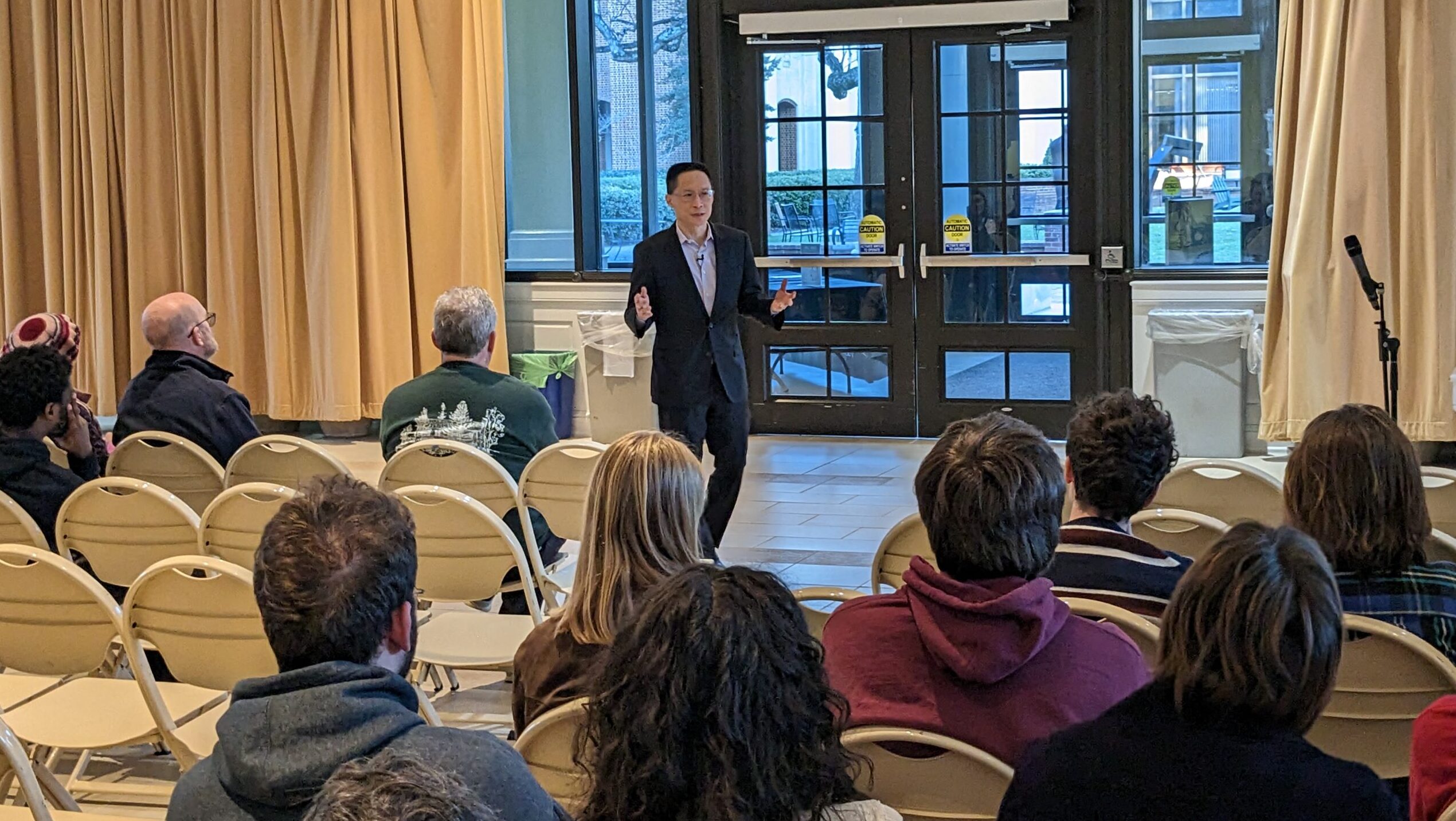
Speaker talking to audience at Davidson College Lilly Gallery.

On February 6, The Bonner Scholars Program and the Deliberative Citizenship Initiative co-sponsored two events featuring Citizen University CEO Eric Liu. The first was a public lecture by Mr. Liu in the Lilly Gallery that was attended by over 100 online (via Zoom and YouTube) and in-person guests. The theme of his talk was “From Isolation to Community: A Commitment to Rehumanize and Revive our Democracy.”

Liu 2

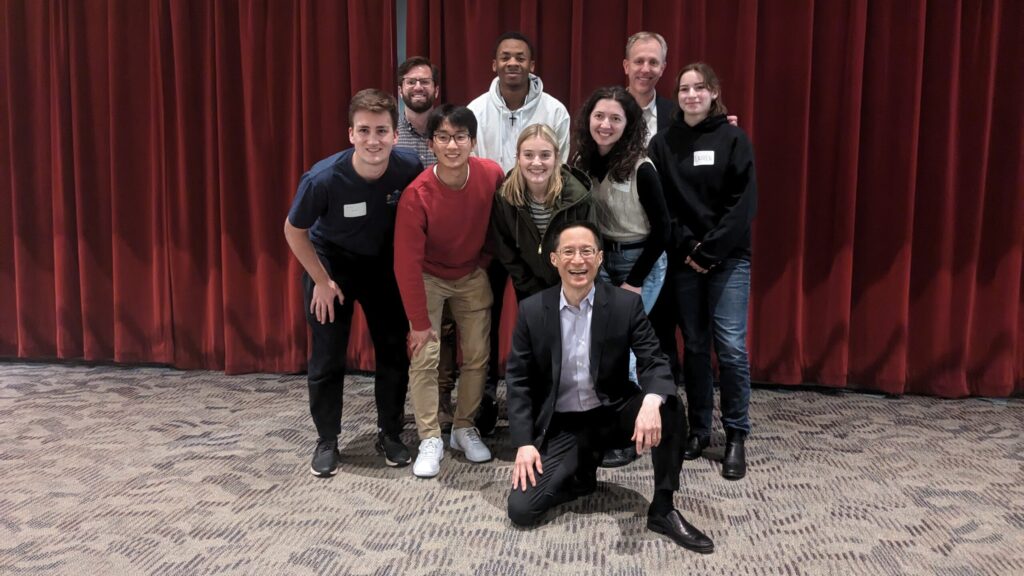
After his keynote address, Liu led a smaller interactive conversation exploring the key insights from the Better Arguments Project, a national civic initiative that he helped create to “bridge divides – not by papering over those divides but by helping people have better arguments.” During his visit, Liu was also able to meet and talk with several Davidson students, faculty, staff, and community members about their work and questions related to deliberation and building a healthier democracy.

Liu 3

Overall, it was an action-packed and engaging visit that touched on a range of important topics that are highly relevant to both life on campus and in our broader society. Liu provided us with a key set of ideas and a hopeful sense of optimism that despite the challenges we face, we can connect with one another despite and even because of our differences, as we work together to rehumanize and re-energize our democracy.

Eric-Liu-Flyer-for-Email

Filed Under: Blog Posts, Events

The DCI & Bonner Scholars Program Continue Our Collaboration During Fall 2023

December 13, 2023 by Sara Copic

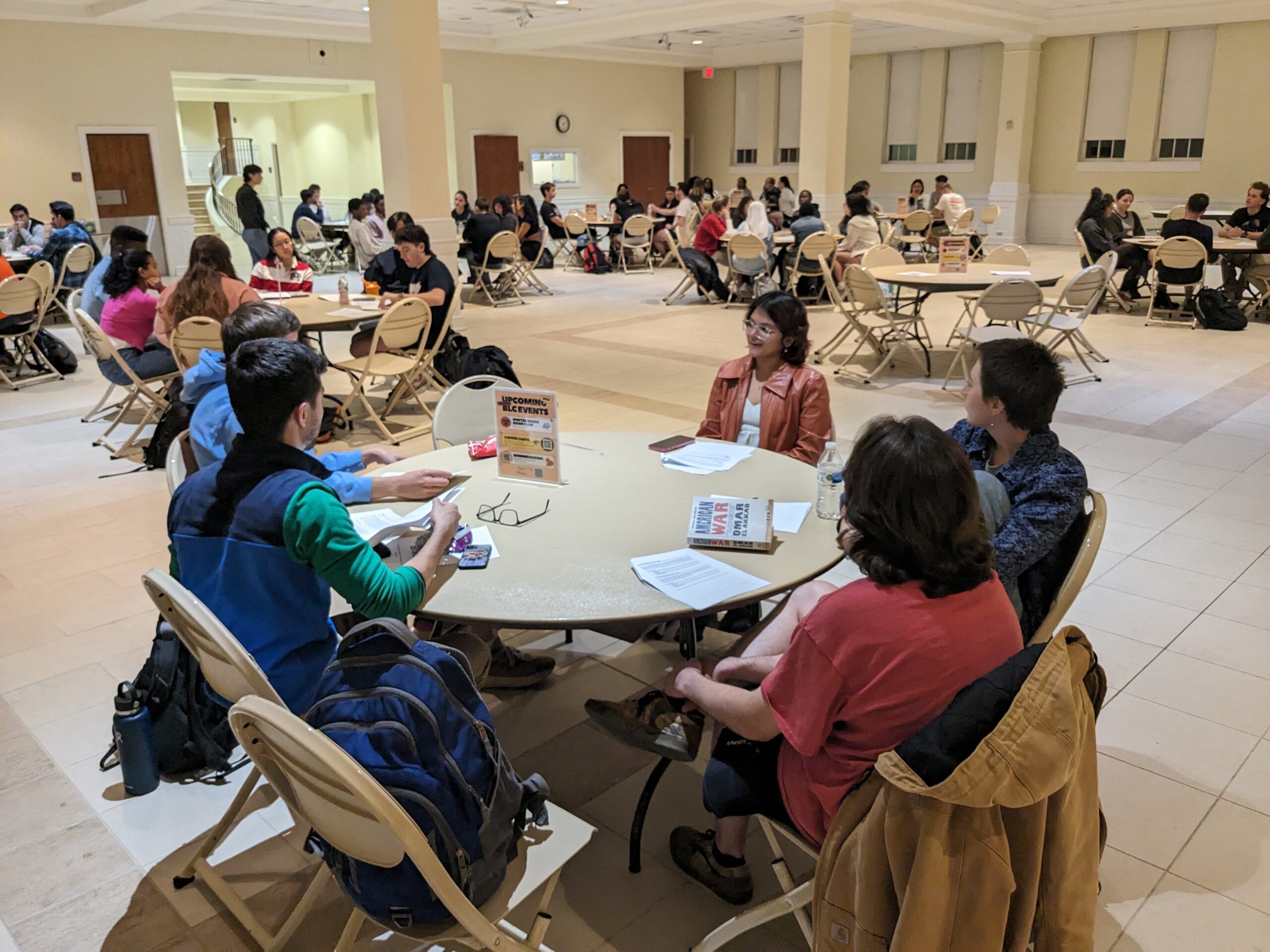
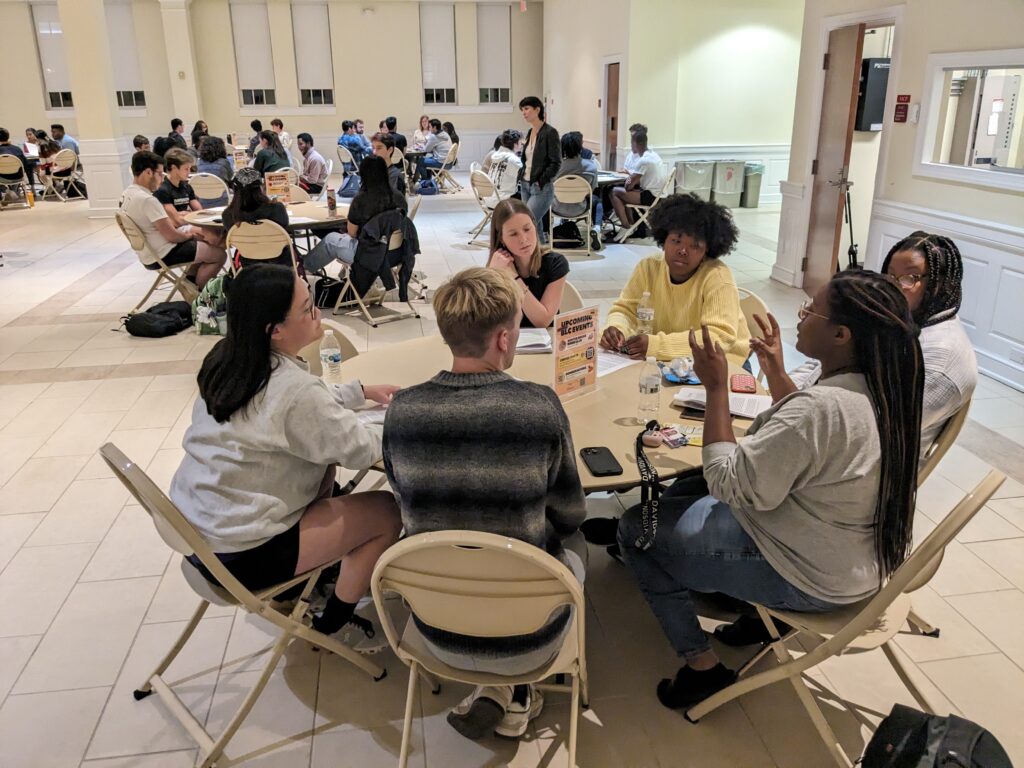
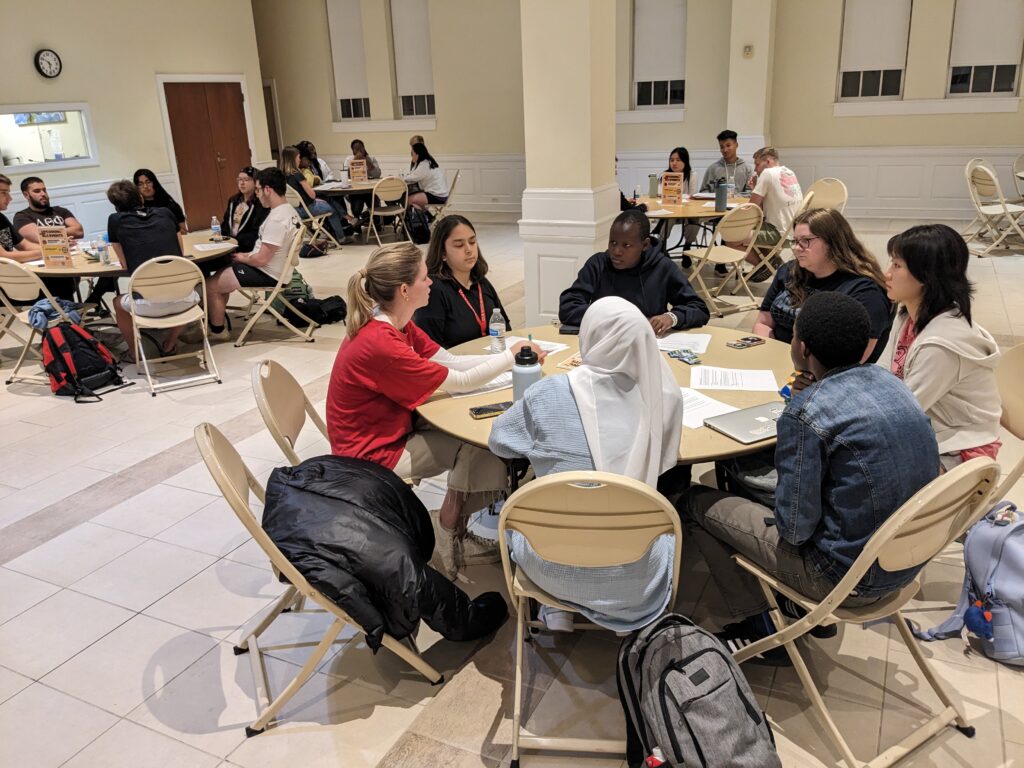
Round Table Discussions at DCI and Bonner Scholars event in the Davidson College Lilly Gallery.

This fall, the DCI hosted its first in-person Deliberative Forum, featuring three panelists from Davidson’s Political Science Department: Professors Besir Ceka, Ken Menkhaus, and Shelley Rigger. About two weeks later, we held a forum with Davidson’s Bonner Scholars on the same topic: “The Challenge for Democracy: To what extent should the United States and other democratic countries defend and promote democracy around the world?” Over 50 Bonner Scholars gathered in the Lilly Family Gallery to deliberate on this question, having watched the expert panel discussion and read our Deliberation Guide on the topic.

Check out this short video montage from the forum…!

Over 97% of the 35 Bonner participants who completed a short survey after the event reported that they were either very satisfied (57%) or satisfied (40%) with their small group deliberation. Over 85% of the participants also felt like they either learned a huge amount (20%) or a good amount (66%) about the defense of democracy. As one Bonner Scholar wrote, “I felt very comfortable sharing my ideas with the group and I think my facilitator and group members did a great job creating a welcoming environment. It was really cool to be able to genuinely discuss an important topic, as I feel like I don’t get to do that often in my life.” Another Bonner Scholar stated, “It was a very helpful experience overall as it not only helped in learning new perspectives but also helped me strengthen my understanding.”

“It was a very helpful experience overall as it not only helped in learning new perspectives but also helped me strengthen my understanding.”

The Bonner Scholars Program is a scholarship program where students aim and learn how to effect positive community change. Bonner Scholars participate in community service and research, and they have weekly opportunities to engage in educational experiences that enhance their ability to make a positive impact and build capacity within community organizations. Participation in Deliberative Forums allows the Bonner Scholars to harness their humane instincts, listen effectively to diverse perspectives, and seek innovative solutions to urgent public issues. The DCI first partnered with the Bonner Scholars Program in the fall of 2022 to host a deliberative forum on free speech and inclusivity that was very well-received by those who participated, and we have continued this partnership this year.

We are excited to partner with the Bonner Scholars again in the early spring semester! The DCI will host a public Deliberative Forum on Artificial Intelligence (AI) on February 5th, in which Senior Bonner Scholars will take part. This forum will provide a space for Davidson students, alumni, staff, faculty, and members of the public to engage with one another on critical issues regarding emerging technologies. These include AI that is capable of performing tasks as well as humans in economically valuable ways and AI that could be as transformative as the agricultural or industrial revolutions to human society and the world.

Filed Under: Blog Posts, Events

  • « Go to Previous Page
  • Page 1
  • Interim pages omitted …
  • Page 13
  • Page 14
  • Page 15
  • Page 16
  • Page 17
  • Interim pages omitted …
  • Page 38
  • Go to Next Page »

Footer

Blog Post Categories

  • Announcements
  • Blog Posts
  • DCI Posts
  • Events
  • Faculty Posts
  • Fellow Posts
Image of a compass superimposed by the text "Deliberative Citizenship Initiative" and "Davidson College." Clicking on this image leads to the Initiative page.

Recent DCI Blog Posts

  • We Tried to Fix Jubilee’s “Middle Ground” – Here’s How It Went
  • A Case for Deliberation in the Natural Sciences
  • Welcoming New Staff to the DCI and DCN
  • Facebook
  • Twitter
  • Instagram
  • LinkedIn


Copyright © 2026 · Infinity Pro on Genesis Framework · WordPress · Log in