• Skip to main content
  • Skip to footer

Deliberative Citizenship Initiative

Building Democracy One Conversation at a Time

  • The Initiative
    • Programs
      • Deliberation Across the Curriculum
      • Deliberation on Campus
      • Deliberation in the Community
      • Research on Deliberation
    • Motivations
      • Why Deliberative Citizenship?
      • Why Davidson? Why Now?
    • Who’s Involved?
      • DCI Fellows Cohorts
        • 2025-2026 Fellows
        • 2024-2025 Fellows
        • 2023-2024 Fellows
        • 2022-2023 Fellows
        • 2021-2022 Fellows
        • 2020-2021 Fellows
      • DeeP Collaborative Cohorts
        • 2024-2025 DeeP Collaborative Faculty
        • 2023-2024 DeeP Collaborative Faculty
      • Advisory Council
    • History
      • What Sparked the Initiative?
    • Key Deliberative Dispositions
    • Frequently Asked Questions (FAQ)
    • Annual Report
  • Get Involved!
    • Participate in a Forum
    • Join a D Team
    • Become a Fellow
    • Take Courses
    • Get Training
    • Come to Guest Lectures
  • Events
    • Upcoming Events
      • 250th Anniversary Deliberative Forum Series on American Values
    • Past Events
  • Connections
    • The Deliberative Citizen: The DCI’s Monthly Newsletter
    • Efforts on Campus
    • Efforts in the Community
    • Efforts Elsewhere
    • Readings and Resources
      • DCI-Published Guides
      • DCI Guide to One-on-One Conversations
      • How to Disagree
      • Demonstration of Facilitation Styles
      • Deliberative Pedagogy Mini-Course
    • How We Can Help: DCI’s LET’S DELIBERATE! Partnership Opportunities
    • DCI in the News
  • DCI Blog Posts
    • Recent Blog Posts
    • All Blog Posts

Blog Posts

AI Deliberative Forum: View the Panel Recording & Deliberation Guide

February 8, 2024 by Sara Copic

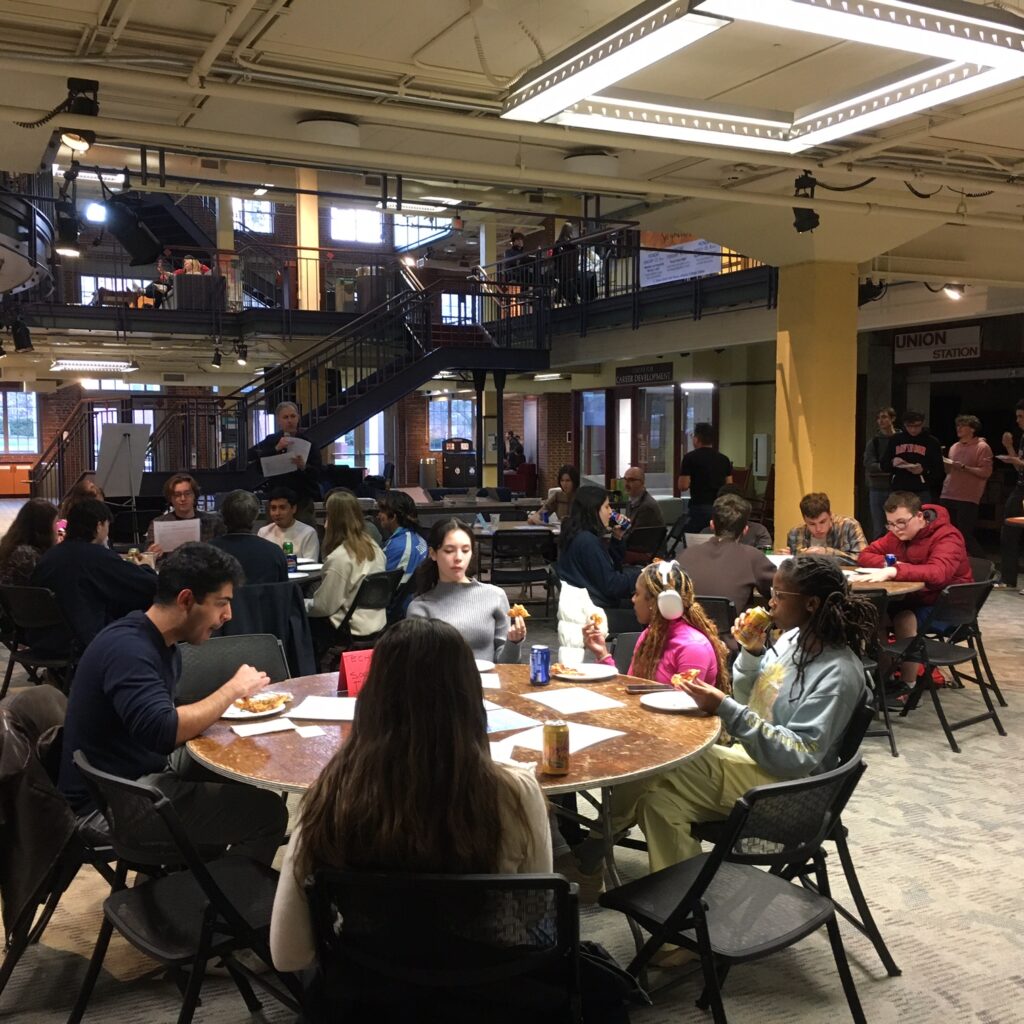
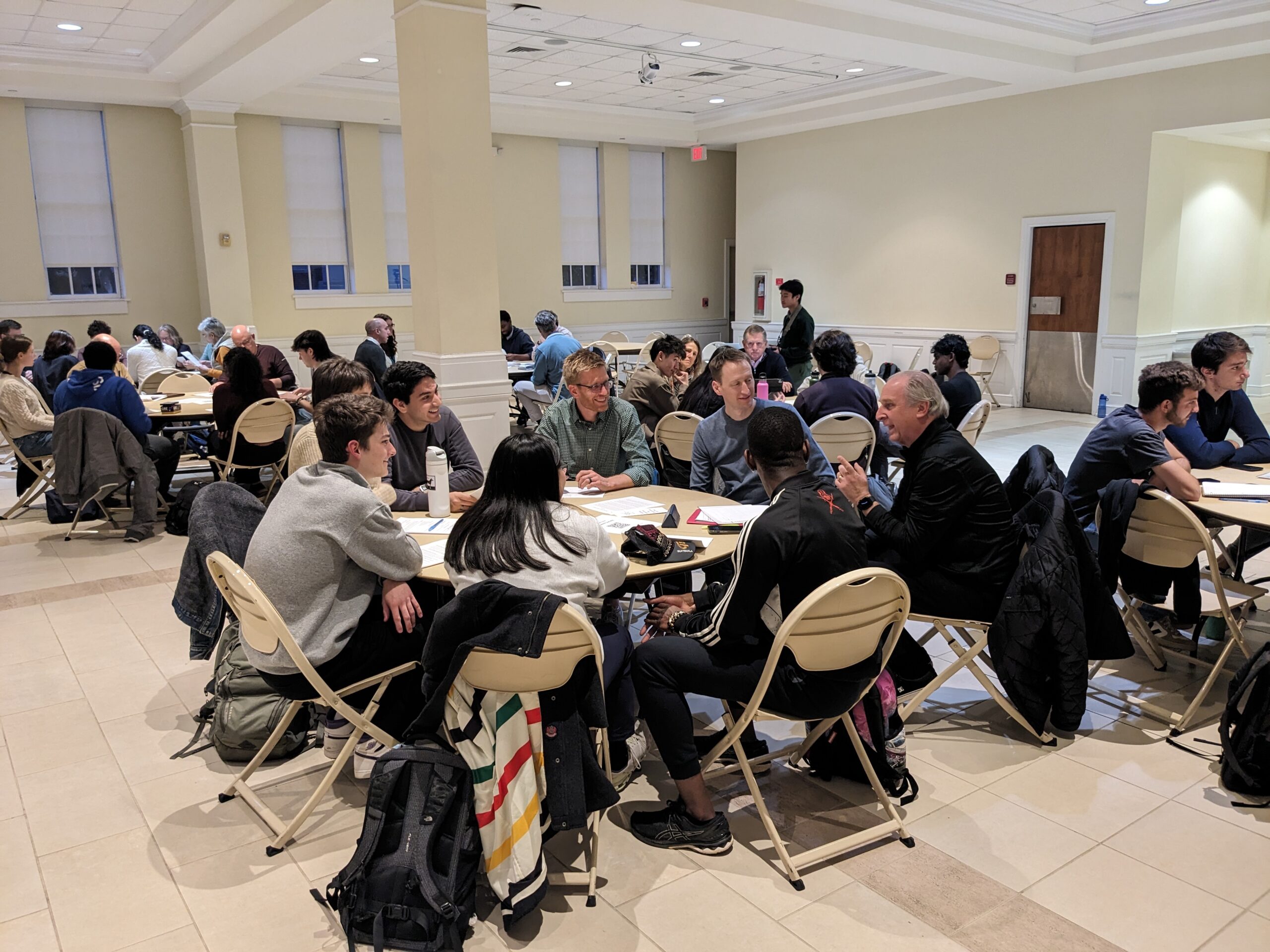
Forum participants deliberate at round tables

Earlier this week, the DCI hosted a Deliberative Forum on Artificial Intelligence in partnership with Davidson’s Computer Science Department, Digital Studies Department, and Office for Technology and Innovation. Together, we connected Davidson students, faculty, staff, alums, and members of the wider community to discuss how we should think about and interact with the advanced AI systems have been dominating our public discourse about tech since the public release of ChatGPT in November 2022.

Three panelists with very different kinds of AI expertise discussed how we should aim to realate to AI now and in the future. You can watch the whole panel discussion below. All in all, over 130 people participated in the forum, sharing their hopes and fears about the technology’s impact and deliberating together about the role of humans in a world that will be potentially fundamentally transformed by generative AI.

Damien Williams, Assistant Professor of Philosophy and Data Science at UNC Charlotte spoke about how awareness of what biases, especially social biases, can arise in AI algorithm training impact the degree to which the outputs of these systems align with just goals and values. Lauren Kahn, Senior Research Analyst at Georgetown University’s Center for Security and Emerging Technology discussed ways that AI applications can positively impact national security and state interests, the risks associated with them, and how to develop them with responsible speed. Richard Boyd, CEO of Ultism, talked about AI’s impacts on the private sector. All panelists touched on the importance of working on aligning AI systems with our values and interests, as well as the challenges associated with this task. The panel was moderated by Sara Copic, DCI Assistant Director and affiliate researcher of the UNC Chapel Hill AI Project.

Following the panel discussion, participants deliberated about AI ethics, standards, and policy. These discussion groups were guided by the DCI’s trained facilitators and included a mix of students, faculty, staff, alumni, and community members who were able to share their questions and thoughts about this new technology.
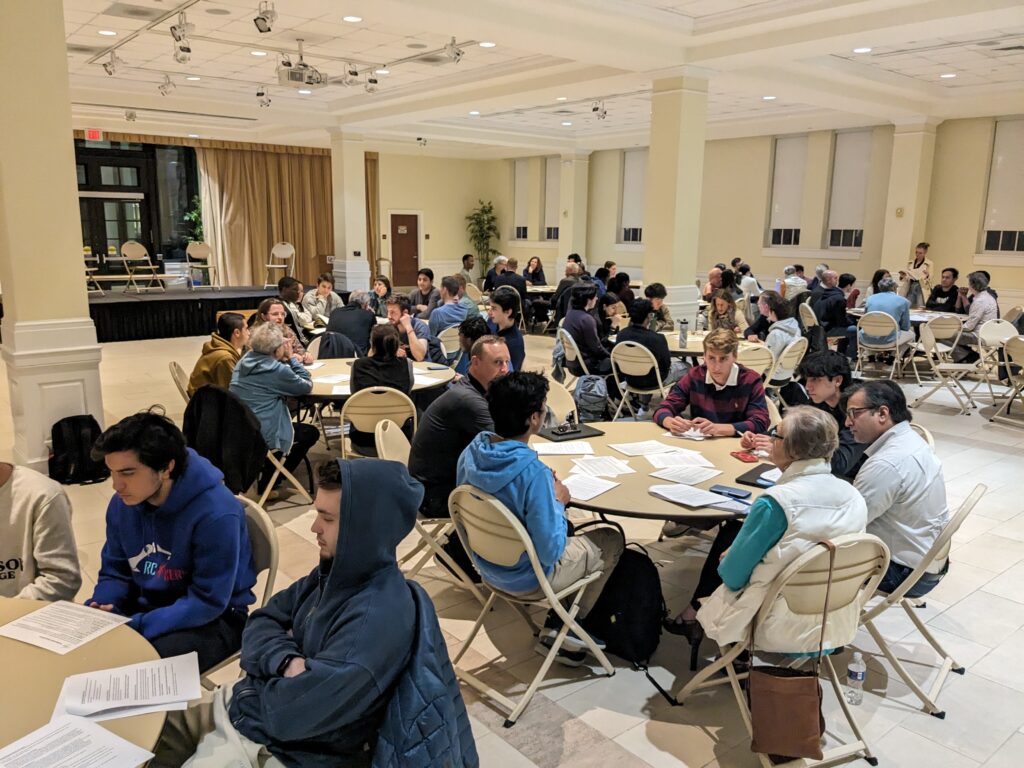
Forum participants deliberate at round tables

You can check out a short video of the small group discussions that participants engaged in the video below (less than one minute long). We used Canva’s AI Assistant to help generate the video, and we couldn’t resist leaving in the last two captions that it generated — watch until the end and we bet you’ll get a kick of out of it.

Participation in every DCI program includes access to a Deliberation Guide, a document that provides some background information and practical examples that enable people of all backgrounds to engage with the topics of our programs. Below, you can access our Deliberation Guide that we distributed as part of our Forum on Artificial Intelligence. Although our guides are intended to be used with the help of a trained facilitator, we hope that this document will spark interest for those looking for ways to deepen their understanding of how generative AI works and the special ethical and policy tradeoffs and challenges associated with this technology. If you missed this event, we also hope it will inspire you to participate in our future deliberative forums — we have one coming up on April 2 on Guns in America. More info coming soon…

DCI-Deliberation-Guide_Artificial-Intelligence-1


Filed Under: Blog Posts, Events

Why Me?

February 7, 2024 by Auden White

Game pieces connected by a network

Auden White ’26 (DCI Fellow)

In the DCI’s fall forum, “The Challenge for Democracy,” one of the participants posed an important question: “Why me?” He was a student who was in the midst of a discussion about the role of United States military interventions, nation-building missions, and sanctions in promoting democracy abroad. He had just listened to expert professors, themselves conflicted by the track record of previous US efforts, navigate the topic for the last hour. He was unsure how to add to the conversation, chart a course, and direct policy for the future, given his lack of experience and knowledge.

His caution is justifiable. He was not as knowledgeable as an expert, nor did he have a strong personal connection to the topic. Despite this background, I pushed back against his hesitancy and urged him to participate in the discussion. He did so wonderfully and brought up some interesting points during the discussion.

The Deliberative Citizenship Initiative (DCI) is designed for the hesitant young man and everyone who wants to learn more about politics. It focuses on deliberations, not decisions. We are not focused on changing government policy. The issues we try to tackle are too large, too divisive, and too complicated to find the best solution in a short deliberation about US foreign policy. Additionally, implementing that solution is difficult given the DCI does not have an advocacy wing, nor any political power. While in the longer term one of the DCI’s goals is to catalyze creative solutions that respond to and accommodate the important concerns of all stakeholders, we work to achieve this goal by first fostering greater understanding of these concerns about the issues at hand.

This emphasis on fostering understanding rather than seeking immediate solutions is valuable. Creating a space for dialogue and deliberation can lead to increased empathy, tolerance, and a deeper comprehension of diverse perspectives. Its goal is to bring members of the Davidson community closer, to hear each other’s stories, all of them, and to walk away with a more complete understanding of the American experience. It can lead to understanding between the most ardent supporter of abortion and a pro-life absolutist, where the other is no longer demonized but seen as a person who went through a slightly different set of circumstances. For dialogue, solutions are helpful, but not required.

The DCI’s focus on bringing people together to share their stories and perspectives, even if they ultimately agree to disagree, promotes a more nuanced and interconnected community. It fosters an environment where individuals can appreciate the complexity of various viewpoints without the pressure of arriving at a definitive solution. In a world often driven by the need for quick decisions and immediate outcomes, the emphasis on deliberation for the sake of understanding aligns with the principles of participatory democracy. It recognizes that meaningful change often begins with thoughtful and informed conversations, even if the tangible results may take time to manifest.

The young man at my forum on democracy is not alone: only 40% of youth say they feel well-qualified to participate in politics. This low confidence contributes to low voter turnout and political participation amongst youth. Deliberations like the ones sponsored by the DCI inspire further political participation and foster a more vibrant democracy.

Image Credit: allinonemovie

Filed Under: Blog Posts, Fellow Posts Tagged With: deliberation, democracy, facilitation, politics

Why DCI?

January 30, 2024 by Declan O'Donoghue

Stickers scattered with an "I Voted" design on each of them.

Declan O’Donoghue ’26 (DCI Fellow)

When I contemplate the question Why DCI? I like to consider the personal motivations for my interest in politics. When I was younger, I was always upset that I could not vote. My high school civics teacher, who inspired me to study political science at Davidson, gave our class the opportunity to write a proposal for an amendment of any element of the US Constitution. I quickly chose to focus on the 26th amendment and the larger concept of voting age. I was frustrated with all of the adults who cared so little about what was on the ballot. Many of which had the opportunity to vote and still failed to practice their constitutional right.

Now, only after a few years of waiting, I have the opportunity to vote and directly participate in our political institutions. While I am grateful to have this privilege, I cannot imagine how it feels for people who are denied their right to vote due to social, financial, or legal barriers.

Throughout all political systems, even the most equitable democracies, we see some level of systemic inequality. In the United States and elsewhere, large subsets of the population have a limited ability to directly participate in politics. People under 18, felons, and non-citizens have all been politically restricted. Historically, pluralities of democratic nations have lacked the vote, like the United states before women won the right through the 19th amendment to the US Constitution.

There are several ways to respond to political wrongdoings but many of them are inaccessible to the people that need them most. Protests and strikes can be dangerous, illegal, financially burdensome, and sometimes unsustainable. Sometimes topics might not be consequential enough to be valuable to a protestor or the protested group. Other forms of participation like debates can be increasingly zero-sum in our current political landscape. Most Americans would find it hard to walk away with a new perspective or a sense of growth after a thanksgiving dinner argument, let alone a presidential debate.

Deliberation can be used to approach problems of political equity from a new direction when traditional methods have been worn out. Consider classical Athens, for example; although such a small subset in the population (free-born male citizens) had almost all the political power and by modern standards would hardly be called a democracy, the city-state has continued to be used as a political ideal today. I believe Athenian democracy was regarded so highly, not because a subset of people had the power to vote, but because they deliberated about their political ideologies and actions so extensively.

The Athenian free-born male citizens did not lock themselves in an upper and lower chamber and emerge with a new decision void of any public input. They met in the Agora and publicly deliberated about the topics they chose were most important. Although limited in their ability to participate in official political discussions, the non-voting groups could still bring their input forward due to the inherent openness of deliberation. Scholarly analysis has found that non-voting groups found places to deliberate, or at least have political discussions, in courts, assemblies, councils, local assemblies, and even in the street.[1]

Beyond large government, other systems can be even more difficult or abstracted to directly participate in. Take a school board, for example; for a school district with thousands of students, a small group of people, who can be shockingly disconnected from the student body to begin with, can make drastic and unpopular decisions with little consequence (consider this article for context: Locally Elected School Boards Are Failing.)

School boards across the country have been plagued with toxic and ill prepared forms of deliberation that might be causing more harm than good. While school boards are just once means of political participation available to local communities, they provide a unique environment where deliberation with elected officials is more accessible than at the national level. Research on methods to improve the efficacy and equity of school board outcomes suggests that “expanding community advocacy” through greater opportunities for formal participation outside of elections, like deliberations, is essential.[2]

Like Athens, our modern democratic systems are far from perfect. While I joined DCI without understanding very much about what deliberation actually means, I can remember the frustration I felt when I lacked a formal political voice. From ancient Athens all the way to our local school boards, it is clear that political leadership could benefit from deliberation, even in its most casual form. If deliberation is not only useful to the deliberators’ understanding of important issues, but also in giving a political and social platform to those who have been restricted in their rights, then it should be vigorously pursued.  


[1] Cammack, Daniela. “Deliberation and Discussion in Classical Athens.” Journal of Political Philosophy, vol. 29, Apr. 2020, https://doi.org/10.1111/jopp.12215. Accessed 12 Dec. 2020.

[2] Sampson, Carrie. “In School Boards We Trust? The Potential for Educational Equity in Public Education | Equity Alliance.” Equityalliance.stanford.edu, 8 May 2020, equityalliance.stanford.edu/content/school-boards-we-trust-potential-educational-equity-public-education.

Filed Under: Blog Posts, Fellow Posts

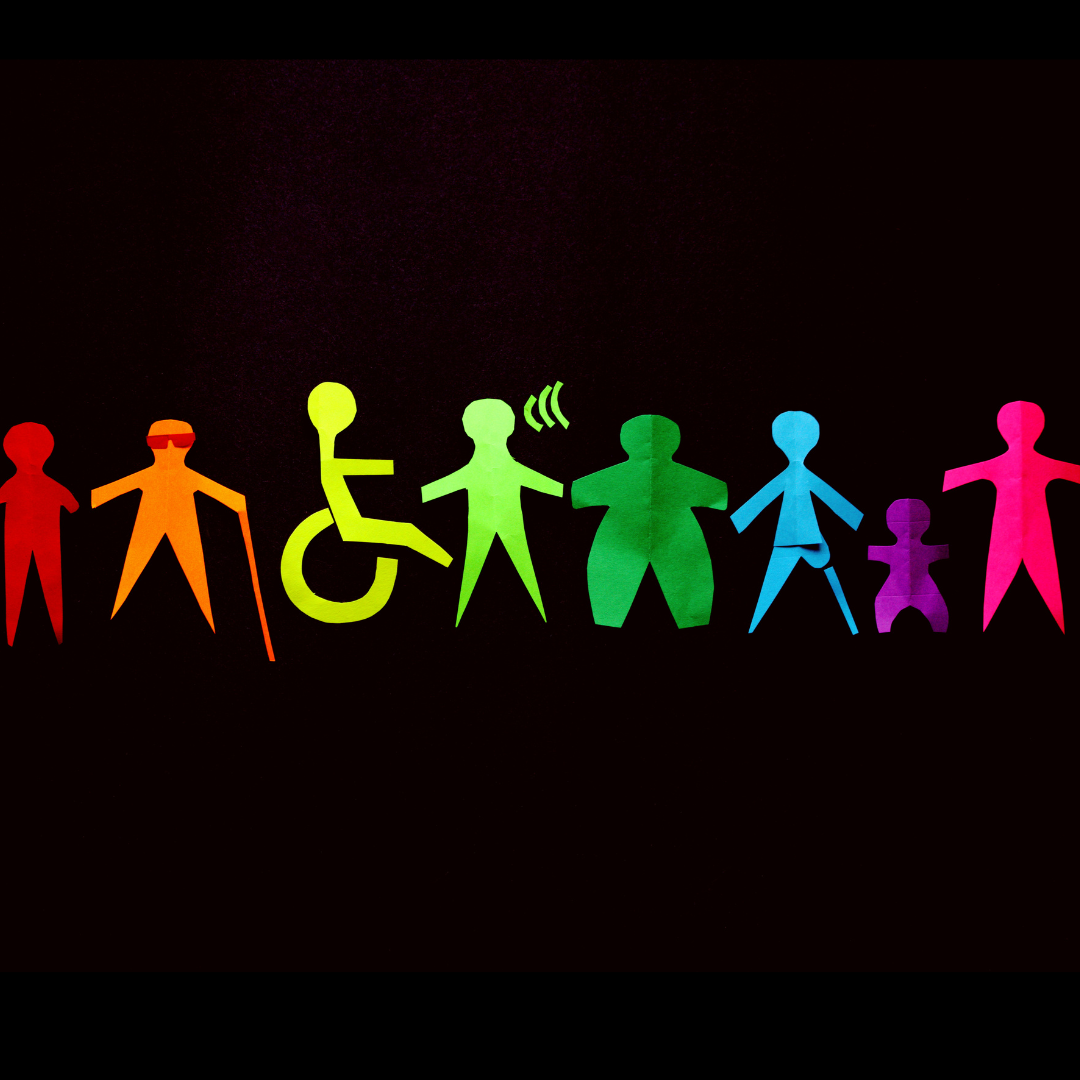
Accessibility As a Priority: A Perspective From the DCI  

January 24, 2024 by Zoe Moseley

Inclusive colorful image of human silhouettes

Zoe Moseley ’26

At a Deliberative Citizenship Fellows meeting in November, we discussed an article published by Colorado State University’s Center for Public Deliberation titled, “Inclusion Around the Cycle.” This reading aligned well with what I was doing at Davidson that week, helping the Davidson Disability Alliance lead a conversation about event accessibility with student organizations. The argument the reading was trying to refute was that all deliberations are necessarily and equally exclusionary. Power dynamics and certain people speaking more, or more freely than others, are two examples of ways deliberations may not be completely inclusive.

“Inclusion Around the Cycle” started by discussing two types of exclusion, external and internal. External exclusion was described as the fact that some voices will not be present for the event.  Internal exclusion, however, is the idea that non-dominant voices may be overlooked during the event. The article emphasizes that strategies to reach sufficient inclusion are entirely possible, especially when implemented before, during, and after events.

I would say the idea that not every voice at a deliberation could be present or heard felt very disappointing throughout working with the DCI. However, I did not know how to fix it. As someone who works towards access and inclusion on campus, I was confused about why I could not think of feasible ways to bring this perspective to the DCI. I was therefore excited to read, “Deliberative practitioners should not allow the perfect to be the enemy of the good in public processes” (Maldonado, 6).

The article opened my eyes to the opportunity that deliberation presents us with on the subject of inclusivity, which is improving every time. I was surprised I had not viewed it this way before, as this was advice I gave to student organization leaders regarding accessibility. To me, accessibility, making resources available to all people, is the key to inclusion. During the meeting, we stressed that full accessibility is almost impossible since disability and need vary drastically. The article said the same thing about inclusion: “It is important to note that there is no way to ensure complete inclusivity” (Maldonado, 6).

The article touched on inclusivity efforts I realized the DCI was already making, such as offering almost all events via Zoom, training facilitators to make sure every voice gets a chance to speak, and asking for constant feedback. I tried to emphasize more minor things within my D Team when it came to inclusion, such as continuously asking if everyone could hear me, ensuring that when participants arrived, the heavy door was propped open, and zooming one participant in when they were ill. By making it clear that we care about access, I hope participants feel more comfortable to show ways we can improve. After reading this article, I have ideas for more efforts I can make next semester, taking to heart the idea of improving each time. For example, I’d like to ask participants throughout the semester if there are aspects of our meeting that may improve inclusivity and incorporate their ideas on the matter.

I am curious to see what those who argue that deliberations are not inclusive would say to Maldonado’s argument that while it is impossible to create a “perfectly inclusive forum,” we should nonetheless strive for sufficient inclusion. I appreciate the optimism of the Center for Public Deliberation on this front and hope other deliberative organizations put inclusion at the forefront of their discussion. I believe that the values of deliberation align well with the idea of inclusivity: respecting every voice, discussing differences, and assuming the best intentions.

Filed Under: Blog Posts, Fellow Posts Tagged With: D Teams, deliberation, facilitation

The DCI’s Spring Kickoff Party – Biggest Turnout Ever!

January 24, 2024 by Graham Bullock

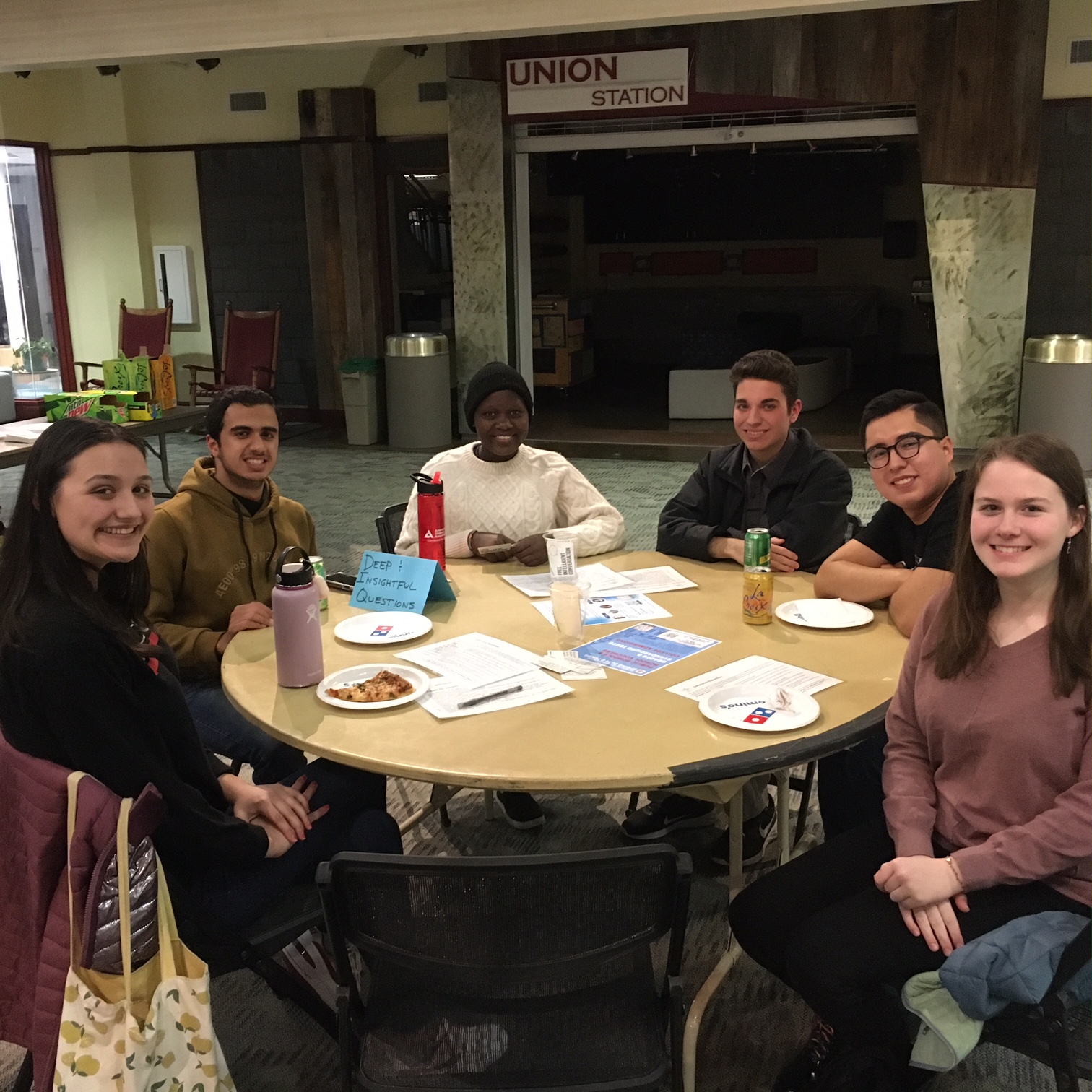
Davidson students gathering at a round table discussion

This past Friday, the DCI started off the new year with some fantastic energy when it held its Spring Semester Kickoff Party. Over 50 people came out to enjoy some pizza and conversation about a wide range of topics. They included Davidson students, staff, faculty, alumni, and community members, some of whom had never heard of the DCI and others who were DCI veterans.

Attendees filled up tables in the College Union’s Atrium that were dedicated to different topics – Davidson Issues, Technology and Social Media Issues, International Issues, US Politics, Economic Issues, and more. DCI Fellows facilitated informal discussions of questions related to each table’s topics, aided by copies of the DCI’s Conversation Agreements and Deliberative Dispositions that were available as placemats at each table. For the adventurous, there were a couple of “mystery tables” where questions from a wide range of domains were discussed.

Every 15 minutes or so, the DCI’s Faculty Director and Assistant Director spoke briefly about upcoming DCI events and offered some deliberative tips to the attendees. At each interlude, one attendee was randomly selected to win a prize from the DCI for attending the event. And then the conversations continued! Participants could stay at their table or switch between tables to try out different topics.

It was a great way for students to connect with each other as well as engage with faculty, staff, and community members. And everyone got to experience a deeper and more respectful kind of conversation than they might normally have in our highly polarized and politically fragmented society. It provided a window into what the DCI is focused on – building democracy, one conversation at a time – and a gateway to other DCI programs, including our Spring D Teams on Education Issues (registration deadline January 25) and upcoming Deliberative Forum on AI (registration deadline January 31).

Filed Under: Blog Posts, Events

  • « Go to Previous Page
  • Page 1
  • Interim pages omitted …
  • Page 12
  • Page 13
  • Page 14
  • Page 15
  • Page 16
  • Interim pages omitted …
  • Page 38
  • Go to Next Page »

Footer

Blog Post Categories

  • Announcements
  • Blog Posts
  • DCI Posts
  • Events
  • Faculty Posts
  • Fellow Posts
Image of a compass superimposed by the text "Deliberative Citizenship Initiative" and "Davidson College." Clicking on this image leads to the Initiative page.

Recent DCI Blog Posts

  • We Tried to Fix Jubilee’s “Middle Ground” – Here’s How It Went
  • A Case for Deliberation in the Natural Sciences
  • Welcoming New Staff to the DCI and DCN
  • Facebook
  • Twitter
  • Instagram
  • LinkedIn


Copyright © 2026 · Infinity Pro on Genesis Framework · WordPress · Log in