• Skip to main content
  • Skip to footer

Deliberative Citizenship Initiative

Building Democracy One Conversation at a Time

  • The Initiative
    • Programs
      • Deliberation Across the Curriculum
      • Deliberation on Campus
      • Deliberation in the Community
      • Research on Deliberation
    • Motivations
      • Why Deliberative Citizenship?
      • Why Davidson? Why Now?
    • Who’s Involved?
      • DCI Fellows Cohorts
        • 2025-2026 Fellows
        • 2024-2025 Fellows
        • 2023-2024 Fellows
        • 2022-2023 Fellows
        • 2021-2022 Fellows
        • 2020-2021 Fellows
      • DeeP Collaborative Cohorts
        • 2024-2025 DeeP Collaborative Faculty
        • 2023-2024 DeeP Collaborative Faculty
      • Advisory Council
    • History
      • What Sparked the Initiative?
    • Key Deliberative Dispositions
    • Frequently Asked Questions (FAQ)
    • Annual Report
  • Get Involved!
    • Participate in a Forum
    • Join a D Team
    • Become a Fellow
    • Take Courses
    • Get Training
    • Come to Guest Lectures
  • Events
    • Upcoming Events
      • 250th Anniversary Deliberative Forum Series on American Values
    • Past Events
  • Connections
    • The Deliberative Citizen: The DCI’s Monthly Newsletter
    • Efforts on Campus
    • Efforts in the Community
    • Efforts Elsewhere
    • Readings and Resources
      • DCI-Published Guides
      • DCI Guide to One-on-One Conversations
      • How to Disagree
      • Demonstration of Facilitation Styles
      • Deliberative Pedagogy Mini-Course
    • How We Can Help: DCI’s LET’S DELIBERATE! Partnership Opportunities
    • DCI in the News
  • DCI Blog Posts
    • Recent Blog Posts
    • All Blog Posts

Blog Posts

A Night of Eating Ice Cream and Deliberating GOATs

March 28, 2024 by Sara Copic

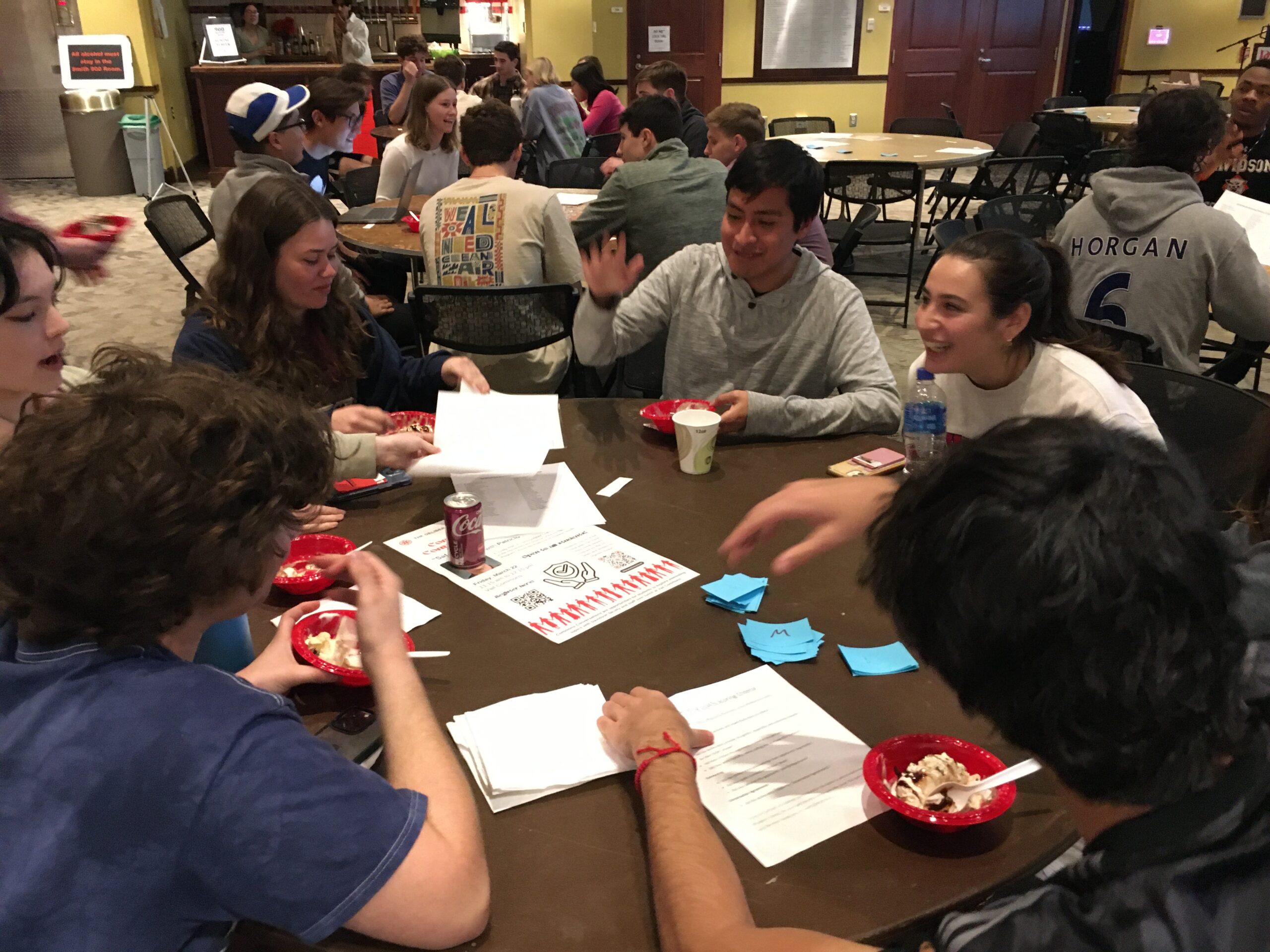
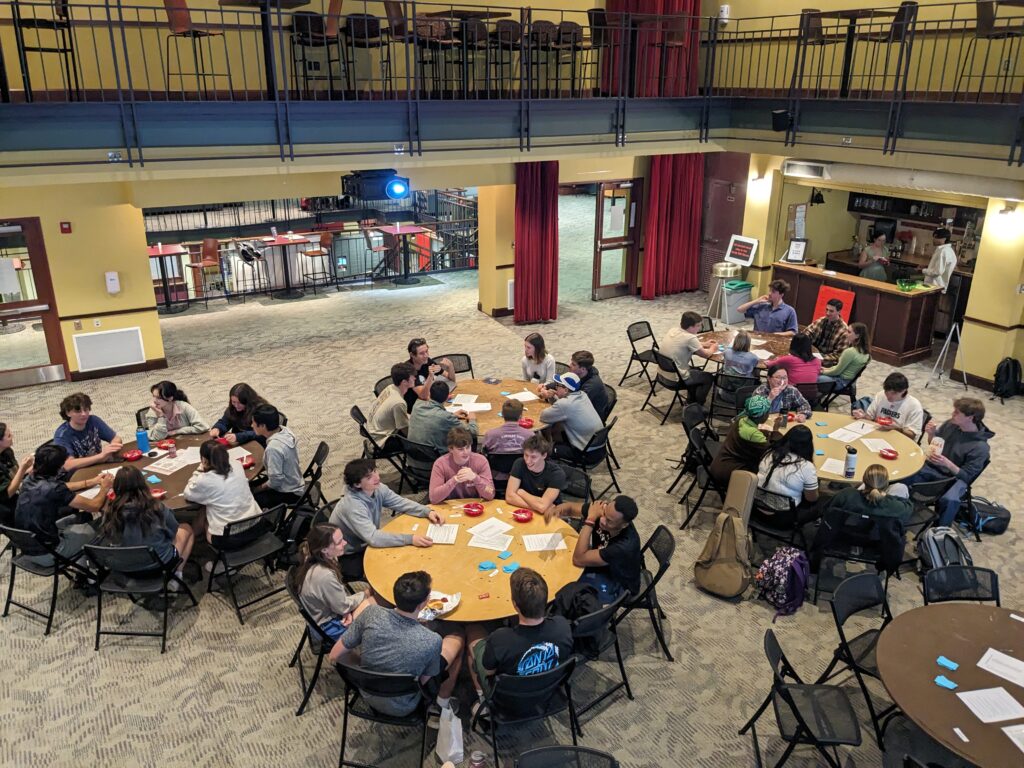
Davidson students in 900 room at 9

On March 12th, Davidson students gathered in the 900 Room at 9:00 to deliberate about the greatest of all time in music, movies, and Davidson life! The event was hosted by the DCI Fellows, and led by Senior Fellows LJ Phillips ’25 and Body Bassett ’25 and Fellows Logan Jain ’26 and Emre Guvenilir ’25.

The event was organized as a competitive deliberative event, and students enjoyed presenting competing arguments about what the best dorms at Davidson are, who the greatest basketball players of all time are, and all manner of similarly lighthearted but contentious topics. There were ice cream sundaes and premium prizes like DCI-themed Stanley cups. All in all the event was a great success, as it introduced students to the practices and principles of deliberation in a fun and engaging atmosphere.

This was the DCI’s second Deliberating GOATs event, and it is quickly becoming a campus tradition. We hope to see you next spring!
Filed Under: Blog Posts, Events, Fellow Posts Tagged With: DCI, deliberation, discourse, facilitation

Spring 2024 Deliberative Pedagogy (DeeP) Panel & Lunch

March 28, 2024 by Graham Bullock

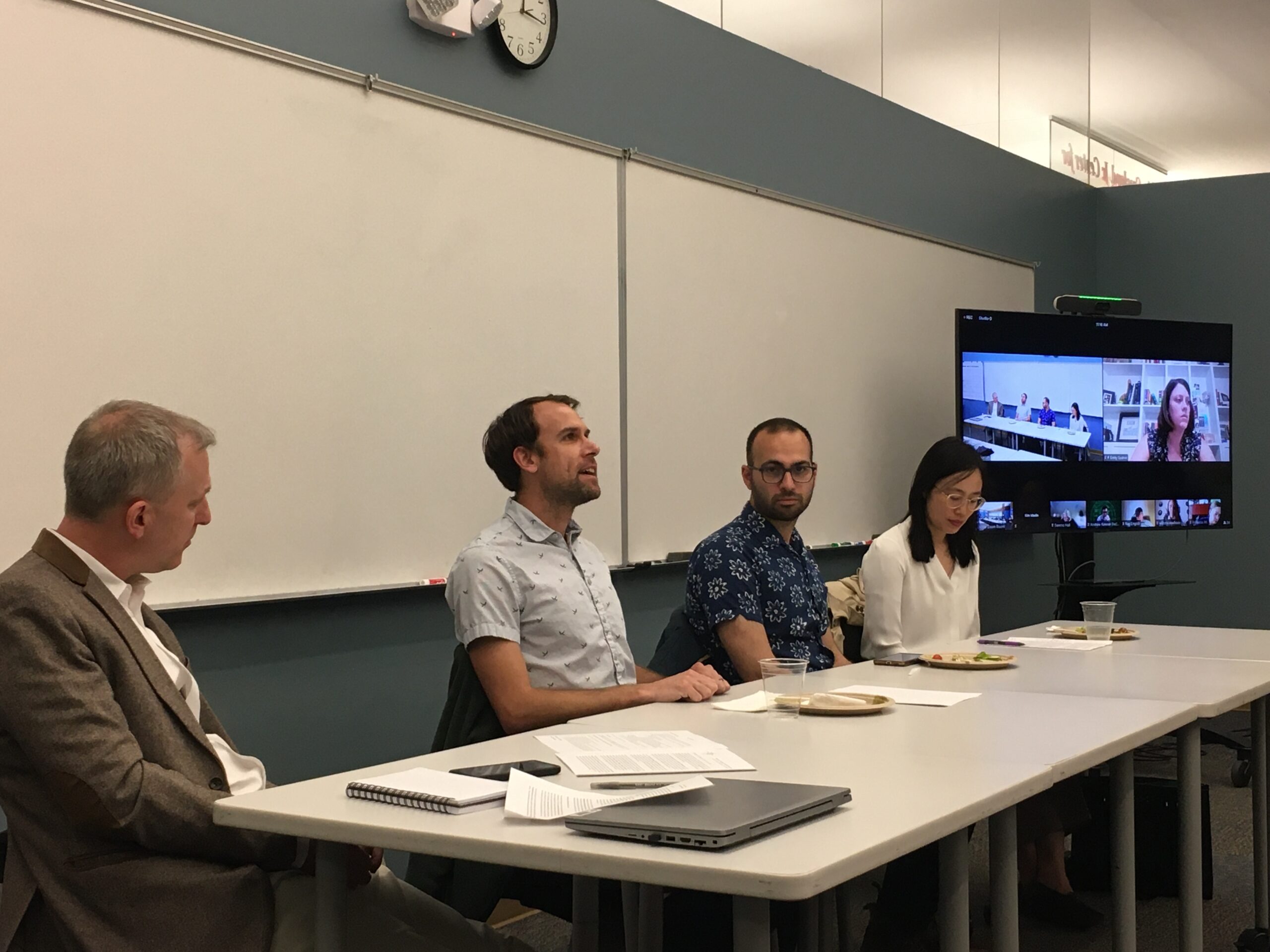
DeeP Faculty Panel

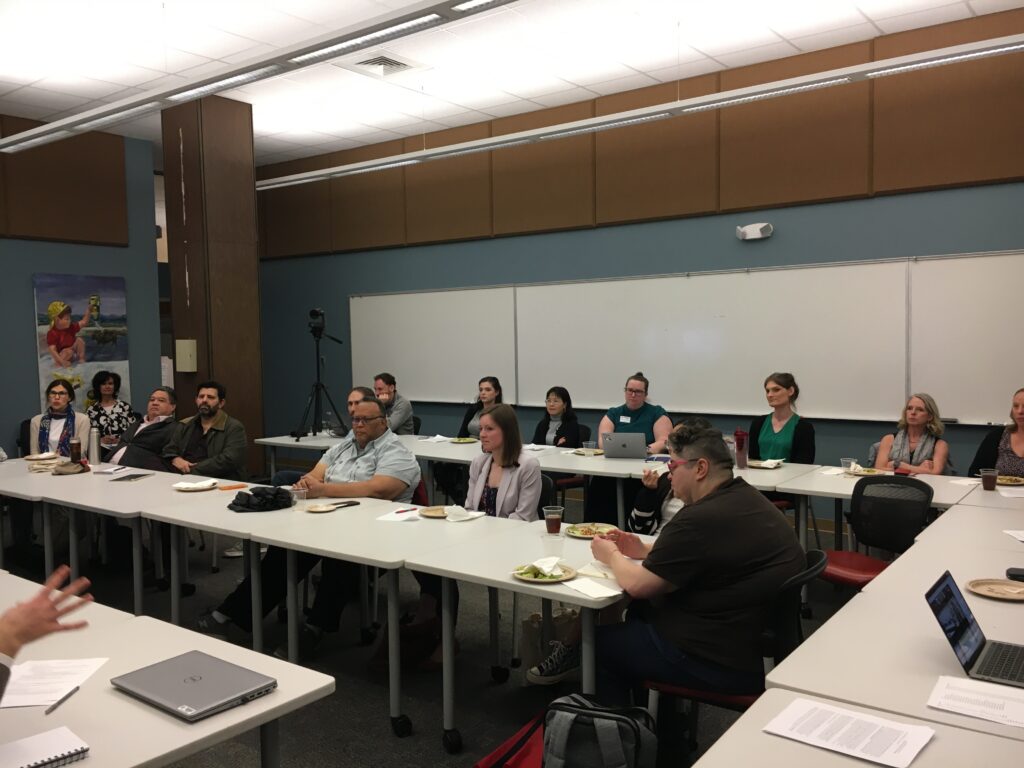
On Friday, March 15th, faculty from Davidson and beyond gathered to learn from Professors Emily Sydnor (Political Science, Southwestern University), Rachel Pang (Religious Studies, Davidson College), Bassil El-Zaatari (Chemistry, Davidson College), and Anthony Kuchera (Physics, Davidson College) about how to integrate deliberative practices into their classrooms over lunch. The panelists spoke about best practices for hosting deliberations in the classroom, facilitating deliberation, providing feedback, and the improved learning outcomes they found in the courses where they had started to practice deliberative pedagogy.

For example, Professor El-Zaatari encouraged STEM faculty not to shy away from deliberative pedagogy in their courses. And Professor Pang spoke about increased student engagement and how students felt an increased sense of ownership over the course in her deliberative religious studies course. All in all, participants walked away with new knowledge about how to update their teaching practice with deliberative practices.

The event highlighted the work that all four professors did as members of the DCI’s Deliberative Pedagogy (DeeP) Collaborative, which is a year-long, paid fellowship program that helps faculty embed deliberation about contentious topics into their courses related to their content. Attendees of the panel and lunch learned about how professors from very different disciplines can update their teaching practice with deliberative practices.

Graham Bullock, Faculty Director of the DCI, moderated the panel and announced that the applications to join the 2024-25 cohort of the Deliberative Pedagogy (DeeP) Collaborative are now being accepted. Review of applications will begin on April 22 and will continue until all positions are filled. If participating in the Collaborative sounds intriguing to you, learn more and apply to be a Faculty Fellow in next year’s Deliberative Pedagogy (DeeP) Collaborative here.

You can learn more about the Collaborative and hear what the panelists had to say yourself by checking out our recording of the panel discussion below…

Filed Under: Blog Posts, Events, Faculty Posts Tagged With: DCI, deliberation, discourse

Commons Conversations Reflection: Discussing Potential U.S. Intervention in Taiwan with Dr. Rigger

March 18, 2024 by Zoe Moseley

8.5×11-CC-w-Shelley-Rigger-with-Graphics-1.png

Zoe Moseley ’26 (DCI Fellow)

On Friday February 23rd, ten lucky Davidson students signed up to spend their lunch hour deliberating about international politics. The topic discussed for an hour was the United States’ role in intervening should China take military action in Taiwan. Davidson is lucky to have one of the leading experts on Taiwanese politics, Dr. Shelley Rigger, who was generous enough to answer students’ questions. The conversation began with DCI Fellow Florian Moser setting the expectations of the conversation. He encouraged everyone in the room to introduce themselves before they spoke. This led to participants being able to learn who was in the room, which ranged from students across different fields of study and from each class year. It also allowed students to express why they felt curious about this topic, or why they might have an interesting perspective to share.

Dr. Rigger prompted the conversation by introducing the relationship between Taiwan and China. The first question that came after this was, “Well, what could the U.S. even do?” It was fascinating to see students discuss potential outcomes. We spoke about economic and social consequences. After most people finished eating students had no hesitation to jump in. Two students came in that had interned in Taiwan for a summer, and they recounted stories from their experience. One student said that she was in Taiwan the day Nancy Pelosi visited, and Dr. Rigger and other students who understood the context of her visit laughed.

A few students chose to ask questions to the entire group rather than state their opinion. This led to more fruitful conversation and to some healthy disagreements. The deliberation ended with more questions asked than in the D Teams that I have facilitated, but regardless, Dr. Rigger expressed how much she enjoyed the discussion. And as I was putting away my dishes, I heard students continuing to deliberate after the event was over. It was a great way to launch our first Commons Conversation of the semester – stay tuned for more about our future ones coming soon!

Filed Under: Blog Posts, Fellow Posts Tagged With: DCI, deliberation, democracy, discourse, facilitation, politics

Bridging Divides and Overcoming Polarization: The Power of Deliberative Practice

March 14, 2024 by Florian Moser

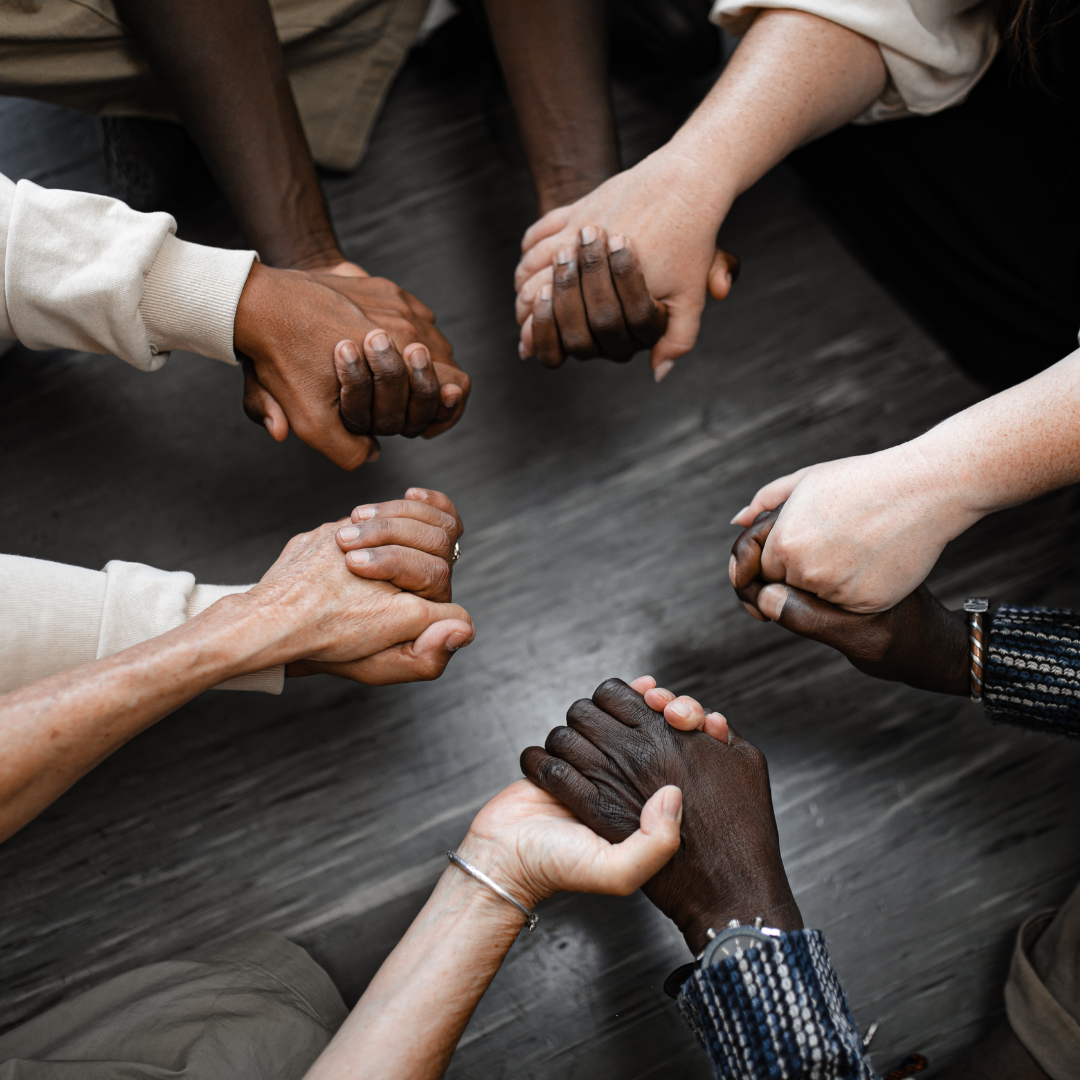
People of different races holding hands in a circle

Flo Moser ’26 (DCI Fellow)

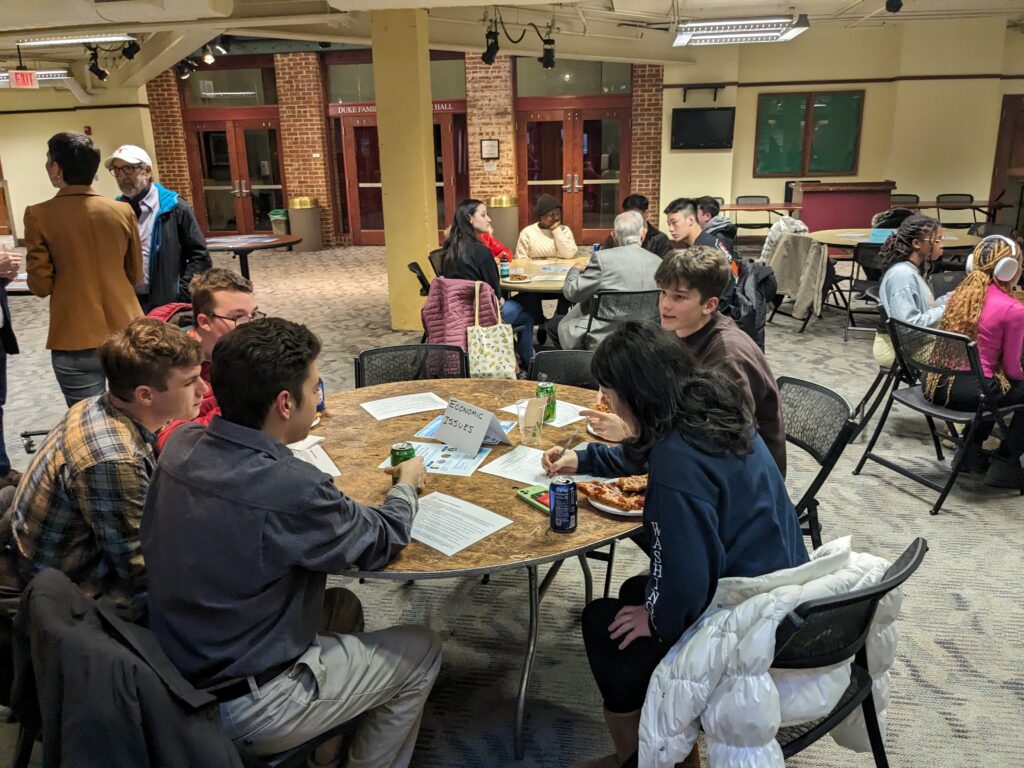
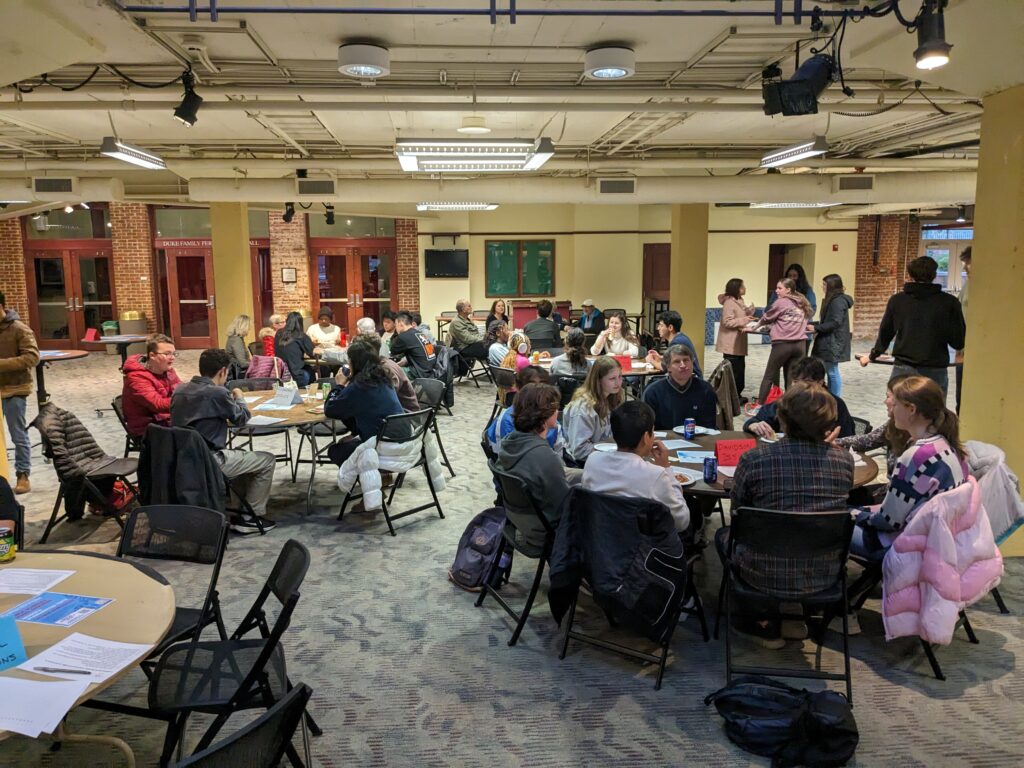
On Friday, January 19, the Deliberative Citizenship organized a Semester Kickoff Party to start the semester by engaging in deliberative practice. In addition to the table with the pizzas and drinks, many tables were assigned to different subject areas. For example, there were tables on international topics, economics, American politics, technology, etc. On each table, there were cards with conversation topics, which were then discussed by the participants under the guidance of the deliberative facilitators. For instance, one card from the economics table asked whether the minimum wage should be lower or higher. Usually, topics like this are said to polarize and divide society. On this day, however, they brought people together.

In today’s increasingly polarized society, finding common ground and fostering understanding between opposing viewpoints has become a formidable challenge. The social media echo chambers and the divisive rhetoric in public discourse often lead to a widening gap between individuals and groups. However, there is a powerful tool that has the potential to mend these fractures and build bridges of understanding: deliberative practice.

Polarization in society arises from the deepening divisions between individuals with differing opinions, values, and beliefs. This phenomenon is fueled by a need for more meaningful communication and a growing unwillingness to engage with perspectives that differ from our own. In such an environment, breaking down these barriers and creating spaces for constructive dialogue is crucial.

Deliberative practice involves intentionally and thoughtfully discussing issues among individuals with diverse perspectives. It goes beyond mere debate, emphasizing active listening, respectful engagement, and a commitment to finding common ground. This process encourages participants to examine their beliefs and critically understand the nuances of opposing viewpoints.

One of the critical elements of deliberative practice is the art of listening. In a society where people are often quick to express their opinions without truly hearing others, fostering a culture of active listening is transformative. When individuals are willing to listen, they open themselves to understanding the motivations, fears, and aspirations underlying diverse perspectives. This empathetic approach is a cornerstone of overcoming polarization.

Deliberation practice taps into a fundamental human desire—the urge to be part of the solution. Many people are growing weary of the toxic environment created by polarization and yearn for constructive ways to contribute to positive change. Deliberation provides an avenue for individuals to actively engage in shaping solutions rather than perpetuating the cycle of division.

One of the main drivers of polarization is confirmation bias—the tendency to seek out information that confirms our pre-existing beliefs. Deliberative practices encourage participants to confront and challenge their biases by exposing them to alternative viewpoints. This process helps individuals move beyond their comfort zones and fosters a more comprehensive understanding of complex issues.

In a world marked by polarization, deliberation emerges as a powerful antidote. By promoting active listening, a commitment to understanding diverse perspectives, and a shared sense of responsibility for solutions, deliberation can bridge divides and cultivate a culture of unity. As the many participants at the DCI Kickoff Party showed, people are willing to listen to others’ opinions, even on the most polarized topics, because they strive to be part of the solution. This urge we have to be part of the solution, combined with a willingness to engage in respectful dialogue, can create a more harmonious and inclusive society. As we embrace deliberation, we take a significant step towards healing the fractures in our communities and building a future grounded in understanding and collaboration.

DCI Spring Semester Kickoff Party

Filed Under: Blog Posts, Fellow Posts Tagged With: DCI, debate, deliberation, democracy, discourse, politics

When Deliberation Fails

February 29, 2024 by Emre Guvenilir

Game paws collected on one side with one outlier

Emre Guvenilir ’25 (DCI Fellow)

As a trained deliberation facilitator, my role is often central to the success or detriment of a deliberation. The skills I employ as well as the framework set up by the Deliberative Citizenship Initiative (DCI) allow deliberators to navigate the difficult topics chosen. Two of these frameworks are the conversation agreements and deliberative dispositions, which set the expectations for those who enter in a deliberation to adhere to. These standards allow all participants and the facilitator to feel comfortable and welcome in the environment.

Our deliberative dispositions include ideas like egalitarianism, which is a commitment to the involvement of each participant. They also include the empathy, which asks deliberators to “treat remarks made by others with openness and compassion, and approach disagreements with generosity and good will.” But do these frameworks always ensure that a deliberation goes well? While at a glance these seem obvious, it can be difficult to adhere to every disposition when someone feels that a vital part of their identity is at stake in the conversation.

For a deliberation to be successful, both deliberators and the facilitator must feel welcome and engaged. Such success does not always mean that ideas have been transcended and the participants have found a new way to view an issue. Rather, success could mean that the facilitator has enabled the deliberators to carefully listen to another perspective that challenged their views, even if these views did not change.

Sometimes we do not achieve such success in our deliberations, and the challenge is to figure out how we can do better next time. I recently facilitated a deliberation where the topic was important to all the deliberators, yet at the end I felt I had failed as a facilitator because, from my view, we had not been able to maintain our deliberative dispositions or our conversation agreements. Surprisingly, it wasn’t because the conversation was rife with immense disagreement. A consensus had formed in the group, and I pointed it out to the deliberators. Part of the facilitator’s job is to introduce views that have not been expressed in the conversation, and to do so in a way that makes clear those views are not necessarily their own, but views that many hold just as closely as the participants hold their views.

This is where I believe the deliberation failed. I did not succeed in enabling the deliberators to productively engage with perspectives different from their own. When addressing these views that were not represented in the group, the deliberators oriented their responses towards me rather than amongst themselves. Because they believed those views were at odds with their fundamental beliefs, the deliberation became agitated and a clear tension arose in the conversation.

What could I have done differently? Looking back on this experience now, I would have paused the deliberation and created a “half time” where everyone can get up and move around, get some water, and detach from the tension rather than attempting to power through it when we were no longer holding ourselves to the conversation agreements.

Although it can be difficult to do so in the moment, taking a break can allow each participant and the facilitator to reflect and come back with a new start. Returning from a break, I could have asked more questions about the why. What makes these issues so important to you, personally? I believe that if I had done a better job at asking questions and guiding the conversation, the deliberation might have turned a corner. The pessimistic part of me wants to say, “No, that deliberation was never going to succeed in the environment it was in.” But if I am going to become a better facilitator, and become more open-minded myself, I cannot listen to the pessimist. To walk away from a deliberation without reflecting and trying to improve undermines the exact reason we deliberate in the first place: to reflect on our own stances and ways, and to refine those skills, those beliefs, and all the things that can help make us more complete and better human beings.

Filed Under: Blog Posts, Fellow Posts Tagged With: deliberation, democracy, discourse, facilitation

  • « Go to Previous Page
  • Page 1
  • Interim pages omitted …
  • Page 11
  • Page 12
  • Page 13
  • Page 14
  • Page 15
  • Interim pages omitted …
  • Page 38
  • Go to Next Page »

Footer

Blog Post Categories

  • Announcements
  • Blog Posts
  • DCI Posts
  • Events
  • Faculty Posts
  • Fellow Posts
Image of a compass superimposed by the text "Deliberative Citizenship Initiative" and "Davidson College." Clicking on this image leads to the Initiative page.

Recent DCI Blog Posts

  • We Tried to Fix Jubilee’s “Middle Ground” – Here’s How It Went
  • A Case for Deliberation in the Natural Sciences
  • Welcoming New Staff to the DCI and DCN
  • Facebook
  • Twitter
  • Instagram
  • LinkedIn


Copyright © 2026 · Infinity Pro on Genesis Framework · WordPress · Log in