• Skip to main content
  • Skip to footer

Deliberative Citizenship Initiative

Building Democracy One Conversation at a Time

  • The Initiative
    • Programs
      • Deliberation Across the Curriculum
      • Deliberation on Campus
      • Deliberation in the Community
      • Research on Deliberation
    • Motivations
      • Why Deliberative Citizenship?
      • Why Davidson? Why Now?
    • Who’s Involved?
      • DCI Fellows Cohorts
        • 2025-2026 Fellows
        • 2024-2025 Fellows
        • 2023-2024 Fellows
        • 2022-2023 Fellows
        • 2021-2022 Fellows
        • 2020-2021 Fellows
      • DeeP Collaborative Cohorts
        • 2024-2025 DeeP Collaborative Faculty
        • 2023-2024 DeeP Collaborative Faculty
      • Advisory Council
    • History
      • What Sparked the Initiative?
    • Key Deliberative Dispositions
    • Frequently Asked Questions (FAQ)
    • Annual Report
  • Get Involved!
    • Participate in a Forum
    • Join a D Team
    • Become a Fellow
    • Take Courses
    • Get Training
    • Come to Guest Lectures
  • Events
    • Upcoming Events
      • 250th Anniversary Deliberative Forum Series on American Values
    • Past Events
  • Connections
    • The Deliberative Citizen: The DCI’s Monthly Newsletter
    • Efforts on Campus
    • Efforts in the Community
    • Efforts Elsewhere
    • Readings and Resources
      • DCI-Published Guides
      • DCI Guide to One-on-One Conversations
      • How to Disagree
      • Demonstration of Facilitation Styles
      • Deliberative Pedagogy Mini-Course
    • How We Can Help: DCI’s LET’S DELIBERATE! Partnership Opportunities
    • DCI in the News
  • DCI Blog Posts
    • Recent Blog Posts
    • All Blog Posts

Stephen Walker

Event Re-Cap: Campus Conversation on Civic Discourse in the Wake of Political Violence

February 4, 2026 by Stephen Walker

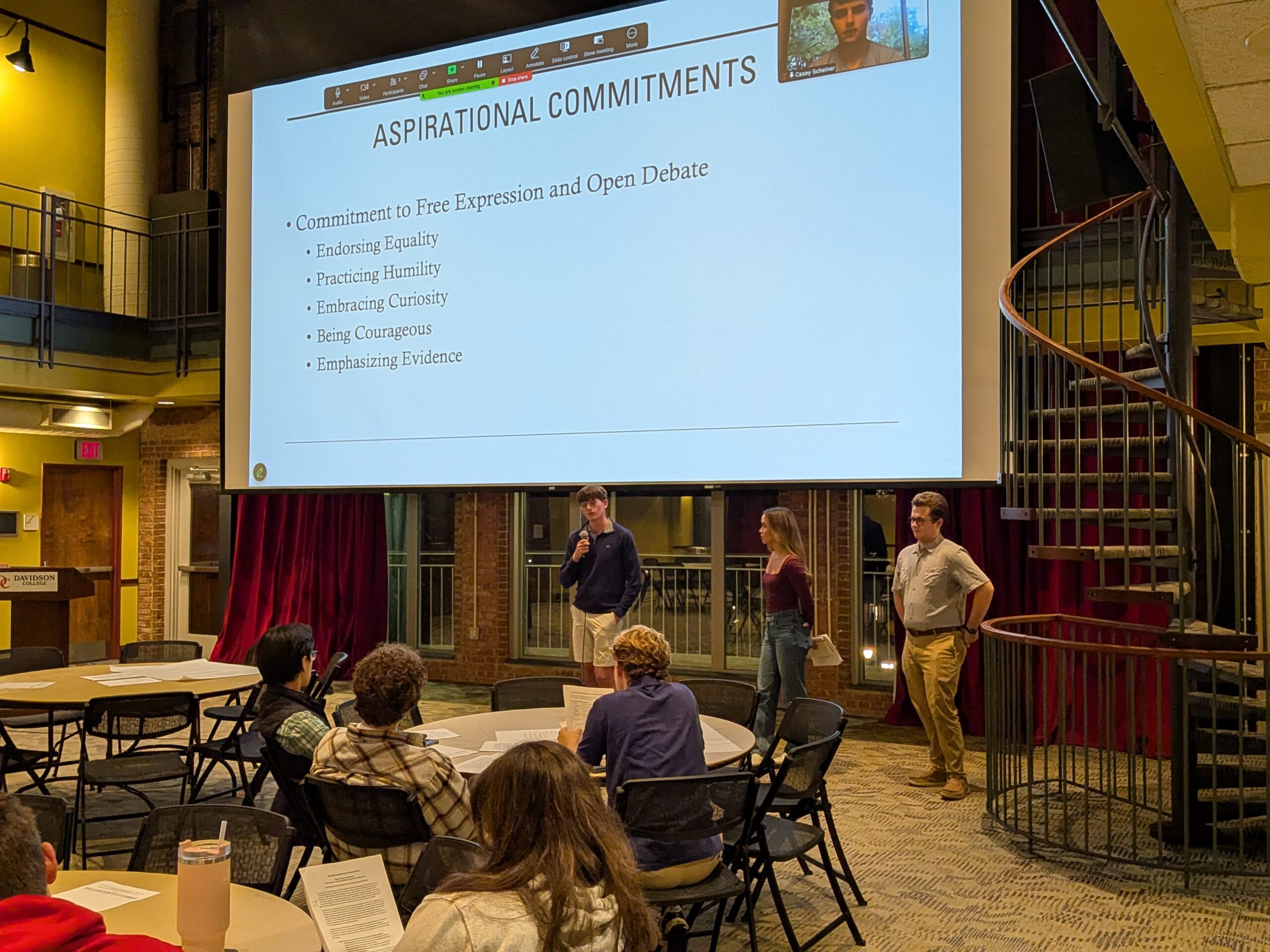
Students presenting in the 900 Room.

By Stephen Walker ’26 (DCI Senior Fellow and Co-Convener)

This Fall, Deliberative Citizenship Initiative Fellows Saeran Daewar ‘28 and Oliver Genovese ’28 and Senior Fellows Casey Scheiner ‘28 and Stephen Walker ‘26 worked with the guidance of DCI Director Graham Bullock and Professor Ike Baliey to host a Campus Conversation entitled “Civic Discourse in the Wake of Political Violence: How Can We Foster the Campus Culture We Want to Have?” on Thursday, November 20th.

The event builds on the work that they have been doing together this semester as they’ve thought about how Davidson can best respond to the assassination of Charlie Kirk and rising political violence in general. The work was motivated by the interest from students in following up on an opinion-editorial in The Davidsonian, in which the large political organizations on Davidson’s campus came together to condemn all forms of political violence.

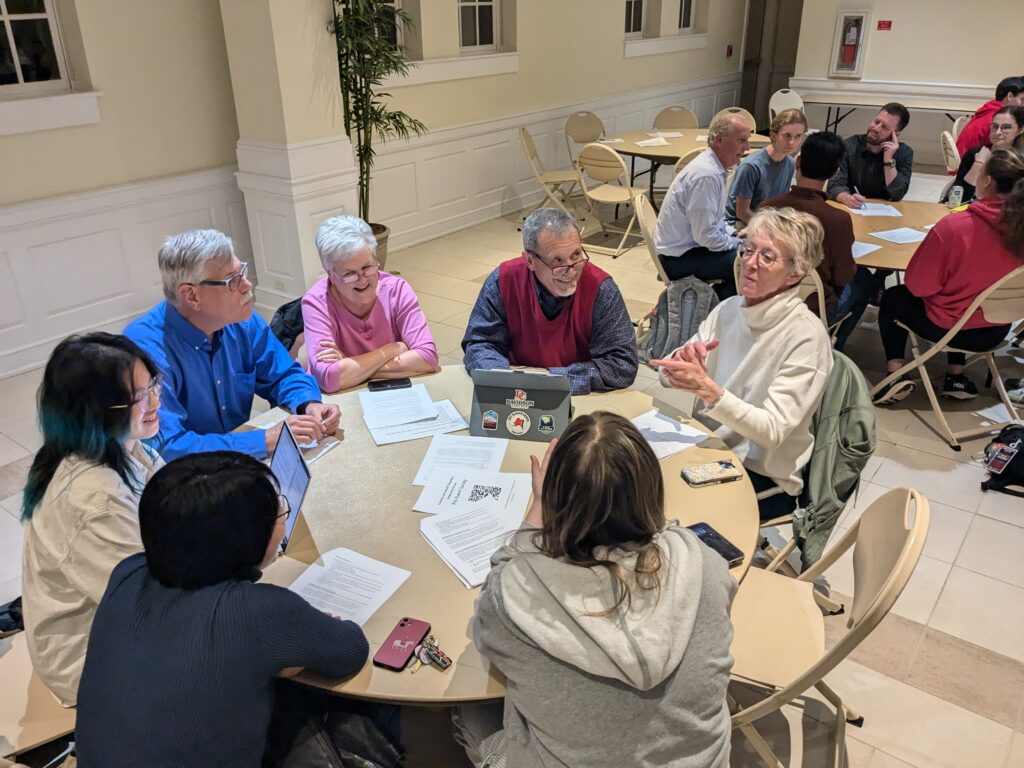
Student participants, many of whom represented political organizations and student publications on campus, were treated to snacks and ice cream in the 900 Room of the College Union as the student fellows discussed the pertinent issues and the task of moving forward from it as a campus community.
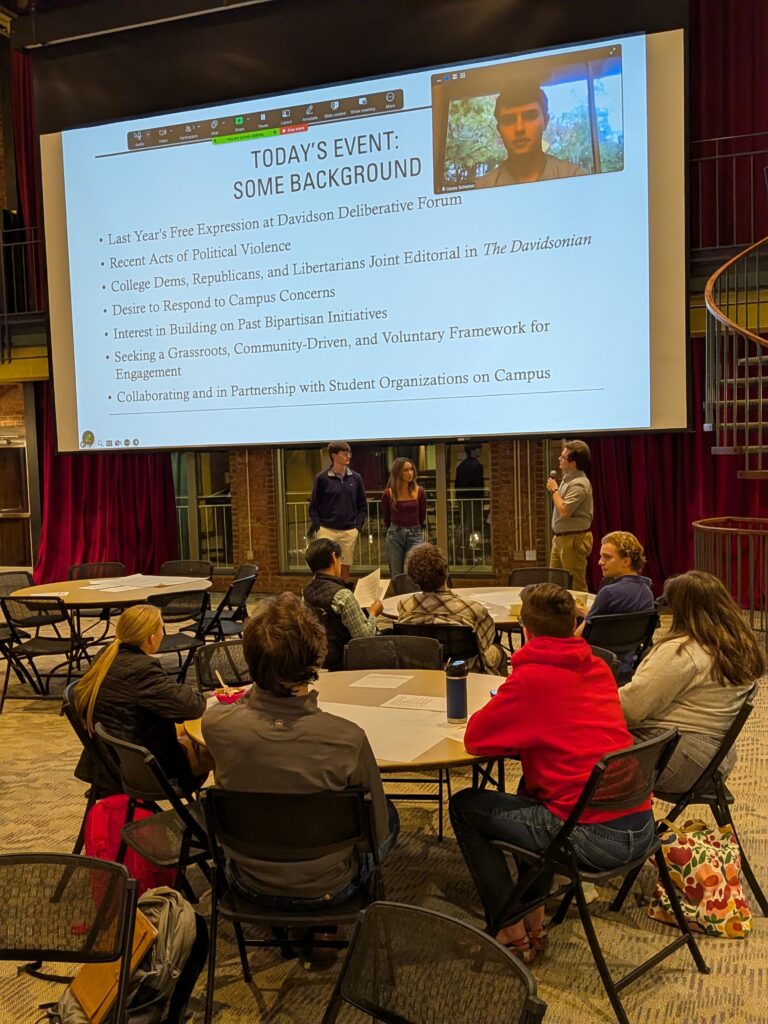
The fellows began the presentation by walking attendees through relevant background details concerning free expression and campus discourse at Davidson, so all participants had some context before entering into the conversation portion of the event. This included strategies for maintaining a healthy political culture and past work to determine how that is best done at Davidson.

The Fellows also introduced themselves and their work to produce a list of aspirational commitments meant to bring community groups together around a set of community standards for engaging in public discourse. These standards were framed as rooted in the spirit of students’ shared decision to attend Davidson and agree to uphold an Honor Code and the college’s statement of purpose at all times.

Specific core components of the aspirational commitments document included a commitment to free expression and open debate, the inherent worth and dignity of all people, and organizing opportunities for respectful engagement across the political spectrum. The fellows then discussed a selection of passages from the College Constitution pertaining to free expression and rights of students, as well as the different terms at the heart of the commitment and the process by which students determine definitions for those terms.

The commitments document was designed to serve as a framework to start a conversation between participants, who were encouraged to discuss what they liked and thought should be added or changed in the document itself. The goal is to create a document truly shaped by the community it is designed to represent.

The participants were then asked to discuss the following questions to determine what their priorities were and how they would amend, if at all, the commitments document:

  • How can we foster civic discourse in the wake of political violence?
  • What should civic discourse look like on campus?
  • What value(s) or aspirational commitment(s) are most important to you in the context of civil discourse?

After sharing with other participants seated next to them and writing out their answers on a whiteboard, students shared their answers with the full group so everybody could see what their views on the three questions were.

The conversation then transitioned to several rounds of scenarios related to controversial expressions of speech. Participants were asked to discuss hypothetical situations and rank them on a scale ranging from 5 for maximum allowance to 1 for the least permissible forms of expression. Students were asked to contemplate the scenarios and discuss what specific facts influenced their ratings.

Then, students were asked to share with the full group before moving on to another round of hypotheticals. Each one was designed to demonstrate the nuance of a particular situation and the importance of a variety of relevant factors in determining whether a certain behavior was acceptable or not. It pointed towards the value of a document like the set of aspirational commitments that can serve as a point of reference in the future.

Such determinations are difficult, and the attending students showed careful consideration for the specifics of the document, the scenarios, and the issue of political violence at large. Being able to practice their analytical skills while contributing to a community document was a meaningful experience for the presenting fellows and participants in the audience. The conversations also provided important insights that will inform future revisions of the aspirational commitments document as it is further developed. Stay tuned for more updates coming soon!
Filed Under: Events

DCI Fellows Host Discussions after Senators Klobuchar and Tillis Conversation

November 3, 2025 by Stephen Walker

By Stephen Walker ’26 (Senior Fellow and DCI Co-Convener)

Following the inaugural Institute for Public Good October 13 event featuring a conversation between Senators Amy Klobachar, Thom Tillis, and Davidson College President Doug Hicks, Deliberative Citizenship Fellows hosted a discussion for those in attendance at the talk to debrief and continue pondering the nature of the “public good.” In their remarks, both President Hicks and Chris Marsicano, the Director of the Institute for Public Good, encouraged audience members to join the discussion after the event.

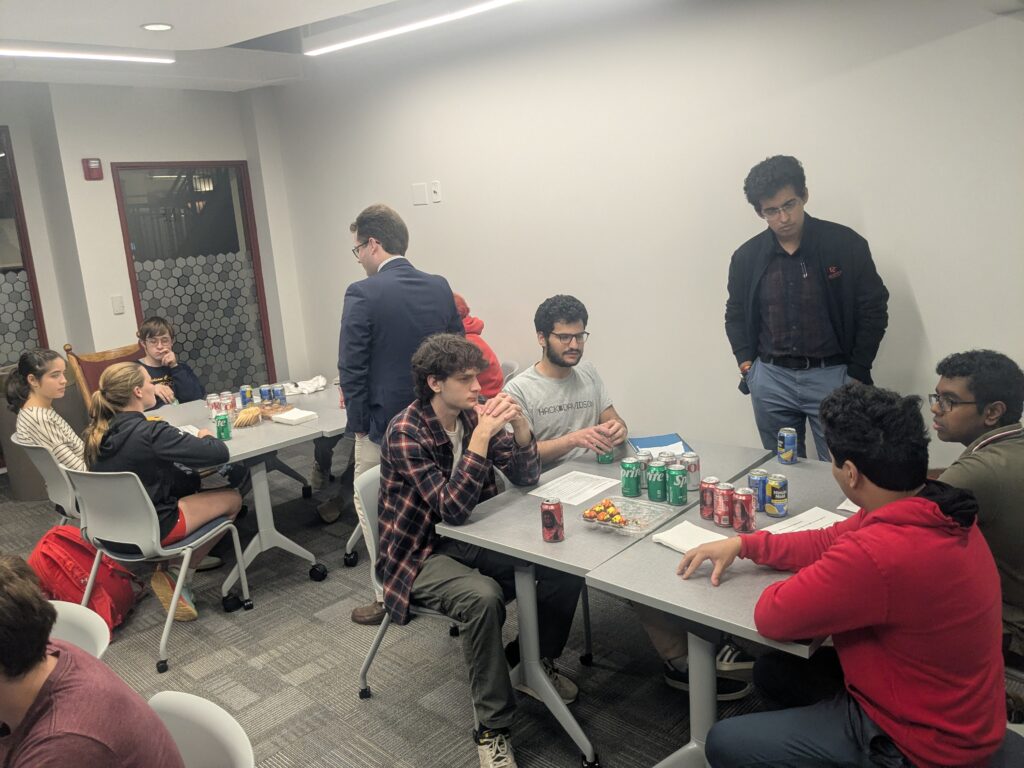
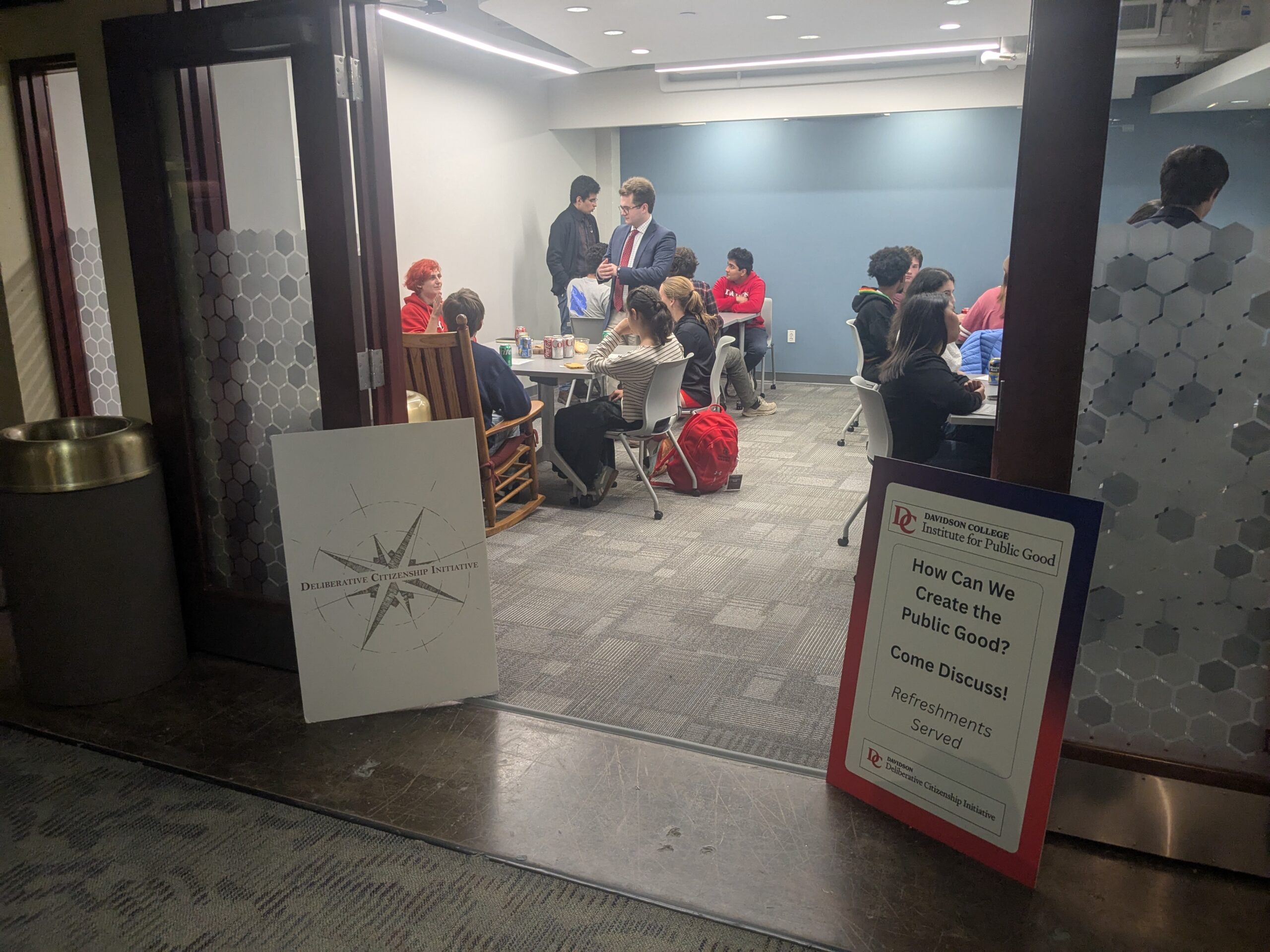
Fellows greeted and welcomed students to discuss the event over snacks in a classroom outside of the Duke Family Performance Hall, where the conversation took place, so that any interested attendees would have the opportunity to reflect and develop their own plans for promoting the public good in their own communities.

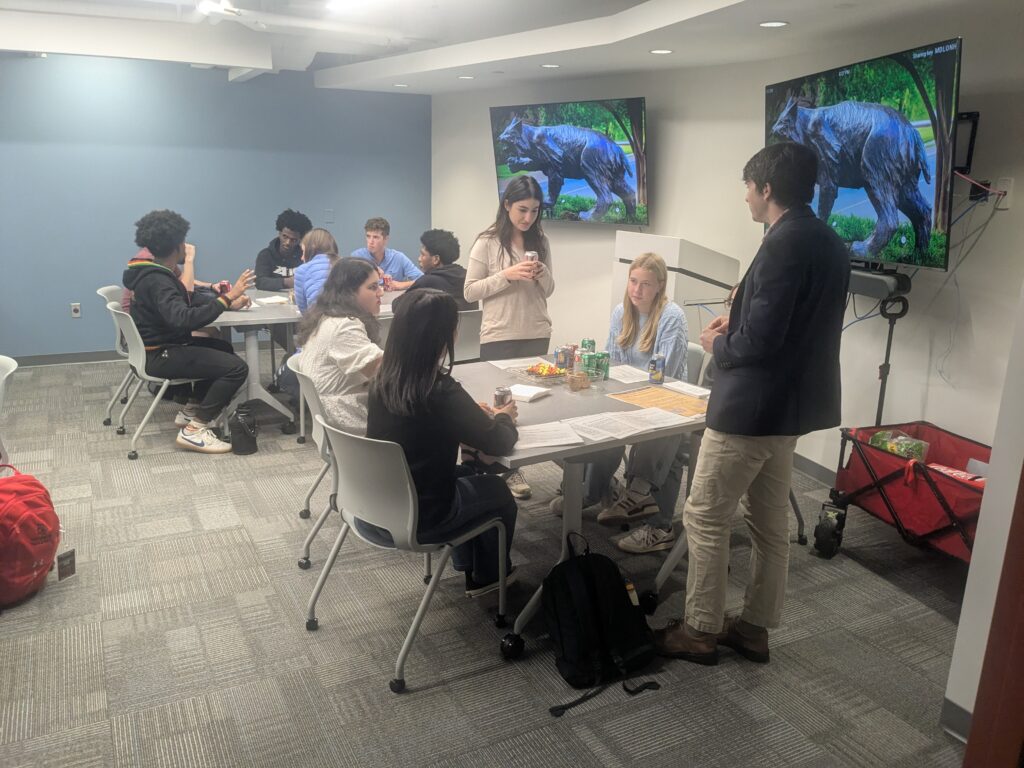
Two tables of deliberators with two facilitators standing

In a packed meeting room with extra chairs just outside the performance hall where some facilitators had to stand as they guided the discussions, a combination of reflections on the senators’ discussion and attempts to agree on their own definitions of the public good kept the students abuzz throughout their extended conversation.

The guiding questions for the discussion, provided by DCI Co-Convener Casey Scheiner and introduced to the participants by DCI Faculty Director Graham Bullock, focused the students on engaging with the Senators’ ideas and identifying their own perceived challenges to the public good and bipartisan action from government. Fueled by an assortment of desserts and beverages, they also discussed the ways government and citizens alike may all come together to promote the public good across a diverse array of sectors throughout society. Such questions enabled participants to focus their participation on defining and applying the public good to contexts that were relevant to their own lives so that they could take what they learned from their conversation with them into their own civic engagements in the future.

The enthusiasm of the students, passionately participating in a discussion of their own after listening to the Senators’ discussion shows the impact the work of the DCI has in providing an outlet for Davidson’s community to tackle our most pressing issues. It also shows how the DCI can complement the work of other organizations, like the Institute of Public Good (which the DCI is now a part), by creating structured yet informal contexts for participants at events they host to deliberate about ideas presented and apply them to Davidson’s own community.

See what the participants had to say for themselves after attending the event:

“[Our group] applied a lot of the things [the senators] talked about to real-world examples and talked about what we thought was a civil good […] and our duties as citizens. There was a wide array of opinions in our group; that was really interesting to get to hear people who had different opinions from myself.

“Every time we do a deliberation, I feel like I end up being able to [better] see the other side, which makes things become more complicated, which is a good thing because it helps all of us become more intentional but it’s also confusing because my opinions keep changing.”

Anna Kate Howell ’29

“I found [the discussion] very helpful to be able to process the information during the senators’ event; […] it was helpful to be able to reflect and to be asked questions that helped me put what they talked about in a proper context.”

“The facilitators were really helpful […] having guiding questions to push us to bring the conversation to different directions was super helpful, […] especially to see different perspectives and how you can apply [them] […] I now have a more nuanced answer for [what the Public Good means].”

Maggie Frampton ’29

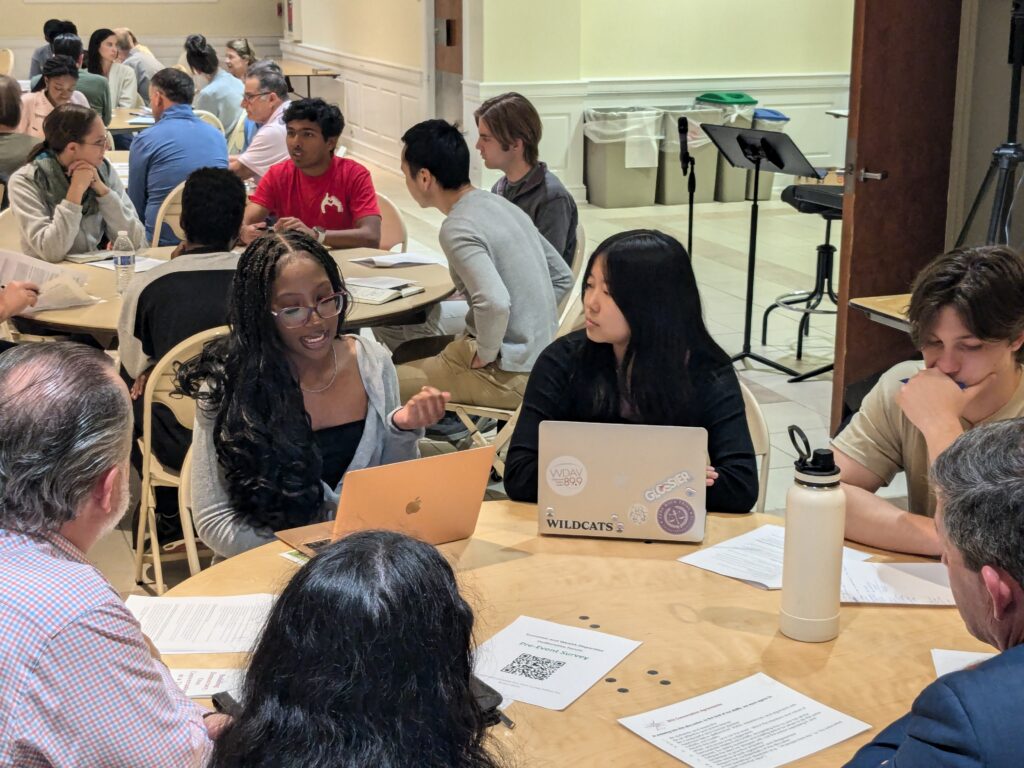
deliberators around tables with two facilitators standing

Filed Under: Events

The DCI Takes on Income and Wealth Disparities: A Recap

November 15, 2024 by Stephen Walker Leave a Comment

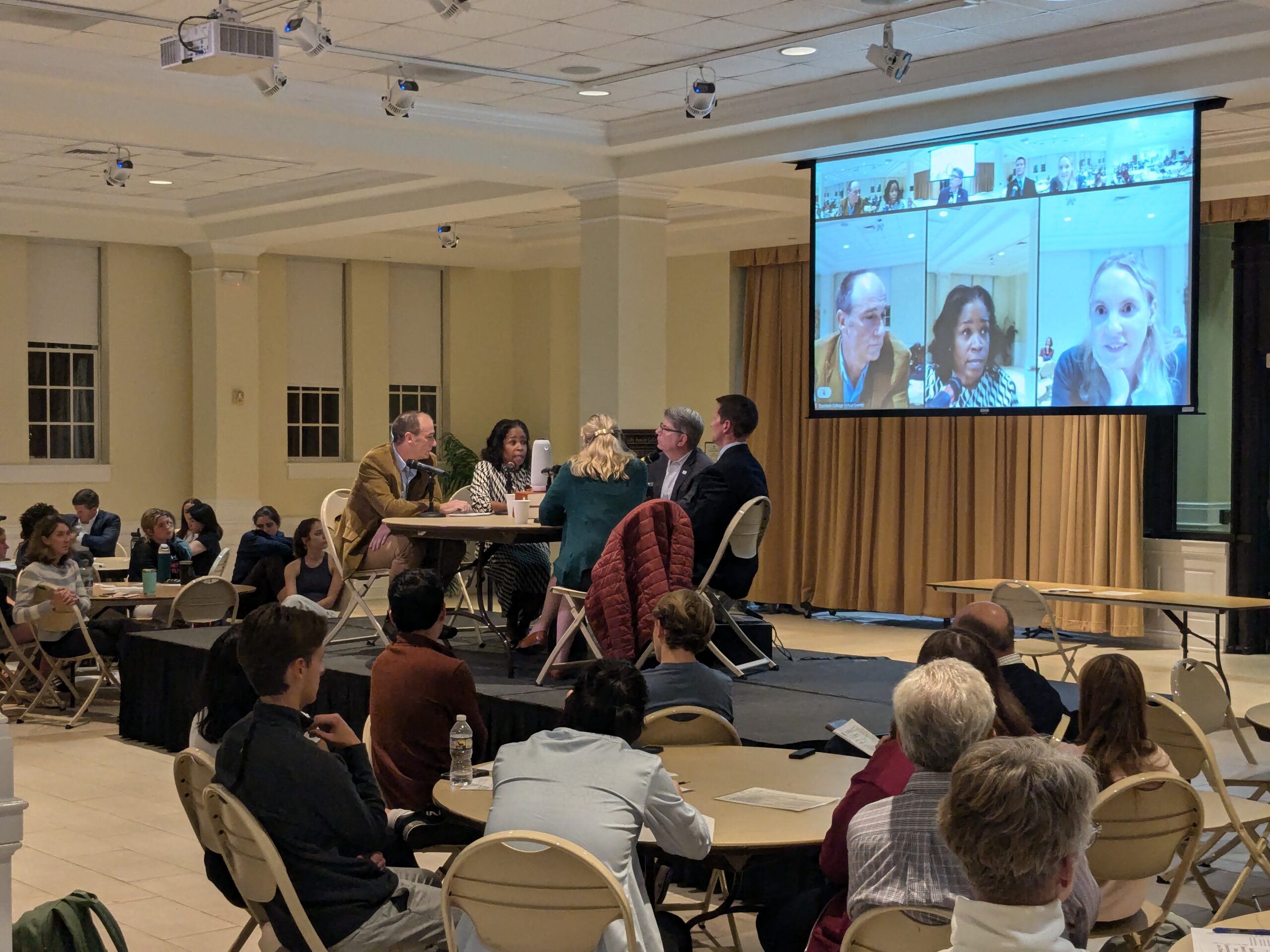
Photo of DCI forum with panelists and participants.

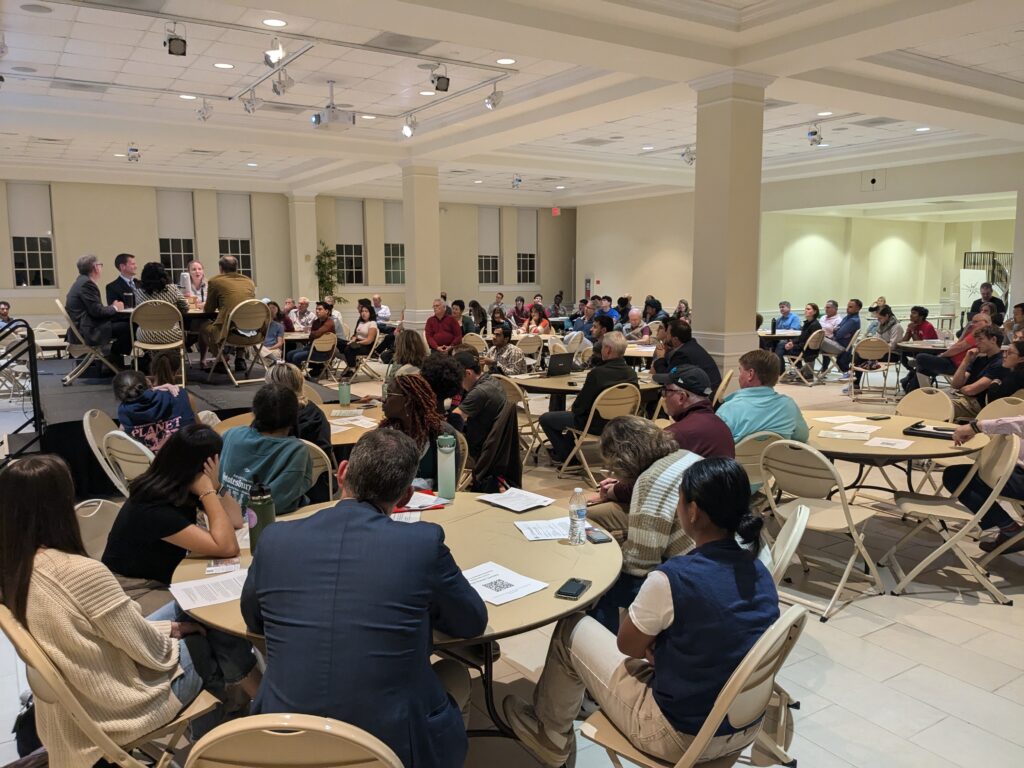
On Tuesday, October 27th at 7:00 PM, members of the Davidson community gathered together on Davidson’s campus to discuss income and wealth disparities. The 164 attendees (76 in person and 88 online) were treated to a meaningful, multifaceted conversation regarding whether or not they pose a problem to society and how, if at all, should they be addressed. Davidson College President Doug Hicks moderated the conversation that included two philosophy scholars, president of a Charlotte-based advocacy organization, and a vice president of a non-profit think tank based in North Carolina. 

These experts included Robyn Lake Hamilton, the CEO of the Urban League of the Central Carolinas, a local leader in the fight to combat inequality. Davidson’s Professor Sean McKeever and University of Richmond’s Jessica Flanigan, professors of philosophy and experts in the study of the phenomenon in question, brought their academic experience to the conversation. Lastly, Brian Balfour, Senior Vice President of the John Locke Foundation, was able to contribute insights from research into economic disparities and their causes and effects. President Hicks kept the conversation among the panelists focused on meaningful exchange of ideas and explorations of the disagreements that further illuminated the issue for those in attendance.

The event was co-sponsored by Davidson College’s Deliberative Citizenship Initiative, Center for Political Engagement, College Republicans, College Libertarians, College Democrats, Economic Department, Philosophy Department, and Political Science Department. Representatives from each of the student political organizations were present for the deliberative half of the evening.

The innovative and successful “round table” format, where the panelists discussed the issue around a table on a stage surrounded by the audience, once again proved to be the most engaging and accessible way to draw the audience into the conversation being held before them. The conversation was recorded with a 360 degree video camera, called the “Meeting Owl,” that was placed on the table the panelists were sitting at for those participants who joined over Zoom. The recording can be viewed by clicking play on the video icon below. 

After the hour-long discussion came to a close, participants turned to each other to continue the discussion. At tables of 6-8 people that included residents of the community, students, faculty, and alumni, trained DCI facilitators led discussions on the topic,  aided by a deliberation guide designed specifically for this event. The guide offered supplemental materials to the conversation to ensure each participant had necessary background knowledge to engage constructively in their group’s conversations. 

These conversations were not an end but the beginning of a long journey the participants have begun to become more comfortable with the disagreement such a complex issue inspires. Participants were more than willing to engage and came away deeply satisfied with their experience. Julio Ramirez, a Davidson College professor who attended the forum, said that the forum provided a “deep assessment of a complex problem from multiple perspectives” and was an “outstanding experience.” See comments from other participants about their experience below:

  • “Not only are the discussion guides balanced and educational, but the facilitated small group deliberations are also such a breath of fresh air and source of hope amidst our current polarization and paucity of thoughtful discussions across differences.”
  • “In these fractious times, it is not just refreshing but also life-affirming to be able to take part in discussion of tough issues with no easy answers, with people are intent not on “scoring points” but on working together to solve problems. Beats hell out of watching TV or playing video games.”
  • “The Deliberative Forum is exactly the type of civic exercise we need right now to practice healthy discourse and “lean in” to the most important issues that will decide our future as world-citizens. Today’s event put the DCI’s goals into action. The panel and the small-group discussion inspired me to dig deeper into this topic and to find ways to take action.”

Check out the video recording of the panel discussion below as well as the event’s deliberation guide.

DCI-Income-and-Wealth-Disparities-Deliberation-Guide_-Fall-2024

Filed Under: DCI Posts, Events

Refresh Your Feed & Your Perspective

April 9, 2024 by Stephen Walker

A balance scale sitting on a table.

Stephen Walker ’26 (DCI Fellow)

When we go to restaurants, some of us like steaks, some prefer salads, and some opt for the pasta. News consumption, for most of us, is the same way. We may know people who stick to their BBC, but we may also have friends who prefer the more politically aligned publications such as Jacobin magazine or The American Conservative. But unlike our ways of developing taste and preference for certain culinary consumption habits–trying different items on the menu, comparing calories, examining ingredients–we often do not, or cannot, hold our news sources to the same level of scrutiny.

Social media algorithms, influential people in our lives, and personal biases may lead us to consume one news source or one-sided sources excessively, leading us to neglect the alternative options and miss out on the variety of flavors of coverage on the same events and topics that are out there. We feel confident in our food preferences because we try different options and determine what best suits our personal tastes. With news, we often stick with what we know or what supports our opinions and appears in our search and social media feeds: we have no clue what other options are available to us. Our frequently misguided, or surface-level evaluations of our news sources, pose threats to our abilities to identify media biases and to gain accurate views of perspectives news sources can distort to serve an ulterior agenda.

In our most recent DCI fellows’ cohort meeting, with help from Jayme Sponsel and Davidson’s E.H. Little Library resource website, we evaluated and discussed methods of combating this dilemma, empowering us to diversify our media tastes in order to improve resource awareness and understandings of the varieties of resources and their respective values. As a part of our discussion, we had the opportunity to evaluate our own news feeds and learn about valuable resources designed to inform us on their biases, offering a variety of perspectives to utilize in bolstering our news consumption.

Two resources that allowed me to both identify the biases in sources I did not anticipate and offered a variety of perspective sources I had not been exposed to before were the Interactive Media Bias Chart and AllSides.com. The chart and AllSides offer a trove of sources along with reliable information on their accuracy and political biases. Immediately, the resources offered analyses of news outlets which made me more aware of even slight bias which may influence reporting. These new resources have allowed me to look for a certain left or right tilt in the sources I consume, and also to understand how much of my newsfeed comes from one side’s perspective versus the others.

That’s not the only takeaway from these sources. With this new awareness I can add the variety my information feed, for whatever reason, was lacking. Without the awareness of other options, I would have never made the alterations to my feed this resource has allowed me to begin making. I now subscribe to more newsletters and follow more social media accounts from resources I disagree with. I may be upset by the content they produce, even incensed by the more opposing stories from the side I don’t align with. But that’s a good thing.

Before, only consuming news more aligned with my views because of the ways social media and influences in my life have led me to gravitate towards these sources, I had an extremely simplistic view of other sides and their views. The new variety populating my feed has offered me a far deeper understanding of different perspectives, being that they come from people who actually hold those views rather than those who either seek to discredit or hold implicit biases against them.

Balancing your feed with both an accurate and balanced array of perspective media allows you to be informed in ways only viewing your “side’s” content could never achieve. Much like knowing what you prefer and why at a restaurant, because of your experience and knowledge of other items on the menu, you cannot have fully formed opinions or clear connection to a perspective until you have sought out other perspectives, especially conflicting ones.

Until you have taken the time to listen to and understand the other side, whether through conversation with people or news consumption, you never really know where you stand on an issue. You only think you know because people and sources you generally agree with tell you that a certain stance is the “correct” one. Only after you can compare different arguments can you truly reason through an issue and choose a side, much like you only know what to order at a restaurant after you peruse the menu and compare items. Weighing arguments and an array of information allows us to fully deliberate internally on an issue and understand which stance most closely supports our core values.

Who knows? Balancing your feed may even lead to forming new perspectives and opinions you would never expect to hold. The best foodies like to scan every page of the menu when they eat out, and because of this they are always sure of what they want. And now I can say I share their confidence in my political perspectives due to my new news awareness and motivation to balance my newsfeed because I have accessed arguments from a variety of sources, been exposed to different opinions, and subsequently undergone the deliberative consideration necessary to determine which stances to take based on what sides align with my values.

We don’t have to switch sides or only consume news from one type of source. But taking the steps to understand perspectives from across the spectrum allows us to form insights at a deeper level than otherwise possible. At the very least, a balanced news feed allows one to gain confidence in their own views, thanks to taking the steps to sample the alternatives. You can’t be sure you disagree with someone or a political stance until you truly know what they believe.

Filed Under: Blog Posts, Fellow Posts Tagged With: deliberation, democracy, discourse, politics

How We Can Use Arguments to Learn From One Another

January 3, 2024 by Stephen Walker

People discussing at a round table

Stephen Walker ’26 (DCI Fellow)

Arguments are difficult. Whether stemming from our own personal attachments to ideas or a fear of criticism and negative social outcomes, people often tend to stigmatize arguments as impolite, irrational drains on our emotional well-being that only serve to produce tension and animosity between the parties involved. In my own experience, I have faced such feelings of hopelessness, of innately distressing conversations bound to go nowhere. Contentious arguments can give one the feeling they are fighting for the sake of fighting and nothing more. But this does not have to be so. Argument can be one of the most meaningful forms of positive interaction individuals can engage in with one another.

The DCI’s deliberative framework and the constructive norms our Fellows cohort has been exposed to have reconfigured my entire perception of how one ought to engage in argument and what they should hope to get out of it. One of our required readings for the program, Why We Argue (And How We Should) by Scott Aikin and Robert Talisse, details two sweeping norms for augment that I have relied on through my work to improve my relational and facilitator abilities: argumentative earnestness and argumentative responsibility.

Argumentative earnestness and responsibility have allowed me and other practitioners who utilize them to guide arguments away from zero sum competitions aimed at forcing one person to concede entirely to the other side through manipulation and distractions toward a positive, holistic exploration of issues at large and an informative pursuit of truth.

Aikin and Talisse describe argumentative earnestness as our duties to pay close attention to evaluating the reasons placed before us to justify a position or a view. By blocking out the noise–pressures to win, manipulative rhetoric, bias, and distractions–and evaluating arguments based on the reasons and logic behind them, the merit of a point can be more clearly established and progress can be made in what would otherwise be a contentious, stagnant process.

Argumentative earnestness takes what Aikin and Talisse label “intellectual courage,” or the courage to not just focus on the truth when others try to pressure you away from it but to also realize you may be biased and misleading others. It takes intellectual courage to admit that, much like the other side, you too can use flawed arguments in pursuit of winning rather than the truth. Going beyond holding the other side in arguments to such scrutiny by holding yourself to equally high, if not higher standards, can ensure you are constantly improving the quality of the arguments you produce.

Argumentative earnestness on its own is not enough to ensure a successful argument. Looking at the variety of reasons that may go into one side or another regarding a particular topic will round out your arguments to a fuller extent. Looking beyond what may be the widely preferred or most obvious reasons for holding a belief, we find out that there can be many reasons for taking a specific stance on a specific issue.

When we try to empathize with those who might take these different positions, regardless of whether we agree with them or not, it allows us to engage with the other side to the fullest extent possible. When we engage with the full, honest perception we have of the other side’s stance we can either learn and change our own perspectives on an issue or develop more robust responses than we would otherwise be capable of when engaging with simplified reasons. In this way, argumentative responsibility inspires learning and is essential to productive argument.

In my work as a deliberation facilitator, I am sometimes tasked with playing devil’s advocate by taking on the role of the other side when everyone in a deliberation agrees on an issue and the conversation reaches a stand-still. Without engaging in argumentative earnestness and responsibility, it could be very hard to be the sole advocate for another perspective that one sometimes may not even agree with themselves. Embodying these principles in my attempts at being a better devil’s advocate has allowed me to focus on the reasons behind competing stances, encouraging people to examine their views in ways that would not be possible without such a focus on reason over confrontation.

Playing devil’s advocate to urge members of my deliberation groups to consider opposing arguments has been a truly fruitful exercise to watch play out. People not only willingly consider the full scope of reasons behind views they may have otherwise immediately rejected, but they learn how to better respond to such reasons and enhance their reasoning processes. This can allow deliberators to examine their views, thus enhancing their ability to reason through and properly weigh the merit of counterarguments they may face for the stances they take on various issues. It also allows them to build up the courage to admit when they may be wrong or faced with superior reasoning.

In my experience, when we try to exercise argumentative earnestness and responsibility in our efforts to deliberate, we tend to learn more, have better arguments, and have a better chance of unlocking the truth. This allows us to not only be aware of the flaws in the stances we take but to make clear to others in a constructive, rather than hostile way, the problems in the reasoning that they present. Better arguments make better-informed citizens and by leaning into not just argumentation but constructive norms, we learn and grow in ways that would not otherwise be possible. We learn and grow as a community of citizens unified by our pursuit of truth.

Filed Under: Blog Posts, Fellow Posts Tagged With: debate, deliberation, discourse, facilitation

Footer

Blog Post Categories

  • Announcements
  • Blog Posts
  • DCI Posts
  • Events
  • Faculty Posts
  • Fellow Posts
Image of a compass superimposed by the text "Deliberative Citizenship Initiative" and "Davidson College." Clicking on this image leads to the Initiative page.

Recent DCI Blog Posts

  • We Tried to Fix Jubilee’s “Middle Ground” – Here’s How It Went
  • A Case for Deliberation in the Natural Sciences
  • Welcoming New Staff to the DCI and DCN
  • Facebook
  • Twitter
  • Instagram
  • LinkedIn


Copyright © 2026 · Infinity Pro on Genesis Framework · WordPress · Log in