• Skip to main content
  • Skip to footer

Deliberative Citizenship Initiative

Building Democracy One Conversation at a Time

  • The Initiative
    • Programs
      • Deliberation Across the Curriculum
      • Deliberation on Campus
      • Deliberation in the Community
      • Research on Deliberation
    • Motivations
      • Why Deliberative Citizenship?
      • Why Davidson? Why Now?
    • Who’s Involved?
      • DCI Fellows Cohorts
        • 2025-2026 Fellows
        • 2024-2025 Fellows
        • 2023-2024 Fellows
        • 2022-2023 Fellows
        • 2021-2022 Fellows
        • 2020-2021 Fellows
      • DeeP Collaborative Cohorts
        • 2024-2025 DeeP Collaborative Faculty
        • 2023-2024 DeeP Collaborative Faculty
      • Advisory Council
    • History
      • What Sparked the Initiative?
    • Key Deliberative Dispositions
    • Frequently Asked Questions (FAQ)
    • Annual Report
  • Get Involved!
    • Participate in a Forum
    • Join a D Team
    • Become a Fellow
    • Take Courses
    • Get Training
    • Come to Guest Lectures
  • Events
    • Upcoming Events
      • 250th Anniversary Deliberative Forum Series on American Values
    • Past Events
  • Connections
    • The Deliberative Citizen: The DCI’s Monthly Newsletter
    • Efforts on Campus
    • Efforts in the Community
    • Efforts Elsewhere
    • Readings and Resources
      • DCI-Published Guides
      • DCI Guide to One-on-One Conversations
      • How to Disagree
      • Demonstration of Facilitation Styles
      • Deliberative Pedagogy Mini-Course
    • How We Can Help: DCI’s LET’S DELIBERATE! Partnership Opportunities
    • DCI in the News
  • DCI Blog Posts
    • Recent Blog Posts
    • All Blog Posts

DCI Posts

DCI Publishes its Fourth Annual Report!

September 19, 2024 by Graham Bullock Leave a Comment

Cover page of DCI Annual Report.

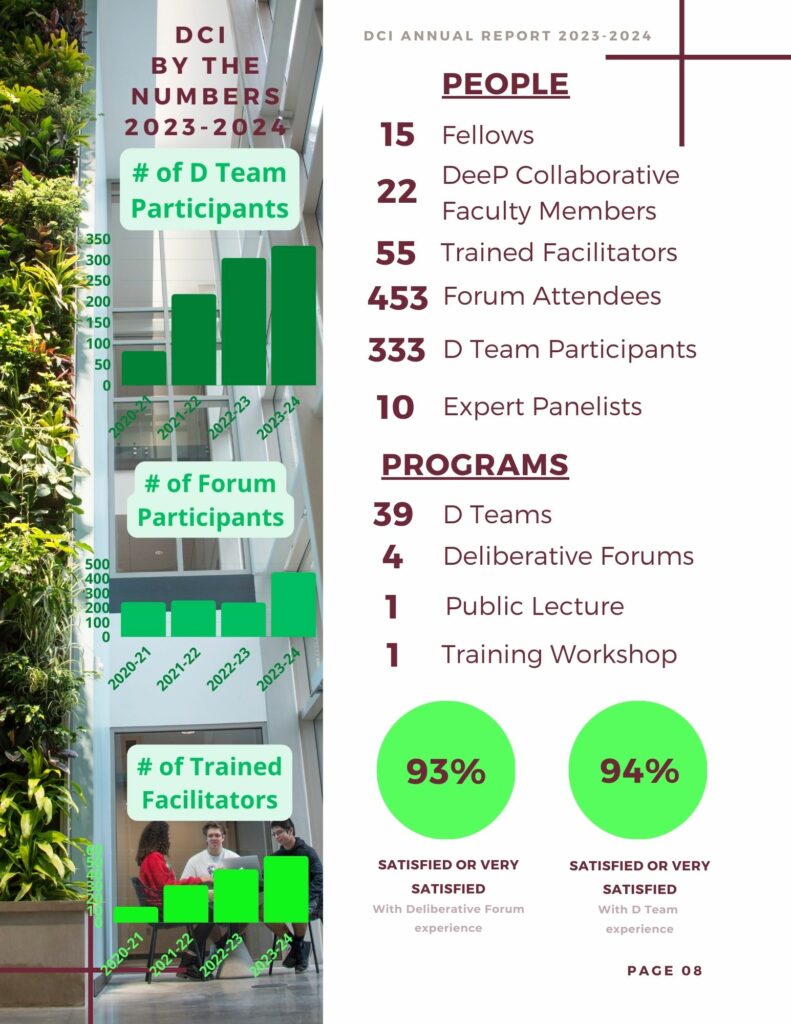
Four Deliberative Forums, 10 expert panelists, 15 Student Fellows, 22 Deliberative Pedagogy Collaborative Faculty Fellows, 39 D Teams, and over 1000 Davidson students, faculty, staff, alumni, and community members who participated in facilitated deliberations on challenging and contentious issues facing our society…2023-24 was a busy year for the DCI! The range and depth of this work is captured in the DCI’s fourth Annual Report that was just published on its website. We’d like to share a few highlights from the report and encourage you to check it out yourself as well. We hope that it will inspire you to join the new and continuing programs that the DCI is planning for the coming year.

Page of data from Annual Report.

The year began with our second annual Fall Semester Kickoff Party and our fifth Deliberation Facilitator Training Program, which trained over 50 people in how to moderate challenging conversations on difficult topics. They included our fourth cohort of DCI Student Fellows and our third cohort of DeeP Faculty Fellows, who came from 13 different colleges and universities from across the country. The student fellows went on to host our Deliberative Forums, D Teams, Commons Conversations, Deliberating GOATs event, and their own personal deliberation projects, while the Faculty Fellows developed and taught courses that systematically incorporated more deliberation about contentious topics into them.

The DCI hosted Christy Vines, CEO and President of the Ideos Institute, for a series of public lectures, workshops, class visits, and small group discussions with students. Vines focuses on empathic intelligence in her work, and her public lecture was titled, Faith, Race, and Politics: Can empathy help bridge our divides in a polarized world? Her visit helped the DCI and the Davidson community grapple with challenging questions related to identity, public discourse, and the pursuit of justice in a pluralistic society.

The DCI’s newly re-imagined Commons Conversations series featured Davidson faculty and staff who hosted discussions on topics related to their expertise. One of the DCI’s forums also highlighted the expertise of Davidson faculty on challenges facing democracy around the world, from Europe to Asia to Africa. The DCI continued to collaborate with academic departments, co-curricular programs, and community partners throughout the year. For example, its final forum of the year on Guns in America was co-sponsored with the Davidson College Democrats, Davidson College Republicans, Davidson College Libertarians, Center for Political Engagement, and the Political Science Department.

The work of the DCI also extended last year beyond Davidson, as it co-organized the first North Carolina Campus Discourse Leaders Conference with colleagues from UNC Chapel Hill, UNC Charlotte, Elon University, and North Carolina Campus Engagement. Hosted on the Chapel Hill campus, the conference brought together over 40 faculty and staff from public and private institutions of higher education from across the state of North Carolina to connect, share, and learn about how to best foster more productive discourse about difficult political and social issues in the classroom, on campus, and with the community.

Suffice to say, it was a rich and rewarding year, and provides a solid foundation for the exciting opportunities that the DCI will be pursuing in the year ahead. Check out the annual report at the link below, stay tuned for more info about our upcoming programs that are coming soon!

Filed Under: Announcements, Blog Posts, DCI Posts

Deliberative Pedagogy in Action: Highlights from the Annual DeeP Collaborative Workshop

September 6, 2024 by Willow Paul

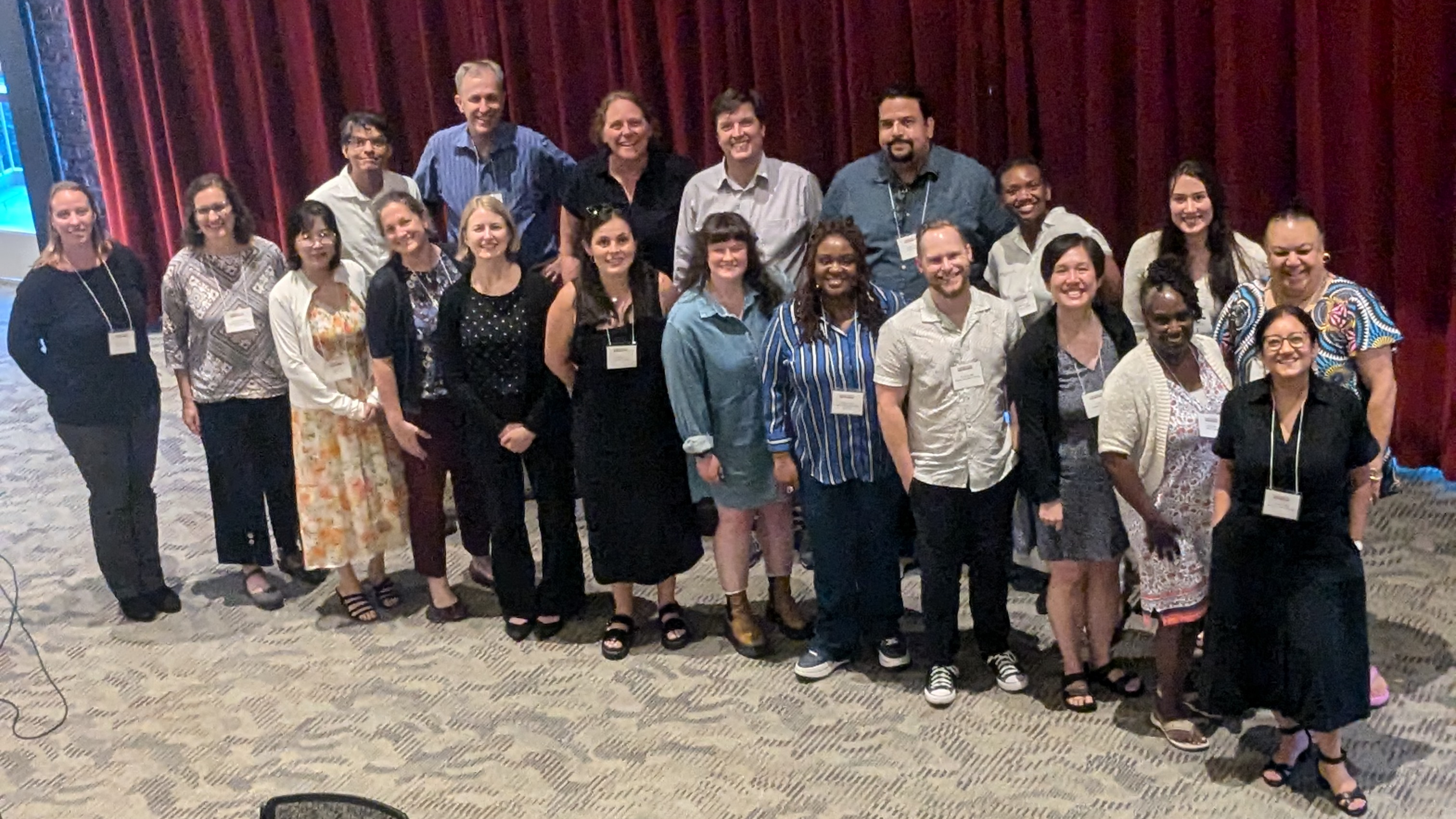
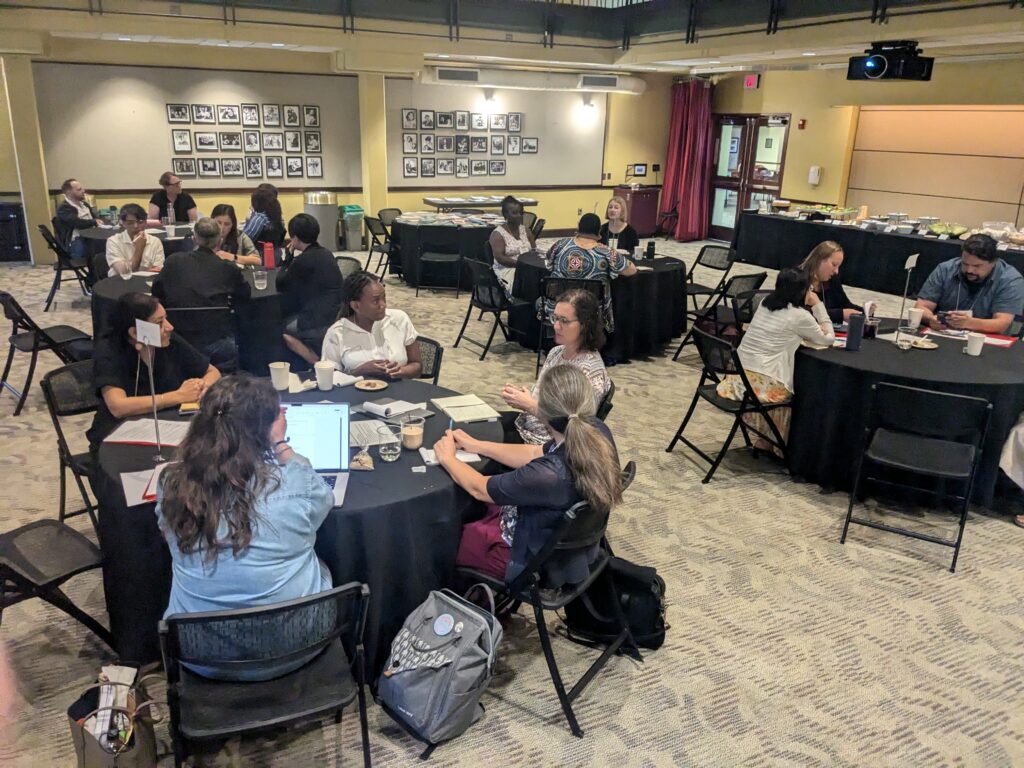
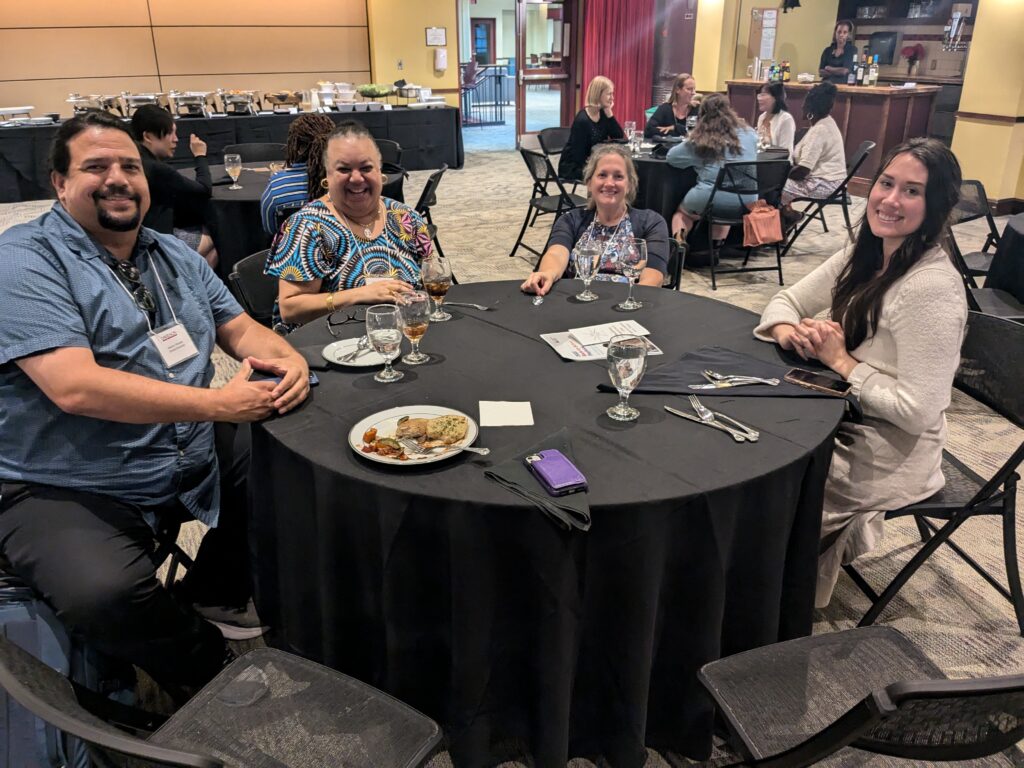
group photo of faculty.

On August 8th, we kicked off our fourth installment of the Deliberative Pedagogy (DeeP) Faculty Collaborative with our annual DeeP Collaborative Orientation Workshop. This year’s cohort brings together 18 new faculty collaborators who specialize in over 13 different academic disciplines, including anthropology, biology, communication studies, economics and business, health sciences, Hispanic studies, history, mathematics, natural sciences, political science, psychology, sociology, and writing.

They also come from 14 different institutions, including Colorado College, Davidson College, Denison University, Drexel University, Furman University, Hendrix College, Johnson C. Smith University, North Carolina A&T State University, Rhodes College, Rollins College, Sewanee: The University of the South, The University of Texas at San Antonio, Western Carolina University, and Wingate University.

The goals of this workshop were to introduce our new Collaborative members to the key principles and practices of deliberative pedagogy, to build community among the cohort members—who will be working together over the coming academic year—and to begin mapping out their goals for the fall semester, during which they will explore how they will apply deliberative pedagogy to their future courses.

DCI Faculty Director Dr. Graham Bullock led the workshop, using both active learning and deliberative strategies to introduce the motivations for using deliberative pedagogy practices, the most relevant concepts and frameworks, specific deliberative teaching methods and tools, and case studies of deliberation-involved courses.

What is deliberative pedagogy? In short, deliberative pedagogy is a teaching practice that involves the use of structured deliberative activities to teach learners how to express different viewpoints about an issue or approaches to a problem, how to evaluate these viewpoints or approaches critically, and how to identify both areas of agreement and disagreement through the course of their deliberative discussions.

The key to practicing deliberative pedagogy well is to setup deliberations in the classroom so that they include multiple viewpoints on the issue at hand, allow all voices to be heard, and promote the assessment of arguments for and against the variety of viewpoints on the table. One way to do so is by introducing conversation agreements, or ground rules for good discursive practices. Another way is to have a facilitator present who can ensure the deliberation represents multiple viewpoints and voices. (Want to learn how to become a trained facilitator for deliberative events in OR out of the classroom? Learn more about our upcoming Deliberation Facilitator Training Program here!)

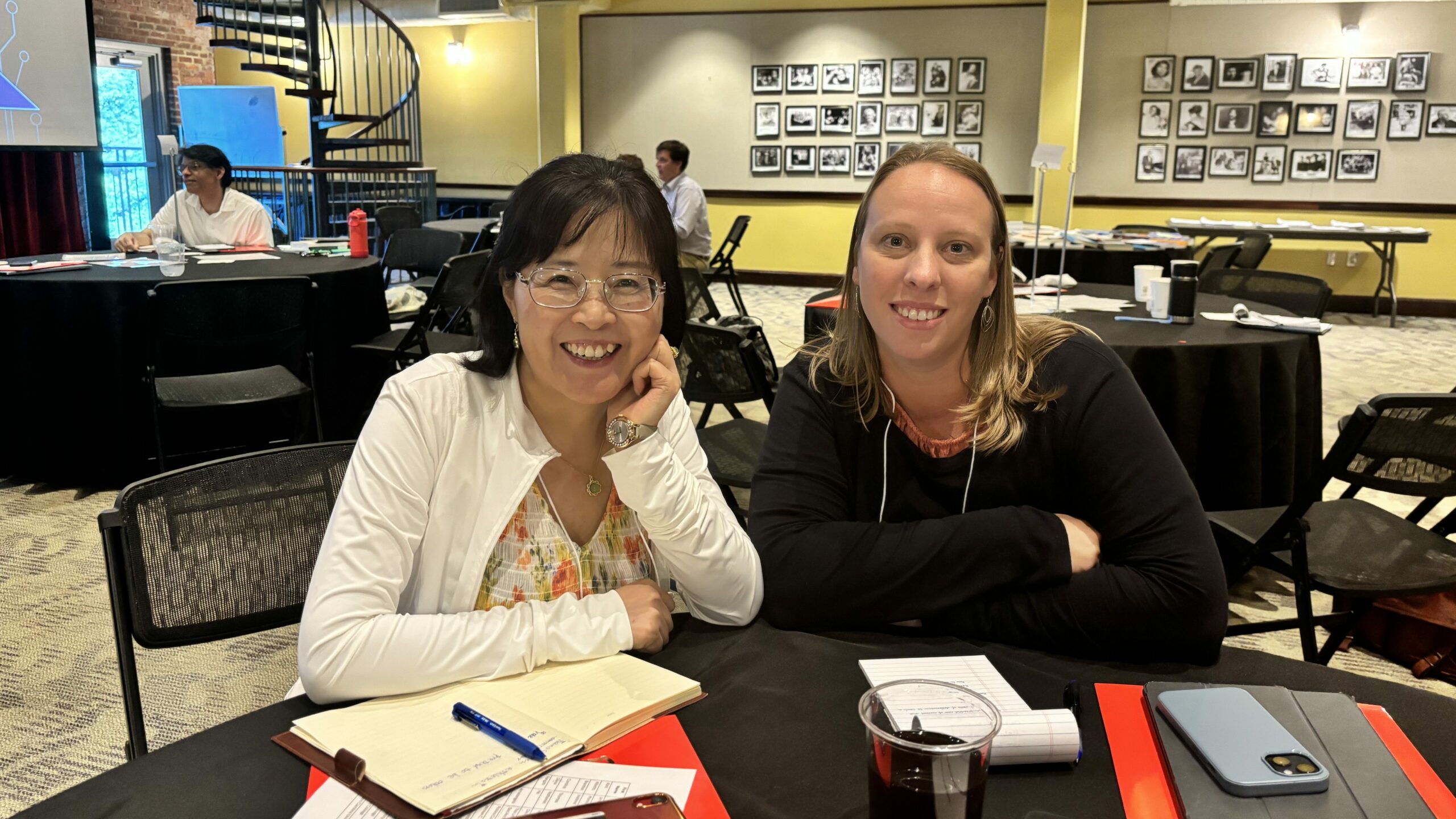
faculty meeting in tables

Deliberative pedagogy is also connected to the concept of deliberative democracy, a type of democratic engagement in which reason-giving – broadly-defined – is used as a means for citizens to make progress on practical issues facing their community.

Some of the lively discussions among our faculty cohort members focused on how deliberative pedagogy can be employed beyond courses that focus explicitly on public policy, including courses in the arts and the sciences. Groups also discussed how deliberative pedagogy can be a form of inclusive pedagogy and how faculty can navigate the apparent tension between affirming our lived experiences as individuals while assessing reasons for and against policy decisions that impact those experiences.

Others discussed whether or in what circumstances instructors should remain neutral during debates about normative issues that do not have straightforward answers and about which there can be reasonable disagreement among deliberators. None of these questions have easy answers, but we look forward to diving deeper with our ’24-’25 DeeP Collaborative cohort on these and other important topics in the coming year. Look out for blog posts from this year’s participants next year, once they have begun applying what they have taken from our interactive learning sessions in the fall to their various teaching contexts.

table of faculty

Filed Under: DCI Posts, Events

DCI Fellows Present a Mock Deliberation on Free Speech and Inclusion at the VMC

July 31, 2024 by Graham Bullock Leave a Comment

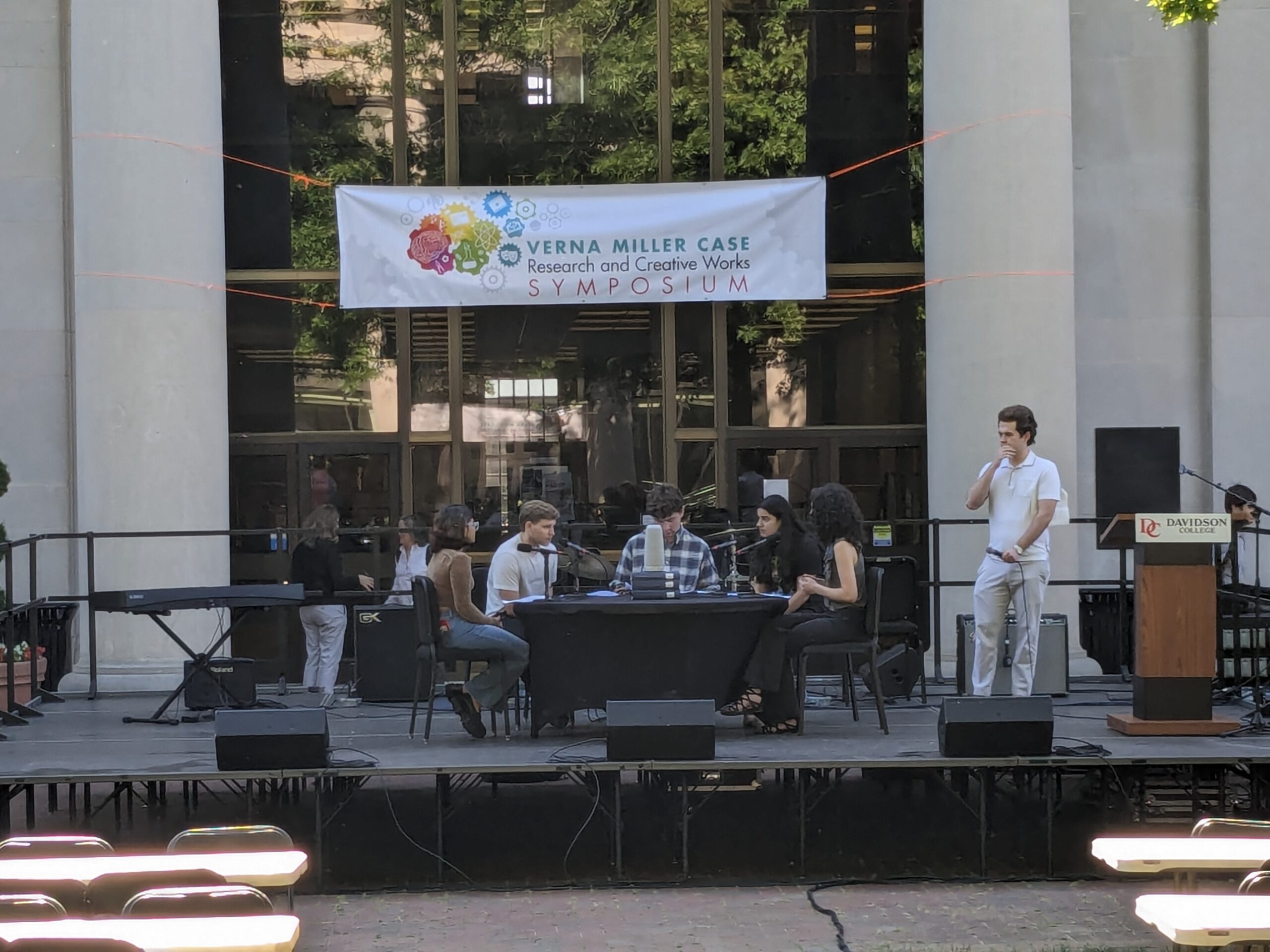
Fellows at VMC Symposium

Since its inception, the DCI has participated in Davidson’s daylong celebration of student intellectual achievement called the Verna Miller Case (VMC) Symposium. DCI Fellows have presented posters and given presentations on the work of the DCI, and it has been a great opportunity for them to share their work with the Davidson community.

This year we wanted to do something a little more dynamic and interactive to capture the spirit and ethos of the DCI. And so a team of Fellows got together and designed an hour-long event that actively demonstrated the DCI’s key features and contributions to creating a more deliberative culture on and off campus.

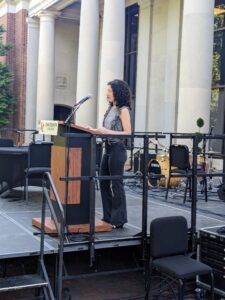
Photo of Mishti Mookherjee standing behind a Davidson College podium, speaking to the public.

It included a mock deliberation on the relationship between free speech and inclusion that highlighted moves that both deliberators and facilitators can make to foster more productive deliberations. The mock deliberation did not shy away from engaging with some of the most contentious aspects of the issue at hand, but tried to demonstrate how we can engage constructively and respectfully with them.

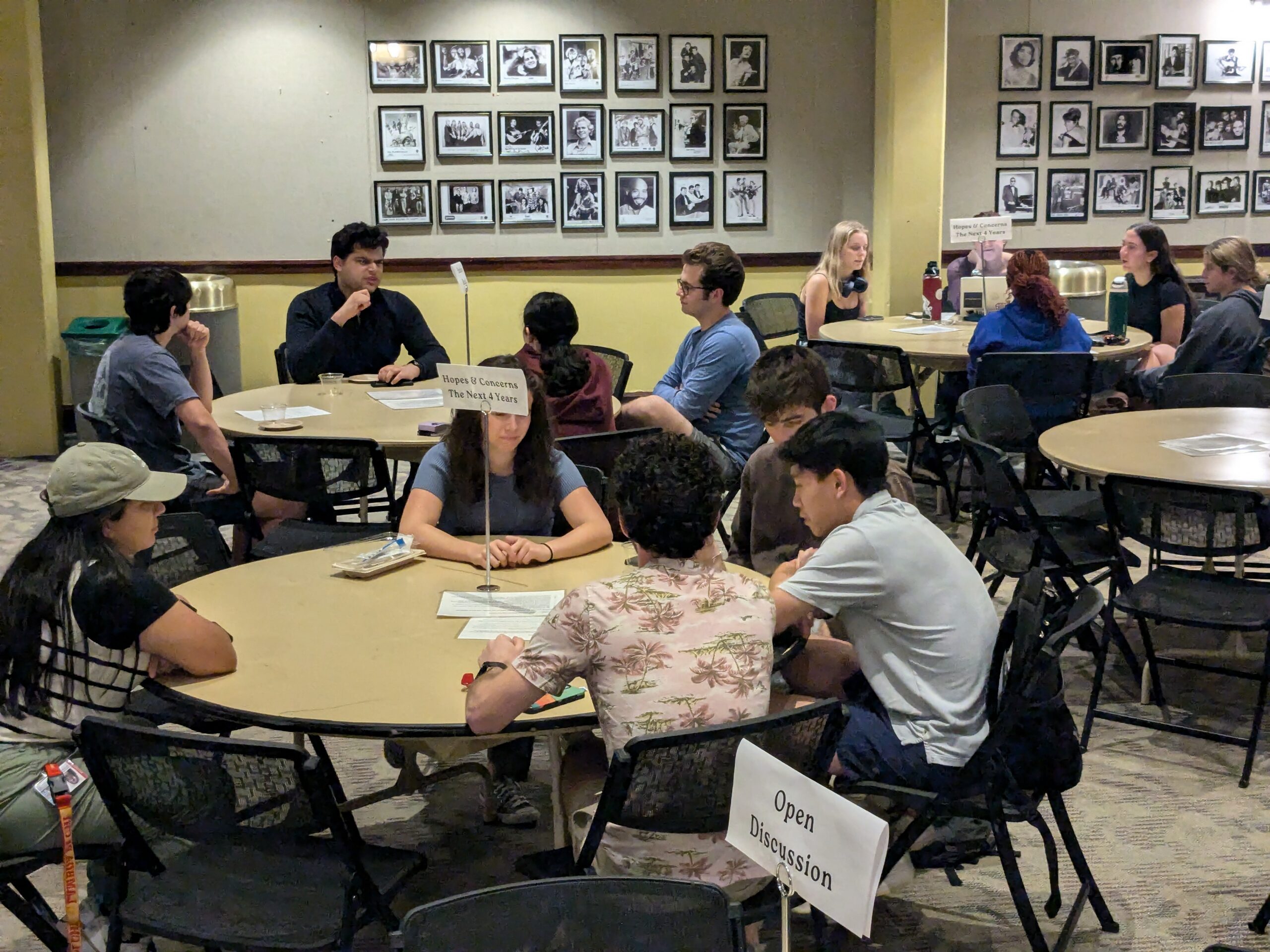
The event also included short summaries by the Fellows about their deliberation projects that they designed on issues important to them personally. It concluded with an opportunity for audience members to deliberate among themselves on a range of different topics.

The event wonderfully displayed the range and depth of deliberation that the Fellows engaged in and the set of skills they learned over the course of the 2023-24 academic year. It nicely complemented the other types of amazing work highlighted by the Symposium that Davidson students engage in on campus, from research in the social sciences, natural sciences, and humanities to achievements in the performing and visual arts to collaborations with local communities and organizations on pressing social challenges.

Laegan Smith speaking.

In many ways, the DCI brings together these different threads of the liberal arts – rigorous research, creative work, and civic engagement – and applies them to the critical project of fostering constructive conversations across differences on issues that matter deeply to our society.

Check out the video highlights of the DCI’s symposium event below. It features an introduction to the Deliberative Citizenship Initiative by DCI Senior Fellow and Co-Convener Laegan Smith ’24 followed by a mock deliberation featuring Laegan, Stephen Walker ’26, Emre Guvenilir ’25, Auden White ’26, Mishti Mookherjee ’27, and Arshi Hussain ’26. These and other DCI Fellows then introduce their personal deliberation projects. Check it out – it’s a great way to learn about the incredible work that Davidson students are doing as part of the DCI.

Filed Under: Blog Posts, DCI Posts, Events, Fellow Posts

A New Assistant Director Joins the DCI!

July 26, 2024 by Graham Bullock Leave a Comment

Willow Paul slide

The DCI is happy to share that Willow Paul is our new Assistant Director! Willow will be assisting with the development, implementation, and assessment of the DCI’s programs and operations. Willow earned her B.A. and M.A. in Communication Studies from Colorado State University with a specialization in Deliberative Practice, making her particularly well-suited to help lead the DCI’s efforts in creating opportunities for productive dialogue and deliberation in diverse classroom settings, outside of the classroom, and in the community.

Willow has conducted in-depth research on deliberative democracy, facilitation training, and public discourse initiatives. Her master’s thesis, “Healing a Divided Democracy,” provides important insights on efforts to bridge divides in hyperpolarized societies. Willow also served on the leadership team at Colorado State’s Center for Public Deliberation and has extensive experience designing deliberative processes, facilitating difficult conversations, and conducting research on deliberative practices. Willow’s dedication to supporting the DCI’s mission is grounded in a deep appreciation for the diverse ideological landscape of the United States. She is deeply committed to this work, and her extensive research and practitioner experience will enable her to make significant contributions to expanding the impact that the DCI has had thus far.  

All to say, we are excited that Willow has joined the DCI team! Watch out for blog posts and emails from Willow, and say hi to her if you see her around campus or in the community.

Filed Under: Announcements, DCI Posts

A 4th of July Message of Hope: The DCI is Part of an Important and Growing Movement

July 2, 2024 by Graham Bullock

Bridging differences logo from Greater Good Science Center

Happy Fourth of July! On this day celebrating American independence, many Americans are no doubt feeling a deep sense of unease about the country’s politics. In a June 2024 Gallup poll, 77% of Americans reported they were dissatisfied with the way things are going in the United States. In 2023, 79% of Americans described American politics in negative terms, 65% said they were exhausted by politics, and 61% reported that political conversations with people they disagree with are stressful and frustrating. Only 10% felt hopeful about US politics.

These feelings are reinforced by a constant bombardment of negative stories in the news media and on social media. The images and narratives emerging in the midst of the campus protests that occurred this spring may have been particularly disheartening, regardless of where you fall on the issues involved. So I wanted to share with you some good news that might give you at least a little bit of hope on this 248th anniversary of the adoption of the Declaration of Independence.

This past year, the DCI’s Assistant Director Sara Copic and I participated in a Bridging Differences Community of Practice hosted by UC Berkeley’s Greater Good Science Center. This group included 28 deliberation scholars and practitioners from across the United States who are working earnestly to foster more productive dialogue on their college campuses. They came from large public and private universities, medical colleges, law schools, community colleges, and liberal arts colleges like Davidson.

We met regularly as a large cohort to hear from experts in the field on topics such as the science and practice of listening, the psychology of intergroup processes, and the measurement and evaluation of dialogue outcomes.  We were also split into small groups who met separately to discuss our progress on our work, challenges that have come up, and questions we had for one another. My group had representatives from Stanford University, Providence College, the University of Alabama, and California State University East Bay, and it was fascinating to hear about everyone’s different experiences with bridging divides on their campuses.

What I took away from this experience was a sense that a lot of good and smart people are working creatively, thoughtfully, and tirelessly on building connections across social and political differences. Even though you may not see it and it is not the first thing that comes up on your newsfeed, there is a solid and growing community – for example, over 200 campus leaders have participated in the Greater Good Science Center’s Bridging Differences in Higher Education Learning Fellowship since its inception – engaged in this work. From the conversations I participated in as a part of this community, I was deeply impressed by everyone’s commitment to fostering productive conversations on challenging topics, despite the challenges they face.

I also saw even more clearly how the DCI is an important part of this work. As innovative and active as we are, we may often feel that we are swimming alone in a toxic sea of hyper-polarization. But we are in fact connected to an extensive network of efforts with similar goals and methods that is building more deliberative cultures and communities across the country. The movement to engage more productively in political conversation is real and growing, and the DCI – and anyone who has participated in a D Team or Deliberative Forum or been a member of the DeeP Collaborative – is contributing to the growth and dynamism of that movement. As we examine other deliberation programs, this is a point we make frequently to our DCI Fellows, but it is worth reinforcing among our wider community as well.

As an election season that threatens to be one of the most acrimonious and rancorous in recent memory gets underway, the challenges to this work are no doubt significant. But just as the Continental Congress overcame the immeasurable odds against them and came together to sign the Declaration of Independence in 1776 (the reimagined 1776 musical that I saw last year provides a trenchant reminder of their difficulties), so too can we find ways to bridge our differences in the months and years to come.

Filed Under: Blog Posts, DCI Posts, Faculty Posts

  • « Go to Previous Page
  • Page 1
  • Interim pages omitted …
  • Page 6
  • Page 7
  • Page 8
  • Page 9
  • Page 10
  • Page 11
  • Go to Next Page »

Footer

Blog Post Categories

  • Announcements
  • Blog Posts
  • DCI Posts
  • Events
  • Faculty Posts
  • Fellow Posts
Image of a compass superimposed by the text "Deliberative Citizenship Initiative" and "Davidson College." Clicking on this image leads to the Initiative page.

Recent DCI Blog Posts

  • We Tried to Fix Jubilee’s “Middle Ground” – Here’s How It Went
  • A Case for Deliberation in the Natural Sciences
  • Welcoming New Staff to the DCI and DCN
  • Facebook
  • Twitter
  • Instagram
  • LinkedIn


Copyright © 2026 · Infinity Pro on Genesis Framework · WordPress · Log in