• Skip to main content
  • Skip to footer

Deliberative Citizenship Initiative

Building Democracy One Conversation at a Time

  • The Initiative
    • Programs
      • Deliberation Across the Curriculum
      • Deliberation on Campus
      • Deliberation in the Community
      • Research on Deliberation
    • Motivations
      • Why Deliberative Citizenship?
      • Why Davidson? Why Now?
    • Who’s Involved?
      • DCI Fellows Cohorts
        • 2025-2026 Fellows
        • 2024-2025 Fellows
        • 2023-2024 Fellows
        • 2022-2023 Fellows
        • 2021-2022 Fellows
        • 2020-2021 Fellows
      • DeeP Collaborative Cohorts
        • 2024-2025 DeeP Collaborative Faculty
        • 2023-2024 DeeP Collaborative Faculty
      • Advisory Council
    • History
      • What Sparked the Initiative?
    • Key Deliberative Dispositions
    • Frequently Asked Questions (FAQ)
    • Annual Report
  • Get Involved!
    • Participate in a Forum
    • Join a D Team
    • Become a Fellow
    • Take Courses
    • Get Training
    • Come to Guest Lectures
  • Events
    • Upcoming Events
      • 250th Anniversary Deliberative Forum Series on American Values
    • Past Events
  • Connections
    • The Deliberative Citizen: The DCI’s Monthly Newsletter
    • Efforts on Campus
    • Efforts in the Community
    • Efforts Elsewhere
    • Readings and Resources
      • DCI-Published Guides
      • DCI Guide to One-on-One Conversations
      • How to Disagree
      • Demonstration of Facilitation Styles
      • Deliberative Pedagogy Mini-Course
    • How We Can Help: DCI’s LET’S DELIBERATE! Partnership Opportunities
    • DCI in the News
  • DCI Blog Posts
    • Recent Blog Posts
    • All Blog Posts

DCI Posts

War, Peace, and Ginkgo Trees: A Deliberative Forum on the Legacies of WWII in the Asia Pacific Region

February 20, 2025 by Graham Bullock

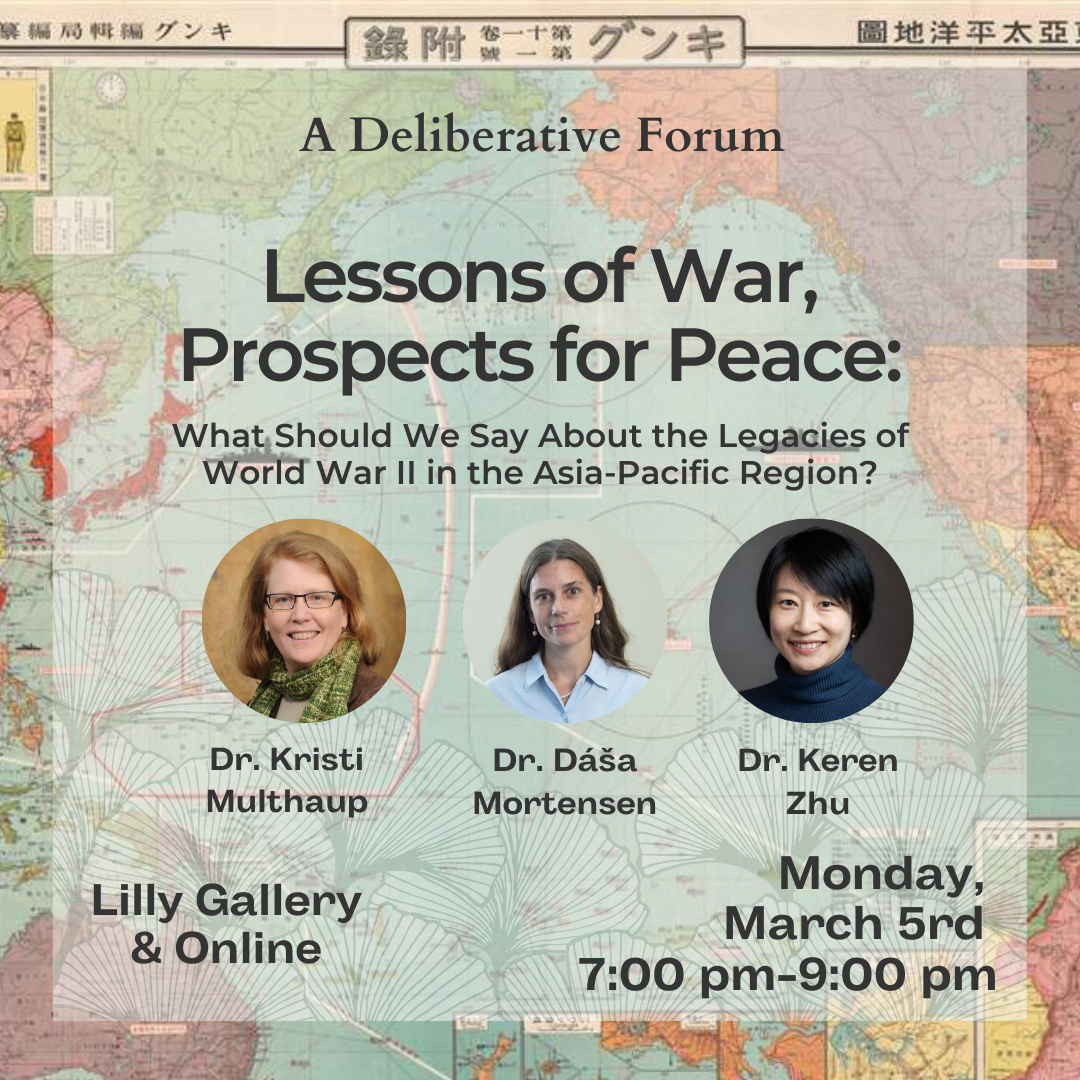
poster for ginkgo event

In the spring of 2024, eight ginkgo tree saplings were planted on the Davidson campus between the Library, the Wall Science Center, and Chambers. These saplings, descendants of trees that survived the US military’s atomic bombing of Hiroshima, were donated by Green Legacy Hiroshima to promote awareness about the dangers of warfare. While serving as powerful reminders of the devastation caused by nuclear weapons, the ginkgo trees’ symbolism has raised the concern that the project’s focus on the impacts on Japan risks overlooking the broader and more complex history of World War II in the Asia-Pacific. 

People from different countries in the region have different historical perspectives on the war, which make drawing a universal lesson from their experiences difficult. The ginkgo trees, therefore, encourage us to discuss these questions: What should we say about the legacies of World War II in the Asia-Pacific region? How can we craft an interpretation that honors the universal suffering caused by war while respecting the diverse ways nations and individuals remember this history? By approaching these questions with openness and a commitment to historical nuance, we reflect not only on the past but also on our shared responsibility for shaping a more peaceful future.

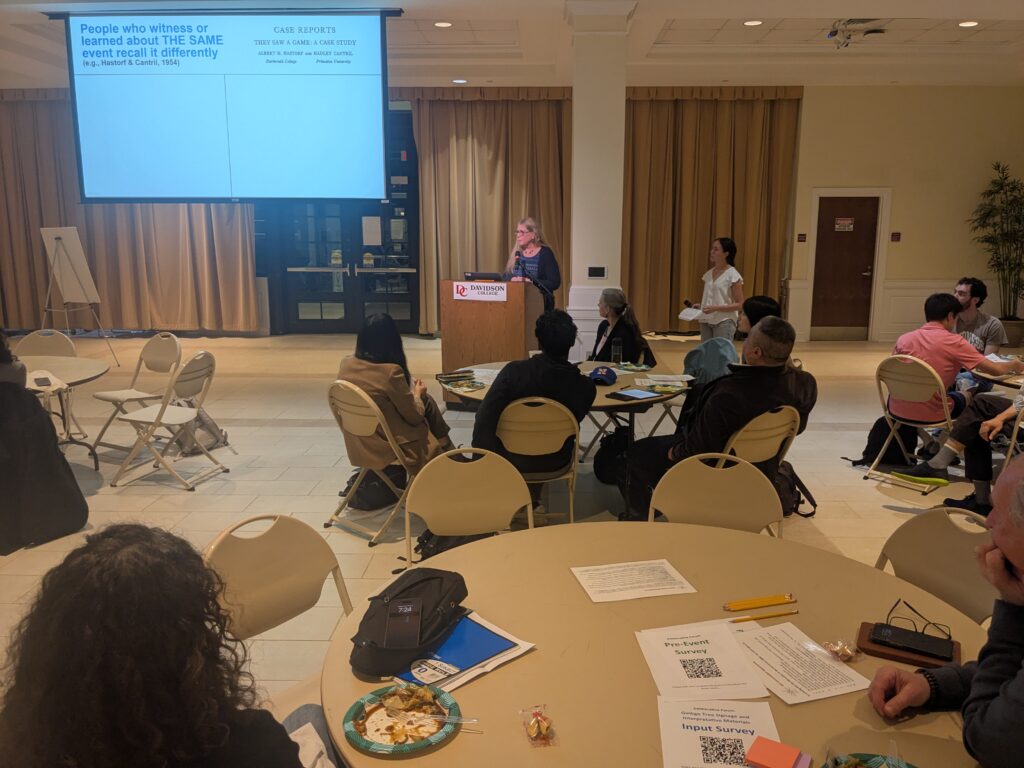
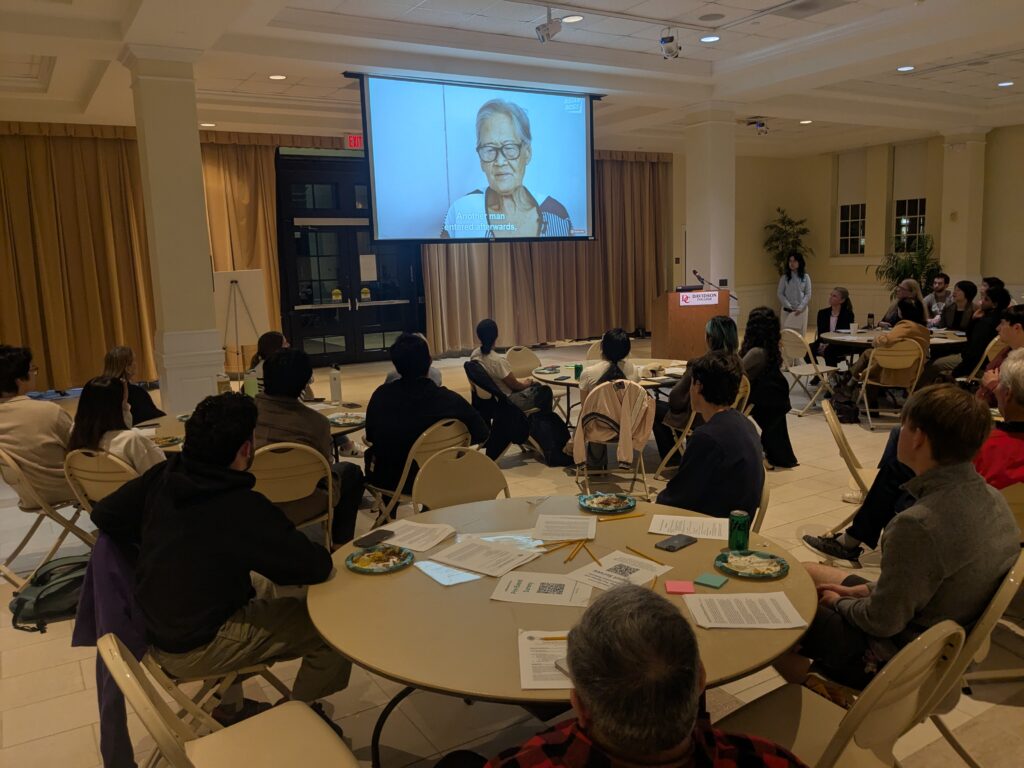
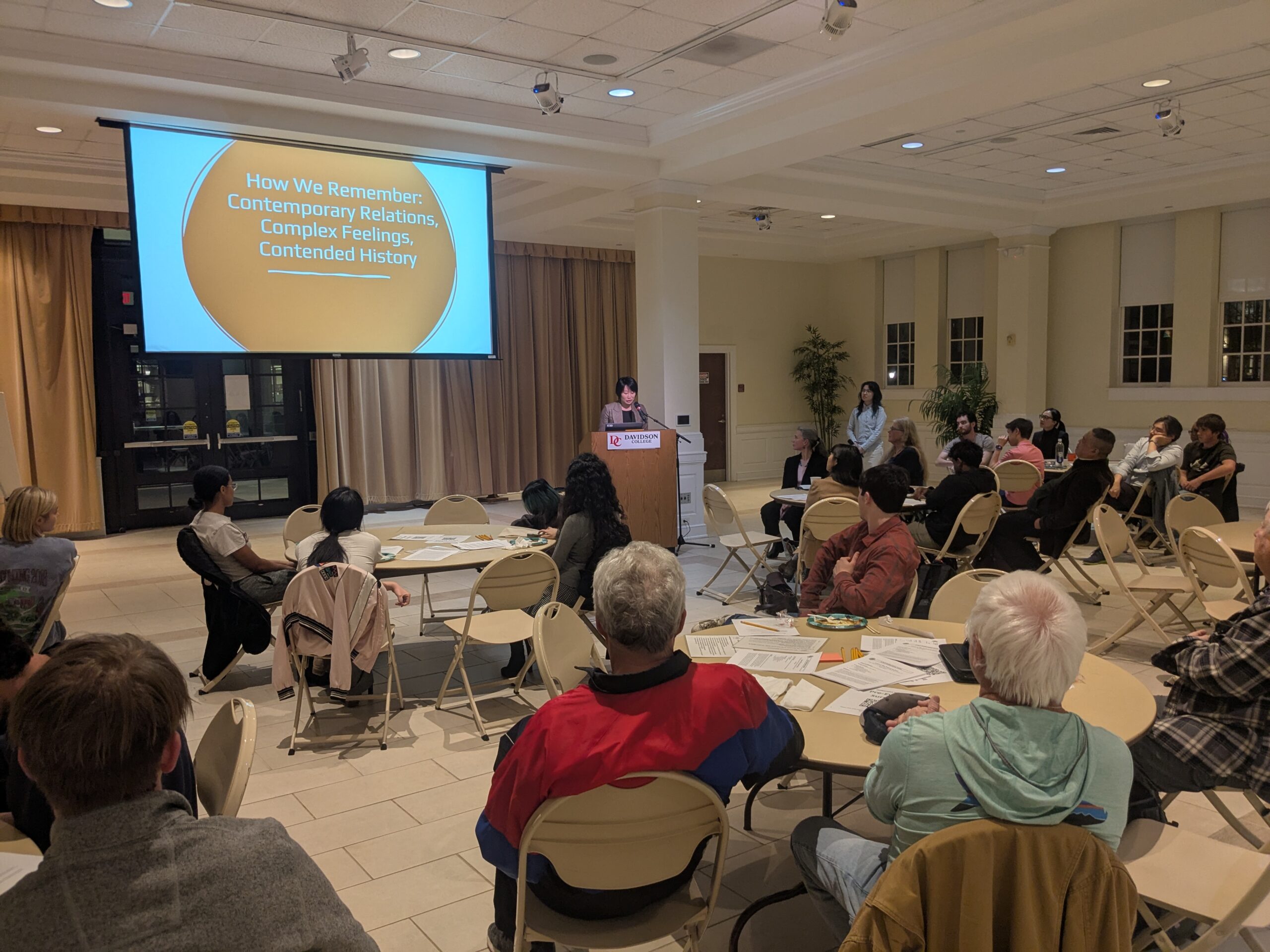
Davidson College’s Deliberative Citizenship Initiative invites you to join our Deliberative Forum on Wednesday, March 5th, where participants will first hear presentations from three speakers from Davidson College. Dr. Kristi Multhaup, Vail Professor of Psychology, will share the story of the ginkgo tree saplings and how they came to Davidson. Assistant Professor of History, Dr. Dáša Mortensen, will provide an overview of the history of World War II in the Asia-Pacific and its effects on the region. Dr. Keren Zhu, Assistant Professor of Political Science, will then examine how the war has shaped the collective memories of countries in the region and their relationships with each other today. 

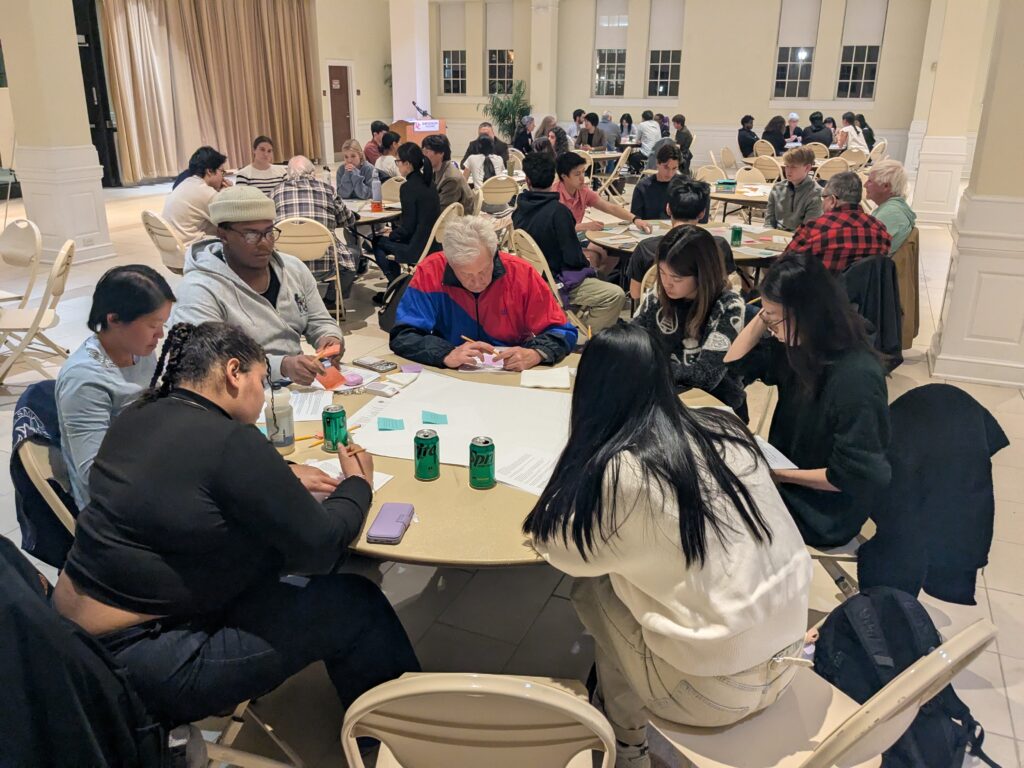
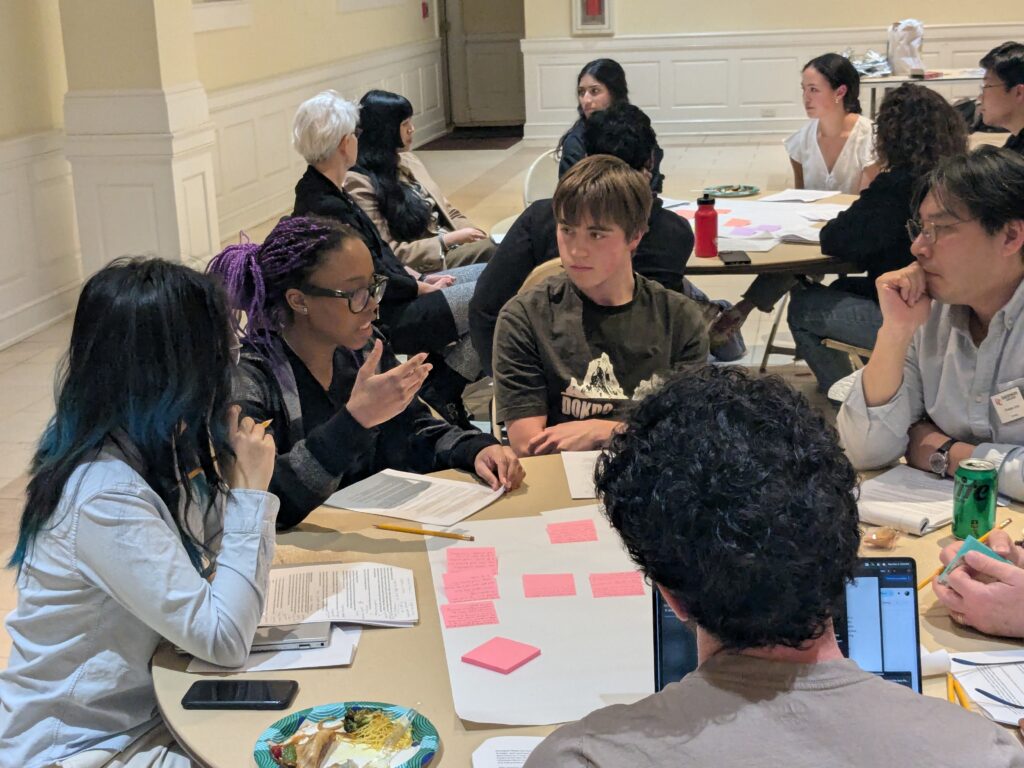
After the presentations, attendees at the forum will share their thoughts with each other about the legacies of WWII in the Asia Pacific. Facilitated by the DCI’s trained facilitators, these deliberations will generate ideas for signs and related interpretative materials that will be placed alongside the ginkgo trees on campus, representing the Davidson community’s reflections on the devastation of war and its aspirations for peace.

The event, which is co-hosted with the Office of the Vice President for Academic Affairs, East Asian Studies, History, and Political Science Departments, will be both in person in the Lilly Gallery and online over Zoom on March 5 from 7:00 pm to 9:00 pm. Find out more about the event and sign up to attend the forum by March 2 at this link. We look forward to seeing you and hearing your thoughts at the event!

Registration is required as dinner will be served as part of the event (from Sabi!). Sign up today as seats are limited!

Register for the Forum Here

This event has been planned by a team of Davidson students and faculty, including Keya Zhou ’25, Luna Noguchi ’25, Flo Moser ’26, Romeo Norris ’27, Casey Scheiner ’28, Lily Ogawa ’28, and Dr. Graham Bullock…To learn more about this project, check out the Ginkgo Project overview document below.

DCI-Gingko-Tree-Project-Summary

Filed Under: DCI Posts, Events

The 2024-25 DCI Fellows Cohort

January 29, 2025 by Graham Bullock Leave a Comment

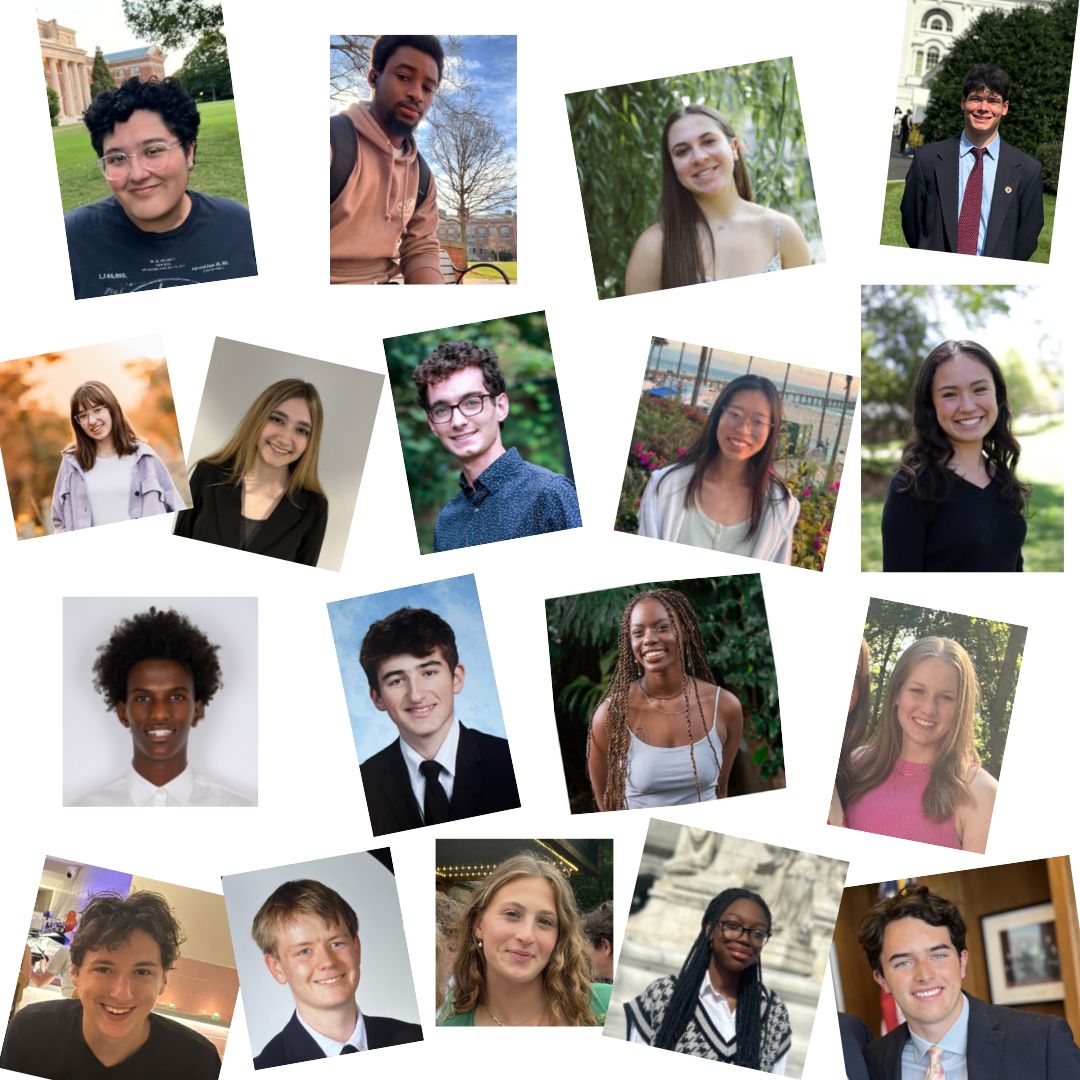
montage of Fellows photos

We’ve just uploaded photos and bios for all of our current 2024-25 DCI Fellows – 19 Davidson students who applied and were selected to participate in the Deliberative Citizenship Fellows Program. These students include first years through seniors, international students, and Division I athletes; they are majors in computer science, biology, political science, Russian studies, data science, educational studies, Latin American studies, physics, economics, communication studies, and more. They have all gone through the DCI’s intensive deliberation facilitation training program and continue to meet weekly throughout the academic school year.

They also complete the Collaborative Dialogue Institute’s Perspectives training program and read and discuss texts about deliberation and public discourse together. They facilitate the DCI’s D Teams and small group discussions at its Deliberative Forums, which they prepare for in advance by engaging in practice deliberations and debrief about them afterwards, sharing how the deliberations went and how they might improve in the future. In the spring semester, they also complete their own personal deliberation projects on topics of interest to them. After their first year as Fellows, they can continue to work with the DCI as Senior Fellows and Student Co-Conveners.

To learn more about the backgrounds of our current Fellows, check out this page with their bios and photos.

Filed Under: DCI Posts

Yes, It is Possible: You Can Deliberate, Eat Pizza, and Play Ping Pong Simultaneously!

January 29, 2025 by Graham Bullock

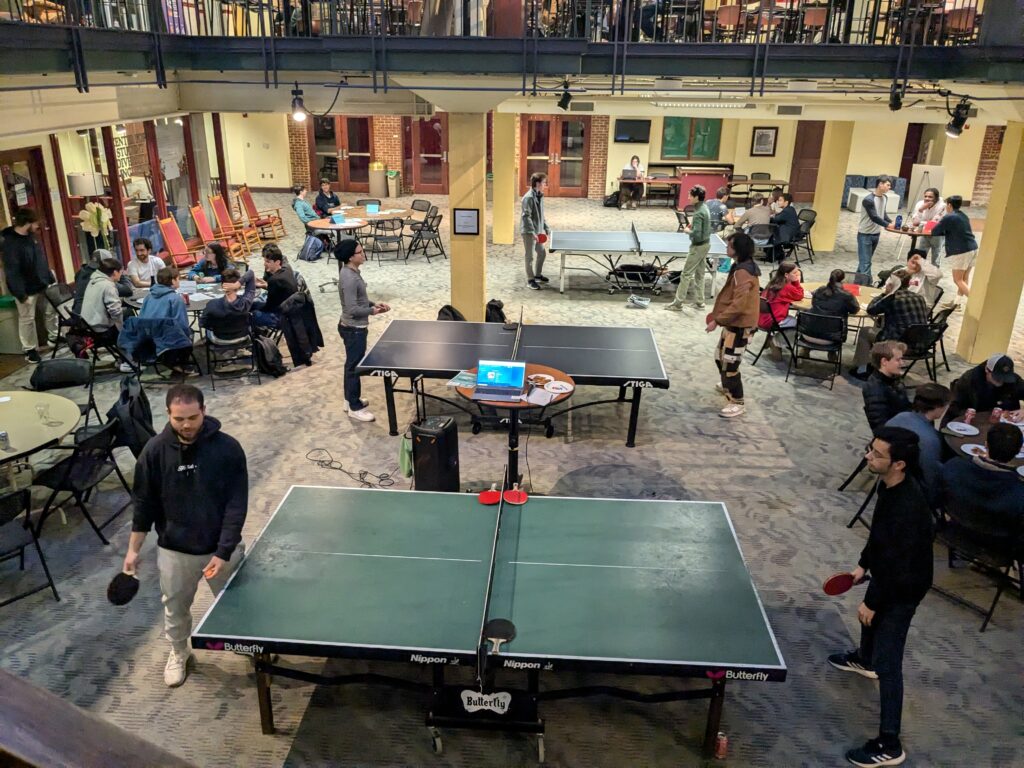
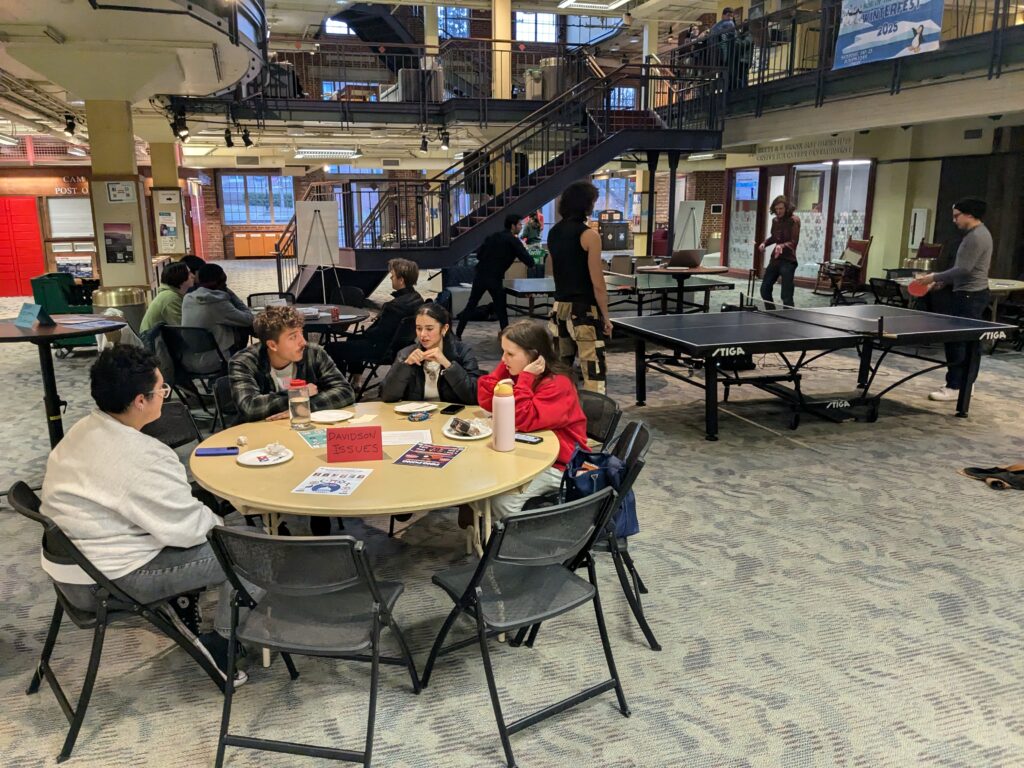
photo of students deliberating around a table with ping pong in the background.

For the last several years, the DCI has hosted a kickoff party at the beginning of every semester to create a space for students and other members of our community to get together after being apart over the winter and summer breaks. These parties are designed to be low-key and fun – we have music, provide pizza, and give away prizes throughout the event. We also provide a lightly structured opportunity for people who join us to talk about a range of interesting topics – political and social issues, economic and education issues, and a mix of thought-provoking and light-hearted life questions. Throughout the event, we also share information about upcoming DCI events and some quick tips on how to deliberate constructively and respectfully across differences.

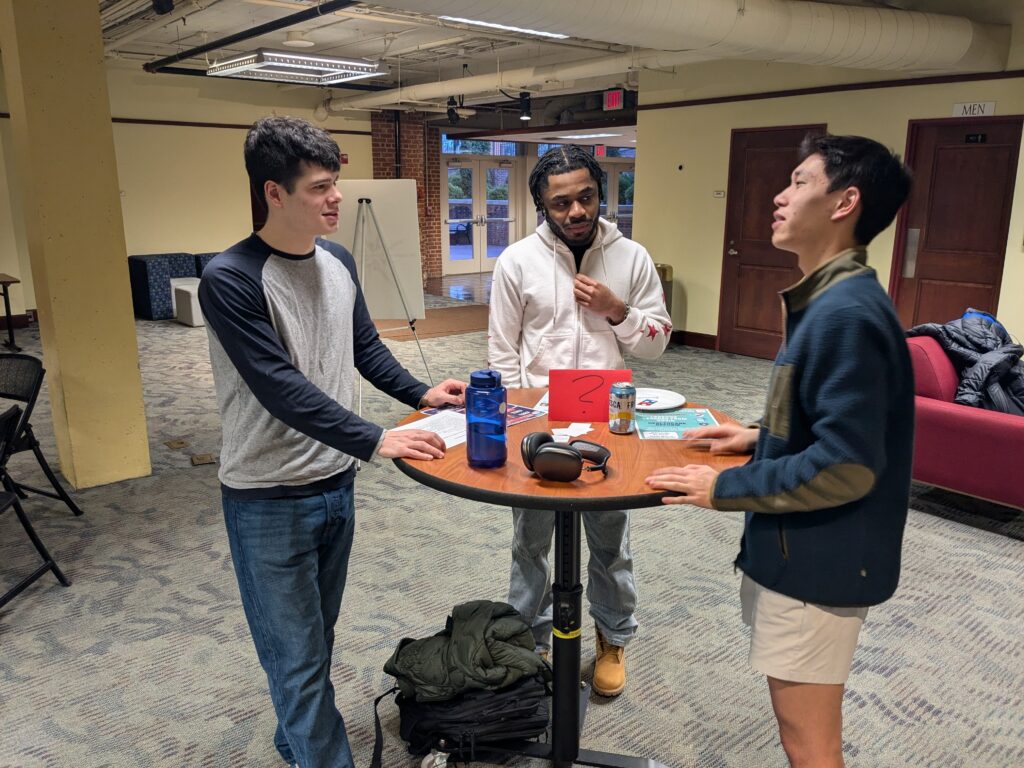
group of three people eating pizza and talking

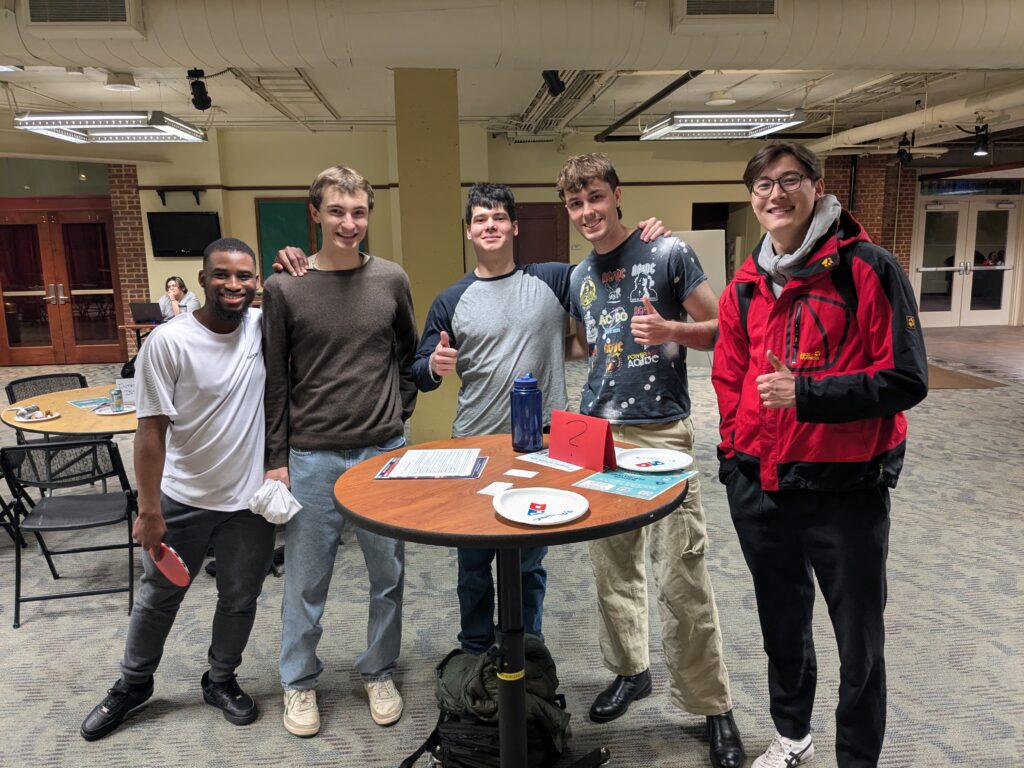
This spring we mixed it up a little bit by co-hosting the event with the Ping Pong Club and enabling people to play some ping pong in between their bites of pizza and their conversations with new and old friends. While there were a few errant balls that might have hit people as they returning for a second piece of pizza :), it was a great mashup of physical activity and dynamic discussions. We had nearly 50 people join us, many of whom had never attended a DCI event before, and several signed up for our upcoming DCI programs.

tables of people talking and playing ping pong

Table discussions were thoughtful and engaged, guided by our DCI Fellows. Every fifteen minutes or so, people were invited to move to a different table to explore a different set of topics. Some certainly did so, but many stuck with their current conversation partners, happy to further engage with one another on the questions raised at their table.

tables of people talking and playing ping pong

Overall, it was a great way to kickoff the semester and continue our efforts to promote a more deliberative culture on campus, and to show how deliberation can be fun and welcoming for everyone (ping pong players and non ping pong players alike!).

group of guys standing and smiling

Filed Under: DCI Posts, Events

We’re Hiring!

January 26, 2025 by Graham Bullock Leave a Comment

Image of "job opportunity" with DCI logo

The Deliberative Citizenship Initiative is hiring a new Program Coordinator! We are seeking an energetic and hard-working person to join our team and coordinate the implementation of the initiative’s programs. These include our efforts to create opportunities for productive dialogue and deliberation in diverse classroom settings, outside of the classroom, and in the community. 

Responsibilities include organizing the logistics of the Initiative’s meetings, programs, and events; maintaining and updating the initiative’s website and social media presence; and managing the data collected by the DCI about its programs. The position is also responsible for managing and tracking the expenses and budget of the Initiative and working on special projects related to the mission of the DCI.

Visit the Davidson website to learn more about the position and the application process.

Filed Under: DCI Posts

Thanksgiving after the Election

November 26, 2024 by Graham Bullock

Thanksgiving images with people talking and Donkey and Elephant in their thoughts, with the word Connect between them.

Every year around Thanksgiving you can find a stream of advice about how to engage with family with different political viewpoints across the dinner table (and the DCI has contributed our fair share). The supply of these missives likely peaks in presidential election years, and the demand for them may be at its highest after our most recent election. Indeed, many Americans feel a deep sense of disconnection from, disillusionment with, and even disgust for those who voted for the candidate they most despise.

These feelings build on a normal and natural desire to step from politics after an election and return to focusing on other important spheres of our lives. Even when elections are not as fraught as they currently are, it is not surprising that we want to escape from the political and re-discover our other passions – whether that be on Netflix, in books, on hikes, or elsewhere.

Whether our candidate won or lost, such escape may be healthy and even critical for us at this point. It can enable us to step back, get perspective, and restore ourselves. It can help us re-focus our energies and return to our interest in politics with a fresh perspective. Because at some point, we must return to it; if we care about our collective life together, if we care about one another and the directions our society follows, then we owe it to ourselves and each other to re-engage in some form or another.

Okay, fine, you say, but do I have to do it at Thanksgiving? Can’t I wait until at least the New Year, or maybe 2026? Perhaps, and everyone must make their own decision on when and how best to re-enter the political conversation. But family gatherings, perhaps ironically, offer a special opportunity for trying out new approaches and different modes of engagement after consequential political events.

How so? By enabling us, first within the space of our closest relations, to re-commit to following the Golden Rule of “loving your neighbor as yourself.” We can ask ourselves, if your candidate had lost (when in fact they won), how would you want those whose candidate had won to treat you at those gatherings? Certainly not by making snide, sarcastic, or acerbically triumphant remarks, but probably also not by just ignoring you or the subject.

Instead, how meaningful would it be to you, if that sister whose candidate won, authentically, earnestly, and sincerely asked you, in a quiet moment after dinner perhaps, “You know, I know we voted differently, and I know how upset you must feel about the outcome. I’m concerned about you – how are you doing?” What if they were truly open to hearing your concerns and just listening – and responding as patiently and respectfully as possible, when asked, “How could you vote for that person?”

And likewise, if your candidate had won (when in fact they lost), how would you like those whose candidate had lost to treat you? Also probably not with biting criticism, doomsday rhetoric, or willful silence. But what if instead, that brother whose candidate lost, said to you, honestly and directly, “You know, I know we voted differently, and I know how happy you must feel about the outcome. But frankly, I’m really struggling with understanding it; maybe you can help me. Why do you think so many people voted the way they did?” What if they were truly open to hearing your analysis and just listening – and asking as respectfully as possible, “And why did you vote for that person?”

There is some asymmetry here – a basic ethic of care and compassion suggests that the victor has a little more moral responsibility to reach out to the vanquished.  But the vanquished also have a duty to treat the victor as a human being as well. Humility, generosity, and curiosity are all important virtues – and deliberative dispositions – to cultivate in these moments.

I was recently invited by a group at Davidson College Presbyterian Church to speak about “Civil Discourse after the Election: Pitfalls and Pathways Moving Forward.” In my talk, I referenced some biblical passages that provide some guidance on why and how to adopt these dispositions. To those who have been victorious, Proverbs 24:17 suggests, “Do not gloat when your enemy falls; when they stumble, do not let your heart rejoice.” To those who have been defeated and feel (or fear) persecution, Matthew 5:43-44 encourages, “You have heard that it was said, ‘Love your neighbor and hate your enemy.’ But I tell you, love your enemies and pray for those who persecute you.”

Similar advice is offered by many different faith and secular traditions, and they all suggest we should avoid the vices of both conceit and contempt – the habit of thinking ourselves better than others and believing those others to be unequivocally worthless. Instead, we should aim to be both humble and courageous – humble enough to recognize we might be wrong and brave enough to discover when others might be right.

Sounds great in theory, perhaps, but how do we enact these principles in practice? The DCI has developed a Guide to One-on-One Conversations, which maps out a process that you can follow before, during, and after a discussion with someone who you disagree with. Establishing expectations, setting the tone, asking good questions, listening actively, sharing respectfully; these are just a few of the suggestions it includes that may be helpful.

But perhaps the most important thing to remember, as you pass the Thanksgiving sides across the table, is the goal. Given the deep pain, frustration, and division that many of us are feeling, our objective at this point should probably not be to win an argument or persuade one another of the rightness of our side. Instead, we should first focus on re-discovering our common humanity, our common joys and concerns, our love for one another. First seek to heal and to understand; as Sara Copic wrote in her Thanksgiving blog post last year, “By approaching our deep disagreements with curiosity first, we may be able to build the trust needed in order to have the hard conversations we would like to have together.”

Have a restful and restorative Thanksgiving that has its share of escape, rediscovery, and perhaps a small bit of empathetic conversation across our family and political divides.

Filed Under: DCI Posts, Faculty Posts

  • « Go to Previous Page
  • Page 1
  • Interim pages omitted …
  • Page 4
  • Page 5
  • Page 6
  • Page 7
  • Page 8
  • Interim pages omitted …
  • Page 11
  • Go to Next Page »

Footer

Blog Post Categories

  • Announcements
  • Blog Posts
  • DCI Posts
  • Events
  • Faculty Posts
  • Fellow Posts
Image of a compass superimposed by the text "Deliberative Citizenship Initiative" and "Davidson College." Clicking on this image leads to the Initiative page.

Recent DCI Blog Posts

  • We Tried to Fix Jubilee’s “Middle Ground” – Here’s How It Went
  • A Case for Deliberation in the Natural Sciences
  • Welcoming New Staff to the DCI and DCN
  • Facebook
  • Twitter
  • Instagram
  • LinkedIn


Copyright © 2026 · Infinity Pro on Genesis Framework · WordPress · Log in