• Skip to main content
  • Skip to footer

Deliberative Citizenship Initiative

Building Democracy One Conversation at a Time

  • The Initiative
    • Programs
      • Deliberation Across the Curriculum
      • Deliberation on Campus
      • Deliberation in the Community
      • Research on Deliberation
    • Motivations
      • Why Deliberative Citizenship?
      • Why Davidson? Why Now?
    • Who’s Involved?
      • DCI Fellows Cohorts
        • 2025-2026 Fellows
        • 2024-2025 Fellows
        • 2023-2024 Fellows
        • 2022-2023 Fellows
        • 2021-2022 Fellows
        • 2020-2021 Fellows
      • DeeP Collaborative Cohorts
        • 2024-2025 DeeP Collaborative Faculty
        • 2023-2024 DeeP Collaborative Faculty
      • Advisory Council
    • History
      • What Sparked the Initiative?
    • Key Deliberative Dispositions
    • Frequently Asked Questions (FAQ)
    • Annual Report
  • Get Involved!
    • Participate in a Forum
    • Join a D Team
    • Become a Fellow
    • Take Courses
    • Get Training
    • Come to Guest Lectures
  • Events
    • Upcoming Events
      • 250th Anniversary Deliberative Forum Series on American Values
    • Past Events
  • Connections
    • The Deliberative Citizen: The DCI’s Monthly Newsletter
    • Efforts on Campus
    • Efforts in the Community
    • Efforts Elsewhere
    • Readings and Resources
      • DCI-Published Guides
      • DCI Guide to One-on-One Conversations
      • How to Disagree
      • Demonstration of Facilitation Styles
      • Deliberative Pedagogy Mini-Course
    • How We Can Help: DCI’s LET’S DELIBERATE! Partnership Opportunities
    • DCI in the News
  • DCI Blog Posts
    • Recent Blog Posts
    • All Blog Posts

DCI Posts

DCI Co-Organizes Inaugural North Carolina Campus Discourse Leaders Conference

June 28, 2024 by Graham Bullock

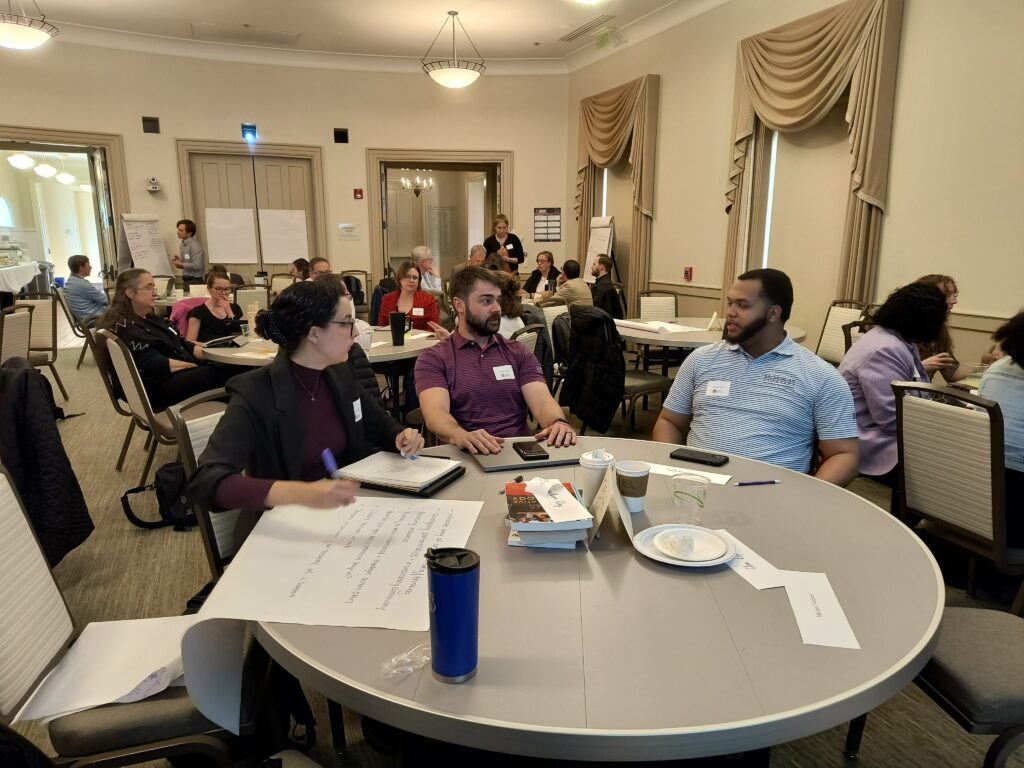
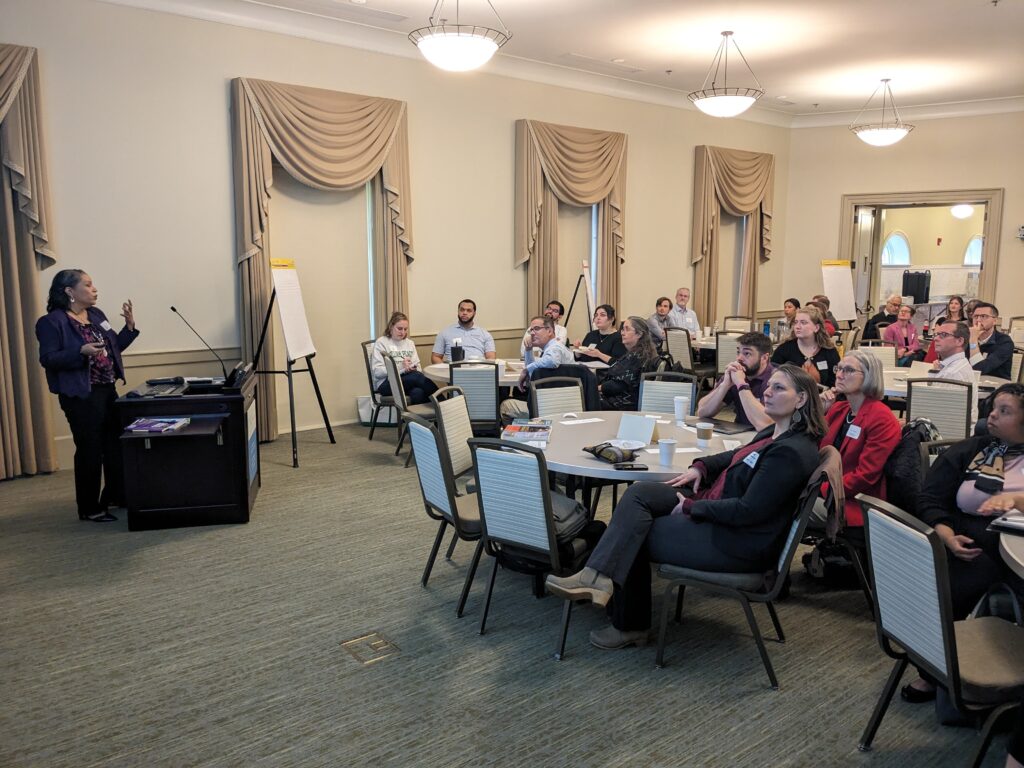
Participant presenting at conference

Faculty and staff who work on improving public discourse on college campuses can often feel disconnected from similar efforts at other institutions, even those that are very nearby. The Deliberative Citizenship Initiative recently collaborated with several other organizations to organize an opportunity for these public discourse scholars and practitioners to share ideas, practices, and challenges with one another.

On April 5, the DCI, the Program for Public Discourse at the University of North Carolina at Chapel Hill, the Kernodle Center for Civic Life at Elon University, and the Free Expression and Constructive Dialogue Task Force at the University of North Carolina at Charlotte, and NC Campus Engagement (a consortium of 41 higher education institutions in North Carolina) partnered to host the inaugural North Carolina Campus Discourse Leaders Conference.

Over 40 faculty and staff members representing 18 different institutions of higher education from across North Carolina attended the day-long conference. They included participants from state universities (e.g., North Carolina State, Western Carolina University), private universities (e.g., Duke University, Wake Forest University), historically black colleges and universities (e.g., North Carolina Central University, Winston Salem State University), and community colleges (e.g., Wake Tech Community College, Durham Technical Community College) and came from the eastern, western, central, and southern regions of the state.

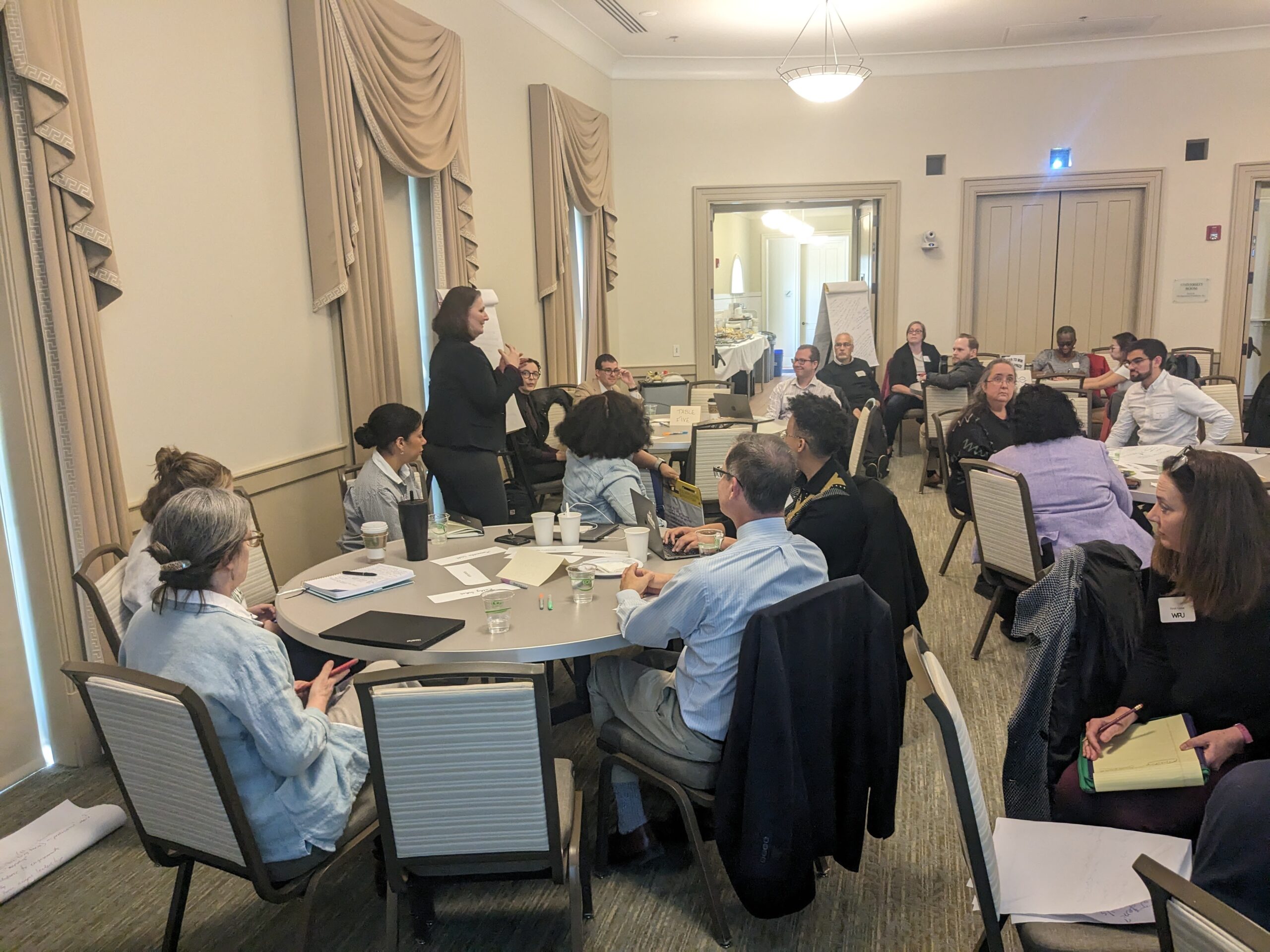
Participants discussing around a table

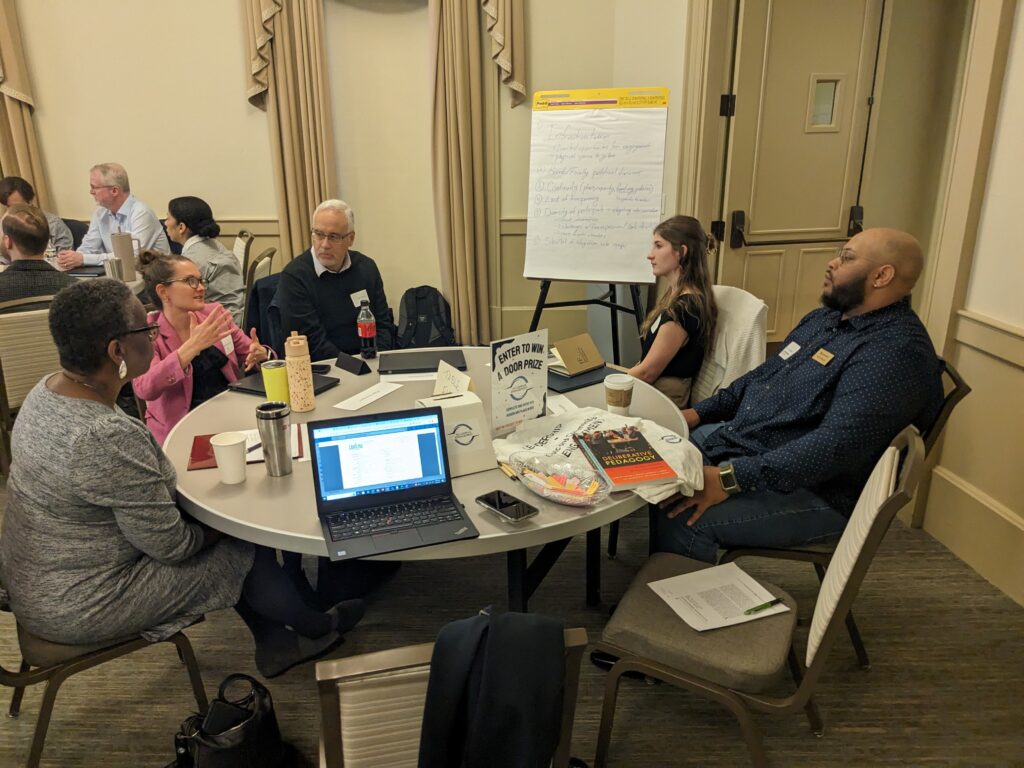
Hosted at the University of North Carolina  at Chapel Hill, the conference provided an opportunity for participants to share their approaches and challenges that they have experienced at their institutions. They were also able to learn from each other in highly interactive breakout discussions with colleagues at institutions that are both similar to and different from their own.

The conference was structured into four sessions, each beginning with an introductory presentation on a key topic of discourse from the co-organizing partners before opening into round-table discussions. Campus discourse leaders shared the strategies they have been implementing in their own programs, discussed challenges they have been faced with, and offered future points of discussion. Session topics included:

  • The Context of Public Discourse on College Campuses Today
  • Strategies for Fostering Robust Discourse in the Classroom
  • Strategies for Fostering Robust Discourse on Campus and in the Community
  • Strategies for Connecting and Collaborating across Campuses
Participants discussing around a table

The NC Campus Discourse Leaders Conference inspired a commitment to ongoing collaboration and support among attendees and organizers, with plans already underway for future events and initiatives aimed at advancing the mission of dialogue and discourse on college campuses statewide.

Participants left the conference with a new network of colleagues from across North Carolina, new opportunities for collaboration on projects related to public discourse, and new ideas to consider and implement back on their campuses. 

Special recognition is due to the great team of partners who made this event possible. Kevin Marinelli and Alissa Bouttavong from the UNC-Chapel Hill Program for Public Discourse were amazing hosts who spearheaded the logistics of the conference and worked closely with the co-organizing planning team of Leslie Garvin (NC Campus Engagement), Graham Bullock (Davidson College), Matthew Metzgar (UNC Charlotte), Anne Moore (UNC Charlotte), and Andrew Moffa (Elon University). The team met regularly for nearly a year to organize the conference and is looking forward to following up on its success in the months to come.

Leslie Garvin presenting at the NC Campus Discourse Leaders Conference.
Leslie Garvin from North Carolina Campus Engagement
presenting at the NC Campus Discourse Leaders Conference.
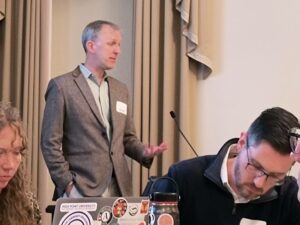
Graham Bullock presenting at the NC Campus Discourse Leaders Conference.
Conference co-organizer Graham Bullock from Davidson College presenting at the
NC Campus Discourse Leaders Conference.

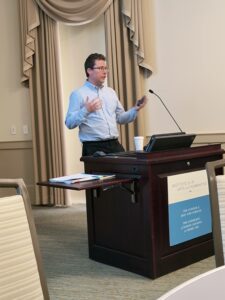
Conference host and co-organizer Kevin Marinelli from UNC-Chapel Hill presenting at the
NC Campus Discourse Leaders Conference.

Kevin Marinelli presenting at the NC Campus Discourse Leaders Conference.
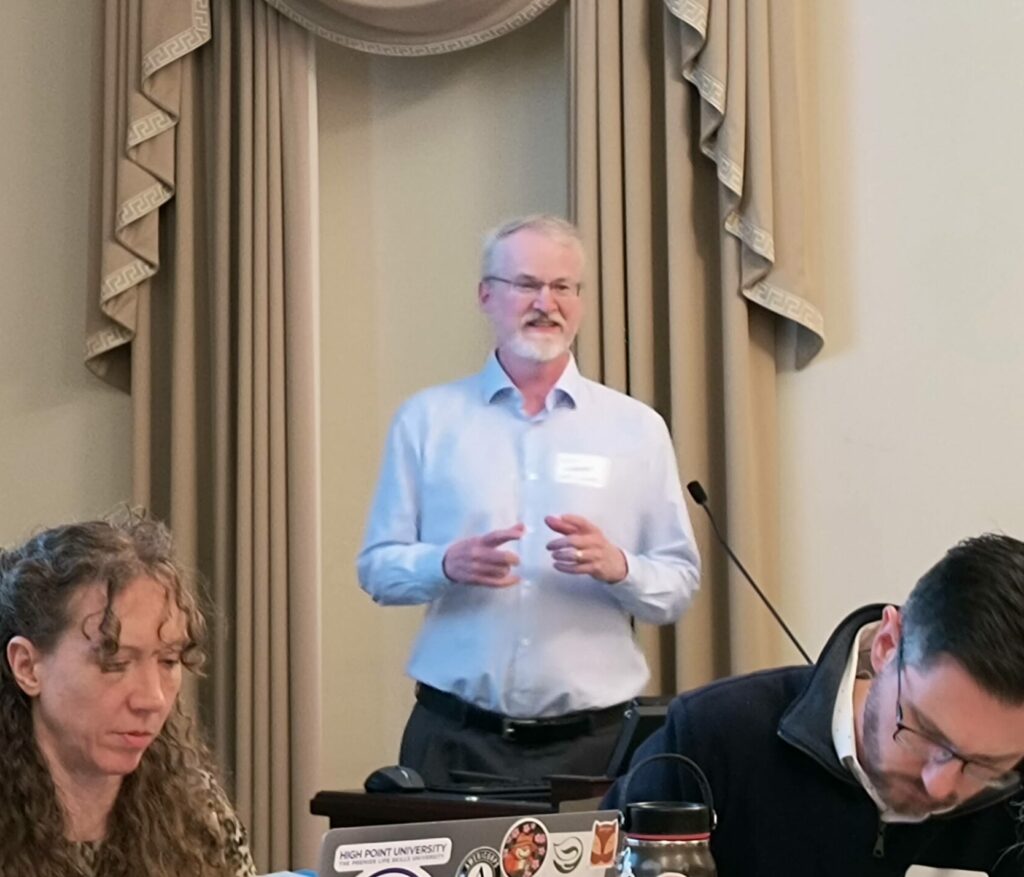
Matt presenting at the NC Campus Discourse Leaders Conference.
Matt Metzgar from UNC Charlotte presenting at the NC Campus Discourse Leaders Conference.

Filed Under: Blog Posts, DCI Posts, Events

The DCI Fellows Program – Check out the New Video about this Opportunity Not To Be Missed!

May 4, 2024 by Graham Bullock Leave a Comment

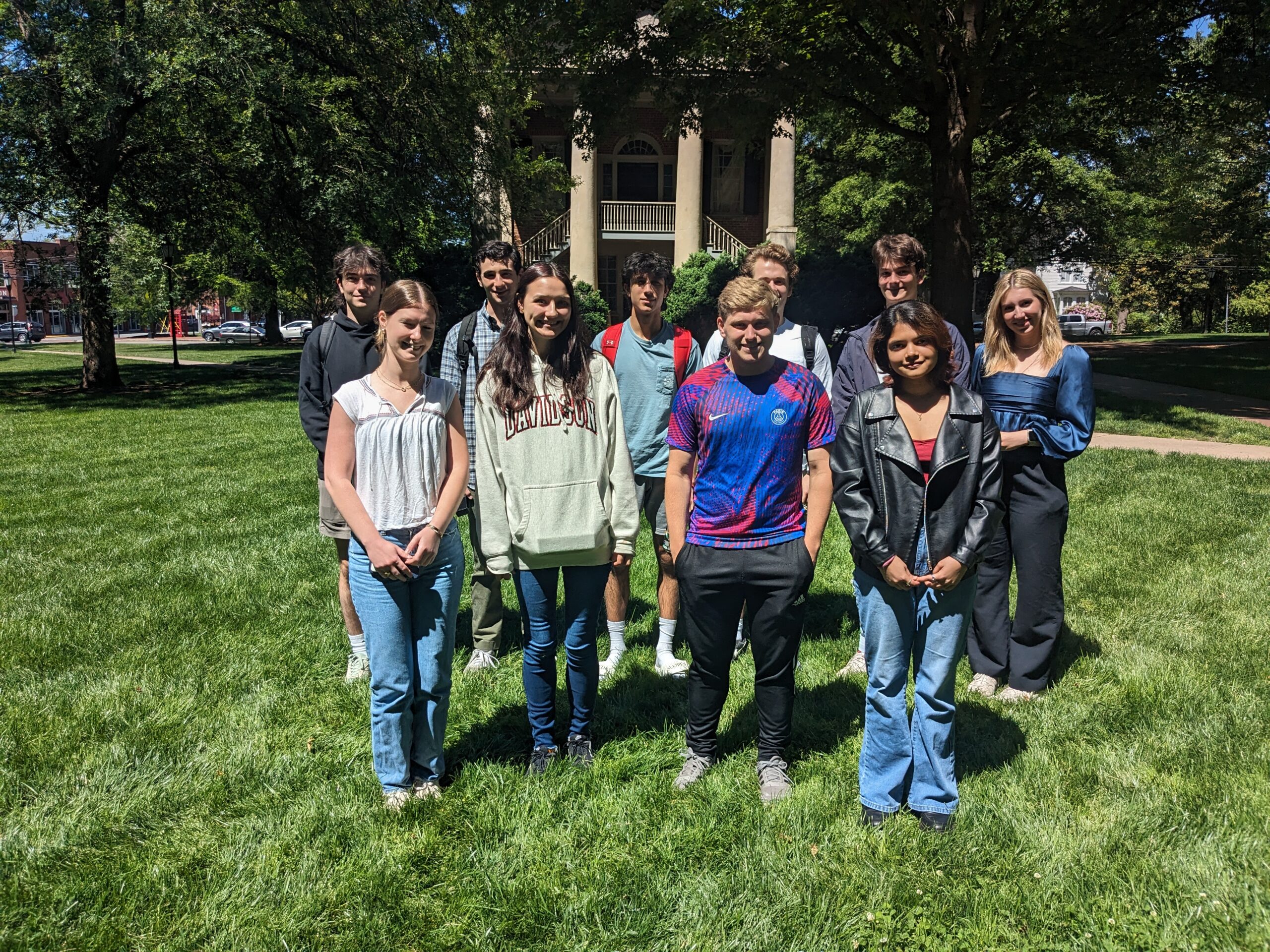
Picture of DCI Fellows.

Each year, the DCI selects 12-15 students to serve as Deliberative Citizenship Fellows.  These fellows spend the year playing a leadership role in the initiative.  They immerse themselves in deliberative theory and methods, help choose the issues for the year’s focus, facilitate robust deliberations on those issues, and reflect on and document their experiences as sponsors of these discussions.

Applications for the 2024-25 Fellowship Program are now open. All Davidson students are welcome to apply. To submit your application, please complete the ‘Deliberative Citizenship Initiative – Fellows Application’ form on WildcatSync. The priority application deadline is May 30. Applications will remain open and new submissions accepted on a rolling basis until July 31 or once all positions have been filled by qualified candidates. To learn more and apply for this opportunity, check out the short video about the program that features several of the DCI’s 2023-24 Fellows and the additional information below.

Fellows-2024-25-Flyer


DCI-Fellows-2024-25-Job-Description

To apply, click on the link below:

  • Deliberative Citizenship Fellows Application

Filed Under: Announcements, DCI Posts, Fellow Posts

Apply Today to Become a DeeP Faculty Fellow!

March 29, 2024 by Graham Bullock Leave a Comment

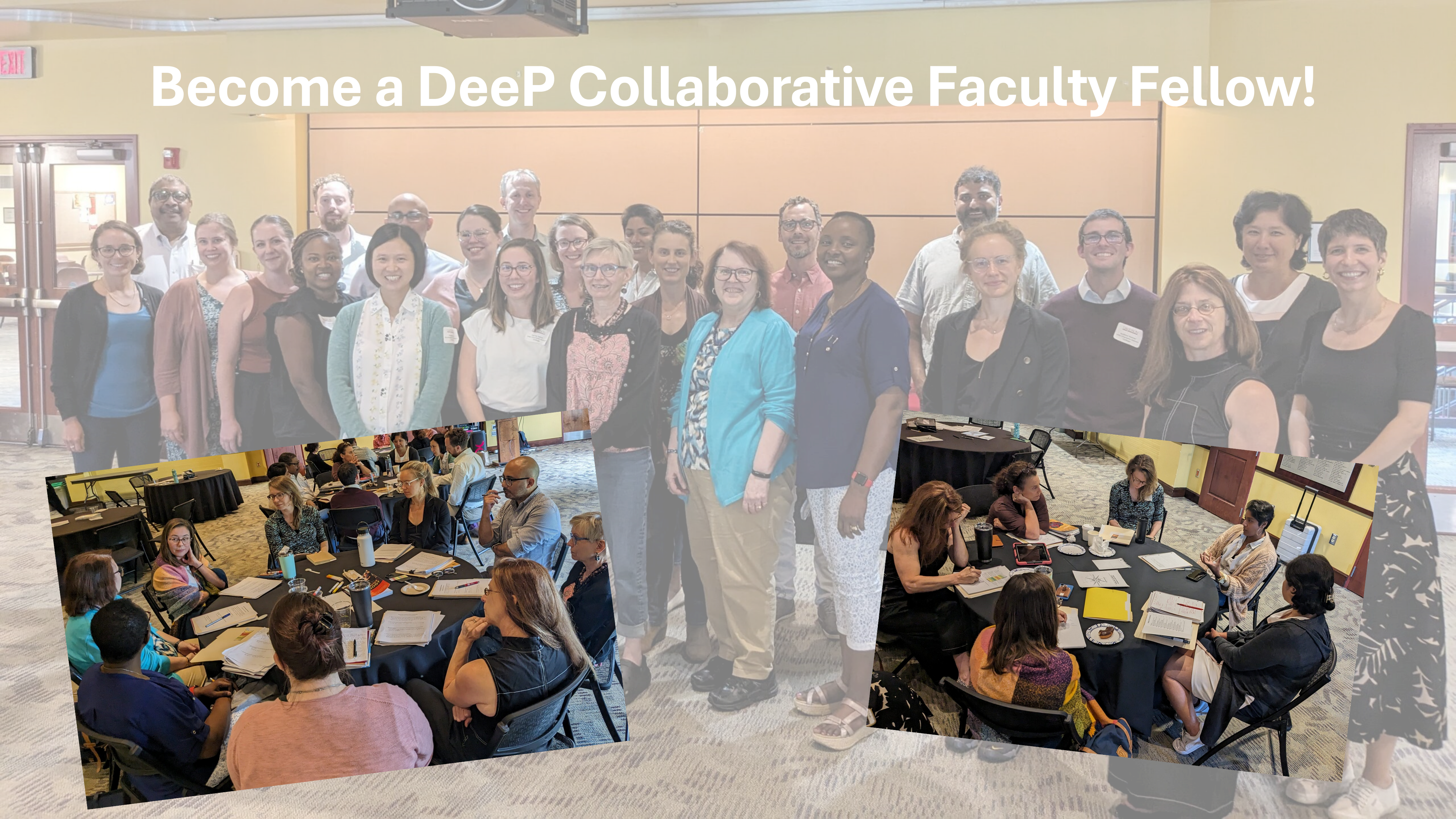
Multiple images of fellows working in the 900 room at the Davidson College Union.

The DCI invites all full-time faculty members who teach undergraduates to apply to participate in the fourth year of its Deliberative Pedagogy (DeeP) Collaborative. Applications to join the Collaborative are welcome from faculty in all departments at both Davidson and other higher education institutions who wish to enhance their ability to embed more deliberation about questions and issues involving important disagreements in their classes. With the generosity of the Arthur Vining Davis Foundations, the DCI is able to provide a stipend of $2000 for participants who complete the expectations of the Fellowship. Review of applications will begin on Monday, April 22 and will continue until all spaces are filled.

DeeP-Collaborative-2024-Poster

So far over 40 faculty members from Davidson and 18 other colleges and universities — from UNC Charlotte and Alamance Community College to Swarthmore College and Southwestern University — have participated in the Collaborative. Collaborative members spend an academic year learning about and discussing deliberative pedagogy theory and techniques, embedding them into their own course plans and syllabi, and then actually teaching courses that are infused with deliberation in a multitude of ways. They have come from a wide range of social science, humanities, and natural science disciplines, including Africana studies, anthropology, archaeology/classics, biology, management, chemistry, communications, dance, economics, education, English, environmental studies, gender and sexuality studies, German studies, Hispanic studies, history, mathematics, philosophy, physics, political science, public health, sociology, and more.

Check out the comments from some of the Collaborative’s members below:

  • Luis Gonzalez-Barrios (World Languages and Cultures, Spelman College): “The planning process of the course was very interesting, since it not only made me think about the new DeeP materials, but also about the way of organizing the sessions, the periodization of the modules, and of course the forms of evaluation. I mean, it made me rethink my entire pedagogical approach…Experiential learning and democratic deliberation seem to me necessary pedagogical approaches in times of constant “noise” and polarization.”
  • Rachel Pang (Religious Studies, Davidson College): “One of the best things about participating in the DeeP Collaborative was the chance to engage with a group of experienced and creative pedagogues at Davidson and other ACS institutions.”
  • Caleb Stroup (Economics, Davidson College): “Overall, I think students benefited greatly from structured deliberation aimed at developing their abilities to reach collective agreement about competing values embedded in scientific research conclusions.”
  • Emily Sydnor (Political Science, Southwestern University): “Overall, I found the deliberative discussions and affiliated assignments achieved my course goals and were interesting and engaging for both me and the students. In their reflections on deliberation, several participants commented that in spite of their initial anxiety about talking politics with their peers, they had found the discussions to be a positive experience.” 

You can learn more about the Collaborative experience by watching a panel of four faculty members who have been DeeP Fellows in earlier Collaborative cohorts. Check out the recording below…

You can also learn more by reading the blog posts by these and other faculty members about the courses they developed as members of the Collaborative that are posted on the DCI Blog and listed below:

  • Rachel Pang (Davidson; Religion): “Student-Driven, Curiosity-Focused Deliberation in a Chinese Religions Course”
  • Luis Gonzalez-Barrios (Spelman; World Languages and Cultures): “’Seeing Many More Angles than Usual:’ Deliberative Pedagogy in a Spanish Course on Feminism, Democracy, and Utopia”
  • Anthony Kuchera (Davidson; Physics): “The Fusion of Nuclear Technologies and Policy in a First-Year Writing Course”
  • Melissa Gonzalez (Davidson; Gender and Sexuality Studies/Hispanic Studies/Latin American Studies): “Deliberation across Disciplines: Lessons from a Course in Gender and Sexuality Studies”
  • Camille Lewis (Furman; Communication Studies): “From the Big Picture to Micro-Deliberations: Argumentation Meets Deliberative Pedagogy” 
  • Joshua Yesnowitz (Davidson; Writing Program/Political Science): “Writing Deliberatively”
  • Kata Chillag (Davidson; Public Health): Conversations about Cases: Integrating Deliberation into a Public Health Ethics Seminar
  • Nathan Nobis (Morehouse; Philosophy): A “Fair and Balanced” Approach to Deliberation in a Philosophical Ethics Course
  • Dan Aldridge (Davidson; Africana Studies/History): From Imperialism to Civil Rights: Debating and Discussing American History in HIS 142
  • Kyra Kietrys (Davidson; Hispanic Studies/Global Literary Theory): Deliberating about Collective Memory in a Hispanic Studies Course on the Comics and Graphic Novels of Spain
  • Robert Vander Poppen (Rollins; Art and Art History): Saving the Republic: Re-Enacting and Learning from a Key Deliberative Moment in Roman History
  • Caleb Stroup (Davidson; Economics): Mapping Arguments and Weighing Values in an Economics Seminar
  • Emily Sydnor (Southwestern; Political Science) Psyching Ourselves Out: Applying Political Psychology to Deliberative Discussion
  • Greg Snyder (Davidson; Religion) “What does the Bible Say?” Deliberating Across Difference in a Course on the Bible and Modern Moral Issues
  • Jessica Worl (Davidson; Environmental Studies): The Political Classroom in Practice: Roleplaying Deliberations in a Political Ecology Course
  • Eric Anderson (Furman; Philosophy) Hot-Button Issues in Three Acts: Promoting Deliberation in a Social and Political Philosophy Course
  • Bassil El-Zaatari (Davidson; Chemistry): Catalyzing Pollution Solutions: Deliberation in a Polymer Chemistry Course

Blog posts from our 2023-24 Collaborative members will be published this summer (you can sign-up for updates on the DCI’s website). You can learn more about the 22 members of this cohort of the Collaborative here. More on the background, goals, and expectations of the Collaborative is provided in embedded PDF invitation below and on the DCI’s “Deliberation Across the Curriculum” webpage. 

DeeP-Collaborative-Invitation-2024-25

The 2024-25 cohort will also include faculty from both Davidson and other institutions of higher education – if you know someone who might be interested, encourage them to apply – all faculty are welcome! More on the background and goals of the Collaborative and DCI’s Deliberation Across the Curriculum is available here. If you have any questions about the Collaborative, please reach out to the DCI’s Faculty Director, Graham Bullock (grbullock@davidson.edu), or any of the Collaborative’s current or former faculty fellows.

Filed Under: Announcements, DCI Posts, Faculty Posts

Thanksgiving With a Side of Politics

November 22, 2023 by Sara Copic

Pumpkins and squashes at harvest time

By Sara Copic, DCI Assistant Director

It’s a commonplace saying in American culture that we shouldn’t talk about politics at family gatherings. And though American political polarization is nothing new, recent Israeli military raids in Gaza in response to the October 7th Hamas attack in Israel have the potential to deepen our political divides and leave us feeling more emotionally reactive, more prone to blaming one another, and potentially less willing to spend time together at Thanksgiving. Recent landmark Supreme Court rulings, former President Donald Trump’s ongoing trials, and an upcoming presidential election make the political stakes feel even higher.

What practices or intentions might help us have a Thanksgiving that connects us with our families, communities, and friends—and what should we leave at the door? One thing we have control over and that can help us connect is the practice of approaching a disagreement with genuine curiosity.

All too often, when we get into a discussion about a social or political problem, we fall into a debate—you have your reasons, I have mine, now let’s figure out who’s right and who’s wrong. But if we’re gathering to connect, as we hope to do at Thanksgiving, debate is likely not the right tool for the occasion. Instead, asking how someone came to hold their beliefs and why those beliefs are so important to them with openness and curiosity can better aid connection.

There’s a fine line between asking “why do you think that?” in the spirit of debate and in the spirit of curiosity. But asking questions that aim toward understanding rather than adversarial debate can show someone you really care, rather than that you’re looking for a fight. One way to show genuine curiosity is not to follow up on those questions right away with opposing positions and arguments, but to sit with where the other person is coming from. Making space for their beliefs without arguing against them can be a way of showing acceptance for someone as a person, even if you ultimately disagree with her worldview.

An objector might ask, “But what if I find my family members’ views morally problematic? What if what they advocate is, in my opinion, unjust?” The idea here may be that we must—perhaps for reasons of moral integrity, or for the sake of doing the right thing—disabuse our family and friends of the problematic views they hold. Indeed, we shouldn’t simply let a disagreement lie indefinitely or condone a serious injustice where we see it. But might it be possible and even preferable to leave the business of moral and political argumentation aside in some contexts so that we may foster a mutual care for each other, and lay the foundation for more productive disagreements in the future? By approaching our deep disagreements with curiosity first, we may be able to build the trust needed in order to have the hard conversations we would like to have together.

If this approach resonates with you, or you would like to learn more about it, check out some of our programming from this semester in which Christy Vines explains the idea of empathic intelligence and how to harness it to connect across our lines of difference.

Want more Thanksgiving inspiration? Check out posts by Carla Cole and Dalton Landon for more perspectives about how to approach holiday connection and conversation.

Filed Under: Blog Posts, DCI Posts, Faculty Posts

“Let’s Deliberate!” The DCI’s Partnership Program

November 13, 2023 by Graham Bullock

weaving

Is there a difficult or contentious issue of public concern that your organization, program, department, office, or business would like to have a conversation about, but you are hesitant because you don’t know how it would go? Do you see the value of such a discussion but are not sure how to organize it effectively?

If so, the Deliberative Citizenship Initiative (DCI) may be able to help through its Deliberation Partnership Program, Let’s Deliberate! Every year, the DCI’s Fellows organize their own deliberation projects on topics that are of interest to them and others in our community. They could assist you in designing and facilitating a conversation on a topic that members of your group are interested in discussing. These Fellows are Davidson students who have gone through intensive deliberation facilitation training and have served as facilitators of the DCI’s Deliberative “D” Teams and Deliberative Forums.

If you are interested in exploring this option with one of our Fellows or other collaboration opportunities, please email dci@davidson.edu with your ideas. You are welcome to share some information about your group or organization and what topic of public concern that you would like to discuss. While we cannot guarantee that we will be able to match you with one of our Fellows, we will make our best efforts to do so.

To learn more about the DCI’s LET’S DELIBERATE Deliberative Citizenship Partnership opportunities, check out this page.

Filed Under: Announcements, DCI Posts

  • « Go to Previous Page
  • Page 1
  • Interim pages omitted …
  • Page 7
  • Page 8
  • Page 9
  • Page 10
  • Page 11
  • Go to Next Page »

Footer

Blog Post Categories

  • Announcements
  • Blog Posts
  • DCI Posts
  • Events
  • Faculty Posts
  • Fellow Posts
Image of a compass superimposed by the text "Deliberative Citizenship Initiative" and "Davidson College." Clicking on this image leads to the Initiative page.

Recent DCI Blog Posts

  • We Tried to Fix Jubilee’s “Middle Ground” – Here’s How It Went
  • A Case for Deliberation in the Natural Sciences
  • Welcoming New Staff to the DCI and DCN
  • Facebook
  • Twitter
  • Instagram
  • LinkedIn


Copyright © 2026 · Infinity Pro on Genesis Framework · WordPress · Log in