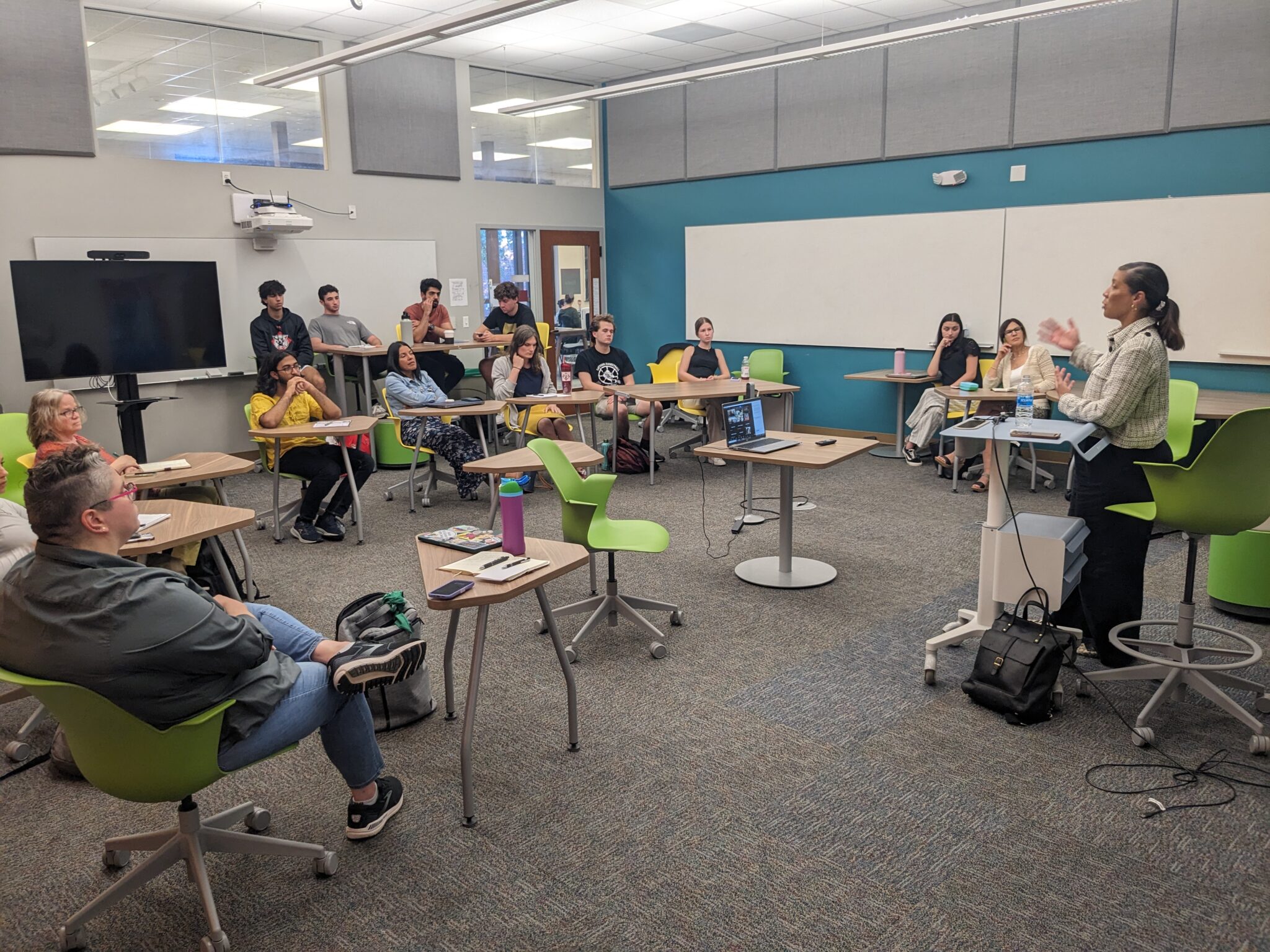
• Skip to main content
  • Skip to footer

Deliberative Citizenship Initiative

Building Democracy One Conversation at a Time

  • The Initiative
    • Programs
      • Deliberation Across the Curriculum
      • Deliberation on Campus
      • Deliberation in the Community
      • Research on Deliberation
    • Motivations
      • Why Deliberative Citizenship?
      • Why Davidson? Why Now?
    • Who’s Involved?
      • DCI Fellows Cohorts
        • 2025-2026 Fellows
        • 2024-2025 Fellows
        • 2023-2024 Fellows
        • 2022-2023 Fellows
        • 2021-2022 Fellows
        • 2020-2021 Fellows
      • DeeP Collaborative Cohorts
        • 2024-2025 DeeP Collaborative Faculty
        • 2023-2024 DeeP Collaborative Faculty
      • Advisory Council
    • History
      • What Sparked the Initiative?
    • Key Deliberative Dispositions
    • Frequently Asked Questions (FAQ)
    • Annual Report
  • Get Involved!
    • Participate in a Forum
    • Join a D Team
    • Become a Fellow
    • Take Courses
    • Get Training
    • Come to Guest Lectures
  • Events
    • Upcoming Events
      • 250th Anniversary Deliberative Forum Series on American Values
    • Past Events
  • Connections
    • The Deliberative Citizen: The DCI’s Monthly Newsletter
    • Efforts on Campus
    • Efforts in the Community
    • Efforts Elsewhere
    • Readings and Resources
      • DCI-Published Guides
      • DCI Guide to One-on-One Conversations
      • How to Disagree
      • Demonstration of Facilitation Styles
      • Deliberative Pedagogy Mini-Course
    • How We Can Help: DCI’s LET’S DELIBERATE! Partnership Opportunities
    • DCI in the News
  • DCI Blog Posts
    • Recent Blog Posts
    • All Blog Posts

facilitation

Why Me?

February 7, 2024 by Auden White

Game pieces connected by a network

Auden White ’26 (DCI Fellow)

In the DCI’s fall forum, “The Challenge for Democracy,” one of the participants posed an important question: “Why me?” He was a student who was in the midst of a discussion about the role of United States military interventions, nation-building missions, and sanctions in promoting democracy abroad. He had just listened to expert professors, themselves conflicted by the track record of previous US efforts, navigate the topic for the last hour. He was unsure how to add to the conversation, chart a course, and direct policy for the future, given his lack of experience and knowledge.

His caution is justifiable. He was not as knowledgeable as an expert, nor did he have a strong personal connection to the topic. Despite this background, I pushed back against his hesitancy and urged him to participate in the discussion. He did so wonderfully and brought up some interesting points during the discussion.

The Deliberative Citizenship Initiative (DCI) is designed for the hesitant young man and everyone who wants to learn more about politics. It focuses on deliberations, not decisions. We are not focused on changing government policy. The issues we try to tackle are too large, too divisive, and too complicated to find the best solution in a short deliberation about US foreign policy. Additionally, implementing that solution is difficult given the DCI does not have an advocacy wing, nor any political power. While in the longer term one of the DCI’s goals is to catalyze creative solutions that respond to and accommodate the important concerns of all stakeholders, we work to achieve this goal by first fostering greater understanding of these concerns about the issues at hand.

This emphasis on fostering understanding rather than seeking immediate solutions is valuable. Creating a space for dialogue and deliberation can lead to increased empathy, tolerance, and a deeper comprehension of diverse perspectives. Its goal is to bring members of the Davidson community closer, to hear each other’s stories, all of them, and to walk away with a more complete understanding of the American experience. It can lead to understanding between the most ardent supporter of abortion and a pro-life absolutist, where the other is no longer demonized but seen as a person who went through a slightly different set of circumstances. For dialogue, solutions are helpful, but not required.

The DCI’s focus on bringing people together to share their stories and perspectives, even if they ultimately agree to disagree, promotes a more nuanced and interconnected community. It fosters an environment where individuals can appreciate the complexity of various viewpoints without the pressure of arriving at a definitive solution. In a world often driven by the need for quick decisions and immediate outcomes, the emphasis on deliberation for the sake of understanding aligns with the principles of participatory democracy. It recognizes that meaningful change often begins with thoughtful and informed conversations, even if the tangible results may take time to manifest.

The young man at my forum on democracy is not alone: only 40% of youth say they feel well-qualified to participate in politics. This low confidence contributes to low voter turnout and political participation amongst youth. Deliberations like the ones sponsored by the DCI inspire further political participation and foster a more vibrant democracy.

Image Credit: allinonemovie
Filed Under: Blog Posts, Fellow Posts Tagged With: deliberation, democracy, facilitation, politics

Accessibility As a Priority: A Perspective From the DCI  

January 24, 2024 by Zoe Moseley

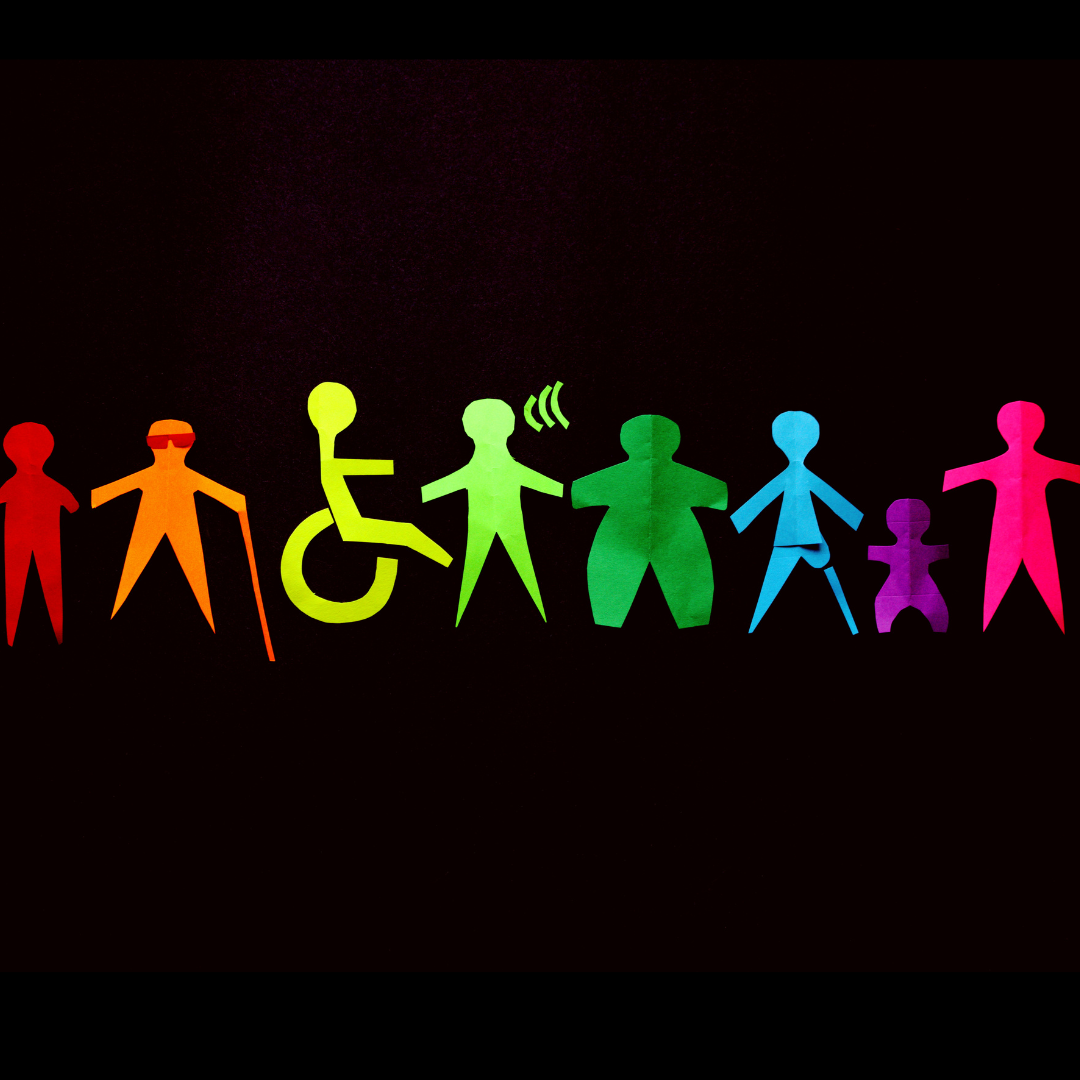
Inclusive colorful image of human silhouettes

Zoe Moseley ’26

At a Deliberative Citizenship Fellows meeting in November, we discussed an article published by Colorado State University’s Center for Public Deliberation titled, “Inclusion Around the Cycle.” This reading aligned well with what I was doing at Davidson that week, helping the Davidson Disability Alliance lead a conversation about event accessibility with student organizations. The argument the reading was trying to refute was that all deliberations are necessarily and equally exclusionary. Power dynamics and certain people speaking more, or more freely than others, are two examples of ways deliberations may not be completely inclusive.

“Inclusion Around the Cycle” started by discussing two types of exclusion, external and internal. External exclusion was described as the fact that some voices will not be present for the event.  Internal exclusion, however, is the idea that non-dominant voices may be overlooked during the event. The article emphasizes that strategies to reach sufficient inclusion are entirely possible, especially when implemented before, during, and after events.

I would say the idea that not every voice at a deliberation could be present or heard felt very disappointing throughout working with the DCI. However, I did not know how to fix it. As someone who works towards access and inclusion on campus, I was confused about why I could not think of feasible ways to bring this perspective to the DCI. I was therefore excited to read, “Deliberative practitioners should not allow the perfect to be the enemy of the good in public processes” (Maldonado, 6).

The article opened my eyes to the opportunity that deliberation presents us with on the subject of inclusivity, which is improving every time. I was surprised I had not viewed it this way before, as this was advice I gave to student organization leaders regarding accessibility. To me, accessibility, making resources available to all people, is the key to inclusion. During the meeting, we stressed that full accessibility is almost impossible since disability and need vary drastically. The article said the same thing about inclusion: “It is important to note that there is no way to ensure complete inclusivity” (Maldonado, 6).

The article touched on inclusivity efforts I realized the DCI was already making, such as offering almost all events via Zoom, training facilitators to make sure every voice gets a chance to speak, and asking for constant feedback. I tried to emphasize more minor things within my D Team when it came to inclusion, such as continuously asking if everyone could hear me, ensuring that when participants arrived, the heavy door was propped open, and zooming one participant in when they were ill. By making it clear that we care about access, I hope participants feel more comfortable to show ways we can improve. After reading this article, I have ideas for more efforts I can make next semester, taking to heart the idea of improving each time. For example, I’d like to ask participants throughout the semester if there are aspects of our meeting that may improve inclusivity and incorporate their ideas on the matter.

I am curious to see what those who argue that deliberations are not inclusive would say to Maldonado’s argument that while it is impossible to create a “perfectly inclusive forum,” we should nonetheless strive for sufficient inclusion. I appreciate the optimism of the Center for Public Deliberation on this front and hope other deliberative organizations put inclusion at the forefront of their discussion. I believe that the values of deliberation align well with the idea of inclusivity: respecting every voice, discussing differences, and assuming the best intentions.

Filed Under: Blog Posts, Fellow Posts Tagged With: D Teams, deliberation, facilitation

How We Can Use Arguments to Learn From One Another

January 3, 2024 by Stephen Walker

People discussing at a round table

Stephen Walker ’26 (DCI Fellow)

Arguments are difficult. Whether stemming from our own personal attachments to ideas or a fear of criticism and negative social outcomes, people often tend to stigmatize arguments as impolite, irrational drains on our emotional well-being that only serve to produce tension and animosity between the parties involved. In my own experience, I have faced such feelings of hopelessness, of innately distressing conversations bound to go nowhere. Contentious arguments can give one the feeling they are fighting for the sake of fighting and nothing more. But this does not have to be so. Argument can be one of the most meaningful forms of positive interaction individuals can engage in with one another.

The DCI’s deliberative framework and the constructive norms our Fellows cohort has been exposed to have reconfigured my entire perception of how one ought to engage in argument and what they should hope to get out of it. One of our required readings for the program, Why We Argue (And How We Should) by Scott Aikin and Robert Talisse, details two sweeping norms for augment that I have relied on through my work to improve my relational and facilitator abilities: argumentative earnestness and argumentative responsibility.

Argumentative earnestness and responsibility have allowed me and other practitioners who utilize them to guide arguments away from zero sum competitions aimed at forcing one person to concede entirely to the other side through manipulation and distractions toward a positive, holistic exploration of issues at large and an informative pursuit of truth.

Aikin and Talisse describe argumentative earnestness as our duties to pay close attention to evaluating the reasons placed before us to justify a position or a view. By blocking out the noise–pressures to win, manipulative rhetoric, bias, and distractions–and evaluating arguments based on the reasons and logic behind them, the merit of a point can be more clearly established and progress can be made in what would otherwise be a contentious, stagnant process.

Argumentative earnestness takes what Aikin and Talisse label “intellectual courage,” or the courage to not just focus on the truth when others try to pressure you away from it but to also realize you may be biased and misleading others. It takes intellectual courage to admit that, much like the other side, you too can use flawed arguments in pursuit of winning rather than the truth. Going beyond holding the other side in arguments to such scrutiny by holding yourself to equally high, if not higher standards, can ensure you are constantly improving the quality of the arguments you produce.

Argumentative earnestness on its own is not enough to ensure a successful argument. Looking at the variety of reasons that may go into one side or another regarding a particular topic will round out your arguments to a fuller extent. Looking beyond what may be the widely preferred or most obvious reasons for holding a belief, we find out that there can be many reasons for taking a specific stance on a specific issue.

When we try to empathize with those who might take these different positions, regardless of whether we agree with them or not, it allows us to engage with the other side to the fullest extent possible. When we engage with the full, honest perception we have of the other side’s stance we can either learn and change our own perspectives on an issue or develop more robust responses than we would otherwise be capable of when engaging with simplified reasons. In this way, argumentative responsibility inspires learning and is essential to productive argument.

In my work as a deliberation facilitator, I am sometimes tasked with playing devil’s advocate by taking on the role of the other side when everyone in a deliberation agrees on an issue and the conversation reaches a stand-still. Without engaging in argumentative earnestness and responsibility, it could be very hard to be the sole advocate for another perspective that one sometimes may not even agree with themselves. Embodying these principles in my attempts at being a better devil’s advocate has allowed me to focus on the reasons behind competing stances, encouraging people to examine their views in ways that would not be possible without such a focus on reason over confrontation.

Playing devil’s advocate to urge members of my deliberation groups to consider opposing arguments has been a truly fruitful exercise to watch play out. People not only willingly consider the full scope of reasons behind views they may have otherwise immediately rejected, but they learn how to better respond to such reasons and enhance their reasoning processes. This can allow deliberators to examine their views, thus enhancing their ability to reason through and properly weigh the merit of counterarguments they may face for the stances they take on various issues. It also allows them to build up the courage to admit when they may be wrong or faced with superior reasoning.

In my experience, when we try to exercise argumentative earnestness and responsibility in our efforts to deliberate, we tend to learn more, have better arguments, and have a better chance of unlocking the truth. This allows us to not only be aware of the flaws in the stances we take but to make clear to others in a constructive, rather than hostile way, the problems in the reasoning that they present. Better arguments make better-informed citizens and by leaning into not just argumentation but constructive norms, we learn and grow in ways that would not otherwise be possible. We learn and grow as a community of citizens unified by our pursuit of truth.

Filed Under: Blog Posts, Fellow Posts Tagged With: debate, deliberation, discourse, facilitation

Emotion in Deliberation: A Necessity Rather Than an Impediment

December 19, 2023 by Atyantika Mookherjee

Brain and Heart

Atyantika Mookherjee ’27 (DCI Fellow)

It is common to consider emotion as the antithesis of reason and logic. After all, emotions are seen as spontaneous, subjective, and sometimes even irrational, while reason and logic is associated with objectivity and rationality. In public discourse, the interplay of these elements is of prime importance, influencing the course of an argument. Playing into an emotion/reason binary, it is often considered that debate should be centered on facts, leaving no room for the informal fallacy of appealing to emotion. Before joining the DCI as a Fellow, I, too, believed that emotion was a dispensable part of facilitating a productive conversation. However, in learning more about deliberation, I’ve come to recognize the importance of emotion, how it can be effectively communicated through storytelling, and why we should not just “set our feelings aside” when deliberating about public issues.

In his article, “Impassioned Democracy: The Roles of Emotion in Deliberative Theory,” Michael Neblo explores this intersection between emotion and deliberative theory, making the case that despite what many people think, the two are not mutually exclusive. He goes on to outline twelve distinct roles that emotion plays in the process of deliberation. These include contributing to the motivation to deliberate, providing inputs through experiences that harden into critical propositions, and ensuring a reciprocal and empathetic backdrop for the deliberation to occur.

In practice, I see how emotions contribute to better deliberations and agree with many aspects of Neblo’s argument. During the deliberation sessions I hosted as a DCI fellow for Davidson students, alums, and community members, I noted many individuals falling back on personal experiences and how they felt about them in formulating their arguments. Many of their responses to each other were rooted in shared events and outlooks. In retrospect, even my motivation to be part of the DCI comes from my travels to Pakistan as a young Indian girl, seeking to clarify misconceptions both countries have about each other’s communities as I saw them. In this manner, I now understand the role of emotion in deliberation to be critical and be expressed through a medium one would also not commonly associate with deliberation: storytelling.

Stories aim to inspire empathy and provide a deeper, more vibrant understanding of contexts the way facts fail to. Through the use of the Perspectives platform that seeks to encourage individuals to participate in constructive dialogue, I was able to glean more of an understanding of the role of storytelling in deliberation. Stories that are honest, important, and effective play a crucial role in setting the tone for peoples’ opinions and allow deliberators to connect, making for a more fruitful discussion. Naturally, the cornerstone for all such stories is emotion. People remember how an experience made them feel and use this to formulate the values they eventually contemplate during deliberations. They listen to other peoples’ emotions and compare them to their own in reaching their conclusions.

This is not to say that the influence of emotion in deliberation is always straightforward. In certain instances, emotions might sway deliberations towards options that align with immediate gratification or deeply ingrained beliefs, bypassing logical reasoning. Nonetheless, acknowledging and understanding emotions in deliberation can lead to more informed and balanced decision-making. From my own experiences, I’ve realized that successful deliberation often involves integrating emotional intelligence with rationality. This integration allows for a more comprehensive evaluation of choices, considering both the logical implications and the emotional resonance of decisions. In collaborative deliberative processes, recognizing and respecting diverse emotional responses among participants can lead to more inclusive and nuanced outcomes.

Filed Under: Blog Posts, Fellow Posts Tagged With: deliberation, discourse, facilitation

How Empathic Intelligence Can Improve Our Discourse: Reflecting on Christy Vines’s Visit to Davidson

December 7, 2023 by Grace Gallagher

Christy Vines Fall 2023 Empathic Intelligence in the Classroom Workshop

Grace Gallagher ’26 (DCI Fellow)

This fall semester, the DCI brought Christy Vines to campus for our Fall Speaker Series. She led a workshop, screening of her film, Dialogue Lab: America, and a campus lecture to share her various thoughts and experiences about empathic intelligence with the Davidson community.

Before hearing her speak, I did not know anything about Empathic Intelligence (EI), but her events taught me a lot about it and provided me with a new perspective. I thoroughly enjoyed listening to her thoughts, and I have found several applications of her points to our work with the Deliberative Citizenship Initiative.

First, she stressed the importance of being “effective” rather than being “right” in conversations with others. I have noticed through my D Teams, the forums that we have had, and through DCI Fellows meetings and discussions, that adopting this mindset makes deliberating much more productive and rewarding. Many of our most contentious topics in the world are topics with varying perspectives and without a “correct” answer, or without an answer we can all agree on. For example, one of our D Team meetings was about abortion. When individuals disagree about the ethics of abortion, the most productive action that can be taken is explaining to others where your opinion comes from and why you believe what you believe to make sure that others understand different perspectives. Abortion is an issue in our society that lacks agreement, making these conversations especially beneficial.

Another point that Christy Vines discussed was the idea that you do not need to change someone’s opinion very much at all in order to have a significant impact. She used the metaphor of a gauge that moves someone 5 degrees in the moment, such as in the direction of a large ship. At first this does not seem like much of a change, but that 5 degrees will keep them going in a new direction for a long time and cause them to end up in a very different place. Simply expressing where your opinion comes from can potentially provide someone with that 5 degree gauge rotation that informs, challenges, and orients them towards a different perspective.

In my opinion, these two points seem incredibly important and beneficial to think about when discussing contentious topics with others. However, these ideas are both much easier to talk about and understand than to utilize when deliberating. When deliberating about a topic that is important to you, I believe that it can sometimes be really difficult to follow the deliberative dispositions and agreements because your emotions can overtake what you are saying, but these ideas can help individuals to refocus their points more effectively.

I have had the opportunity to participate in DCI deliberations from the perspective of both a deliberator and a facilitator. Last Fall, before I became a DCI Fellow, I was a deliberator in the D Team series on elections, focusing on election security, fairness, and accessibility. As a deliberator, I experienced some of my deliberations having very cohesive opinions and others with opposing views, especially regarding recent elections. This year, I am a DCI Fellow, and I have experienced both of these different scenarios as a facilitator. As a deliberator, it is much harder to comprehend if others are gaining any value from your points and whether they are believing you are wrong or truly trying to understand your view. As a facilitator, I believe it is much easier to recognize when someone’s point is being effective and engaging others into their view. This is apparent when participants begin to let their guards down, connect with others further, and realize new ideas. 

Filed Under: Blog Posts, Fellow Posts Tagged With: D Teams, deliberation, facilitation

  • « Go to Previous Page
  • Page 1
  • Page 2
  • Page 3
  • Page 4
  • Interim pages omitted …
  • Page 8
  • Go to Next Page »

Footer

Blog Post Categories

  • Announcements
  • Blog Posts
  • DCI Posts
  • Events
  • Faculty Posts
  • Fellow Posts
Image of a compass superimposed by the text "Deliberative Citizenship Initiative" and "Davidson College." Clicking on this image leads to the Initiative page.

Recent DCI Blog Posts

  • We Tried to Fix Jubilee’s “Middle Ground” – Here’s How It Went
  • A Case for Deliberation in the Natural Sciences
  • Welcoming New Staff to the DCI and DCN
  • Facebook
  • Twitter
  • Instagram
  • LinkedIn


Copyright © 2026 · Infinity Pro on Genesis Framework · WordPress · Log in