• Skip to main content
  • Skip to footer

Deliberative Citizenship Initiative

Building Democracy One Conversation at a Time

  • The Initiative
    • Programs
      • Deliberation Across the Curriculum
      • Deliberation on Campus
      • Deliberation in the Community
      • Research on Deliberation
    • Motivations
      • Why Deliberative Citizenship?
      • Why Davidson? Why Now?
    • Who’s Involved?
      • DCI Fellows Cohorts
        • 2025-2026 Fellows
        • 2024-2025 Fellows
        • 2023-2024 Fellows
        • 2022-2023 Fellows
        • 2021-2022 Fellows
        • 2020-2021 Fellows
      • DeeP Collaborative Cohorts
        • 2024-2025 DeeP Collaborative Faculty
        • 2023-2024 DeeP Collaborative Faculty
      • Advisory Council
    • History
      • What Sparked the Initiative?
    • Key Deliberative Dispositions
    • Frequently Asked Questions (FAQ)
    • Annual Report
  • Get Involved!
    • Participate in a Forum
    • Join a D Team
    • Become a Fellow
    • Take Courses
    • Get Training
    • Come to Guest Lectures
  • Events
    • Upcoming Events
      • 250th Anniversary Deliberative Forum Series on American Values
    • Past Events
  • Connections
    • The Deliberative Citizen: The DCI’s Monthly Newsletter
    • Efforts on Campus
    • Efforts in the Community
    • Efforts Elsewhere
    • Readings and Resources
      • DCI-Published Guides
      • DCI Guide to One-on-One Conversations
      • How to Disagree
      • Demonstration of Facilitation Styles
      • Deliberative Pedagogy Mini-Course
    • How We Can Help: DCI’s LET’S DELIBERATE! Partnership Opportunities
    • DCI in the News
  • DCI Blog Posts
    • Recent Blog Posts
    • All Blog Posts

facilitation

DCI Fellowship Application is Now Open!

June 1, 2023 by Graham Bullock

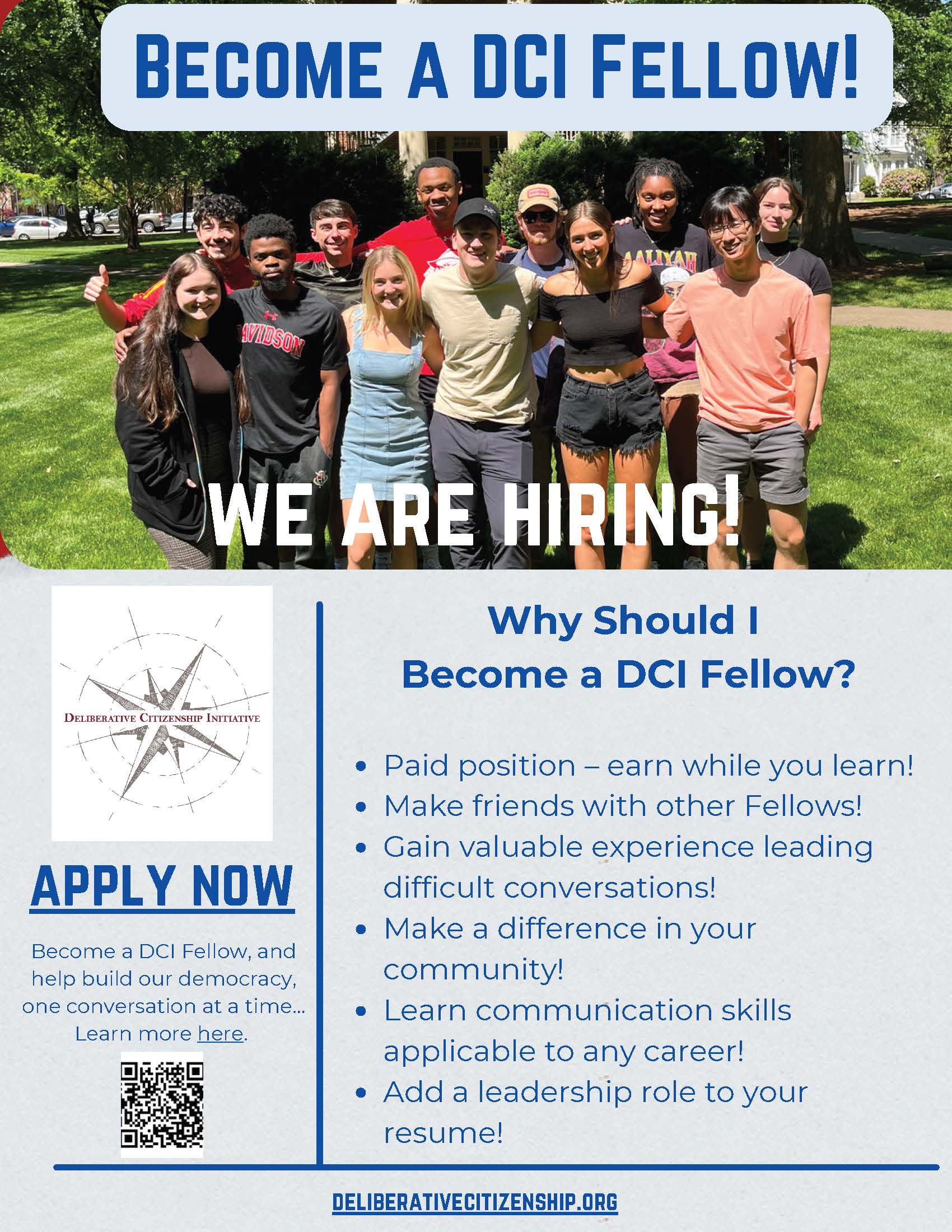
DCI Fellow Sign-Up Flyer.

Davidson students, the DCI is hiring! Apply to be a paid DCI Fellow for the 2023-24 academic year — earn while you learn, make friends with other Fellows, and gain valuable experience leading difficult conversations. You’ll also make a difference in your community, learn important communication skills applicable to any career, and be able to add a leadership role to your resume.

The purpose of the Deliberative Citizenship Initiative (DCI) is to create opportunities for Davidson students, faculty, staff, and members of the community to productively engage with one another on difficult and contentious issues facing our community and society. The Fellows Program offers interested Davidson students academic-year positions working with the DCI.

The DCI will select 12-15 students to work as Fellows for the 2023-2024 academic year. Fellows will meet weekly as a group with the DCI Faculty Director and Assistant Director to work towards achieving the DCI’s mission and goals – to teach deliberative skills, reinforce humane instincts, build meaningful community, catalyze creative solutions, and research deliberation. Fellows will also meet monthly with their Deliberative “D” Teams, small groups of 5-10 individuals who commit to engaging with one another on difficult issues.

Throughout the year, Fellows will immerse themselves in deliberative theory and methods by completing weekly curriculum assignments, deliberating among themselves, facilitating robust deliberations during D Team meetings and deliberative forums, learning from deliberative guest speakers, completing an individual deliberation project, and writing blog posts and reflections that document their experience. Fellows will also contribute to the planning of DCI programs by assisting with research, community engagement, and deliberation guide development. Fellows also play a leadership role in the DCI by serving as deliberative ambassadors demonstrating the skills of deliberation on campus and in the communities and organizations they are a part of.

In this age of intense feelings, rapid change, and hyper-polarization, Fellows will have the opportunity to contribute to the urgent and important work of bringing people together to explore how and why their perspectives are both similar and different – and begin building common solutions to our collective challenges. In the process, they will also enhance their ability to reason, engage in “good argument,” articulate their values, and help others do the same. These are life-long skills that will benefit fellows in their personal lives, in the classroom, and in their careers after Davidson. The ability to bring people together to tackle difficult challenges is in high demand across sectors, professions, and industries, and DCI Fellows will improve their capacity to do this critical work in a wide variety of settings.  

Program Components

The DCI Fellows program requires a commitment to learning about and doing deliberation. It empowers participants with new skills and knowledge to build community and promote more productive public discourse through deliberation. Key activities include:

  • Orientation – Fellows are required to complete an 8-hour deliberation facilitator training and orientation program in September.
  • Fellows Cohort Meetings – Fellows will meet as a group once a week during the Tuesday Common Hour to discuss deliberative topics covered in assigned readings, videos, and other materials, to debrief about their facilitation experiences, to plan DCI activities, and to deliberate as a group on important topics. Fellows will also serve on different committees focused on DCI goals and will provide committee updates and ideas during cohort meetings.
  • D Teams – Fellows will facilitate monthly Deliberative “D” Teams, which consist of 5-10 students, faculty, staff, alumni, and community members who are interested in engaging with one another over multiple sessions to discuss difficult issues. D Teams may meet both in-person or virtually.
  • Deliberative Forums and Other Events – Fellows will play key leadership roles in the DCI’s Deliberative Forums and other public events. These events enable one-time discussion and learning opportunities for students, faculty, staff, and community members and may be conducted in partnerships with other groups and organizations. The DCI hosts 1-2 deliberative events per semester.
  • Reflections and Blog Posts– Each Fellow will contribute one post per semester to the DCI Blog. Fellows will also be asked to reflect and write about their experiences throughout the year with the aim of informing the DCI about what worked well, what did not work well, and specific insights or takeaways, new ideas, and suggestions for program development.
  • Personal Deliberation Project– Fellows will organize, host, and facilitate a deliberative event that connects to their personal interests, exposes participants to the deliberation process, and builds Fellows’ capacity to conduct deliberative activities after they have completed the DCI Fellowship program.

Time Commitment and Compensation

Individuals can expect to commit approximately 5 hours every week to their work as a DCI Fellow. These hours may vary depending on the timing of scheduled events and activities. Fellows must be available for a 1-hour weekly cohort meeting during the Tuesday Common Hour and a 10-hour orientation and facilitation training at the start of the semester – 12:30 pm to 5:30 pm on September 10 and September 16 (including lunch both days). Per Davidson College’s Human Resources policies and guidance, Fellows will be compensated as follows: Fellows will be employed with the DCI as student workers to receive hourly compensation at a rate of $12.00 per hour, with maximum annual earnings of $1,800.

Eligibility

All students are eligible to apply on WildcatSync to become a 2023-2024 DCI Fellow. Approximately 12-15 students will be selected. Students in a work study program are eligible to apply their funding towards a job as a DCI Fellow. Davidson students who are part of scholarship and service programs such as the Bonner Scholars program may be able to apply their DCI Fellows experience towards program service hour requirements in lieu of compensation. Students should check with their respective program directors.

Deadline/How to Apply

To submit your application, please complete the ‘Deliberative Citizenship Initiative – Fellows Application’ form on WildcatSync. The priority application deadline is June 30. However, applications will remain open and new submissions accepted on a rolling basis until August 4th or once all positions have been filled by qualified candidates. Click here to access WildcatSync and complete your application. If you have any questions about your application, please email dci@davidson.edu.


Filed Under: Events Tagged With: facilitation

What Does the Rise of A.I. Chatbots Mean for the Future of Conversations?

May 23, 2023 by Clyde Dwyer

Image of arm holding phone with messages to a bot that is replying.

Clyde Dwyer ‘25 (DCI Fellow)

Artificial intelligence (A.I.) chatbots have taken the world by storm in recent months. It started with ChatGPT, a chatbot from the OpenAI GPT-3 engine, and has since generated a flurry of attention and concern about the growing role this technology will play in our lives. In one sense, we are nearing an exciting new frontier of knowledge and information accessibility, with chatbots capable of recounting historical events, solving complex equations, or giving you relationship advice. In another sense, the future of human interaction as we know it is at stake.

How does this connect to deliberation?

Conversation, collaboration, and deliberation are essential components of our lives. Especially in a college environment, information, and knowledge are diffused between students and professors of all different backgrounds and disciplines. Through my daily conversations and interactions, I learn about things that would have otherwise never crossed my mind. Like the science behind music, from my roommate, who is a Physics major and plays guitar. Or listening to my non-white peers talk about their experience attending a predominantly white institution, something that I’ll never experience as a white person.

There are clear benefits to opening yourself up to new perspectives and worldviews. This is true in conversations with friends and deliberations, where conflicting viewpoints and arguments occur. These benefits cannot be realized through the use of chatbots.

Of course, chatbots will never replace conversation and deliberation–– but it is very plausible that chatbots can begin to chip away at vital human exchanges of knowledge. For example, why study with a friend who is more proficient in economics than you if ChatGPT has all the answers? Similarly, why attend a book club to hear people’s thoughts on Harry Potter when ChatGPT can instantly analyze all the book’s themes? Why go to office hours with an esteemed, knowledgeable professor when you can spend time with all-knowing ChatGPT? One may balk at the possibility of these scenarios, but as chatbots become more intelligent and accessible, they are not outside the realm of possibility.

When I asked ChatGPT about the role of A.I. in the future of deliberative citizenship, it told me that chatbots could be harnessed for “increasing accessibility, facilitation of dialogue, and expansion of civic education.” ChatGPT may have some utility in deliberative citizenship. During D-Teams or deliberative forums, participants may be confused about technical aspects of specific topics–– an area where a knowledgeable chatbot can be handy. However, deliberation and communication with other humans are essential to promoting deliberative citizenship.

Chatbots cannot provide the emotional element that underpins logical reasoning and can never fully encompass the variety of human experiences. Take a chatbot and a person arguing for the same thing: Davidson should build more affordable housing. If you oppose this claim, the chatbot’s arguments will do little to sway you. However, if you learn that the person making the same point is a single mother who was evicted from her apartment due to increasing rents, this will certainly shift how you understand the situation.

Deliberative citizenship as a means and as an end will need to adapt in the face of emergent technologies. These technologies may threaten certain elements of human interaction and knowledge exchange; however, for deliberative citizenship, they can be harnessed for positive means and will not stand in the way of deliberation. Deliberation is a fundamentally human process–– one which engages both reason and emotion in tandem. Even in a changing world, deliberation is crucial to the future.

Image by Mohamed Hassan from Pixabay

Filed Under: Blog Posts, Fellow Posts Tagged With: facilitation

Building Coalitions Through Deliberation

April 18, 2023 by Daniel Lee

Painting of Rodney King with quote "Can't we all just get along?" and "Born on April 2, 1965."

Daniel Lee ’26 (DCI Fellow)

April 30th, 1992. Fire blazed through the streets of Koreatown and South Central in Los Angeles. Korean Americans frantically ran about, attempting without much success to prevent looters from stealing from vandalized buildings. The police were nowhere to be seen—the people were on their own, helpless except for a few handguns and the presence of one another.

March 3rd, 1991. Rodney King, a Black construction worker, enjoyed a few drinks with his friends and drove down Interstate 210. A few officers noticed him speeding and pursued his vehicle. Determined to avoid being convicted and thus violating parole for a previous robbery, King led the police on a high-speed chase through Los Angeles. He was eventually arrested and beaten mercilessly by a swarm of officers.

The act of police brutality was recorded and distributed through the media, enraging Black communities. When King’s case was taken to court, the resulting verdict only furthered the brewing anger by favoring the position of the white officers. Infuriated, Blacks violently protested in the streets of Koreatown and South Central, destroying and burning property. The police dared not intervene, leaving residents to fend for themselves. Ultimately, an estimated 2,300 privately-owned businesses run by Korean Americans were harmed, measuring up to approximately $400 million in damages.

On its face, the 1992 LA Riots tell a story of police brutality and white supremacy. But in close examination, it also tells a story of the dysfunctional relationship between Black and Korean American communities. Cultural misunderstanding and prejudice directed at one another create unnecessary division among marginalized communities and make it difficult to develop meaningful coalitions to fight against greater structural problems. Often, this dysfunctional dynamic arises from differences in cultural etiquettes (e.g., norms surrounding eye contact and merchant-customer interaction) and faulty stereotypes that instill unreasonable fear and hatred in people’s minds. Without this unfortunate misperception, it seems unlikely that the 1992 LA Riots would have manifested in the way they did.

In this light, it is my sincere hope to break down existing cultural misunderstandings and work towards building productive coalitions between the AAPI community and other marginalized communities. Instead of being held at an impasse over our differences, we must work hand-in-hand to fight against the greater evil—structural racism and prejudice that weigh down our communities. This starts with intentional education that dissolves toxic stereotypes and respectful deliberations that allow communities to find common ground and see each other in a truer light.

Through the skills and life experiences I develop as a DCI Fellow, I hope to use deliberation to lead successful coalition-building between marginalized communities. The empowerment of future generations to create a more perfect society founded upon values of justice and inclusion starts with everyday conversations grounded in intellectual humility and genuine respect. Instead of being in conflict with each other, I dream of people from all different cultures and backgrounds standing together, hope dancing with our every heartbeat as we march on toward a brighter future.

Image by Cass Anaya used under Creative Commons License

Filed Under: Blog Posts, Fellow Posts Tagged With: facilitation, politics

Intellectual Humility and the Power of Questions

February 20, 2023 by Heidi Meyer

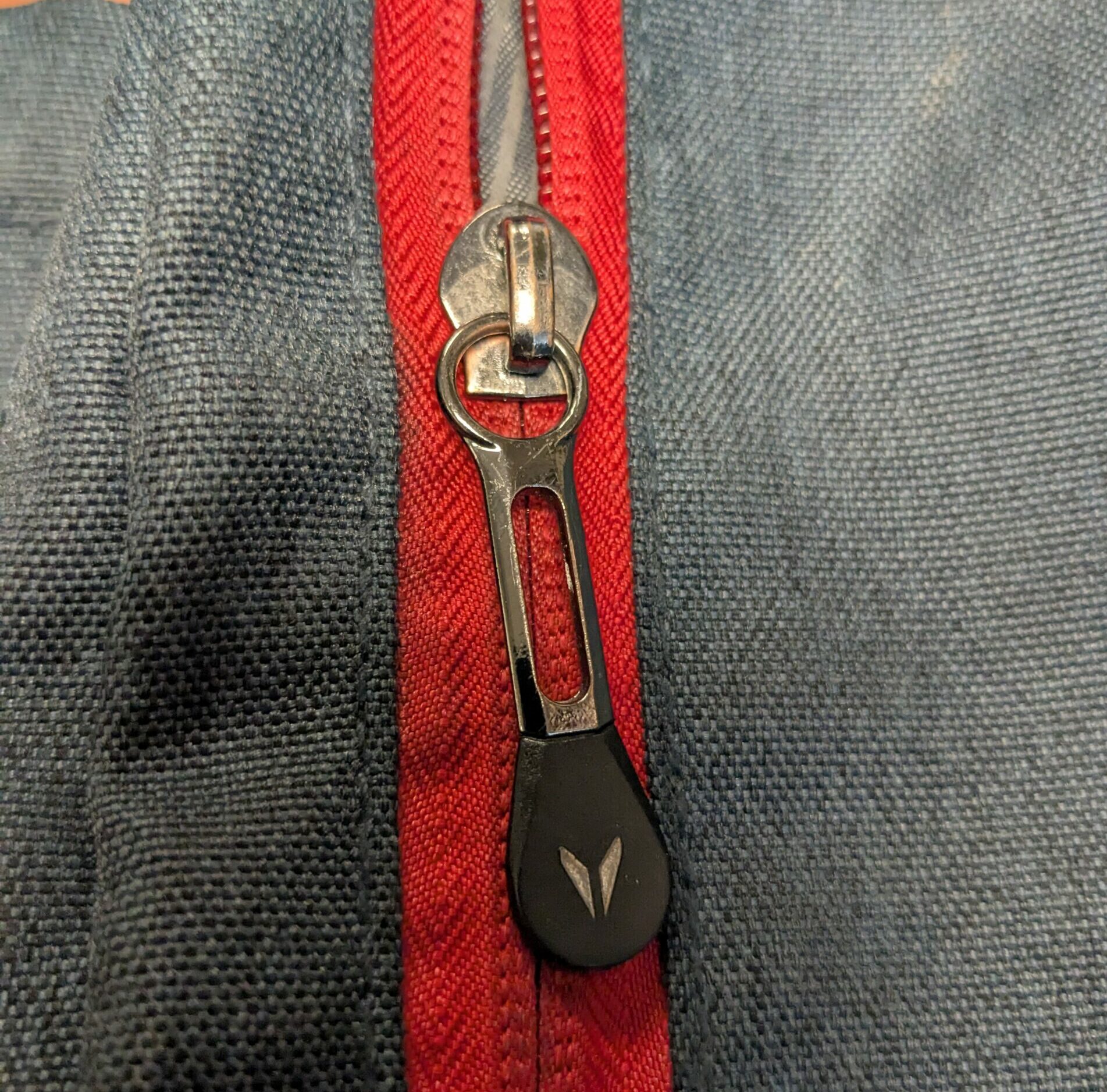
Photo of zipper

Heidi Meyer ’23 (DCI Fellow)

“Do you know how a zipper works?” “Yes,” I quickly answered confidently on the survey, reflecting that I’ve used zippers my whole life on clothing, my shoes, backpacks, and more. My confidence slowed when the next question came: “Please explain in the writing response below how a zipper works.” I paused. After a bit of thinking, I wrote “I realize now I do not know how a zipper works.” 

This example was a successful lesson for me in intellectual humility. This Perspectives module, which was a part of my DCI training, had totally convinced me to completely change my viewpoint and I wasn’t angry or defensive, but rather astonished and impressed with how much my view had changed so quickly. 

The first takeaway for me was that I don’t know as much as I think I know. While there are many topics that I could give a stance on or may have learned about in the past through a class or personal research, I often forget details or don’t look deeply into topics before taking a stance. 

The beauty of intellectual humility is that it is positive. There is always more anyone can learn on any subject. Therefore everyone should be open to learning more information and with new information, changes in beliefs or stances may come. If society can learn to embrace intellectual humility and a growth mindset around learning, it would help combat polarization. People would be more willing to engage with someone who holds a different viewpoint, as every conversation would pose an opportunity to learn and grow. This doesn’t mean that everyone will change their core beliefs after one conversation, but it does mean that you can learn about someone, humanize them, and sympathize with why they might hold a different view than you do. 

The second lesson for me was the power of questions. The efficacy of a question to diplomatically disarm someone is powerful and can not only help someone change their mind but can also help protect a relationship from being harmed by a disagreement. Most people become defensive when their views and especially core beliefs are challenged. But asking genuine questions to understand where someone is coming from, however, can help you learn about their reasoning and simultaneously encourage them to reflect on their reasoning. This self-reflection is often more effective in getting someone to realize their mistake than telling someone why they are wrong. In the zipper example, I was completely convinced to change my mind to a completely different perspective due to one question asking me to explain my stance. 

While zippers are a niche topic, the lesson applies to other subjects such as politics, workplaces, and personal relationships. Asking people to explain their positions is an effective way to help them think through their position and defend it. The answers can help you understand where someone is coming from or help that individual consider other perspectives if they realize they aren’t as sure as they thought they were about why they held such a stance. 

In today’s modern polarized society, questions are a simple but effective way to come together, whether through learning about the other side or encouraging people to be more curious and openminded. When asking questions, be mindful to also ask yourself why you hold the views you do and to remain intellectually humble even if you have answers to your own questions.  There is always more you can learn that may change the way you think and feel.

Filed Under: Blog Posts, Fellow Posts Tagged With: D Teams, facilitation

Don’t Expect It, but Persuasion is Possible

January 31, 2023 by Brody Bassett

Stock Image of multiple headshots making the shape of a lightbulb.

By Brody Bassett ’25 (DCI Fellow)

Going into my first semester as a facilitator with the Deliberative Citizenship Initiative, I was excited to hopefully help people hear different opinions. I hoped to help facilitate discussion to break people out of potential “echo chambers,” so there could be more understanding between opposing viewpoints on and off Davidson’s campus. 

After my first week of facilitations, I was pleased with the development of the deliberations. The members of my group were openly conversing about their opinions and viewpoints. During the first session, I was able to see the different perspectives within the groups. These different perspectives led to differing political beliefs which were talked about during the discussion. I was happy to see that my deliberation team engaged with each other despite their differences in opinion.

One of the first deliberation topics of my session brought about a specific voting option: mail-in voting. People certainly had different opinions about this option and its effects on the overall electoral process.  Specifically, one person voiced the opinion that mail-in voting leads to a potential for less integrity within the voting system. Another individual from the deliberation voiced their own belief that mail-in voting allows more accessibility for working-class Americans. The two then began to weigh the pros and cons of the mail-in voting system, each expressing their own opinions. I was happy to facilitate this discussion, and both parties productively expressed their opinions while other members began to weigh in as well, leading to a fruitful exchange of ideas. My first facilitation lived up to my expectations as people shared different viewpoints, exposing each other to different opinions. In my next facilitation, however, the conversation did not follow my expectations.

As stated above, I was committed to being a facilitator of deliberation groups to hopefully show people different perspectives on politically contentious topics. I frankly did not realize the potential of deliberation groups to change people’s opinions on political topics. As facilitators, we don’t expect our group’s participants to necessarily alter their views on these topics; we are more focused on encouraging listening, sharing, and exploring new ideas together.  So my expectations were broken when I was pleasantly surprised that one of my D Team members humbly started our time by admitting that they conceded their viewpoint from the last deliberation. The member recounted specific details from the opposing point of view, leading them to the conclusion that they might be wrong. They shared this revelation with the group and thanked everyone for the discussion that helped change their viewpoint.

Following my second meeting with my D Team, I was impressed by the humility and the bravery the individual took to let go of their views and acknowledge to a group their change in opinion. This interaction showed me that deliberation groups were more than just tools to break people from their “echo chambers,” and that deliberations could bring people to accept new ideas. While not all the members of D Teams will come forward to share their change in opinion, the environment of a deliberation group does allow for the change of opinions in a healthy space. We shouldn’t expect it but it does happen and I was very pleased to see it firsthand.

Filed Under: Blog Posts, Fellow Posts Tagged With: D Teams, facilitation

  • « Go to Previous Page
  • Page 1
  • Page 2
  • Page 3
  • Page 4
  • Page 5
  • Page 6
  • Interim pages omitted …
  • Page 8
  • Go to Next Page »

Footer

Blog Post Categories

  • Announcements
  • Blog Posts
  • DCI Posts
  • Events
  • Faculty Posts
  • Fellow Posts
Image of a compass superimposed by the text "Deliberative Citizenship Initiative" and "Davidson College." Clicking on this image leads to the Initiative page.

Recent DCI Blog Posts

  • We Tried to Fix Jubilee’s “Middle Ground” – Here’s How It Went
  • A Case for Deliberation in the Natural Sciences
  • Welcoming New Staff to the DCI and DCN
  • Facebook
  • Twitter
  • Instagram
  • LinkedIn


Copyright © 2026 · Infinity Pro on Genesis Framework · WordPress · Log in