• Skip to main content
  • Skip to footer

Deliberative Citizenship Initiative

Building Democracy One Conversation at a Time

  • The Initiative
    • Programs
      • Deliberation Across the Curriculum
      • Deliberation on Campus
      • Deliberation in the Community
      • Research on Deliberation
    • Motivations
      • Why Deliberative Citizenship?
      • Why Davidson? Why Now?
    • Who’s Involved?
      • DCI Fellows Cohorts
        • 2025-2026 Fellows
        • 2024-2025 Fellows
        • 2023-2024 Fellows
        • 2022-2023 Fellows
        • 2021-2022 Fellows
        • 2020-2021 Fellows
      • DeeP Collaborative Cohorts
        • 2024-2025 DeeP Collaborative Faculty
        • 2023-2024 DeeP Collaborative Faculty
      • Advisory Council
    • History
      • What Sparked the Initiative?
    • Key Deliberative Dispositions
    • Frequently Asked Questions (FAQ)
    • Annual Report
  • Get Involved!
    • Participate in a Forum
    • Join a D Team
    • Become a Fellow
    • Take Courses
    • Get Training
    • Come to Guest Lectures
  • Events
    • Upcoming Events
      • 250th Anniversary Deliberative Forum Series on American Values
    • Past Events
  • Connections
    • The Deliberative Citizen: The DCI’s Monthly Newsletter
    • Efforts on Campus
    • Efforts in the Community
    • Efforts Elsewhere
    • Readings and Resources
      • DCI-Published Guides
      • DCI Guide to One-on-One Conversations
      • How to Disagree
      • Demonstration of Facilitation Styles
      • Deliberative Pedagogy Mini-Course
    • How We Can Help: DCI’s LET’S DELIBERATE! Partnership Opportunities
    • DCI in the News
  • DCI Blog Posts
    • Recent Blog Posts
    • All Blog Posts

Deliberative Forums

Expert Roundtable on Balancing Self-Government and National Stability: The Case of Presidents, Institutions, and the People

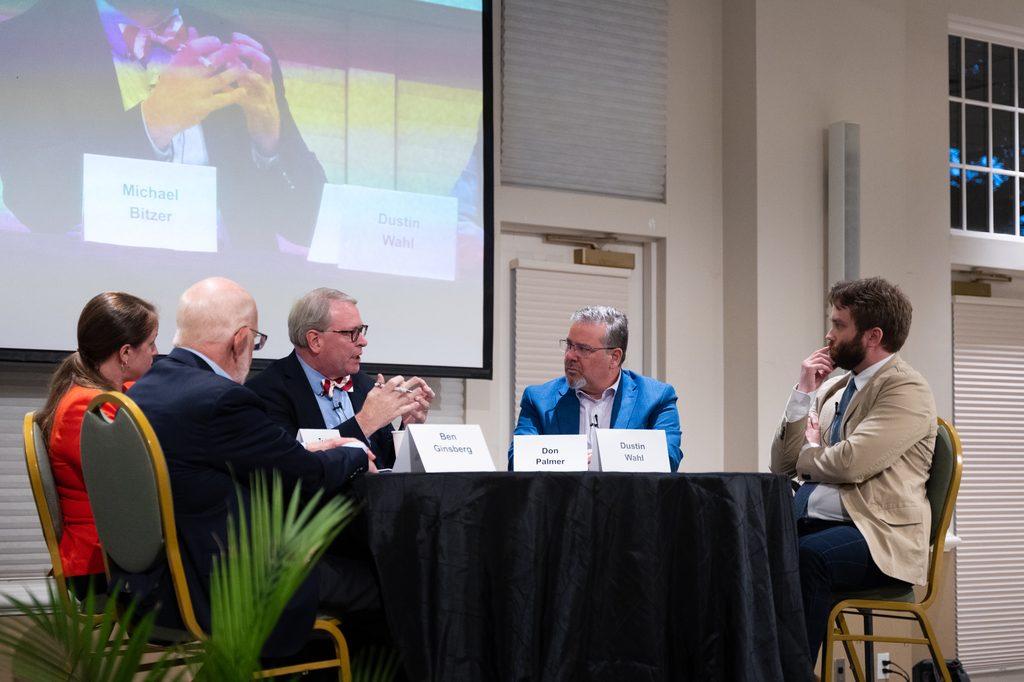
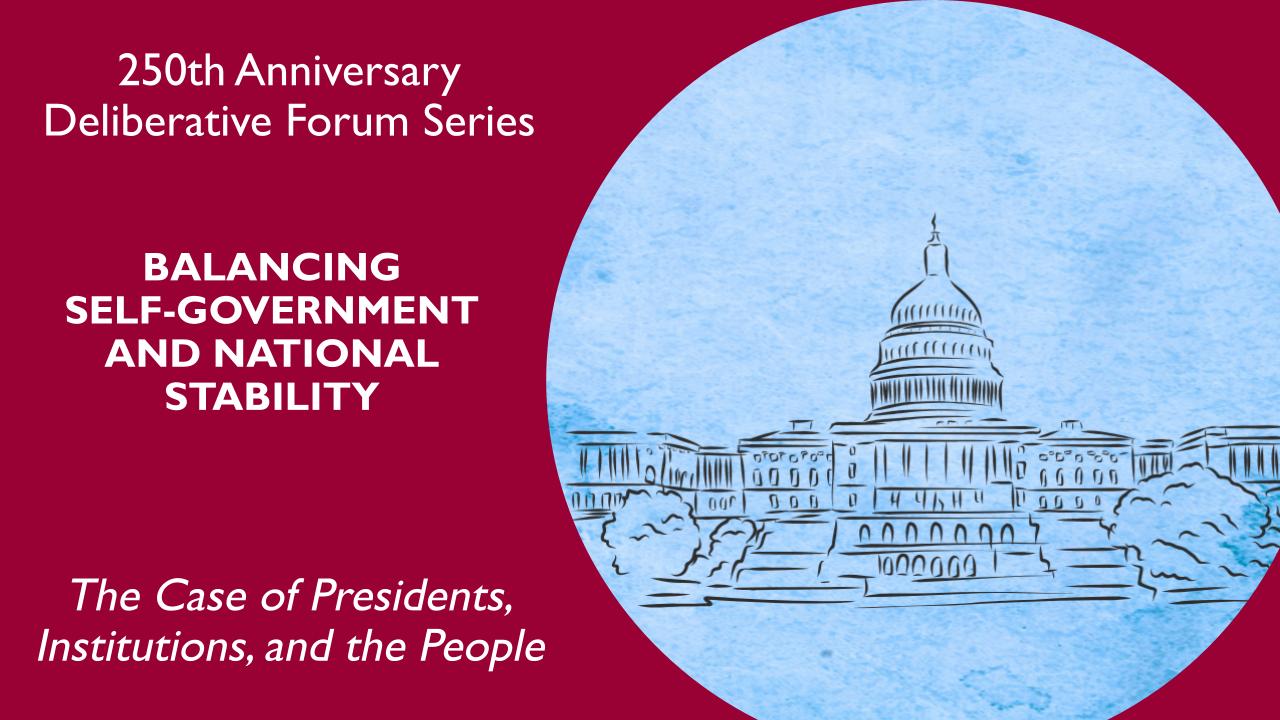
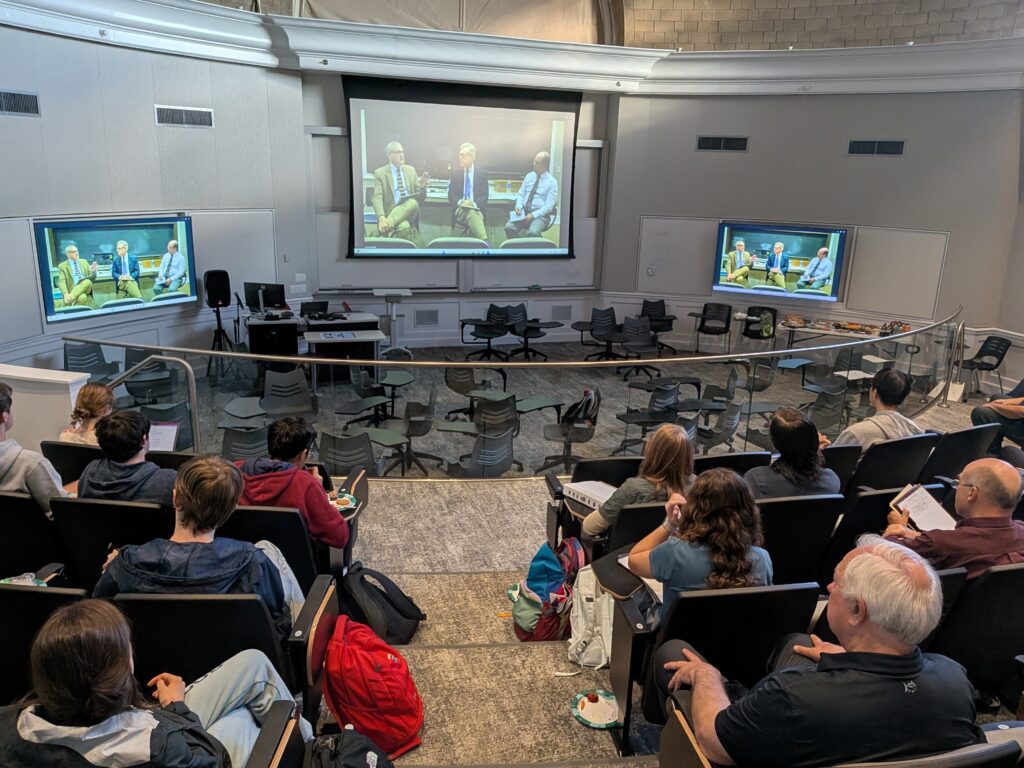
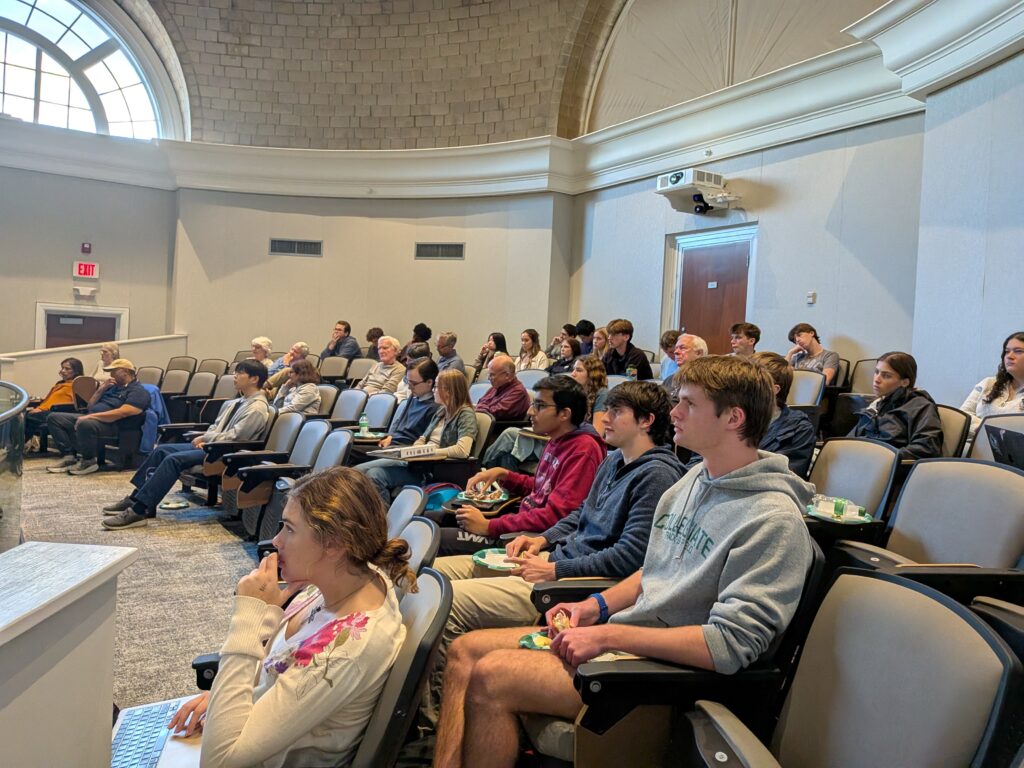
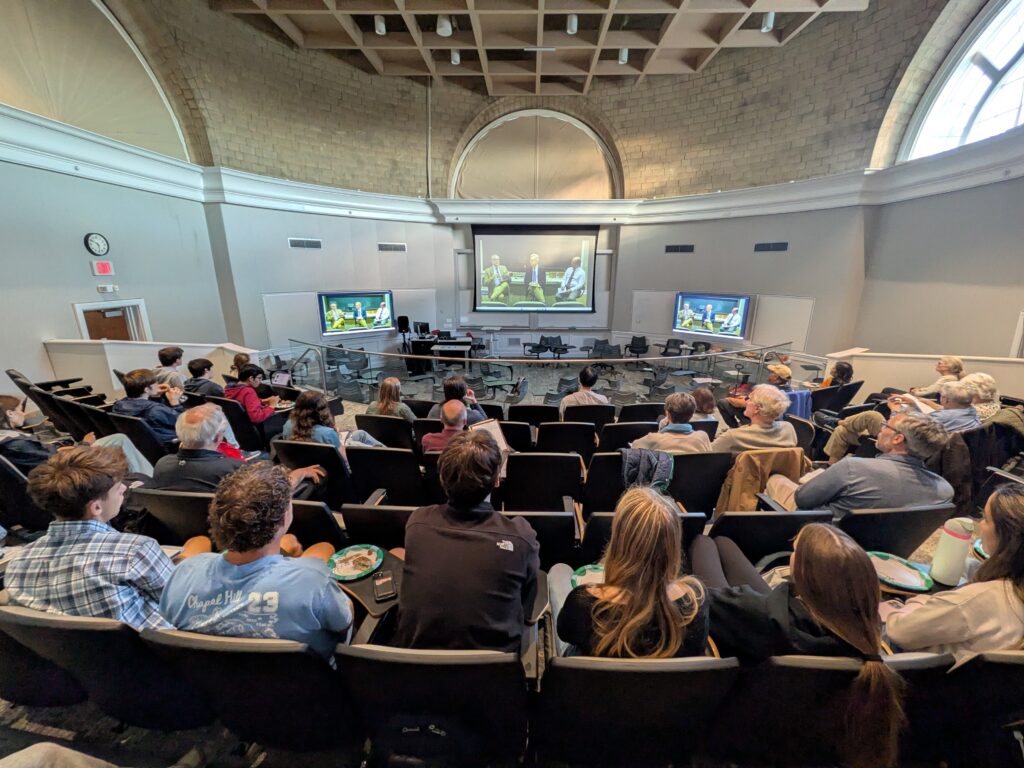
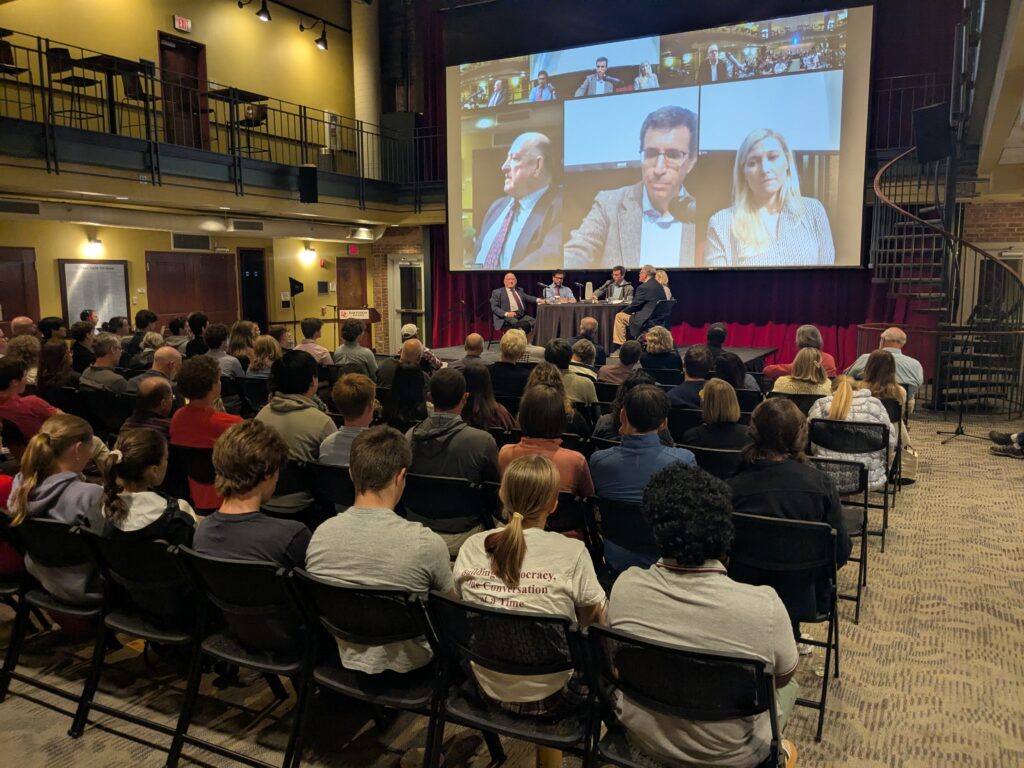
On October 30, 2025, the Deliberative Citizenship Initiative hosted its first-ever watch party of an expert roundtable held not at Davidson College, but on another college campus. UNC Chapel Hill’s Program for Public Discourse hosted the second event in the American Values Deliberative Forum Series on “Balancing Self-Government and National Stability: The Case of Presidents, Institutions, and the People.” Approximately 50 Davidson students, faculty, staff, and community members gathered in Hance Auditorium to view the nearly two hour conversation — and more joined via UNC’s livestream via Zoom.


image of audience

The panelists on this roundtable included Thomas Frank (best-selling author of What’s the Matter with Kansas?) and John Gastil (professor of communication studies, public policy, and political science at Penn State). Unfortunately the third panelist, Jennifer Mascott (professor of law and founder of the Separation of Powers Institute at Catholic University, was unable to attend at the last minute due to travel challenges, UNC Chapel Hill professor of political science Kevin McGuire served as the moderator of the panel discussion, which was followed by a Q&A session with the audience.

Image of audience

250th Anniversary American Values Deliberative Forum Series

This event is the second Expert Roundtable in the 250th Anniversary American Values Deliberative Forum Series, which is designed to commemorate the upcoming 250th anniversary of the Declaration of Independence. This anniversary represents an important opportunity to both deepen and elevate the discourse about the values that have animated American social and political debates throughout its history. The goal of the series is to enable Americans of all backgrounds – college students, high school students, families and neighbors, members of faith communities and other civic organizations – to authentically, respectfully, and constructively engage with each other about our foundational ideals and how they are relevant to contemporary policy issues.

Co-hosted by Davidson College’s Deliberative Citizenship Initiative (DCI), Duke University’s Provost’s Initiative on Pluralism, Free Inquiry, and Belonging, and the University of North Carolina at Chapel Hill’s Program for Public Discourse, this year-long program will include both Expert Roundtables and Community Conversations dedicated to unpacking, understanding, and applying the values that are foundational to the United States – and to many other countries around the world.

Photo of audience watching screens at Watch Party

Community Conversations

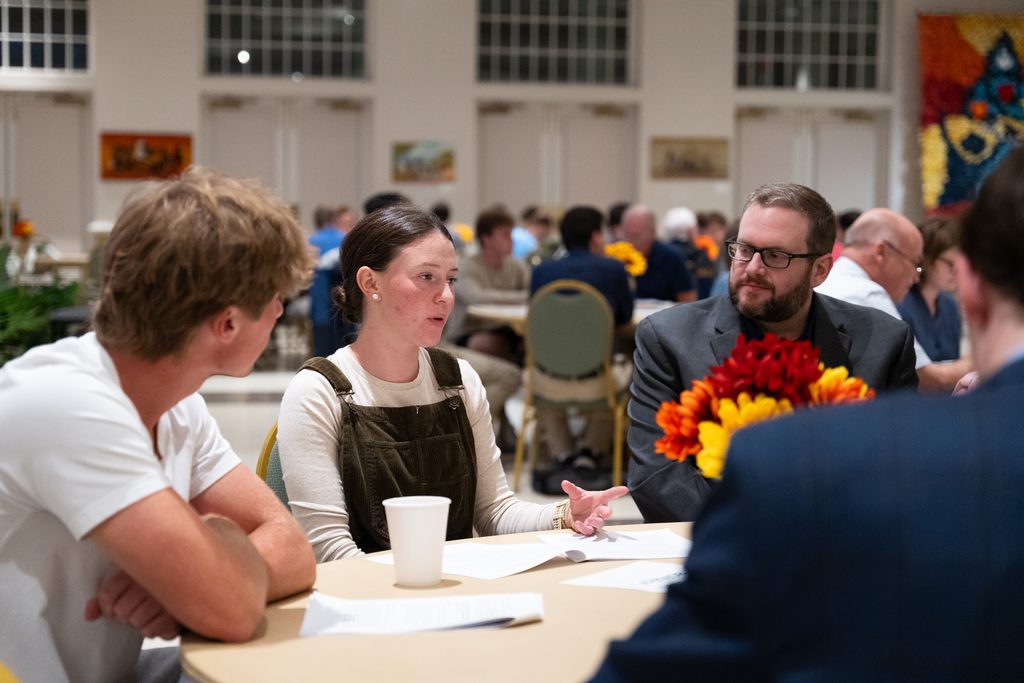
During the week after the roundtable, both Davidson and UNC Chapel Hill hosted Community Conversations for members of their communities to discuss the same issues covered by the panelists. At Davidson, these conversations were part of the DCI’s D Team series, which involved 16 small groups — over 130 people — gathering to share their thoughts with each other both in-person and online, guided by student facilitators trained by the DCI.

The recording of the roundtable is posted below, as are some guides that you can use to host such conversations. The Deliberation Guide provides both important background information on the topics in question and a specific framework for engaging with these topics in the context of a two-hour facilitated conversation, which is the format that the DCI’s D Teams will use to explore the topic. The Issue Guide is similar to the Deliberation Guide but does not include the structured format for group conversations. The Issue Brief provides a brief outline of the main ideas that are presented in the Deliberation Guide and Issue Guide. While both include a similar list of questions to consider about the topic, they are designed for personal reflection before, during, or after our expert roundtable on the same topic.

Other institutions are welcome to use these resources to highlight their own conversations about the important issues covered in this forum. For ideas on how to host such a discussion, check out the webinar that DCI Faculty Director Graham Bullock hosted that provides an overview of different strategies and options that might work well in different organizational and community contexts. Please email dci@davidson.edu if you have any questions or ideas you’d like to share.

ISSUE BRIEF

DCI-Self-Government-National-Stability-Issue-Brief

ISSUE GUIDE

DCI-Self-Government-National-Stability-Issue-Guide

DELIBERATION GUIDE

DCI-Self-Government-National-Stability-Deliberation-Guide

Expert Roundtable on Equality, Unity, and Immigration

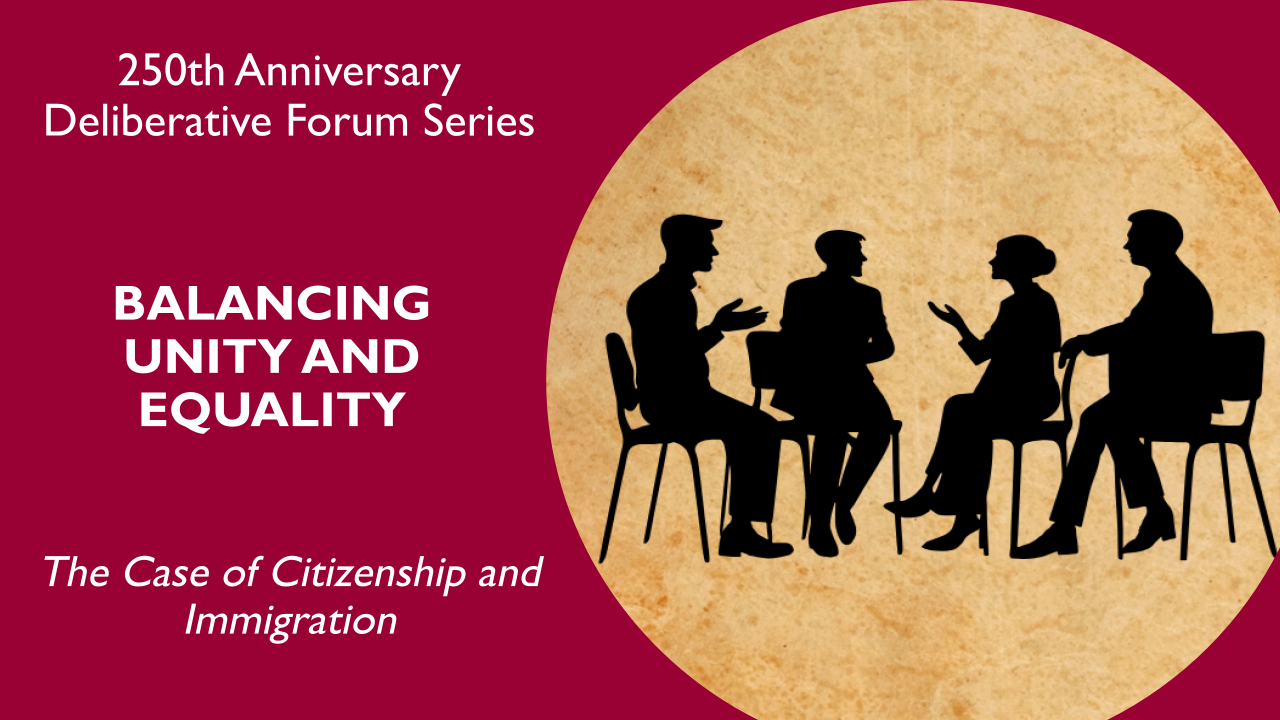
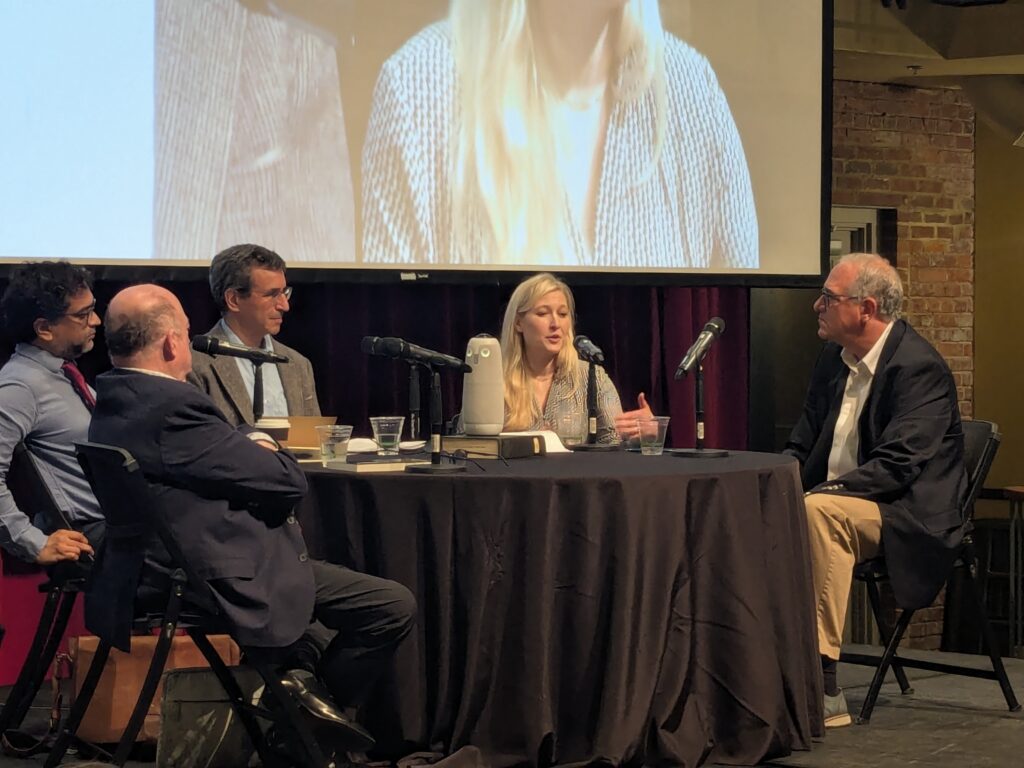
On September 30, 2025, Davidson College’s Deliberative Citizenship Initiative hosted an Expert Roundtable on “Balancing Equality and Unity: The Case of Immigration and Citizenship.” The roundtable is the first event in the Deliberative Forum Series on American Values that Davidson College, commemorating the 250th anniversary of the Declaration of Independence co-hosted by Davidson College, Duke University, and the University of North Carolina at Chapel Hill. This roundtable focused on two particular founding values, unity and equality, and explored them in the context of both American history generally and the specific policy issue of immigration and citizenship.

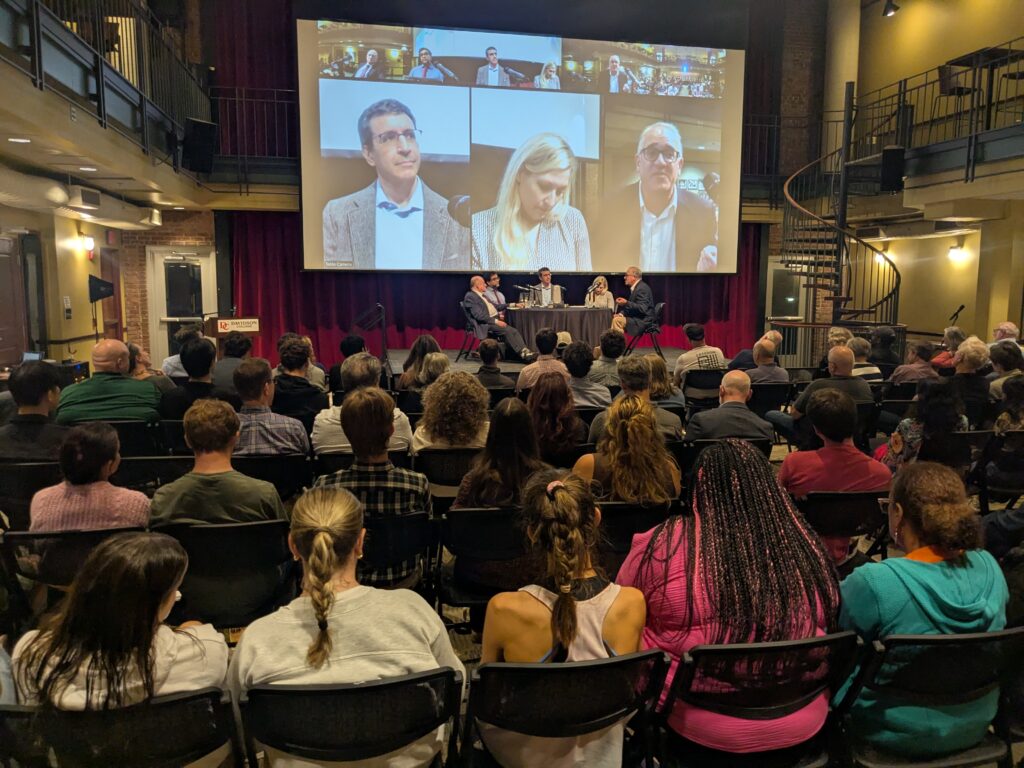
Image of roundtable with audience and screen in background

It included four panelists, Danielle Battisti (U. of Nebraska at Omaha), Philip Cafaro (Colorado State University, retired), Fernando Tesón (Florida State University, retired), and Hrishikesh Joshi (University of Arizona), and was moderated by John Wertheimer (Davidson College). More info on each panelist is provided below, and more background about the roundtable generally is available at this link. The event was introduced by Graham Bullock (Associate Professor of Political Science and Faculty Director of the Deliberative Citizenship Initiative at Davidson College) and Doug Hicks (President of Davidson College).

image of audience with roundtable in the background

Nearly 100 people attended in person and approximately 200 joined the event via Zoom. After engaging in a spirited and respectful discussion with one another, the panelists answered questions from both the in-person and online audiences. A video recording of the event is available below.

In the week following the Roundtable, Davidson, Duke, UNC, and potentially other institutions will be hosting community conversations building on the roundtable discussion. If you are interested in hosting a conversation yourself, click here to watch a webinar that provides some ideas about how both individuals and institutions can get involved in the series by doing exactly that, either now or over the next several months.

The DCI’s series of Community Conversations during the week of October 6 will build on the scholars’ deliberations. These two-hour deliberative discussions of 6-10 people will be moderated by trained facilitators and will use a similar format to the DCI’s D Teams. To learn more about this opportunity to engage with your fellow citizens — either online or in-person) and reserve a spot at a time that works for you, click here. The primary time for these conversations is Wednesday, October 8 at 7 pm in the Student Union’s 900 Room on the Davidson campus. We’ll have round tables and DCI-trained facilitators on hand to moderate small group discussions of 6-7 people. If you can’t make that time, you can select the other times you are available and we’ll be in touch about another facilitated Community Conversation that you can join. The deadline to sign-up for one of these additional times is October 5, but everyone is welcome to join the Oct. 8 conversation without advance registration.

photo of roundtable discussion

Included below is a deliberation guide that provides some background information about the topic of the roundtable and the community conversations. Participants are invited to review it in advance of the conversation, as it includes some discussion questions that the facilitators will be asking everyone in their group to share their thoughts on during the conversation.

DCI-Unity-Equality-and-Immigration-Deliberation-Guide

Register to Participate in an Upcoming Community Conversation

Expert Roundtable

  • Danielle Battisti is an associate professor of history at the University of Nebraska at Omaha where she specializes in immigration and ethnic history. Her book, “Whom We Shall Welcome: Italian Americans and Immigration Reform” (Fordham University Press, 2019) examines both the liberal and conservative elements of Italian American efforts to influence American immigration policies in the 1950s and 1960s. It was awarded the Immigration and Ethnic History Society’s best first book award for 2019. She is also the co-editor of Hidden Histories of Unauthorized Migrations from Europe to the United States (Illinois University Press 2025). One of her current projects is examining the immigration laws that largely facilitated Euro-Americans’ efforts to adjust their status from “illegal alien” to “legal permanent resident.” 

  • Philip Cafaro, a philosophy professor who recently retired from Colorado State, is the author of the book, How Many Is Too Many? The Progressive Argument for Reducing Immigration into the United States (University of Chicago Press, 2015), which argues that current immigration levels—the highest in U.S. history—undermine efforts to achieve a more economically just and ecologically sustainable society. He is also the co-editor of Life on the Brink: Environmentalists Confront Overpopulation (University of Georgia Press, 2012) and Virtue Ethics and the Environment (Springer-Verlag 2010) as well as the author of Thoreau’s Living Ethics: Walden and the Pursuit of Virtue (University of Georgia Press 2004) and “The Impact of Immigration Policy on Future US Population Size” in The Journal of Population and Sustainability (2025).
  • Fernando Tesón is Eminent Scholar Emeritus at Florida State University College of Law. An Argentine-American legal scholar, he is a leading authority on humanitarian intervention and the philosophy of international law. He is the editor of The Theory of Self-Determination (Cambridge University Press 2016) and co-author of Debating Humanitarian Intervention: Should We Try to Save Strangers? (Oxford University Press (2017) and Justice at a Distance: Extending Freedom Globally (Cambridge University Press 2015). He has also published articles supporting less restrictive immigration policies, including  “The Bourgeois Argument for Freer Immigration” in The Cambridge Handbook of Classical Liberal Thought and “Brain Drain” in the San Diego Law Review.

  • Hrishikesh Joshi is an Assistant Professor of Philosophy at the University of Arizona, where he also serves as a core faculty member at the Center for the Philosophy of Freedom. His research focuses on normative issues at the intersection of philosophy, politics, and economics (PPE). He has published several chapters related to immigration and citizenship, including “Immigration Enforcement and Fairness to Would-Be Immigrants” (in The Handbook of Philosophy and Public Policy), “Immigration” (in The Routledge Companion to Libertarianism), and “Immigration: Some Arguments for Limits” (in The Routledge Handbook of the Ethics and Economics of Immigration). He has also published a book on Why It’s Okay to Speak Your Mind (Routledge).
  • John Wertheimer, the William R. Kenan, Jr. Professor of History at Davidson College, will serve as moderator of the roundtable discussion. Dr. Wertheimer’s research and teaching focuses on modern U.S. history and legal history; his two books – Law and Society in the South: A History of North Carolina Court Cases (University Press of Kentucky) and Race and the Law in South Carolina: From Slavery to Jim Crow (Amherst College Press) – explore the legal history of the U.S. South.

Unity-Equality-and-Immigration-Roundtable-Poster

Free Expression at Davidson

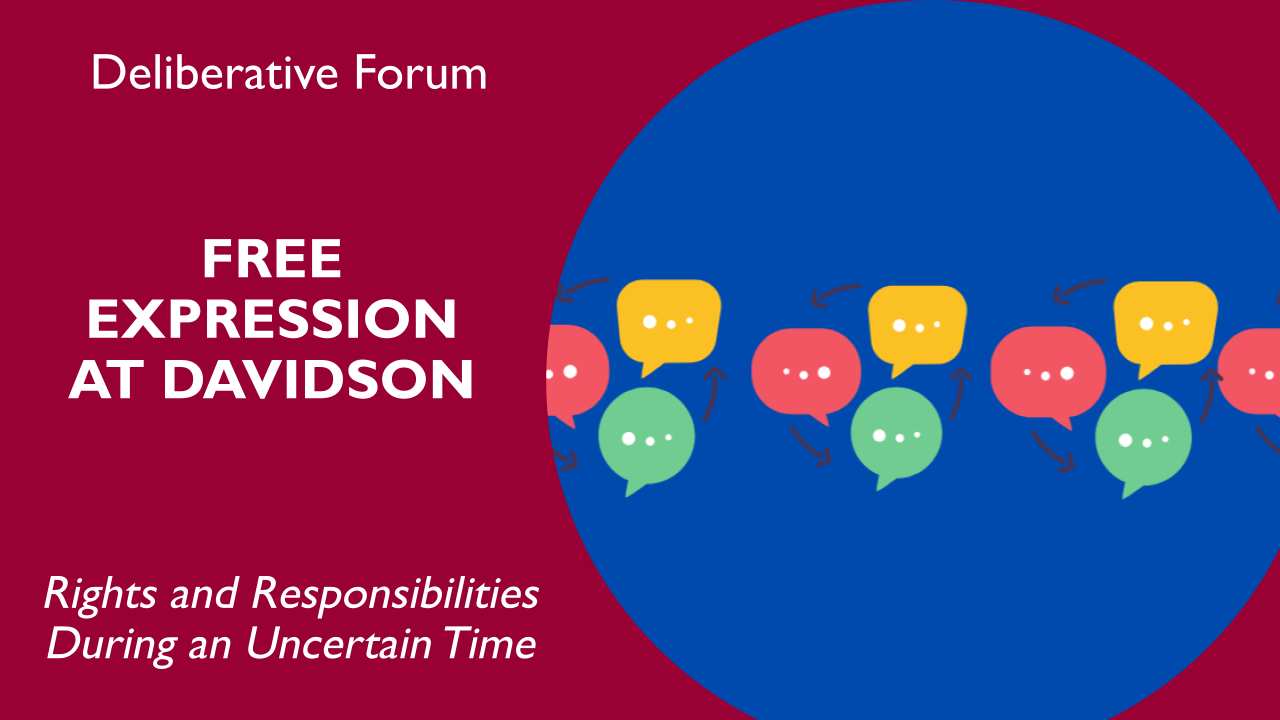
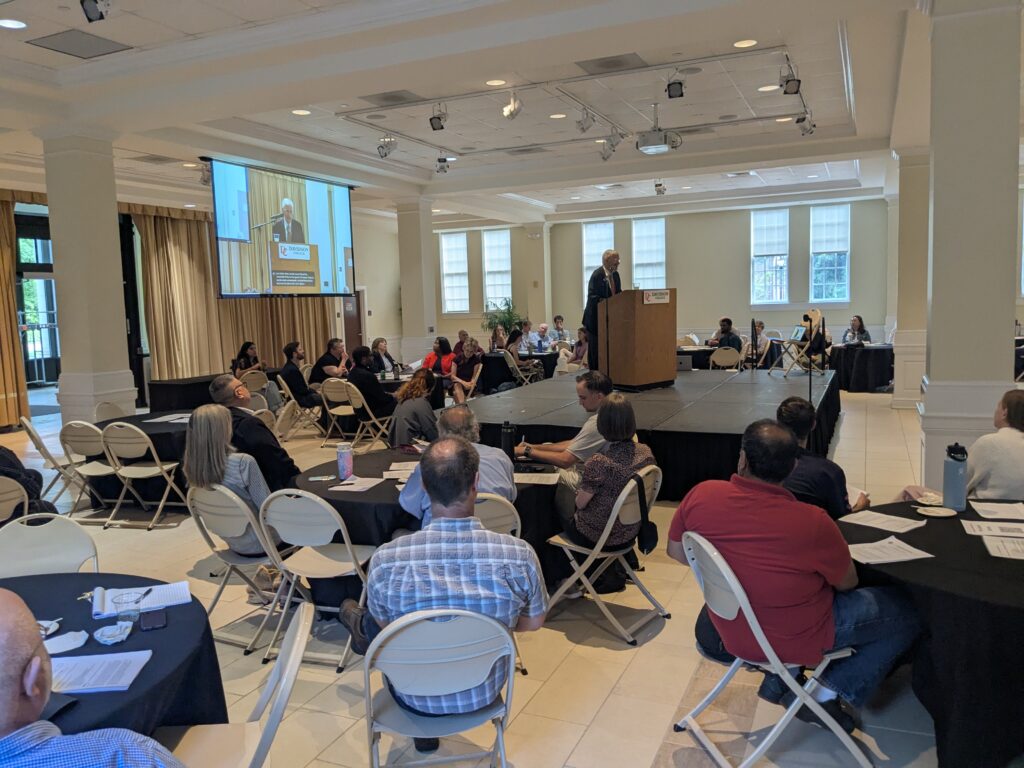
On April 23, the Deliberative Citizenship Initiative hosted a Deliberative Forum on “Free Expression at Davidson: Rights and Responsibilities during an Uncertain Time.” The forum was the last DCI event to be held in the Lilly Gallery before it is transformed into a study space for the next two years while the library is renovated. A total of 144 people attended the event; 61 in-person and 83 online.

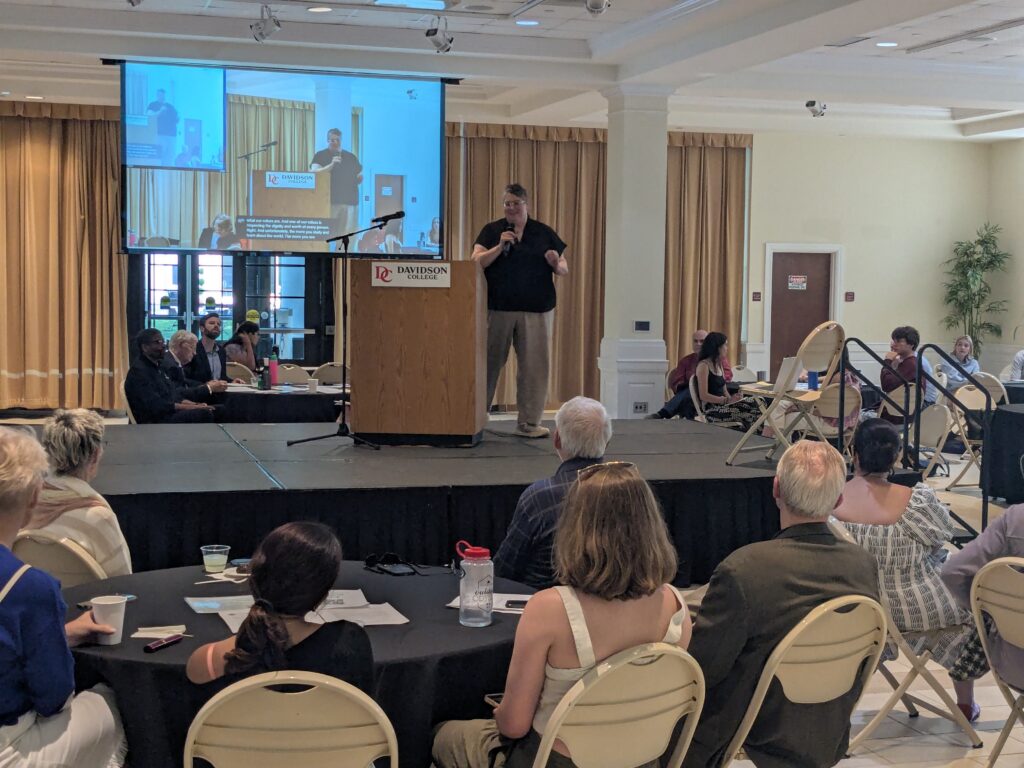
Jim Martin speaking to the audience.
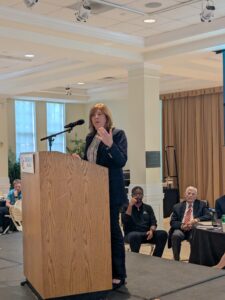
Jacquie Pffeffer Merrill at the podium.

Like most past DCI forums, this event included both expert speakers and an opportunity for the audience to engage with one another on the topic. But instead of a panel or roundtable discussion, this time the speakers spoke sequentially to freely express their thoughts about free expression.

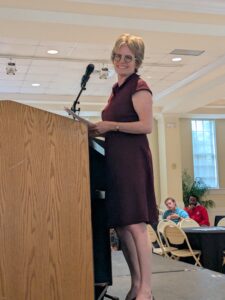
Stacey Riemer at the podium.

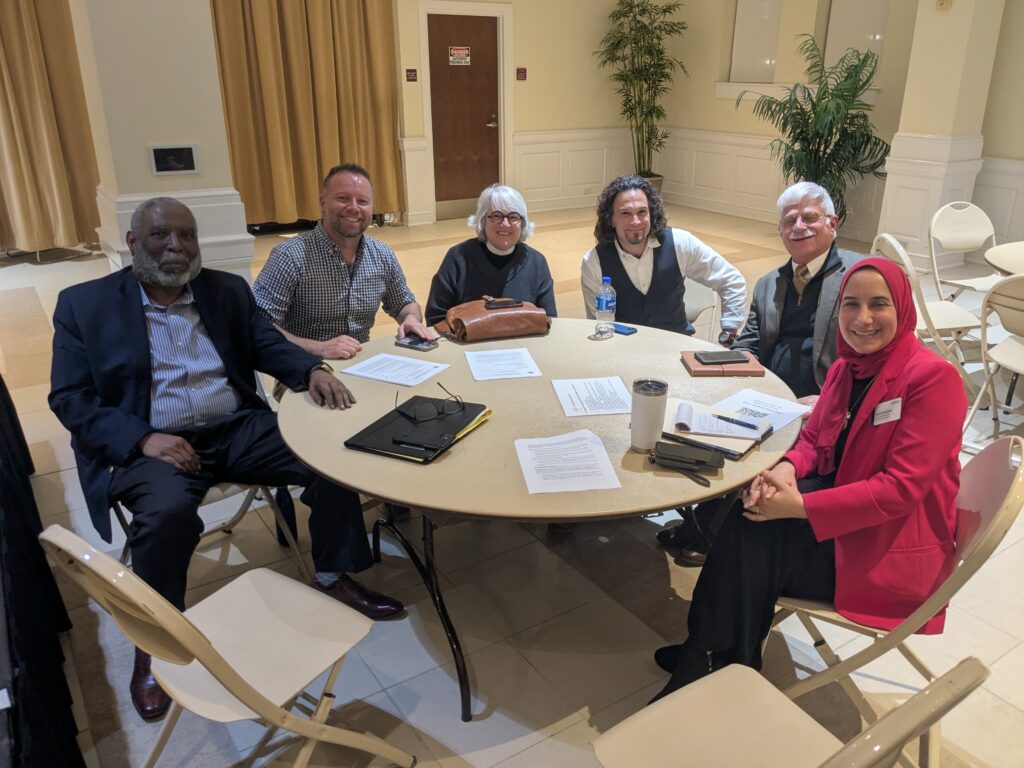
The speakers included Melissa Gonzalez (Associate Professor of Hispanic Studies, Gender & Sexuality Studies and Latin American Studies), Dan Layman (Associate Professor of Philosophy), Jim Martin ’57 (Former Davidson Associate Professor of Chemistry and Former Governor of North Carolina), Ike Bailey ’95 (Professor of the Practice in Communication Studies), Jacqueline Pfeffer Merrill (Director of the Campus Free Expression Project, Council of Independent Colleges) and Stacey Riemer (Interim Vice President for Student Life and Dean of Students). The event was moderated by Graham Bullock, Associate Professor of Political Science and Faculty Director of the DCI.

Melissa Gonzalez speaking to the audience.

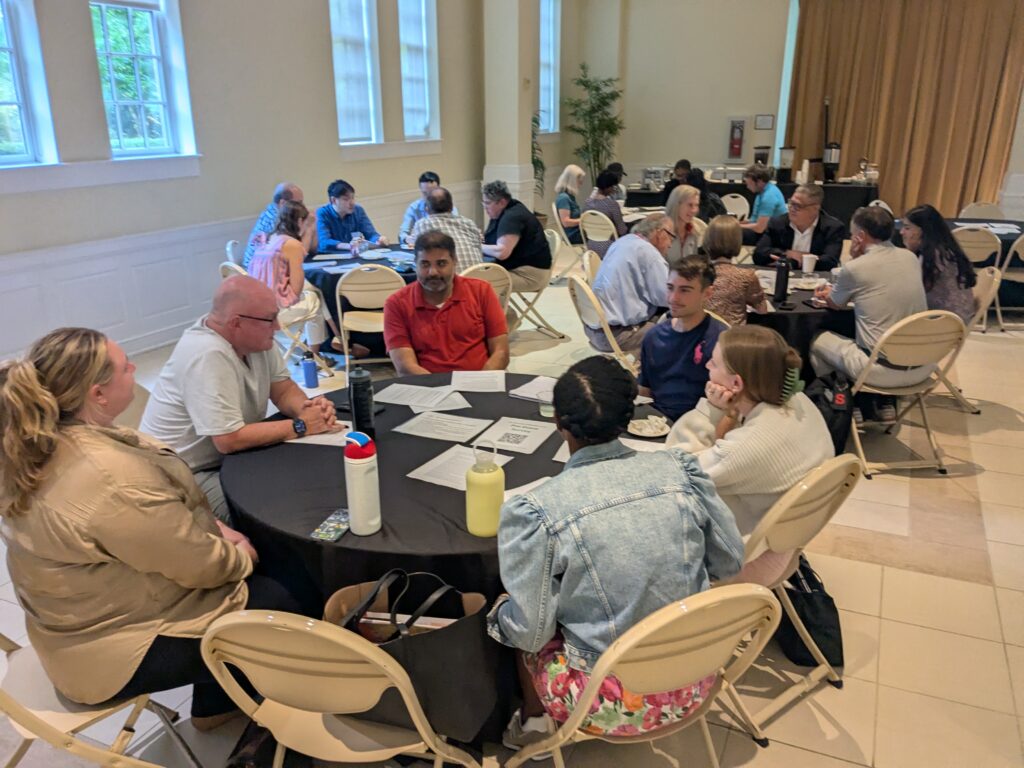
Following the speakers’ remarks, audience members began talking with each other around roundtables in person and in breakout rooms online. Following the DCI’s deliberation guide written for this forum (provided below) and guided by the DCI’s trained facilitators, the discussions explored three related themes and questions:

  1. The Nature and Importance of Freedom of Expression: Why do we value it in a democratic society and in higher education?
  2. The Nature of Responsible Freedom of Expression: What are reasonable limits on our right to “free speech?”
  3. Davidson College’s Approach to Freedom of Expression and the Student Code of Responsibility: How does and how should the College respond to concerns about the expression of particular viewpoints on campus?

Feedback from the event was very positive. 92% of respondents to the post-event survey left either somewhat or very hopeful that we can identify at least some areas of agreement on the importance of free expression and reasonable limits on free speech, 94% reported being satisfied or very satisfied with their small group discussion and likely to participate in another Deliberative Forum in the future, and 97% stated they were likely or highly likely to recommend participating in a Deliberative Forum to a friend.

deliberators sitting around tables.

Below are some of the comments that participants shared about their experience at the forum:

  • “I am really proud to know my alma matter is thinking about this and proactively encouraging discussion. I am proud to be a Davidson Alumni.” Conservative Female Participant
  • “I applaud you for including an ideologically diverse panel. Though I did not agree with one of the members, it was such a great model of civil discourse! Thank you to Dr. Bailey for his inspiring message to us all!! The event was fantastic, and our small group deliberation was a joy. Thank you to the DCI for this Deliberative Forum! Thanks to the deliberation guide, panel, and small group deliberation, I learned much about the topic, as well as how to deliberate together. Deliberative Forums are a very worthy investment in time personally and for our communities and society.” Liberal Female Participant
  • “It’s refreshing and encouraging to see an institution of higher learning actively solicit opinions from and engage with a diverse group of students, faculty, alumni, parents, and friends.  It speaks to the philosophy of the College…a philosophy from which many other institutions could stand to learn.” Moderate Male Participant
  • “I enjoyed participating with other thoughtful, intelligent people of varying ages as they discussed a difficult topic.” Conservative Male Participant
  • “Thank you for hosting this important event, and for the broad range of speakers on the panel.  Our small group was well-facilitated by a current student, who set clear parameters, included everyone, and kept the conversation moving.  The advance reading provided a good foundation while also being an accessible length. Institutions of higher learning have a powerful opportunity and responsibility right now to protect freedom of speech and it is heartening to know how Davidson is striving to stand up for free speech in our current cultural climate. It was refreshing to reconnect with Davidson by learning about the topic of free speech from faculty, staff, and alumni who offered a broad range of perspectives.  I am encouraged to see how carefully this topic is being considered on campus and appreciate the opportunity to connect with others in the structured small group discussion.”  Moderate Female Participant
  • “I thought our moderator was excellent and mature for a sophomore. The organization of the subject matter was great. The diversity of the panel was better than I expected. Being a conservative I did not expect my views to be heard or accepted. I was pleasantly surprised and considered the opposition well formed. I would have enjoyed further discussion.” Conservative Male Participant
  • “How we do anything matters as much as what we do. The DCI brings people together and teaches us how to be deliberative and how to be an effectively engaged citizen, skills that have application across a wide spectrum of critical issues. While I (as a Davidson parent) benefit personally from the wealth of information and opportunities the DCI offers, what I most appreciate is this opportunity for students. The DCI is supporting Davidson’s statement of purpose in countless way, both directly and indirectly.” Liberal Female Participant

Participants were also invited to like to share any other comments, suggestions, or questions about free expression at Davidson that they would like the College to take into consideration in its approach to managing the tensions around protecting freedom of expression and promoting belong and mutual respect. Responses to this question are included in the document below.

DCI-Forum-on-Free-Expression-Participant-Responses

Check out the recording of the speakers’ remarks, deliberation guide, pathways guide and more photos from the event below.

DCI Deliberation Guide on Free Expression at Davidson

DCI-Free-Expression-Deliberation-Guide

Deliberators deliberating around tables.

DCI Pathways Guide on Free Expression at Davidson

DCI-Free-Expression-At-Davidson-Pathways-Guide

Three tables of deliberators.

Religion in Public Life

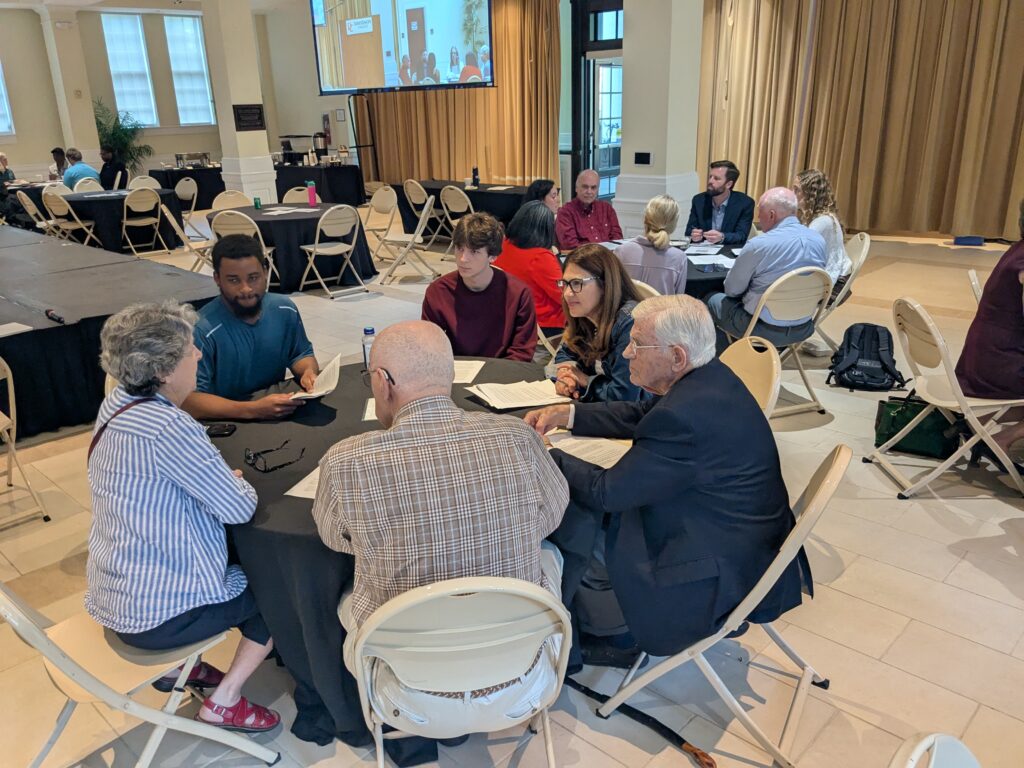
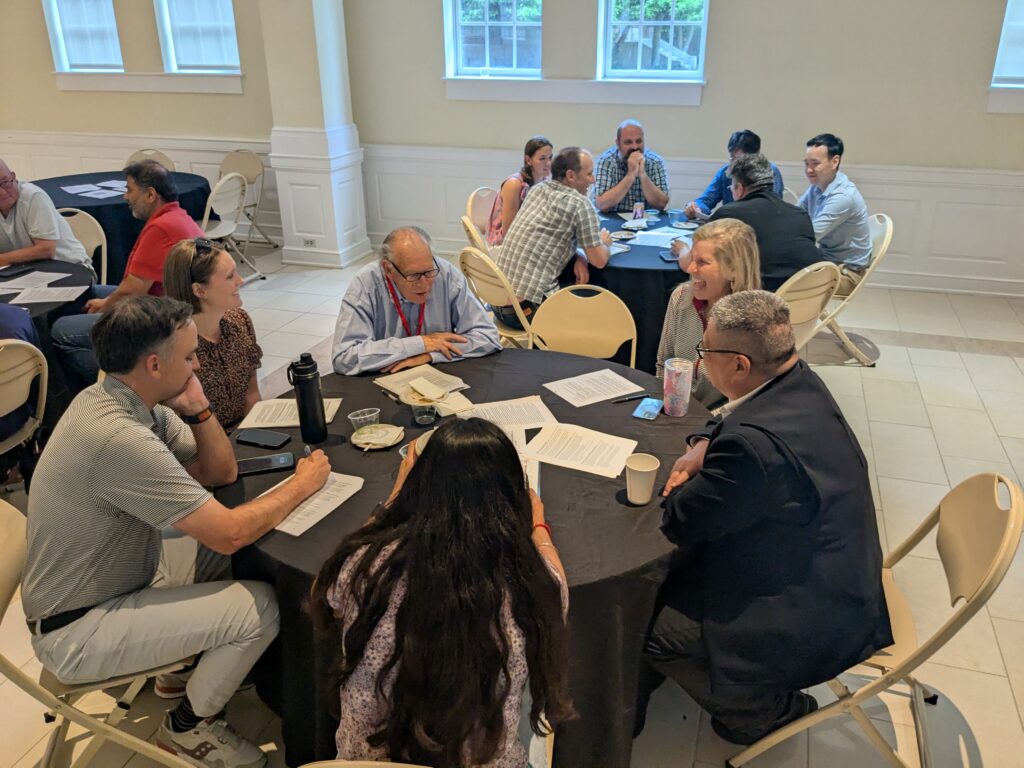
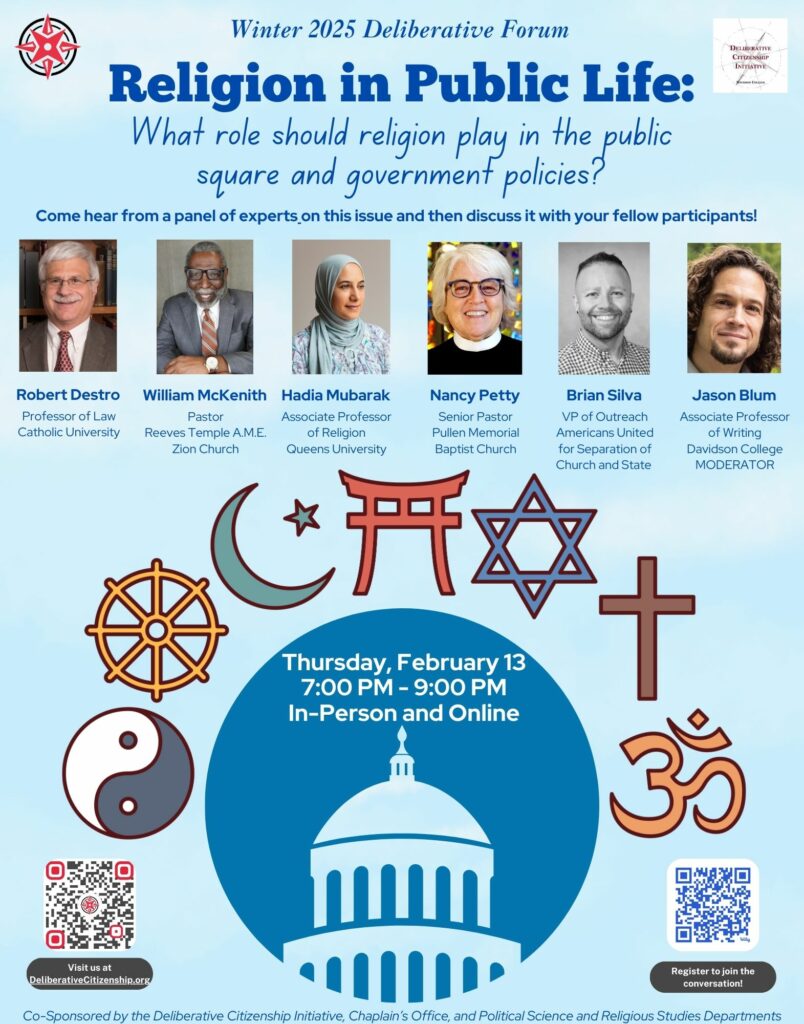
On February 13, 2025, in collaboration with Davidson College’s Chaplain’s Office and Religious Studies and Political Science Department, the Deliberative Citizenship Initiative hosted a Deliberative Forum on Religion in Public Life. Attended by over 150 people, approximately half in person and half online, the event began with a roundtable discussion of five panelists with a diverse set of experiences and perspectives related to the topic at hand. They included Robert Destro, Professor of Law at Catholic University; William McKenith, Pastor at Reeves Temple A.M.E. Zion Church; Hadia Mubarak, Associate Professor of Religion at Queens University; Nancy Petty, Pullen Memorial Baptist Church; and Brian Silva, VP of Outreach at Americans United for Separation of Church and State.

panelists smiling for the camera

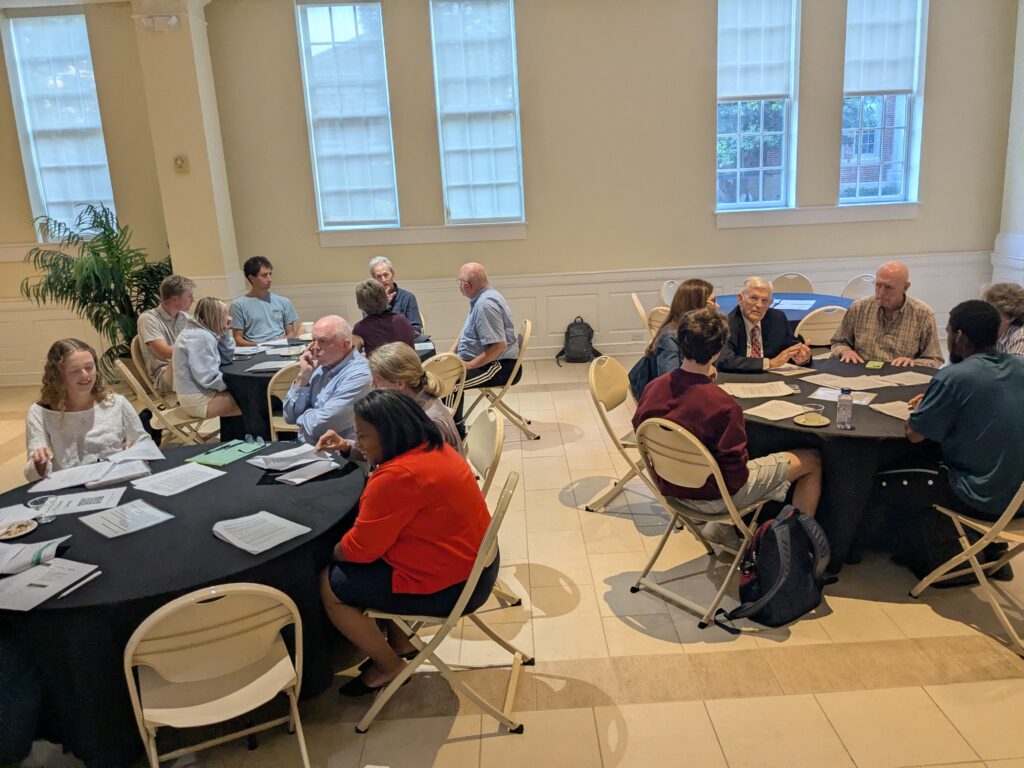
Moderated by Davidson College Associate Professor of Writing Jason Blum, the panelists covered a wide range of questions, including whether religion should have special legal status and the tensions between religious autonomy, equality, and anti-discrimination efforts. Following the panel, DCI-trained facilitators guided audience members through small group discussions that explored the topic further, building on the deliberation guide that was shared beforehand and at the event.

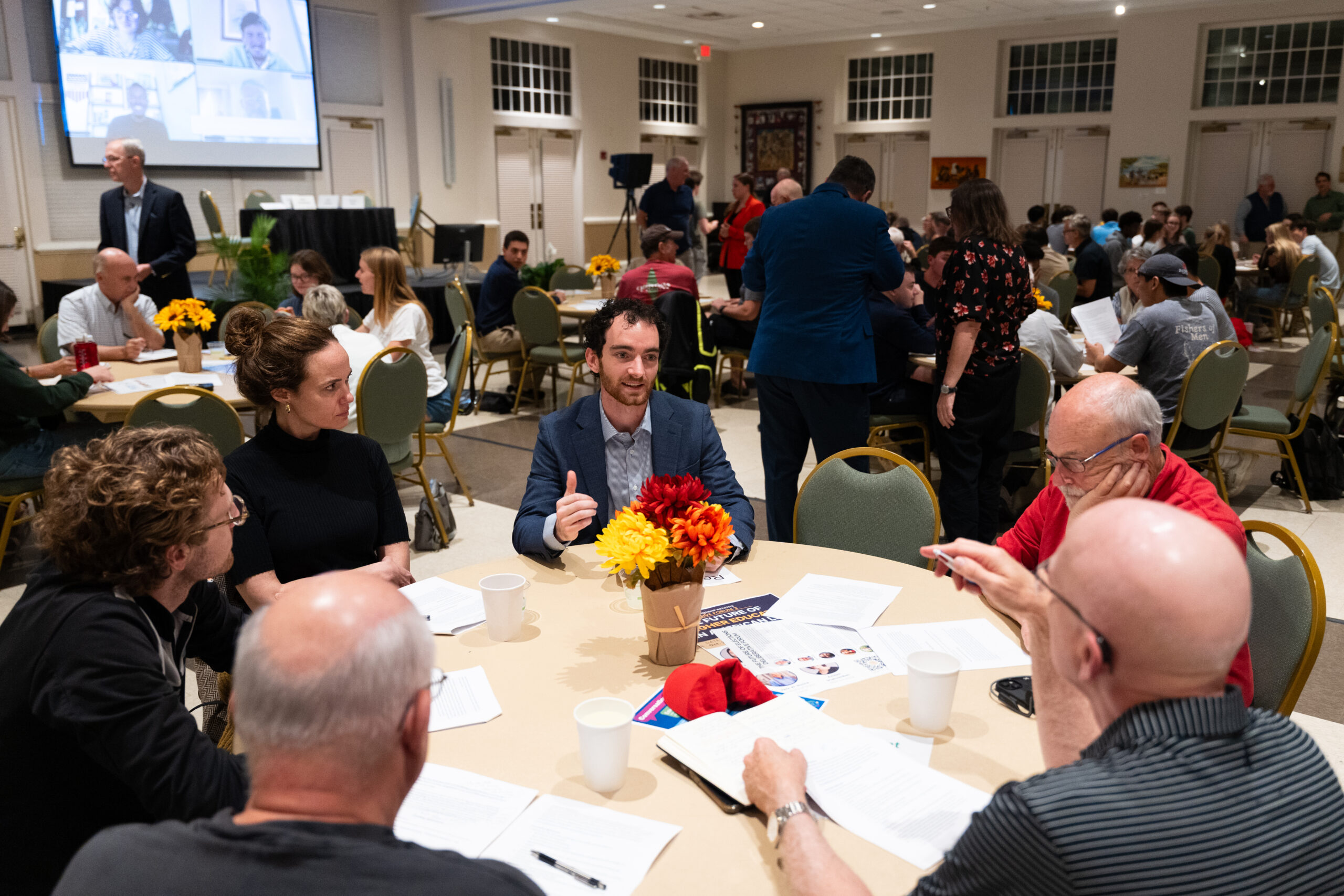
Participants sitting around a table talking

Feedback about the forum was very positive — nearly 90% stated in a post-event survey that they were very satisfied or satisfied with their small group discussion and would recommend the experience to a friend. As one participant wrote:

I left the discussion on Religion in Public Life with an appreciation for the ways in which religion intersects with public life and a greater understanding of the challenges and opportunities that arise when trying to maintain respect for religious diversity in the public square. It was a thought-provoking experience that not only broadened my understanding but also fostered a sense of community and mutual respect among participants.

participants sitting around a table talking

Check out the deliberation guide and recording of the panel discussion below:

DCI-Religion-in-Public-Life-Deliberation-Guide-2025

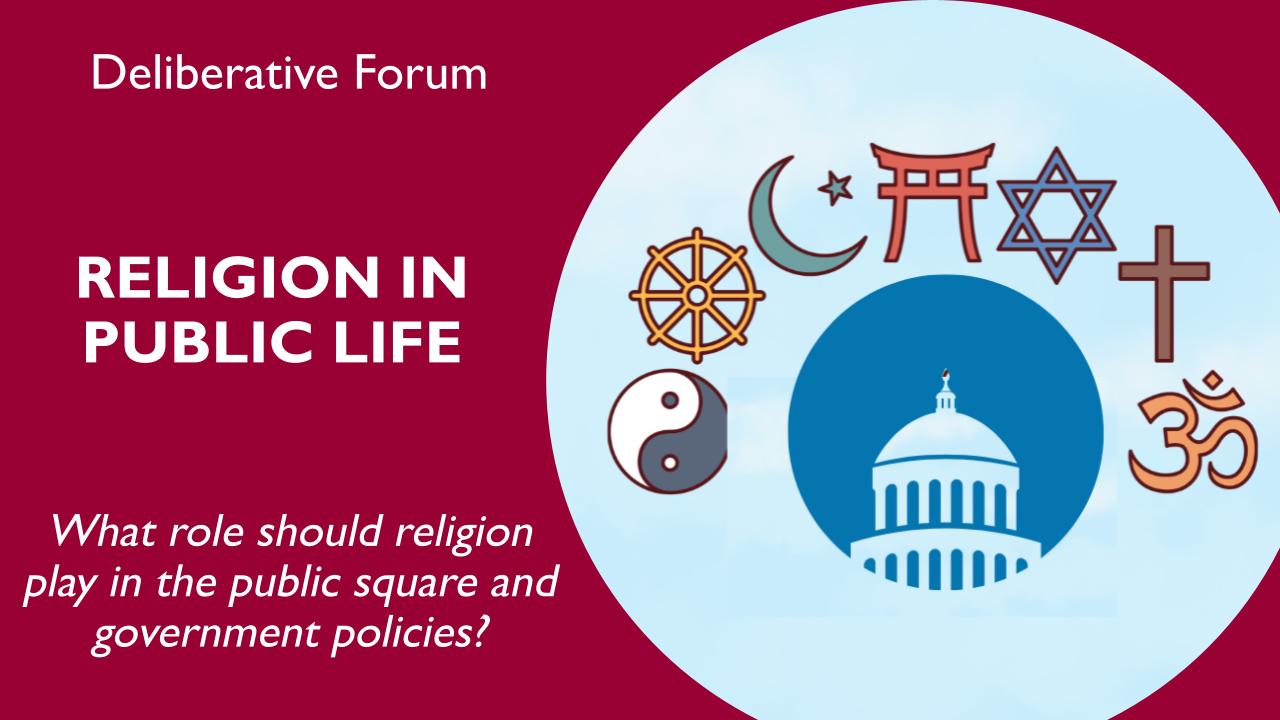
Religion in public life forum flyer.

Income and Wealth Disparities

On Tuesday, October 27th at 7:00 PM, members of the Davidson community gathered together on Davidson’s campus to discuss income and wealth disparities. The 164 attendees (76 in person and 88 online) were treated to a meaningful, multifaceted conversation regarding whether or not they pose a problem to society and how, if at all, should they be addressed. Davidson College President Doug Hicks moderated the conversation that included two philosophy scholars, president of a Charlotte-based advocacy organization, and a vice president of a non-profit think tank based in North Carolina. 

These experts included Robyn Lake Hamilton, the CEO of the Urban League of the Central Carolinas, a local leader in the fight to combat inequality. Davidson’s Professor Sean McKeever and University of Richmond’s Jessica Flanigan, professors of philosophy and experts in the study of the phenomenon in question, brought their academic experience to the conversation. Lastly, Brian Balfour, Senior Vice President of the John Locke Foundation, was able to contribute insights from research into economic disparities and their causes and effects. President Hicks kept the conversation among the panelists focused on meaningful exchange of ideas and explorations of the disagreements that further illuminated the issue for those in attendance.

The event was co-sponsored by Davidson College’s Deliberative Citizenship Initiative, Center for Political Engagement, College Republicans, College Libertarians, College Democrats, Economic Department, Philosophy Department, and Political Science Department. Representatives from each of the student political organizations were present for the deliberative half of the evening.

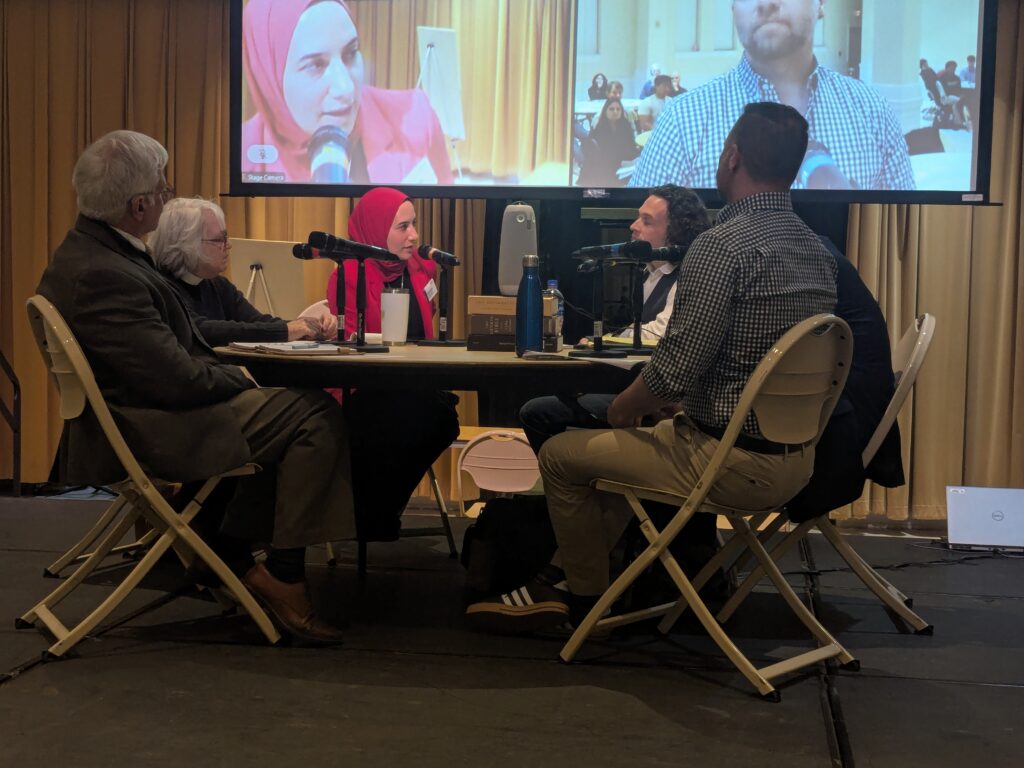
The innovative and successful “round table” format, where the panelists discussed the issue around a table on a stage surrounded by the audience, once again proved to be the most engaging and accessible way to draw the audience into the conversation being held before them. The conversation was recorded with a 360 degree video camera, called the “Meeting Owl,” that was placed on the table the panelists were sitting at for those participants who joined over Zoom. The recording can be viewed by clicking play on the video icon below. 

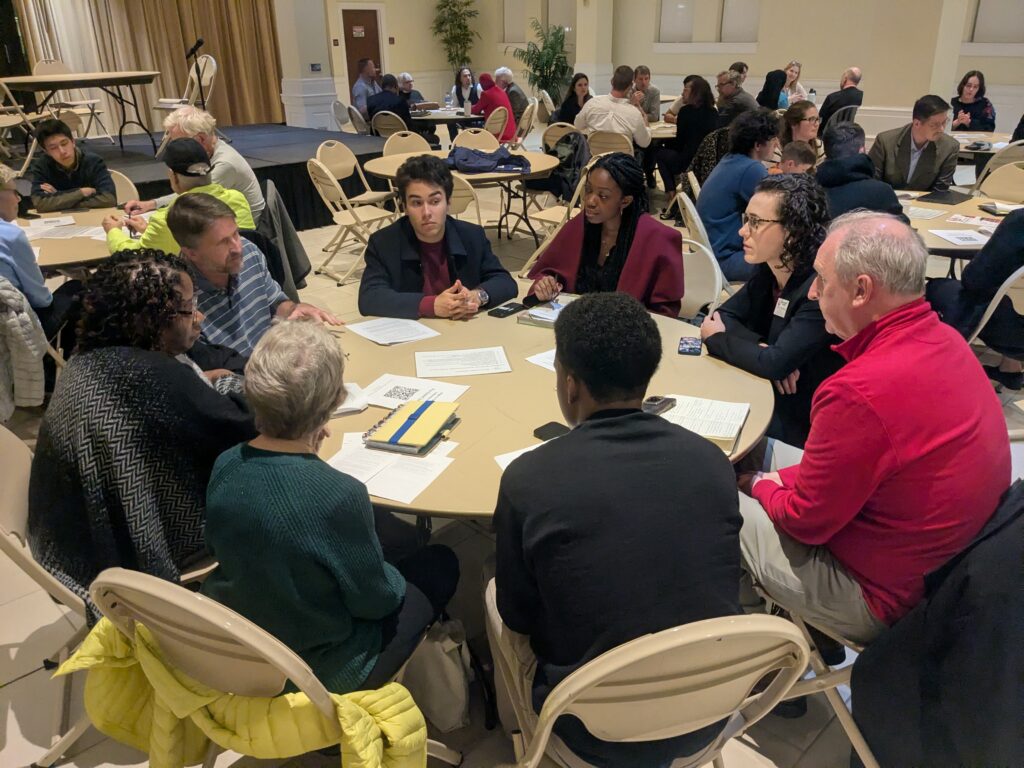
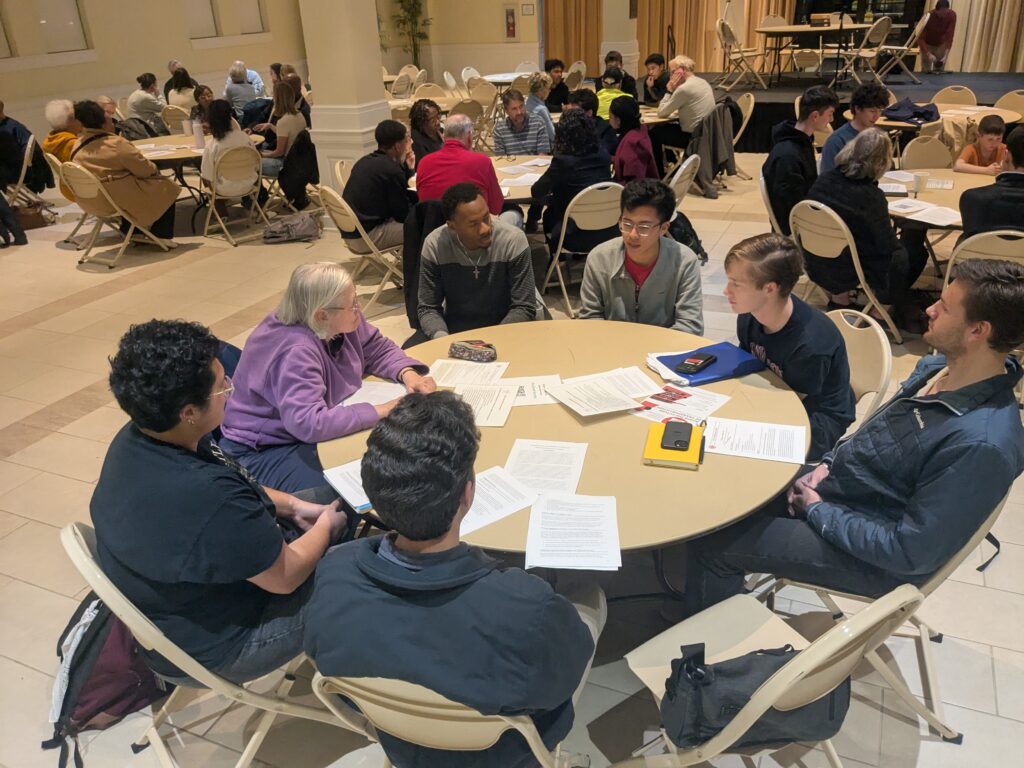
After the hour-long discussion came to a close, participants turned to each other to continue the discussion. At tables of 6-8 people that included residents of the community, students, faculty, and alumni, trained DCI facilitators led discussions on the topic,  aided by a deliberation guide designed specifically for this event. The guide offered supplemental materials to the conversation to ensure each participant had necessary background knowledge to engage constructively in their group’s conversations. 

These conversations were not an end but the beginning of a long journey the participants have begun to become more comfortable with the disagreement such a complex issue inspires. Participants were more than willing to engage and came away deeply satisfied with their experience. Julio Ramirez, a Davidson College professor who attended the forum, said that the forum provided a “deep assessment of a complex problem from multiple perspectives” and was an “outstanding experience.” See comments from other participants about their experience below:

  • “Not only are the discussion guides balanced and educational, but the facilitated small group deliberations are also such a breath of fresh air and source of hope amidst our current polarization and paucity of thoughtful discussions across differences.”
  • “In these fractious times, it is not just refreshing but also life-affirming to be able to take part in discussion of tough issues with no easy answers, with people are intent not on “scoring points” but on working together to solve problems. Beats hell out of watching TV or playing video games.”
  • “The Deliberative Forum is exactly the type of civic exercise we need right now to practice healthy discourse and “lean in” to the most important issues that will decide our future as world-citizens. Today’s event put the DCI’s goals into action. The panel and the small-group discussion inspired me to dig deeper into this topic and to find ways to take action.”

Check out the video recording of the panel discussion below as well as the event’s deliberation guide.

DCI-Income-and-Wealth-Disparities-Deliberation-Guide_-Fall-2024

  • Page 1
  • Page 2
  • Page 3
  • Page 4
  • Go to Next Page »

Footer

Blog Post Categories

  • Announcements
  • Blog Posts
  • DCI Posts
  • Events
  • Faculty Posts
  • Fellow Posts
Image of a compass superimposed by the text "Deliberative Citizenship Initiative" and "Davidson College." Clicking on this image leads to the Initiative page.

Recent DCI Blog Posts

  • We Tried to Fix Jubilee’s “Middle Ground” – Here’s How It Went
  • A Case for Deliberation in the Natural Sciences
  • Welcoming New Staff to the DCI and DCN
  • Facebook
  • Twitter
  • Instagram
  • LinkedIn


Copyright © 2026 · Infinity Pro on Genesis Framework · WordPress · Log in