• Skip to main content
  • Skip to footer

Deliberative Citizenship Initiative

Building Democracy One Conversation at a Time

  • The Initiative
    • Programs
      • Deliberation Across the Curriculum
      • Deliberation on Campus
      • Deliberation in the Community
      • Research on Deliberation
    • Motivations
      • Why Deliberative Citizenship?
      • Why Davidson? Why Now?
    • Who’s Involved?
      • DCI Fellows Cohorts
        • 2025-2026 Fellows
        • 2024-2025 Fellows
        • 2023-2024 Fellows
        • 2022-2023 Fellows
        • 2021-2022 Fellows
        • 2020-2021 Fellows
      • DeeP Collaborative Cohorts
        • 2024-2025 DeeP Collaborative Faculty
        • 2023-2024 DeeP Collaborative Faculty
      • Advisory Council
    • History
      • What Sparked the Initiative?
    • Key Deliberative Dispositions
    • Frequently Asked Questions (FAQ)
    • Annual Report
  • Get Involved!
    • Participate in a Forum
    • Join a D Team
    • Become a Fellow
    • Take Courses
    • Get Training
    • Come to Guest Lectures
  • Events
    • Upcoming Events
      • 250th Anniversary Deliberative Forum Series on American Values
    • Past Events
  • Connections
    • The Deliberative Citizen: The DCI’s Monthly Newsletter
    • Efforts on Campus
    • Efforts in the Community
    • Efforts Elsewhere
    • Readings and Resources
      • DCI-Published Guides
      • DCI Guide to One-on-One Conversations
      • How to Disagree
      • Demonstration of Facilitation Styles
      • Deliberative Pedagogy Mini-Course
    • How We Can Help: DCI’s LET’S DELIBERATE! Partnership Opportunities
    • DCI in the News
  • DCI Blog Posts
    • Recent Blog Posts
    • All Blog Posts

Deliberative Forums

Deliberative Forum on Artificial Intelligence

AI slide

In February 2024, the DCI hosted a Deliberative Forum on Artificial Intelligence in partnership with Davidson’s Computer Science Department, Digital Studies Department, and Office for Technology and Innovation. Together, we connected Davidson students, faculty, staff, alums, and members of the wider community to discuss how we should think about and interact with the advanced AI systems have been dominating our public discourse about tech since the public release of ChatGPT in November 2022.

DCI-AI-Forum-Poster_Feb-5

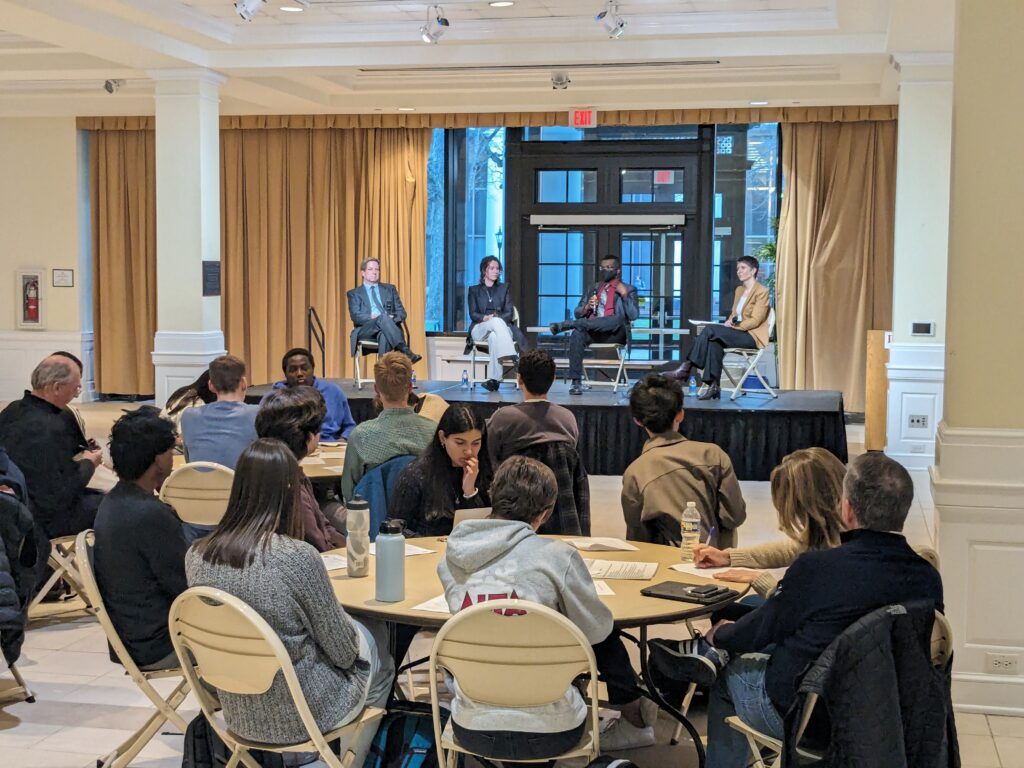
Three panelists with very different kinds of AI expertise discussed how we should aim to relate to AI now and in the future. You can watch the whole panel discussion below. All in all, over 130 people participated in the forum, sharing their hopes and fears about the technology’s impact and deliberating together about the role of humans in a world that will be potentially fundamentally transformed by generative AI.

Damien Williams, Assistant Professor of Philosophy and Data Science at UNC Charlotte spoke about how awareness of what biases, especially social biases, can arise in AI algorithm training impact the degree to which the outputs of these systems align with just goals and values. Lauren Kahn, Senior Research Analyst at Georgetown University’s Center for Security and Emerging Technology discussed ways that AI applications can positively impact national security and state interests, the risks associated with them, and how to develop them with responsible speed. Richard Boyd, CEO of Ultism, talked about AI’s impacts on the private sector. All panelists touched on the importance of working on aligning AI systems with our values and interests, as well as the challenges associated with this task. The panel was moderated by Sara Copic, DCI Assistant Director and affiliate researcher of the UNC Chapel Hill AI Project.

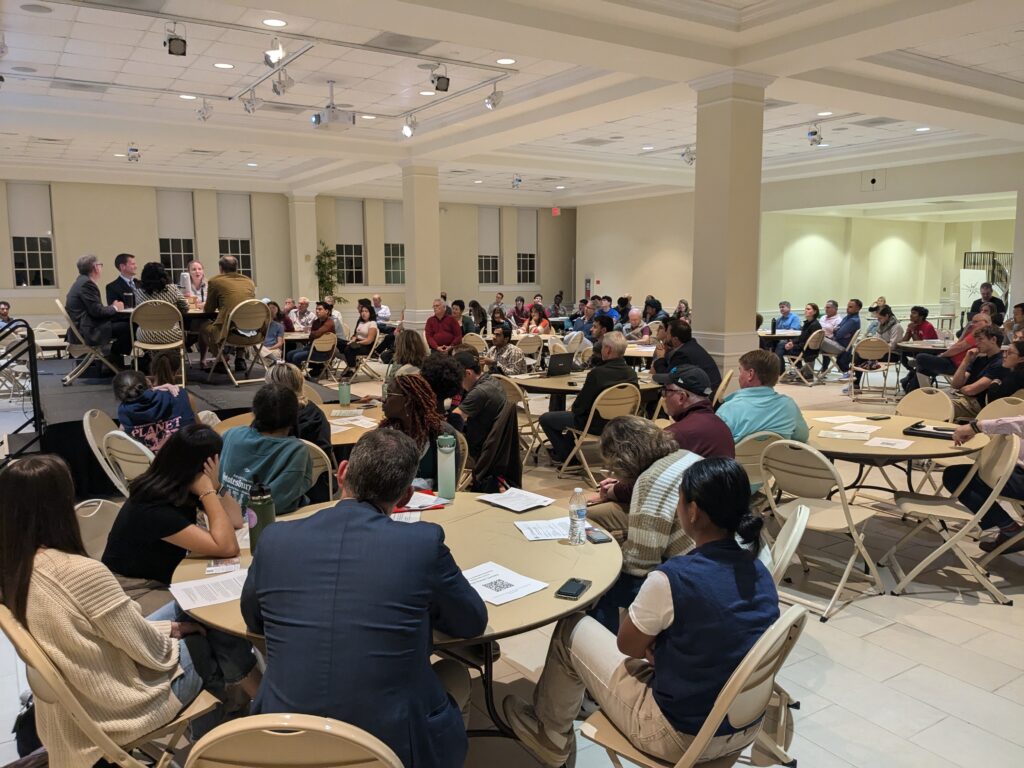
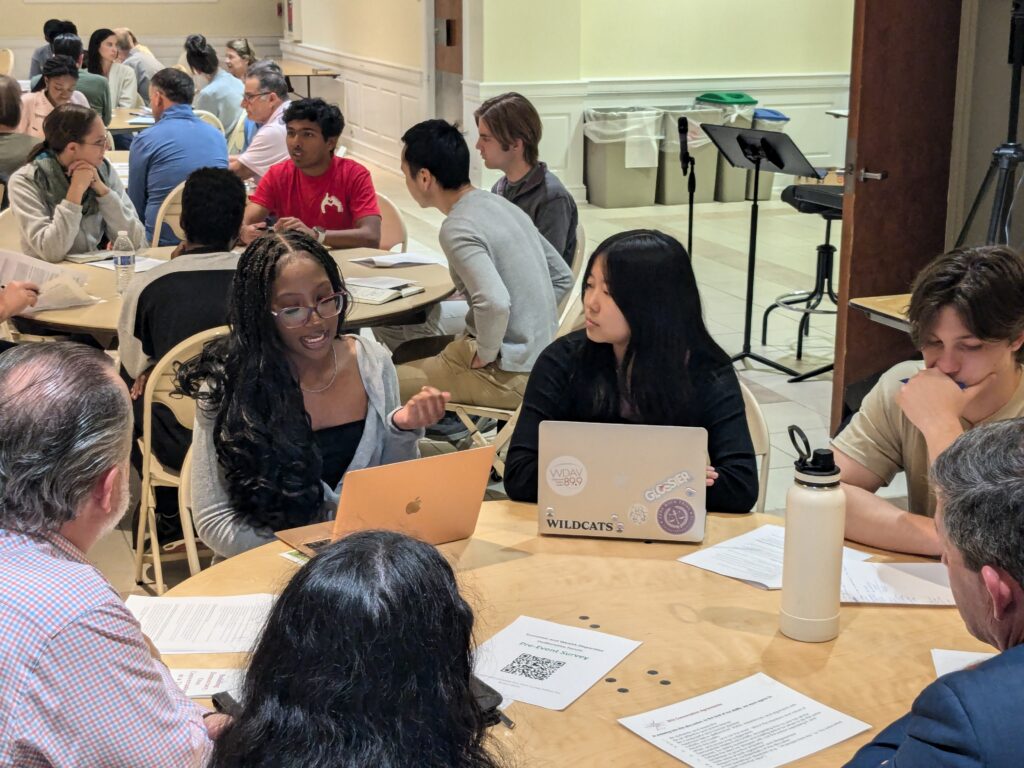
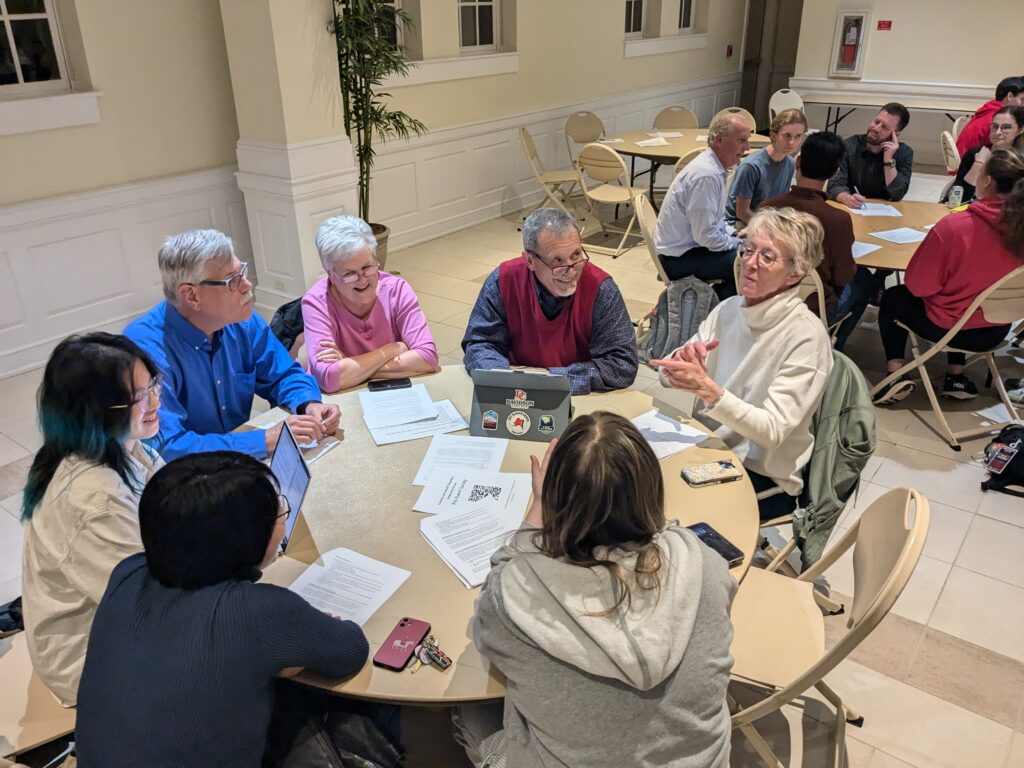
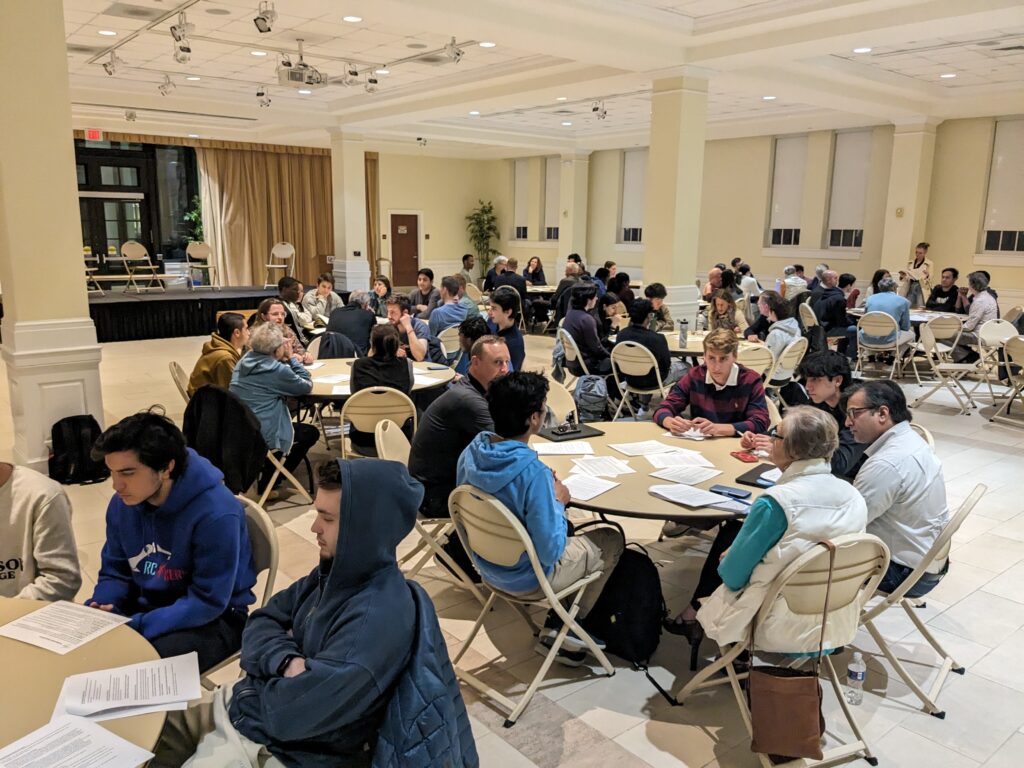
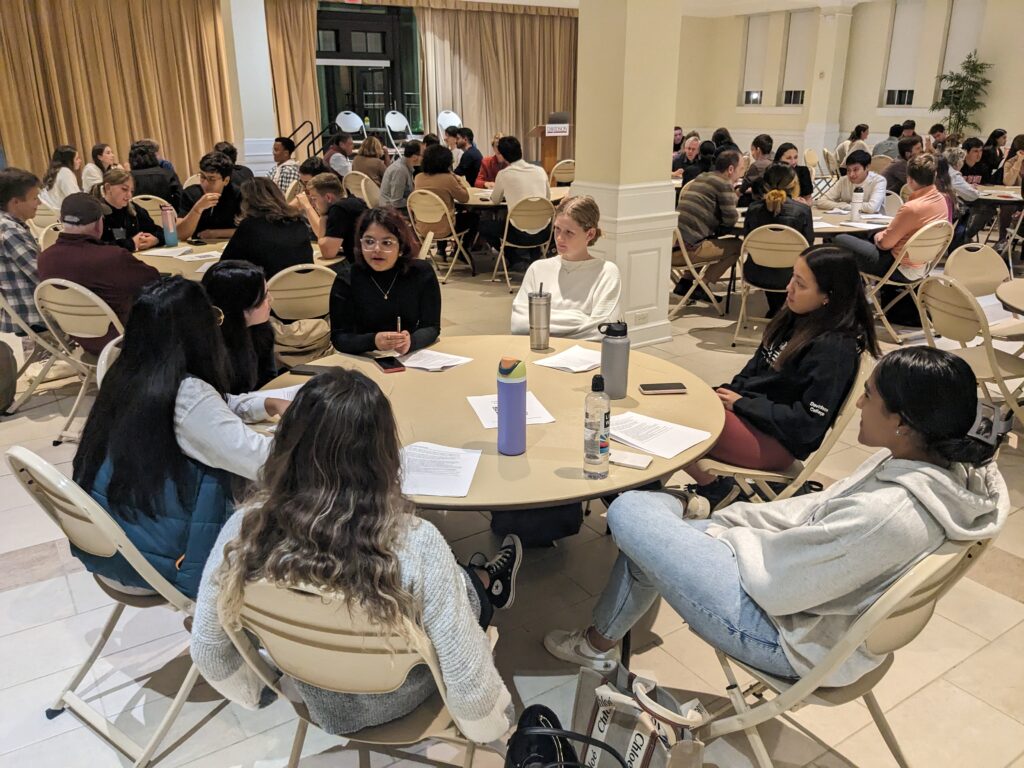
Following the panel discussion, participants deliberated about AI ethics, standards, and policy. These discussion groups were guided by the DCI’s trained facilitators and included a mix of students, faculty, staff, alumni, and community members who were able to share their questions and thoughts about this new technology.

Forum participants deliberate at round tables

You can check out a short video of the small group discussions that participants engaged in the video below (less than one minute long). We used Canva’s AI Assistant to help generate the video, and we couldn’t resist leaving in the last two captions that it generated — watch until the end and we bet you’ll get a kick of out of it.

Participation in every DCI program includes access to a Deliberation Guide, a document that provides some background information and practical examples that enable people of all backgrounds to engage with the topics of our programs. Below, you can access our Deliberation Guide that we distributed as part of our Forum on Artificial Intelligence. Although our guides are intended to be used with the help of a trained facilitator, we hope that this document will spark interest for those looking for ways to deepen their understanding of how generative AI works and the special ethical and policy tradeoffs and challenges associated with this technology. If you missed this event, we also hope it will inspire you to participate in our future deliberative forums — we have one coming up on April 2 on Guns in America. More info coming soon…

DCI-Deliberation-Guide_Artificial-Intelligence-1

Deliberative Forum on Guns in America

Slide of Guns in America forum.

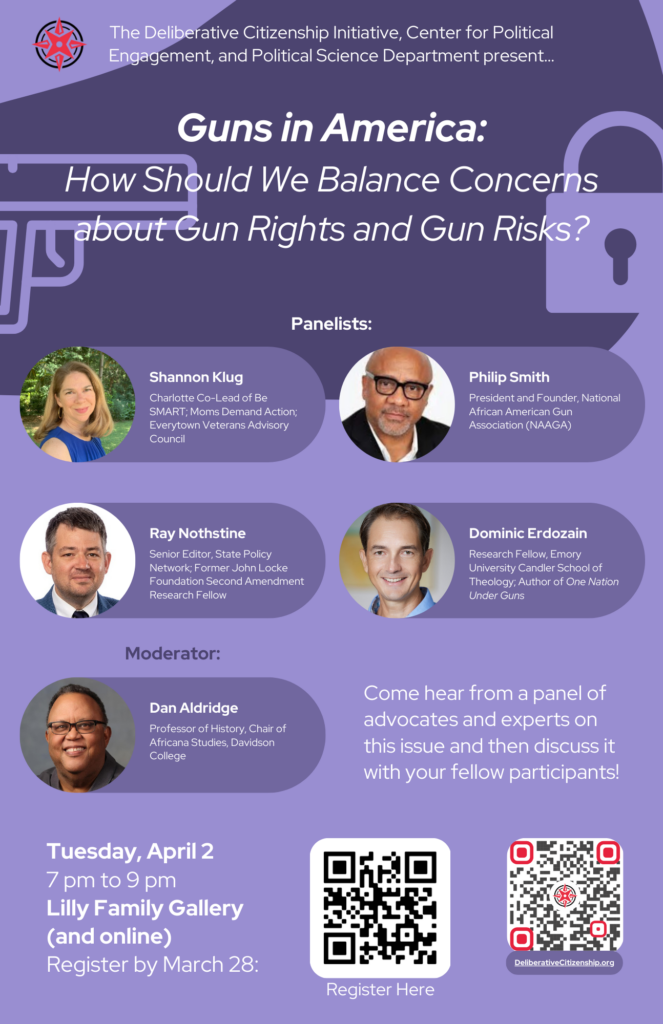
The Deliberative Citizenship Initiative, Center for Political Engagement, College Democrats, College Libertarians, College Republicans, and Political Science Department recently co-hosted a Deliberative Forum on Guns in America: How Should We Balance Concerns about Gun Rights and Gun Risks? Below is the flyer, more information about the event and panelists, recordings of the panel discussion and small group deliberations, and the deliberation guide for the forum.

gun forum flyer

“I’m so very grateful for Davidson’s DCI initiative that provides a thoughtful, meaningful, and challenging (in all the good ways a functioning democracy requires that) opportunity to engage with fellow citizens.“

DCI Guns in America Deliberative Forum Participant

On Tuesday, April 2, 2024, nearly 170 people – 94 online on Zoom and 69 in-person at Davidson College’s Lilly Family Gallery (a record number for a DCI Forum) – gathered to deliberate about one of the most contentious and challenging topics in American politics, and they did so authentically, respectfully, and thoughtfully. The topic – Guns in America: How Should We Balance Concerns about Gun Rights and Gun Risks? – was first discussed by a panel of experts and advocates who came from a wide range of backgrounds and expressed a wide range of perspectives.

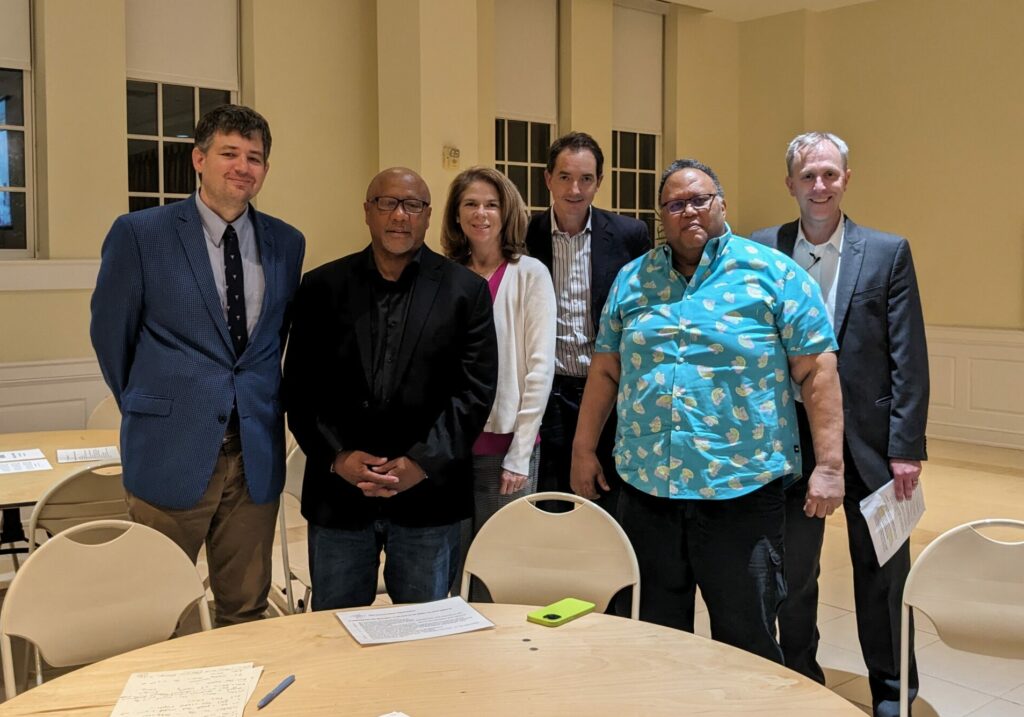
They included Shannon Klug, a Former Air Force Colonel who has worked with Moms Demand Action, Be SMART, and Everytown’s Veterans Advisory Council), Philip Smith, the President of the National African Americans Gun Association, Ray Nothstine, a former Second Amendment Research Fellow at the John Locke Foundation, and Dominic Erdozain, a Research Fellow at Emory University and author of One Nation Under Guns: How Gun Culture Distorts our History and Threatens our Democracy. Their discussion was moderated by Dan Aldridge, Professor of History, Chair of Africana Studies, and a former DCI Deliberative Pedagogy (DeeP) Faculty Fellow, while Graham Bullock, Faculty Director of the DCI and Associate Professor of Political Science, served as the event’s MC.

Photo of panelists and organizers standing together.
From Left: Ray Nothstine, Philip Smith, Shannon Klug, Dominic Erdozain, Dan Aldridge, and Graham Bullock

 The event was co-sponsored by Davidson College’s Deliberative Citizenship Initiative, Center for Political Engagement, College Democrats, College Libertarians, College Republicans, and Political Science Department. Representatives from each of the student political organizations asked questions of the panelists during the event, building on Dr. Aldridge’s facilitation of the discussion.

Instead of being lined up in a row of chairs, the panelists were seated around a roundtable on a stage, which enabled them to talk to each other more easily. A 360 degree video camera (a “Meeting Owl”) was placed in the center of the table, which enabled the conversation to be streamed live to participants who joined over Zoom. The video stream, which is available to view below, was also projected on a screen behind the panelists so people attending in-person could see who was speaking in case their direct view was blocked. This was the first time the DCI used this format, and it was widely praised as a helpful and engaging innovation.

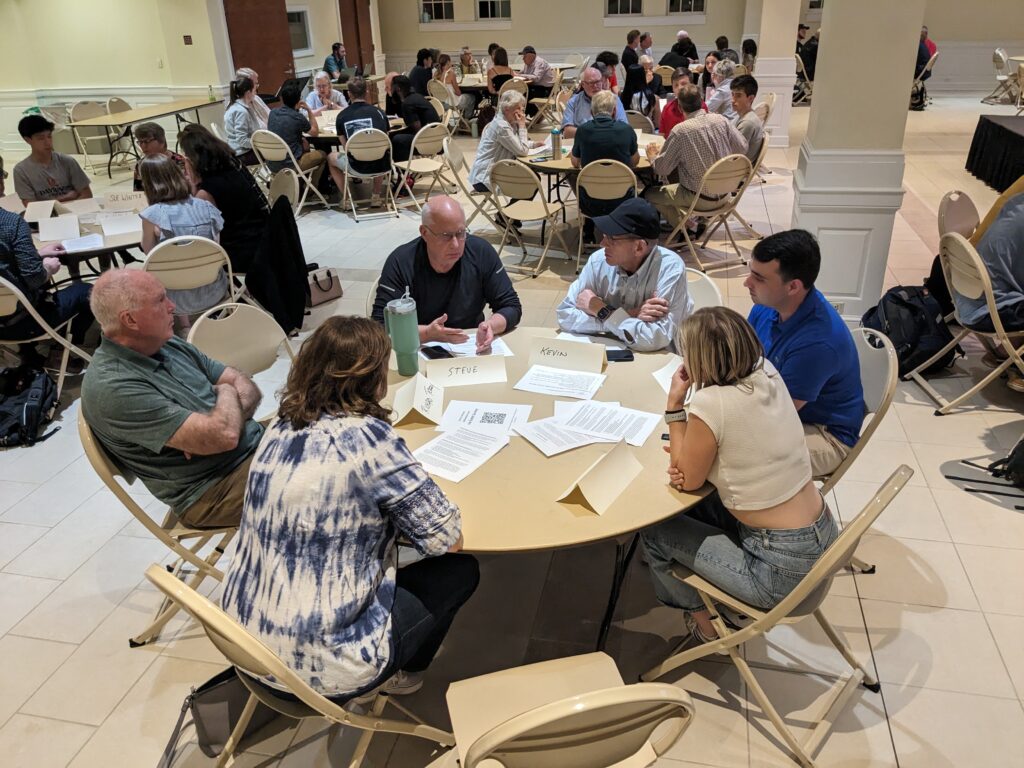
The panel discussion set the stage for an in-depth hour-long opportunity for audience members to explore the issues associated with guns in America among themselves. They broke up into small groups of 6-8 people who included Davidson students, faculty, staff, community members, and alums. Each discussion was facilitated by a trained DCI facilitator, most of whom were DCI student fellows but also included several faculty and community members. They introduced a series of discussion questions shared in a Deliberation Guide that was distributed to participants both before and at the event. The guide, included below, also provided some background information and a summary of different viewpoints on the topic so everyone had access to a baseline of knowledge going into the discussion.

The short video below provides some short clips of these discussions as well as a window into how the panelists’ roundtable deliberation was setup in the room.

These were not easy discussions and participants explored both their areas of disagreement and agreement. But they did so with kindness, curiosity, and courage, and were generally very satisfied with the experience; 82% were either satisfied or very satisfied with their small group discussion, and 98% reported they are likely or highly likely to participate in another Deliberative Forum in the future. Check out some of their comments about the event below:

  • “We live in such angry times, where every controversial topic becomes a zero sum game that is impossible to win. I’m so very grateful for Davidson’s DCI initiative that provides a thoughtful, meaningful, and challenging (in all the good ways a functioning democracy requires that) opportunity to engage with fellow citizens. It is empowering to know you have a lot to contribute to the greater understanding of critical issues, and crucially important to be reminded that you also have a lot to learn from others.”
  • “We can all learn and open our minds to others in this type of format. The guided breakout sessions gave me reason to look at my own views and rethink some of my positions. In addition, the Deliberation Guide given out is most helpful in discerning my thoughts on this topic and learning of other resources. I encourage anyone who has even made up their mind about gun laws to attend the next forum. What we do together makes a difference.”
  • “I wanted to attend the DCI forum on guns to hear from experts and fellow citizens on how we can all work together to address gun safety in America. It was refreshing to be in a room full of people who all seemed to be there for the right reasons and were all open-minded to hearing different perspectives. The work being done by the DCI is important and I believe all citizens should challenge themselves to participate in these types of programs.”
  • “Far exceeded my expectations to hear a wide variety of opinions in a balanced and logical way.”
  • “The range of views (rather than simply two opposite views) on the panel was fabulous.”
  • “This was fantastic – THANK YOU to everyone who worked so hard to provide a balanced, informative space. [Our facilitator] did an excellent job in facilitating our discussion. Loved connecting with all the other alums in my group. And am very appreciative of the well sourced materials that I may revisit more deeply on my own time.”

Our hope is that events like this forum contribute to greater understanding of different perspectives on the issues that divide us and create the foundation for sustained progress on them in the future.

Deliberation on Guide in Guns in America

DCI-Deliberation-Guide_Guns-in-America-2024

Panelist Bios

Shannon Klug works with Moms Demand Action, a part of Everytown for Gun Safety, and is the Charlotte Co-Lead for Be SMART, an organization that advocates for secure gun storage to save children’s lives. She is also a gun owner and retired Air Force Colonel, and she is a member of the Everytown Veterans Advisory Council. Klug has written numerous op-eds in the Charlotte Observer, Stars and Stripes, and elsewhere about the importance of reducing gun violence and improving gun safety.

Philip Smith, a graduate of the University of California at Davis, is the president and founder of the National African American Gun Association (NAAGA). The National African American Gun Association is an organization that promotes gun ownership rights among African Americans in the United States. Founded in 2015, it has over 34,000 members (60% of whom are African American women), more than 75 chapters in the United States, and has grown significantly in reaction to black deaths. 

Ray Nothstine is a Future of Freedom Fellow and senior editor and writer for a non-profit focusing on state-level policy. He previously worked as opinion editor at Carolina Journal and as a Second Amendment research fellow at the John Locke Foundation. Nothstine served for over seven years as managing editor of Religion & Liberty, a publication of the Acton Institute. He has written numerous articles advocating for gun rights and fewer gun regulations in The Carolina Journal, Salisbury Post, The Anson Record, and elsewhere. 

Dominic Erdozain is a writer and historian with a passion for bringing the past into dialogue with the present. A graduate of Oxford and Cambridge, he is currently a Research Fellow at Emory University. In his book, One Nation Under Guns: How Gun Culture Distorts our History and Threatens our Democracy, published by Random House in 2024, Erdozain places America’s gun problem in a broader philosophical and historical context and argues that we have wrongly ceded the big-picture argument on guns.

Moderator Bio

Dr. Dan Aldridge will serve as the moderator of the panel. Dr. Aldridge is Professor of History and Chair of Africana Studies at Davidson College. He has also participated as a Faculty Fellow in the DCI’s Deliberative Pedagogy (DeeP) Collaborative. Dr. Aldridge has served as a public defender in Los Angeles and written extensively about the history of the African American civil rights movement. He received his PhD from Emory University, his JD from Northwestern University, and his BA from Michigan State University.

A Deliberative Forum on the Legacies of WWII in the Asia Pacific Region

In the spring of 2024, eight ginkgo tree saplings were planted on the Davidson campus between the Library, the Wall Science Center, and Chambers. These saplings, descendants of trees that survived the US military’s atomic bombing of Hiroshima, were donated by Green Legacy Hiroshima to promote awareness about the dangers of warfare. While serving as powerful reminders of the devastation caused by nuclear weapons, the ginkgo trees’ symbolism has raised the concern that the project’s focus on the impacts on Japan risks overlooking the broader and more complex history of World War II in the Asia-Pacific. 

People from different countries in the region have different historical perspectives on the war, which make drawing a universal lesson from their experiences difficult. The ginkgo trees, therefore, encourage us to discuss these questions: What should we say about the legacies of World War II in the Asia-Pacific region? How can we craft an interpretation that honors the universal suffering caused by war while respecting the diverse ways nations and individuals remember this history? By approaching these questions with openness and a commitment to historical nuance, we reflect not only on the past but also on our shared responsibility for shaping a more peaceful future.

Davidson College’s Deliberative Citizenship Initiative invites you to join our Deliberative Forum on Wednesday, March 5th, where participants will first hear presentations from three speakers from Davidson College. Dr. Kristi Multhaup, Vail Professor of Psychology, will share the story of the ginkgo tree saplings and how they came to Davidson. Assistant Professor of History, Dr. Dáša Mortensen, will provide an overview of the history of World War II in the Asia-Pacific and its effects on the region. Dr. Keren Zhu, Assistant Professor of Political Science, will then examine how the war has shaped the collective memories of countries in the region and their relationships with each other today. 

After the presentations, attendees at the forum will share their thoughts with each other about the legacies of WWII in the Asia Pacific. Facilitated by the DCI’s trained facilitators, these deliberations will generate ideas for signs and related interpretative materials that will be placed alongside the ginkgo trees on campus, representing the Davidson community’s reflections on the devastation of war and its aspirations for peace.

The event, which is co-hosted with the Office of the Vice President for Academic Affairs, East Asian Studies, History, and Political Science Departments, will be both in person in the Lilly Gallery and online over Zoom on March 5 from 7:00 pm to 9:00 pm. Find out more about the event and sign up to attend the forum by March 2 at this link. We look forward to seeing you and hearing your thoughts at the event!

Registration is required as dinner will be served as part of the event (from Sabi!). Sign up today as seats are limited!

Register for the Forum Here

This event has been planned by a team of Davidson students and faculty, including Keya Zhou ’25, Luna Noguchi ’25, Flo Moser ’26, Romeo Norris ’27, Casey Scheiner ’28, Lily Ogawa ’28, and Dr. Graham Bullock…To learn more about this project, check out the Ginkgo Project overview document below.

DCI-Gingko-Tree-Project-Summary

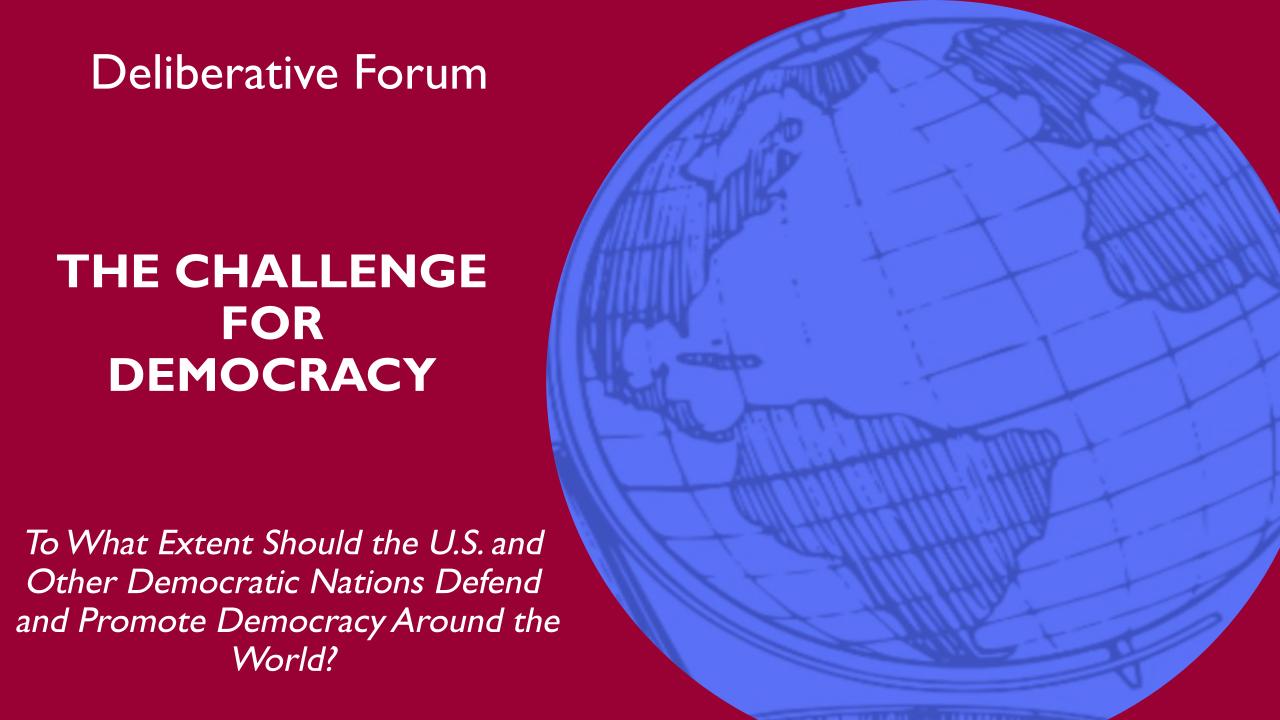
The Challenge for Democracy: To What Extent Should the U.S. and Other Democratic Nations Defend and Promote Democracy Around the World?

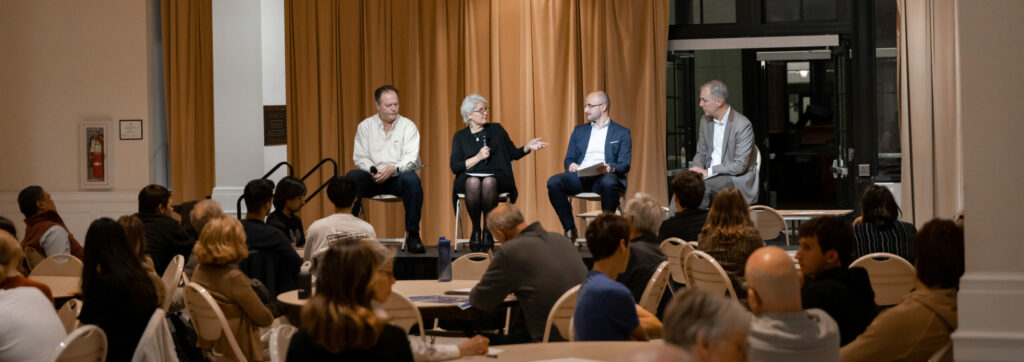
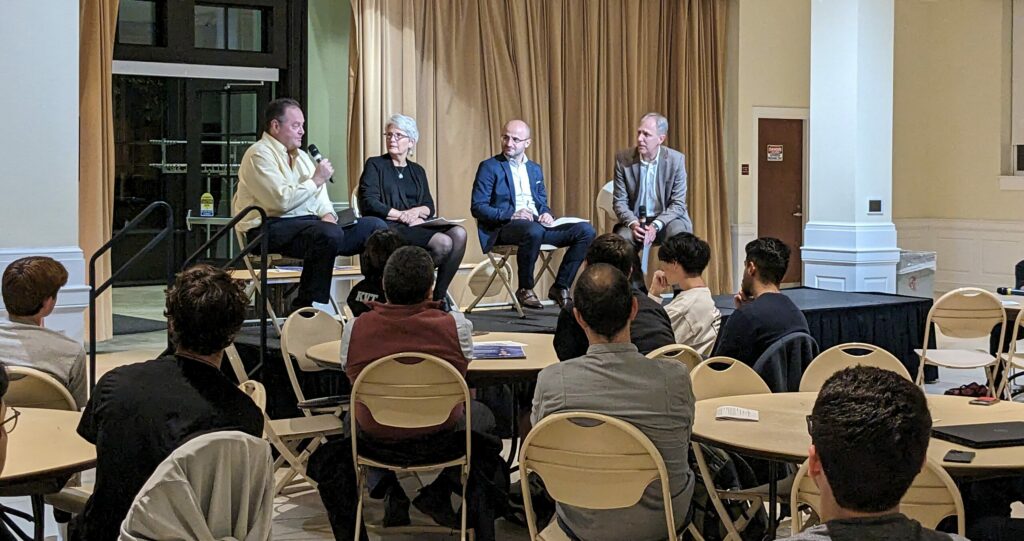
On Thursday, October 19, the DCI hosted its 9th public Deliberative Forum, The Challenge for Democracy: To What Extent Should the U.S. and Other Democratic Nations Defend and Promote Democracy Around the World?  For this event, we partnered with Davidson’s own Political Science Department and featured speakers with different global areas of specialization. Professors Bes Ceka, Shelley Rigger, and Ken Menkhaus presented their own views about democracy promotion and defense and focused on Europe, Asia, and Africa (respectively). We invite you to watch the recording of our panel below!

The Challenge for Democracy: To What Extent Should the U.S. and Other Democratic Nations Defend and Promote Democracy

panel

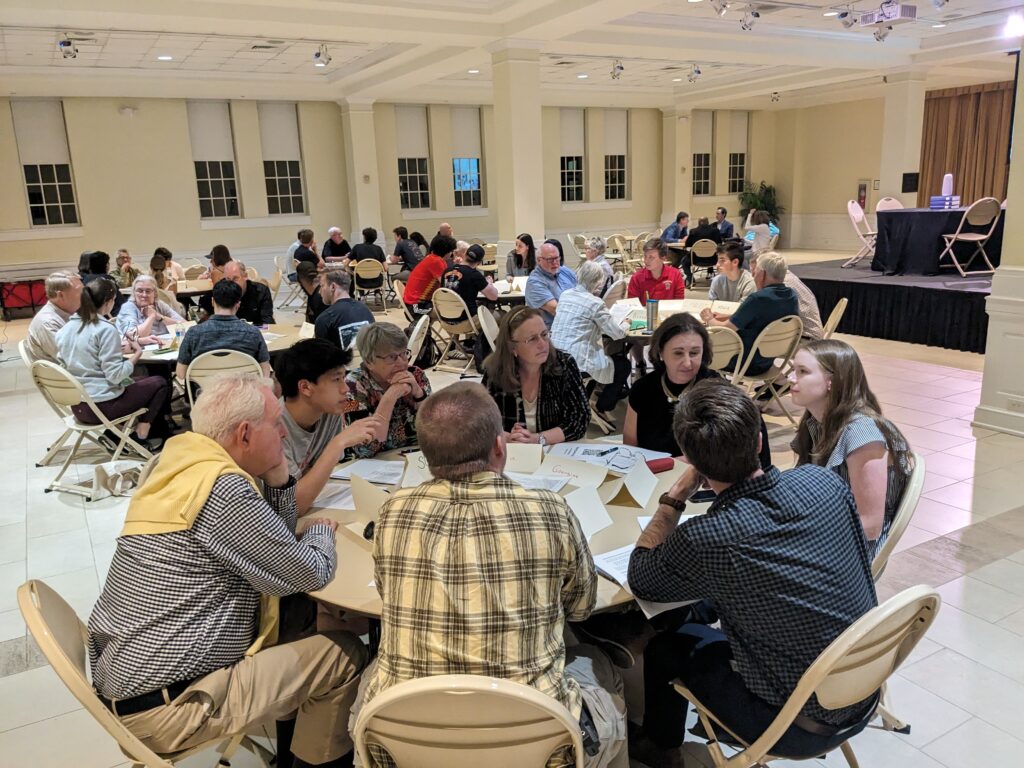
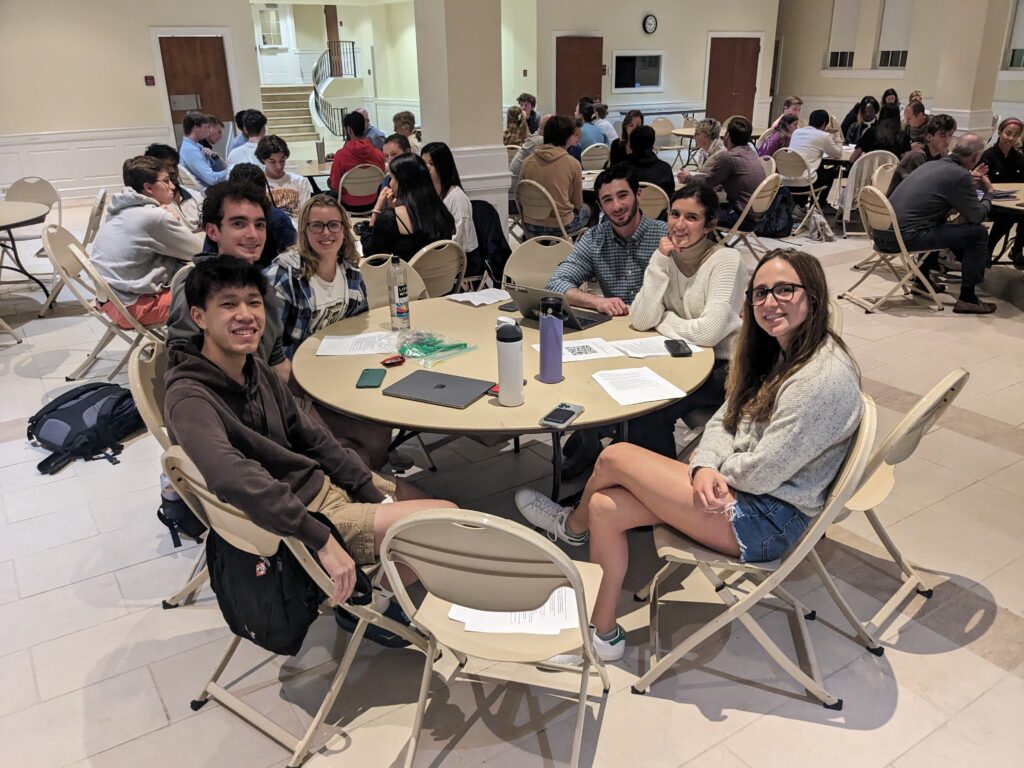
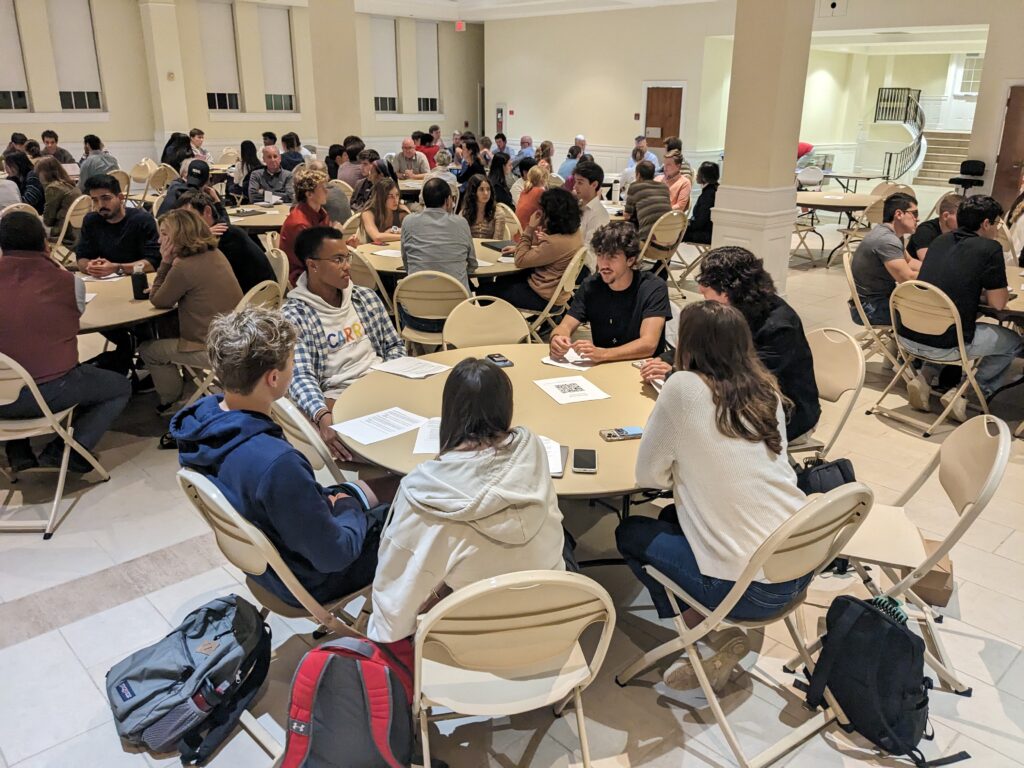
Our Deliberative Forum didn’t end with the panel. After the panel discussion, 96 participants engaged with one another in small-group deliberations facilitated by the DCI’s Fellows, Senior Fellows, and others who have gone through our Deliberation Facilitator Training Program, including a few Davidson faculty members. We had a total of 18 small groups deliberating about the topic both online and in-person, drawing on our Deliberation Guide written for the event and engaging with one another on the forum’s central question.

Check out some photos and the short video of these discussions below.

Here is the deliberation guide that was shared with participants and used to guide the small group discussions…

DCI-Challenge-for-Democracy-Deliberation-Guide

Want to make sure you don’t miss our next forum? Follow us on your favorite social media site and subscribe below for DCI updates!

The Challenge for Democracy: To What Extent Should the U.S. and Other Democratic Nations Defend and Promote Democracy Around the World? 

This fall, the DCI hosted its first in-person Deliberative Forum, featuring three panelists from Davidson’s Political Science Department: Professors Besir Ceka, Ken Menkhaus, and Shelley Rigger. About two weeks later, we held a forum with Davidson’s Bonner Scholars on the same topic: “The Challenge for Democracy: To what extent should the United States and other democratic countries defend and promote democracy around the world?” Over 50 Bonner Scholars gathered in the Lilly Family Gallery to deliberate on this question, having watched the expert panel discussion and read our Deliberation Guide on the topic.

Round Table Discussions at DCI and Bonner Scholars event in the Davidson College Lilly Gallery.

Check out this short video montage from the forum…!

Over 97% of the 35 Bonner participants who completed a short survey after the event reported that they were either very satisfied (57%) or satisfied (40%) with their small group deliberation. Over 85% of the participants also felt like they either learned a huge amount (20%) or a good amount (66%) about the defense of democracy. As one Bonner Scholar wrote, “I felt very comfortable sharing my ideas with the group and I think my facilitator and group members did a great job creating a welcoming environment. It was really cool to be able to genuinely discuss an important topic, as I feel like I don’t get to do that often in my life.” Another Bonner Scholar stated, “It was a very helpful experience overall as it not only helped in learning new perspectives but also helped me strengthen my understanding.”

“It was a very helpful experience overall as it not only helped in learning new perspectives but also helped me strengthen my understanding.”

The Bonner Scholars Program is a scholarship program where students aim and learn how to effect positive community change. Bonner Scholars participate in community service and research, and they have weekly opportunities to engage in educational experiences that enhance their ability to make a positive impact and build capacity within community organizations. Participation in Deliberative Forums allows the Bonner Scholars to harness their humane instincts, listen effectively to diverse perspectives, and seek innovative solutions to urgent public issues. The DCI first partnered with the Bonner Scholars Program in the fall of 2022 to host a deliberative forum on free speech and inclusivity that was very well-received by those who participated, and we have continued this partnership this year.

We are excited to partner with the Bonner Scholars again in the early spring semester! The DCI will host a public Deliberative Forum on Artificial Intelligence (AI) on February 5th, in which Senior Bonner Scholars will take part. This forum will provide a space for Davidson students, alumni, staff, faculty, and members of the public to engage with one another on critical issues regarding emerging technologies. These include AI that is capable of performing tasks as well as humans in economically valuable ways and AI that could be as transformative as the agricultural or industrial revolutions to human society and the world.

  • « Go to Previous Page
  • Page 1
  • Page 2
  • Page 3
  • Page 4
  • Go to Next Page »

Footer

Blog Post Categories

  • Announcements
  • Blog Posts
  • DCI Posts
  • Events
  • Faculty Posts
  • Fellow Posts
Image of a compass superimposed by the text "Deliberative Citizenship Initiative" and "Davidson College." Clicking on this image leads to the Initiative page.

Recent DCI Blog Posts

  • We Tried to Fix Jubilee’s “Middle Ground” – Here’s How It Went
  • A Case for Deliberation in the Natural Sciences
  • Welcoming New Staff to the DCI and DCN
  • Facebook
  • Twitter
  • Instagram
  • LinkedIn


Copyright © 2026 · Infinity Pro on Genesis Framework · WordPress · Log in