By Savannah Downtin ‘ 28 (DCI Fellow)
While the Deliberative Citizenship Initiative encourages and fosters deliberative discussion on polarizing issues, my experience as a fellow has made me not only a better facilitator but also a better conversationalist. Conversation is a key building block to connection, creating bridges that bond people across personal and geographical gaps.
If conversation were a recipe, the first ingredient would be curiosity. Serving as one of our DCI deliberative dispositions, curiosity can make or break a conversation. Having a curious outlook naturally opens doors to new topics and encourages intellectual humility; it helps counter instinctive judgment that might arise during a conversation when someone expresses different viewpoints. Instead of writing these off, curiosity empowers us to look deeper and investigate the root cause of the opinion.
Although many conversations don’t start with a concrete end goal like a deliberation or debate might, there is almost always the underlying motive to try to get to know the other person better. Every time someone offers new information about themselves in a conversation — say, mentioning summer plans or aspects about their family — it’s a chance to let curiosity take hold and ask follow-up questions. A curious person never runs out of things to talk about because they continuously pull on the threads that others leave.
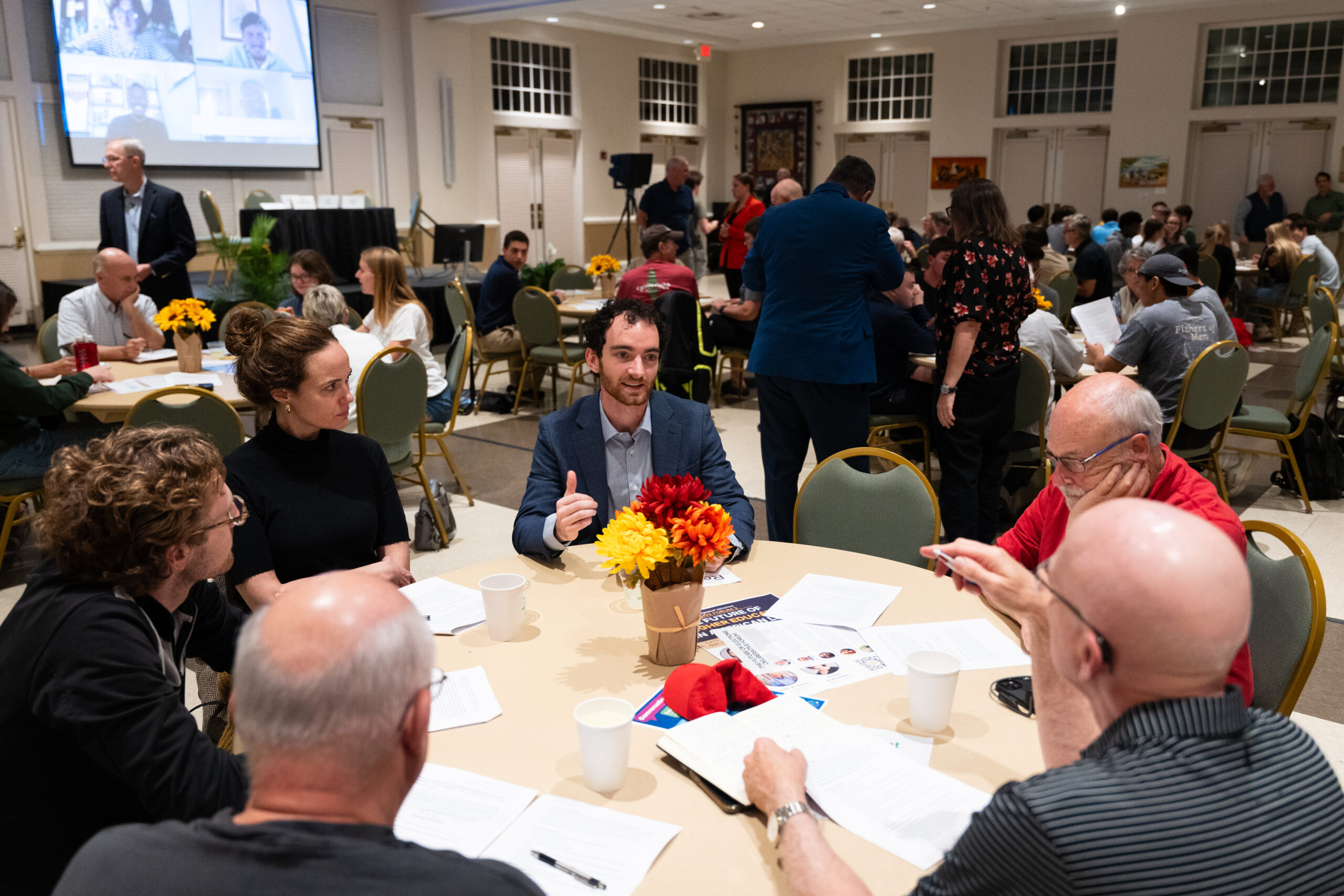
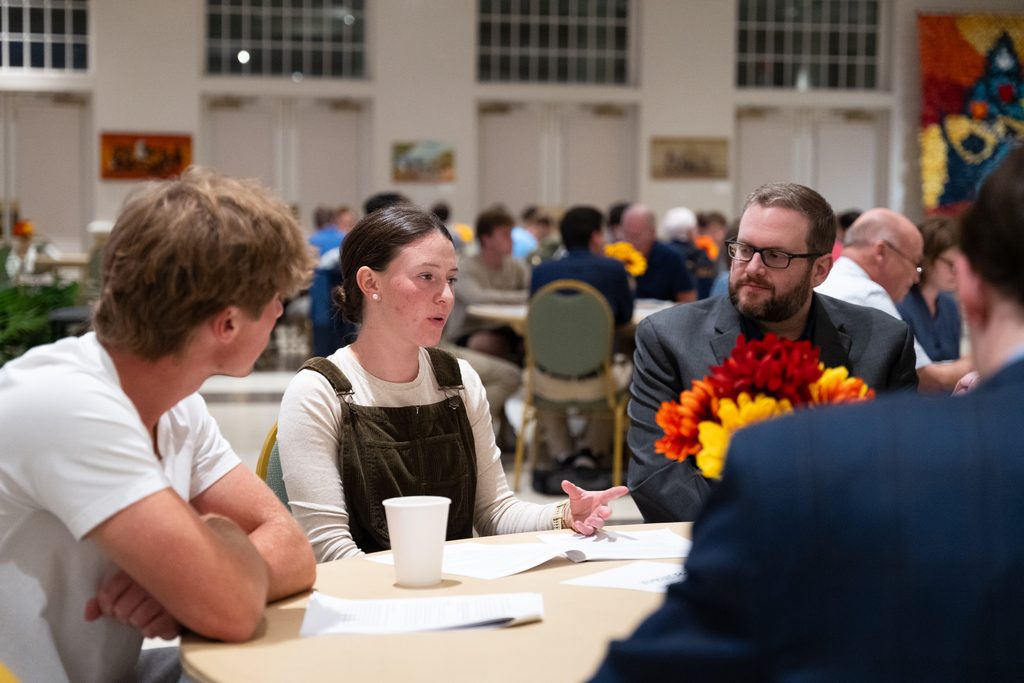
In my work as a facilitator, the deliberation guides often do a lot of the heavy lifting when it comes to creating new topics of conversation. However, I have also found that when the water is too still, and everyone seems to agree on a specific topic, pulling on the threads can often expose knots and tangles of underlying disagreements. Like most of us, the participants within my D Teams had the polite tendency to brush over their contentions early on with the well-meaning intention of keeping the peace. In these situations, it’s necessary to directly bring up these contentious matters to have a more fulfilling discussion. My experiences have reinforced my belief that refraining from discussing disagreements entirely can be just as detrimental as talking about them unproductively.
Diving off the deep end into discussing controversial issues is easier said than done, which is why scaffolding these conversations can increase the longevity of the deliberation. I always enjoy hearing what my D Team participants say during the Getting to Know You portion, whether it’s hearing about their connection to Davidson or what time in history they’d travel back to. Although this section would be easy to skip over for time, it helps set the tone for the rest of the deliberation by establishing a semblance of understanding among deliberators.
While it seems like one of the most mundane or trivial conversation topics, talking about the weather is widely and commonly used because it’s one of the easiest ways to find common ground with a conversation partner. Virtually anyone can talk about the weather because it’s something we all experience and have enough information to form opinions about.
One thing that sets deliberations apart from debates is the intentional effort to find common ground with those you’re discussing with, acknowledging both areas of agreement and disagreement. Additionally, finding common ground in values can help participants trust one another and treat their fellow deliberators’ opinions with validity and respect, knowing that their differing beliefs still stem from a place of common principles.
Furthermore, conversation goes beyond building relationships among individuals and can directly impact the effectiveness of our democracies. Robert Putman’s Making Democracy Work unpacks how reciprocal trust within communities is vital for maintaining working democratic systems because it increases the likelihood that those members will follow laws and exercise civic duties. His research in Italy showed that the most direct predictor of good democracies was the number of choral societies in the region. Although this may seem like a data analysis fluke, he goes on to explain that choral societies represent the presence of civic community: organizations that foster trust, shared responsibility, and social capital among their members. Increasing opportunities for individuals to regularly come together helps bolster each person’s stake in democracy.
So the next time you’re on the way to class, take the extra minute to have a conversation with someone you pass, because that small connection means a step towards trust, which is a step toward democracy.