Lily Ogawa ’28 (DCI Fellow)
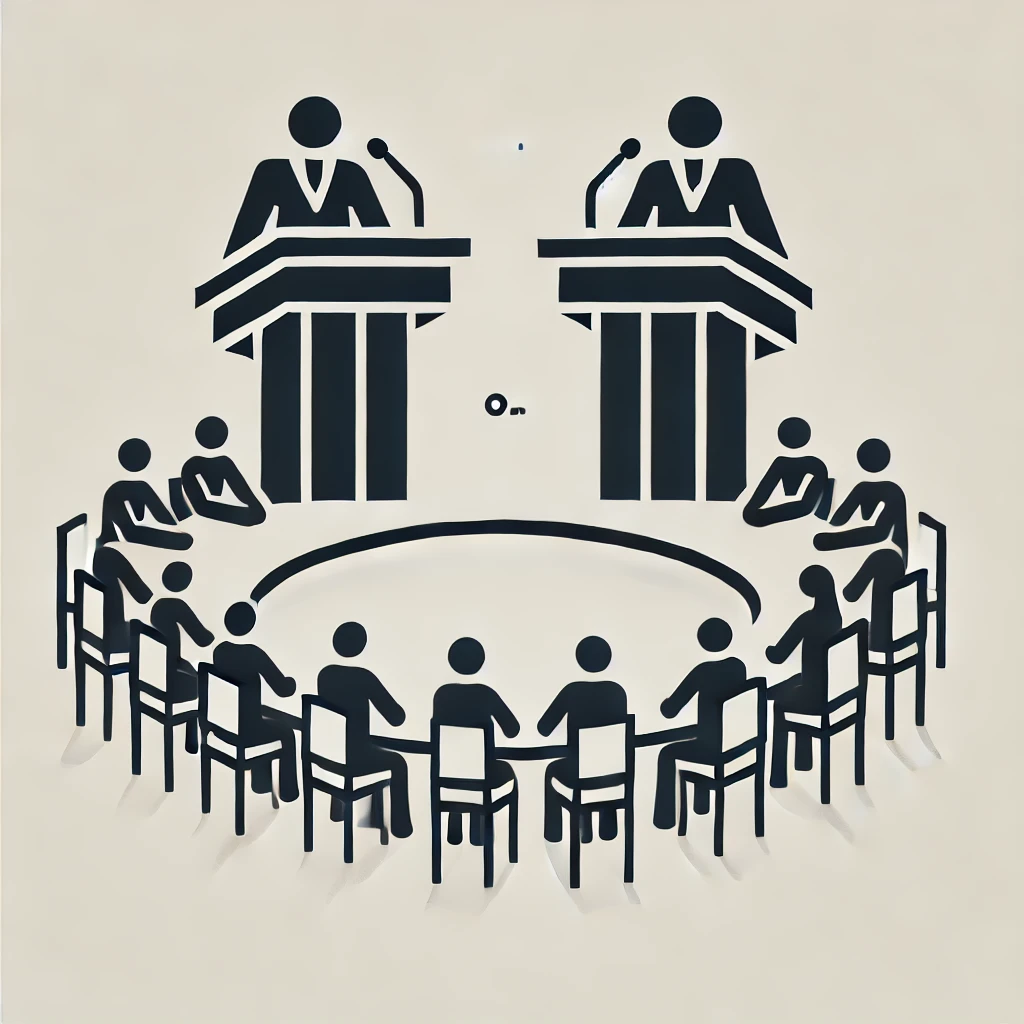
As someone who has participated in debate tournaments in high school, I had signed up to the DCI in college with the expectation that I would be able to hear people’s diverse perspectives and see them debate about current events. The more I learned about deliberation, however, I realized how different it is from debate. Deliberation is more applicable to our society now in so far as that deliberation seeks to find a solution while debates aim at finding a winner. In the deliberations I have led as a facilitator on free speech and college campus protests, oftentimes, people shared different views and there seemed to be no one “real” winner.
In high school, I debated a wide range of topics from U.S. aid to the Yemen crisis to the cost and benefits of building a high-speed rail in the U.S. In all of the debates, however, there were only two sides: for and against. While there were still different angles in which you could debate for one side, there was no side arguing for a middle-ground. This made it easier to research and frame my arguments, but as I researched, I realized that by eliminating the middle ground, it removed the nuance of the topic. Many of the articles I had read highlighted how, for instance, the U.S. should send aid to a certain area and not in weapons, which was hard to defend against if I could only argue for the “against” side in the topic of whether the U.S. should aid countries. It was unrealistic to frame the whole debate in two sides when in reality, many had moderate views that did not fully align with one particular side.
Debates are often entertaining because there is a winner. While it can be beneficial to weigh the pros and cons to determine what side you are more persuaded by, having one winner can also simplify the complexity of the issue. There is the added pressure that there must be a winner when in reality, both sides can have valid arguments and can be right depending on the specific context. This is not to say that debates are a harmful sport and that the competitive nature of it is not good. In fact, I still enjoy watching debates and there are benefits to debates that other activities do not provide, but it is important to also remember the pitfalls that can come with solely relying on debates to solve the issues in our society.
Deliberation allows people to share their own views without the restriction of having to choose a particular side. In one of my D Team meetings, for example, I facilitated a deliberation about campus protests. I was able to hear the participants’ background with college protests, and many of them had a view that was in the middle between for and against college protests. They explained that their view can change depending on the situation. Some argued that they cannot condone violent protests, but peaceful ones can bring about good change. Because of the fair and peaceful format of the deliberation, these nuanced answers were able to be captured. There was no pressure for a person to only respond to the topic with a yes or no answer.
Deliberation can change the way people engage in current issues and allow people to reach a solution without determining a specific winner. While debate has its own benefits of engaging people and training people to come up with different arguments, there are certain perspectives that cannot be captured in a debate. This is when deliberation comes into the picture and creates a space where people can constructively share their thoughts.