• Skip to main content
  • Skip to footer

Deliberative Citizenship Initiative

Building Democracy One Conversation at a Time

  • The Initiative
    • Programs
      • Deliberation Across the Curriculum
      • Deliberation on Campus
      • Deliberation in the Community
      • Research on Deliberation
    • Motivations
      • Why Deliberative Citizenship?
      • Why Davidson? Why Now?
    • Who’s Involved?
      • DCI Fellows Cohorts
        • 2025-2026 Fellows
        • 2024-2025 Fellows
        • 2023-2024 Fellows
        • 2022-2023 Fellows
        • 2021-2022 Fellows
        • 2020-2021 Fellows
      • DeeP Collaborative Cohorts
        • 2024-2025 DeeP Collaborative Faculty
        • 2023-2024 DeeP Collaborative Faculty
      • Advisory Council
    • History
      • What Sparked the Initiative?
    • Key Deliberative Dispositions
    • Frequently Asked Questions (FAQ)
    • Annual Report
  • Get Involved!
    • Participate in a Forum
    • Join a D Team
    • Become a Fellow
    • Take Courses
    • Get Training
    • Come to Guest Lectures
  • Events
    • Upcoming Events
      • 250th Anniversary Deliberative Forum Series on American Values
    • Past Events
  • Connections
    • The Deliberative Citizen: The DCI’s Monthly Newsletter
    • Efforts on Campus
    • Efforts in the Community
    • Efforts Elsewhere
    • Readings and Resources
      • DCI-Published Guides
      • DCI Guide to One-on-One Conversations
      • How to Disagree
      • Demonstration of Facilitation Styles
      • Deliberative Pedagogy Mini-Course
    • How We Can Help: DCI’s LET’S DELIBERATE! Partnership Opportunities
    • DCI in the News
  • DCI Blog Posts
    • Recent Blog Posts
    • All Blog Posts

Graham Bullock

DCI’s First-Ever Watch Party: Tuning into UNC Chapel Hill’s Expert Roundtable on Presidents, Institutions, and the People

November 12, 2025 by Graham Bullock

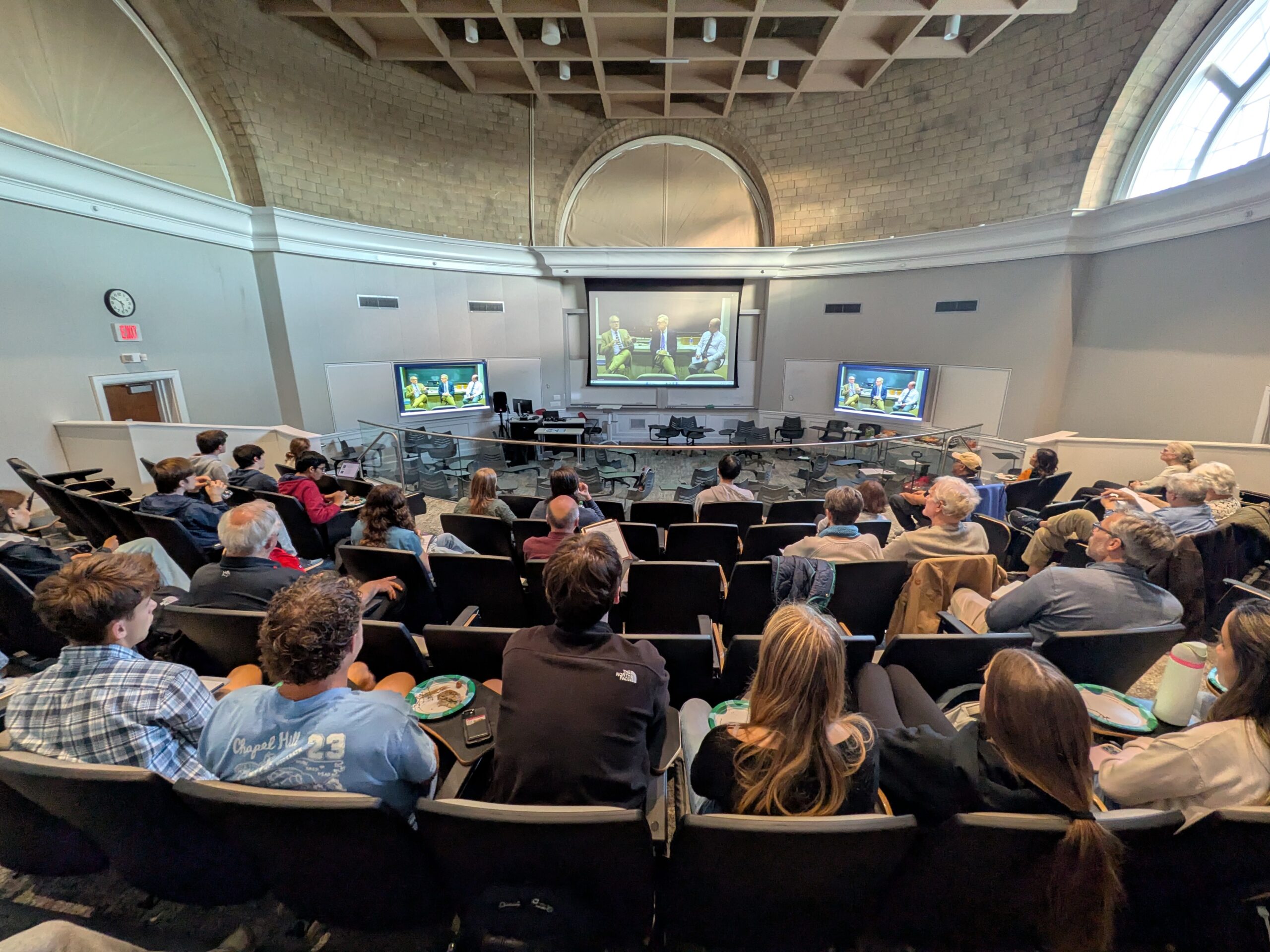
Photo of audience watching screens at Watch Party

On October 30, 2025, the Deliberative Citizenship Initiative hosted its first-ever watch party of an expert roundtable held not at Davidson College, but on another college campus. UNC Chapel Hill’s Program for Public Discourse hosted the second event in the American Values Deliberative Forum Series on “Balancing Self-Government and National Stability: The Case of Presidents, Institutions, and the People.” Approximately 50 Davidson students, faculty, staff, and community members gathered in Hance Auditorium to view the nearly two hour conversation — and more joined via UNC’s livestream via Zoom.
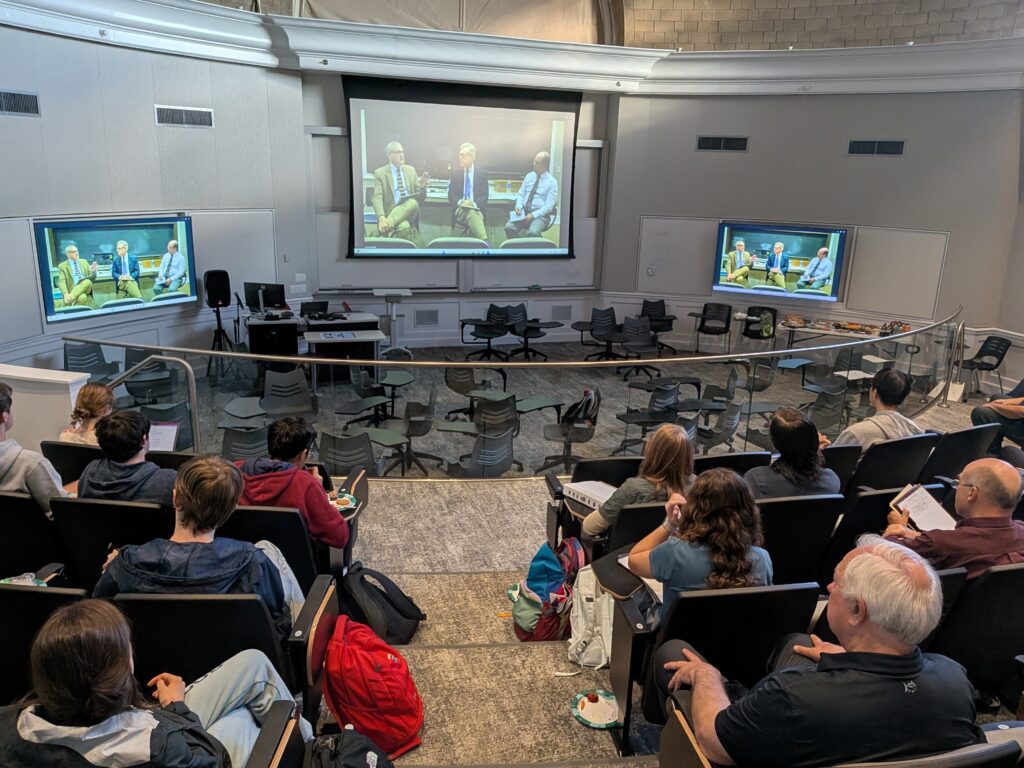
 

image of audience

The panelists on this roundtable included Thomas Frank (best-selling author of What’s the Matter with Kansas?) and John Gastil (professor of communication studies, public policy, and political science at Penn State). Unfortunately the third panelist, Jennifer Mascott (professor of law and founder of the Separation of Powers Institute at Catholic University, was unable to attend at the last minute due to travel challenges, UNC Chapel Hill professor of political science Kevin McGuire served as the moderator of the panel discussion, which was followed by a Q&A session with the audience.
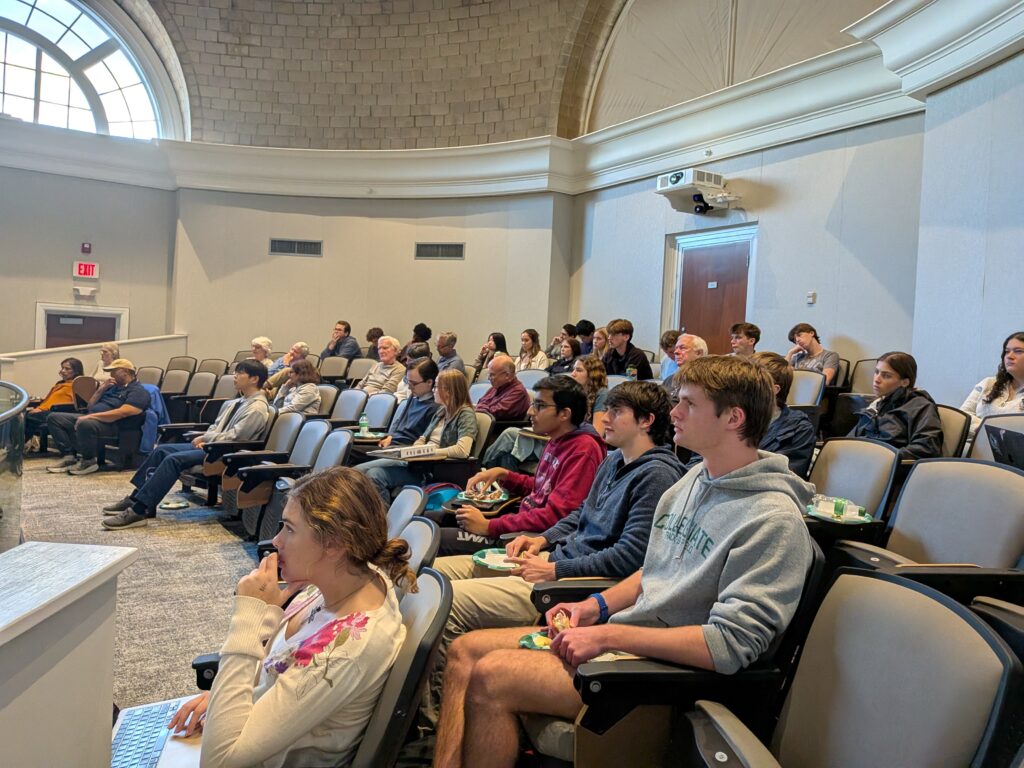
Image of audience

250th Anniversary American Values Deliberative Forum Series

This event is the second Expert Roundtable in the 250th Anniversary American Values Deliberative Forum Series, which is designed to commemorate the upcoming 250th anniversary of the Declaration of Independence. This anniversary represents an important opportunity to both deepen and elevate the discourse about the values that have animated American social and political debates throughout its history. The goal of the series is to enable Americans of all backgrounds – college students, high school students, families and neighbors, members of faith communities and other civic organizations – to authentically, respectfully, and constructively engage with each other about our foundational ideals and how they are relevant to contemporary policy issues.

Co-hosted by Davidson College’s Deliberative Citizenship Initiative (DCI), Duke University’s Provost’s Initiative on Pluralism, Free Inquiry, and Belonging, and the University of North Carolina at Chapel Hill’s Program for Public Discourse, this year-long program will include both Expert Roundtables and Community Conversations dedicated to unpacking, understanding, and applying the values that are foundational to the United States – and to many other countries around the world.

Community Conversations

During the week after the roundtable, both Davidson and UNC Chapel Hill hosted Community Conversations for members of their communities to discuss the same issues covered by the panelists. At Davidson, these conversations were part of the DCI’s D Team series, which involved 16 small groups — over 130 people — gathering to share their thoughts with each other both in-person and online, guided by student facilitators trained by the DCI.

The recording of the roundtable is posted below, as are some guides that you can use to host such conversations. The Deliberation Guide provides both important background information on the topics in question and a specific framework for engaging with these topics in the context of a two-hour facilitated conversation, which is the format that the DCI’s D Teams will use to explore the topic. The Issue Guide is similar to the Deliberation Guide but does not include the structured format for group conversations. The Issue Brief provides a brief outline of the main ideas that are presented in the Deliberation Guide and Issue Guide. While both include a similar list of questions to consider about the topic, they are designed for personal reflection before, during, or after our expert roundtable on the same topic.

Other institutions are welcome to use these resources to highlight their own conversations about the important issues covered in this forum. For ideas on how to host such a discussion, check out the webinar that DCI Faculty Director Graham Bullock hosted that provides an overview of different strategies and options that might work well in different organizational and community contexts. Please email dci@davidson.edu if you have any questions or ideas you’d like to share.

ISSUE BRIEF

DCI-Self-Government-National-Stability-Issue-Brief

ISSUE GUIDE

DCI-Self-Government-National-Stability-Issue-Guide

DELIBERATION GUIDE

DCI-Self-Government-National-Stability-Deliberation-Guide
Filed Under: Events

Paper Based on DCI Data Presented at American Political Science Association Annual Meeting

November 4, 2025 by Graham Bullock

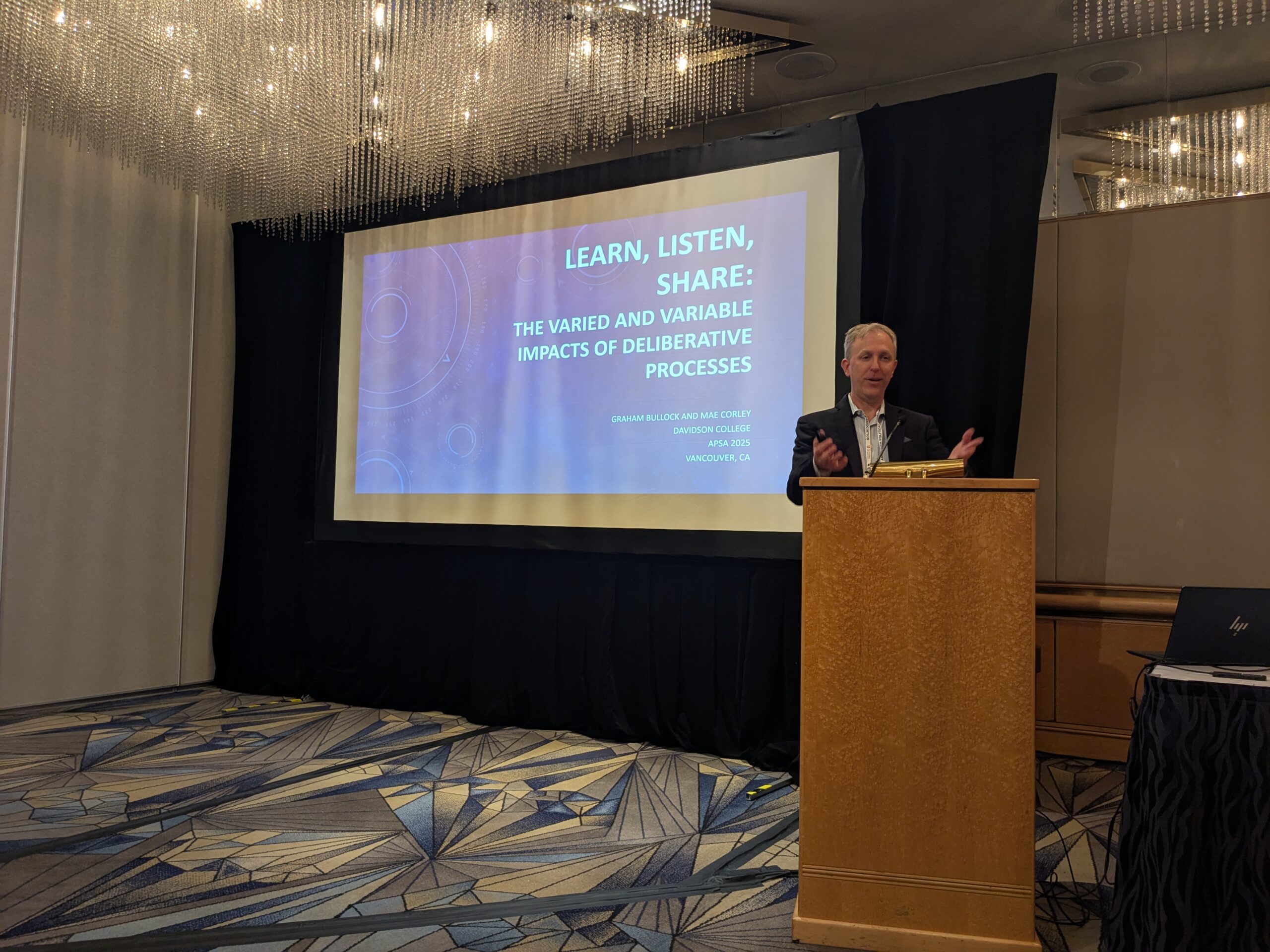
Graham Bullock presenting at APSA conference.

On September 11, 2025, DCI Faculty Director Graham Bullock presented a paper written in collaboration with Mae Corley ’25 on “Learn, Listen, Share: The Varied and Variable Impacts of Deliberative Processes” at the American Political Science Association (APSA) Annual Meeting in Vancouver, CA. The paper built on research conducted by Corley and Bullock in an independent study during the spring of 2025. Corley, who had served as a DCI Fellow, Senior Fellow, and Co-Convener as a student at Davidson, worked with Dr. Bullock on compiling and analyzing the pre- and post-survey data from 15 of the DCI’s Deliberative Forums.

This paper presents a comprehensive analysis of five years of data from forums that included both undergraduate students and community members. It examines the DCI’s forums as a structured communicative process designed to bring citizens together to discuss a wide range of global challenges. Topics explored in the forums covered by the paper included income and wealth disparities, climate change, religion in the public sphere, gun rights and regulations, the challenges for democracies, and more.

These deliberation-based forums rest on the idea that respectful dialogue can bridge divides and foster more considered opinions. But does this hold true for all participants? This paper examines the varied experiences of individuals who participated in this public discourse program, focusing on whether a participant’s identity—specifically their gender, race, age, and political ideology—shapes their perceptions of the forums they joined. Do participants with different backgrounds leave the forum with different perceptions and outcomes?

This question connects to a core theoretical tension in the literature. On the one hand, critical theorists suggest that participants from historically marginalized groups—such as non-white individuals, women, and young people—are likely to have less positive experiences in a deliberative setting than those from groups traditionally perceived as holding power. The fear is that dominant voices intentionally or unintentionally marginalize or silence others, leading to a less satisfying experience for some participants. Alternatively, those who believe these programs are intentionally and effectively designed to give disproportionate voice to the disempowered might assert the opposite effect. They would hypothesize that these groups will feel empowered and have more positive experiences than those who already hold significant power.

This paper uses survey data to explore these competing hypotheses. Its central research question is: How do a participant’s demographic characteristics, including gender, race, ideology, and age, correlate with their deliberative experiences and outcomes? The findings highlight the different types of impacts that deliberative processes can have and explore how these effects differ across topics and demographic groups. By focusing on how individuals engage with and interpret complex issues through deliberation, the study sheds light on the conditions under which public discourse fosters increased understanding, leads to shifts in attitudes and self-perceptions, and affects how participants engage with each other. It also explores how participants from different demographic backgrounds respond differently and similarly to the experience of engaging in deliberative processes.

Moreover, the analysis uncovers patterns of engagement that can inform strategies for enhancing the effectiveness of deliberative practices. The paper contributes to the field of political communication by offering empirical insights into the role of deliberation in enabling participants to engage with each other on complex social and political issues. By leveraging a sample of over 1400 participants who answered surveys before and after the hosted forums, it explores the potential and limits of deliberative processes to bridge divides, deepen understanding, and equip participants to engage with global threats. At the same time, it underscores the need to tailor these processes to the specific dynamics of the issues, audiences, and formats involved. These findings have implications for scholars and practitioners seeking to leverage public discourse as a tool for addressing the multifaceted challenges of our time.

Bullock and Corley will be incorporating the helpful feedback they received at the conference into their next version of the paper, which they hope to submit for publication soon. Stay tuned for updates!

Filed Under: DCI Posts

Tips for Conversations about Race: How to Make Them Possible and Productive

October 22, 2025 by Graham Bullock

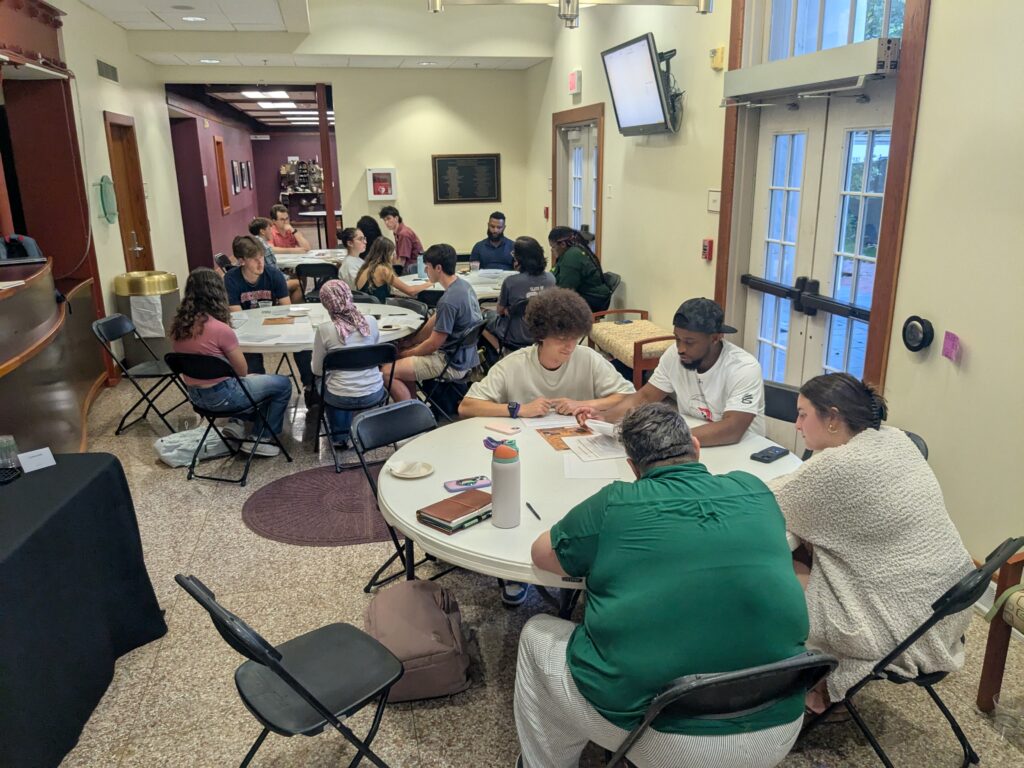
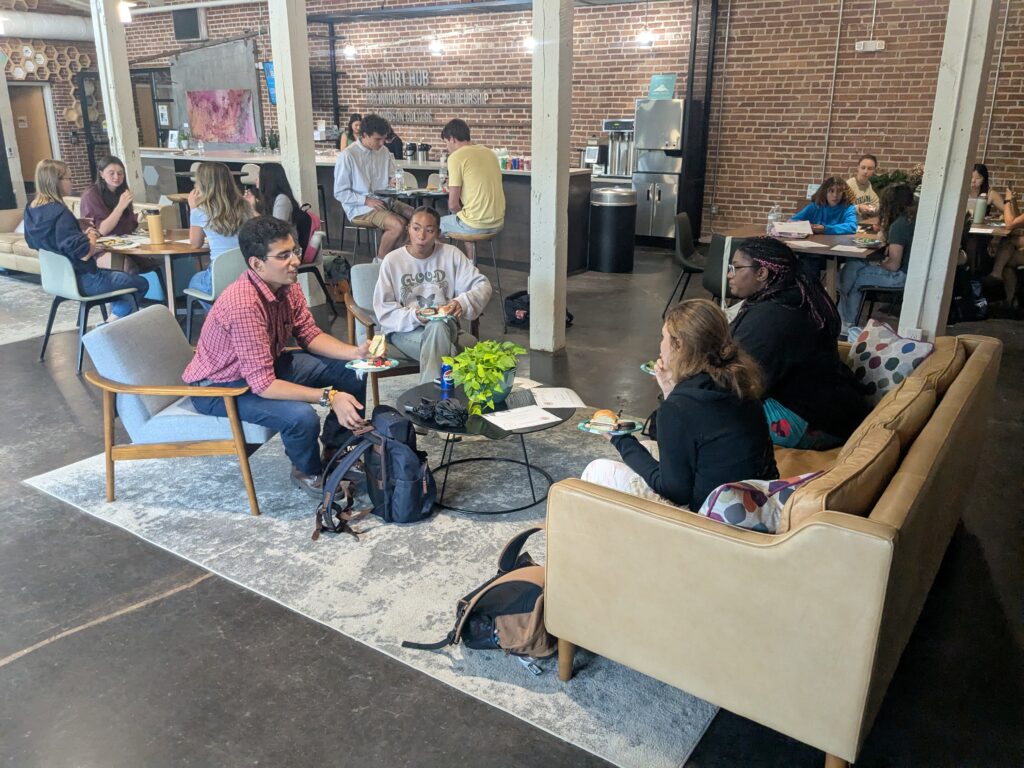
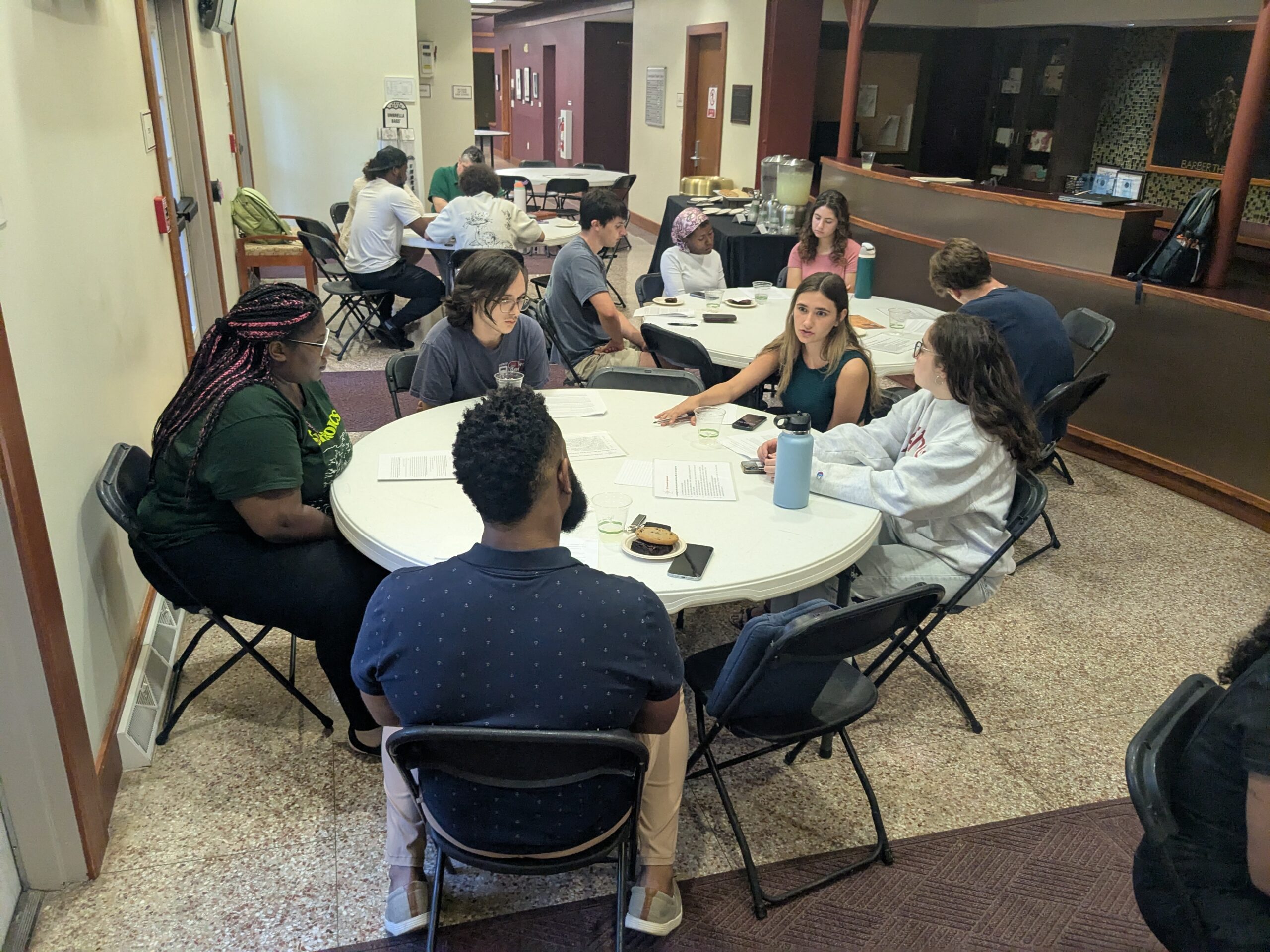
Conversations around round tables

On September 8, 2025, the Davidson College Deliberative Citizenship Initiative (DCI) and the Theatre Department co-sponsored a  Community Conversation on “Talking about Race: What Makes It Possible and Productive?” in the Barber Theatre’s lobby. The conversation was held a week after the production of Dissonance on Monday, September 1 in the Barber Theatre by actor-playwrights Marci J. Duncan and Kerry Sandell. The play, which is directed by Davidson College Assistant Professor of Theatre James Webb, explores what happens when a Black woman and a White woman who have been friends for 20 years have their first open, honest conversation about race, provides a helpful backdrop for this conversation.

Some of the participants in the Community Conversation had seen the play while others had not, but everyone there was committed to exploring the question of what makes conversations about race possible and productive. The conversation was designed by DCI Senior Fellow Alyssa Henke ’26 as part of her DCI fellows deliberation project, and one of Alyssa’s goals was to generate insights and suggestions for future efforts to host conversations about race, whether at Davidson College or elsewhere.

conversations around round tables

Approximately 20 Davidson students and faculty attended the event and participated in small group discussions facilitated by several DCI Fellows. Since the event, Alyssa has compiled the notes taken by the DCI Fellows from their group’s discussions in the document below. She also developed a two-page infographic (also available below) that summarizes some of the main tips that came up in these conversations, from how to prepare for these conversations to what to pay attention to during them. The infographic also provides suggestions for conversations with both close friends and new connections.

Tips-for-Talking-about-Race-Infographic

Talking-About-Race_-What-Makes-It-Possible-and-Productive_-Event-Summary

Race is one of the most challenging topics to discuss with family, friends, colleagues, and our fellow citizens. And yet it is also one of the most important topics to engage with, given our many divides that relate to the history of slavery, Jim Crow, and efforts to advance racial equity and justice. The hope is that these tips will be helpful as we have opportunities to have conversations about race, whether they are in the context of personal relationships, local histories, or national issues.

One such opportunity is Davidson College’s upcoming dedication of its “With these Hands” memorial to the enslaved and exploited on Thursday, October 22, 2025. The memorial is designed to recognize the contributions of African Americans to the College since its founding in 1837 either as enslaved people before the Civil War or exploited people during the Jim Crow era afterwards. It will likely provoke questions and conversations about Davidson’s history, legacy, and future with regard to race; the tips below can enable those conversations to deepen our understanding of different perspectives on these questions and strengthen our relationships and sense of connection in the process.

Filed Under: Announcements, DCI Posts

Expert Roundtable on Balancing Self-Government and National Stability: The Case of Presidents, Institutions, and the People

October 21, 2025 by Graham Bullock

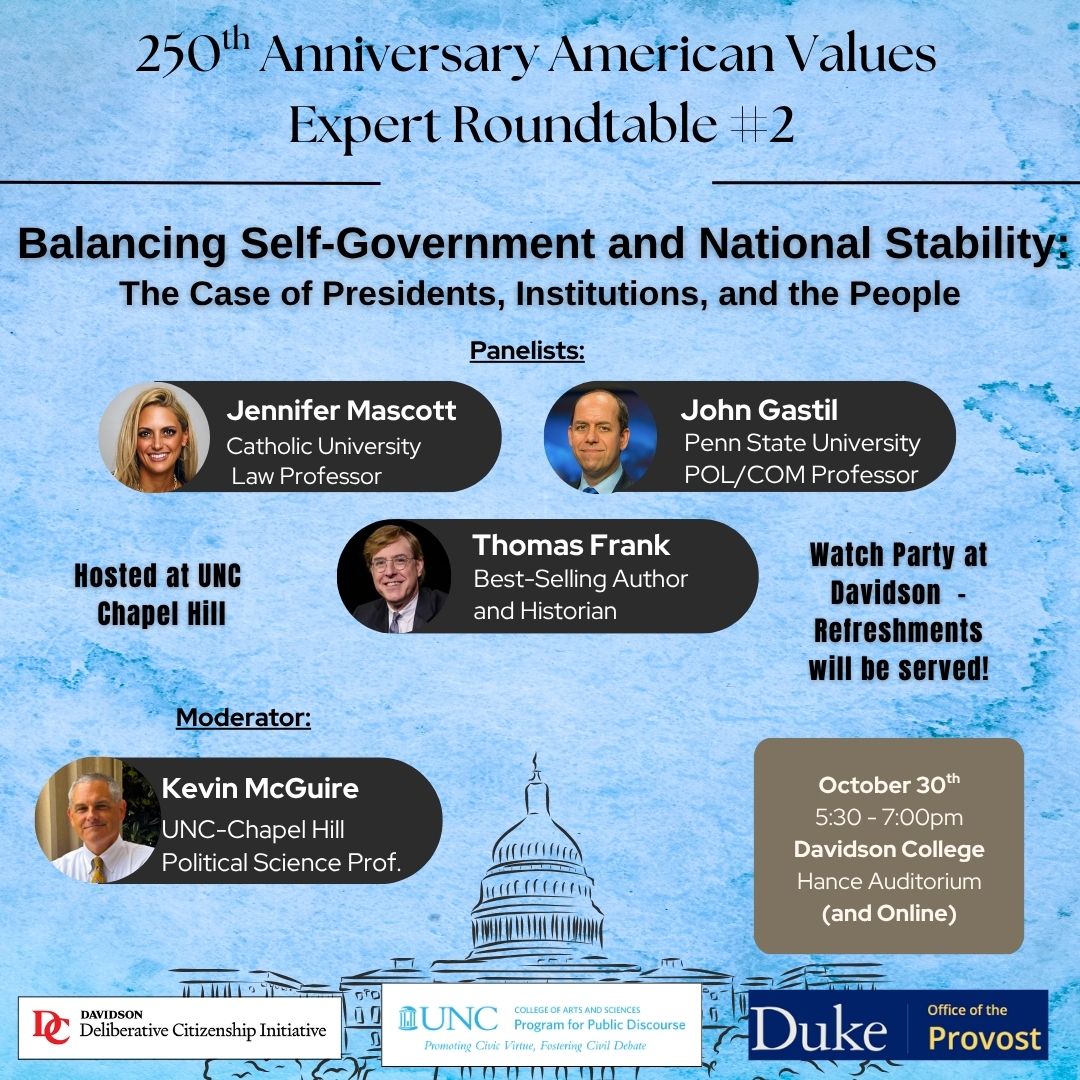
Poster for Expert Roundtable.

The Deliberative Citizenship Initiative invites you to join us for a watch party with Davidson students, faculty, staff, and community members in Hance Auditorium to view the second Expert Roundtable on “Balancing Self-Government and National Stability: The Case of Presidents, Institutions, and the People” that will be hosted at UNC Chapel Hill from 5:30 pm to 7 pm on October 30. Refreshments will be served. Registration is not required, but please help us out with our planning by clicking on this link. If you can’t join us in person, you can also view the Expert Roundtable online yourself by registering for the event via UNC Chapel Hill’s registration page. 

The panelists on this roundtable include Thomas Frank (best-selling author of What’s the Matter with Kansas?), John Gastil (professor of communication studies, public policy, and political science at Penn State), and Jennifer Mascott (professor of law and founder of the Separation of Powers Institute at Catholic University). See below for more info about each panelist and the moderator (Kevin McGuire, UNC Chapel Hill professor of political science):

Thomas Frank is a historian and political analyst known for his critically acclaimed books, such as What’s the Matter with Kansas: How Conservatives Won the Heart of America (2004) and, most recently, The People, No: A Brief History of Anti-Populism (2020). Dr. Frank, who earned a PhD in history from the University of Chicago, is best known for his New York Times best-selling book, What’s the Matter with Kansas, while his more recent book on anti-populism explores the populism movements from the 1890s to the New Deal to the Civil Rights Movement to the present – and the resistance to them.

John Gastil is Distinguished Professor of Communication Studies, Public Policy, and Political Science at Penn State, where he also serves as Senior Scholar at the McCourtney Institute for Democracy and teaches courses on political communication, group behavior, and democratic deliberation. Dr. Gastil studies political deliberation and deliberative governance, and he has authored several books, including, most recently, Hope for Democracy: How Citizens Can Bring Reason Back into Politics (2019), which examines how the State of Oregon’s Citizens’ Initiative Review enables citizens and public officials to work together to bring more rationality and empathy into modern politics.

Jennifer Mascott is Associate Professor of Law (currently on public service leave) and the Founder of the Separation of Powers Institute at Catholic Law. Professor Mascott’s writing focuses on administrative and constitutional law, constitutional and statutory interpretation, and separation of powers in the U.S. context. Professor Mascott clerked for Supreme Court Justices Clarence Thomas and Brett Kavanaugh, served in the US Department of Justice in 2019 and 2020 and in the White House General Counsel’s Office in 2025. She was recently confirmed to serve on the US Court of Appeals for the 3rd Circuit.

Kevin McGuire  is Professor of Political Science at the University of North Carolina at Chapel Hill and will serve as the moderator of the roundtable. Dr. McGuire teaches courses on the U.S. Supreme Court and American constitutional law. His current research interests include the effect of the Court’s institutional arrangements on the Court’s policymaking, the impact of public opinion on the Court, and the measurement and modeling of judicial outcomes. He is the author of Understanding the U.S. Supreme Court and The Supreme Court Bar: Legal Elites in the Washington Community , and co-editor of the forthcoming Creating Constitutional Change: Clashes over Power and Liberty in the Supreme Court .

250th Anniversary American Values Deliberative Forum Series

This event is the second Expert Roundtable in the 250th Anniversary American Values Deliberative Forum Series, which is designed to commemorate the upcoming 250th anniversary of the Declaration of Independence. This anniversary represents an important opportunity to both deepen and elevate the discourse about the values that have animated American social and political debates throughout its history. The goal of the series is to enable Americans of all backgrounds – college students, high school students, families and neighbors, members of faith communities and other civic organizations – to authentically, respectfully, and constructively engage with each other about our foundational ideals and how they are relevant to contemporary policy issues.

Co-hosted by Davidson College’s Deliberative Citizenship Initiative (DCI), Duke University’s Provost’s Initiative on Pluralism, Free Inquiry, and Belonging, and the University of North Carolina at Chapel Hill’s Program for Public Discourse, this year-long program will include both Expert Roundtables and Community Conversations dedicated to unpacking, understanding, and applying the values that are foundational to the United States – and to many other countries around the world.

Watch Parties and Community Conversations

This year, we’re proud to partner with two other North Carolina institutions of higher education, Duke and UNC Chapel Hill, to expand the reach of the series. Davidson will host two of the Expert Roundtables, while Duke and UNC will each host one roundtable on their respective campuses. All four will be available to watch online, with potential for “watch parties” to be held at higher education institutions and other organizations across North Carolina and beyond, including Davidson, Duke, and UNC-Chapel Hill.

Organizations can also host Community Conversations in the week after the Expert Roundtable. For ideas on how to host either a watch party of community conversation, check out the webinar that DCI Faculty Director Graham Bullock hosted that provides an overview of different strategies and options you might work well in different organizational and community contexts. Please email dci@davidson.edu if you have any questions or ideas you’d like to share.

Below are some guides that you can use to host such conversations. The Deliberation Guide provides both important background information on the topics in question and a specific framework for engaging with these topics in the context of a two-hour facilitated conversation, which is the format that the DCI’s D Teams will use to explore the topic. The Issue Guide is similar to the Deliberation Guide but does not include the structured format for group conversations. The Issue Brief provides a brief outline of the main ideas that are presented in the Deliberation Guide and Issue Guide. While both include a similar list of questions to consider about the topic, they are designed for personal reflection before, during, or after our expert roundtable on the same topic.

ISSUE BRIEF

DCI Self-Government & National Stability Issue BriefDownload

ISSUE GUIDE

DCI Self Government & National Stability Issue GuideDownload

DELIBERATION GUIDE

DCI Self Government & National Stability Deliberation GuideDownload
Expert-Roundtable-on-Presidents-Institutions-and-the-People

Filed Under: Announcements

Recap of Our Fall 2025 Facilitator Training

October 3, 2025 by Graham Bullock

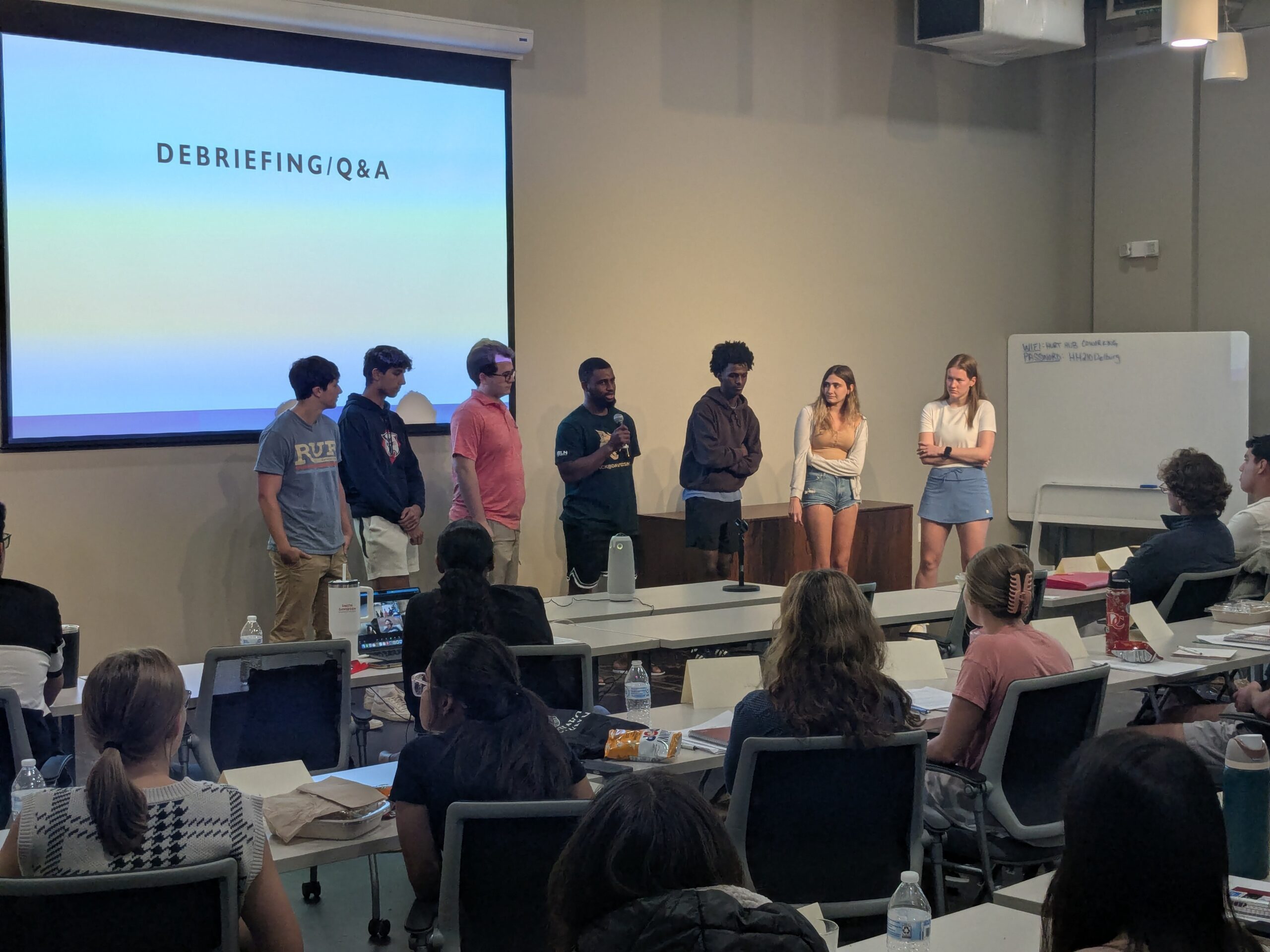
Photo of senior fellows answering questions at training

On August 31st and September 7th, the Deliberative Citizenship Initiative held its annual Deliberation Facilitator Training at the Jay Hurt Hub for Innovation and Entrepreneurship at Davidson College. These trainings, held since the spring of 2020, are designed to empower students, staff, faculty, and community members with essential skills to become facilitators of both formal and informal deliberations. Participants who complete the training become DCI certified facilitators, opening the door for participants to facilitate the DCI’s Deliberative Forums. This 8-hour training, spread over two days, enhances participants’ ability to facilitate meaningful discussions on political and social issues among deliberators with diverse perspectives.

This year, we were excited to welcome a wonderfully diverse group, with 25 participants attending in person and 4 joining us online. The cohort included a rich mix of DCI Fellows, Davidson students, staff, and engaged community members, each bringing unique insights and experiences. This blend of backgrounds created an inclusive, dynamic environment that fostered deep dialogue and collaboration right from the start.

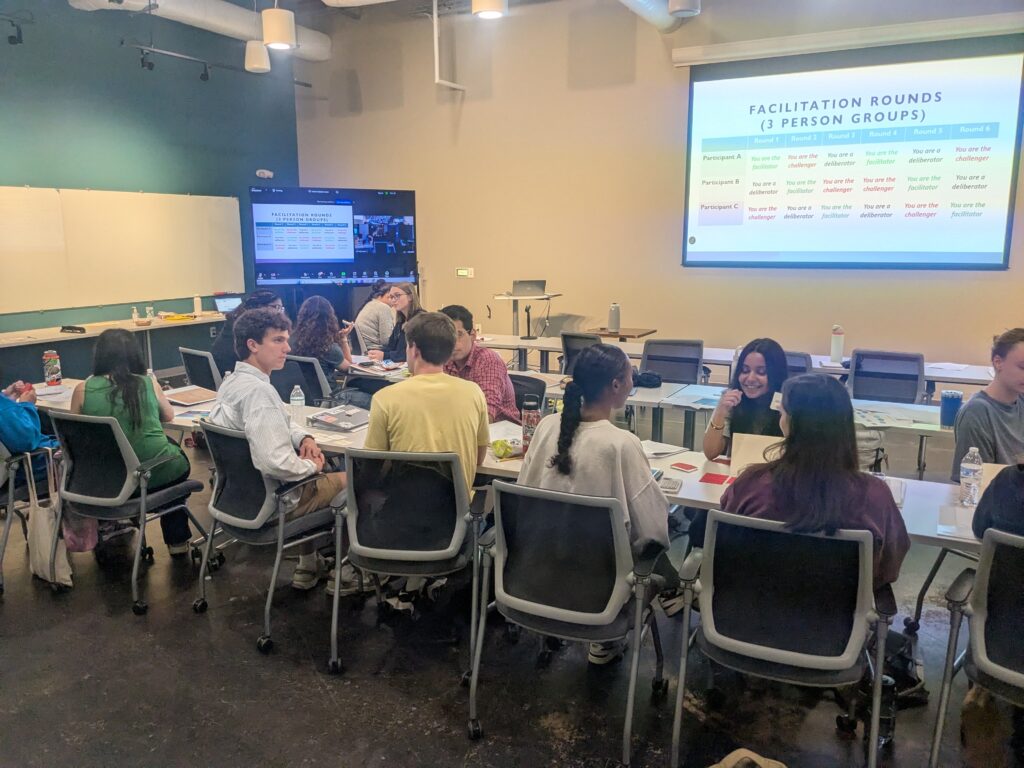
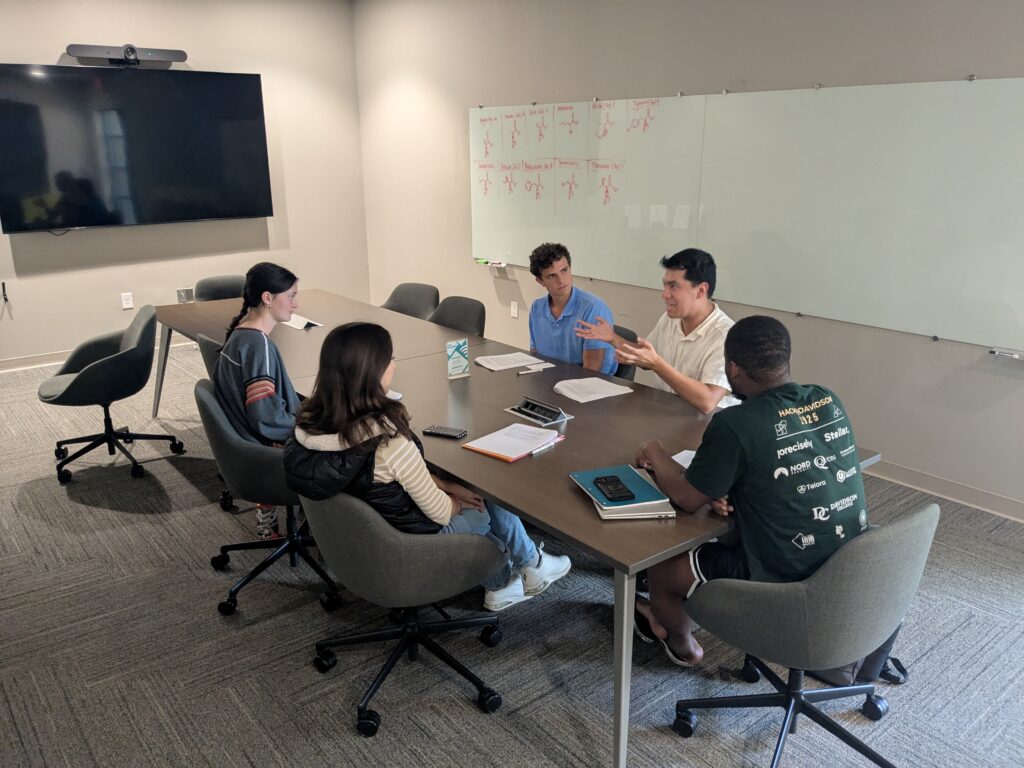
photo of small group conversations during the training.

During the first session, Dr. Graham Bullock guided participants through the essentials of setting up and preparing for deliberation. A highlight was the session’s mock deliberation on Free Speech and Inclusion, facilitated by our Senior Fellows. This hands-on experience allowed trainees to step into the role of deliberators, share personal thoughts, and observe how seasoned facilitators effectively navigate challenging, contentious conversations. The collaborative atmosphere underscored the vital importance of empathy and respect when guiding difficult discussions.

photo of participants in a small group conversation

The following weekend, Dr. Bullock equipped our trainees with advanced techniques for handling the tough moments that arise in discussions on divisive issues. Participants tackled a gamified training experience that brought to life the methods and tools outlined in the Deliberation Facilitator’s Handbook, making the learning process interactive and memorable. To apply their new knowledge, they then engaged in a second mock deliberation, using the DCI’s guide on Religion in the Public Sphere. Here, trainees stepped into the facilitator role themselves, practicing how to effectively explore multiple perspectives and motivate robust conversation. This immersive practice allowed them to build confidence and refine their techniques in a supportive setting.

The training concluded with a reception where participants had the chance to connect and build community over food and refreshments. We are immensely grateful for the time spent with all our trainees over these two weekends and are excited to see how they will apply their new skills to foster meaningful conversations within their communities. We warmly welcome them into our community of deliberation advocates who are deeply committed to strengthening our democracy.

We invite all those interested in building a better democracy, one conversation at a time, to keep an eye out for future Deliberation Facilitator Trainings. We would love to welcome you to our community!

Filed Under: Events

  • « Go to Previous Page
  • Page 1
  • Interim pages omitted …
  • Page 3
  • Page 4
  • Page 5
  • Page 6
  • Page 7
  • Interim pages omitted …
  • Page 22
  • Go to Next Page »

Footer

Blog Post Categories

  • Announcements
  • Blog Posts
  • DCI Posts
  • Events
  • Faculty Posts
  • Fellow Posts
Image of a compass superimposed by the text "Deliberative Citizenship Initiative" and "Davidson College." Clicking on this image leads to the Initiative page.

Recent DCI Blog Posts

  • We Tried to Fix Jubilee’s “Middle Ground” – Here’s How It Went
  • A Case for Deliberation in the Natural Sciences
  • Welcoming New Staff to the DCI and DCN
  • Facebook
  • Twitter
  • Instagram
  • LinkedIn


Copyright © 2026 · Infinity Pro on Genesis Framework · WordPress · Log in