• Skip to main content
  • Skip to footer

Deliberative Citizenship Initiative

Building Democracy One Conversation at a Time

  • The Initiative
    • Programs
      • Deliberation Across the Curriculum
      • Deliberation on Campus
      • Deliberation in the Community
      • Research on Deliberation
    • Motivations
      • Why Deliberative Citizenship?
      • Why Davidson? Why Now?
    • Who’s Involved?
      • DCI Fellows Cohorts
        • 2025-2026 Fellows
        • 2024-2025 Fellows
        • 2023-2024 Fellows
        • 2022-2023 Fellows
        • 2021-2022 Fellows
        • 2020-2021 Fellows
      • DeeP Collaborative Cohorts
        • 2024-2025 DeeP Collaborative Faculty
        • 2023-2024 DeeP Collaborative Faculty
      • Advisory Council
    • History
      • What Sparked the Initiative?
    • Key Deliberative Dispositions
    • Frequently Asked Questions (FAQ)
    • Annual Report
  • Get Involved!
    • Participate in a Forum
    • Join a D Team
    • Become a Fellow
    • Take Courses
    • Get Training
    • Come to Guest Lectures
  • Events
    • Upcoming Events
      • 250th Anniversary Deliberative Forum Series on American Values
    • Past Events
  • Connections
    • The Deliberative Citizen: The DCI’s Monthly Newsletter
    • Efforts on Campus
    • Efforts in the Community
    • Efforts Elsewhere
    • Readings and Resources
      • DCI-Published Guides
      • DCI Guide to One-on-One Conversations
      • How to Disagree
      • Demonstration of Facilitation Styles
      • Deliberative Pedagogy Mini-Course
    • How We Can Help: DCI’s LET’S DELIBERATE! Partnership Opportunities
    • DCI in the News
  • DCI Blog Posts
    • Recent Blog Posts
    • All Blog Posts

Daniel Lee

Building Coalitions Through Deliberation

April 18, 2023 by Daniel Lee

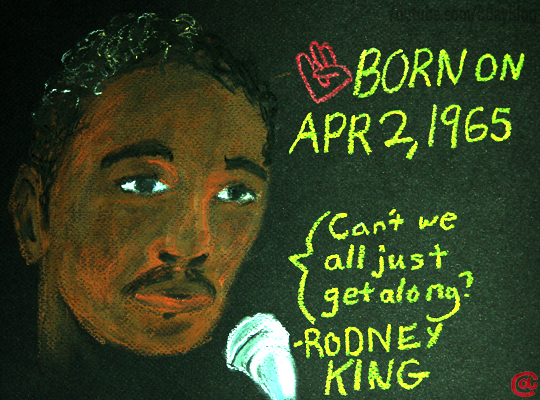
Painting of Rodney King with quote "Can't we all just get along?" and "Born on April 2, 1965."

Daniel Lee ’26 (DCI Fellow)

April 30th, 1992. Fire blazed through the streets of Koreatown and South Central in Los Angeles. Korean Americans frantically ran about, attempting without much success to prevent looters from stealing from vandalized buildings. The police were nowhere to be seen—the people were on their own, helpless except for a few handguns and the presence of one another.

March 3rd, 1991. Rodney King, a Black construction worker, enjoyed a few drinks with his friends and drove down Interstate 210. A few officers noticed him speeding and pursued his vehicle. Determined to avoid being convicted and thus violating parole for a previous robbery, King led the police on a high-speed chase through Los Angeles. He was eventually arrested and beaten mercilessly by a swarm of officers.

The act of police brutality was recorded and distributed through the media, enraging Black communities. When King’s case was taken to court, the resulting verdict only furthered the brewing anger by favoring the position of the white officers. Infuriated, Blacks violently protested in the streets of Koreatown and South Central, destroying and burning property. The police dared not intervene, leaving residents to fend for themselves. Ultimately, an estimated 2,300 privately-owned businesses run by Korean Americans were harmed, measuring up to approximately $400 million in damages.

On its face, the 1992 LA Riots tell a story of police brutality and white supremacy. But in close examination, it also tells a story of the dysfunctional relationship between Black and Korean American communities. Cultural misunderstanding and prejudice directed at one another create unnecessary division among marginalized communities and make it difficult to develop meaningful coalitions to fight against greater structural problems. Often, this dysfunctional dynamic arises from differences in cultural etiquettes (e.g., norms surrounding eye contact and merchant-customer interaction) and faulty stereotypes that instill unreasonable fear and hatred in people’s minds. Without this unfortunate misperception, it seems unlikely that the 1992 LA Riots would have manifested in the way they did.

In this light, it is my sincere hope to break down existing cultural misunderstandings and work towards building productive coalitions between the AAPI community and other marginalized communities. Instead of being held at an impasse over our differences, we must work hand-in-hand to fight against the greater evil—structural racism and prejudice that weigh down our communities. This starts with intentional education that dissolves toxic stereotypes and respectful deliberations that allow communities to find common ground and see each other in a truer light.

Through the skills and life experiences I develop as a DCI Fellow, I hope to use deliberation to lead successful coalition-building between marginalized communities. The empowerment of future generations to create a more perfect society founded upon values of justice and inclusion starts with everyday conversations grounded in intellectual humility and genuine respect. Instead of being in conflict with each other, I dream of people from all different cultures and backgrounds standing together, hope dancing with our every heartbeat as we march on toward a brighter future.

Image by Cass Anaya used under Creative Commons License
Filed Under: Blog Posts, Fellow Posts Tagged With: facilitation, politics

Discovering Public Happiness in Deliberation

October 31, 2022 by Daniel Lee

key to happiness stock image.


By Daniel Lee ’26 (DCI Fellow)

Happiness is a timeless virtue that colors the human condition. It is powerful, bringing light into the darkness and hope to the meek. Our fondest memories are often accompanied by this emotion, which comes back alive in reminiscence and nostalgia. And perhaps it is the presence of happiness itself—whether large or small—that allows us to march on past the burdens of a broken world.

There are, arguably, two distinct forms of happiness: private and public. Private happiness is found within the comfort of one’s private life, without interaction with other individuals. For example, one might achieve private happiness through the independent indulgence of food, entertainment, or physical activity. The duration of happiness created out of these activities tends to be short and temporary, leaving individuals unsatisfied in the aftermath.

Public happiness, on the other hand, is found exclusively by interacting with other individuals. The etymology of “happiness” is critical in understanding this phenomenon. The word originates from happ (Old Norse for chance or luck) and -ness (the state of being). Together, it signifies the state of being encompassed by chance and luck. So how does this apply to the creation of public happiness, and how does one go about bringing it to life?

The answer to that question can be found in the art of public discourse and deliberation. When individuals gather to hold a genuine conversation, void of preconceived scripts or narratives, the potential and possibility of the conversation are limitless, led by the force of spontaneity and chance. The contribution of one individual’s ideas will prompt others to react and contribute their own thoughts by chance, leading to the creation of something new. More often than not, this creation of something new is the birth of public happiness, brought forth into existence out of meaningful and exciting interactions between people.

This pursuit of public happiness is what I believe to be at the core of the DCI’s mission. In a world plagued by the impasse of ideological polarization and serious mental health crises, we need to work actively to bring back the virtue of public happiness into our communities. Whether the DCI deliberation model is implemented in local coffee shops or at large academic conferences, each step is crucial in ensuring a path forward. Without this important work, I am afraid that future generations of humanity may forgo ever experiencing public happiness altogether.

Although the present circumstances may seem dim, hope dances with my every heartbeat because of the meaningful interactions I have experienced through DCI this semester. Working with the DCI Fellows, D Team participants, and Dr. Bullock has helped restore my faith in our ability to move past the self-centered narrative and rather pursue great conversations created out of a bridge of respect and humility. And yes, much work is still left to be done. However, insofar as the possibility exists, the pursuit of public happiness is worth the struggle toward a better and healthier democracy.

Filed Under: Blog Posts, Fellow Posts Tagged With: facilitation

Footer

Blog Post Categories

  • Announcements
  • Blog Posts
  • DCI Posts
  • Events
  • Faculty Posts
  • Fellow Posts
Image of a compass superimposed by the text "Deliberative Citizenship Initiative" and "Davidson College." Clicking on this image leads to the Initiative page.

Recent DCI Blog Posts

  • We Tried to Fix Jubilee’s “Middle Ground” – Here’s How It Went
  • A Case for Deliberation in the Natural Sciences
  • Welcoming New Staff to the DCI and DCN
  • Facebook
  • Twitter
  • Instagram
  • LinkedIn


Copyright © 2026 · Infinity Pro on Genesis Framework · WordPress · Log in