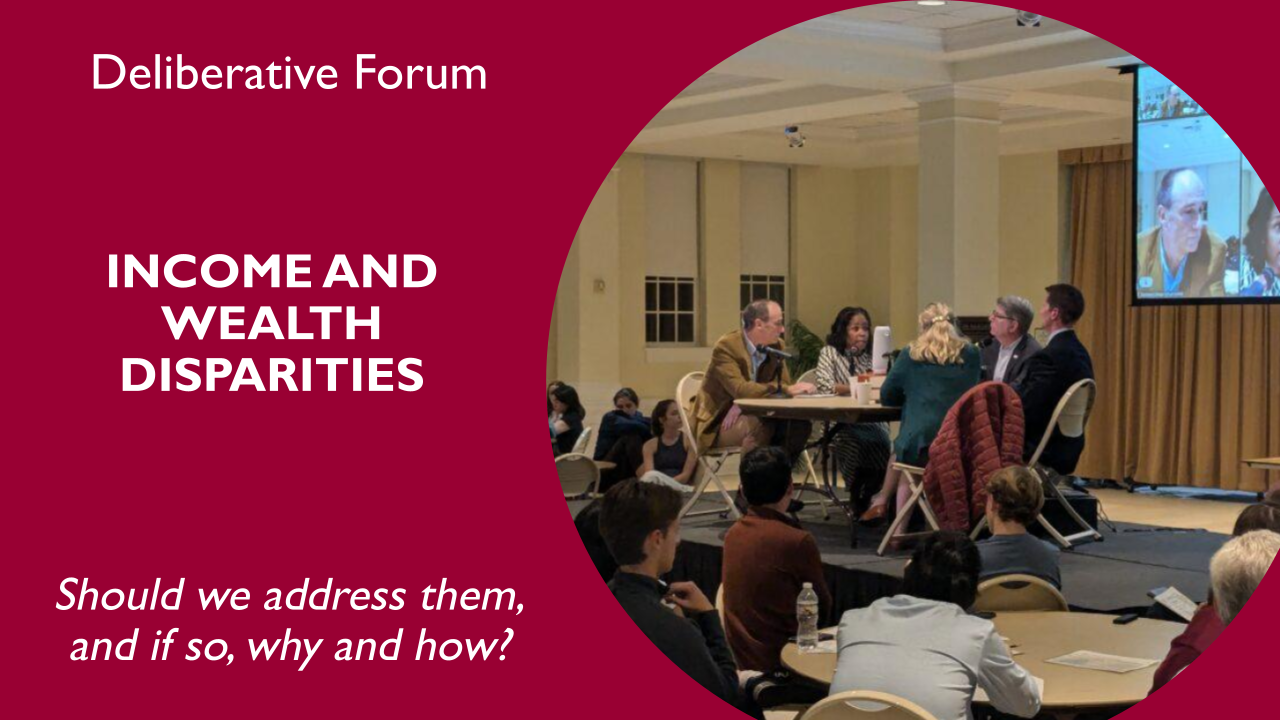
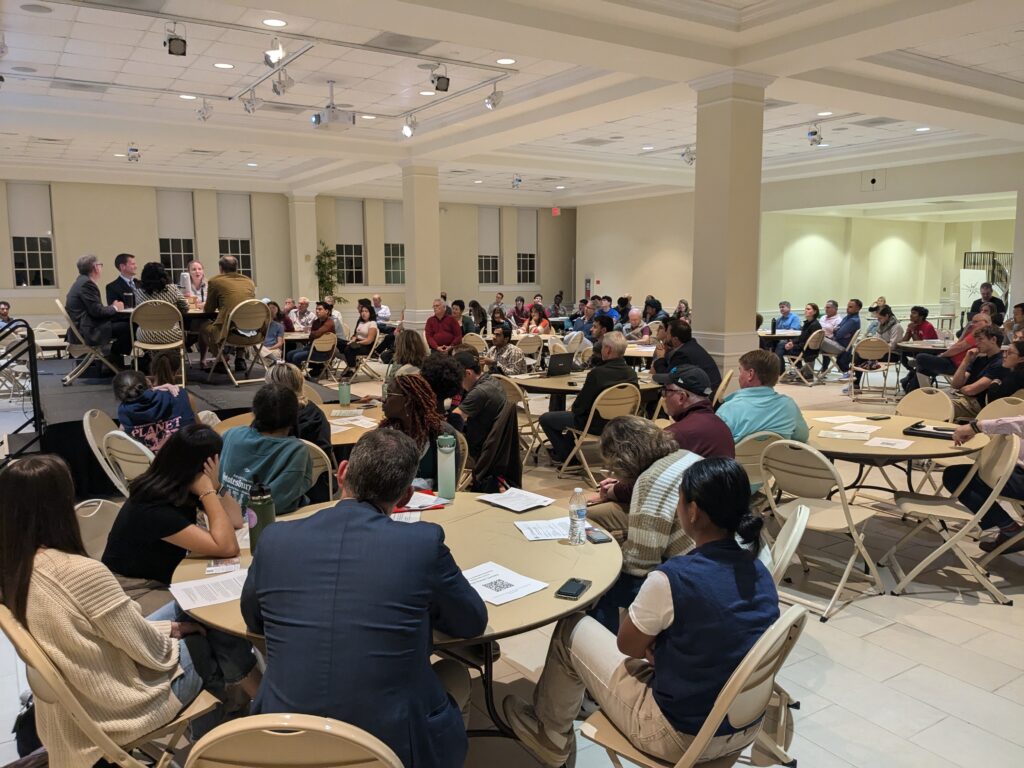
On Tuesday, October 27th at 7:00 PM, members of the Davidson community gathered together on Davidson’s campus to discuss income and wealth disparities. The 164 attendees (76 in person and 88 online) were treated to a meaningful, multifaceted conversation regarding whether or not they pose a problem to society and how, if at all, should they be addressed. Davidson College President Doug Hicks moderated the conversation that included two philosophy scholars, president of a Charlotte-based advocacy organization, and a vice president of a non-profit think tank based in North Carolina.
These experts included Robyn Lake Hamilton, the CEO of the Urban League of the Central Carolinas, a local leader in the fight to combat inequality. Davidson’s Professor Sean McKeever and University of Richmond’s Jessica Flanigan, professors of philosophy and experts in the study of the phenomenon in question, brought their academic experience to the conversation. Lastly, Brian Balfour, Senior Vice President of the John Locke Foundation, was able to contribute insights from research into economic disparities and their causes and effects. President Hicks kept the conversation among the panelists focused on meaningful exchange of ideas and explorations of the disagreements that further illuminated the issue for those in attendance.
The event was co-sponsored by Davidson College’s Deliberative Citizenship Initiative, Center for Political Engagement, College Republicans, College Libertarians, College Democrats, Economic Department, Philosophy Department, and Political Science Department. Representatives from each of the student political organizations were present for the deliberative half of the evening.
The innovative and successful “round table” format, where the panelists discussed the issue around a table on a stage surrounded by the audience, once again proved to be the most engaging and accessible way to draw the audience into the conversation being held before them. The conversation was recorded with a 360 degree video camera, called the “Meeting Owl,” that was placed on the table the panelists were sitting at for those participants who joined over Zoom. The recording can be viewed by clicking play on the video icon below.
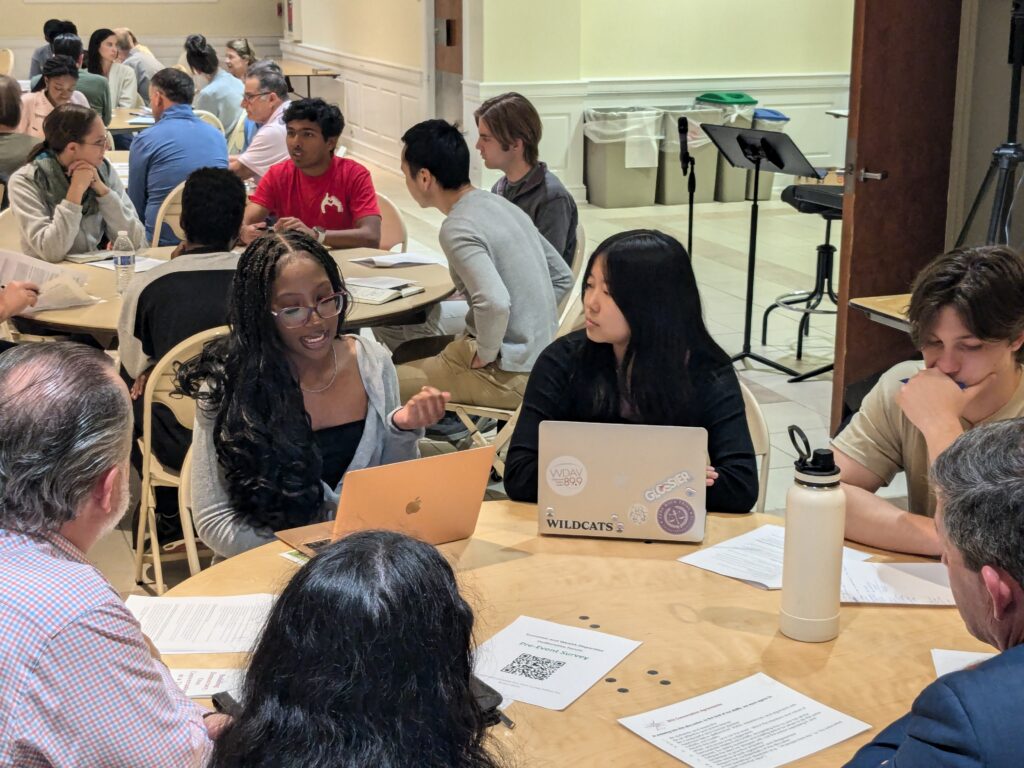
After the hour-long discussion came to a close, participants turned to each other to continue the discussion. At tables of 6-8 people that included residents of the community, students, faculty, and alumni, trained DCI facilitators led discussions on the topic, aided by a deliberation guide designed specifically for this event. The guide offered supplemental materials to the conversation to ensure each participant had necessary background knowledge to engage constructively in their group’s conversations.
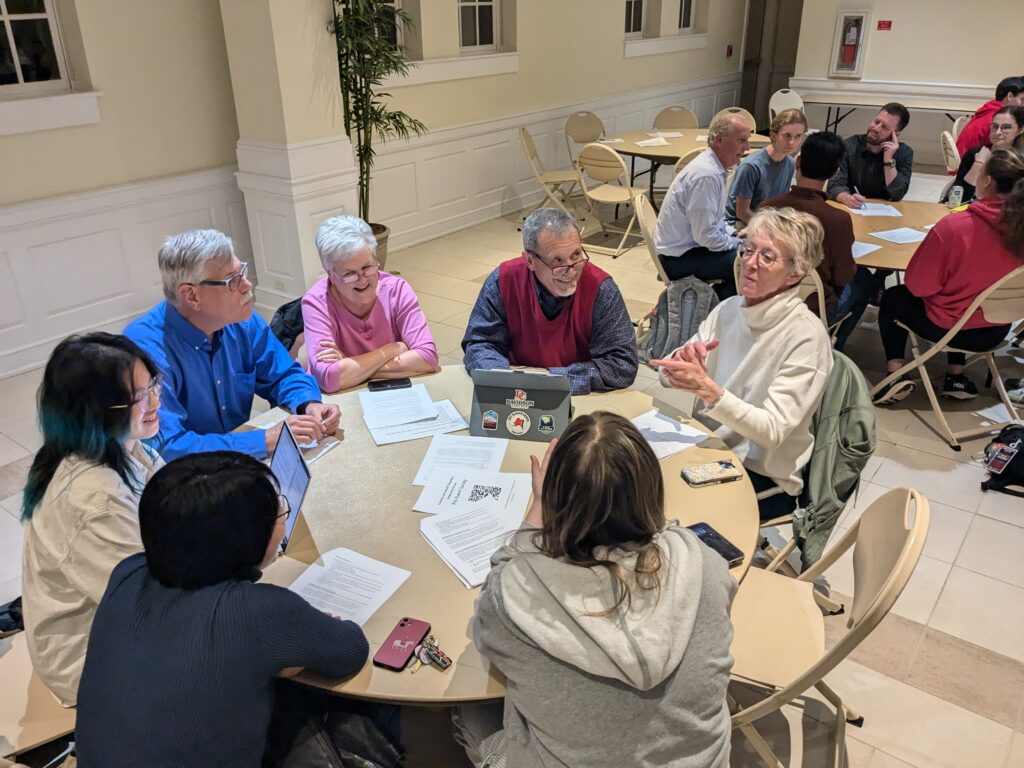
These conversations were not an end but the beginning of a long journey the participants have begun to become more comfortable with the disagreement such a complex issue inspires. Participants were more than willing to engage and came away deeply satisfied with their experience. Julio Ramirez, a Davidson College professor who attended the forum, said that the forum provided a “deep assessment of a complex problem from multiple perspectives” and was an “outstanding experience.” See comments from other participants about their experience below:
- “Not only are the discussion guides balanced and educational, but the facilitated small group deliberations are also such a breath of fresh air and source of hope amidst our current polarization and paucity of thoughtful discussions across differences.”
- “In these fractious times, it is not just refreshing but also life-affirming to be able to take part in discussion of tough issues with no easy answers, with people are intent not on “scoring points” but on working together to solve problems. Beats hell out of watching TV or playing video games.”
- “The Deliberative Forum is exactly the type of civic exercise we need right now to practice healthy discourse and “lean in” to the most important issues that will decide our future as world-citizens. Today’s event put the DCI’s goals into action. The panel and the small-group discussion inspired me to dig deeper into this topic and to find ways to take action.”
Check out the video recording of the panel discussion below as well as the event’s deliberation guide.