• Skip to main content
  • Skip to footer

Deliberative Citizenship Initiative

Building Democracy One Conversation at a Time

  • The Initiative
    • Programs
      • Deliberation Across the Curriculum
      • Deliberation on Campus
      • Deliberation in the Community
      • Research on Deliberation
    • Motivations
      • Why Deliberative Citizenship?
      • Why Davidson? Why Now?
    • Who’s Involved?
      • DCI Fellows Cohorts
        • 2025-2026 Fellows
        • 2024-2025 Fellows
        • 2023-2024 Fellows
        • 2022-2023 Fellows
        • 2021-2022 Fellows
        • 2020-2021 Fellows
      • DeeP Collaborative Cohorts
        • 2024-2025 DeeP Collaborative Faculty
        • 2023-2024 DeeP Collaborative Faculty
      • Advisory Council
    • History
      • What Sparked the Initiative?
    • Key Deliberative Dispositions
    • Frequently Asked Questions (FAQ)
    • Annual Report
  • Get Involved!
    • Participate in a Forum
    • Join a D Team
    • Become a Fellow
    • Take Courses
    • Get Training
    • Come to Guest Lectures
  • Events
    • Upcoming Events
      • 250th Anniversary Deliberative Forum Series on American Values
    • Past Events
  • Connections
    • The Deliberative Citizen: The DCI’s Monthly Newsletter
    • Efforts on Campus
    • Efforts in the Community
    • Efforts Elsewhere
    • Readings and Resources
      • DCI-Published Guides
      • DCI Guide to One-on-One Conversations
      • How to Disagree
      • Demonstration of Facilitation Styles
      • Deliberative Pedagogy Mini-Course
    • How We Can Help: DCI’s LET’S DELIBERATE! Partnership Opportunities
    • DCI in the News
  • DCI Blog Posts
    • Recent Blog Posts
    • All Blog Posts

Events

Why Argue?

November 1, 2023 by Monty Krakovitz

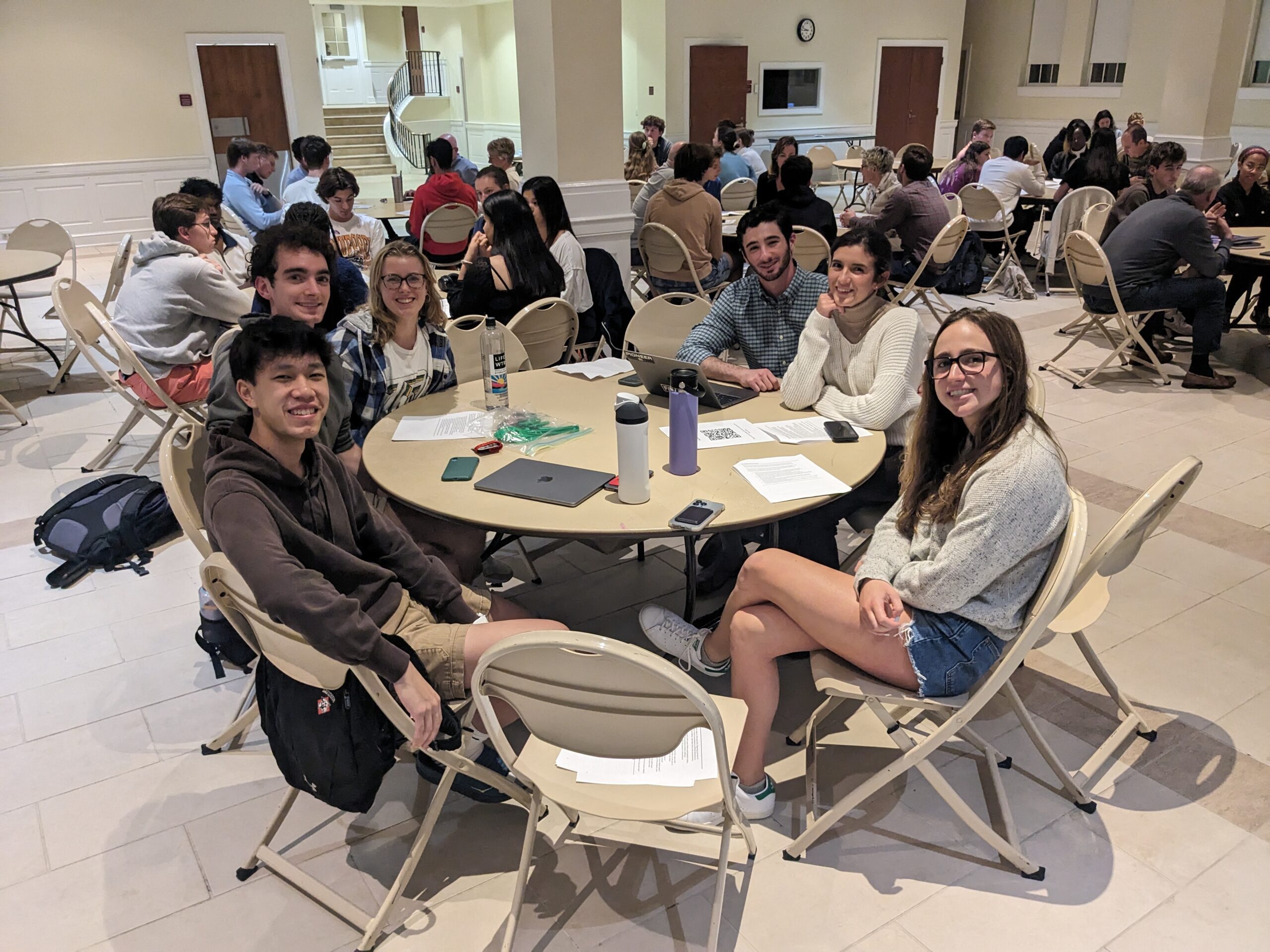
DCI Fellow Monty Krakovitz facilitating a deliberation

Monty Krakovitz ’25 (DCI Fellow)

As part of the deliberative training for the DCI Fellows, we were asked to read a section from the book written by Scott Akin and Robert Talisse titled “Why We Argue (And How We Should).” The book shows the importance of political deliberation from the perspective of Aristotle . The authors present the view of Aristotle that “man is a political animal” and that what we believe or do in the privacy of our own home affects society at large.

When Aristotle makes this claim, he doesn’t necessarily mean politics in terms of voting. He conceives of politics as how individuals relate to one another to form communities. From the moment that each of us are brought into this world, we are defined by our relationships to others. The newborn is not an isolated individual, but is someone’s son or daughter who relies on his or her mother and father for support. Likewise, the new mother is also not an isolated individual, but has obligations to her child. The term “political animal” means nearly everyone has duties and relationships with others, who also have relationships with others, connecting everyone together to form the society at large.

The authors also give an example of private beliefs affecting others as well. For example, a person, let’s call her Nancy, schedules a picnic at the park with the false view that the weather is sunny when it is clearly raining, and proceeds to invite her family from out of town to the picnic. The family does not know that it is raining at the park because they are coming from a distance. After being falsely told that the weather is perfect, they all drive in to find out that the weather is not, in fact, perfect but is pouring rain. The family has now wasted their day because the person who scheduled the picnic held the false belief that the weather is nice. Nancy’s false belief about the weather led her to act on that belief, which in turn inconvenienced her family in a large way.

This example displays a relatively low-cost error considering that no one was harmed, but the same principle can be applied to  other circumstances where the consequence of holding false beliefs is much higher. The truth is that ideas have consequences. When a man holds a false belief, he is likely to act in accordance with that false belief, leading to bad behavior that affects others in his community.

This semester, one of the D Team deliberations will be on abortion which is a topic ripe for discussion. The D Team will get down to the root of people’s beliefs in order to discover why citizens hold the views that they do. It is clear that a person’s views on this moral, political, and ultimately religious issue affects their actions. From the Pro-Life perspective, holding a false moral view on abortion directly affects the unborn child whose life is now endangered by the mother’s false view on the sanctity of life. From the Pro-Choice perspective, the false view that abortion is a moral evil leads citizen to vote in a way that infringes on the mother’s bodily autonomy.

This is why deliberation is vital: our private views do matter, and they matter deeply. In some cases, a false opinion can lead to minor inconveniences. In others, a false opinion can lead to the death of an unborn child or the loss of a women’s bodily autonomy. That is why it is important to argue: it helps avoid the high cost of error and aids in answering the big questions facing our society today.
Filed Under: Blog Posts, Events, Fellow Posts Tagged With: D Teams, deliberation, discourse, facilitation

DCI’s Fall 2023 Deliberative Forum Recap & Recording: The Challenge for Democracy

October 26, 2023 by Sara Copic

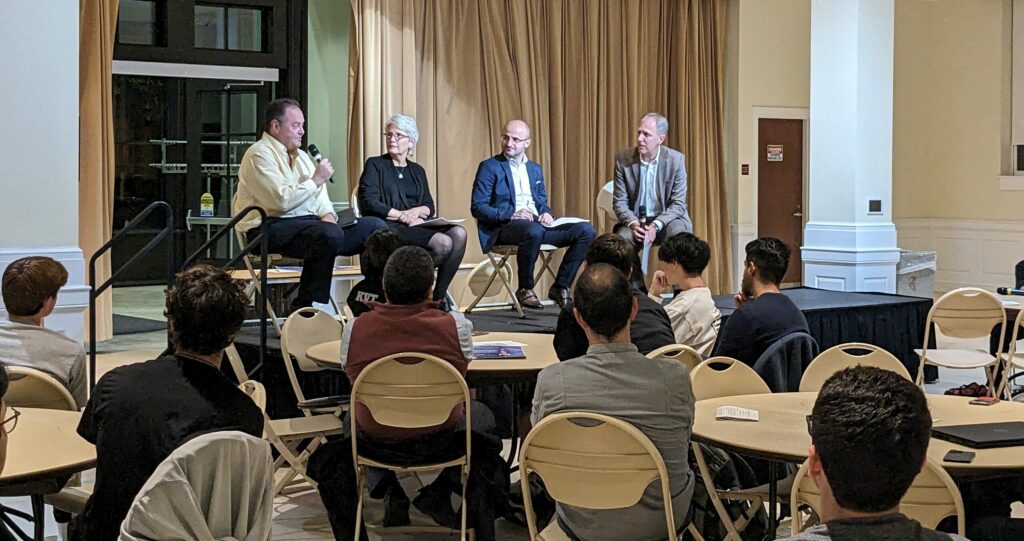
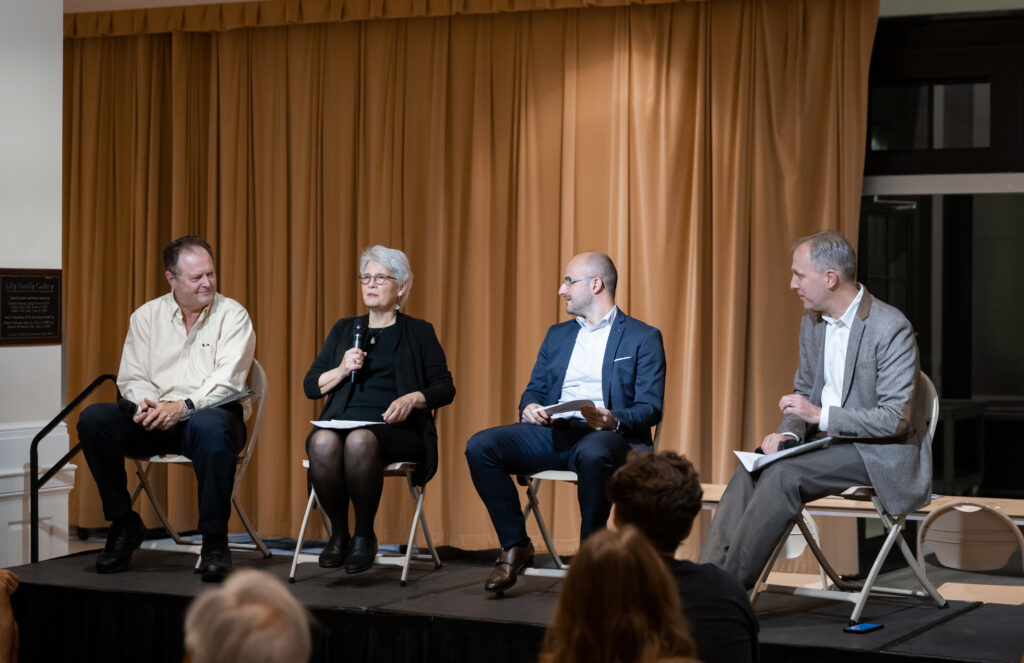
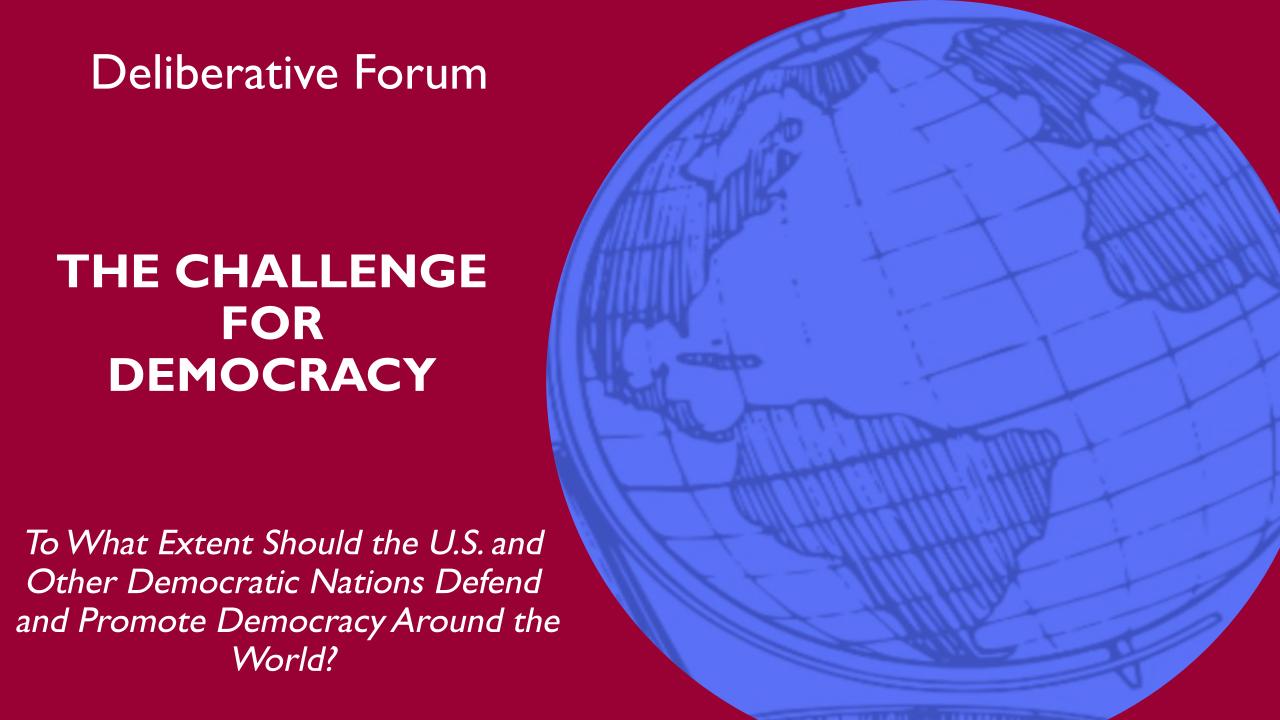
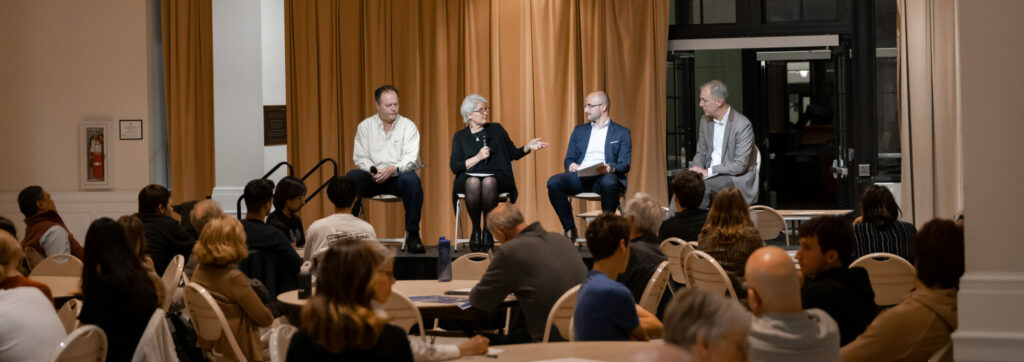
On Thursday, October 19, the DCI hosted its 9th public Deliberative Forum, The Challenge for Democracy: To What Extent Should the U.S. and Other Democratic Nations Defend and Promote Democracy Around the World?  For this event, we partnered with Davidson’s own Political Science Department and featured speakers with different global areas of specialization. Professors Bes Ceka, Shelley Rigger, and Ken Menkhaus presented their own views about democracy promotion and defense and focused on Europe, Asia, and Africa (respectively). We invite you to watch the recording of our panel below!

The Challenge for Democracy: To What Extent Should the U.S. and Other Democratic Nations Defend and Promote Democracy

panel

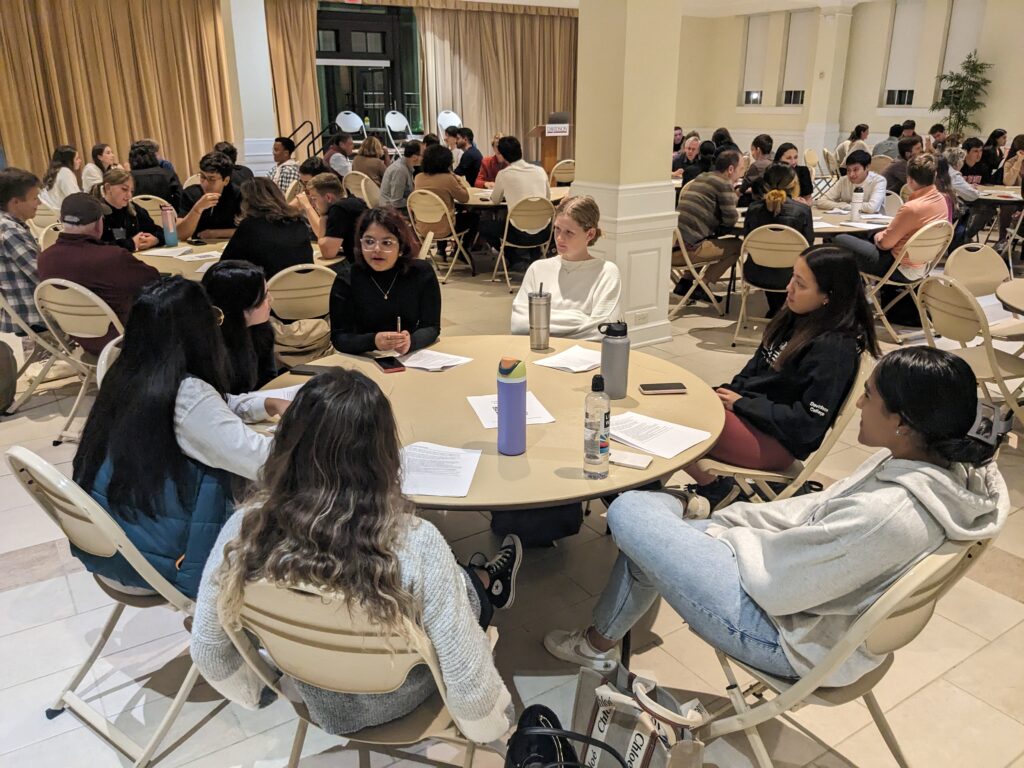
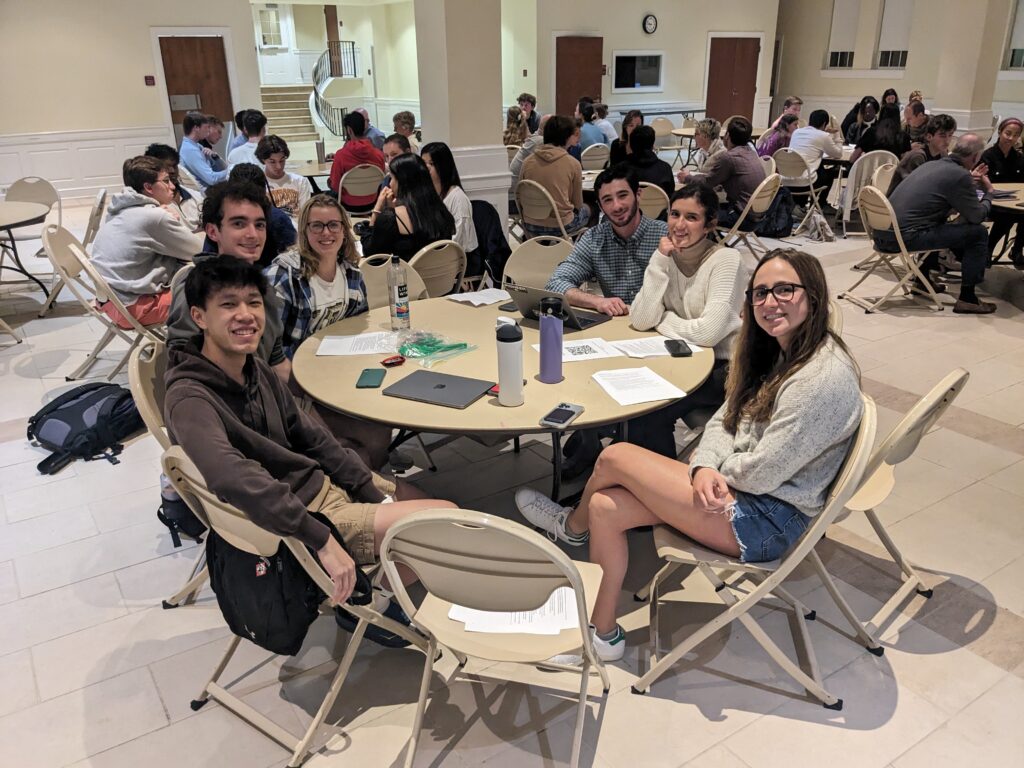
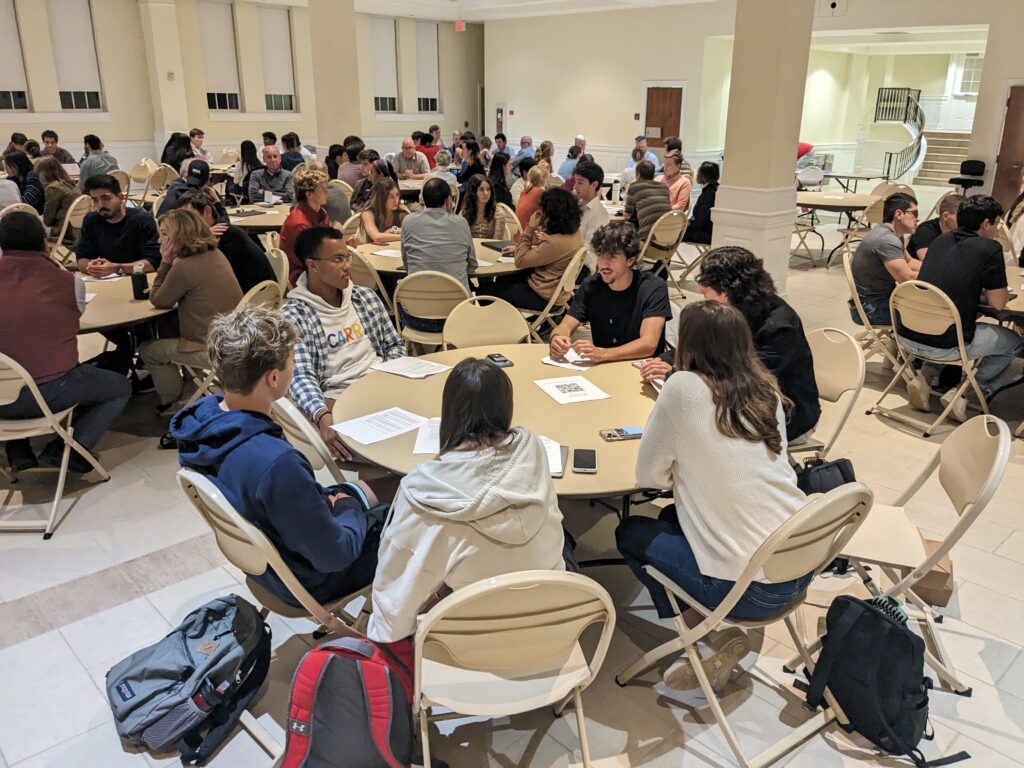
Our Deliberative Forum didn’t end with the panel. After the panel discussion, 96 participants engaged with one another in small-group deliberations facilitated by the DCI’s Fellows, Senior Fellows, and others who have gone through our Deliberation Facilitator Training Program, including a few Davidson faculty members. We had a total of 18 small groups deliberating about the topic both online and in-person, drawing on our Deliberation Guide written for the event and engaging with one another on the forum’s central question.

Check out some photos and the short video of these discussions below.

Want to make sure you don’t miss our next forum? Follow us on your favorite social media site and subscribe below for DCI updates!

Panel at DCI Forum
The Deliberative Citizenship Initiative (DCI) and Political Science Department Event – The Challenge for Democracy

Filed Under: Announcements, Events, Fellow Posts Tagged With: deliberation, democracy, facilitation

Christy Vines Visit to Davidson: Recordings are Posted!

October 17, 2023 by Sara Copic

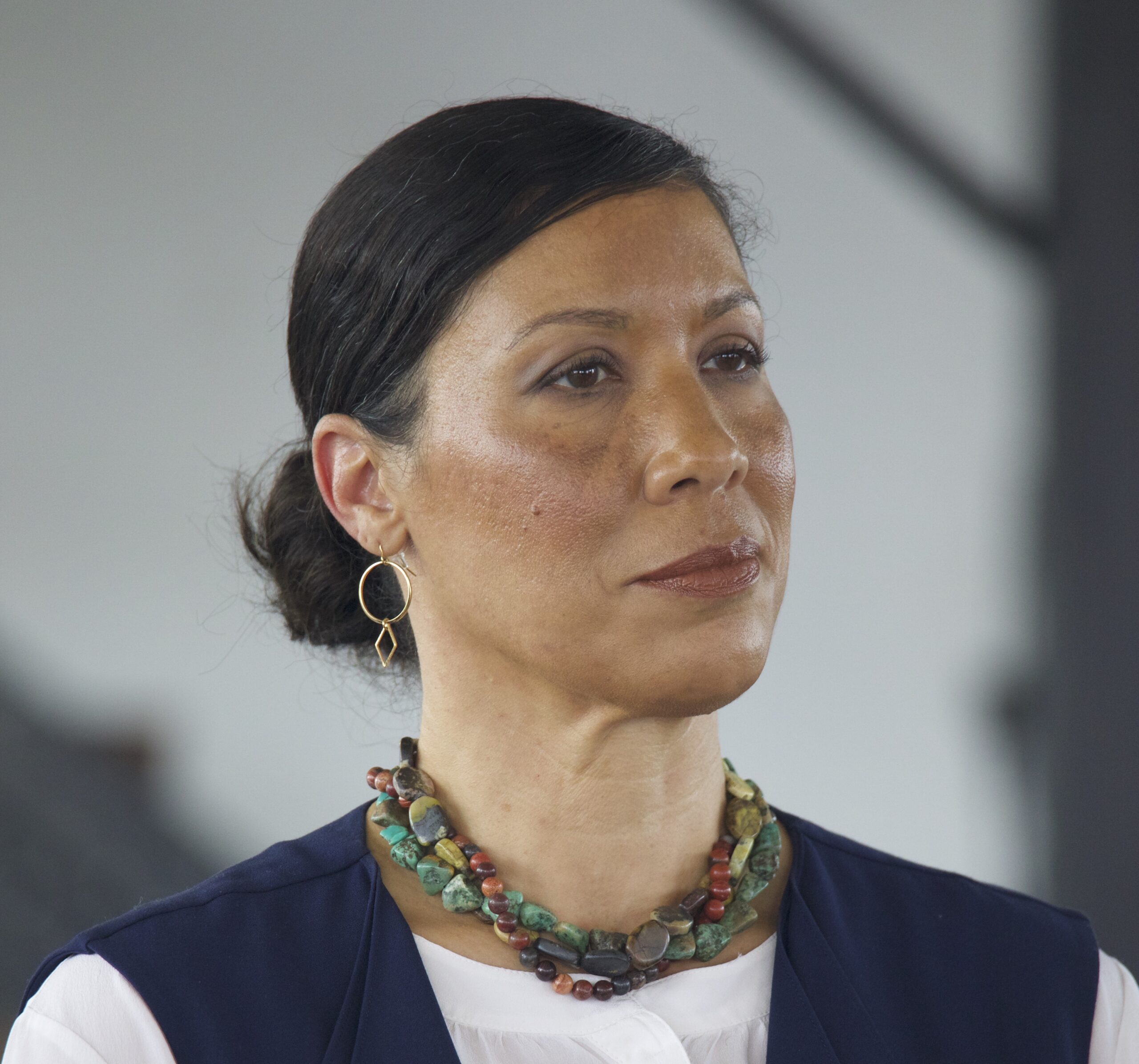
Headshot Image of Christy Vines

In September, the DCI partnered with the Office of the Chief Equity and Inclusion Officer, Dean Rusk International Studies Program, Chaplain’s Office, and Public Lectures Committee to bring Christy Vines to campus as part of our Deliberative Speaker Series. Christy is President and CEO of Ideos Institute and Executive Producer of the documentary film Dialogue Lab: America. Much of her current focuses on the concept and practice of empathic intelligence.

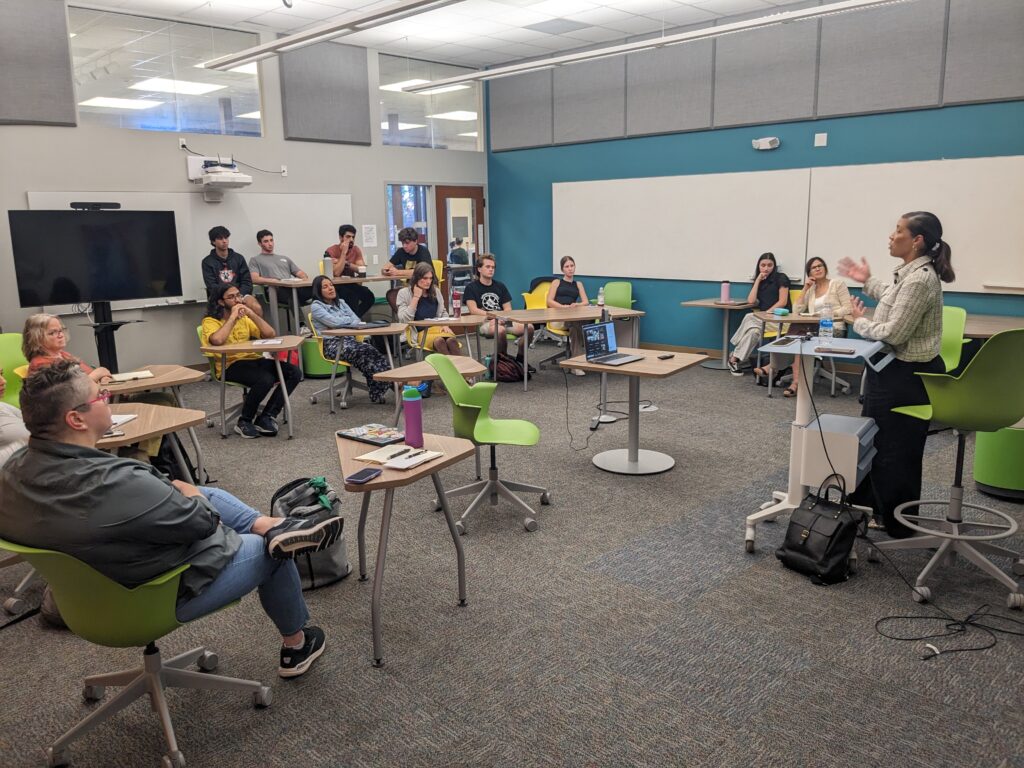
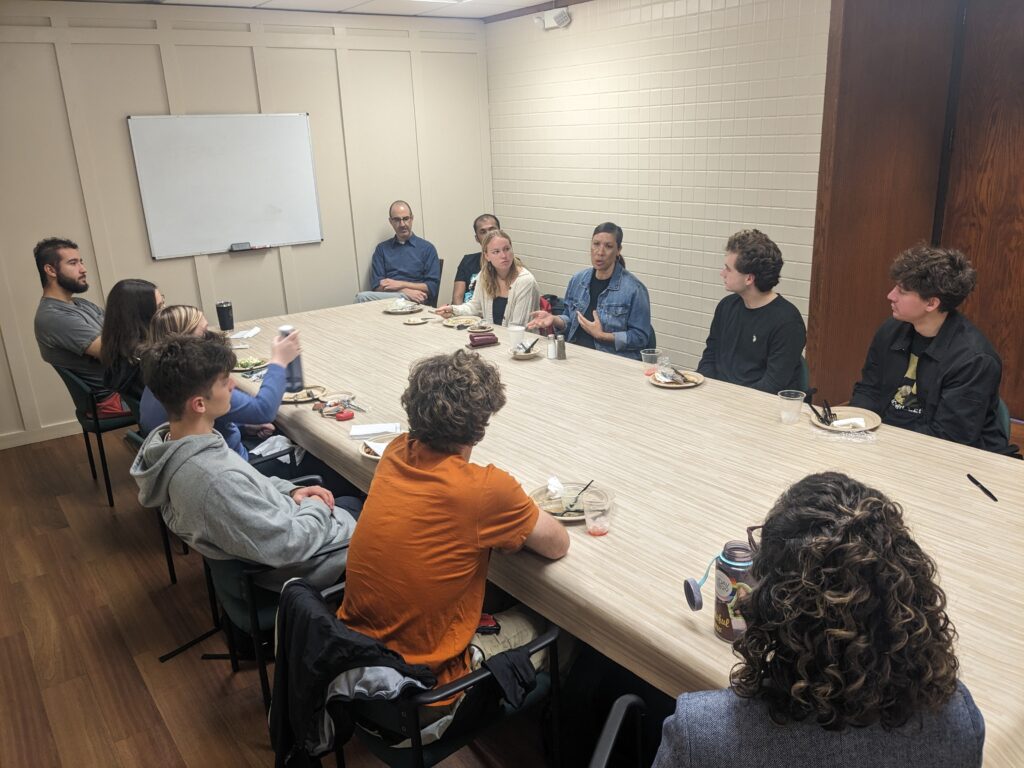
In the course of her visit, Christy met with multiple student groups, led two workshops, and gave one public lecture. She argued that empathic intelligence is a skill that we can all hone over time, and that it is required in order for us to be effective in our goals that require engaging with and understanding others. Empathic intelligence involves our ability to understand others in a way that humanizes them in spite of our differences. Christy argued persuasively that harnessing this skill can help us heal polarized divides in the U.S., and it can help us make progress toward collective decision-making.

Watch Christy’s lecture below to find out more. In her talk and the Q&A session afterwards, she talks directly about both the challenges related to the religious, racial, and political fractures in our society and the ways by which an empathic mindset can enable us to promote better understanding across those divisions.

Faith, Race & Politics: Can empathy help bridge our divides in a polarized world?

Christy also led a workshop about promoting empathic intelligence in the classroom and other contexts. If you didn’t catch the workshop but would like to find out more, whether you’re an educator or a student, you can watch it below.

Empathic Intelligence: What it is and how to cultivate it in the classroom and beyond

It is our hope that these resources will go some way toward healing our divides and enabling us to solve our collective problems together. Follow us on your favorite social media site, and we hope to see you at our future events!

Filed Under: Announcements, Blog Posts, Events, Faculty Posts Tagged With: Speakers

Upcoming Deliberative Forum on The Challenge for Democracy

October 10, 2023 by Graham Bullock

DCI and Political Science Department The Challenge for Democracy Event flyer.

Democracies have faced numerous threats, both internal and external, in recent years. Scholars and policymakers have expressed serious concerns about democratic backsliding, democratic deficits, and growing levels of authoritarianism around the world. Davidson College’s Deliberative Citizenship Initiative and Political Science Department invite you to explore these issues during an upcoming Deliberative Forum on “The Challenge for Democracy.” The forum will examine the pivotal question of how far the United States and other democratic nations should go in defending and promoting democracy globally. It will be held on Thursday, October 19 from 7 pm – 9 pm in Davidson College’s Lilly Gallery and online.

This Deliberative Forum will enable participants to actively engage with these important issues, first by listening to a panel of experts with diverse perspectives discuss the topic, and then by actively deliberating with one another in facilitated small group discussions (either in person or virtually) on how best to address the problems facing democracy (if at all). This is a fantastic opportunity to learn from experts, listen to the viewpoints of others, and share your own ideas about this challenging and complex topic. The panelists include Davidson Political Science Professors Kate Bersch, Bes Ceka, Ken Menkhaus, and Shelley Rigger who have expertise on the challenges facing democracy around the world and particularly in Latin America, Europe, Africa, and Asia.

The event is free but registration is required. We request that all registrants plan to attend both the panel and the small group discussions, which are designed to complement each other. Participants may join both in-person and online. Spaces are limited due to the number of trained DCI facilitators we have available to moderate the small group discussions. You may be placed on a waitlist if our capacity is reached, and we will let you know if spaces open up. We will do our best to accommodate as many people as we can so please don’t hesitate to get on the waitlist. The Zoom link will be sent to online participants after they register.

To learn more about the panelists and register for the event, click here. We hope you can join us – everyone is welcome!

Filed Under: Announcements, Events

Fall 2023 Speaker: Christy Vines

September 12, 2023 by Sara Copic

CHRISTY-VINES-FLYER-FOR-PRINTING

Mark your calendars for the next installment of the DCI’s Deliberative Citizenship Speaker Series! We are proud to present our fall 2023 speaker, Christy Vines. Vines will visit Davidson on September 28th and 29th, during which time she will give a public lecture, host a workshop, and lead a training session following a film screening. She will focus her time here on exploring with the Davidson community how to cultivate empathic intelligence and how to heal the rifts that exist in our society and our communities due to our political, social, religious, and racial differences.

We are excited to have Christy Vines join us on campus this fall because it is part of the DCI’s mission to build a community in which we all feel a sense of belonging and make commitments to one another to improve and sustain our social and civic relations. She can help us build such a community that values listening and engagement even as we disagree deeply on difficult issues, so we hope that you will join us for at least one of our events with her.

Christy Vines’ visit to Davidson is co-sponsored by the Deliberative Citizenship Initiative, Office of the Chief Equity and Inclusion Officer, Dean Rusk International Studies Program, Chaplain’s Office, and Public Lectures Committee. It is part of our ongoing speaker series designed to bring scholars and practitioners to campus who can provide useful insights on how best to enable productive public discourse in pluralistic, democratic communities. Previous speakers include Eric Liu (Citizens University), Leila Brammer (University of Chicago), Debra Hawhee (Penn State), Martin Carcasson (Colorado State), and Sara Drury (Wabash College/Unite America).

About Our Speaker

Christy Vines is the President and CEO of Ideos Institute, a research and practice institute dedicated to advancing empathy in leadership, culture, and spiritual formation. She is best known for her unique perspective on faith, society, and culture, and her ability to help people bridge differences and connect more authentically.

After working in the fields of peacemaking, conflict transformation, and women’s leadership across a variety of global and religious contexts, in 2015 Vines focused her attention on advancing the burgeoning field of empathic intelligence in order to better understand the disconnections, biases, and misperceptions that often underlie conflict in the first place. She now leads the Ideos Institute’s research and its application to efforts to transform intractable conflicts, build social cohesion and community resiliency, and encourage servant leadership. 

Vines is a published writer, speaker, and the executive producer of the 2022 documentary film, Dialogue Lab: America, a moving take on the current state of division and polarization in the U.S. She has been interviewed in a number of published articles, interviewed on numerous podcasts, and has published her own articles and op-eds in publications like The Washington Post, Christianity Today, and Capital Commentary. Vines received her Master’s Degree in Public Administration from the Harvard Kennedy School and lives in Pasadena, CA with her husband, Anthony.

Public Lecture: FAITH, RACE & POLITICS: Can empathy help bridge our divides in a polarized world?

Vines has dedicated herself to advancing empathy in leadership, culture, and spiritual life. In this forum discussion, she will discuss her work on understanding why, as humans living in a dense and diverse society, we remain divided over long-standing issues like religion, race, and politics. She will unpack how empathy can help us not only understand one another better, but also heal our human propensity towards division, dehumanization, and hate.

Workshop: EMPATHIC INTELLIGENCE: What it is and how to cultivate it in the classroom and beyond

In this workshop, Vines will share insights from the Ideos Institute’s work in the field of Empathic Intelligence, which it describes as a pursuit of knowing that gives us the ability to understand and act upon the experiences of others without negating our own. Participants will walk away with a better understanding of the science and research behind the Empathic Intelligence framework, as well as the underlying skills and practices necessary to both increase their own empathic intelligence and apply it in their work with students, colleagues, and beyond.

Documentary Screening & Training Program: THE DIALOGUE LAB METHOD: Creating Shared Meaning and Enabling Meaningful Action

The last event in our series will be a screening of the Ideos Institute’s 2022 documentary, Dialogue Lab: America, a story of 12 strangers who came together in an audacious social experiment on political polarization. The hour-long film chronicles the group’s journey as each individual shares their story, discovers common ground, and forges a path to mutual understanding. 

The screening will be followed by a mini Dialogue Lab workshop where you can experience Ideos’ training in the art and practice of dialogue-based relational, social, and systems change. At the end of the 60-minute training, you will walk away with new skills and tools that can help you: 

  • challenge your unconscious biases and misplaced judgments
  • break down barriers that can lead to misunderstanding and isolated thinking
  • create shared meaning and mutual understanding with those you disagree with
  • lay the groundwork for authentic relationships and meaningful action.

Please join us for our event series with Christy Vines! Sign up on WildcatSync!

Filed Under: Announcements, Blog Posts, Events

  • « Go to Previous Page
  • Page 1
  • Interim pages omitted …
  • Page 12
  • Page 13
  • Page 14
  • Page 15
  • Page 16
  • Interim pages omitted …
  • Page 19
  • Go to Next Page »

Footer

Blog Post Categories

  • Announcements
  • Blog Posts
  • DCI Posts
  • Events
  • Faculty Posts
  • Fellow Posts
Image of a compass superimposed by the text "Deliberative Citizenship Initiative" and "Davidson College." Clicking on this image leads to the Initiative page.

Recent DCI Blog Posts

  • Making Conversation: A First Step to Understanding
  • The Costs of Changing Your Mind, and How to Overcome Them
  • ​Middle Schoolers: The Ones Who Taught Me the Most About Facilitation
  • Facebook
  • Twitter
  • Instagram
  • LinkedIn


Copyright © 2026 · Infinity Pro on Genesis Framework · WordPress · Log in