• Skip to main content
  • Skip to footer

Deliberative Citizenship Initiative

Building Democracy One Conversation at a Time

  • The Initiative
    • Programs
      • Deliberation Across the Curriculum
      • Deliberation on Campus
      • Deliberation in the Community
      • Research on Deliberation
    • Motivations
      • Why Deliberative Citizenship?
      • Why Davidson? Why Now?
    • Who’s Involved?
      • DCI Fellows Cohorts
        • 2025-2026 Fellows
        • 2024-2025 Fellows
        • 2023-2024 Fellows
        • 2022-2023 Fellows
        • 2021-2022 Fellows
        • 2020-2021 Fellows
      • DeeP Collaborative Cohorts
        • 2024-2025 DeeP Collaborative Faculty
        • 2023-2024 DeeP Collaborative Faculty
      • Advisory Council
    • History
      • What Sparked the Initiative?
    • Key Deliberative Dispositions
    • Frequently Asked Questions (FAQ)
    • Annual Report
  • Get Involved!
    • Participate in a Forum
    • Join a D Team
    • Become a Fellow
    • Take Courses
    • Get Training
    • Come to Guest Lectures
  • Events
    • Upcoming Events
      • 250th Anniversary Deliberative Forum Series on American Values
    • Past Events
  • Connections
    • The Deliberative Citizen: The DCI’s Monthly Newsletter
    • Efforts on Campus
    • Efforts in the Community
    • Efforts Elsewhere
    • Readings and Resources
      • DCI-Published Guides
      • DCI Guide to One-on-One Conversations
      • How to Disagree
      • Demonstration of Facilitation Styles
      • Deliberative Pedagogy Mini-Course
    • How We Can Help: DCI’s LET’S DELIBERATE! Partnership Opportunities
    • DCI in the News
  • DCI Blog Posts
    • Recent Blog Posts
    • All Blog Posts

Speakers

Christy Vines Visit to Davidson: Recordings are Posted!

October 17, 2023 by Sara Copic

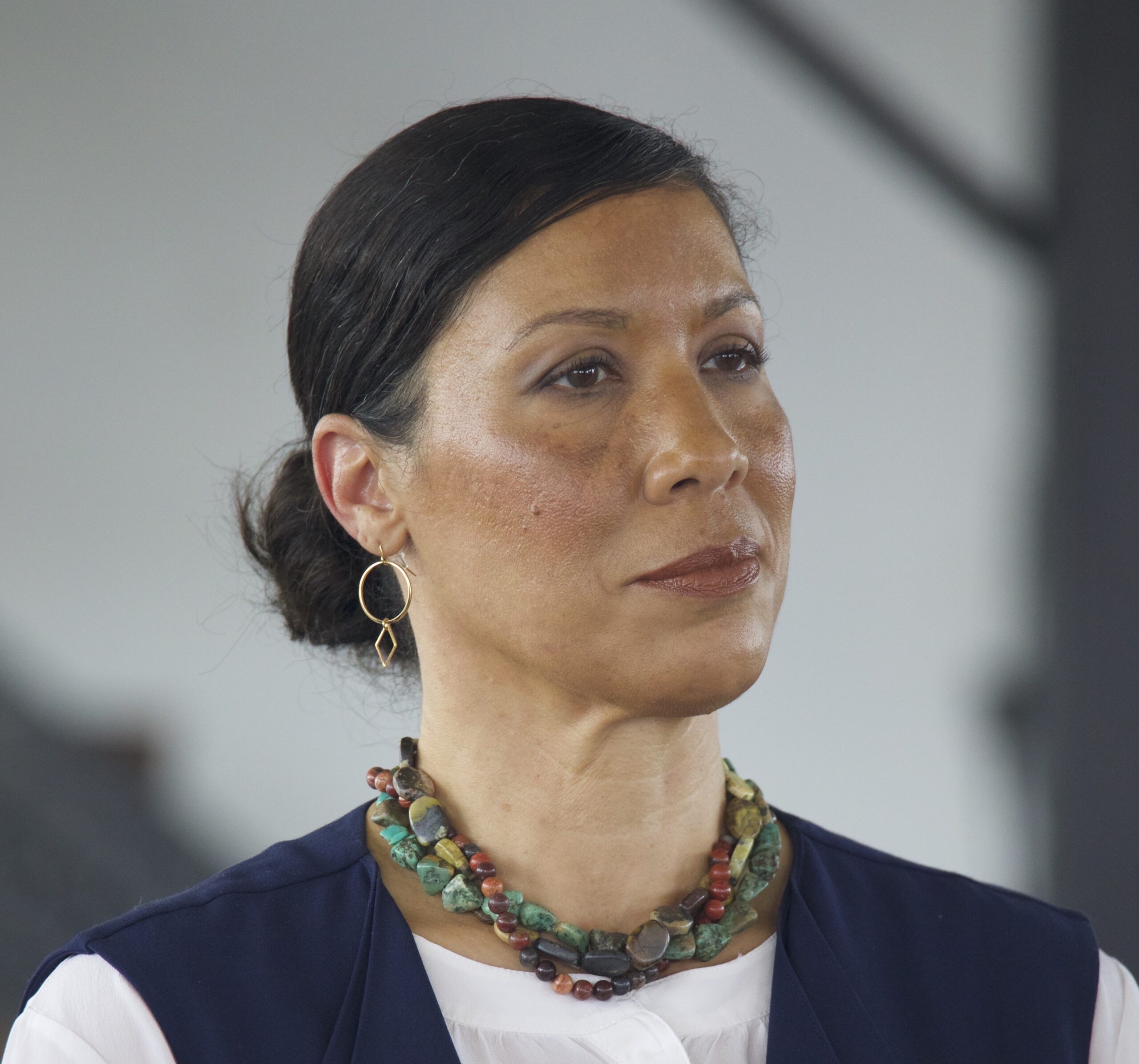
Headshot Image of Christy Vines

In September, the DCI partnered with the Office of the Chief Equity and Inclusion Officer, Dean Rusk International Studies Program, Chaplain’s Office, and Public Lectures Committee to bring Christy Vines to campus as part of our Deliberative Speaker Series. Christy is President and CEO of Ideos Institute and Executive Producer of the documentary film Dialogue Lab: America. Much of her current focuses on the concept and practice of empathic intelligence.
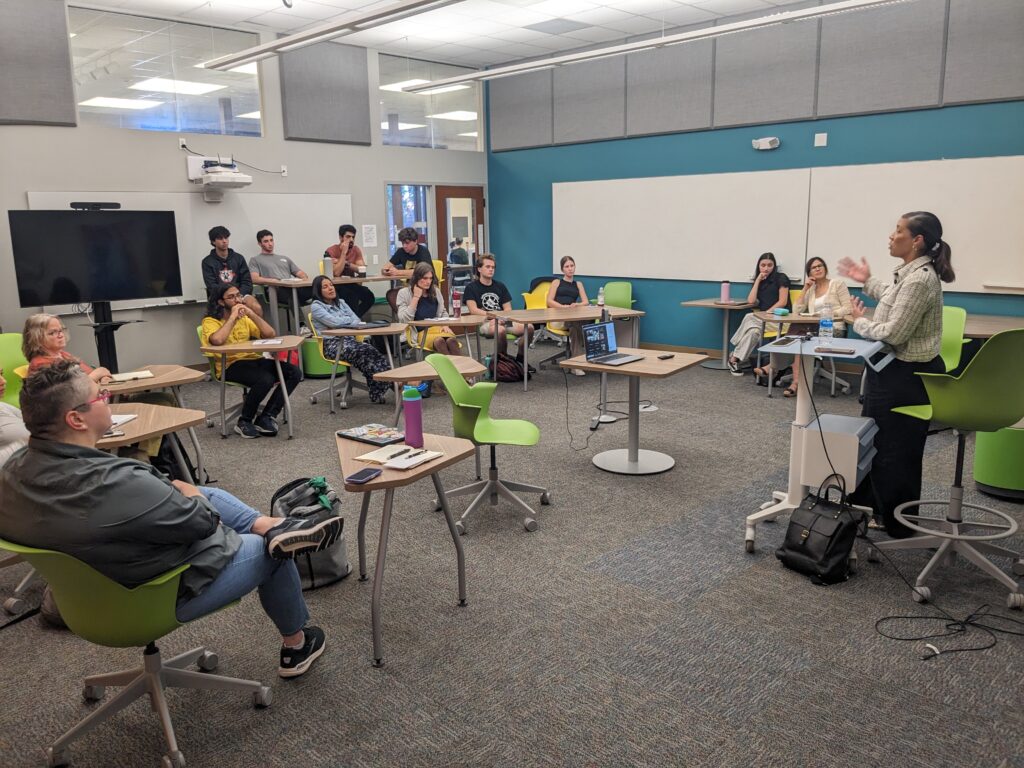
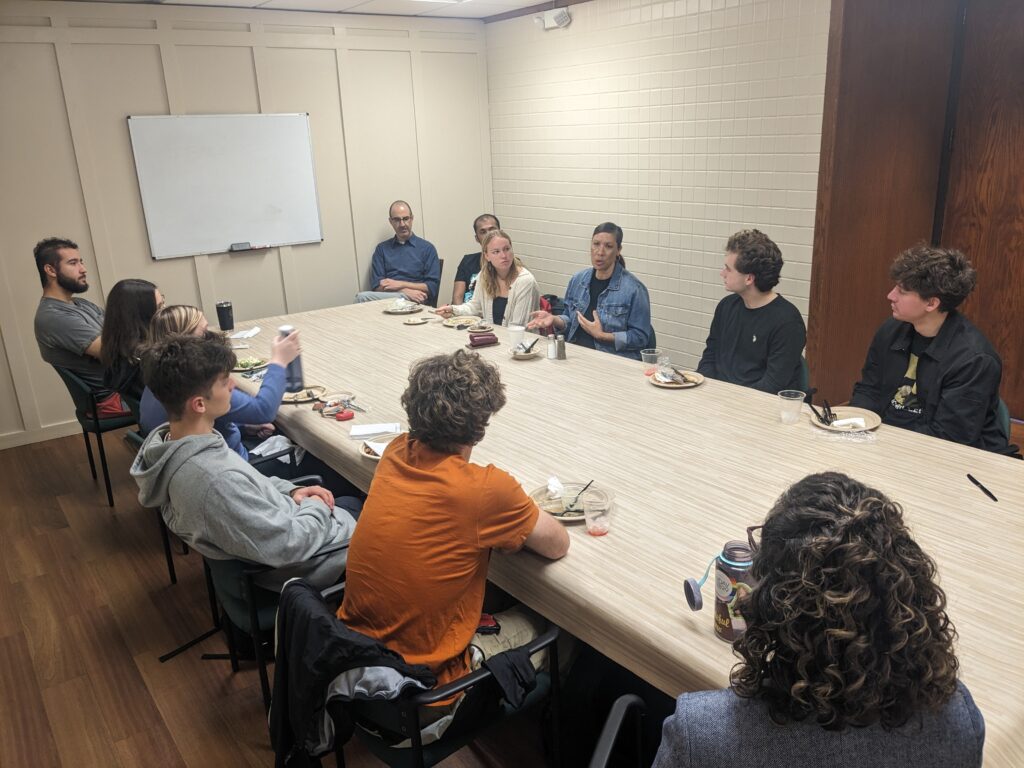
In the course of her visit, Christy met with multiple student groups, led two workshops, and gave one public lecture. She argued that empathic intelligence is a skill that we can all hone over time, and that it is required in order for us to be effective in our goals that require engaging with and understanding others. Empathic intelligence involves our ability to understand others in a way that humanizes them in spite of our differences. Christy argued persuasively that harnessing this skill can help us heal polarized divides in the U.S., and it can help us make progress toward collective decision-making.
Watch Christy’s lecture below to find out more. In her talk and the Q&A session afterwards, she talks directly about both the challenges related to the religious, racial, and political fractures in our society and the ways by which an empathic mindset can enable us to promote better understanding across those divisions.

Faith, Race & Politics: Can empathy help bridge our divides in a polarized world?

Christy also led a workshop about promoting empathic intelligence in the classroom and other contexts. If you didn’t catch the workshop but would like to find out more, whether you’re an educator or a student, you can watch it below.

Empathic Intelligence: What it is and how to cultivate it in the classroom and beyond

It is our hope that these resources will go some way toward healing our divides and enabling us to solve our collective problems together. Follow us on your favorite social media site, and we hope to see you at our future events!
Filed Under: Announcements, Blog Posts, Events, Faculty Posts Tagged With: Speakers

Faith, Race & Politics: Can empathy help bridge our divides in a polarized world?

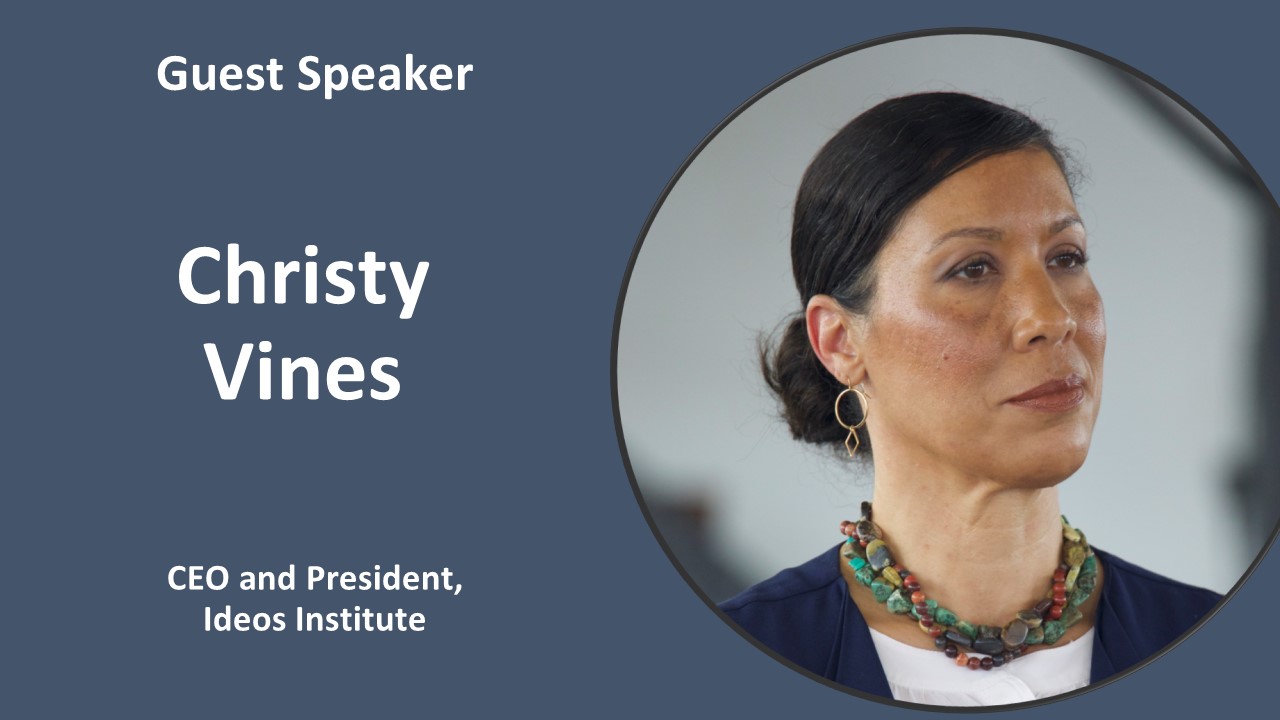
Introductory Image of Guest Speaker Christy Vines.

In September, the DCI partnered with the Office of the Chief Equity and Inclusion Officer, Dean Rusk International Studies Program, Chaplain’s Office, and Public Lectures Committee to bring Christy Vines to campus as part of our Deliberative Speaker Series. Christy is President and CEO of Ideos Institute and Executive Producer of the documentary film Dialogue Lab: America. Much of her current focuses on the concept and practice of empathic intelligence.

In the course of her visit, Christy met with multiple student groups, led two workshops, and gave one public lecture. She argued that empathic intelligence is a skill that we can all hone over time, and that it is required in order for us to be effective in our goals that require engaging with and understanding others. Empathic intelligence involves our ability to understand others in a way that humanizes them in spite of our differences. Christy argued persuasively that harnessing this skill can help us heal polarized divides in the U.S., and it can help us make progress toward collective decision-making.

Watch Christy’s lecture below to find out more. In her talk and the Q&A session afterwards, she talks directly about both the challenges related to the religious, racial, and political fractures in our society and the ways by which an empathic mindset can enable us to promote better understanding across those divisions.

Faith, Race & Politics: Can empathy help bridge our divides in a polarized world?

Christy also led a workshop about promoting empathic intelligence in the classroom and other contexts. If you didn’t catch the workshop but would like to find out more, whether you’re an educator or a student, you can watch it below.

Empathic Intelligence: What it is and how to cultivate it in the classroom and beyond

It is our hope that these resources will go some way toward healing our divides and enabling us to solve our collective problems together. Follow us on your favorite social media site, and we hope to see you at our future events!
From Isolation to Community: A Commitment to Rehumanize and Revive our Democracy

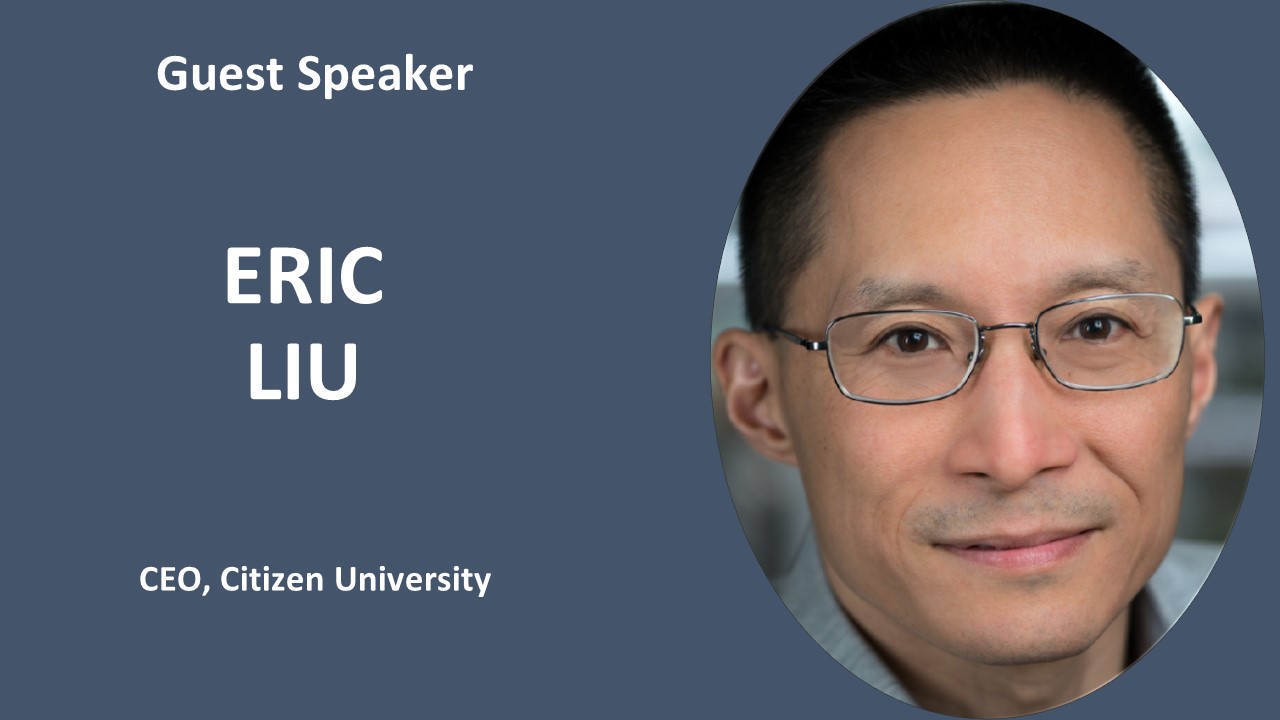
Introductory Image for Guest Speaker Eric Liu.

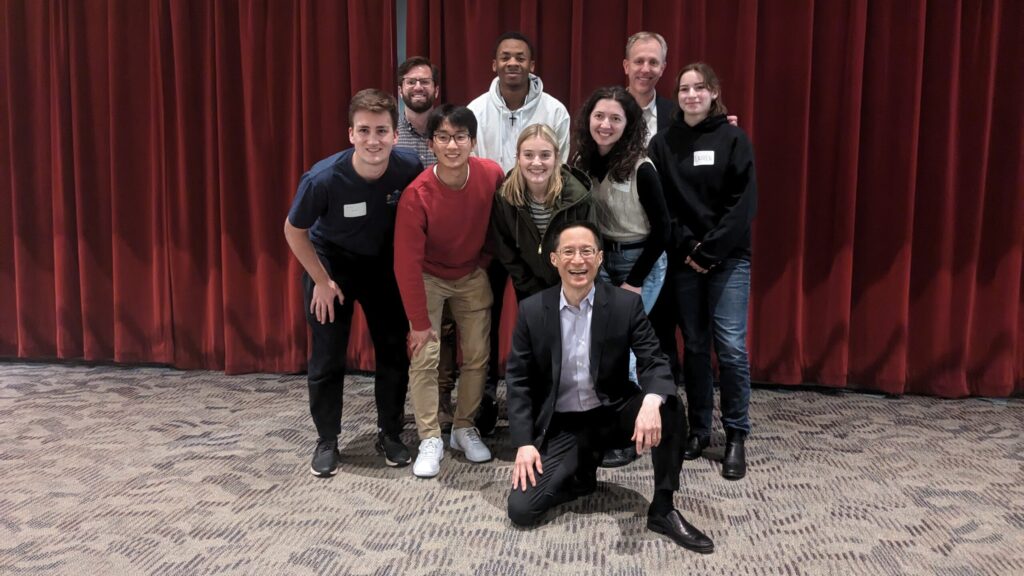
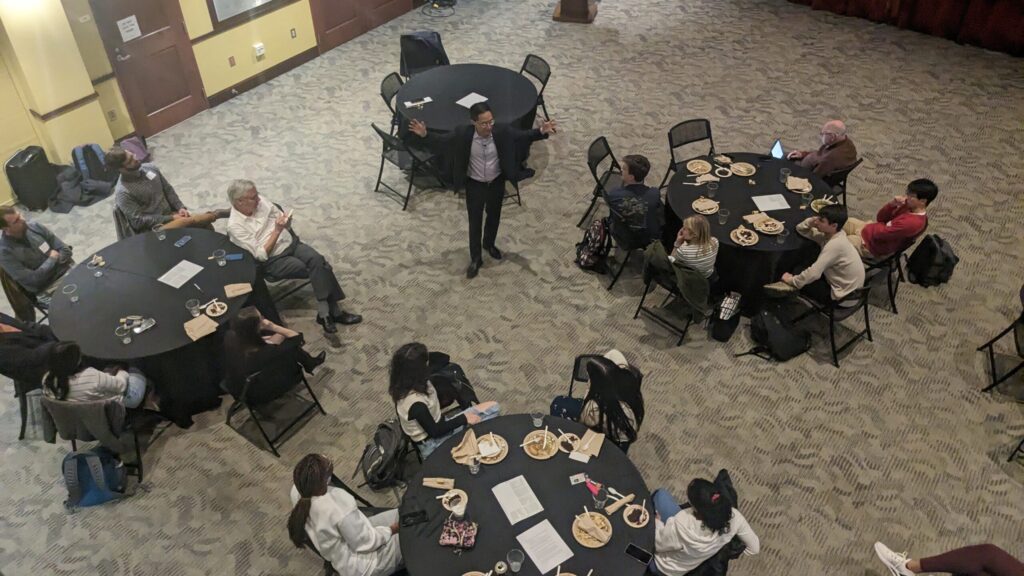
On February 6, The Bonner Scholars Program and the Deliberative Citizenship Initiative co-sponsored two events featuring Citizen University CEO Eric Liu. The first was a public lecture by Mr. Liu in the Lilly Gallery that was attended by over 100 online (via Zoom and YouTube) and in-person guests. The theme of his talk was “From Isolation to Community: A Commitment to Rehumanize and Revive our Democracy.”

Liu 2

After his keynote address, Liu led a smaller interactive conversation exploring the key insights from the Better Arguments Project, a national civic initiative that he helped create to “bridge divides – not by papering over those divides but by helping people have better arguments.” During his visit, Liu was also able to meet and talk with several Davidson students, faculty, staff, and community members about their work and questions related to deliberation and building a healthier democracy.

Liu 3

Overall, it was an action-packed and engaging visit that touched on a range of important topics that are highly relevant to both life on campus and in our broader society. Liu provided us with a key set of ideas and a hopeful sense of optimism that despite the challenges we face, we can connect with one another despite and even because of our differences, as we work together to rehumanize and re-energize our democracy.

Eric-Liu-Flyer-for-Email

Democracy and Freedom of Expression: Revitalizing Public Discourse on Campus and Beyond

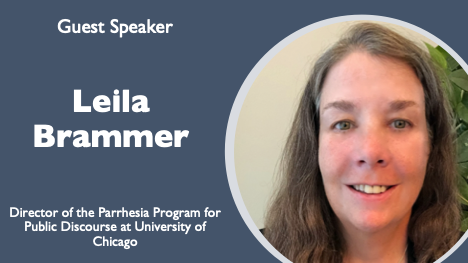
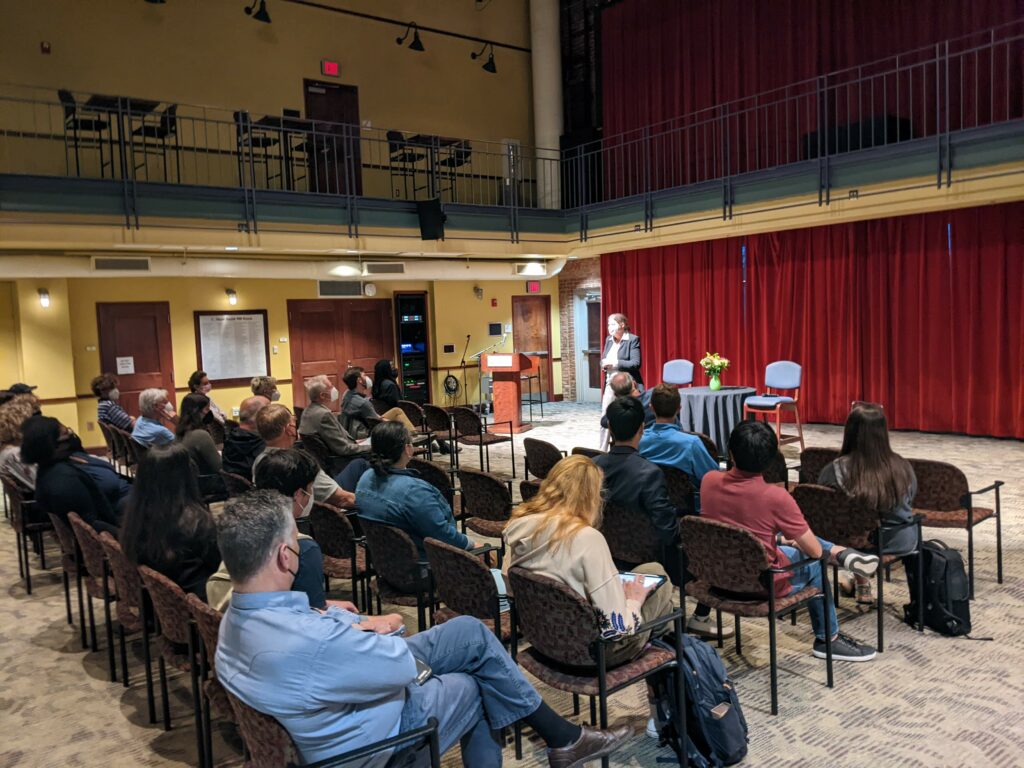
The Deliberative Citizenship Initiative and Davidson College Writing Program sponsored a public lecture, Democracy and Freedom of Expression: Revitalizing Public Discourse on Campus and Beyond, featuring Leila Brammer, Director of the Parrhesia Program for Public Discourse at the University of Chicago on March 22, 2022.


In her remarks, Dr. Brammer addressed how freedom of expression in academic and civic environments recognizes the centrality of multiple perspectives, differences, and disagreements to test and develop the best thinking to address collective challenges. Public discourse today is often critiqued for divisiveness that fails to reflect these foundational practices and leaves many unwilling to enter into essential conversations that should animate a healthy democracy. Dr. Brammer explored how the lens of discourse theory exposes the limits of our current modes of discourse and suggested important ways to reimagine and transform how we engage with one another on campuses and in our communities.

This lecture is part of Davidson College’s “Freedom of Expression Week 2022: Speak. Listen. Learn. Do.”

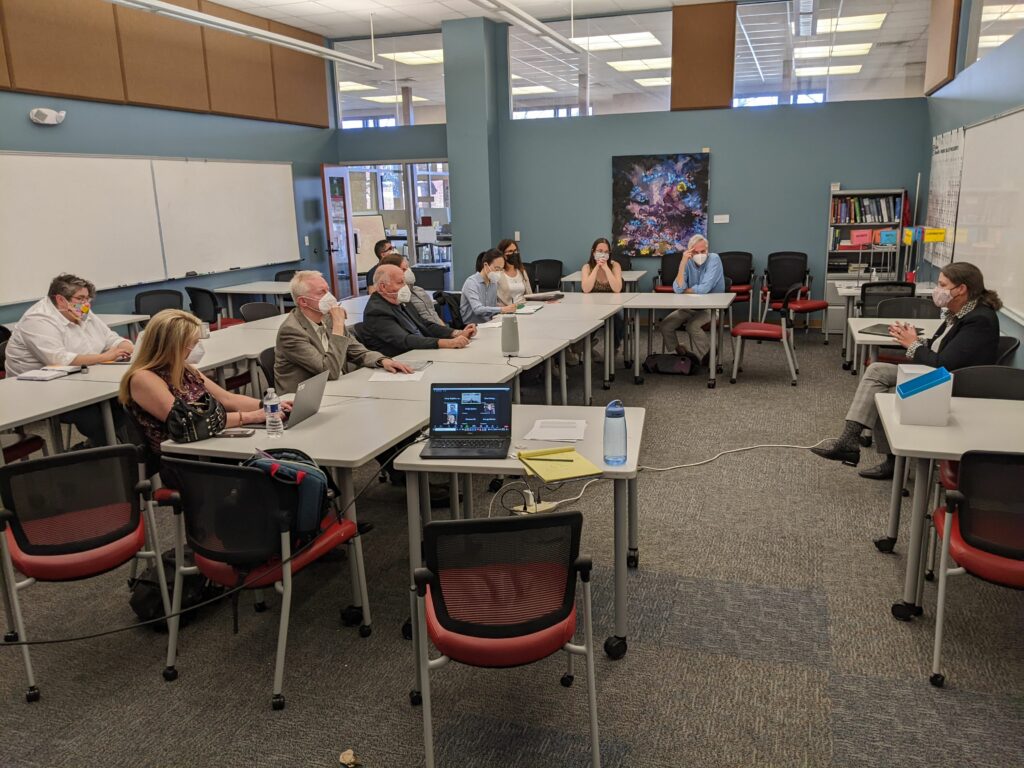
Dr. Brammer also spoke on Democratic Discourse in the Classroom: Lessons from the University of Chicago’s Parrhesia Program at 4 pm on March 22 on Zoom and in the Davidson Library Open Tutoring Room. In this talk focused on deliberative pedagogy, Dr. Brammer discussed how discourse rests at the nexus of academic inquiry, freedom of expression, democratic practices, and civic education. The testing and refining of ideas necessary for academic and civic inquiry depend on the ability to seek out and engage multiple perspectives, differences, and disagreements. Through an examination and application of discourse theory, this session explored principles and practices to develop student capacities for engaging and facilitating vigorous, inclusive, and productive discourse.

Leila Brammer is the Director of the Parrhesia Program for Public Discourse at the University of Chicago. Rooted in the Chicago Principles of Freedom of Expression, the Parrhesia Program curricula, programming, and outreach seek to foster the capacity for vigorous, inclusive, and productive discourse in the classroom, campus, and civic life. Building on the history and theory of freedom of expression and rhetoric, the curriculum and programming promote and model academic and civic practices of dialogue, deliberation, and advocacy. Outreach efforts include workshops and seminars for college/university and high school faculty and students to explore and embed both the principles and practices of open discourse in curricula, campus life, and surrounding communities.

Previously, Dr. Brammer developed a civic engagement curriculum and public deliberation and dialogue program at Gustavus Adolphus College that were recognized nationally by the American Association of Colleges and Universities and the National Communication Association. In her work in public deliberation and dialogue, Dr. Brammer builds and facilitates frameworks in which community members come to understand problems from multiple perspectives and work together to develop evidence-based approaches to address challenging civic issues.

Spring Deliberative Speaker Series: Debra Hawhee

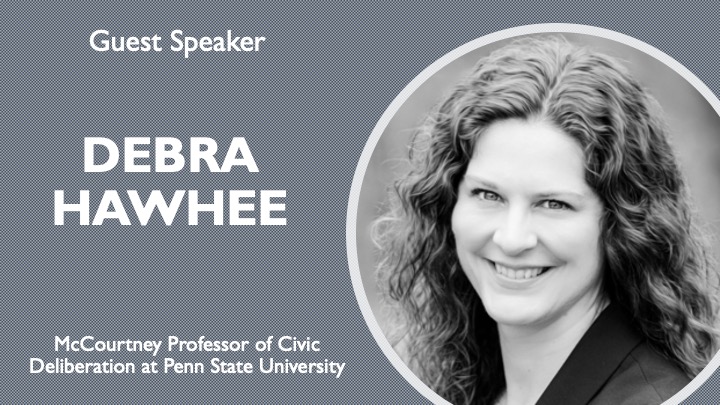
Introductory Slide for Debra Hawhee.

The DCI and Davidson College Writing Program were pleased to host Debra Hawhee, McCourtney Professor of Civic Deliberation at Penn State University, for a guest lecture series March 8-11, 2021. In addition to an informal chat about her work on climate rhetoric and deliberation in the Penn State curriculum, Professor Hawhee delivered two lectures: “Imagining Our Shared Future: Rhetoric, Deliberation, and Democratic Life,” and “The Original-Scholar Athlete: Athletics and Rhetoric in Ancient Greece.”

“Imagining Our Shared Future: Rhetoric, Deliberation, and Democratic Life”

https://www.youtube.com/watch?v=YprGl1Oy8kU

In her keynote address, Professor Hawhee presented deliberation as an art of imagining shared futures together. She spoke about Aristotle’s On Rhetoric, the relationship between deliberative dispositions and feelings, and her work on deliberation during crisis at Penn State. Professor Hawhee infuses her approach to deliberation with insights drawn from humanities and the arts, insights drawn from her training in rhetoric (the art of effective communication) and her experience incorporating deliberation into an integrated speaking and writing course at Penn State. This approach emphasizes imagination, listening, and attention to dispositions.

“The Original Scholar-Athlete: Athletics and Rhetoric in Ancient Greece”


In her second lecture, Professor Hawhee shared the curious early connections between athletic and rhetorical education, connections that she first noticed as she was finishing up her career as a basketball player at the University of Tennessee. Professor Hawhee explored the layout of the ancient Greek gymnasium and the expectation that individuals be trained in both bodily and mental arts.

  • Page 1
  • Page 2
  • Go to Next Page »

Footer

Blog Post Categories

  • Announcements
  • Blog Posts
  • DCI Posts
  • Events
  • Faculty Posts
  • Fellow Posts
Image of a compass superimposed by the text "Deliberative Citizenship Initiative" and "Davidson College." Clicking on this image leads to the Initiative page.

Recent DCI Blog Posts

  • We Tried to Fix Jubilee’s “Middle Ground” – Here’s How It Went
  • A Case for Deliberation in the Natural Sciences
  • Welcoming New Staff to the DCI and DCN
  • Facebook
  • Twitter
  • Instagram
  • LinkedIn


Copyright © 2026 · Infinity Pro on Genesis Framework · WordPress · Log in