• Skip to main content
  • Skip to footer

Deliberative Citizenship Initiative

Building Democracy One Conversation at a Time

  • The Initiative
    • Programs
      • Deliberation Across the Curriculum
      • Deliberation on Campus
      • Deliberation in the Community
      • Research on Deliberation
    • Motivations
      • Why Deliberative Citizenship?
      • Why Davidson? Why Now?
    • Who’s Involved?
      • DCI Fellows Cohorts
        • 2025-2026 Fellows
        • 2024-2025 Fellows
        • 2023-2024 Fellows
        • 2022-2023 Fellows
        • 2021-2022 Fellows
        • 2020-2021 Fellows
      • DeeP Collaborative Cohorts
        • 2024-2025 DeeP Collaborative Faculty
        • 2023-2024 DeeP Collaborative Faculty
      • Advisory Council
    • History
      • What Sparked the Initiative?
    • Key Deliberative Dispositions
    • Frequently Asked Questions (FAQ)
    • Annual Report
  • Get Involved!
    • Participate in a Forum
    • Join a D Team
    • Become a Fellow
    • Take Courses
    • Get Training
    • Come to Guest Lectures
  • Events
    • Upcoming Events
      • 250th Anniversary Deliberative Forum Series on American Values
    • Past Events
  • Connections
    • The Deliberative Citizen: The DCI’s Monthly Newsletter
    • Efforts on Campus
    • Efforts in the Community
    • Efforts Elsewhere
    • Readings and Resources
      • DCI-Published Guides
      • DCI Guide to One-on-One Conversations
      • How to Disagree
      • Demonstration of Facilitation Styles
      • Deliberative Pedagogy Mini-Course
    • How We Can Help: DCI’s LET’S DELIBERATE! Partnership Opportunities
    • DCI in the News
  • DCI Blog Posts
    • Recent Blog Posts
    • All Blog Posts

Events

A Look Back: Eric Liu, Citizen University CEO, Visits Campus

December 14, 2023 by Graham Bullock Leave a Comment

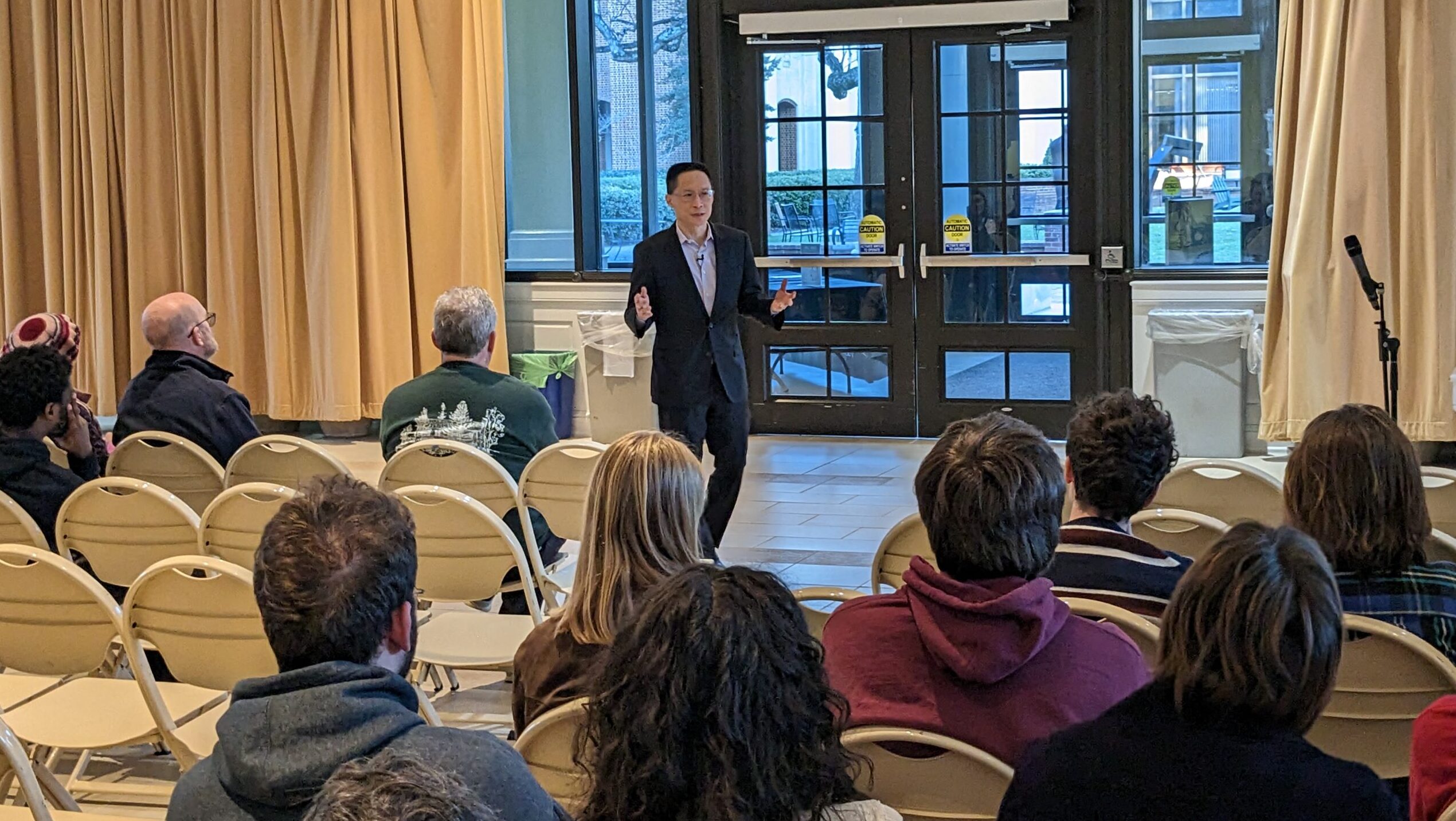
Speaker talking to audience at Davidson College Lilly Gallery.

On February 6, The Bonner Scholars Program and the Deliberative Citizenship Initiative co-sponsored two events featuring Citizen University CEO Eric Liu. The first was a public lecture by Mr. Liu in the Lilly Gallery that was attended by over 100 online (via Zoom and YouTube) and in-person guests. The theme of his talk was “From Isolation to Community: A Commitment to Rehumanize and Revive our Democracy.”

Liu 2

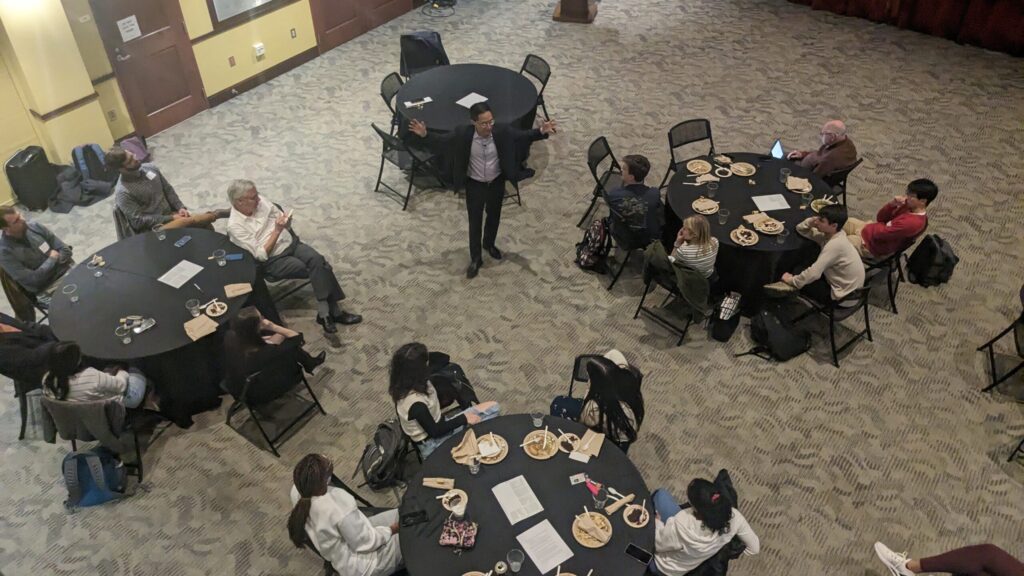
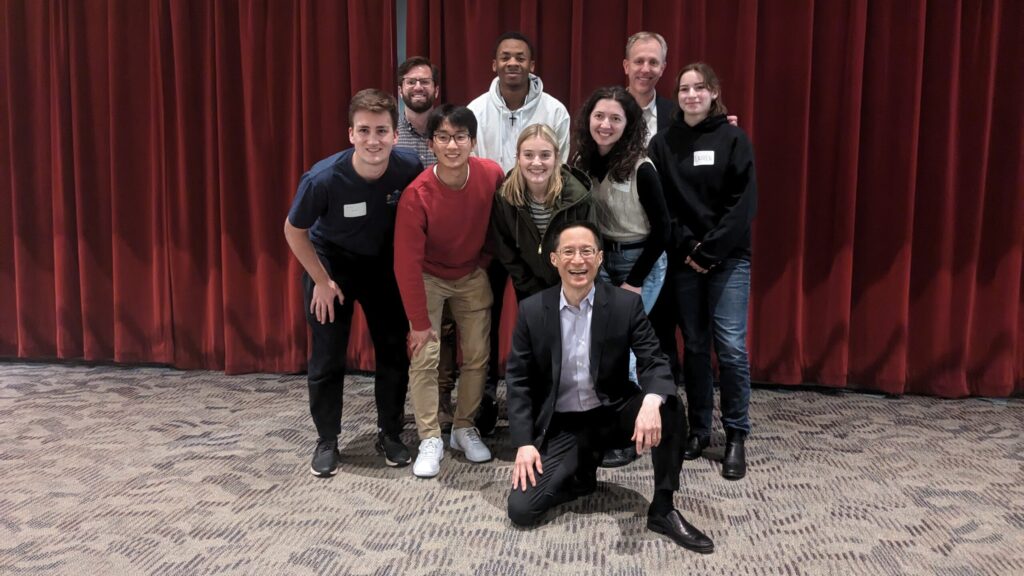
After his keynote address, Liu led a smaller interactive conversation exploring the key insights from the Better Arguments Project, a national civic initiative that he helped create to “bridge divides – not by papering over those divides but by helping people have better arguments.” During his visit, Liu was also able to meet and talk with several Davidson students, faculty, staff, and community members about their work and questions related to deliberation and building a healthier democracy.

Liu 3

Overall, it was an action-packed and engaging visit that touched on a range of important topics that are highly relevant to both life on campus and in our broader society. Liu provided us with a key set of ideas and a hopeful sense of optimism that despite the challenges we face, we can connect with one another despite and even because of our differences, as we work together to rehumanize and re-energize our democracy.

Eric-Liu-Flyer-for-Email

Filed Under: Blog Posts, Events

The DCI & Bonner Scholars Program Continue Our Collaboration During Fall 2023

December 13, 2023 by Sara Copic

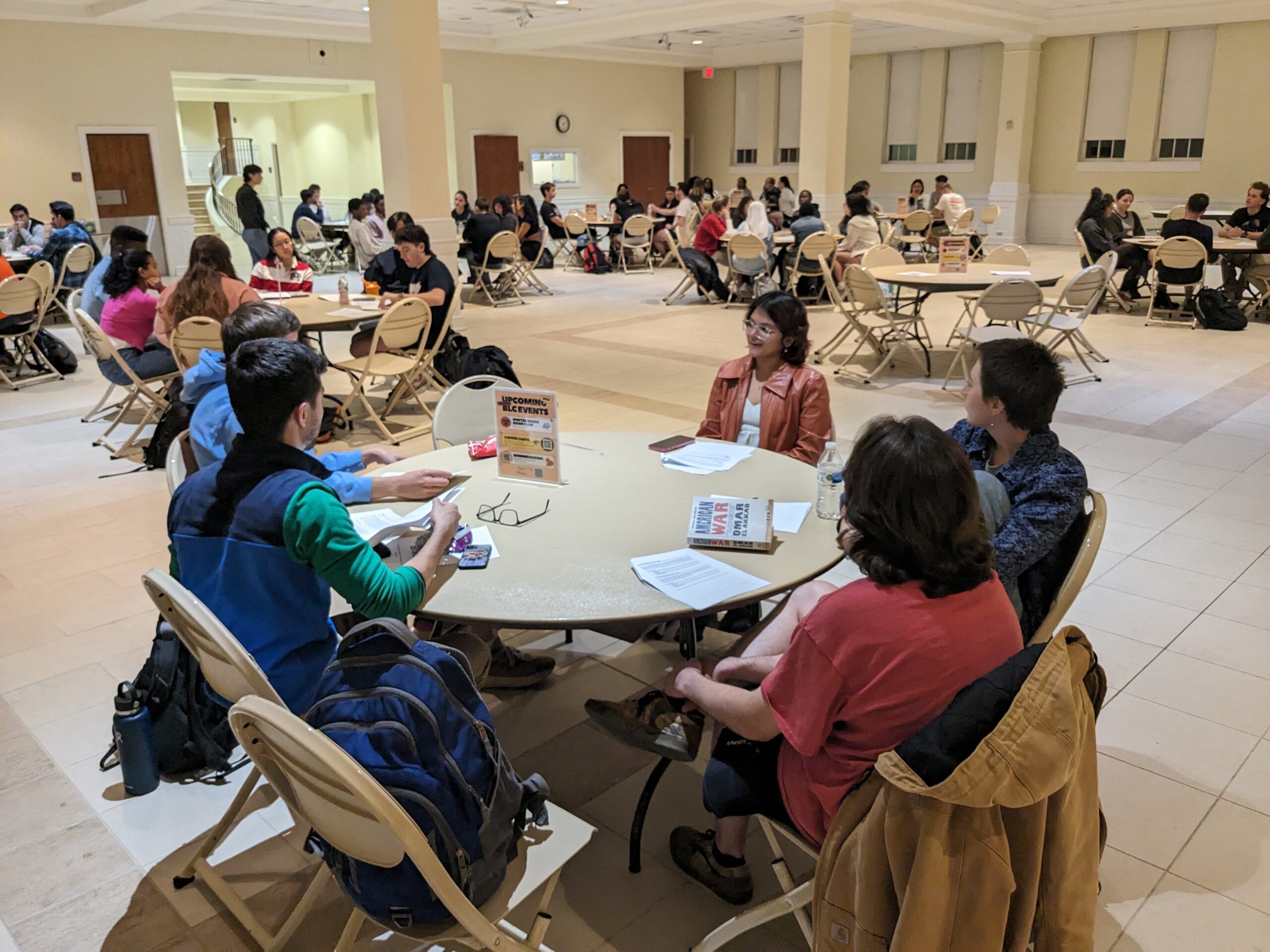
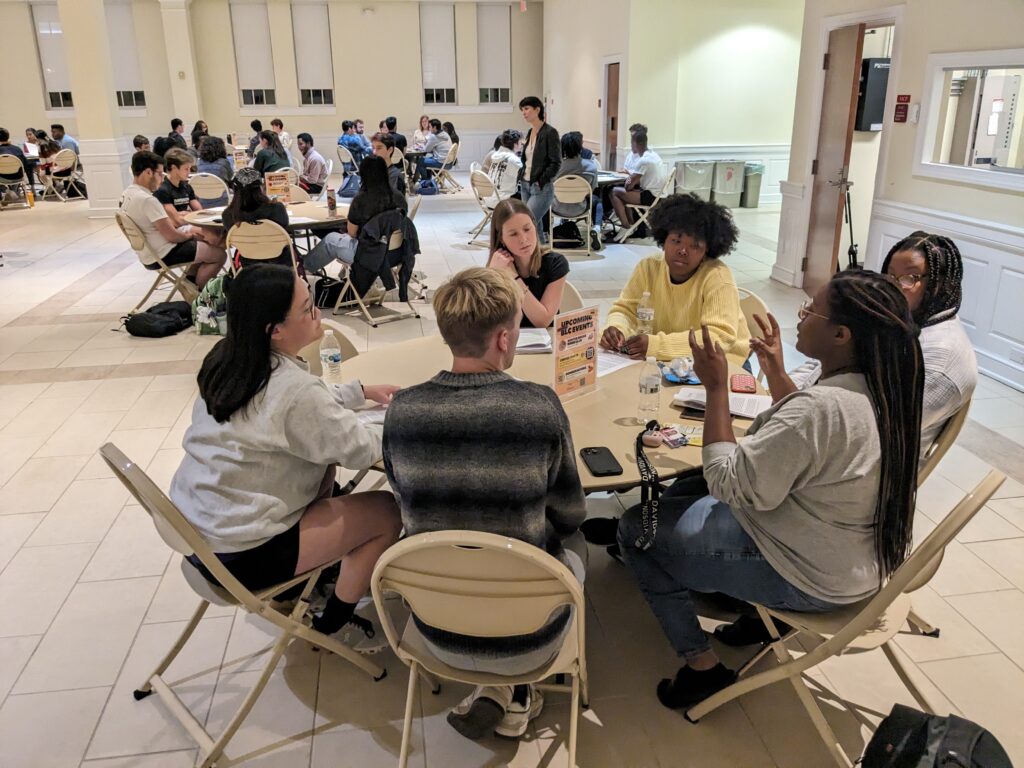
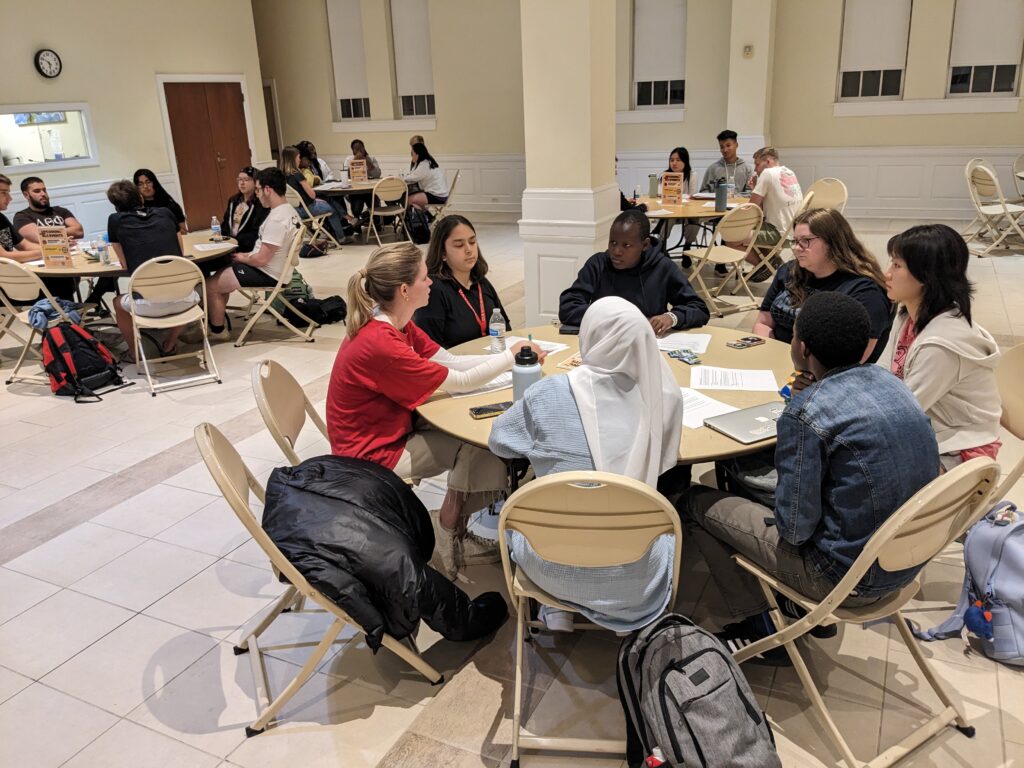
Round Table Discussions at DCI and Bonner Scholars event in the Davidson College Lilly Gallery.

This fall, the DCI hosted its first in-person Deliberative Forum, featuring three panelists from Davidson’s Political Science Department: Professors Besir Ceka, Ken Menkhaus, and Shelley Rigger. About two weeks later, we held a forum with Davidson’s Bonner Scholars on the same topic: “The Challenge for Democracy: To what extent should the United States and other democratic countries defend and promote democracy around the world?” Over 50 Bonner Scholars gathered in the Lilly Family Gallery to deliberate on this question, having watched the expert panel discussion and read our Deliberation Guide on the topic.

Check out this short video montage from the forum…!

Over 97% of the 35 Bonner participants who completed a short survey after the event reported that they were either very satisfied (57%) or satisfied (40%) with their small group deliberation. Over 85% of the participants also felt like they either learned a huge amount (20%) or a good amount (66%) about the defense of democracy. As one Bonner Scholar wrote, “I felt very comfortable sharing my ideas with the group and I think my facilitator and group members did a great job creating a welcoming environment. It was really cool to be able to genuinely discuss an important topic, as I feel like I don’t get to do that often in my life.” Another Bonner Scholar stated, “It was a very helpful experience overall as it not only helped in learning new perspectives but also helped me strengthen my understanding.”

“It was a very helpful experience overall as it not only helped in learning new perspectives but also helped me strengthen my understanding.”

The Bonner Scholars Program is a scholarship program where students aim and learn how to effect positive community change. Bonner Scholars participate in community service and research, and they have weekly opportunities to engage in educational experiences that enhance their ability to make a positive impact and build capacity within community organizations. Participation in Deliberative Forums allows the Bonner Scholars to harness their humane instincts, listen effectively to diverse perspectives, and seek innovative solutions to urgent public issues. The DCI first partnered with the Bonner Scholars Program in the fall of 2022 to host a deliberative forum on free speech and inclusivity that was very well-received by those who participated, and we have continued this partnership this year.

We are excited to partner with the Bonner Scholars again in the early spring semester! The DCI will host a public Deliberative Forum on Artificial Intelligence (AI) on February 5th, in which Senior Bonner Scholars will take part. This forum will provide a space for Davidson students, alumni, staff, faculty, and members of the public to engage with one another on critical issues regarding emerging technologies. These include AI that is capable of performing tasks as well as humans in economically valuable ways and AI that could be as transformative as the agricultural or industrial revolutions to human society and the world.

Filed Under: Blog Posts, Events

A Look Back: The DCI’s Spring Forum on Social Media

December 4, 2023 by Graham Bullock Leave a Comment

Image of Social Media: How should we engage and/or regulate it, if at all.

In the Spring of 2023, Davidson College’s Deliberative Citizenship Initiative, Digital Studies, Political Science, and Psychology Departments, and Jay Hurt Hub for Innovation and Entrepreneurship hosted a Deliberative Forum on “Social Media: How Should We Engage and/or Regulate it, If at All?” This Deliberative Forum enabled participants to actively engage with this important issue, first by hearing from an online panel of experts with diverse perspectives on the topic, and then by actively deliberating with one another in facilitated small group discussions (either in person or virtually) on how best to engage with and regulate social media (if at all). We have just released the recording of the panel portion of the forum and you can view it now below. Also included below are the event’s deliberation guide and flyer for your reference. Enjoy!

Social-Media-Forum-Poster_4.5.23

DCI-Social-Media-Deliberation-Guide

Filed Under: Announcements, Events

The Power of Deliberation: Embracing New Ideas

November 2, 2023 by Florian Moser

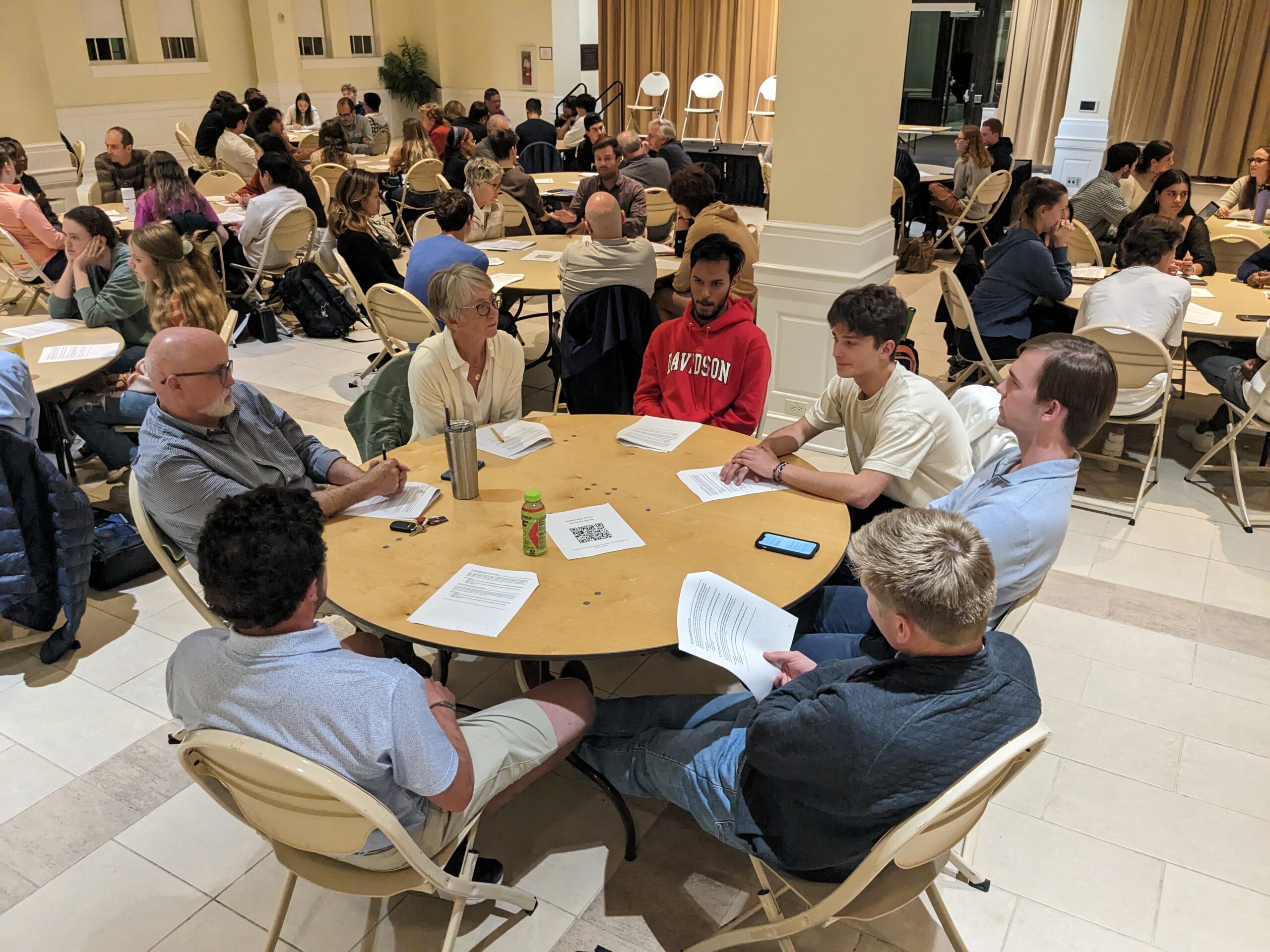
DCI Fellow Florian Moser facilitating a deliberation

Florian Moser ’26 (DCI Fellow)

My initial interest in the Deliberative Citizenship Initiative was sparked last year in a conversation at the DCI kickoff party in the College Union. My group and our facilitator argued about a geopolitical topic on which I held a strong opinion. Therefore, I was trying to defend my point of view and counterargue opposing opinions. At that point, our facilitator interrupted me to ensure everybody could speak, forcing me to listen to other ideas. At that moment, I started to understand the difference between deliberation and debate. I want to compare these two approaches since, in today’s society, debate is the more prominent approach to conversation.

Confrontational vs. Collaborative: Debates and Deliberation

Debates are typically confrontational, with participants firmly entrenched in their positions, aiming to prove their viewpoint’s superiority. In contrast, deliberation is a more open and cooperative process focused on understanding different perspectives, reaching common ground, and appreciating diverse ideas. The key distinction lies in how people react to opposing views. In debates, individuals often defensively cling to their positions, sometimes at the expense of genuinely listening to others. Deliberation, however, encourages active listening and open-mindedness, fostering a collaborative environment that values constructive dialogue and the exploration of different viewpoints.

Since we are so used to debating, it is common for participants of DCI events to recognize the significant difference between deliberation and debate for the first time. In my first mock deliberation, during a DCI facilitator training, my facilitator ensured that every participant expressed their ideas in every round of the deliberation. This strong emphasis on equal-length speech contributions from all deliberations lets people formulate their ideas who might not be used to getting the chance to speak up. 

Instead of getting stuck in a debate about two specific viewpoints, participants gain many ideas they might not have considered before. The exchange of ideas and the practice of leaning into a different perspective holds two advantages. First, it is more valuable for the deliberators to gain new ideas, improving their worldview in the long run, than just winning an argument. Second, deliberations help to foster soft skills, strongly contributing to respectful and productive conversations. These soft skills help create a respectful and constructive environment in the long run, whether in debates or deliberations.

Here, I want to list some critical soft skills:

  1. Active Listening: In deliberation, listening isn’t passive; it’s an active effort to understand and appreciate the viewpoints of others.
  2. Open-Mindedness: Participants should be open to changing their views based on new information or insights.
  3. Respectful Communication: Encourage respectful and civil discourse, where participants can express themselves without fear of personal attacks.
  4. Seek Common Ground: Look for shared values and common objectives as a starting point for finding solutions.
  5. Value Diverse Perspectives: Recognize that diversity of thought leads to more creative and effective solutions.

The Benefits of Deliberation

Deliberation offers several advantages over debate. It promotes collaboration, reduces polarization, and fosters a sense of unity among participants. Moreover, drawing on broader ideas and perspectives can lead to better decision-making. In today’s complex and interconnected world, where many of the challenges we face require innovative solutions, deliberation is a practice that should be embraced and celebrated. It allows us to move beyond the limitations of our own perspectives and tap into the collective intelligence of diverse groups.

Conclusion

While debate has its place and can be a valuable tool for exploring differences, deliberation shines as a means to appreciate and harness new ideas. In deliberation, we see the true power of open-mindedness, empathy, and collaboration, and these qualities can help us navigate the complexities of our rapidly changing world. So, let us strive to embrace deliberation, for in doing so, we unlock the potential for collective growth, understanding, and progress.

Filed Under: Blog Posts, Events, Fellow Posts Tagged With: DCI, debate, deliberation, facilitation

Why Argue?

November 1, 2023 by Monty Krakovitz

DCI Fellow Monty Krakovitz facilitating a deliberation

Monty Krakovitz ’25 (DCI Fellow)

As part of the deliberative training for the DCI Fellows, we were asked to read a section from the book written by Scott Akin and Robert Talisse titled “Why We Argue (And How We Should).” The book shows the importance of political deliberation from the perspective of Aristotle . The authors present the view of Aristotle that “man is a political animal” and that what we believe or do in the privacy of our own home affects society at large.

When Aristotle makes this claim, he doesn’t necessarily mean politics in terms of voting. He conceives of politics as how individuals relate to one another to form communities. From the moment that each of us are brought into this world, we are defined by our relationships to others. The newborn is not an isolated individual, but is someone’s son or daughter who relies on his or her mother and father for support. Likewise, the new mother is also not an isolated individual, but has obligations to her child. The term “political animal” means nearly everyone has duties and relationships with others, who also have relationships with others, connecting everyone together to form the society at large.

The authors also give an example of private beliefs affecting others as well. For example, a person, let’s call her Nancy, schedules a picnic at the park with the false view that the weather is sunny when it is clearly raining, and proceeds to invite her family from out of town to the picnic. The family does not know that it is raining at the park because they are coming from a distance. After being falsely told that the weather is perfect, they all drive in to find out that the weather is not, in fact, perfect but is pouring rain. The family has now wasted their day because the person who scheduled the picnic held the false belief that the weather is nice. Nancy’s false belief about the weather led her to act on that belief, which in turn inconvenienced her family in a large way.

This example displays a relatively low-cost error considering that no one was harmed, but the same principle can be applied to  other circumstances where the consequence of holding false beliefs is much higher. The truth is that ideas have consequences. When a man holds a false belief, he is likely to act in accordance with that false belief, leading to bad behavior that affects others in his community.

This semester, one of the D Team deliberations will be on abortion which is a topic ripe for discussion. The D Team will get down to the root of people’s beliefs in order to discover why citizens hold the views that they do. It is clear that a person’s views on this moral, political, and ultimately religious issue affects their actions. From the Pro-Life perspective, holding a false moral view on abortion directly affects the unborn child whose life is now endangered by the mother’s false view on the sanctity of life. From the Pro-Choice perspective, the false view that abortion is a moral evil leads citizen to vote in a way that infringes on the mother’s bodily autonomy.

This is why deliberation is vital: our private views do matter, and they matter deeply. In some cases, a false opinion can lead to minor inconveniences. In others, a false opinion can lead to the death of an unborn child or the loss of a women’s bodily autonomy. That is why it is important to argue: it helps avoid the high cost of error and aids in answering the big questions facing our society today.

Filed Under: Blog Posts, Events, Fellow Posts Tagged With: D Teams, deliberation, discourse, facilitation

  • « Go to Previous Page
  • Page 1
  • Interim pages omitted …
  • Page 11
  • Page 12
  • Page 13
  • Page 14
  • Page 15
  • Interim pages omitted …
  • Page 19
  • Go to Next Page »

Footer

Blog Post Categories

  • Announcements
  • Blog Posts
  • DCI Posts
  • Events
  • Faculty Posts
  • Fellow Posts
Image of a compass superimposed by the text "Deliberative Citizenship Initiative" and "Davidson College." Clicking on this image leads to the Initiative page.

Recent DCI Blog Posts

  • We Tried to Fix Jubilee’s “Middle Ground” – Here’s How It Went
  • A Case for Deliberation in the Natural Sciences
  • Welcoming New Staff to the DCI and DCN
  • Facebook
  • Twitter
  • Instagram
  • LinkedIn


Copyright © 2026 · Infinity Pro on Genesis Framework · WordPress · Log in