• Skip to main content
  • Skip to footer

Deliberative Citizenship Initiative

Building Democracy One Conversation at a Time

  • The Initiative
    • Programs
      • Deliberation Across the Curriculum
      • Deliberation on Campus
      • Deliberation in the Community
      • Research on Deliberation
    • Motivations
      • Why Deliberative Citizenship?
      • Why Davidson? Why Now?
    • Who’s Involved?
      • DCI Fellows Cohorts
        • 2025-2026 Fellows
        • 2024-2025 Fellows
        • 2023-2024 Fellows
        • 2022-2023 Fellows
        • 2021-2022 Fellows
        • 2020-2021 Fellows
      • DeeP Collaborative Cohorts
        • 2024-2025 DeeP Collaborative Faculty
        • 2023-2024 DeeP Collaborative Faculty
      • Advisory Council
    • History
      • What Sparked the Initiative?
    • Key Deliberative Dispositions
    • Frequently Asked Questions (FAQ)
    • Annual Report
  • Get Involved!
    • Participate in a Forum
    • Join a D Team
    • Become a Fellow
    • Take Courses
    • Get Training
    • Come to Guest Lectures
  • Events
    • Upcoming Events
      • 250th Anniversary Deliberative Forum Series on American Values
    • Past Events
  • Connections
    • The Deliberative Citizen: The DCI’s Monthly Newsletter
    • Efforts on Campus
    • Efforts in the Community
    • Efforts Elsewhere
    • Readings and Resources
      • DCI-Published Guides
      • DCI Guide to One-on-One Conversations
      • How to Disagree
      • Demonstration of Facilitation Styles
      • Deliberative Pedagogy Mini-Course
    • How We Can Help: DCI’s LET’S DELIBERATE! Partnership Opportunities
    • DCI in the News
  • DCI Blog Posts
    • Recent Blog Posts
    • All Blog Posts

DCI Posts

“Hope Instead of Anger: Deliberation Elevates Discourse On Campus and Off:” News Story Posted on Davidson Website

November 5, 2021 by Carla Cole Leave a Comment

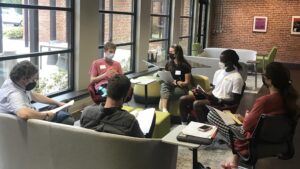
A news story about the Deliberative Citizenship Initiative (DCI) was recently posted on Davidson College’s website, “Hope Instead of Anger: Deliberation Elevates Discourse On Campus and Off,” which highlights the transformative potential of productive deliberation.

Several participants in the DCI, including Cadie McNaboe ’22 (former DCI student co-convener and fellow), Glennette Papovich (community member and D Team participant), Jerry Hopkins ’64 (Davidson alum, D Team participant, DCIAdvisory Council member), Heidi North (Davidson staff member and former DCI Fellow), and Graham Bullock (DCI Faculty Director), are featured in the article.

McNaboe, for example, discusses how her DCI training enabled her to alter the tone and nature of family conversations about contentious issues from hostile to humane. McNaboe states, “The DCI training fundamentally changed the way that I looked at political conversations in my own life.”

The article discusses how the DCI empowers people to engage in the type of deliberative discourse that fosters mutual understanding and respect. Members of deliberative “D” Teams explain how their experiences with the DCI have enabled them to engage in more productive, meaningful, and empathetic conversations. As Graham Bullock, associate professor of political science and faculty director of the DCI, is quoted in the story, “Deliberation offers a path forward toward genuine engagement.”

You can read the full article here.
 

Filed Under: Announcements, Blog Posts, DCI Posts

A Light in the Darkness

January 8, 2021 by Graham Bullock Leave a Comment

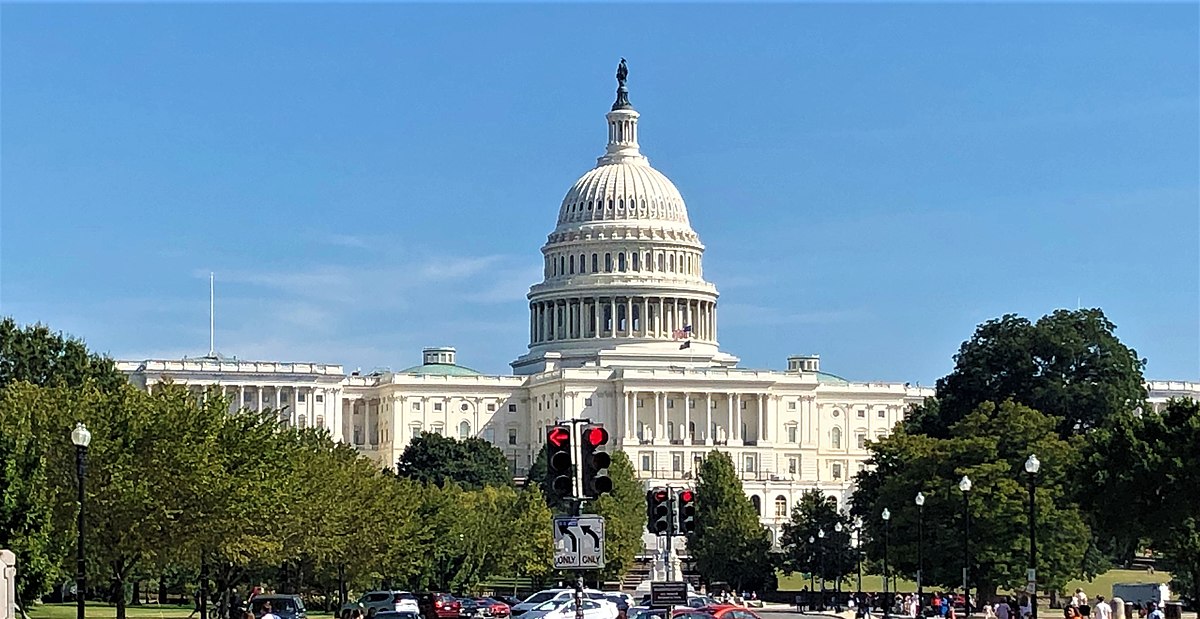
picture of US Capitol


The events of the past several days have been deeply disturbing wounds to the already troubling era we are witnessing in American history. What happened at the U.S. Capitol has catalyzed many to demand immediate action to protect and repair our democratic institutions that were under assault on Wednesday and have been threatened in ever-evolving ways since our nation’s founding. This action inclination, a key deliberative disposition, is necessary and vital to the future of our society.

Equally as important is a renewed commitment to thoughtful and respectful deliberation about what actions we should indeed take. Such deliberative engagement will help ensure that the change inspired by the events of this week outlives the violent and anti-democratic messages of the insurrectionists who besieged and desecrated the Capitol. And it can serve as a beacon of light in the darkness of polarization that we currently find ourselves in.

Given recent events, the Deliberative Citizenship Initiative is more dedicated than ever to the work of building democracy, one conversation a time. Our society is fragmented and in need of the real, long-term progress on our collective challenges that can be born out of good deliberation. Deliberation that welcomes rather than fears productive disagreement; deliberation that fosters the transformational dispositions of open-mindedness, evidential emphasis, humility, empathy, and generosity.

For those looking for a way to proactively respond to the violence and hyper-partisanship that we witnessed in Washington, DC, the DCI’s Skillbuilder and Bridgebuilder D Teams are great options. If you haven’t already, we highly encourage you to join a D Team, and ask your friends and family to do the same, in order to start building the bridges and skills necessary to heal our republic’s wounds, find our common ground, and take effective, fair, and humane action. But even if you don’t choose to join a D Team, we implore you to find some way to activate your civic voice in the service of our democracy.

The deadline to sign-up for D Teams has been extended to Monday, January 18th. More information about this opportunity is available on the DCI website (including a short video) and forms for new and returning D Team participants can be found on WildcatSync. You can contact dci@davidson.edu with any questions or receive further information.

Filed Under: DCI Posts, Events

One Team

September 10, 2020 by Graham Bullock

blog post images

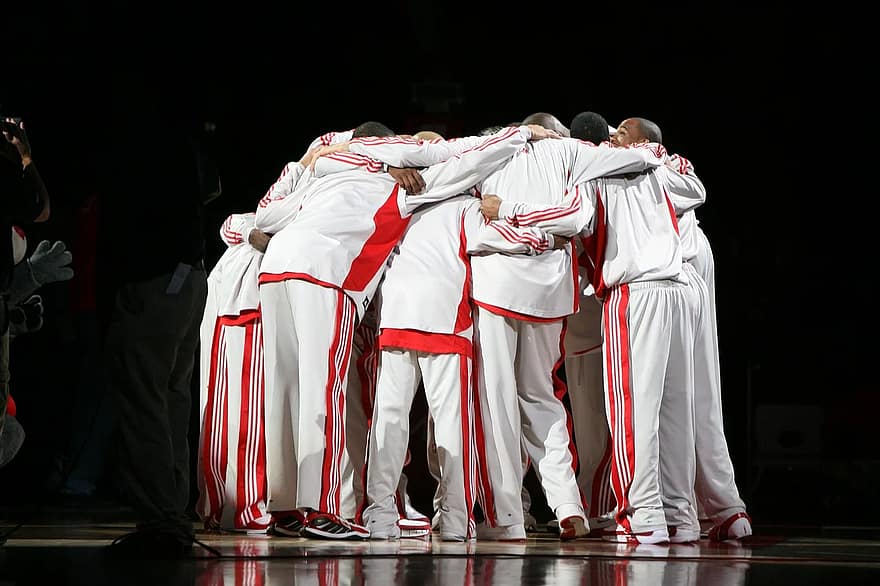
One day my high school basketball coach gave our team an unusual exercise.  He split us into two groups and put us into two separate rooms.  He told us our objective was to get the most possible points for our team, and gave us a sheet of paper with a bunch of instructions on it.  I don’t remember all of the details, but they were roughly as follows:

In a series of rounds, each team was to choose either “Red” or “Blue;” if both groups chose Red, both would earn 3 points, if both groups chose Blue, both would lose 3 points.  But if one group chose blue while the other group chose red, the group that chose blue would earn 6 points and the group that chose red would lose 6 points.  In the first few rounds, the groups were not allowed to communicate with one another; in later rounds, representatives from each group were given short opportunities to discuss their plans with each other.

So which would you choose?  Which did we?  I remember lots of debate in my group – could we trust the others to choose Red so that we would both earn points?  Or would they “backstab” us and choose Blue, causing us to lose big while they would win big?

I have since recognized this game as a classic prisoner’s dilemma, in which detectives try to play prisoners off of each other as they interrogate them in separate rooms.  It is used as a metaphor for the collective action challenges facing any two groups negotiating with each other.  It explains, for example, why it is so hard for Democrats and Republicans to reach a deal on social security or healthcare reform – both fear that the other side will attack them to score political points if they try to offer a reasonable compromise.

But what was most memorable about playing this game with my basketball team was what our coach said at the end of it.  After we went through several rounds of each group experimenting with picking Red, getting burned, and then both consistently picking Blue, we counted up our points and one group celebrated for having edged out the other.  But Coach simply said something to the effect of, “I never said you were supposed to win points for just half your team.”  And then he made us run a LOT.

This for me is an even better metaphor for our current politics.  We think the objective is for our party – our “team” – to win as many elections and policy debates as possible.  This paradigm has been called “teamsmanship,” or “tribalism,” or “hyper-partisanship;” but whatever the name, it misses what should be the real point of politics.  It should not be about one side winning or losing, it should be about both sides – all sides – winning at least a little bit.  Our coach’s point was that it was the cumulative score of the two groups that mattered, not how much one group beat the other group by.  And so it is with effective governance – it should take into account the interests and concerns of all the people, not just those who voted for the party in power.  We are all, ultimately, on one team.

This logic is embedded in the Deliberative Citizenship Initiative’s new Deliberative “D” Teams Program.  These teams are made up of 5-10 people with diverse perspectives and backgrounds who have committed to meet biweekly to discuss important issues and get to know people outside their normal social, academic and professional circles.   At this time of intense feelings, rapid change, and hyper-polarization, D Teams create spaces for people to come together to explore how and why their perspectives are both similar and different – and to begin building common solutions to our collective challenges.

We call them “Teams” to emphasize that even though participants may have significant differences of opinion, they are all on the same team, working together to understand and map the terrain of those differences, uncover the experiences and assumptions that they are based on, and work towards new possibilities that can reconcile and transcend those differences.

To experience this process of exploration and discovery, we encourage you to sign up for a D Team today.  In just three hours a month, these teams will enable you to practice your deliberative citizenship skills of listening actively, expressing yourself authentically, and engaging with others deeply and respectfully.  They are open to all Davidson faculty, staff, students, alumni, and community members and provide a great way to connect with others either online or in a socially distanced in-person format.

Sign-ups are available through a form on the DCI’s WildcatSync page at the beginning of every semester. Individuals can state their preference for a variety of D Team options, including in-person vs. virtual formats. D Teams will be scheduled at a variety of times – e.g. weekday mornings over breakfast, during the lunch hour, in the evenings, Saturday mid-morning, Sunday afternoon – to accommodate everyone’s different schedules as much as possible.

If you have any questions, please visit the DCI’s D Teams webpage or email dci@davidson.edu.  And please forward this post onto anyone you know who might be interested in learning about this opportunity.

Filed Under: Blog Posts, DCI Posts

Facilitation – A Key Ingredient to Productive Deliberation

August 13, 2020 by Graham Bullock Leave a Comment

badgeCreating spaces for constructive conversations about contentious topics seems like an overwhelming task.  Where should initiatives like the Deliberative Citizenship Initiative begin?  Deliberation scholars and practitioners generally agree that one of the most important ingredients for productive public discourse is strong facilitation by someone who is trained in bringing people together and being fair to all participants at the table.

For example, Laurie Mulvey, Executive Director of Penn State’s World in Conversation program, which has hosted more than 30,000 dialogues, asserts that just as we need referees when we play a game, “in dialogue we need conversation referees to be able to make the calls for us to help us through the process.”[i] And the literature on deliberation emphasizes the role that facilitators can play in introducing unmentioned topics, challenging consensus, and structuring communication in a way that empowers disadvantaged participants.”[ii]

For these reasons, the DCI started with an intensive four-session deliberation facilitation training program this past spring.  Each session lasted two hours and were facilitated by practitioners and professors familiar with different models of public discourse.  The training program revealed several important insights about creating opportunities for discourse among those disagree on difficult issues:

  • It’s a mindset: Both participants and facilitators need to adopt a set of dispositions that make productive deliberation possible. These include commitments to modeling egalitarianism, demonstrating openmindedness, and providing either experiential or factual evidence to support one’s claims.  To explore these mindsets, participants were asked to complete the OpenMinds modules, which discuss the value of engaging with those we disagree, the importance of intellectual humility, and the effects of the irrational mind and our “moral matrices.”  Using this framework, facilitators can help participants embrace a “deliberative mindset” that will enable them to work together to better understand a problem and generate transcendent solutions to it.
  • It’s a process: Our first two training sessions were led by an experienced facilitator from the Lee Institute, Chryrstal Joy, who emphasized the multifaceted nature of the facilitation process. It requires thoughtful preparation beforehand that clearly identifies roles, clarifies goals, and develops mutually accepted ground rules.  It also demands proactive moderation that guides, connects, motivates, questions, intervenes, and keeps participants on track during the deliberation itself.  We discussed the nuances of each of these steps, each of which have their challenges.  But by following a clear process, it becomes easier to practice the “passionate impartiality” that is necessary to bring everyone into the conversation.
  • It’s a model: Dialogue and deliberation initiatives have proliferated dramatically in the past three decades, and with them the number of models being used to facilitate public discourse have increased as well. In our third and fourth sessions, we learned and practiced two particular approaches that have been used in a wide range of contexts.  The first was the National Issues Forum model, which provides Issue Briefs for participants to read in advance and focuses on three distinct responses to the issue in focus.  The second was the Living Room Conversations model, which is more informal and involves three rounds of discussion – getting to know each other, exploring a topic, and reflecting on the conversation.

Through these sessions, we learned several important insights about deliberation facilitation.  By encouraging a deliberative mindset, following a clear process, and using a particular model, facilitators can increase the likelihood that a conversation will be engaging, productive, and rewarding.  At the same time, we also realized there is no perfect process or model or mindset, and flexibility and adaptability are important attributes for facilitators and deliberators alike.  Along these lines, we came to recognize that facilitation training is never fully complete, but is a lifelong process that occurs through practice, reading, and exposure to new approaches.

The 25 Davidson staff members, tenured and visiting faculty, and first year, sophomore, junior, and senior students who completed the DCI’s inaugural training program have completed a key first step in this journey.  They are now ready to help guide conversations on difficult topics, whether they are part of a Deliberative Forum or just between friends or family.  If you are interested in learning these skills yourself, sign up for updates below about upcoming DCI training opportunities.

Next week we’ll hear from Davidson’s new DCI Coordinator, Clare Magee, about her experience bringing together students with diverse perspectives when she served as the Executive Director of the Henry Clay Center for Statesmanship.  Stay tuned…!

Notes

[i] Democracy Works, “A Conversation about Conversation,” May 21, 2018, https://www.democracyworkspodcast.com/a-conversation-about-conversation/.

[ii] Archon Fung, “Deliberation’s Darker Side: Six Questions for Iris Marion Young and Jane Mansbridge,” National Civic Review, December 25, 2004; Todd Trenel and Seeta Peña Matthias, “Facilitation and Inclusive Deliberation,” in Online Deliberation: Design, Research, and Practice (Chicago, IL: CSLI Publications/University of Chicago Press, 2009), https://doi.org/10.13140/RG.2.1.4040.0883.

Filed Under: Blog Posts, DCI Posts Tagged With: DCI, facilitation

Welcome to the DCI’s New Website!

July 1, 2020 by Graham Bullock Leave a Comment

Welcome to the new website of the Deliberative Citizenship Initiative!  Over the past year, we’ve been connecting and talking with as many people as we can on and off campus about the need for more intentional and productive discourse about the issues that matter to us.  We’ve sensed a deep and palpable desire for such discourse, and are excited to begin creating opportunities for people to satisfy this need and meaningfully connect and engage with one another.

This website provides an overview of our vision and goals for the initiative as well as the various programs and components that we’ll be working on in the coming months and years.  From small group discussions to larger forums on current issues and events in the news, we want to create times and spaces for conversations that go deeper than soundbytes and epithets and enable us to really explore the origins of our disagreements and the possibilities for shared understanding and action.

We are deeply committed to being as inclusive as possible and collaborating with other groups and organizations that share an interest in promoting more democratic discourse.  So if you are interested in connecting with us, please contact us and sign-up for updates below.  We’ll be adding new blog posts here regularly on our activities and themes related to deliberation, but in the meantime please explore the rest of our site.  More soon!

Filed Under: Blog Posts, DCI Posts

  • « Go to Previous Page
  • Page 1
  • Interim pages omitted …
  • Page 9
  • Page 10
  • Page 11

Footer

Blog Post Categories

  • Announcements
  • Blog Posts
  • DCI Posts
  • Events
  • Faculty Posts
  • Fellow Posts
Image of a compass superimposed by the text "Deliberative Citizenship Initiative" and "Davidson College." Clicking on this image leads to the Initiative page.

Recent DCI Blog Posts

  • We Tried to Fix Jubilee’s “Middle Ground” – Here’s How It Went
  • A Case for Deliberation in the Natural Sciences
  • Welcoming New Staff to the DCI and DCN
  • Facebook
  • Twitter
  • Instagram
  • LinkedIn


Copyright © 2026 · Infinity Pro on Genesis Framework · WordPress · Log in