Luna Noguchi ’25 (DCI Fellow)
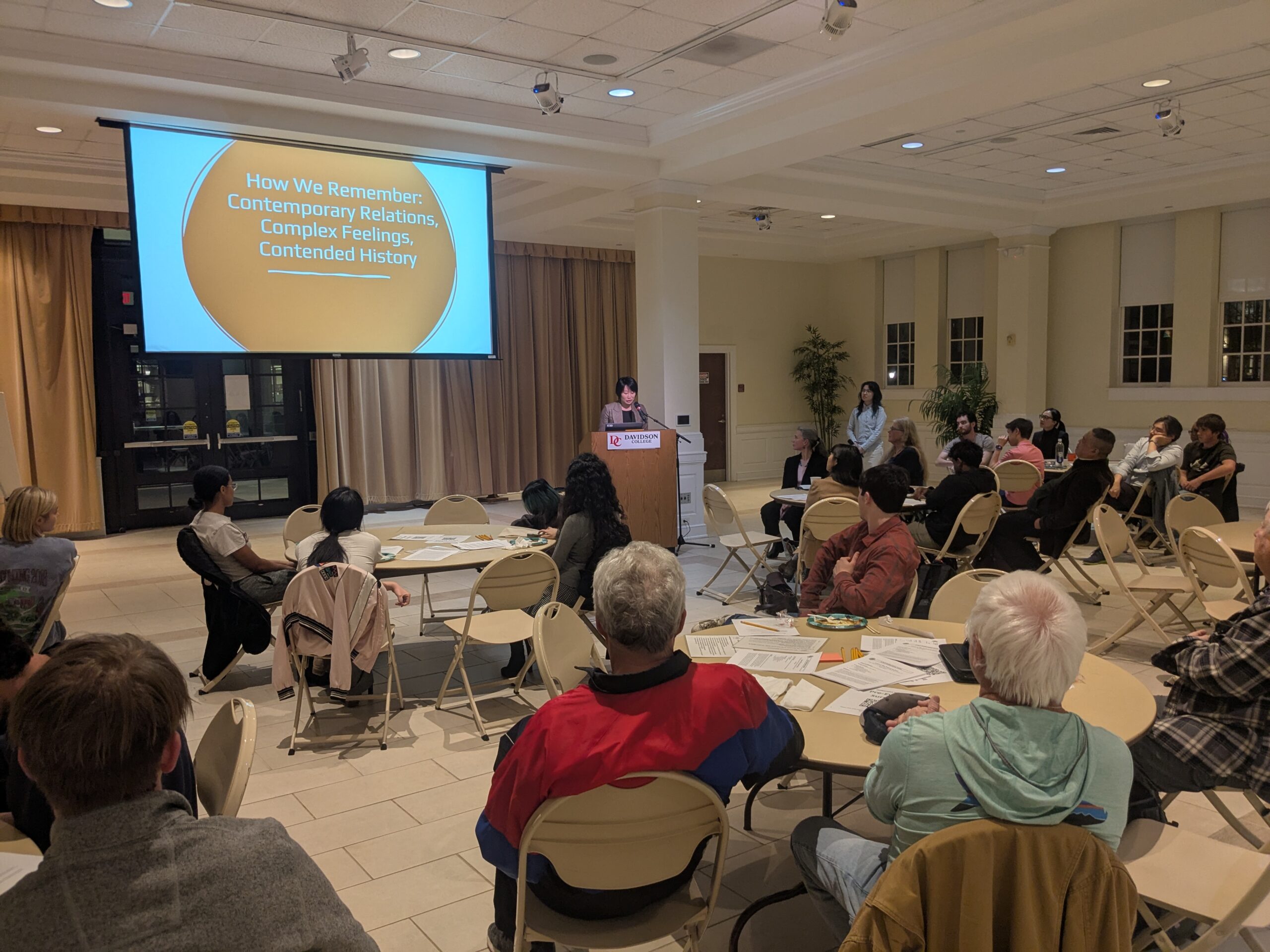
On March 5, the DCI invited students, faculty, and staff together to a forum entitled “Lessons of War, Prospects for Peace: What should we say about the legacies of World War II in the Asia-Pacific region?” It served to provide some historical background for the Ginkgo trees planted in Spring 2024 between Chambers, Wall, and the Library. Co-sponsored with the History Department, East Asian Studies Department, Political Science Department, and the Office of the Vice President of Academic Affairs (VPAA), the event presented the history of World War II in the Asia Pacific with attention to historical controversies, while encouraging reflection on the universal human cost of war beyond regional or political divisions.
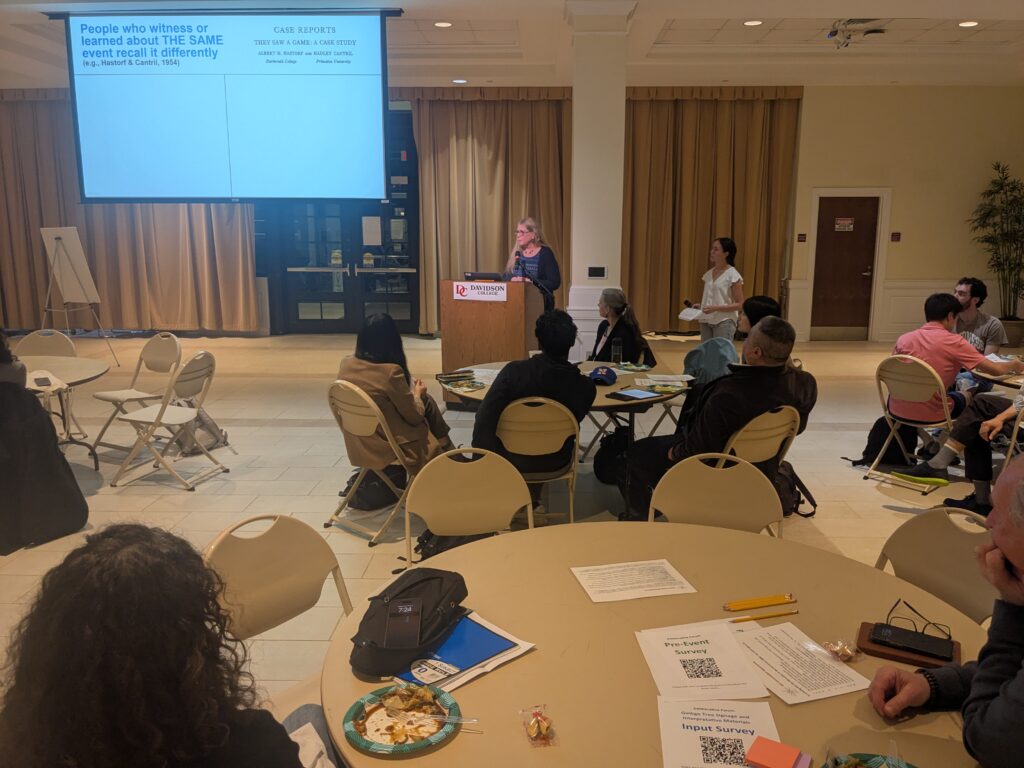
The Ginkgo trees were contextualized with informative presentations from Dr. Kristi Multhaup, Dr. Dáša Mortensen, and Dr. Keren Zhu. Dr. Multhaup, whose research focuses on memory, outlined the lasting memory of WWII in the Asia Pacific and her initiative to bring the Ginkgo trees to campus during her participation in the ASIANetwork in Japan in 2016. Dr. Mortensen provided a broad historical perspective of the war in the region, shedding light on the atrocities that occurred. Dr. Zhu gave a presentation on the causes and consequences of war through an international relations perspective. The presentations provided participants with a nuanced and inclusive understanding of the complexities of war. Participants also had the opportunity to watch a compilation of testimonials provided by survivors of WWII from across the Asia-Pacific region in a video created by Keya Zhou ’25, one of the event’s organizers.
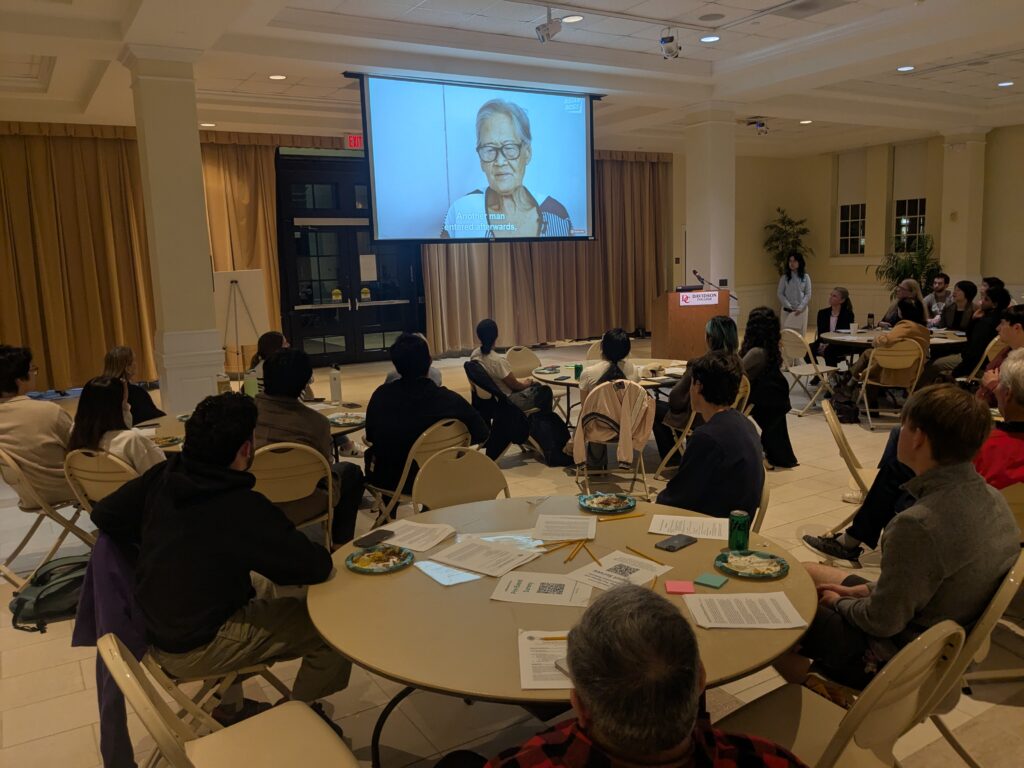
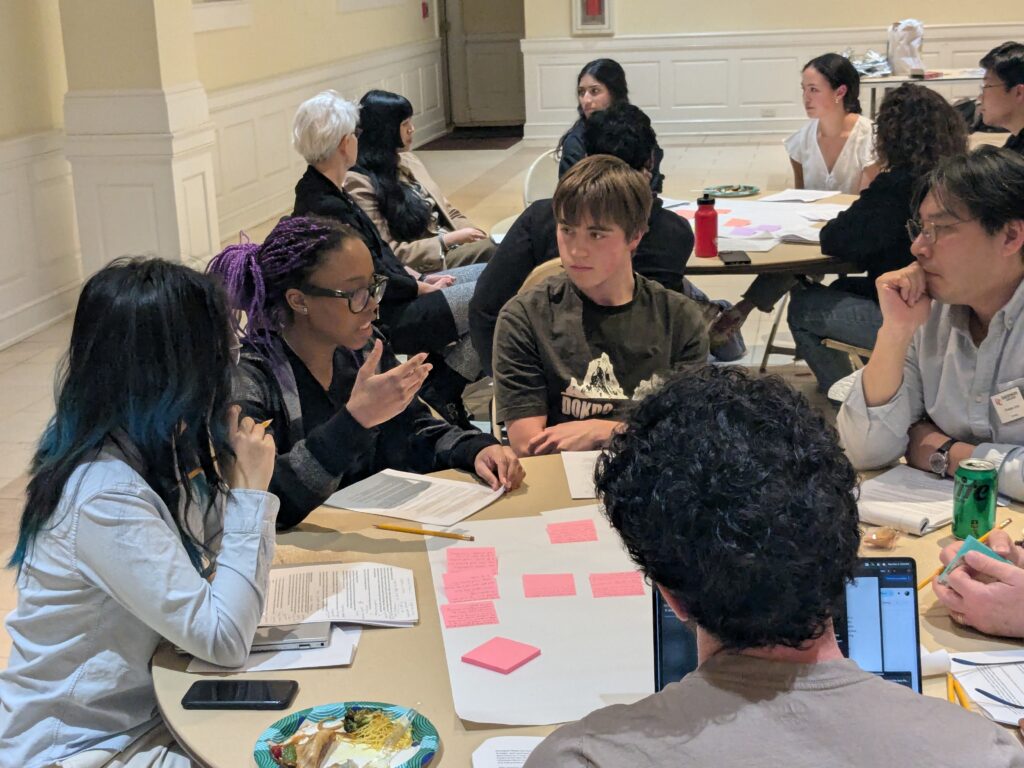
In the second half of the event, participants — over dinner provided by local pan-Asian restaurant Sabi with support from the VPAA’s office — engaged in deliberations facilitated by DCI Fellows and guided by a deliberation guide (see below) developed by the event’s organizing team. The goal was to discuss the legacies of WWII in the Asia Pacific and foster meaningful conversation about the inhumanity of war’s moral atrocities. The forum was also intended to generate ideas for interpretive materials for the Ginkgo trees. As the discussions proceeded, fellows asked participants to write their ideas on post-it notes, stick them to a large sheet of paper, and explain their thought processes. Fellows made notes on the paper and moved the post-it notes around to indicate shared conclusions. Online participants shared their thoughts using Zoom’s whiteboard function in their breakout rooms.
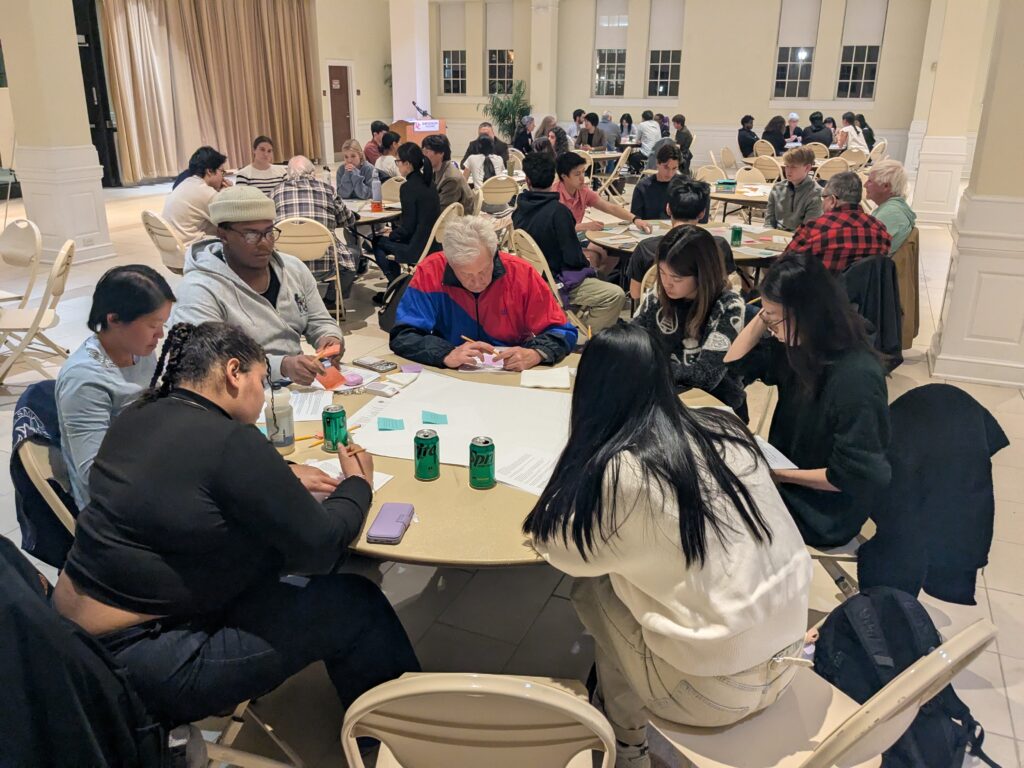
Over 35 Davidson students, faculty, staff, community members, and alumni attended the event (24 in person and 14 online), and they included participants who had ties to countries throughout the region. The organizing team, which consists of Keya Zhou ’25, Luna Noguchi ’25, Flo Moser ’26, Romeo Norris ’27, Casey Scheiner ’28, Lily Ogawa ’28, and Dr. Graham Bullock, is currently in the process of collating and synthesizing the comments and ideas from both the post-it notes and submissions made to an anonymous online form that was shared with the participants. They will incorporate this input from the Davidson community into a proposal for how to introduce and contextualize the Ginkgo trees that have been planted on campus. Stay tuned for more info coming soon!