• Skip to main content
  • Skip to footer

Deliberative Citizenship Initiative

Building Democracy One Conversation at a Time

  • The Initiative
    • Programs
      • Deliberation Across the Curriculum
      • Deliberation on Campus
      • Deliberation in the Community
      • Research on Deliberation
    • Motivations
      • Why Deliberative Citizenship?
      • Why Davidson? Why Now?
    • Who’s Involved?
      • DCI Fellows Cohorts
        • 2025-2026 Fellows
        • 2024-2025 Fellows
        • 2023-2024 Fellows
        • 2022-2023 Fellows
        • 2021-2022 Fellows
        • 2020-2021 Fellows
      • DeeP Collaborative Cohorts
        • 2024-2025 DeeP Collaborative Faculty
        • 2023-2024 DeeP Collaborative Faculty
      • Advisory Council
    • History
      • What Sparked the Initiative?
    • Key Deliberative Dispositions
    • Frequently Asked Questions (FAQ)
    • Annual Report
  • Get Involved!
    • Participate in a Forum
    • Join a D Team
    • Become a Fellow
    • Take Courses
    • Get Training
    • Come to Guest Lectures
  • Events
    • Upcoming Events
      • 250th Anniversary Deliberative Forum Series on American Values
    • Past Events
  • Connections
    • The Deliberative Citizen: The DCI’s Monthly Newsletter
    • Efforts on Campus
    • Efforts in the Community
    • Efforts Elsewhere
    • Readings and Resources
      • DCI-Published Guides
      • DCI Guide to One-on-One Conversations
      • How to Disagree
      • Demonstration of Facilitation Styles
      • Deliberative Pedagogy Mini-Course
    • How We Can Help: DCI’s LET’S DELIBERATE! Partnership Opportunities
    • DCI in the News
  • DCI Blog Posts
    • Recent Blog Posts
    • All Blog Posts

Luna Noguchi

The Power of Language in Writing and Engaging Contentious Histories

September 4, 2025 by Luna Noguchi

By Luna Noguchi ’25 (DCI Fellow)

When I heard discussions about DCI’s new Ginkgo Tree Project, I became immediately interested in the kinds of discussions it would spark. In spring of 2024, Davidson received and planted eight ginkgo trees, trees that were descendants of those that survived the atomic bombing of Hiroshima by the US military. The seeds were donated by Green Legacy Hiroshima and were meant to spread a message of peace and the inhumanity of nuclear war. After the planting of the trees, some students and alumni of Chinese and Korean descent believed that focus on the trees’ direct relationship to the tragedy in Hiroshima failed to capture the historical context of Imperial Japan’s invasions of East Asian countries throughout World War II.

The DCI was then invited to implement a deliberative process that would develop interpretative signage materials designed to provide more context about the trees that had been planted. I was part of a working group (Keya Zhou ‘25, Flo Moser ‘26, Casey Scheiner ‘28, Lily Ogawa ‘28, and Graham Bullock) that organized a deliberative forum for this purpose and then collated the ideas generated into interpretive materials to be put on signage in front of the trees.

While working on the project, I felt myself being stretched by the challenge of designing an event with enough scope of historical information and objectivity to make every viewpoint feel valued. Initially, my knowledge of WWII in East Asia was limited to Japan’s perspective. I have strong family ties to Japan and have both American and Japanese citizenship. I grew up hearing about the horrors of the tragedy and remember feeling changed when I visited the Hiroshima Peace Memorial Museum in Hiroshima, Japan. I was appalled by the level of destruction and inhumanity capable of nuclear weaponry. This spring, I jumped into working on this project so I could expand my understanding of the war’s impact and reshape my perspective while making a tangible impact on campus.

However, writing about a history for the purpose of deliberation required a special attention to the power of language. The experience taught me that when writing about contentious topics for deliberation, one should be attentive to the gravity of the subject while also remaining neutral with regards to particular perspectives about it. Writing about a historical topic as complex as World War II in the Asia Pacific region demanded a comprehensive and nuanced review of the conflict’s events. I quickly realized how easily historical narratives can be shaped by the perspectives we are taught in school or by personal connections to the nations involved. For example, choosing merely between active or passive voice can influence whether a text is interpreted as blaming Japan or remembering victims.

Furthermore, the biggest challenge of the project was navigating the implications of certain word choices. While researching and writing the deliberation guide, I had to actively check whether my words assigned blame or victimhood to certain actors or drew misleading connections between events. For example, we wrote sections on Imperial Japan’s impact on countries in East Asia, such as China, Korea, and Southeast Asia. We discussed how to emphasize that Japan was the perpetrator of violence without assigning blame or judgment.

Because of the strong emotions associated with the victims’ experiences, we had to make sure each event that involved victims in the war was emphasized to the same degree. We had to strike a balance between calling for countries’ accountability while memorializing the victims of the war. The experience taught me about the kind of language that can spark respectful dialogue on sensitive topics, and as a senior who just graduated, I look forward to bringing these lessons with me into my career after Davidson.

Opinions expressed on the DCI Blog are solely those of the author and do not necessarily represent the official views or positions of the Deliberative Citizenship Initiative.

Filed Under: Fellow Posts

How to Foster External and Internal Inclusion in D Teams

April 6, 2025 by Luna Noguchi

cartoon people sitting around a table and walking towards the table

Luna Noguchi ’25 (DCI Fellow)

When I host and facilitate deliberation during DCI D Team sessions, I am very conscious of whether I am including enough diverse perspectives into the conversation as possible. Healthy deliberation is sparked through exploration of individual differences, and they make for a rich understanding of the issue being discussed. Without fostering inclusion, important voices lack a platform to share their experiences, and this can shape harmful norms surrounding the types of perspectives that should be shared. When preparing for a deliberation session, it is important to think about fostering both external and internal inclusion.

One of the most prominent barriers to productive deliberation at Davidson is the issue of exclusion. As a fellow, I see an important aspect of my role as fostering both internal and external inclusion. External inclusion involves dissolving the various physical barriers that prevent individuals from being involved in a D Team or a deliberative forum. Internal inclusion involves conceptual barriers to full participation and engagement in the deliberation process, like power dynamics.

I strive to use the framework set by Carcasson and Sprain to foster both internal and external inclusion in my D teams (1). They designed a cyclical process meant to improve the quality of public engagement in deliberation. The 5 steps are deliberative issue analysis, convening, facilitating deliberative engagement, and action.

During deliberative issue analysis, participants gain a deeper understanding of the topic or issue by learning about it through a thorough deliberation guide that cites research and historical events. The right deliberation guide includes a broad range of voices, is objective, and presents accurate and relevant information to participants. In my role as a fellow, I evaluate drafts of deliberation guides to check for areas where the background information could be presented in a more inclusive way.

Convening involves getting a representative sample to participate in the deliberation event. This is important for having a diverse and rounded group of people whose conclusions can be reflective of the broader whole. Removing barriers to people’s attendance to my D teams is essential. This can involve any planning details which make attending more accessible. For example, D teams which occur on campus are made accessible to many students through advertising, scheduling, and location.

Facilitating deliberative engagement is at the core of my role as a fellow. Through deliberation training, I have a strong understanding of how to frame conversation goals, lay down ground rules, prompt deeper thinking, and draw conclusions among participants. To foster internal inclusion, I introduce excluded perspectives into the conversation and ask questions that diversify participants’ way of thinking about the issue. When my group is on the larger side, I initiate smaller group discussions that may help someone feel more comfortable sharing their experiences.

In reporting the content of the deliberation, one should prioritize accurately capturing the perspectives of participants and the conclusions that were drawn from them. This may involve including important background information on the event, like the host of the event, the issue, the questions, and the people involved. It is important to follow up with participants and leave opportunities for further engagement. Inviting them to share thoughts they refrained from sharing during the event ensures their voices are included.

Ideally, the event would result in an attempt at acting on the issue. It should hinge on the conclusions drawn from the deliberation and represent the collective of diverse perspectives. Taking action on a wicked problem takes multiple trips around the cycle, as it can be very difficult to foster inclusion at this stage without hearing as many voices as possible. It can be helpful to inspire members to create a separate project or initiative that works to address the issue. It is also relevant to discuss methods that members can tackle the issue in their own communities.

Each stage of the cycle should build on themselves by fostering external and internal inclusion. This should promote the norm of listening and inviting diverse perspectives. Ideally, the momentum created by including more voices may contribute to a culture of deliberation in daily democratic engagements. While it is very difficult to reach sufficient inclusion with every event, following the outlined guidelines can be a good start.

Note:

(1) Martín Carcasson and Leah Sprain, “Beyond Problem Solving: Reconceptualizing the Work of Public Deliberation as Deliberative Inquiry,” Communication Theory 26, no. 1 (2015): 41–63.

Filed Under: Blog Posts, Fellow Posts

Event Recap: Deliberating about the Legacies of War

April 6, 2025 by Luna Noguchi

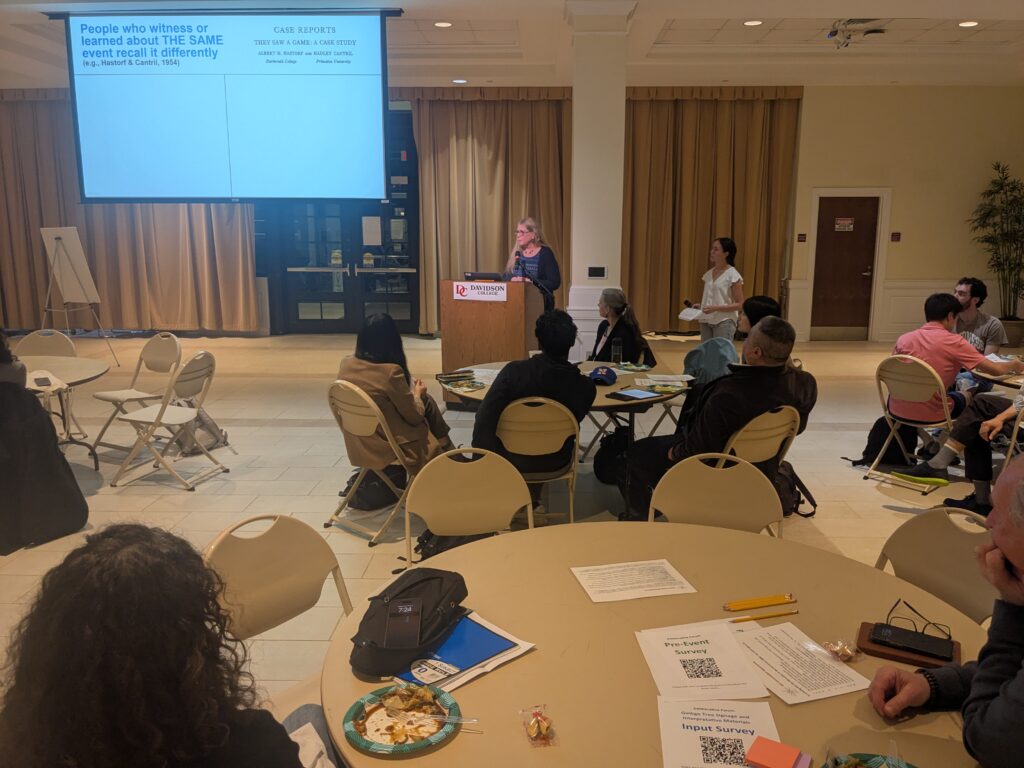
photo of deliberative event with screen in the background

Luna Noguchi ’25 (DCI Fellow)

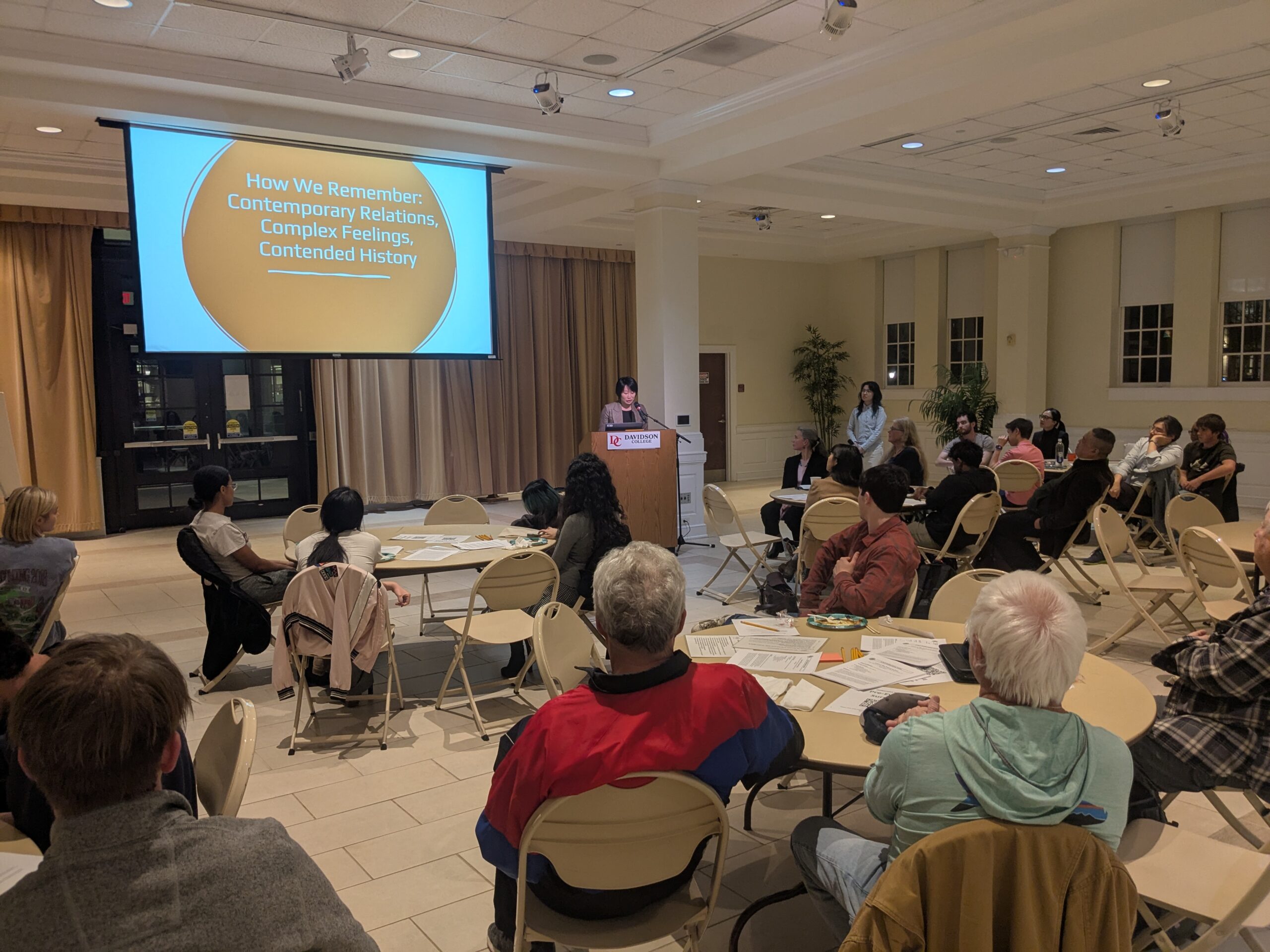
On March 5, the DCI invited students, faculty, and staff together to a forum entitled “Lessons of War, Prospects for Peace: What should we say about the legacies of World War II in the Asia-Pacific region?” It served to provide some historical background for the Ginkgo trees planted in Spring 2024 between Chambers, Wall, and the Library. Co-sponsored with the History Department, East Asian Studies Department, Political Science Department, and the Office of the Vice President of Academic Affairs (VPAA), the event presented the history of World War II in the Asia Pacific with attention to historical controversies, while encouraging reflection on the universal human cost of war beyond regional or political divisions. 

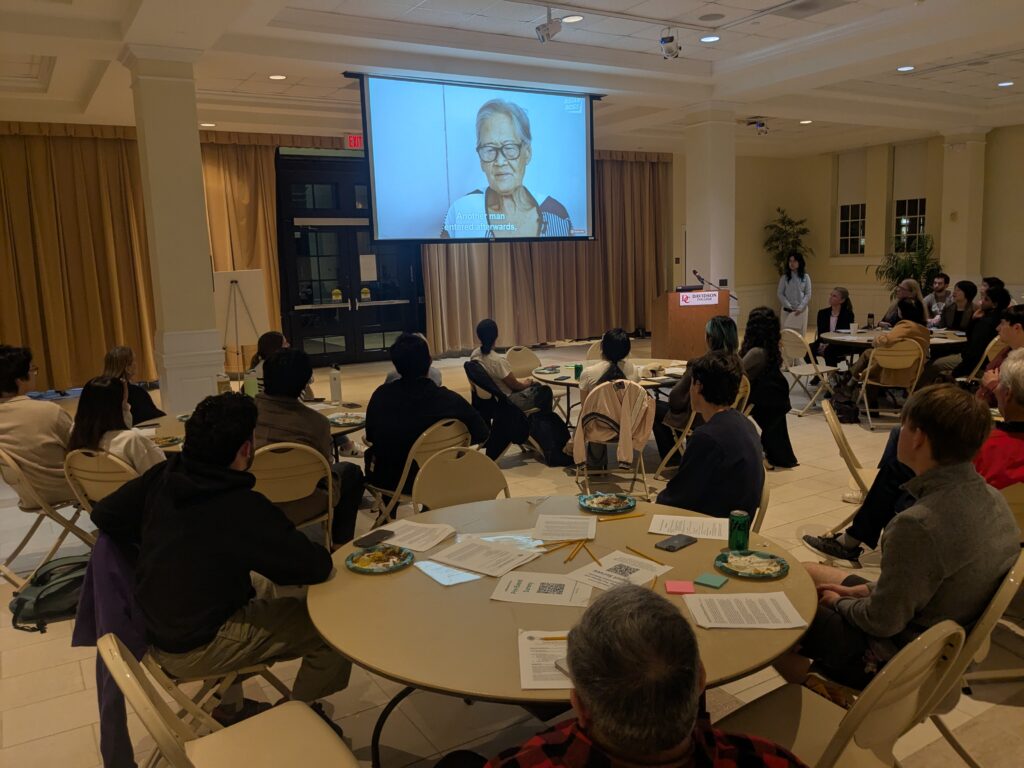
photo of Dr. Multhaup presenting

The Ginkgo trees were contextualized with informative presentations from Dr. Kristi Multhaup, Dr. Dáša Mortensen, and Dr. Keren Zhu. Dr. Multhaup, whose research focuses on memory, outlined the lasting memory of WWII in the Asia Pacific and her initiative to bring the Ginkgo trees to campus during her participation in the ASIANetwork in Japan in 2016. Dr. Mortensen provided a broad historical perspective of the war in the region, shedding light on the atrocities that occurred. Dr. Zhu gave a presentation on the causes and consequences of war through an international relations perspective. The presentations provided participants with a nuanced and inclusive understanding of the complexities of war. Participants also had the opportunity to watch a compilation of testimonials provided by survivors of WWII from across the Asia-Pacific region in a video created by Keya Zhou ’25, one of the event’s organizers.

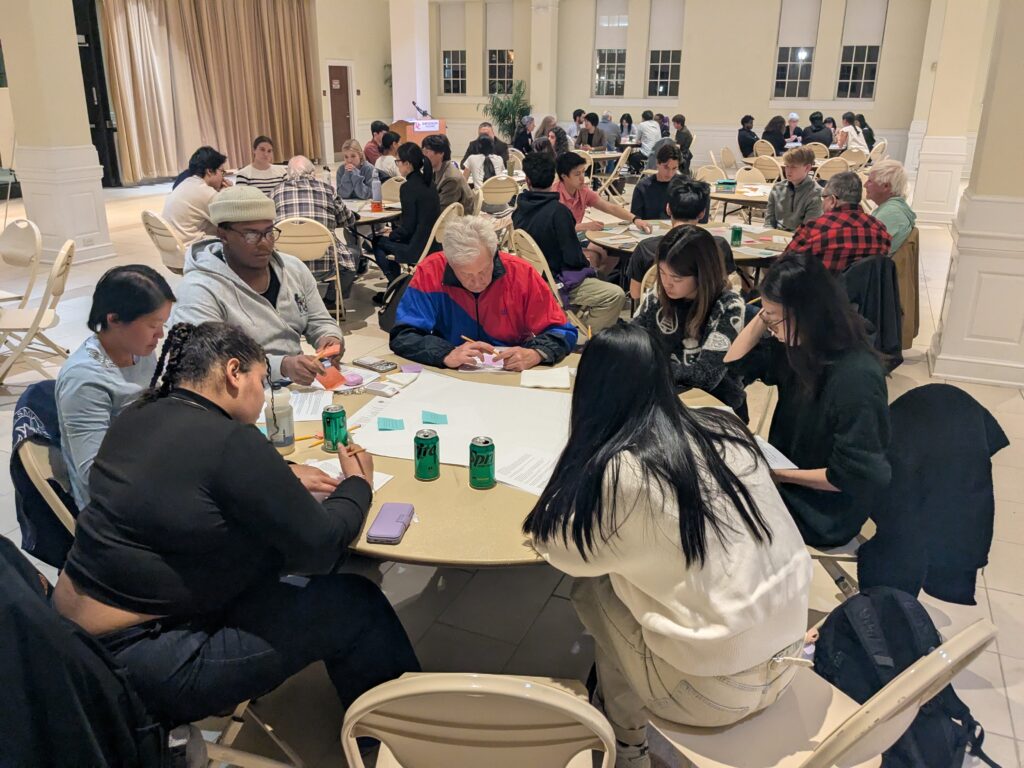
photo of tables at event

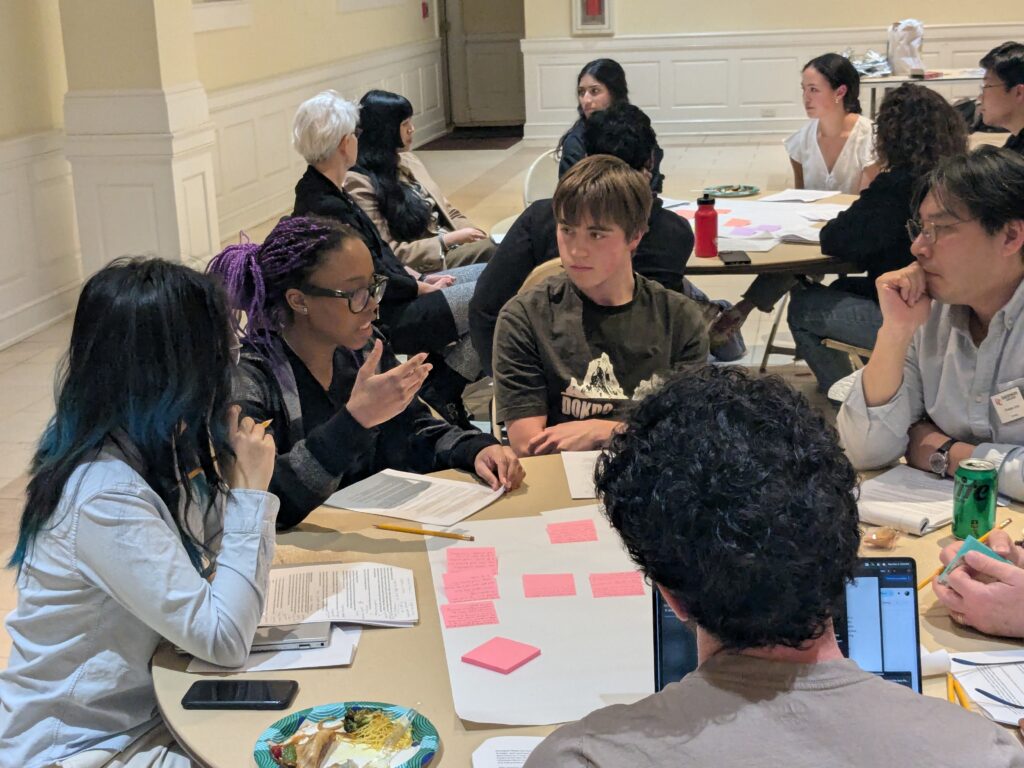
In the second half of the event, participants — over dinner provided by local pan-Asian restaurant Sabi with support from the VPAA’s office — engaged in deliberations facilitated by DCI Fellows and guided by a deliberation guide (see below) developed by the event’s organizing team. The goal was to discuss the legacies of WWII in the Asia Pacific and foster meaningful conversation about the inhumanity of war’s moral atrocities. The forum was also intended to generate ideas for interpretive materials for the Ginkgo trees. As the discussions proceeded, fellows asked participants to write their ideas on post-it notes, stick them to a large sheet of paper, and explain their thought processes. Fellows made notes on the paper and moved the post-it notes around to indicate shared conclusions. Online participants shared their thoughts using Zoom’s whiteboard function in their breakout rooms.

Over 35 Davidson students, faculty, staff, community members, and alumni attended the event (24 in person and 14 online), and they included participants who had ties to countries throughout the region. The organizing team, which consists of Keya Zhou ’25, Luna Noguchi ’25, Flo Moser ’26, Romeo Norris ’27, Casey Scheiner ’28, Lily Ogawa ’28, and Dr. Graham Bullock, is currently in the process of collating and synthesizing the comments and ideas from both the post-it notes and submissions made to an anonymous online form that was shared with the participants. They will incorporate this input from the Davidson community into a proposal for how to introduce and contextualize the Ginkgo trees that have been planted on campus. Stay tuned for more info coming soon!

DCI-WWII-in-the-Asia-Pacific-Deliberation-Guide

Filed Under: DCI Posts, Events, Fellow Posts

Footer

Blog Post Categories

  • Announcements
  • Blog Posts
  • DCI Posts
  • Events
  • Faculty Posts
  • Fellow Posts
Image of a compass superimposed by the text "Deliberative Citizenship Initiative" and "Davidson College." Clicking on this image leads to the Initiative page.

Recent DCI Blog Posts

  • We Tried to Fix Jubilee’s “Middle Ground” – Here’s How It Went
  • A Case for Deliberation in the Natural Sciences
  • Welcoming New Staff to the DCI and DCN
  • Facebook
  • Twitter
  • Instagram
  • LinkedIn


Copyright © 2026 · Infinity Pro on Genesis Framework · WordPress · Log in