• Skip to main content
  • Skip to footer

Deliberative Citizenship Initiative

Building Democracy One Conversation at a Time

  • The Initiative
    • Programs
      • Deliberation Across the Curriculum
      • Deliberation on Campus
      • Deliberation in the Community
      • Research on Deliberation
    • Motivations
      • Why Deliberative Citizenship?
      • Why Davidson? Why Now?
    • Who’s Involved?
      • DCI Fellows Cohorts
        • 2025-2026 Fellows
        • 2024-2025 Fellows
        • 2023-2024 Fellows
        • 2022-2023 Fellows
        • 2021-2022 Fellows
        • 2020-2021 Fellows
      • DeeP Collaborative Cohorts
        • 2024-2025 DeeP Collaborative Faculty
        • 2023-2024 DeeP Collaborative Faculty
      • Advisory Council
    • History
      • What Sparked the Initiative?
    • Key Deliberative Dispositions
    • Frequently Asked Questions (FAQ)
    • Annual Report
  • Get Involved!
    • Participate in a Forum
    • Join a D Team
    • Become a Fellow
    • Take Courses
    • Get Training
    • Come to Guest Lectures
  • Events
    • Upcoming Events
      • 250th Anniversary Deliberative Forum Series on American Values
    • Past Events
  • Connections
    • The Deliberative Citizen: The DCI’s Monthly Newsletter
    • Efforts on Campus
    • Efforts in the Community
    • Efforts Elsewhere
    • Readings and Resources
      • DCI-Published Guides
      • DCI Guide to One-on-One Conversations
      • How to Disagree
      • Demonstration of Facilitation Styles
      • Deliberative Pedagogy Mini-Course
    • How We Can Help: DCI’s LET’S DELIBERATE! Partnership Opportunities
    • DCI in the News
  • DCI Blog Posts
    • Recent Blog Posts
    • All Blog Posts

Blog Posts

Connecting the Abstract and the Practical: Deliberation in a Metaphysics Course

May 11, 2023 by Nathan Nobis

DeeP Collaborative Blog Series Introductory Slide for Nathan Nobis.

The Deliberative Pedagogy (DeeP) Faculty Collaborative consists of 20 faculty from Davidson College and five other Associated Colleges of the South institutions who are committed to learning and implementing new ways to improve and deepen the quality of their class discussions. These faculty come from a wide array of disciplines and backgrounds. They come together to study and discuss different deliberative pedagogy methods, share their ideas and questions with one another, and work to embed deliberation in their classrooms. In this special blog series, members of the Collaborative describe and reflect on their experiences developing and teaching their deliberation-involved courses.

Posted below is Dr. Nobis’s video blog post below about his plans to incorporate elements of deliberative pedagogy into a metaphysics course at Morehouse College (his second deliberation-involved course he has developed through the DeeP Collaborative). Dr. Nobis discusses how, through the processes of deliberation, he will connect the abstract issues of metaphysics — e.g., who we are, what we are, etc. — to practical issues, such as abortion, euthanasia, transgender issues, etc. He does so by having the students prepare for a series of debates by small groups that have to prepare to present on multiple sides of the issue at hand. Check out the video below to learn more about the course.
Filed Under: Blog Posts, Faculty Posts

The Forgotten Value of Intellectual Discomfort

May 2, 2023 by Anthony Toumazatos

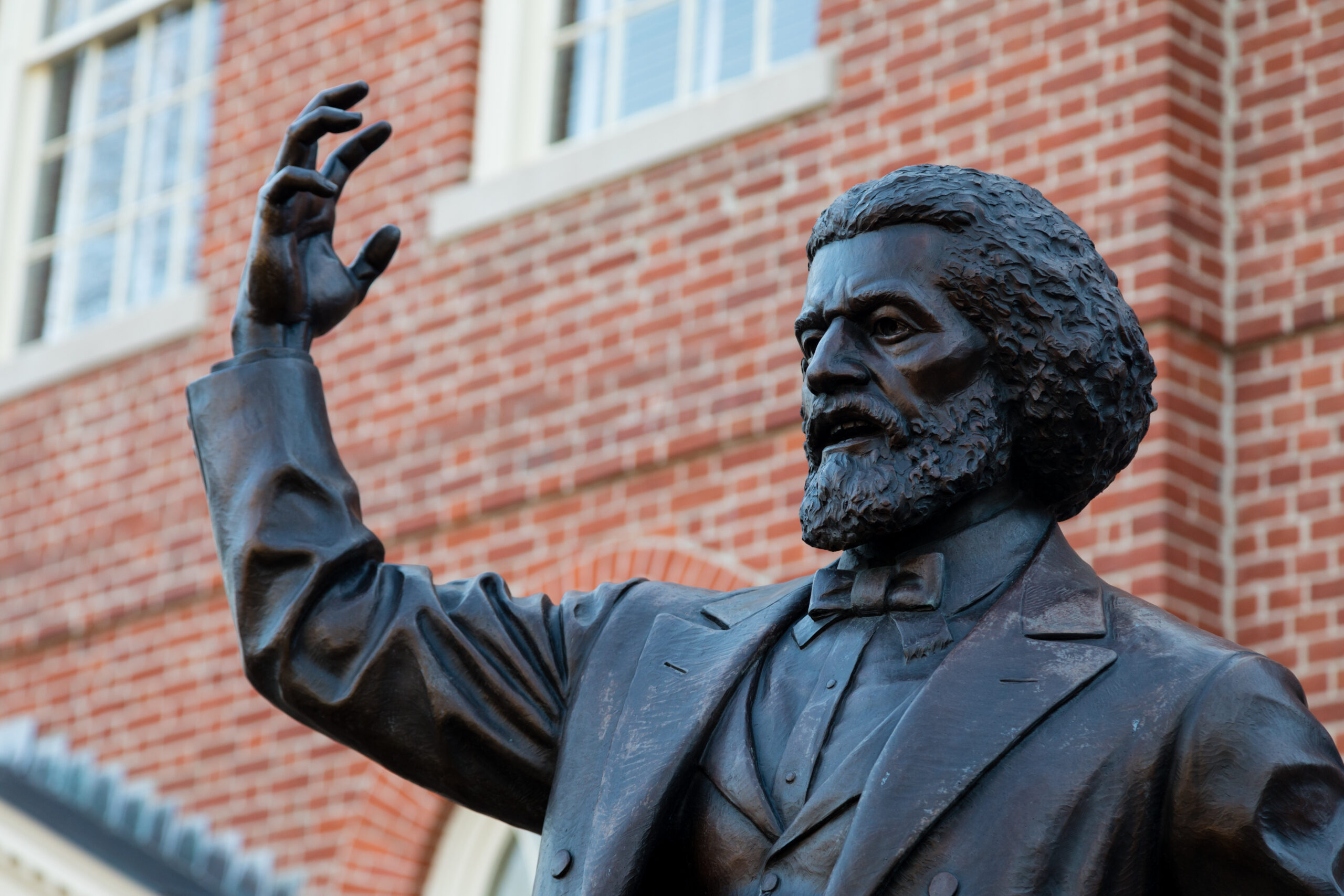
Statue of Frederick Douglass

By Anthony J. Toumazatos ’25 (DCI Fellow)

I was recently posed the question: “Why do you think the DCI’s role on campus is so important today”? It was a seemingly straightforward question that floated through the sneakily warm winter air but pierced towards the heart of our mission.

I took a moment to collect my thoughts. There was much to say, but I ultimately landed on the fact that we foster an environment where one can feel safe feeling uncomfortable. I acknowledge that this initially sounds paradoxical, but this phenomenon is as important in society and college campuses as ever right now.

Today, as a whole, we are uncomfortable with being uncomfortable. The complex issues that our society inevitably must confront are avoided in general discourse and in our supposed hubs of advancement. It is a general trend that the people we converse with or the information we digest are increasingly from sources that share our political orientation. People are hesitant or even fear to express their opinion on certain topics out of a concern about being judged as immoral by their peers.

To truly understand the critical importance of being uncomfortable in our discourse, we can turn our heads back to our nation’s past. A shining example that comes to mind is Frederick Douglass’s speech “What to the Slave is the Fourth of July?” In the speech, Douglass decries the hypocrisy of venerating our nation’s freedom when the peculiar institution of slavery plows on. It was addressed to a crowd of white citizens, and to whom Douglass asked poignantly, “What have I, or those I represent, have to do with your national independence?”

Through interactions like this one, which made many people quite uncomfortable, we were able to undeniably better our country. This is one of countless examples that one can draw upon. So keeping in mind how much good and social progress has come from intellectual discomfort, it is paramount that we do not turn our back on it.

In our small corner of the world, the DCI is doing this work. We confront difficult issues, and encourage students, alumni, and community members alike to do so as well. In our deliberations, we foster an environment where participants can feel comfortable sharing their views, and can guarantee that ideas are grappled with in a respectful manner.

The great Justice Oliver Wendell Holmes once said that “the best test of truth is the power of the thought to get itself accepted in the competition of the market.” The DCI serves as a valuable intermediary that promotes the exchange of ideas in an effective manner. That is why we are so important today.

Photo credit: Chesapeake Bay Program Creative Commons License

Filed Under: Blog Posts, Fellow Posts

The Importance of Age Diversity in Deliberation

April 28, 2023 by LJ Phillips

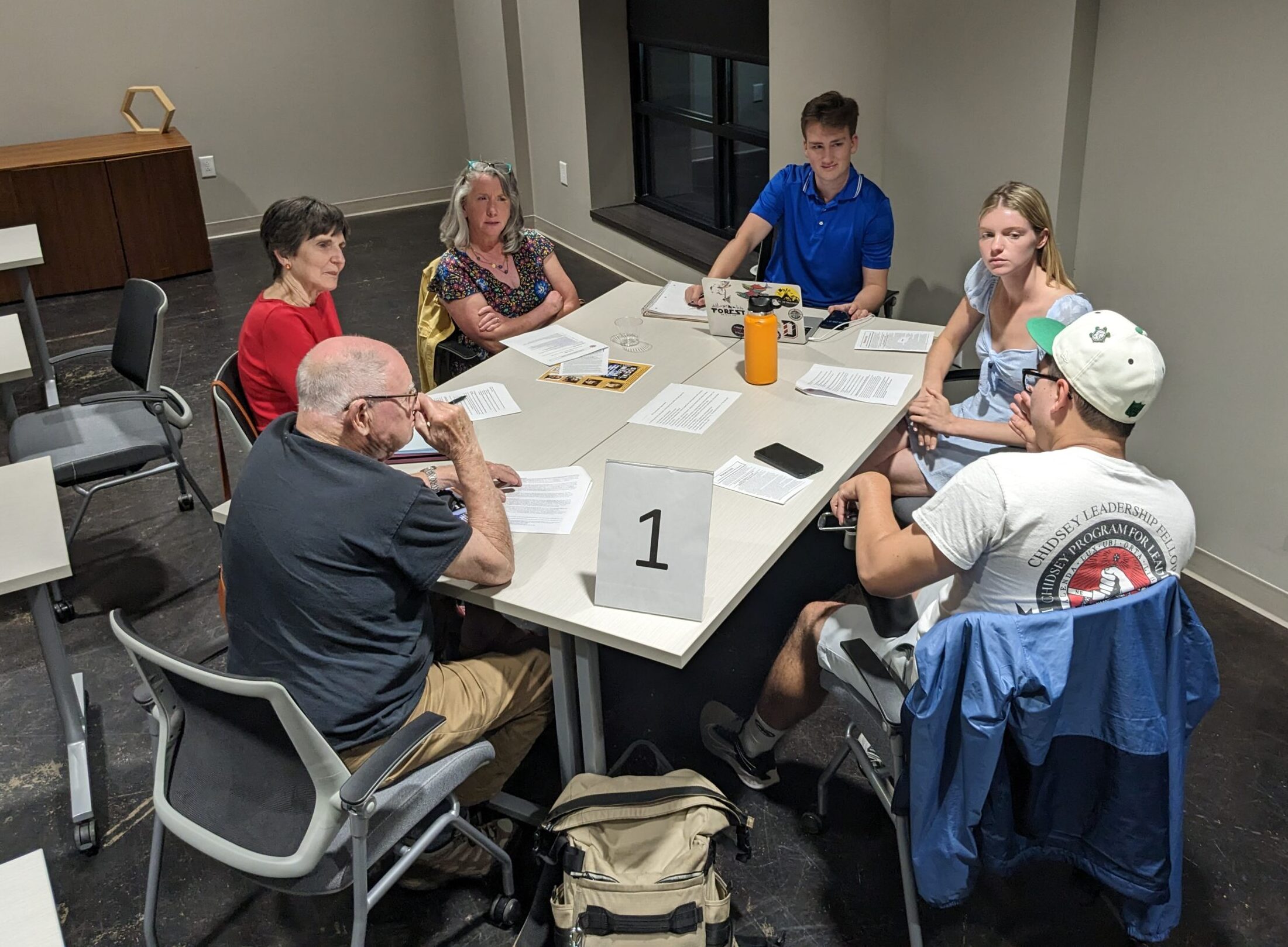
Group Discussion at the Jay Hurt Hub.

LJ Phillips ’25 (DCI Fellow)

Job 12:12 of the Bible, says, “Wisdom is with the aged, and understanding in the length of days.” This is certainly a truth that all of us can relate to. You can learn a lot from the people who have come before. You can also learn from the generation behind you as well. Age brings wisdom while youth brings new and refreshed ideas. These conclusions are why I think age diversity is crucial in having productive deliberations.

In my D Team last semester, I noticed the deliberators’ openness, knowledge, and respect for their peers. Although all those aspects of the D-Team were important, the one that stood out to me was the age diversity and distribution. The different age groups really brought new perspectives and knowledge about the topics that many of the participants were unaware of beforehand.

Many alumni from Davidson ranging from 30 to almost 80 years old made the deliberations flow and more engaging. They made the students feel comfortable but also intrigued in learning aspects they would have never known if someone who had more experience with the topic had not told them. Also, it was beneficial for the students’ forebearers to hear about how the next and current generations feel about certain issues.

People of an older age in deliberations bring nuance and history to topics that students and other younger members would not know the details about because they didn’t live during that time period. Instead of having an outside view of the situation due to age, they have a direct experience with whatever the discussion is about. This sentiment can be shared with younger people as well in the discussion. They provide new insights into topics that they are more accustomed to than their older peers (such as social media).

I think a good example of the influence age diversity has on our interactions would be the conversations we have with family members and colleagues. Even though you might not have the same love and respect for someone in your D Team as you have for your grandmother, the insight you can gain from them is extremely valuable.

We take for granted how important it is for different generations to interact, especially in a time like today when the generations are more disconnected from one another than ever before. Deliberations that are more diverse in nature have a positive impact on the discussion. Age plays a pivotal role when it comes to diversity in spaces like D Teams. It is more useful to acknowledge the differences in experiences and wisdom to come to a solution to any contentious issue.

I encourage elders to speak about their experiences and teach the youth, and I encourage young students and adults to help their predecessors with new ideas foreign to them and share their experiences as well. No matter if you are 40, 21, or 68, you have significance and can bring valuable contributions to any deliberations, so do not be afraid to convey your thoughts – we will all appreciate them.

Filed Under: Blog Posts, Fellow Posts Tagged With: D Teams

Polarization and Deliberation on College Campuses

April 24, 2023 by Miles Charles

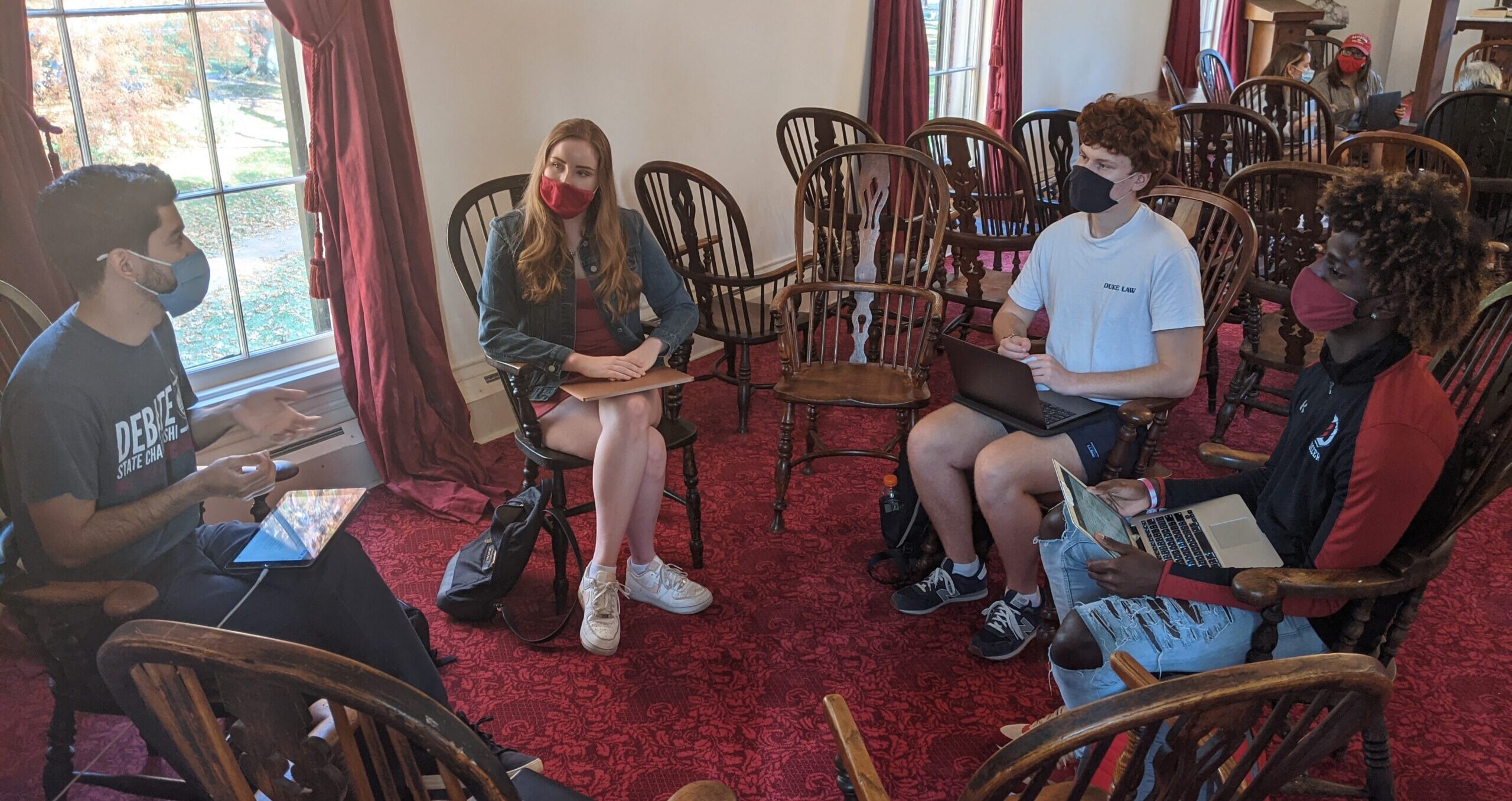
Group of Students talking in a circle.

By Miles Charles ’25 (DCI Fellow)

College campuses are often microcosms of society at large, with students from a wide range of backgrounds and experiences coming together in one place. However, these diverse communities are not immune to the challenges of polarization and division that are currently plaguing our society. Whether it’s disagreements over politics, social issues, or campus policies, tensions can run high on college campuses. But there is hope: deliberation can be a powerful tool for bringing together a divided college campus.

Deliberation involves the careful consideration and discussion of issues, with an emphasis on active listening, respectful communication, and a willingness to engage with others in good faith. When applied to the context of a college campus, Davidson College for example, deliberation opens the opportunity to foster a deeper sense of community past simply being a wildcat and promote a culture of constructive dialogue.

One way to incorporate deliberation on a college campus, as DCI has done at Davidson, is through the implementation of deliberative groups and forums. These groups are facilitated and led by trained Davidson Students to better encourage student participation. As a student facilitator, I have seen and experienced firsthand how student led deliberations create a space in which all voices are heard and respected, regardless of political affiliation, background, or personal beliefs.

Another innovative approach is to incorporate deliberation into the curriculum itself. Various colleges and universities have already begun to do so, incorporating courses on topics such as civil discourse, conflict resolution, and intergroup dialogue. Within the Davidson context, deliberation is being incorporated in courses across the curriculum by faculty participants in the DCI’s Deliberative Pedagogy Collaborative. Expanding these efforts will expose students to different perspectives and teach them skills needed to engage in productive class discussions, dialogues, and promote a more inclusive community.

Deliberation can also be effective in addressing specific issues or conflicts on a college campus. For example, as a student, a controversial issue is the limited number of parking spots on campus. By employing the deliberative process, the various stakeholders such as administration, students, employees, visitors, and more can be brought together to engage in constructive dialogue. This can help to identify common ground and find solutions that are acceptable to all parties involved.

In order for deliberation to be effective, it is important to create a culture that values respectful communication and open-mindedness. This can be achieved through workshops, trainings, and other educational initiatives that teach students and staff the skills necessary to engage in productive dialogue. It is also important to ensure that all voices are represented and that everyone feels comfortable participating in the process.

In conclusion, deliberation is a powerful tool for bringing together a divided college campus. By creating spaces for respectful and constructive dialogue, incorporating deliberative approaches into the curriculum, and addressing specific issues through a deliberative process, colleges and universities can foster a more inclusive and welcoming campus community.

*Photo above is from students participating in a deliberation designed and facilitated by students in a course on ethics and policymaking in the fall of 2021. Over a dozen such deliberation-involved courses have been taught by faculty participants in the DCI’s Deliberative Pedagogy (DeeP) Collaborative.

Filed Under: Blog Posts, Fellow Posts

Building Coalitions Through Deliberation

April 18, 2023 by Daniel Lee

Painting of Rodney King with quote "Can't we all just get along?" and "Born on April 2, 1965."

Daniel Lee ’26 (DCI Fellow)

April 30th, 1992. Fire blazed through the streets of Koreatown and South Central in Los Angeles. Korean Americans frantically ran about, attempting without much success to prevent looters from stealing from vandalized buildings. The police were nowhere to be seen—the people were on their own, helpless except for a few handguns and the presence of one another.

March 3rd, 1991. Rodney King, a Black construction worker, enjoyed a few drinks with his friends and drove down Interstate 210. A few officers noticed him speeding and pursued his vehicle. Determined to avoid being convicted and thus violating parole for a previous robbery, King led the police on a high-speed chase through Los Angeles. He was eventually arrested and beaten mercilessly by a swarm of officers.

The act of police brutality was recorded and distributed through the media, enraging Black communities. When King’s case was taken to court, the resulting verdict only furthered the brewing anger by favoring the position of the white officers. Infuriated, Blacks violently protested in the streets of Koreatown and South Central, destroying and burning property. The police dared not intervene, leaving residents to fend for themselves. Ultimately, an estimated 2,300 privately-owned businesses run by Korean Americans were harmed, measuring up to approximately $400 million in damages.

On its face, the 1992 LA Riots tell a story of police brutality and white supremacy. But in close examination, it also tells a story of the dysfunctional relationship between Black and Korean American communities. Cultural misunderstanding and prejudice directed at one another create unnecessary division among marginalized communities and make it difficult to develop meaningful coalitions to fight against greater structural problems. Often, this dysfunctional dynamic arises from differences in cultural etiquettes (e.g., norms surrounding eye contact and merchant-customer interaction) and faulty stereotypes that instill unreasonable fear and hatred in people’s minds. Without this unfortunate misperception, it seems unlikely that the 1992 LA Riots would have manifested in the way they did.

In this light, it is my sincere hope to break down existing cultural misunderstandings and work towards building productive coalitions between the AAPI community and other marginalized communities. Instead of being held at an impasse over our differences, we must work hand-in-hand to fight against the greater evil—structural racism and prejudice that weigh down our communities. This starts with intentional education that dissolves toxic stereotypes and respectful deliberations that allow communities to find common ground and see each other in a truer light.

Through the skills and life experiences I develop as a DCI Fellow, I hope to use deliberation to lead successful coalition-building between marginalized communities. The empowerment of future generations to create a more perfect society founded upon values of justice and inclusion starts with everyday conversations grounded in intellectual humility and genuine respect. Instead of being in conflict with each other, I dream of people from all different cultures and backgrounds standing together, hope dancing with our every heartbeat as we march on toward a brighter future.

Image by Cass Anaya used under Creative Commons License

Filed Under: Blog Posts, Fellow Posts Tagged With: facilitation, politics

  • « Go to Previous Page
  • Page 1
  • Interim pages omitted …
  • Page 20
  • Page 21
  • Page 22
  • Page 23
  • Page 24
  • Interim pages omitted …
  • Page 38
  • Go to Next Page »

Footer

Blog Post Categories

  • Announcements
  • Blog Posts
  • DCI Posts
  • Events
  • Faculty Posts
  • Fellow Posts
Image of a compass superimposed by the text "Deliberative Citizenship Initiative" and "Davidson College." Clicking on this image leads to the Initiative page.

Recent DCI Blog Posts

  • We Tried to Fix Jubilee’s “Middle Ground” – Here’s How It Went
  • A Case for Deliberation in the Natural Sciences
  • Welcoming New Staff to the DCI and DCN
  • Facebook
  • Twitter
  • Instagram
  • LinkedIn


Copyright © 2026 · Infinity Pro on Genesis Framework · WordPress · Log in