• Skip to main content
  • Skip to footer

Deliberative Citizenship Initiative

Building Democracy One Conversation at a Time

  • The Initiative
    • Programs
      • Deliberation Across the Curriculum
      • Deliberation on Campus
      • Deliberation in the Community
      • Research on Deliberation
    • Motivations
      • Why Deliberative Citizenship?
      • Why Davidson? Why Now?
    • Who’s Involved?
      • DCI Fellows Cohorts
        • 2025-2026 Fellows
        • 2024-2025 Fellows
        • 2023-2024 Fellows
        • 2022-2023 Fellows
        • 2021-2022 Fellows
        • 2020-2021 Fellows
      • DeeP Collaborative Cohorts
        • 2024-2025 DeeP Collaborative Faculty
        • 2023-2024 DeeP Collaborative Faculty
      • Advisory Council
    • History
      • What Sparked the Initiative?
    • Key Deliberative Dispositions
    • Frequently Asked Questions (FAQ)
    • Annual Report
  • Get Involved!
    • Participate in a Forum
    • Join a D Team
    • Become a Fellow
    • Take Courses
    • Get Training
    • Come to Guest Lectures
  • Events
    • Upcoming Events
      • 250th Anniversary Deliberative Forum Series on American Values
    • Past Events
  • Connections
    • The Deliberative Citizen: The DCI’s Monthly Newsletter
    • Efforts on Campus
    • Efforts in the Community
    • Efforts Elsewhere
    • Readings and Resources
      • DCI-Published Guides
      • DCI Guide to One-on-One Conversations
      • How to Disagree
      • Demonstration of Facilitation Styles
      • Deliberative Pedagogy Mini-Course
    • How We Can Help: DCI’s LET’S DELIBERATE! Partnership Opportunities
    • DCI in the News
  • DCI Blog Posts
    • Recent Blog Posts
    • All Blog Posts

D Teams

How do we get people to the table?

December 14, 2022 by Clyde Dwyer

empty table stock image.

Clyde Dwyer ’25 (DCI Fellow)

Over the past couple months, the DCI Fellows have held deliberations with students, faculty, community members and alumni on a range of topics from election accessibility to free speech and inclusion. As a Fellow, I’ve deliberated with both familiar and unfamiliar faces, people younger and older than me from a wide range of backgrounds and experiences.

As Daniel, a fellow DCI Fellow, pointed out in his blog post, deliberation that pushes people towards new ideas serves society. I came to Davidson from New York City, a political echo chamber where it’s often difficult to find ideological diversity. Working with DCI, I’ve recognized the importance of engaging with views that challenge your own

One of the most important elements of deliberation is also one of its greatest downsides. Deliberation is based upon individuals’ voluntary participation in political dialogues, without compulsion or coercion. This is great. In my D-Teams, some members mention how the loss of civil disagreement and the rise of hyper-partisanship has motivated them to become more engaged in democratic processes like deliberation.
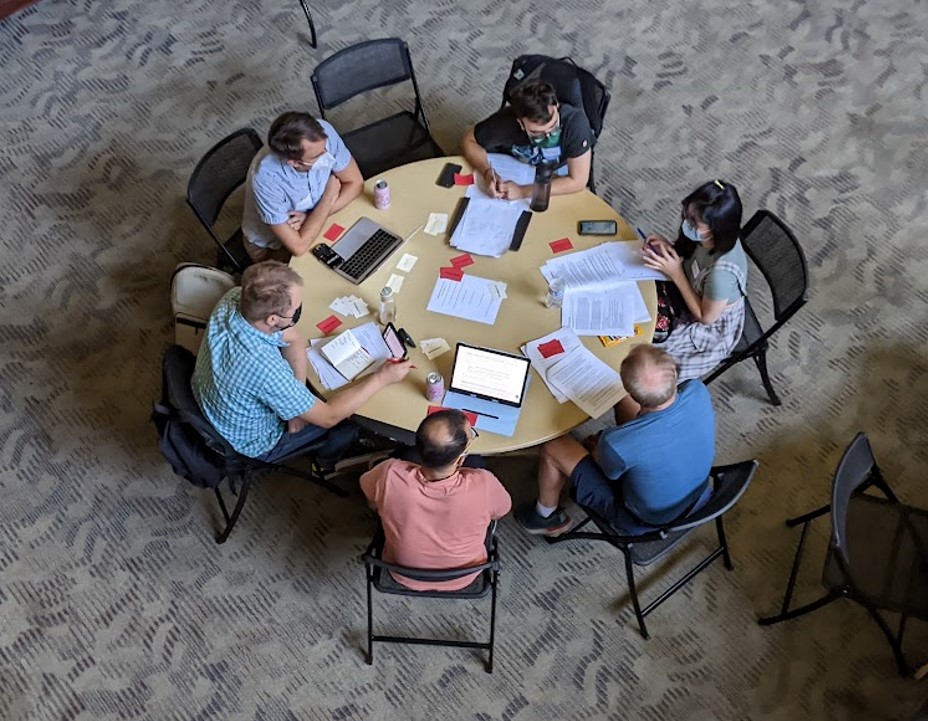
On the other hand, people with strongly differing viewpoints are more likely to oppose deliberation. Outside of the DCI, I’ve heard people say, “I could never be friends with a Republican,” as well as “All Democrats are crazy.” The act of deliberation, where mutual respect and thoughtful engagement are key, is something that could help soften these biases. People enter deliberations not as “Democrats” or “Republicans,” but as people with ideas, values and feelings. After all, much of the political polarization in society has been fueled by people from opposing ends of the ideological spectrum not engaging with one another, or at best, talking past one another.

Certainly, there are valid reasons not to engage in deliberation. Some individuals may feel isolated due to their identity in the conversation. Others may not want to engage with people who they don’t feel respect them. The political and personal realms are not mutually exclusive, and political beliefs are often heavily intertwined with personal values and considerations. Not everyone has to engage on every issue, especially those that are particularly personal and sensitive to them.

On other issues, however, that are not so personal, the question still remains: How do we encourage people with drastically different perspectives to deliberate with one another? One way might be to emphasize that those perspectives are indeed welcome and important for everyone to hear. Deliberation’s necessary emphasis on mutual respect and civility does not preclude strong opinions and even passionate arguments but welcomes and even requires participants to engage with them, as long as everyone is treated as equal participants in the conversation.

The goals of the DCI extend far beyond our campus and the town of Davidson. But the scope of our program will remain limited if only people on opposite sides of the political center are willing to come to the table. I have just suggested one possibility, but we need to find multiple ways for people with vastly different viewpoints to feel like they belong in these conversations. No doubt this task is easier said than done. But before we talk about restoring democracy or restoring our institutions, it is important to restore our willingness to talk with people we strongly disagree with. 

Filed Under: Blog Posts, Fellow Posts Tagged With: D Teams

How to Bridge the Gap between the Old School and the New Kids?

November 23, 2022 by Peyton Carter

two people talking stock image.

By Peyton Carter ’23 (DCI Fellow)

Oftentimes in today’s world, we are surrounded by wildly different viewpoints. Fighting about contentious issues has become a mainstay in this climate, whereas in decades past it may have been taboo to even talk about your politics in a public setting. If we look at which groups are ­­­­butting heads, most of the time we focus on the polarization between liberal and conservative parties, but when looking past those differences we see an even bigger divide between different generations of Americans.

The generational gap in what people believe and stand for has been quite apparent to me for many years now and even more so in recent years. I am only 21 years old, but I feel that even within the past 6 years, I have seen so many changes in the way people in the United States have handled contentious topics. I often see people my age, with a lot of passion and engagement with social or political topics, taking charge and using their voices to advocate for what they feel is important. Alternatively, the older generations (often known as the Silent Generation, Baby Boomers or Gen Xers) are generally more reserved with their opinions and beliefs on such topics, frequently with an emphasis on ‘traditional’ ways of doing things instead of adapting to changing times.

With the DCI’s semester-long D Teams, I have been able to witness firsthand the immense benefits that come from gathering different people from different walks of life, and specifically from different generations. Rather than resulting in demeaning clashes, our D Teams productively bring together students, staff, alumni, and community members. When my D-Team  gathers, we have a mix of different generations with about half of us being college students and the other half much older. I have frequently found that during these deliberations, our older community members are always intrigued and interested in the perspectives of those of us who are younger members. This is not to say that young people do not hold an equal amount of interest in older members’ perspectives as well, but rather that each group is able to learn from each other.

After each meeting or deliberation that I do with the DCI, I always take away the same thoughts – how nice it is to talk with people that have different backgrounds and perspectives. It is a rare opportunity for people around my age to get together and talk about important issues and topics that surround us today, and even rarer to be able to do so with people older than us. Usually, when these conversations arise, it is because we are in class and our teacher tells us to have a discussion about it, or our parents bring it up at dinner.

I have found it to be a rare yet refreshing experience to talk about these topics with people whom I barely know and who have a diverse set of life experiences and outlooks on the world. I find that when we are all in the same room sitting down deliberating rather than debating about these issues, we all learn something from one another. As we talk, you can see both generational groups of participants begin to drop whatever preconceived notions they may have about one another. We start to see that in addition to all our contrasts, we also have some similarities.

Despite all these positive outcomes, these conversations don’t take place if people are not willing to engage in deliberating. You must be willing to give a little of yourself and drop any prejudgments to gain new outlooks on life. The only way to bridge the gap between separate groups – whether it be by age, race, gender, and more – is by sitting down with one another and openly sharing our thoughts and opinions in a respectful manner.

Filed Under: Blog Posts, Fellow Posts Tagged With: D Teams

In the Midst of the Midterms: Timely D Team Deliberations about Electoral Reform

November 17, 2022 by Peter Beck

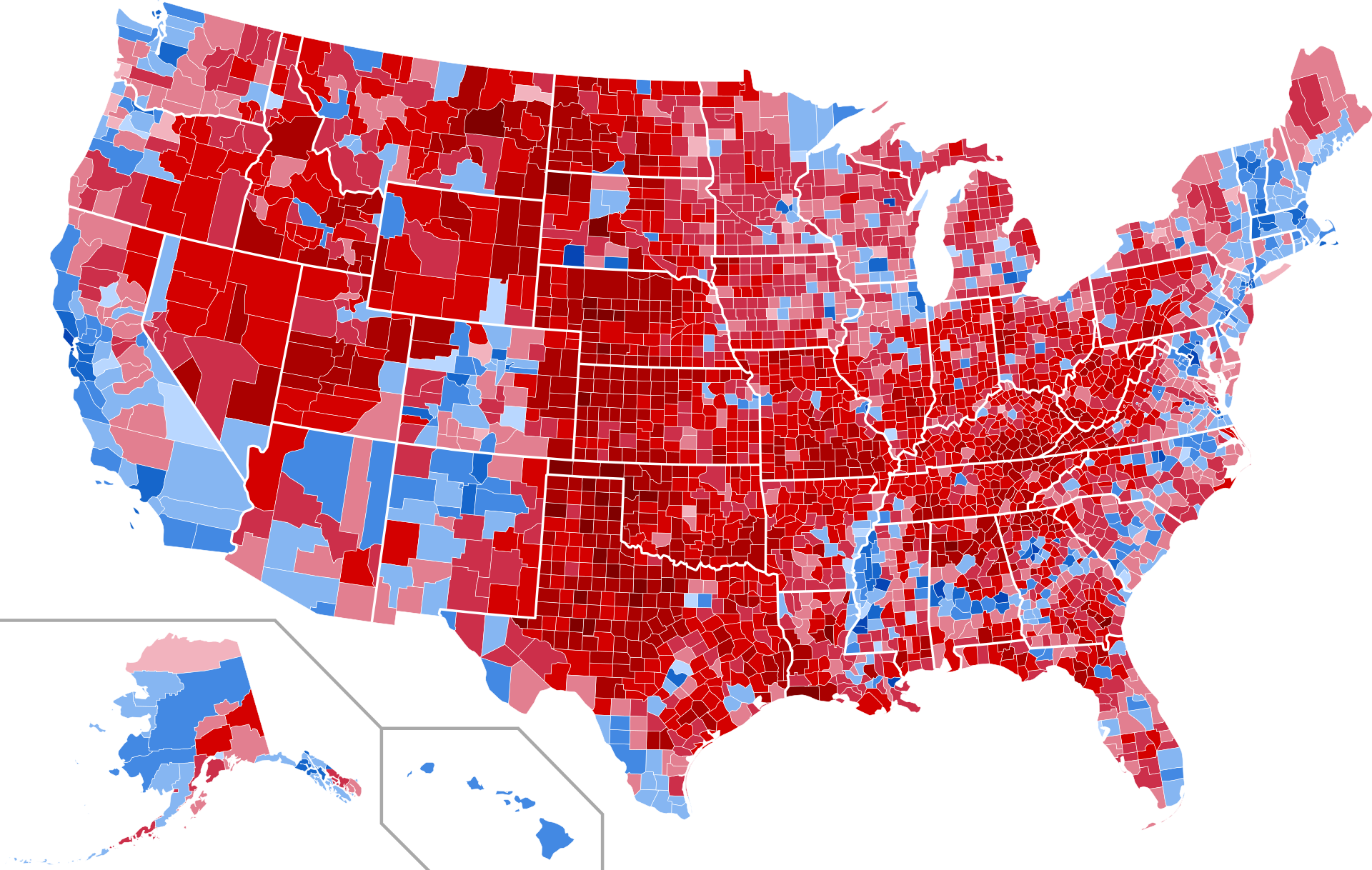
map of 2020 us election

By Peter Beck ’25 (DCI Fellow)

With the highly anticipated November 2022 elections being held this fall, our D Team discussions on electoral accessibility, integrity and reform have been highly relevant to current events. People closely watched the 2022 Midterm elections for a plethora of reasons, but especially for its status as the first set of national elections since the January 6th Insurrection. Democracy and the response to the attack on the Capitol were, in many ways, on the ballot. Indeed, there were a host of candidates running for state and federal office who continue to deny the results of the 2020 Presidential Election (shown in the image above). According to a New York Times-Siena College poll, over seventy percent of voters believe American democracy to be at risk.

Like many other Americans, the efficacy and integrity of election administration are close to my heart. I believe in a patriotic duty to participate in our democracy by casting a vote. Beyond voting, enlisting in the military, serving on a jury, and paying taxes, there are several other ways in which citizens can involve themselves with supporting our nation’s governance. Another such mechanism for people to participate and ensure the success of our democracy is by volunteering for local election offices.

Amidst the Presidential election and the COVID-19 pandemic, election officials expected a record-breaking sum of mail-in ballots for the November 2020 elections. With this in mind, my friend (Mills Jordan, a fellow member of the Davidson Class of 2025) and I recruited over forty high school students to help the Charleston Election Commission process mail-in ballots. 

Spanning six different high schools, students took time off from school and worked three arduous days sorting nearly a hundred thousand envelopes and ballots. This involved navigating health and safety concerns as well as arcane and ambiguous election laws. For the first time in Charleston County history, the sum of votes cast by mail surpassed the number of in-person voters. Miraculously, the team of students and I completed sorting ballots on Election Day before in-person polling places closed.

Election officials across the country also struggled to keep up while facing a flood of mail-in ballots. Areas with higher populations and underwhelming resources could not possibly count all of the votes before the end of election night. This led to the proliferation of conspiracy theories, threats, and even attacks on election officials. These false accusations of election manipulation were essential in creating the climate that led to the storming of the U.S. Capitol.

This context and the current political atmosphere made elections all the more important as a topic for D Team discussion. In our past two sessions, my D Team came together from different backgrounds and ideologies to share their concerns about American democracy. Every participant agreed about the importance of the present moment. We had a robust conversation discussing and coming up with solutions to increase election transparency and accessibility, like expanding peoples’ ability to vote by mail.

Initially, I expected our conversation not to produce many changes of heart, given the fact-based approaches to election integrity. Seeing whether a person believes in the validity of the 2020 election is pretty straightforward. However, I found my D Team participants to be especially responsive and compassionate towards the experiences of their peers. Our country’s current election laws, largely left up to the states, allowed for a conversation that incorporated a diversity of experiences and methods for voting. People’s individual stories were accepted and informed the group’s understanding of voting in the United States.

Residents of different states could compare the methods of how they vote and what they felt most comfortable with. This was an extremely useful exchange of ideas when considering which voting reforms to implement. My D Team deliberation led to a helpful, even necessary, broadening of perspectives on how to improve our electoral process and preserve our democracy.


Filed Under: Blog Posts, Fellow Posts Tagged With: D Teams

DCI Kicks Off a New Year!

September 2, 2022 by Graham Bullock Leave a Comment

It has been a busy week for the DCI as the 2022-23 academic year gets started here at Davidson. Monday night several of our new DCI Fellows represented the DCI at the Political Clubs Fair organized by the Center for Political Engagement. They were able to connect with other organizations interested in political issues and share information about the DCI with students curious about its various activities, from D Teams to Deliberative Forums and more.

Tuesday during Common Hour we had our first cohort meeting of the DCI’s fifteen new 2022-23 Fellows. They include first years through seniors, several international students, and several scholar-athletes, and all of them are passionate about deliberation and excited about getting involved in the DCI. We got to know each other a bit and reviewed our plans for the year, which are extensive and we’re looking forward to sharing more with you about them soon.

Then on Wednesday, several Fellows shared information with interested students about the DCI at a table in front of the College Union. Through this outreach, several students signed up for D Teams (the final deadline is this Friday!) and for updates from the DCI.

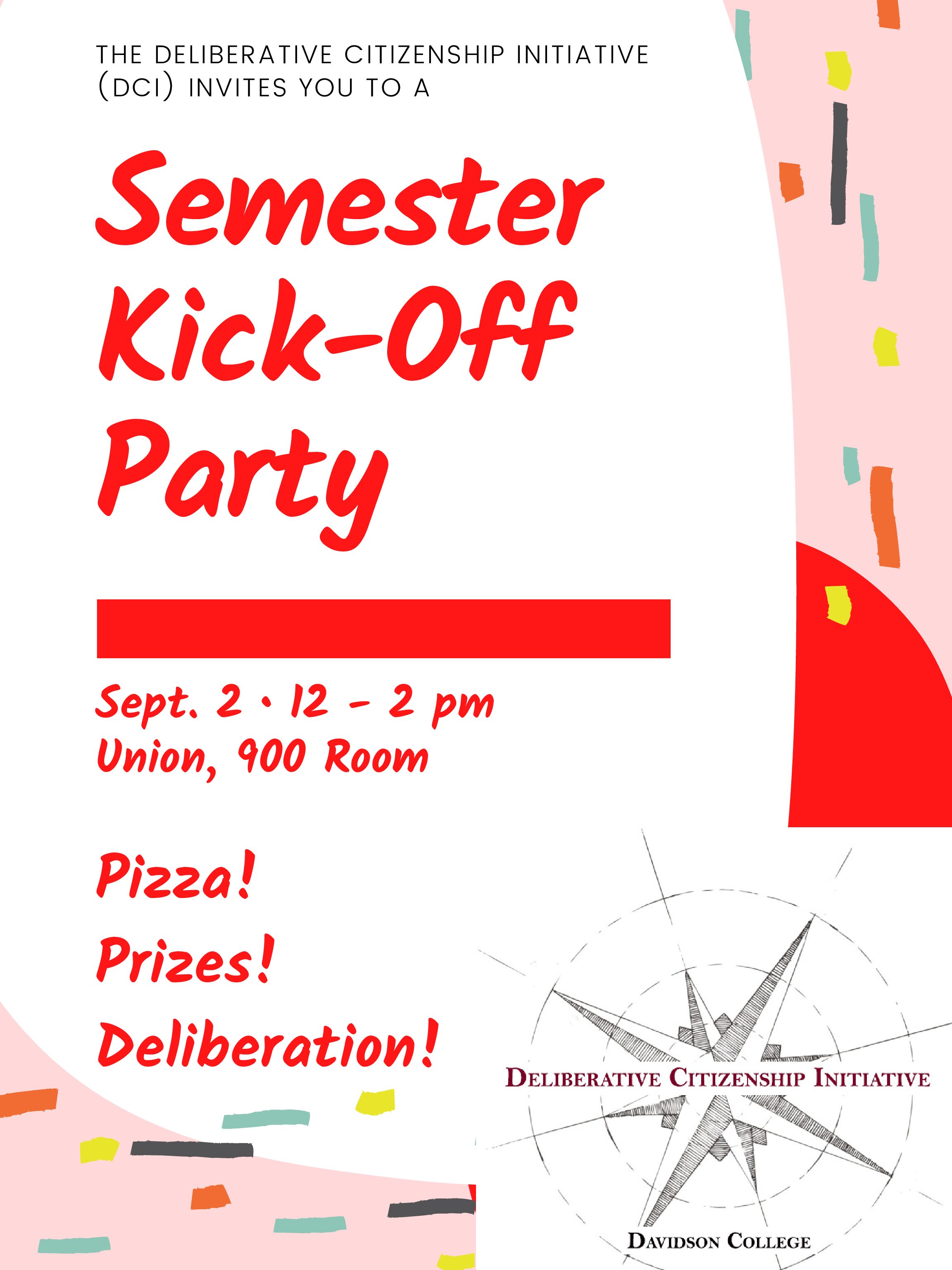
We are rounding out the week tomorrow with our Semester Kickoff Party, which will be held in the 900 Room from 12 pm to 2 pm. Students, staff, faculty, alumni, and community members are all invited to come learn more the DCI, pick up some tips on how to engage in difficult conversations on contentious topics, and enjoy some pizza, prizes, and deliberative activities. We hope you can join us!

Friday (9/2) is also the final deadline to sign up for the DCI’s fall D Teams, which is open to everyone and meets three times during the semester. Our fall topics are election accessibility, security, and fairness. Learn more here and register here by tomorrow!

Filed Under: Announcements, Blog Posts, Events Tagged With: D Teams

Join a Fall D Team!

July 26, 2022 by Carla Cole Leave a Comment

The Deliberative Citizenship Initiative is committed to enhancing the quality of our political discourse with one another through deliberative efforts that span the Davidson community and beyond. One of the ways the DCI aims to achieve this goal is through its Deliberative “D” Teams. D Teams are small groups of 6 to 10 people who meet regularly to discuss important but difficult issues facing society.

Concerns surrounding elections have heightened in recent years as Americans worry about voter fraud and suppression, election security and accessibility, and the fairness and inclusivity of the American electoral system. Various states have enacted stricter voting laws while other have attempted to expand access to the ballot box. As the 2022 elections approach this fall, the DCI’s D Teams will focus on the issues, pressing challenges, and possible solutions related to voting and elections in America.

Over three sessions, D Teams will deliberate about how we can make voting more accessible, more secure, and more fair. The first session will focus on whether we should make voting more accessible through early voting, voting by mail, an increased number of polling places, and more. The second D Team meeting will examine election security and whether we should reduce concerns about voter fraud through poll watching, use of better technology, voter ID laws, and other strategies. The third and final session will address whether we should improve our elections by implementing reforms such as ranked choice voting, proportional representation, and the abolition of the electoral college.

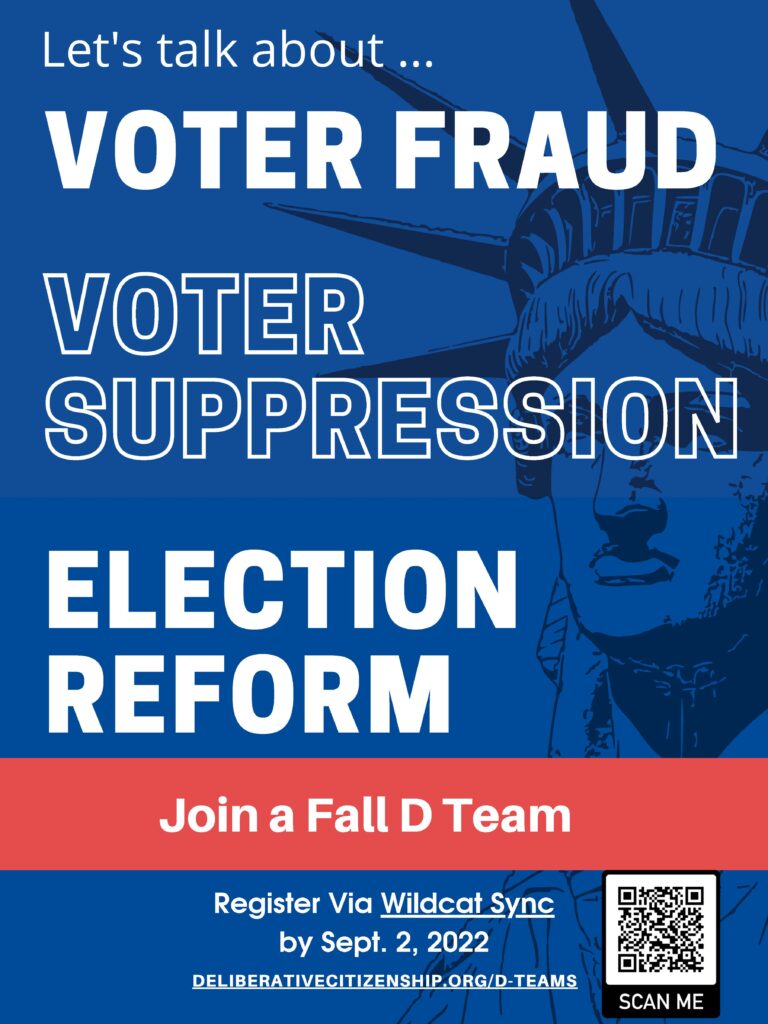
voter d teams

The DCI seeks individuals with diverse perspectives to participate in D Teams to share their thoughts and ideas for broadening our understanding of one another’s opinions and addressing the challenges we face – everyone’s voice is welcome and needed! Teams will meet either online or in person every three weeks from September to November, for a total of three meetings during the fall semester. In order to build and maintain a sense of community and trust within each team, we ask that participants commit to attending all three sessions.

To learn more about this opportunity, visit the DCI website. To register, please sign up here by Sept. 2, 2022. And feel free to share this information with your family, friends, colleagues, and neighbors — anyone who you think might be interested in joining!

Filed Under: Announcements Tagged With: D Teams

  • « Go to Previous Page
  • Page 1
  • Page 2
  • Page 3
  • Page 4
  • Page 5
  • Go to Next Page »

Footer

Blog Post Categories

  • Announcements
  • Blog Posts
  • DCI Posts
  • Events
  • Faculty Posts
  • Fellow Posts
Image of a compass superimposed by the text "Deliberative Citizenship Initiative" and "Davidson College." Clicking on this image leads to the Initiative page.

Recent DCI Blog Posts

  • We Tried to Fix Jubilee’s “Middle Ground” – Here’s How It Went
  • A Case for Deliberation in the Natural Sciences
  • Welcoming New Staff to the DCI and DCN
  • Facebook
  • Twitter
  • Instagram
  • LinkedIn


Copyright © 2026 · Infinity Pro on Genesis Framework · WordPress · Log in