• Skip to main content
  • Skip to footer

Deliberative Citizenship Initiative

Building Democracy One Conversation at a Time

  • The Initiative
    • Programs
      • Deliberation Across the Curriculum
      • Deliberation on Campus
      • Deliberation in the Community
      • Research on Deliberation
    • Motivations
      • Why Deliberative Citizenship?
      • Why Davidson? Why Now?
    • Who’s Involved?
      • DCI Fellows Cohorts
        • 2025-2026 Fellows
        • 2024-2025 Fellows
        • 2023-2024 Fellows
        • 2022-2023 Fellows
        • 2021-2022 Fellows
        • 2020-2021 Fellows
      • DeeP Collaborative Cohorts
        • 2024-2025 DeeP Collaborative Faculty
        • 2023-2024 DeeP Collaborative Faculty
      • Advisory Council
    • History
      • What Sparked the Initiative?
    • Key Deliberative Dispositions
    • Frequently Asked Questions (FAQ)
    • Annual Report
  • Get Involved!
    • Participate in a Forum
    • Join a D Team
    • Become a Fellow
    • Take Courses
    • Get Training
    • Come to Guest Lectures
  • Events
    • Upcoming Events
      • 250th Anniversary Deliberative Forum Series on American Values
    • Past Events
  • Connections
    • The Deliberative Citizen: The DCI’s Monthly Newsletter
    • Efforts on Campus
    • Efforts in the Community
    • Efforts Elsewhere
    • Readings and Resources
      • DCI-Published Guides
      • DCI Guide to One-on-One Conversations
      • How to Disagree
      • Demonstration of Facilitation Styles
      • Deliberative Pedagogy Mini-Course
    • How We Can Help: DCI’s LET’S DELIBERATE! Partnership Opportunities
    • DCI in the News
  • DCI Blog Posts
    • Recent Blog Posts
    • All Blog Posts

2023-2024

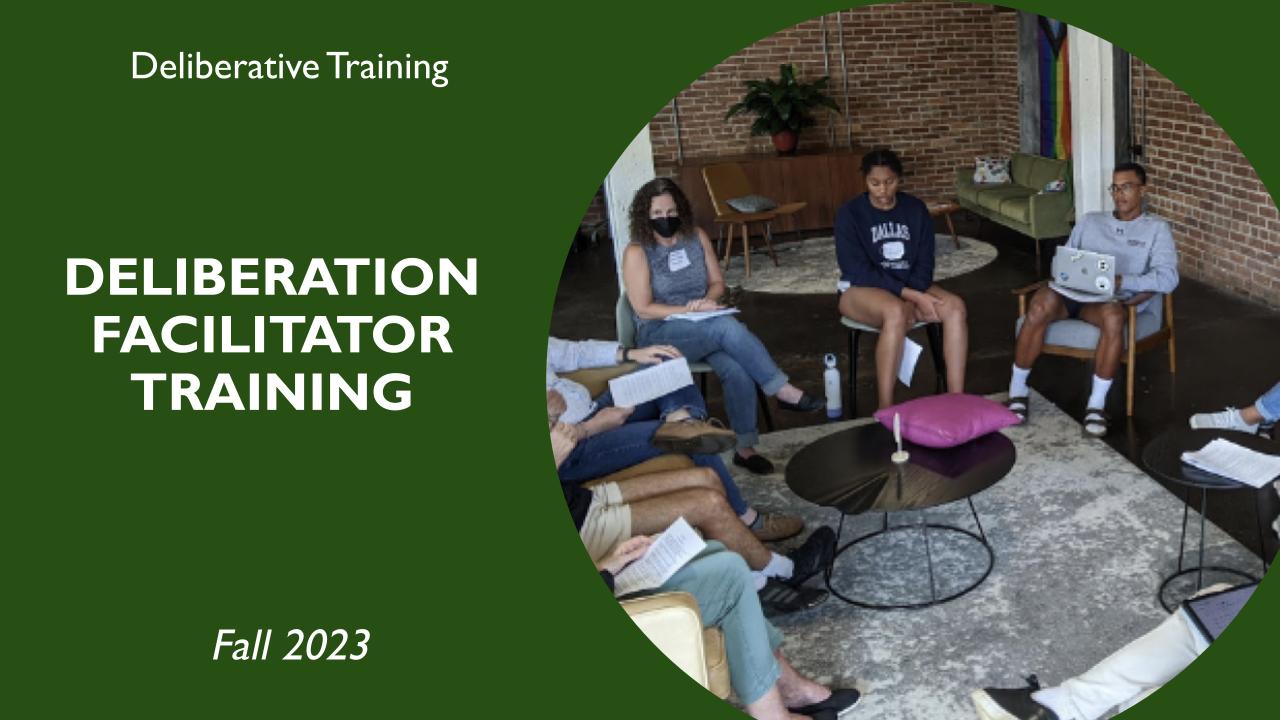
Fifth Deliberation Facilitator Training

Want to learn how to have productive, meaningful conversations about difficult topics and help others to do the same? The Deliberative Citizenship Initiative is excited to host a two-part Deliberation Facilitator Training to help participants learn specific deliberation and facilitation skills. It is open to all Davidson students, faculty, staff, and members of the wider community.

The training will take place at Davidson College on Sept. 11th and Sept. 17thfrom 1:30 to 5:30 pm, and both sessions are required for completion of the program. Upon completion of the program, participants will be certified DCI Facilitators and eligible to facilitate DCI deliberations (and be paid for doing so).

This hands-on, interactive workshop will train participants in techniques that will improve their ability to facilitate difficult discussions about political and social issues among people who may have very different backgrounds, values, and opinions. Although such facilitation can be challenging, it is increasingly needed in a world that is facing a host of immense challenges that require people to come together to solve issues collaboratively. Well-trained facilitators can help us honestly, respectively, and productively engage with these challenges and seek out innovative solutions.

This 8-hour training, spread across 2 days, will equip participants with skills and knowledge to:

  • Facilitate difficult discussions
  • Organize and host deliberations
  • Encourage deliberative dispositions and humane instincts
  • Build community through productive discourse

This free training opportunity will take place in-person at Davidson College, but a limited number of off-site individuals may participate virtually. Given the limited space, please only sign up if you are able to attend both sessions. Learn more about this program on the DCI website and in the information flyer below, and please register here by Sept. 6th!

Deliberation Facilitator Training Poster
The Challenge for Democracy: To What Extent Should the U.S. and Other Democratic Nations Defend and Promote Democracy Around the World?

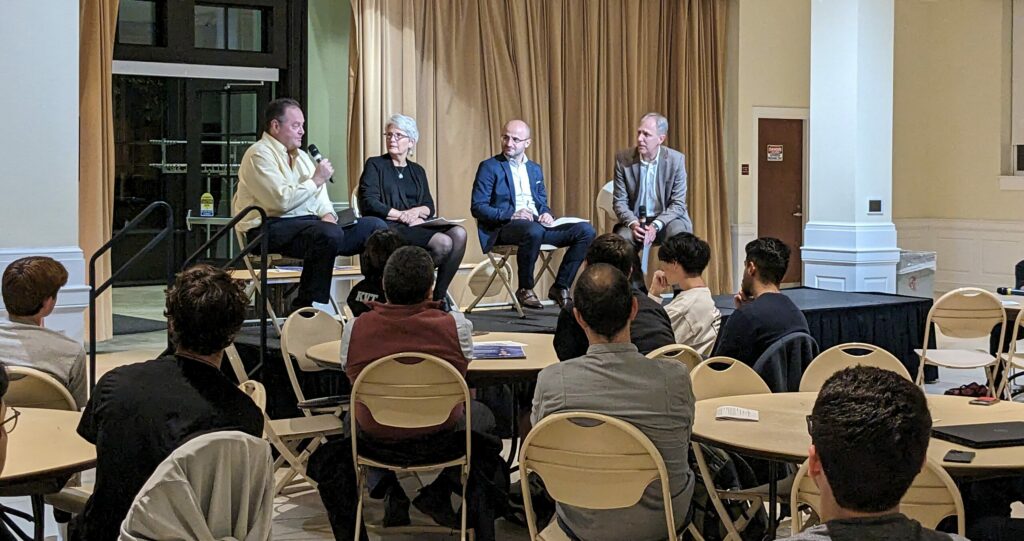
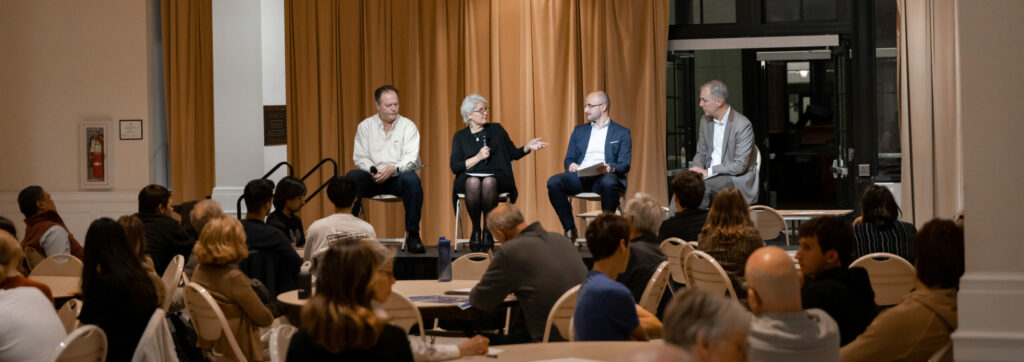
On Thursday, October 19, the DCI hosted its 9th public Deliberative Forum, The Challenge for Democracy: To What Extent Should the U.S. and Other Democratic Nations Defend and Promote Democracy Around the World?  For this event, we partnered with Davidson’s own Political Science Department and featured speakers with different global areas of specialization. Professors Bes Ceka, Shelley Rigger, and Ken Menkhaus presented their own views about democracy promotion and defense and focused on Europe, Asia, and Africa (respectively). We invite you to watch the recording of our panel below!

The Challenge for Democracy: To What Extent Should the U.S. and Other Democratic Nations Defend and Promote Democracy

panel

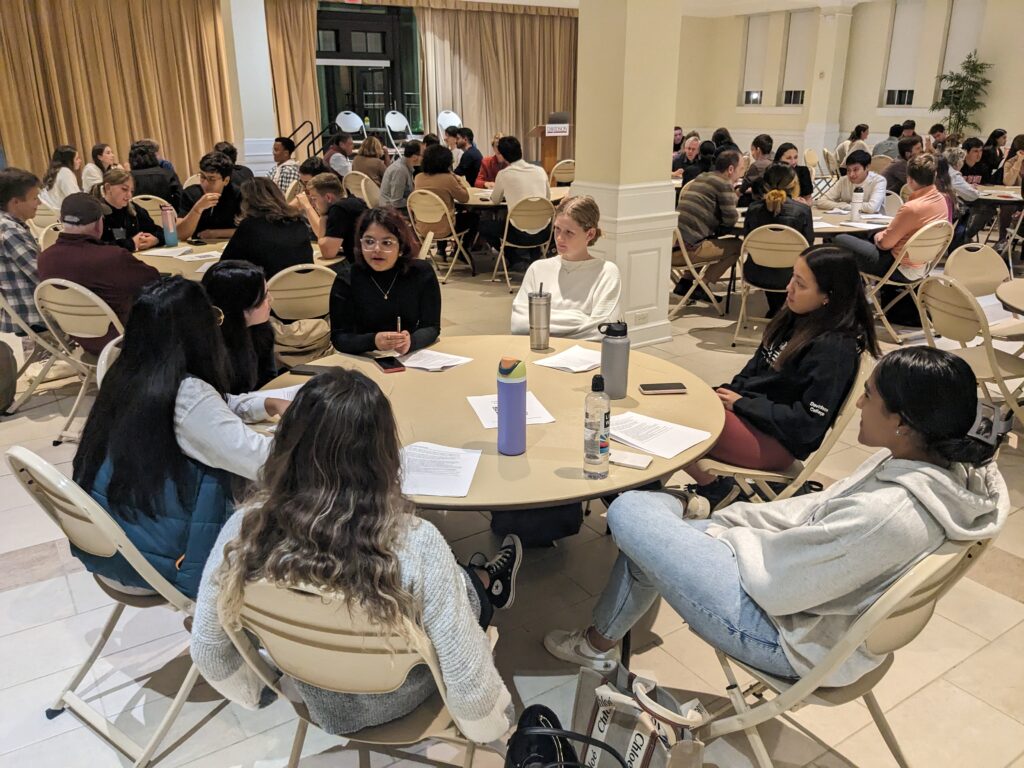
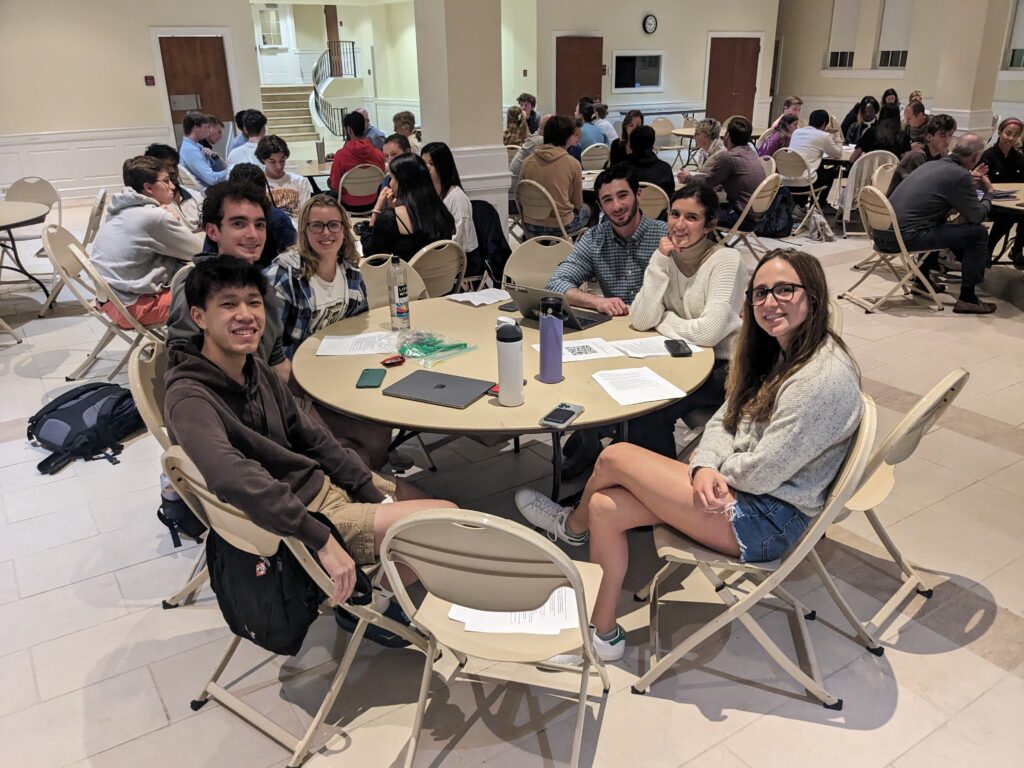
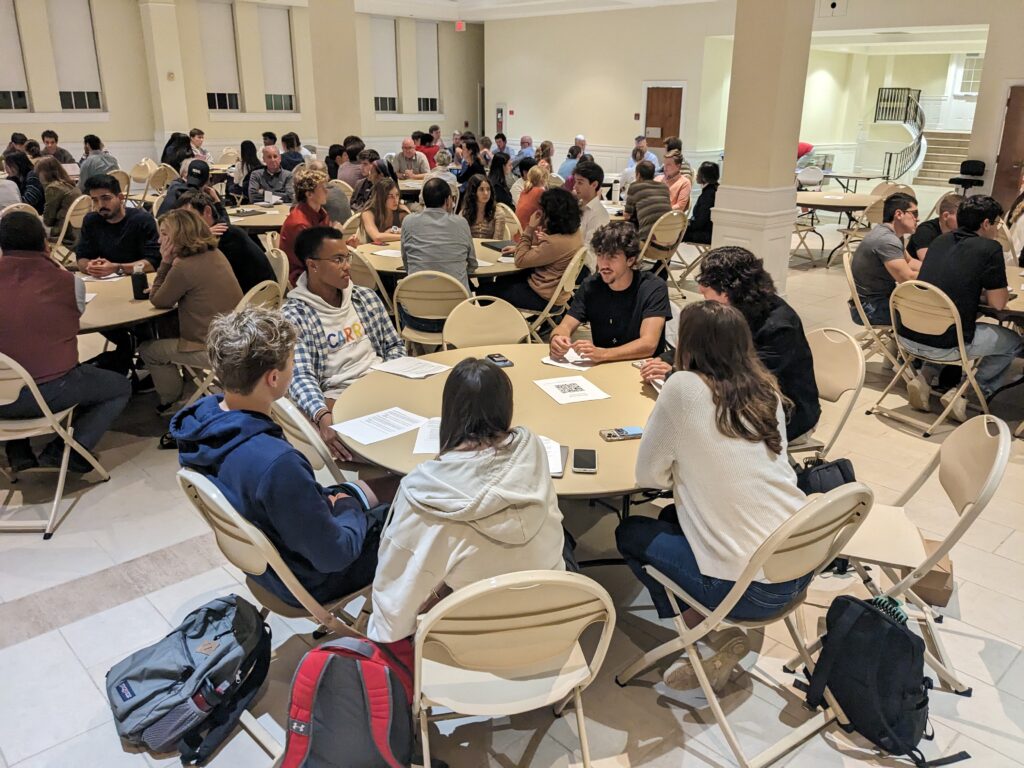
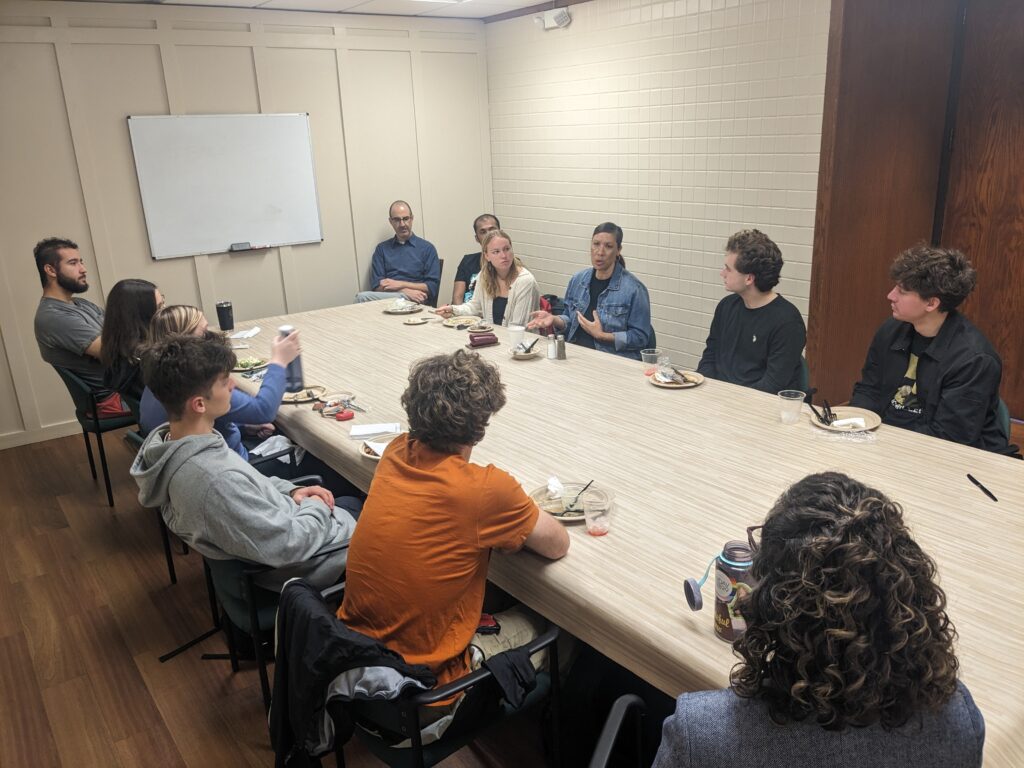
Our Deliberative Forum didn’t end with the panel. After the panel discussion, 96 participants engaged with one another in small-group deliberations facilitated by the DCI’s Fellows, Senior Fellows, and others who have gone through our Deliberation Facilitator Training Program, including a few Davidson faculty members. We had a total of 18 small groups deliberating about the topic both online and in-person, drawing on our Deliberation Guide written for the event and engaging with one another on the forum’s central question.

Check out some photos and the short video of these discussions below.

Here is the deliberation guide that was shared with participants and used to guide the small group discussions…

DCI-Challenge-for-Democracy-Deliberation-Guide

Want to make sure you don’t miss our next forum? Follow us on your favorite social media site and subscribe below for DCI updates!

The Challenge for Democracy: To What Extent Should the U.S. and Other Democratic Nations Defend and Promote Democracy Around the World? 

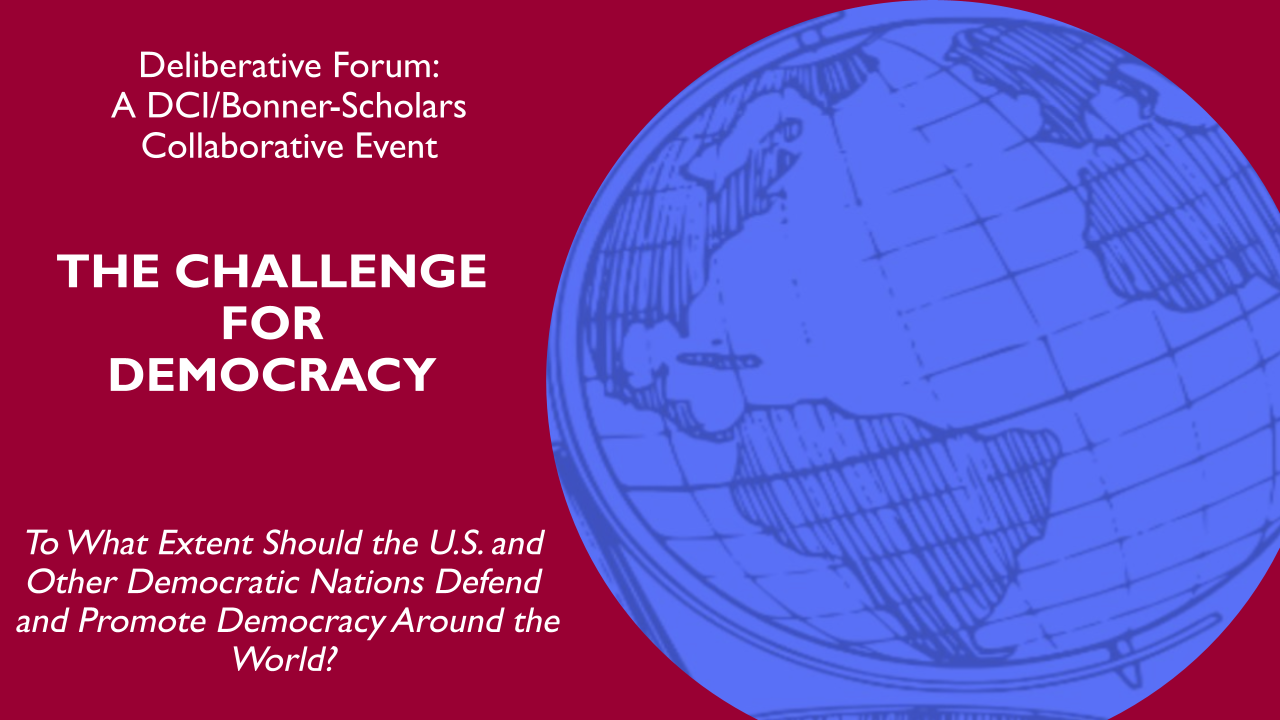
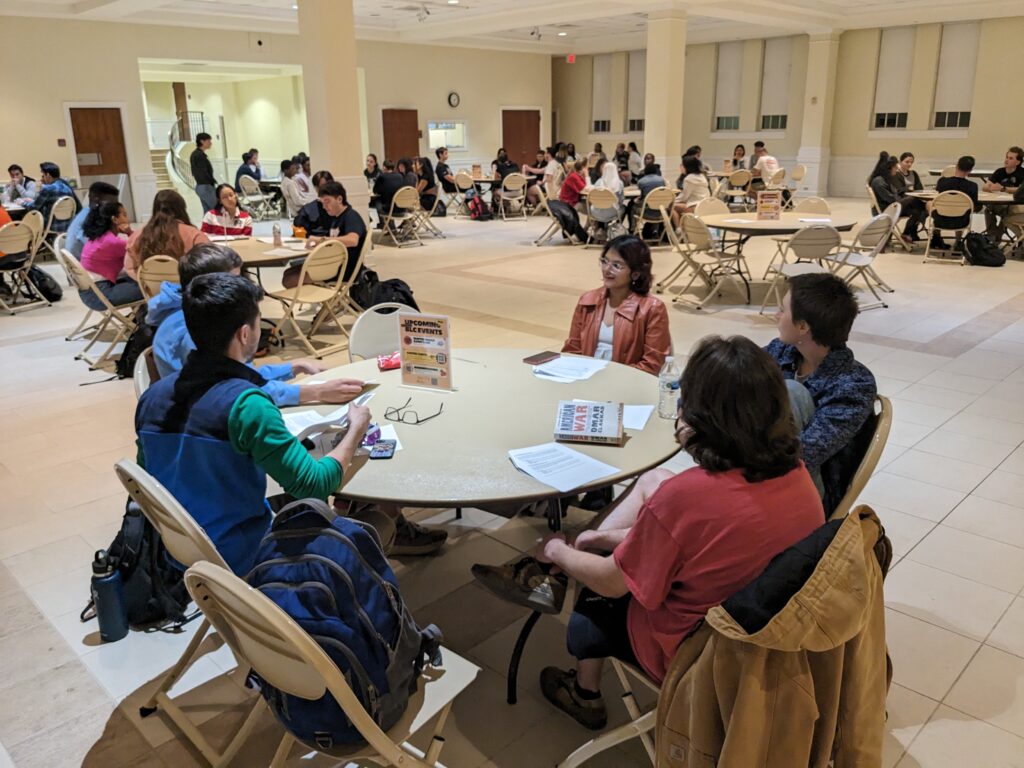
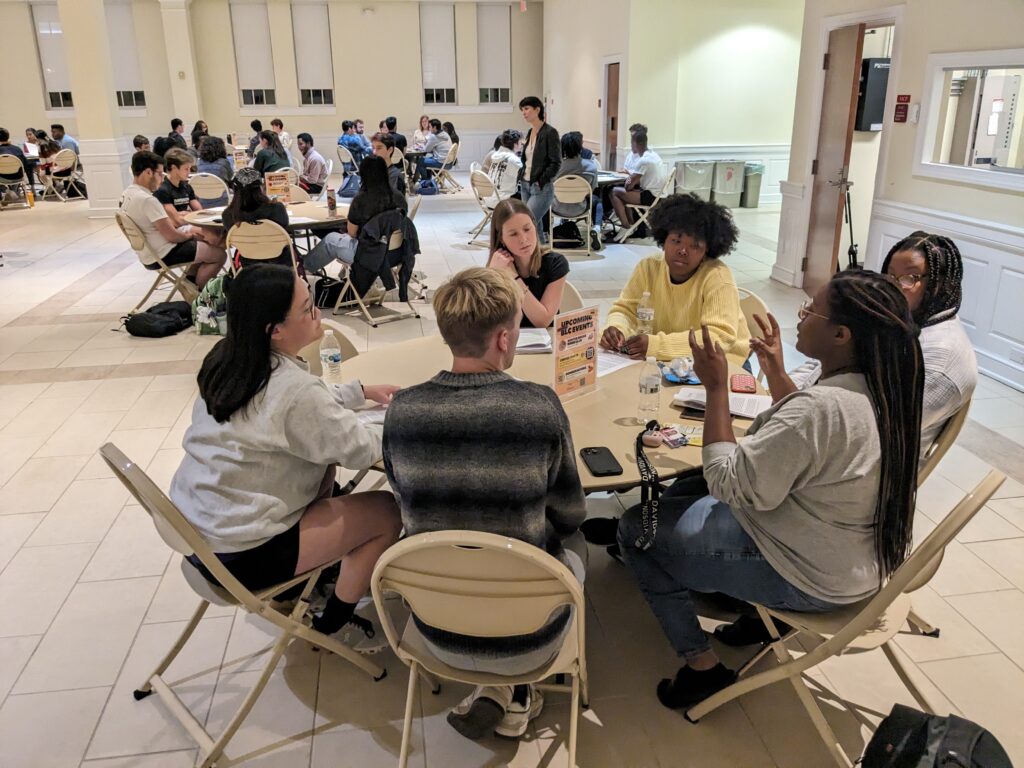
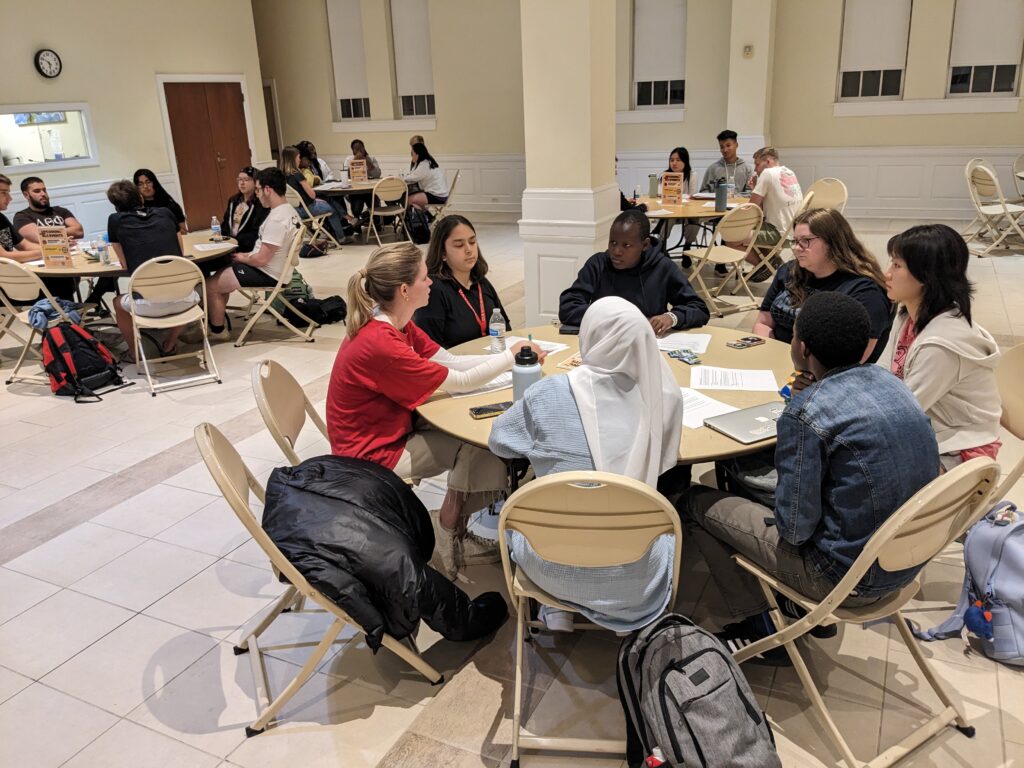
This fall, the DCI hosted its first in-person Deliberative Forum, featuring three panelists from Davidson’s Political Science Department: Professors Besir Ceka, Ken Menkhaus, and Shelley Rigger. About two weeks later, we held a forum with Davidson’s Bonner Scholars on the same topic: “The Challenge for Democracy: To what extent should the United States and other democratic countries defend and promote democracy around the world?” Over 50 Bonner Scholars gathered in the Lilly Family Gallery to deliberate on this question, having watched the expert panel discussion and read our Deliberation Guide on the topic.

Round Table Discussions at DCI and Bonner Scholars event in the Davidson College Lilly Gallery.

Check out this short video montage from the forum…!

Over 97% of the 35 Bonner participants who completed a short survey after the event reported that they were either very satisfied (57%) or satisfied (40%) with their small group deliberation. Over 85% of the participants also felt like they either learned a huge amount (20%) or a good amount (66%) about the defense of democracy. As one Bonner Scholar wrote, “I felt very comfortable sharing my ideas with the group and I think my facilitator and group members did a great job creating a welcoming environment. It was really cool to be able to genuinely discuss an important topic, as I feel like I don’t get to do that often in my life.” Another Bonner Scholar stated, “It was a very helpful experience overall as it not only helped in learning new perspectives but also helped me strengthen my understanding.”

“It was a very helpful experience overall as it not only helped in learning new perspectives but also helped me strengthen my understanding.”

The Bonner Scholars Program is a scholarship program where students aim and learn how to effect positive community change. Bonner Scholars participate in community service and research, and they have weekly opportunities to engage in educational experiences that enhance their ability to make a positive impact and build capacity within community organizations. Participation in Deliberative Forums allows the Bonner Scholars to harness their humane instincts, listen effectively to diverse perspectives, and seek innovative solutions to urgent public issues. The DCI first partnered with the Bonner Scholars Program in the fall of 2022 to host a deliberative forum on free speech and inclusivity that was very well-received by those who participated, and we have continued this partnership this year.

We are excited to partner with the Bonner Scholars again in the early spring semester! The DCI will host a public Deliberative Forum on Artificial Intelligence (AI) on February 5th, in which Senior Bonner Scholars will take part. This forum will provide a space for Davidson students, alumni, staff, faculty, and members of the public to engage with one another on critical issues regarding emerging technologies. These include AI that is capable of performing tasks as well as humans in economically valuable ways and AI that could be as transformative as the agricultural or industrial revolutions to human society and the world.

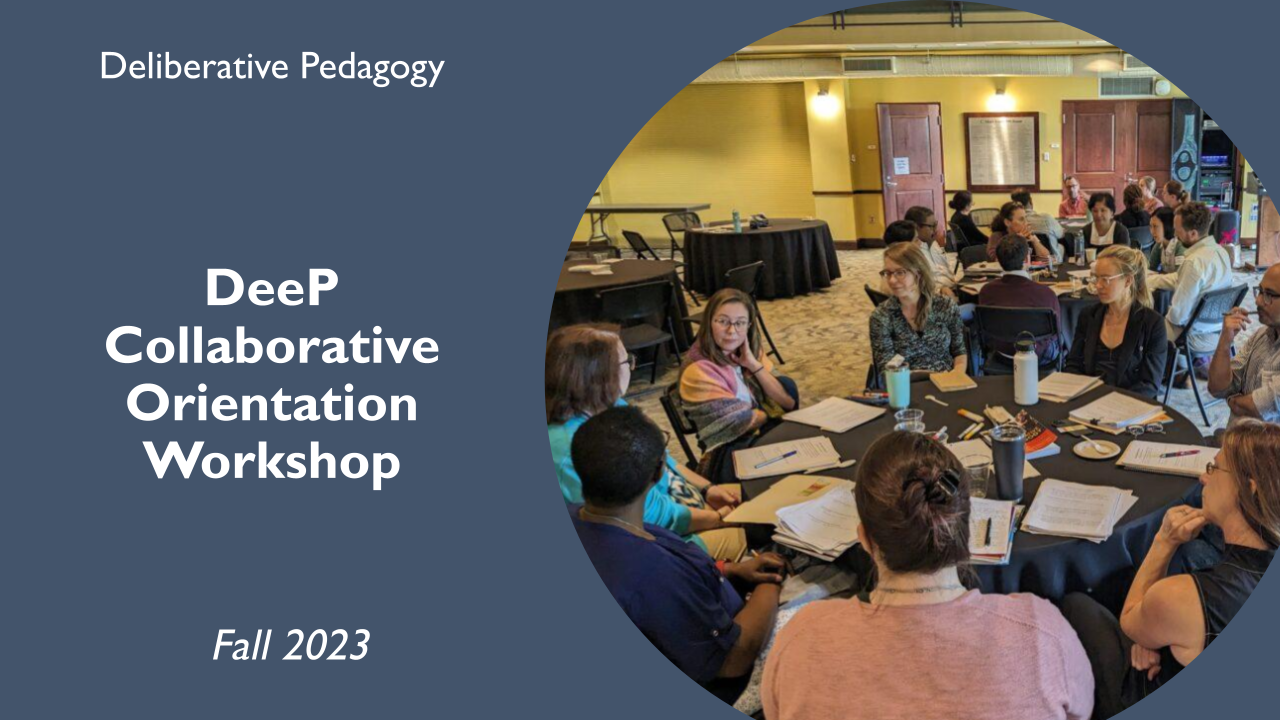
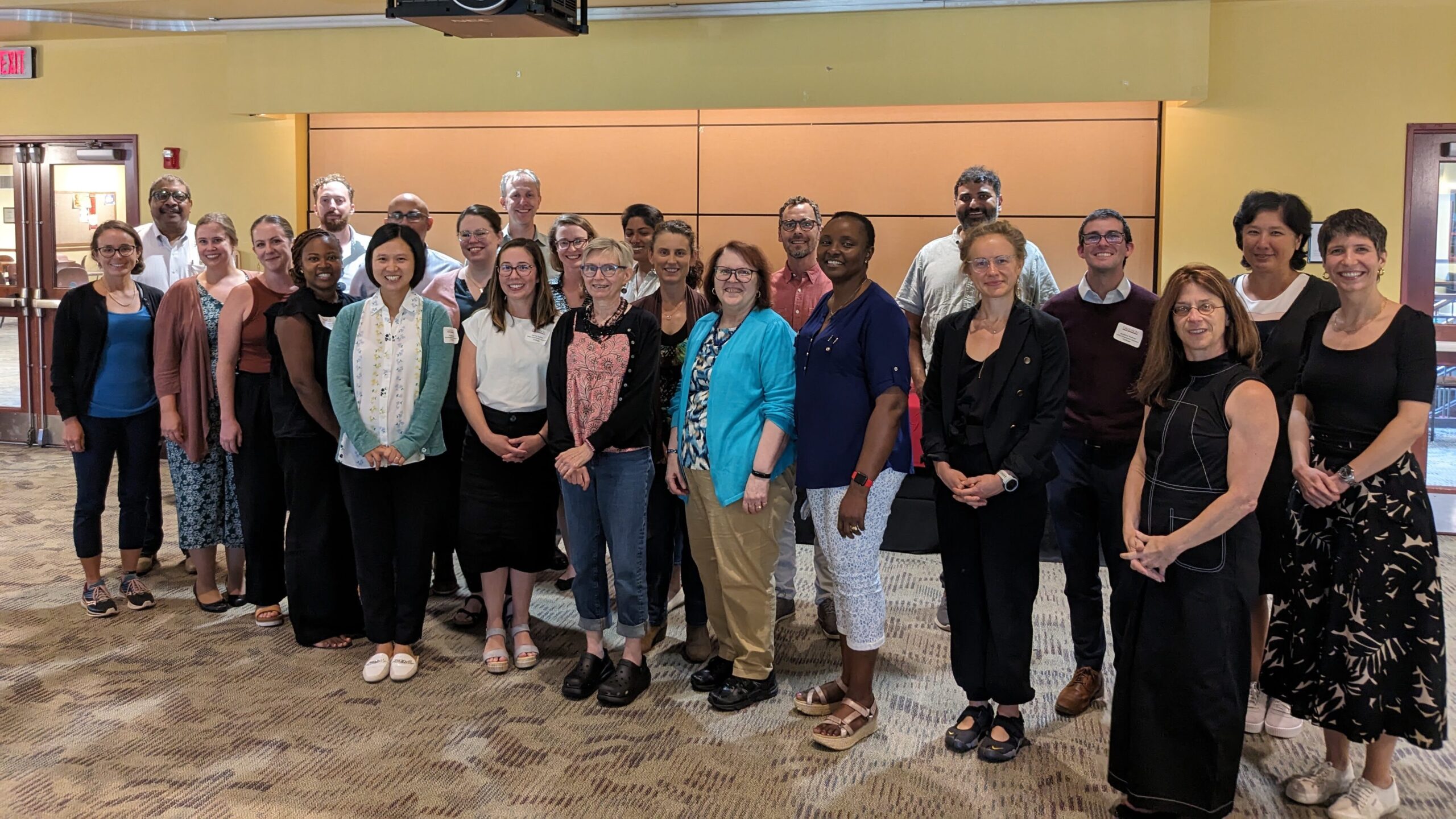
Deepening Class Discussion: This Year’s DeeP Collaborative Orientation Workshop

On August 10th, we kicked off our third installment of the Deliberative Pedagogy (DeeP) Faculty Collaborative with our annual DeeP Collaborative Orientation Workshop. This year’s cohort brings together 22 new faculty collaborators – a record number – who specialize in over 15 different academic disciplines, including anthropology, biology, business administration, communication studies, dance, economics, education, English, environmental studies, German studies, philosophy, political science, public health, peace and conflict studies, and sociology.

They also come from 13 different institutions, including Alamance Community College, Birmingham Southern College, Davidson College, Guilford College, Hendrix College, Lenoir-Rhyne University, Macalester College, Rollins College, Sewanee: The University of the South, Spelman College, Swarthmore College, UNC Charlotte, and Vassar College.

The goals of this workshop were to introduce our new Collaborative members to the key principles and practices of deliberative pedagogy, to build community among the cohort members—who will be working together over the coming academic year—and to begin mapping out their goals for the fall semester, during which they will explore how they will apply deliberative pedagogy to their future courses.

DCI Faculty Director Dr. Graham Bullock led the workshop, using both active learning and deliberative strategies to introduce the motivations for using deliberative pedagogy practices, the most relevant concepts and frameworks, specific deliberative teaching methods and tools, and case studies of deliberation-involved courses.

What is deliberative pedagogy? In short, deliberative pedagogy is a teaching practice that involves the use of structured deliberative activities to teach learners how to express different viewpoints about an issue or approaches to a problem, how to evaluate these viewpoints or approaches critically, and how to identify both areas of agreement and disagreement through the course of their deliberative discussions.

The key to practicing deliberative pedagogy well is to setup deliberations in the classroom so that they include multiple viewpoints on the issue at hand, allow all voices to be heard, and promote the assessment of arguments for and against the variety of viewpoints on the table. One way to do so is by introducing conversation agreements, or ground rules for good discursive practices. Another way is to have a facilitator present who can ensure the deliberation represents multiple viewpoints and voices. (Want to learn how to become a trained facilitator for deliberative events in OR out of the classroom? Learn more about our upcoming Deliberation Facilitator Training Program here!)

Deliberative pedagogy is also connected to the concept of deliberative democracy, a type of democratic engagement in which reason-giving – broadly-defined – is used as a means for citizens to make progress on practical issues facing their community.

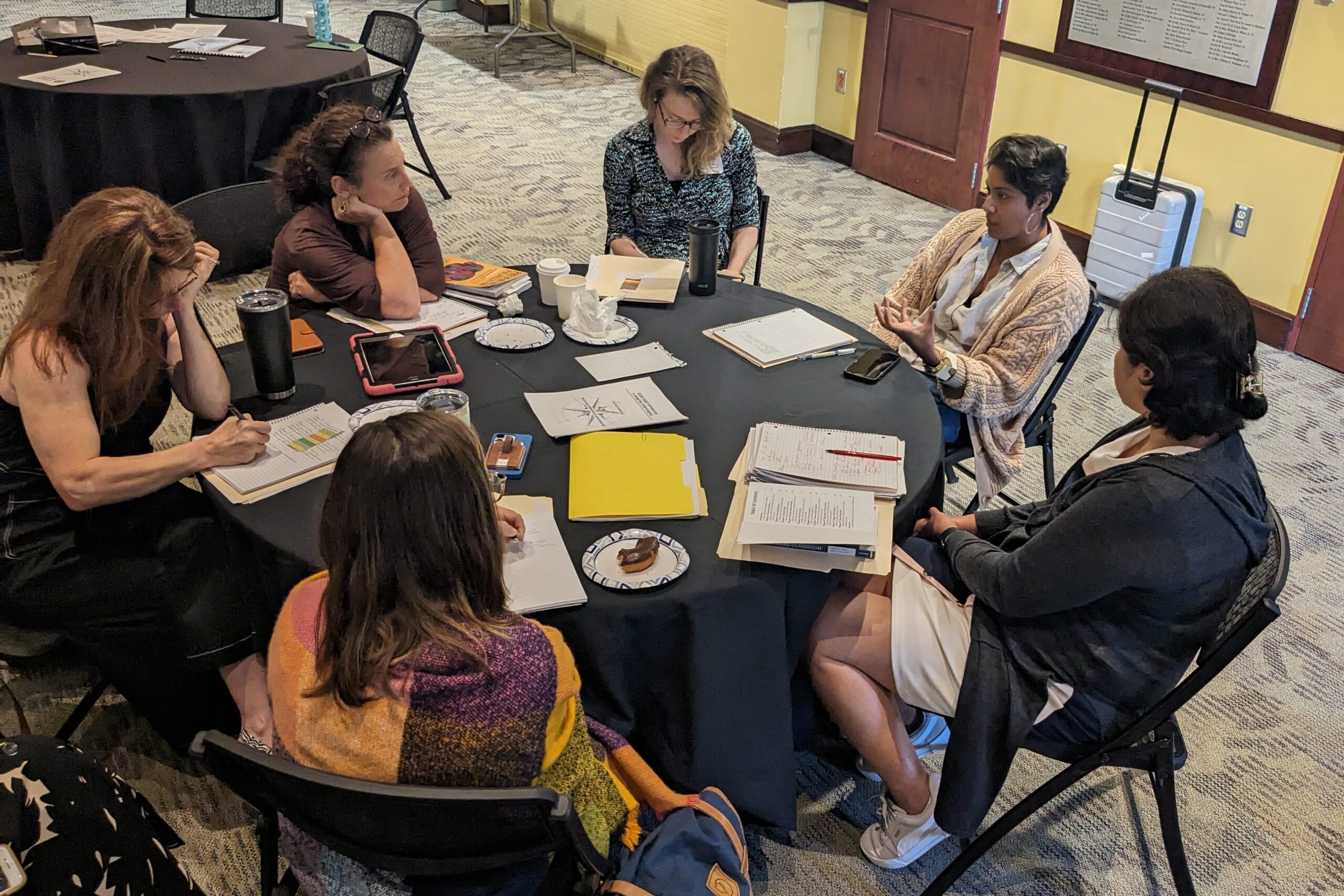
Some of the lively discussions among our faculty cohort members focused on how deliberative pedagogy can be employed beyond courses that focus explicitly on public policy, including courses in the arts and the sciences. Groups also discussed how deliberative pedagogy can be a form of inclusive pedagogy and how faculty can navigate the apparent tension between affirming our lived experiences as individuals while assessing reasons for and against policy decisions that impact those experiences.

Others discussed whether or in what circumstances instructors should remain neutral during debates about normative issues that do not have straightforward answers and about which there can be reasonable disagreement among deliberators. None of these questions have easy answers, but we look forward to diving deeper with our ’23-’24 DeeP Collaborative cohort on these and other important topics in the coming year. Look out for blog posts from this year’s participants in the spring, once they have begun applying what they have taken from our interactive learning sessions in the fall to their various teaching contexts.

Faith, Race & Politics: Can empathy help bridge our divides in a polarized world?

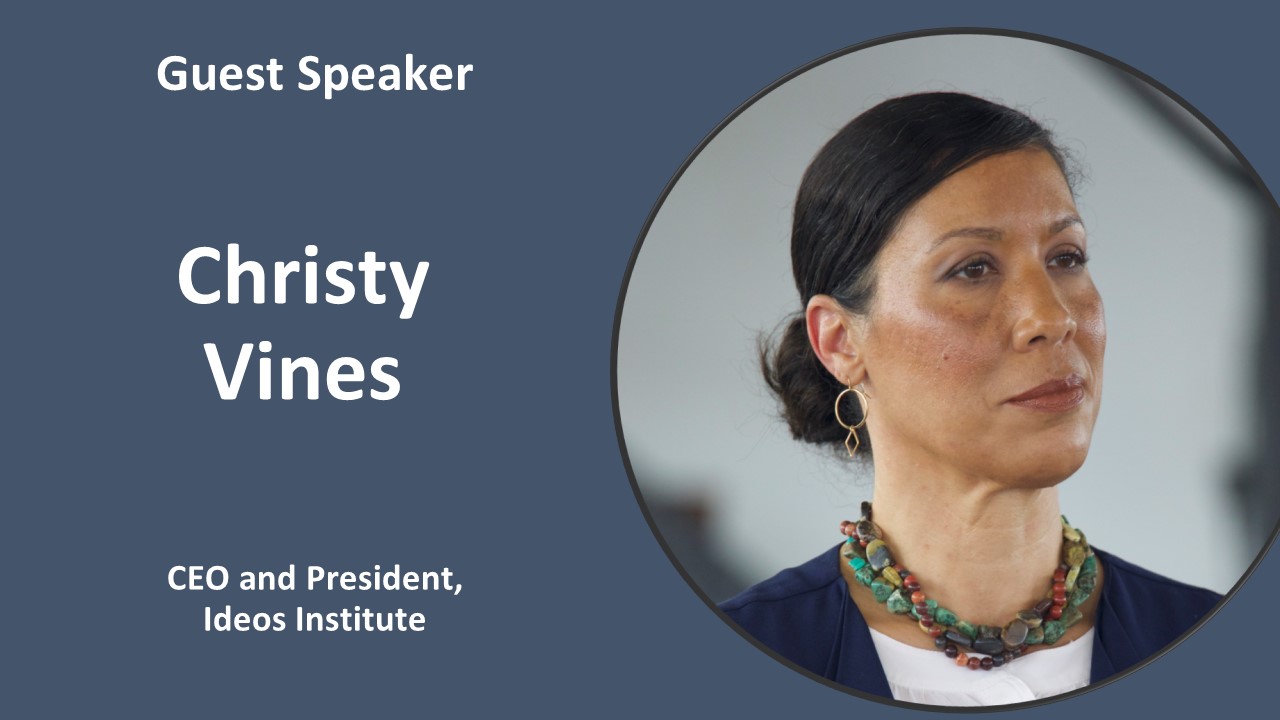
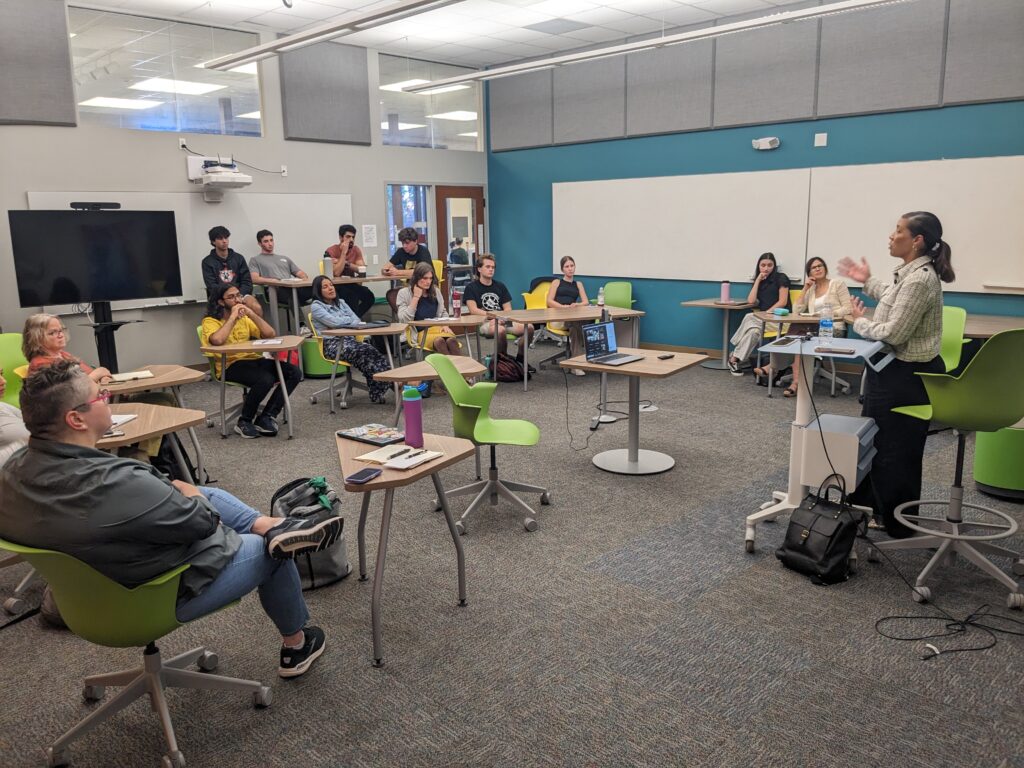
Introductory Image of Guest Speaker Christy Vines.

In September, the DCI partnered with the Office of the Chief Equity and Inclusion Officer, Dean Rusk International Studies Program, Chaplain’s Office, and Public Lectures Committee to bring Christy Vines to campus as part of our Deliberative Speaker Series. Christy is President and CEO of Ideos Institute and Executive Producer of the documentary film Dialogue Lab: America. Much of her current focuses on the concept and practice of empathic intelligence.

In the course of her visit, Christy met with multiple student groups, led two workshops, and gave one public lecture. She argued that empathic intelligence is a skill that we can all hone over time, and that it is required in order for us to be effective in our goals that require engaging with and understanding others. Empathic intelligence involves our ability to understand others in a way that humanizes them in spite of our differences. Christy argued persuasively that harnessing this skill can help us heal polarized divides in the U.S., and it can help us make progress toward collective decision-making.

Watch Christy’s lecture below to find out more. In her talk and the Q&A session afterwards, she talks directly about both the challenges related to the religious, racial, and political fractures in our society and the ways by which an empathic mindset can enable us to promote better understanding across those divisions.

Faith, Race & Politics: Can empathy help bridge our divides in a polarized world?

Christy also led a workshop about promoting empathic intelligence in the classroom and other contexts. If you didn’t catch the workshop but would like to find out more, whether you’re an educator or a student, you can watch it below.

Empathic Intelligence: What it is and how to cultivate it in the classroom and beyond

It is our hope that these resources will go some way toward healing our divides and enabling us to solve our collective problems together. Follow us on your favorite social media site, and we hope to see you at our future events!

  • « Go to Previous Page
  • Page 1
  • Page 2
  • Page 3

Footer

Blog Post Categories

  • Announcements
  • Blog Posts
  • DCI Posts
  • Events
  • Faculty Posts
  • Fellow Posts
Image of a compass superimposed by the text "Deliberative Citizenship Initiative" and "Davidson College." Clicking on this image leads to the Initiative page.

Recent DCI Blog Posts

  • We Tried to Fix Jubilee’s “Middle Ground” – Here’s How It Went
  • A Case for Deliberation in the Natural Sciences
  • Welcoming New Staff to the DCI and DCN
  • Facebook
  • Twitter
  • Instagram
  • LinkedIn


Copyright © 2026 · Infinity Pro on Genesis Framework · WordPress · Log in