• Skip to main content
  • Skip to footer

Deliberative Citizenship Initiative

Building Democracy One Conversation at a Time

  • The Initiative
    • Programs
      • Deliberation Across the Curriculum
      • Deliberation on Campus
      • Deliberation in the Community
      • Research on Deliberation
    • Motivations
      • Why Deliberative Citizenship?
      • Why Davidson? Why Now?
    • Who’s Involved?
      • DCI Fellows Cohorts
        • 2025-2026 Fellows
        • 2024-2025 Fellows
        • 2023-2024 Fellows
        • 2022-2023 Fellows
        • 2021-2022 Fellows
        • 2020-2021 Fellows
      • DeeP Collaborative Cohorts
        • 2024-2025 DeeP Collaborative Faculty
        • 2023-2024 DeeP Collaborative Faculty
      • Advisory Council
    • History
      • What Sparked the Initiative?
    • Key Deliberative Dispositions
    • Frequently Asked Questions (FAQ)
    • Annual Report
  • Get Involved!
    • Participate in a Forum
    • Join a D Team
    • Become a Fellow
    • Take Courses
    • Get Training
    • Come to Guest Lectures
  • Events
    • Upcoming Events
      • 250th Anniversary Deliberative Forum Series on American Values
    • Past Events
  • Connections
    • The Deliberative Citizen: The DCI’s Monthly Newsletter
    • Efforts on Campus
    • Efforts in the Community
    • Efforts Elsewhere
    • Readings and Resources
      • DCI-Published Guides
      • DCI Guide to One-on-One Conversations
      • How to Disagree
      • Demonstration of Facilitation Styles
      • Deliberative Pedagogy Mini-Course
    • How We Can Help: DCI’s LET’S DELIBERATE! Partnership Opportunities
    • DCI in the News
  • DCI Blog Posts
    • Recent Blog Posts
    • All Blog Posts

2023-2024

Commons Conversation Reflection: Discussing Safe Spaces with Dr. Boyer

By Atyantika Mookherjee ’27

On Friday, March 22nd, a group of Davidson students gathered over lunch to discuss the concept and role of safe spaces with Dr Patricio Boyer. Dr Boyer, Director of the Humanities Program, had interesting ideas about the differing roles of safe spaces. The conversation began with an overview of the DCI’s Conversation Agreements and a round of introductions, allowing students from different majors and class years to share their reasons for interest in the topic and fostering a sense of inclusivity.

Dr Boyer then provided an overview of the topic, presenting his thoughts around how the question of a college being a safe space is a compelling one as it not only is a meeting ground for students, but also a place for faculty and staff to express their thoughts. He then opened the conversation up to the students. What followed was an engaging conversation that touched on trigger warnings, the type of media present in the classroom, and the difference between safe and brave places on college campuses.

It was incredibly interesting seeing students grapple with the question of if the classroom ought to be a safe space and the tug between content that requires a trigger warning and a comprehensive education. While – like most conversations at the DCI – there may be no easy answer, the experience was a rewarding one for all involved as we each walked away with new perspectives, more questions, and the skills to bring about productive conversations.
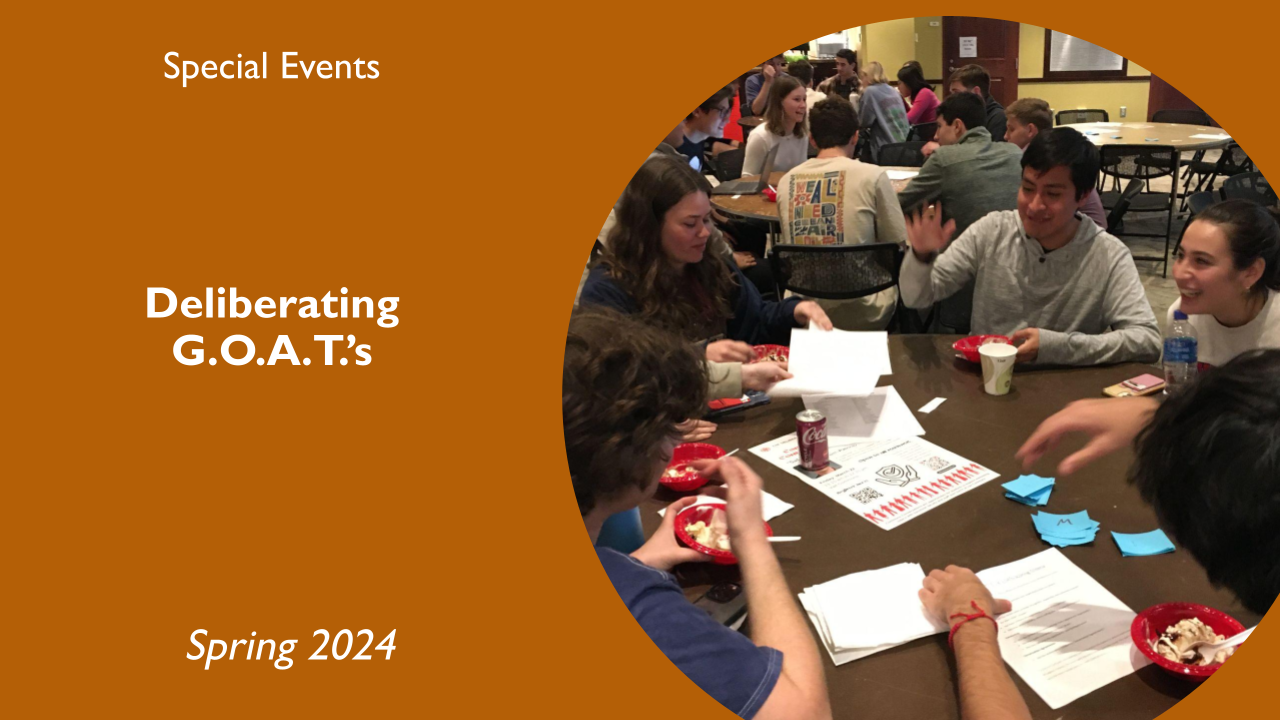
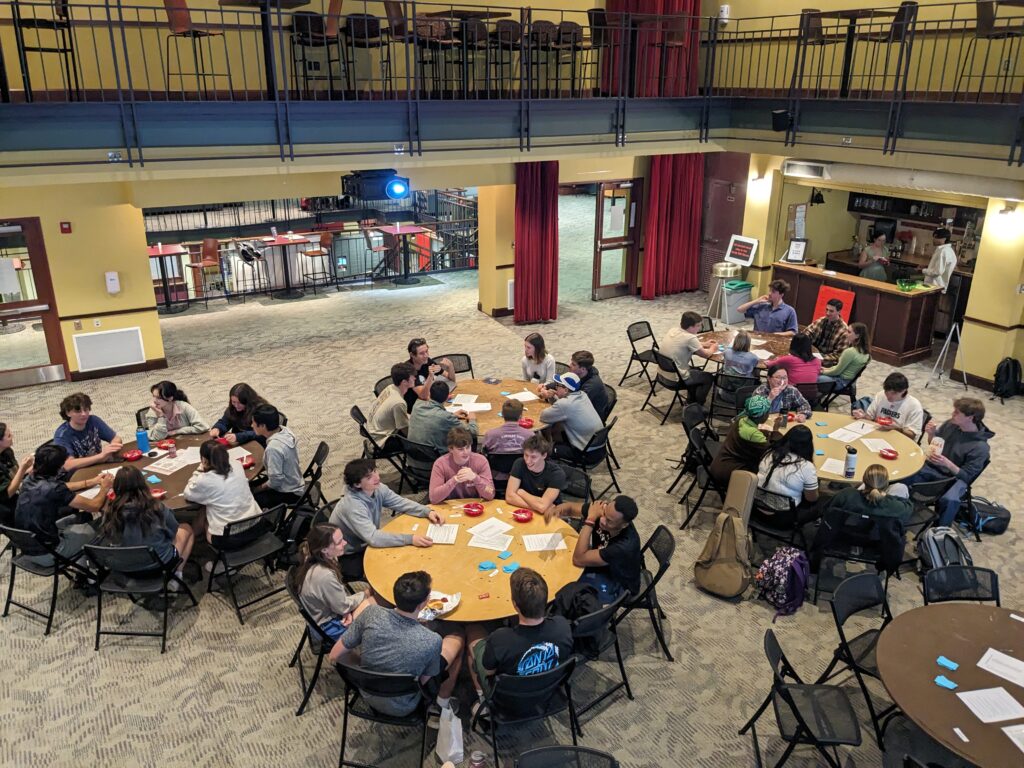
A Night of Eating Ice Cream and Deliberating GOATs

On March 12th, Davidson students gathered in the 900 Room at 9:00 to deliberate about the greatest of all time in music, movies, and Davidson life! The event was hosted by the DCI Fellows, and led by Senior Fellows LJ Phillips ’25 and Body Bassett ’25 and Fellows Logan Jain ’26 and Emre Guvenilir ’25.

The event was organized as a competitive deliberative event, and students enjoyed presenting competing arguments about what the best dorms at Davidson are, who the greatest basketball players of all time are, and all manner of similarly lighthearted but contentious topics. There were ice cream sundaes and premium prizes like DCI-themed Stanley cups. All in all the event was a great success, as it introduced students to the practices and principles of deliberation in a fun and engaging atmosphere.

This was the DCI’s second Deliberating GOATs event, and it is quickly becoming a campus tradition. We hope to see you next spring!

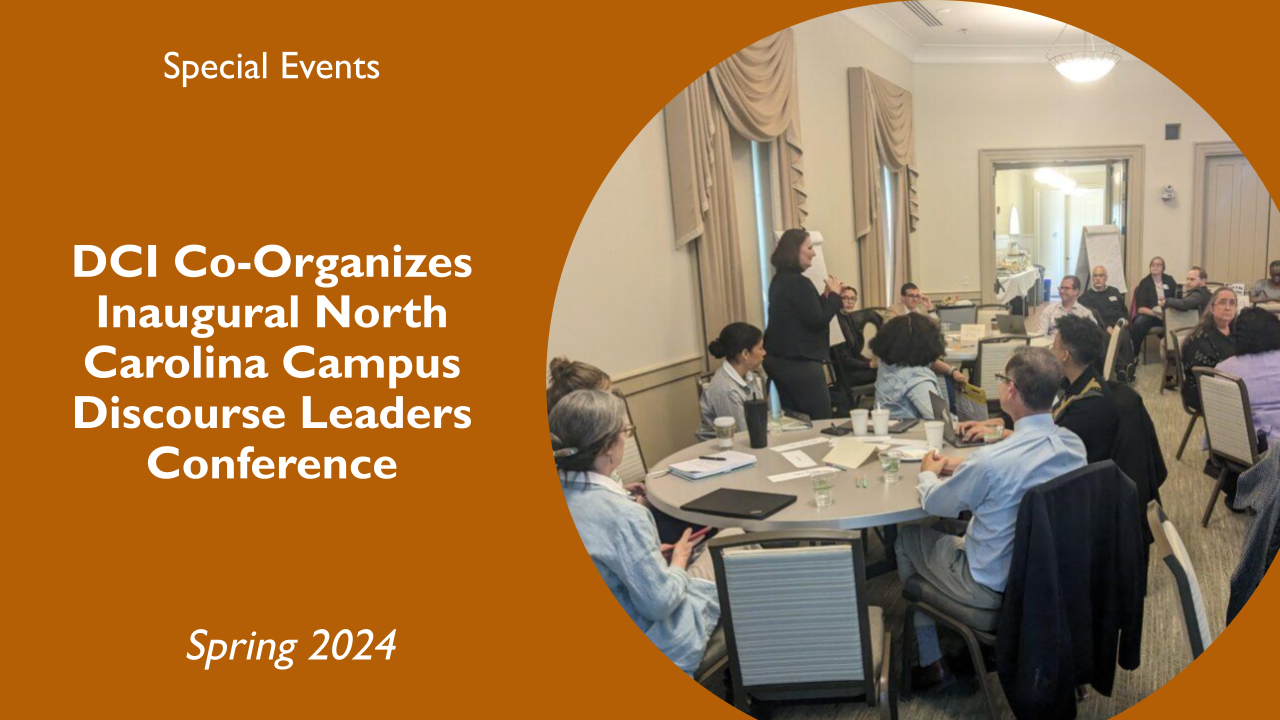
DCI Co-Organizes Inaugural North Carolina Campus Discourse Leaders Conference

Faculty and staff who work on improving public discourse on college campuses can often feel disconnected from similar efforts at other institutions, even those that are very nearby. The Deliberative Citizenship Initiative recently collaborated with several other organizations to organize an opportunity for these public discourse scholars and practitioners to share ideas, practices, and challenges with one another.

On April 5, the DCI, the Program for Public Discourse at the University of North Carolina at Chapel Hill, the Kernodle Center for Civic Life at Elon University, and the Free Expression and Constructive Dialogue Task Force at the University of North Carolina at Charlotte, and NC Campus Engagement (a consortium of 41 higher education institutions in North Carolina) partnered to host the inaugural North Carolina Campus Discourse Leaders Conference.

Over 40 faculty and staff members representing 18 different institutions of higher education from across North Carolina attended the day-long conference. They included participants from state universities (e.g., North Carolina State, Western Carolina University), private universities (e.g., Duke University, Wake Forest University), historically black colleges and universities (e.g., North Carolina Central University, Winston Salem State University), and community colleges (e.g., Wake Tech Community College, Durham Technical Community College) and came from the eastern, western, central, and southern regions of the state.

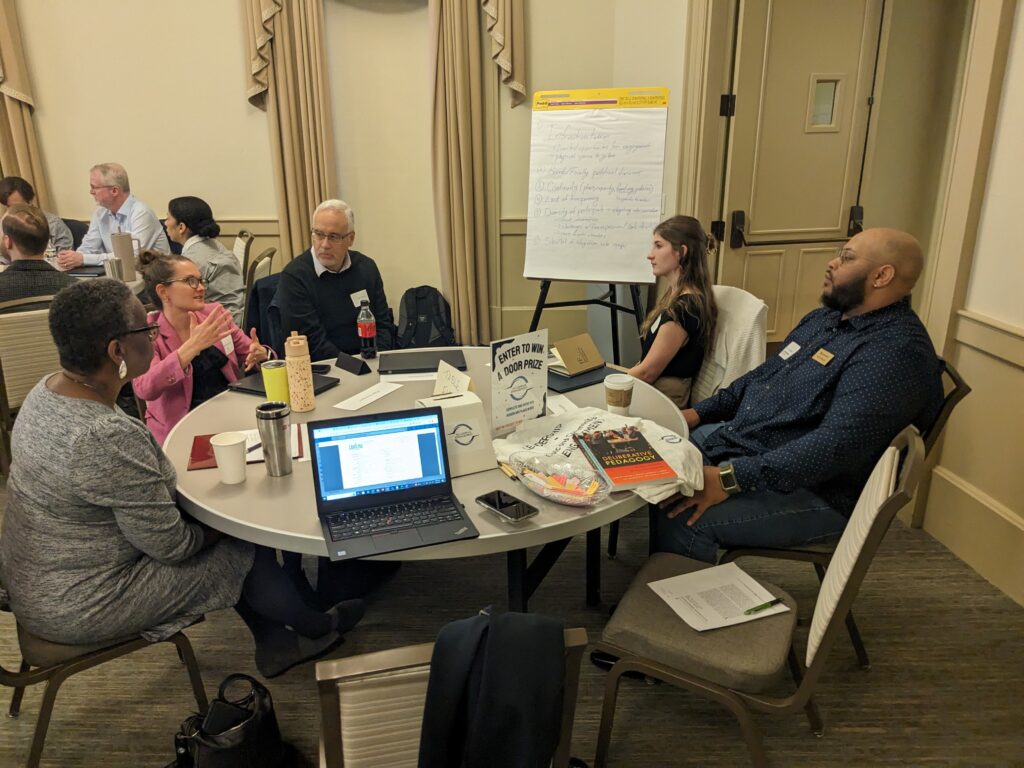
Participants discussing around a table

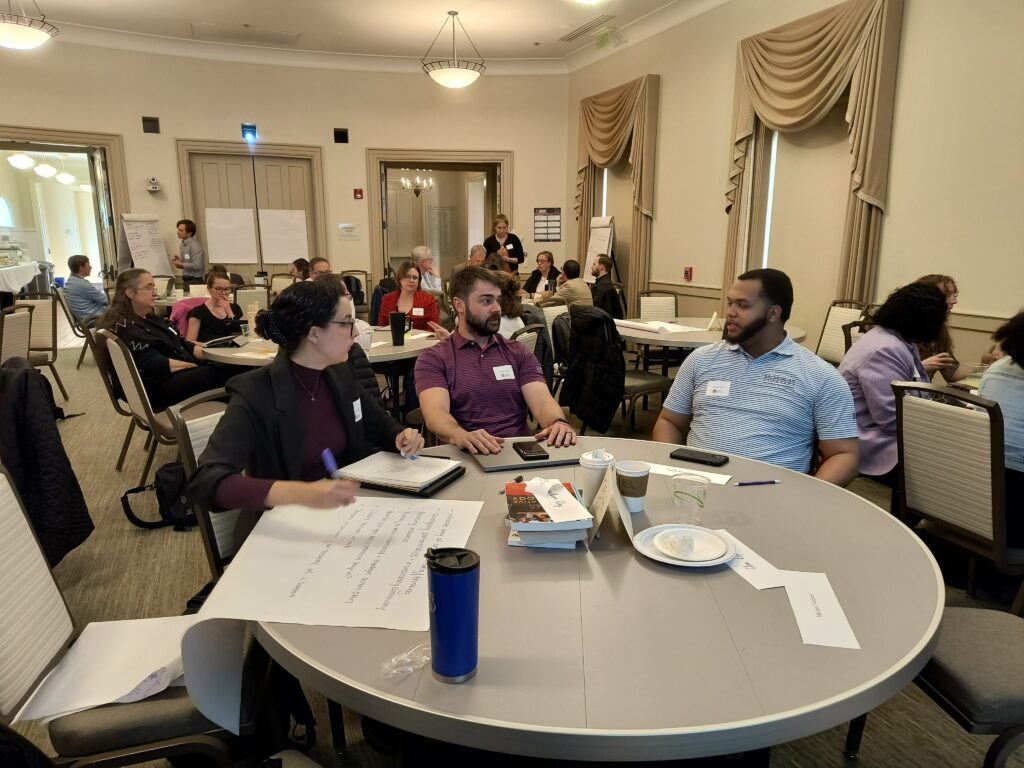
Hosted at the University of North Carolina  at Chapel Hill, the conference provided an opportunity for participants to share their approaches and challenges that they have experienced at their institutions. They were also able to learn from each other in highly interactive breakout discussions with colleagues at institutions that are both similar to and different from their own.

The conference was structured into four sessions, each beginning with an introductory presentation on a key topic of discourse from the co-organizing partners before opening into round-table discussions. Campus discourse leaders shared the strategies they have been implementing in their own programs, discussed challenges they have been faced with, and offered future points of discussion. Session topics included:

  • The Context of Public Discourse on College Campuses Today
  • Strategies for Fostering Robust Discourse in the Classroom
  • Strategies for Fostering Robust Discourse on Campus and in the Community
  • Strategies for Connecting and Collaborating across Campuses
Participants discussing around a table

The NC Campus Discourse Leaders Conference inspired a commitment to ongoing collaboration and support among attendees and organizers, with plans already underway for future events and initiatives aimed at advancing the mission of dialogue and discourse on college campuses statewide.

Participants left the conference with a new network of colleagues from across North Carolina, new opportunities for collaboration on projects related to public discourse, and new ideas to consider and implement back on their campuses. 

Special recognition is due to the great team of partners who made this event possible. Kevin Marinelli and Alissa Bouttavong from the UNC-Chapel Hill Program for Public Discourse were amazing hosts who spearheaded the logistics of the conference and worked closely with the co-organizing planning team of Leslie Garvin (NC Campus Engagement), Graham Bullock (Davidson College), Matthew Metzgar (UNC Charlotte), Anne Moore (UNC Charlotte), and Andrew Moffa (Elon University). The team met regularly for nearly a year to organize the conference and is looking forward to following up on its success in the months to come.

Special recognition is due to the great team of partners who made this event possible. Kevin Marinelli and Alissa Bouttavong from the UNC-Chapel Hill Program for Public Discourse were amazing hosts who spearheaded the logistics of the conference and worked closely with the co-organizing planning team of Leslie Garvin (NC Campus Engagement), Graham Bullock (Davidson College), Matthew Metzgar (UNC Charlotte), Anne Moore (UNC Charlotte), and Andrew Moffa (Elon University). The team met regularly for nearly a year to organize the conference and is looking forward to following up on its success in the months to come.

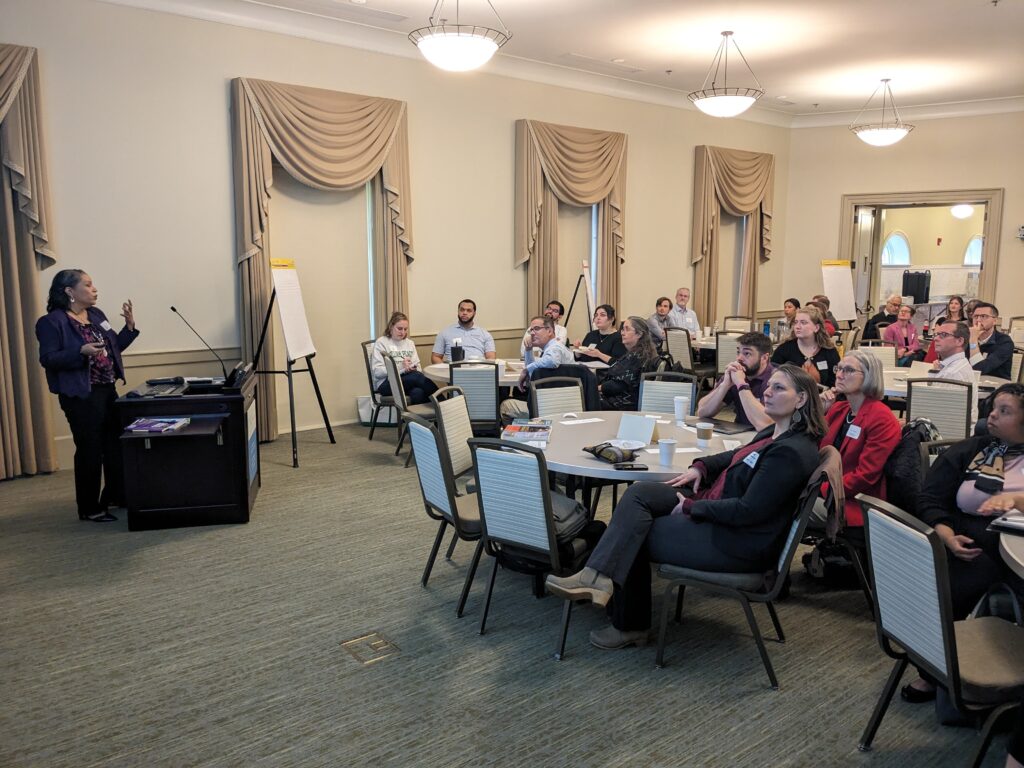
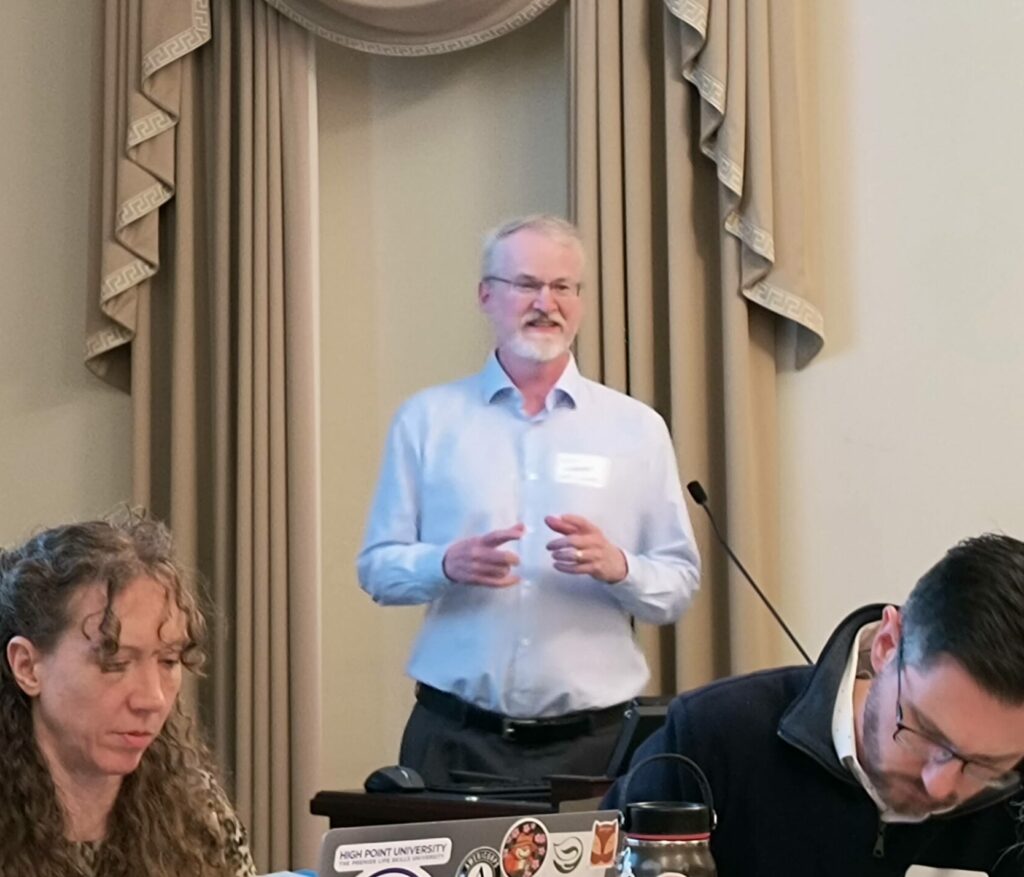
Leslie Garvin presenting at the NC Campus Discourse Leaders Conference.
Leslie Garvin from North Carolina Campus Engagement
presenting at the NC Campus Discourse Leaders Conference.
Graham Bullock presenting at the NC Campus Discourse Leaders Conference.
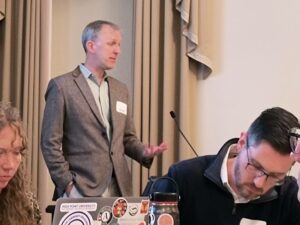
Conference co-organizer Graham Bullock from Davidson College presenting at the
NC Campus Discourse Leaders Conference.

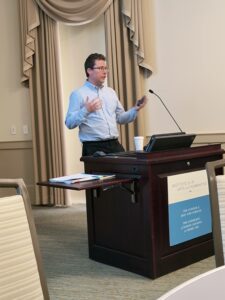
Conference host and co-organizer Kevin Marinelli from UNC-Chapel Hill presenting at the
NC Campus Discourse Leaders Conference.

Kevin Marinelli presenting at the NC Campus Discourse Leaders Conference.
Matt presenting at the NC Campus Discourse Leaders Conference.
Matt Metzgar from UNC Charlotte presenting at the NC Campus Discourse Leaders Conference.

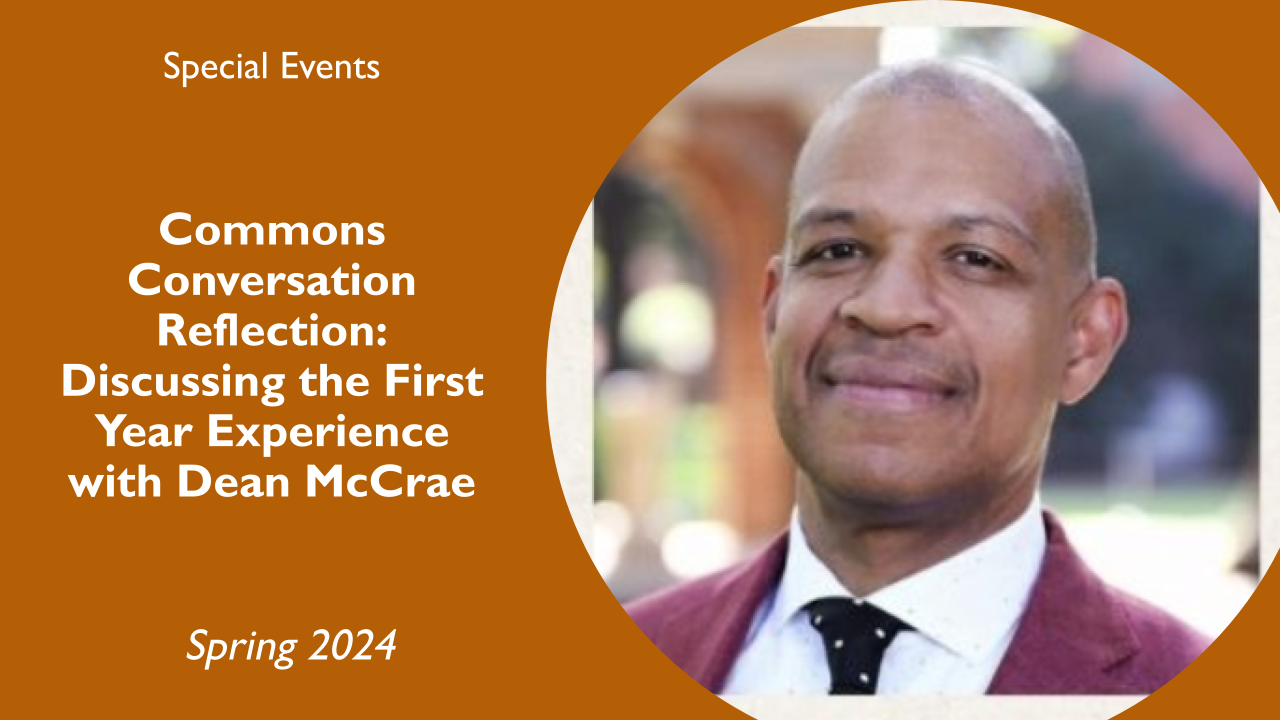
Commons Conversation Reflection: Discussing the First Year Experience with Dean McCrae

By Graham Bullock, Logan Jain ’26, and Grace Gallagher ’26

On Thursday, April 4, Dean of Students Byron McCrae hosted a discussion with students about the first year experience at Davidson as part of the DCI’s ongoing Commons Conversation series. Dean McCrae framed the discussion with some of his initial thoughts and questions and then opened it up for the students to share their impressions related to the first year experience at Davidson.

Students quickly began to ask questions about the goals of first-year programming. Do we want students to make connections and feel at home? Should we focus more on affinity-based programming for different identity groups (e.g., first gen, minority students, etc.)? Or do we want to work on building a broader sense of community and creating groups that include a cross-section of identities?

One theme of the conversation was the schedule and design of freshman orientation. They discussed the tradeoff between having too many required events that exhaust students and giving them a comprehensive enough introduction to life at Davidson – and to each other. Along those lines, the value of class trips also came up – last year the entire first year class went to a Charlotte FC game together.  

The question of whether there are important topic areas that are not currently covered during Orientation was also raised, which precipitated a discussion about whether orientation programs should be extended throughout the whole first semester. There was a sense among some of the conversation participants that orientation shouldn’t end on the first day of classes, and that we need to ensure that first year students continue to receive the necessary support and have access to resources to ease the academic and social transition as they need them.

Others argued that there are a lot of resources currently available but students don’t take advantage of them. How do we increase the publicity of these resources? Some suggestions included creating a website with first-year resources (versus the current strategy of a pamphlet/handbook) as well as de-stigmatizing the use of these resources.

The value of the holistic advising program was discussed, and questions were raised about how students are paired with their advisors and what the tradeoffs of having a staff vs. faculty advisor are. Some students reported having advisors who were really helpful, while others reported that they were helpful in some regards but less helpful in others. Some of the students were unaware that advisors had funding to host social events with their advisees; others wondered how first-year students can be convinced that it is worth their time to show up at these and other events hosted for them.

Another general theme was whether the College should continue to work within the current orientation framework or develop new methods to introduce first years to Davidson. One specific idea that came up was to create more Pre-Orientation Programs that build on the experiences of Davidson Outdoors, the International Students Program, the STRIDE Program, and other similar initiatives.

All in all, it was a rich conversation that generated lots of ideas, questions, and areas of both agreement and disagreement. Dean McCrae took lots of notes; it was a great opportunity for him to both share this thoughts on the topic as well as hear directly from students about their perspectives on what worked well for them and what might be improved in the future.   

The DCI’s Spring Kickoff Party – Biggest Turnout Ever!

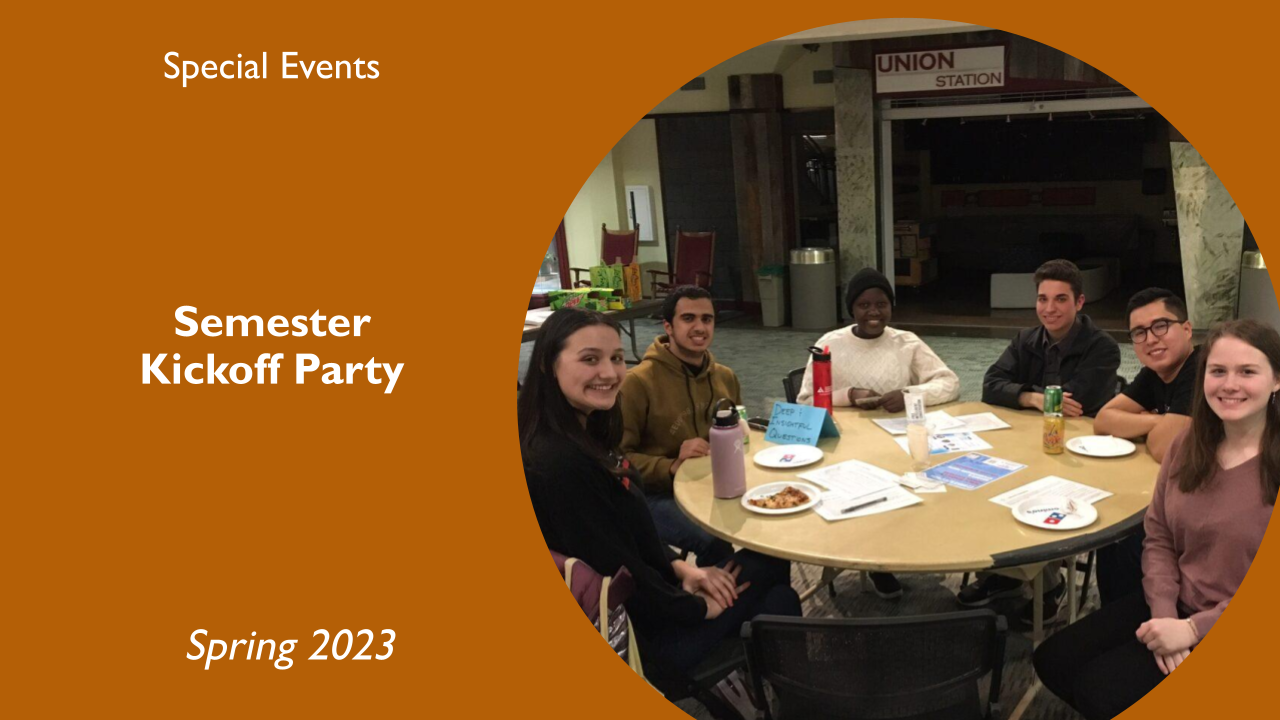
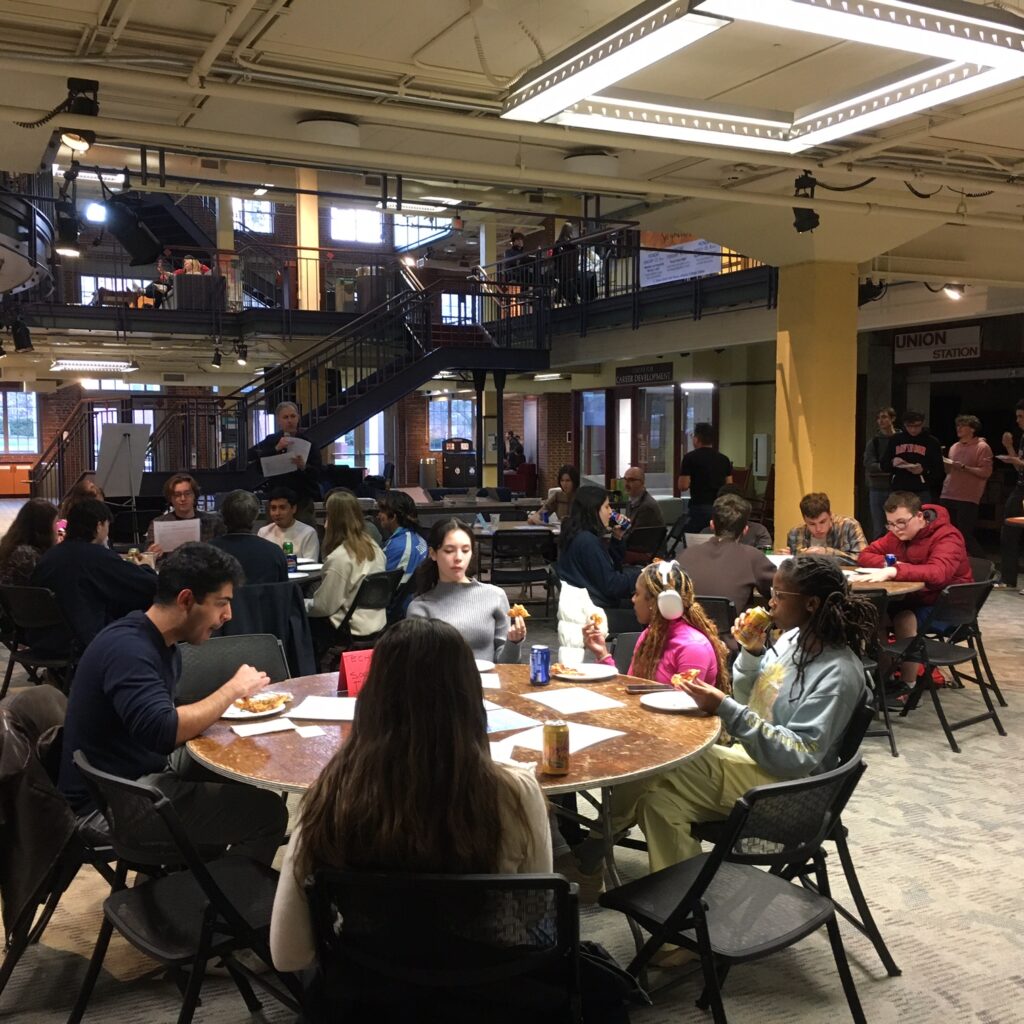
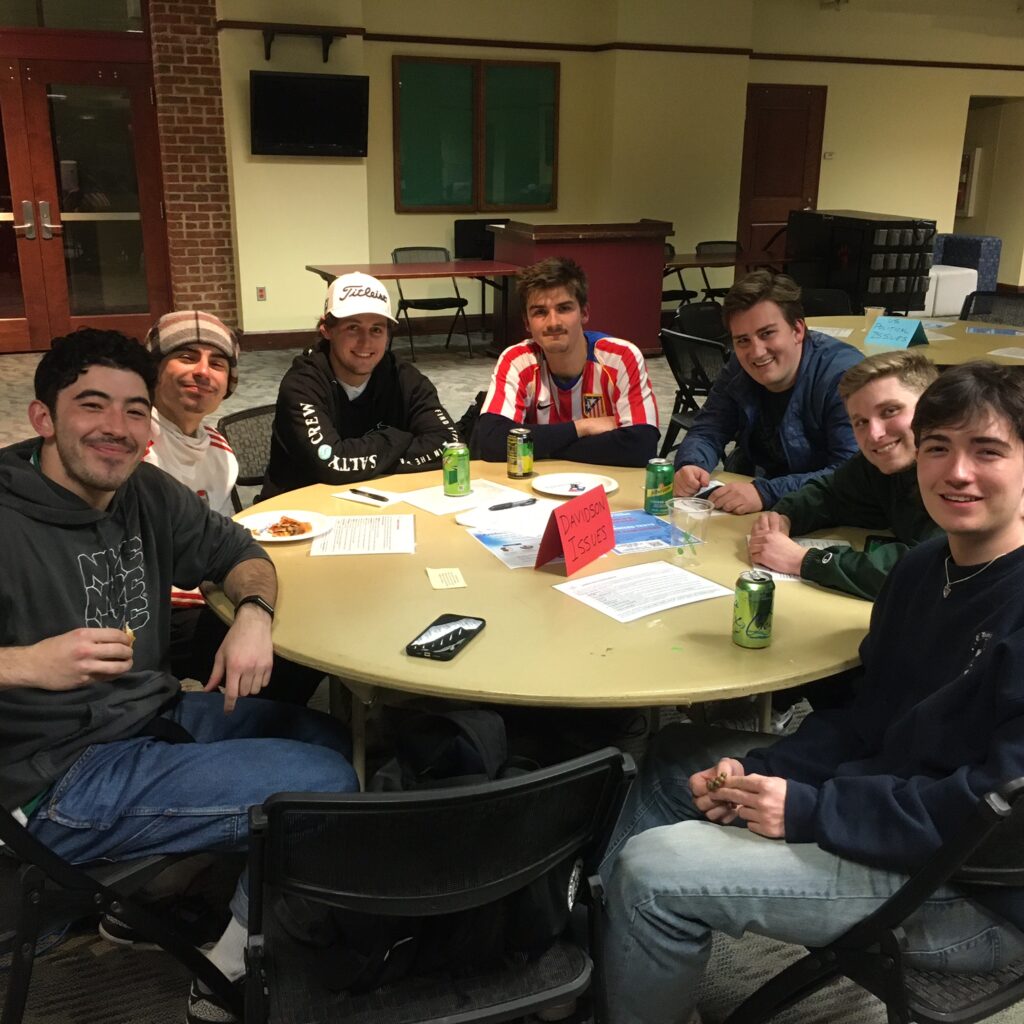
This past Friday, the DCI started off the new year with some fantastic energy when it held its Spring Semester Kickoff Party. Over 50 people came out to enjoy some pizza and conversation about a wide range of topics. They included Davidson students, staff, faculty, alumni, and community members, some of whom had never heard of the DCI and others who were DCI veterans.

Attendees filled up tables in the College Union’s Atrium that were dedicated to different topics – Davidson Issues, Technology and Social Media Issues, International Issues, US Politics, Economic Issues, and more. DCI Fellows facilitated informal discussions of questions related to each table’s topics, aided by copies of the DCI’s Conversation Agreements and Deliberative Dispositions that were available as placemats at each table. For the adventurous, there were a couple of “mystery tables” where questions from a wide range of domains were discussed.

Every 15 minutes or so, the DCI’s Faculty Director and Assistant Director spoke briefly about upcoming DCI events and offered some deliberative tips to the attendees. At each interlude, one attendee was randomly selected to win a prize from the DCI for attending the event. And then the conversations continued! Participants could stay at their table or switch between tables to try out different topics.

It was a great way for students to connect with each other as well as engage with faculty, staff, and community members. And everyone got to experience a deeper and more respectful kind of conversation than they might normally have in our highly polarized and politically fragmented society. It provided a window into what the DCI is focused on – building democracy, one conversation at a time – and a gateway to other DCI programs, including our Spring D Teams on Education Issues (registration deadline January 25) and upcoming Deliberative Forum on AI (registration deadline January 31).

  • « Go to Previous Page
  • Page 1
  • Page 2
  • Page 3
  • Go to Next Page »

Footer

Blog Post Categories

  • Announcements
  • Blog Posts
  • DCI Posts
  • Events
  • Faculty Posts
  • Fellow Posts
Image of a compass superimposed by the text "Deliberative Citizenship Initiative" and "Davidson College." Clicking on this image leads to the Initiative page.

Recent DCI Blog Posts

  • We Tried to Fix Jubilee’s “Middle Ground” – Here’s How It Went
  • A Case for Deliberation in the Natural Sciences
  • Welcoming New Staff to the DCI and DCN
  • Facebook
  • Twitter
  • Instagram
  • LinkedIn


Copyright © 2026 · Infinity Pro on Genesis Framework · WordPress · Log in