• Skip to main content
  • Skip to footer

Deliberative Citizenship Initiative

Building Democracy One Conversation at a Time

  • The Initiative
    • Programs
      • Deliberation Across the Curriculum
      • Deliberation on Campus
      • Deliberation in the Community
      • Research on Deliberation
    • Motivations
      • Why Deliberative Citizenship?
      • Why Davidson? Why Now?
    • Who’s Involved?
      • DCI Fellows Cohorts
        • 2025-2026 Fellows
        • 2024-2025 Fellows
        • 2023-2024 Fellows
        • 2022-2023 Fellows
        • 2021-2022 Fellows
        • 2020-2021 Fellows
      • DeeP Collaborative Cohorts
        • 2024-2025 DeeP Collaborative Faculty
        • 2023-2024 DeeP Collaborative Faculty
      • Advisory Council
    • History
      • What Sparked the Initiative?
    • Key Deliberative Dispositions
    • Frequently Asked Questions (FAQ)
    • Annual Report
  • Get Involved!
    • Participate in a Forum
    • Join a D Team
    • Become a Fellow
    • Take Courses
    • Get Training
    • Come to Guest Lectures
  • Events
    • Upcoming Events
      • 250th Anniversary Deliberative Forum Series on American Values
    • Past Events
  • Connections
    • The Deliberative Citizen: The DCI’s Monthly Newsletter
    • Efforts on Campus
    • Efforts in the Community
    • Efforts Elsewhere
    • Readings and Resources
      • DCI-Published Guides
      • DCI Guide to One-on-One Conversations
      • How to Disagree
      • Demonstration of Facilitation Styles
      • Deliberative Pedagogy Mini-Course
    • How We Can Help: DCI’s LET’S DELIBERATE! Partnership Opportunities
    • DCI in the News
  • DCI Blog Posts
    • Recent Blog Posts
    • All Blog Posts

Events

DCI’s First-Ever Watch Party: Tuning into UNC Chapel Hill’s Expert Roundtable on Presidents, Institutions, and the People

November 12, 2025 by Graham Bullock

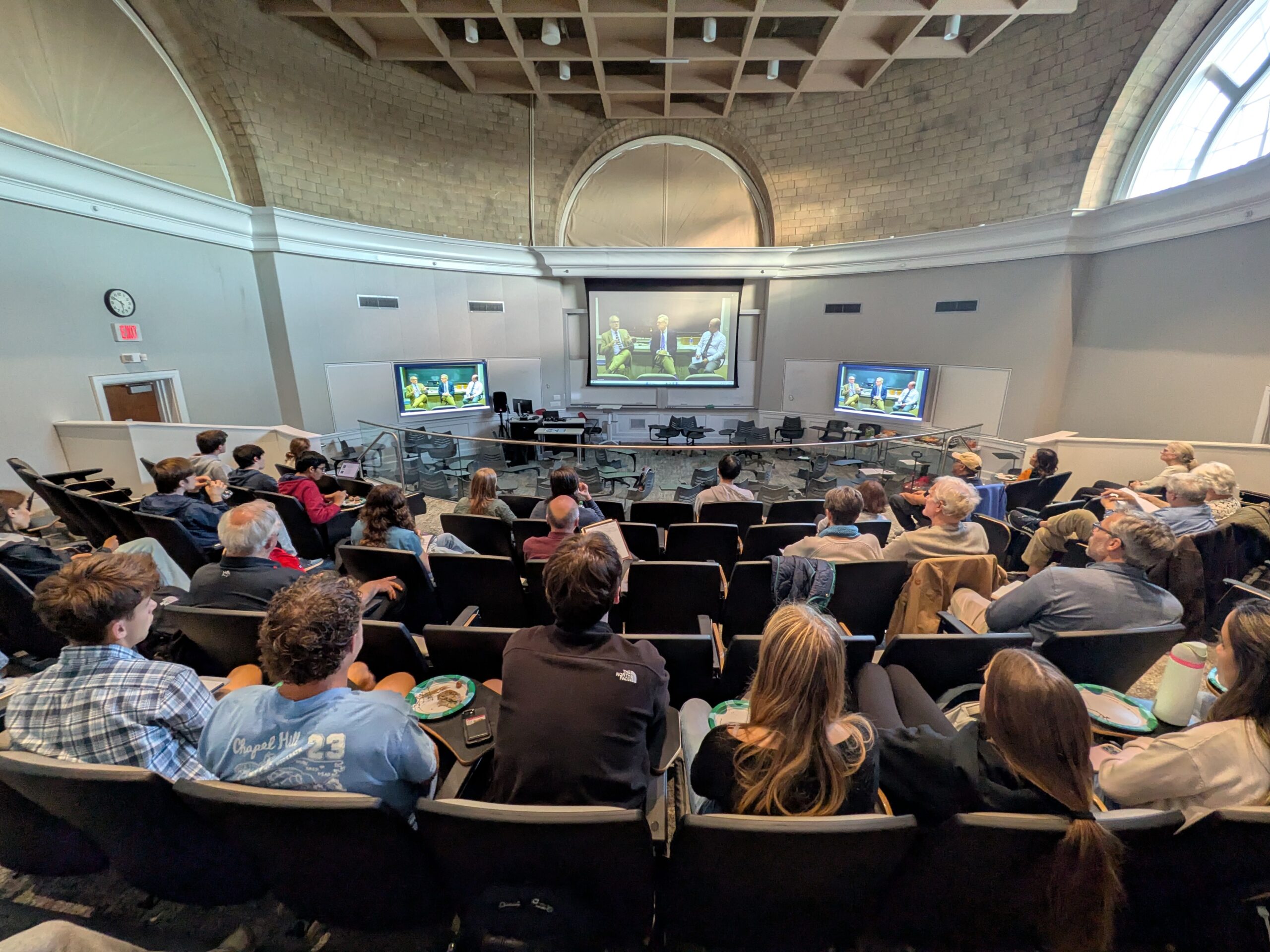
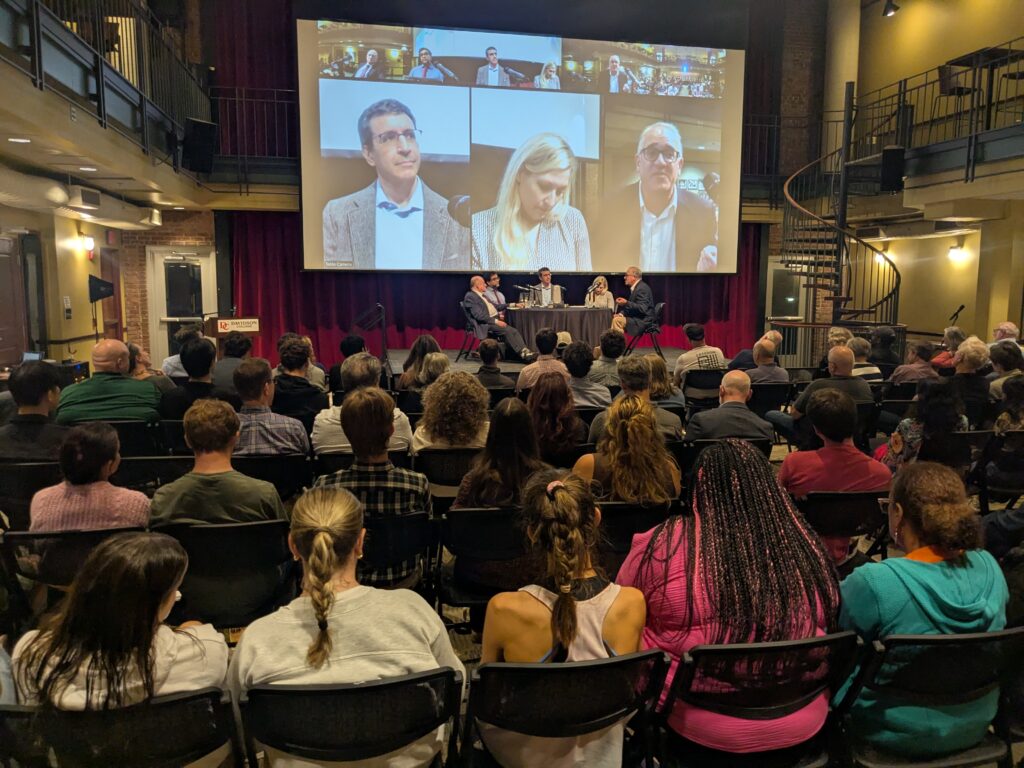
Photo of audience watching screens at Watch Party

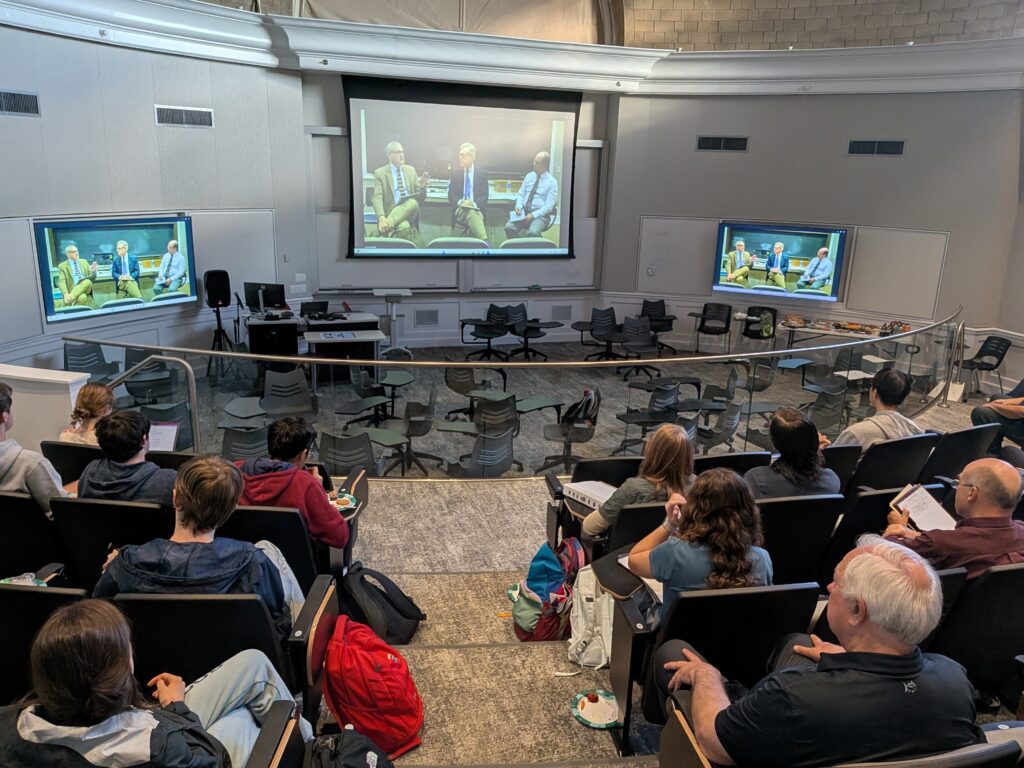
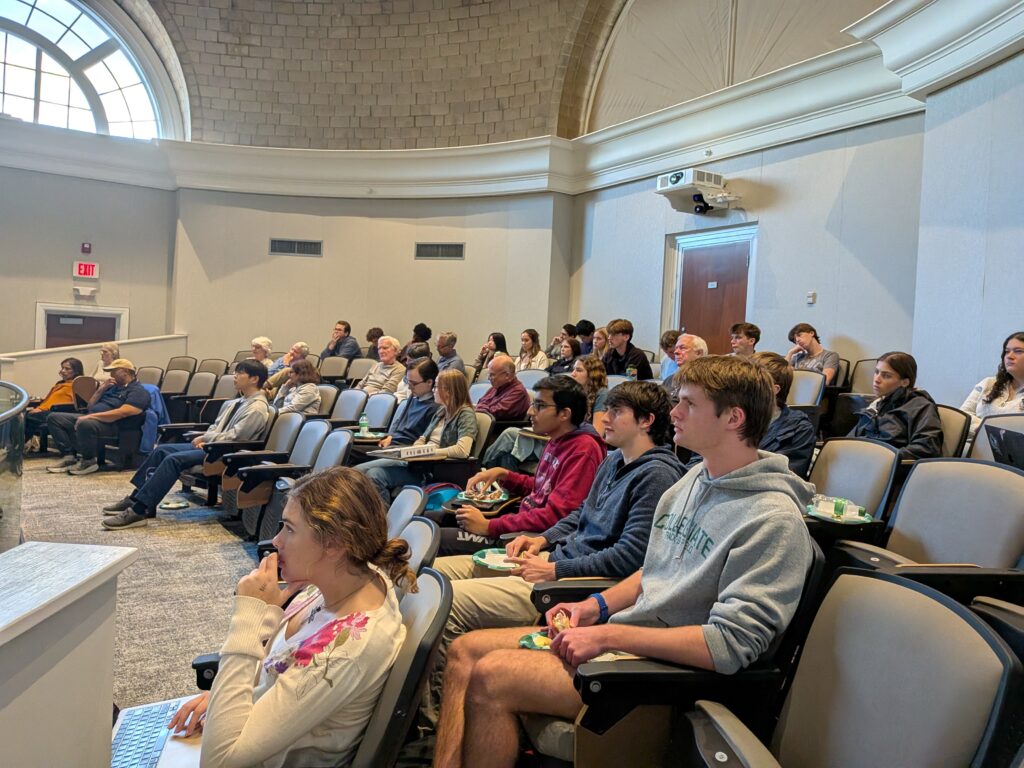
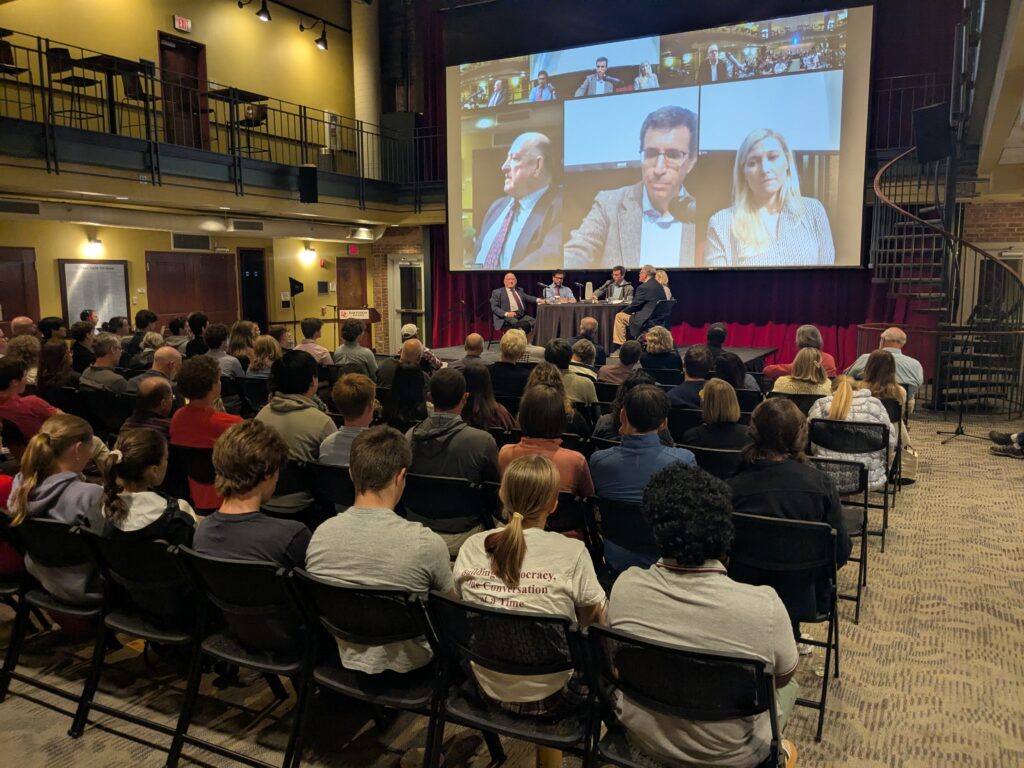
On October 30, 2025, the Deliberative Citizenship Initiative hosted its first-ever watch party of an expert roundtable held not at Davidson College, but on another college campus. UNC Chapel Hill’s Program for Public Discourse hosted the second event in the American Values Deliberative Forum Series on “Balancing Self-Government and National Stability: The Case of Presidents, Institutions, and the People.” Approximately 50 Davidson students, faculty, staff, and community members gathered in Hance Auditorium to view the nearly two hour conversation — and more joined via UNC’s livestream via Zoom.


image of audience

The panelists on this roundtable included Thomas Frank (best-selling author of What’s the Matter with Kansas?) and John Gastil (professor of communication studies, public policy, and political science at Penn State). Unfortunately the third panelist, Jennifer Mascott (professor of law and founder of the Separation of Powers Institute at Catholic University, was unable to attend at the last minute due to travel challenges, UNC Chapel Hill professor of political science Kevin McGuire served as the moderator of the panel discussion, which was followed by a Q&A session with the audience.

Image of audience

250th Anniversary American Values Deliberative Forum Series

This event is the second Expert Roundtable in the 250th Anniversary American Values Deliberative Forum Series, which is designed to commemorate the upcoming 250th anniversary of the Declaration of Independence. This anniversary represents an important opportunity to both deepen and elevate the discourse about the values that have animated American social and political debates throughout its history. The goal of the series is to enable Americans of all backgrounds – college students, high school students, families and neighbors, members of faith communities and other civic organizations – to authentically, respectfully, and constructively engage with each other about our foundational ideals and how they are relevant to contemporary policy issues.

Co-hosted by Davidson College’s Deliberative Citizenship Initiative (DCI), Duke University’s Provost’s Initiative on Pluralism, Free Inquiry, and Belonging, and the University of North Carolina at Chapel Hill’s Program for Public Discourse, this year-long program will include both Expert Roundtables and Community Conversations dedicated to unpacking, understanding, and applying the values that are foundational to the United States – and to many other countries around the world.

Community Conversations

During the week after the roundtable, both Davidson and UNC Chapel Hill hosted Community Conversations for members of their communities to discuss the same issues covered by the panelists. At Davidson, these conversations were part of the DCI’s D Team series, which involved 16 small groups — over 130 people — gathering to share their thoughts with each other both in-person and online, guided by student facilitators trained by the DCI.

The recording of the roundtable is posted below, as are some guides that you can use to host such conversations. The Deliberation Guide provides both important background information on the topics in question and a specific framework for engaging with these topics in the context of a two-hour facilitated conversation, which is the format that the DCI’s D Teams will use to explore the topic. The Issue Guide is similar to the Deliberation Guide but does not include the structured format for group conversations. The Issue Brief provides a brief outline of the main ideas that are presented in the Deliberation Guide and Issue Guide. While both include a similar list of questions to consider about the topic, they are designed for personal reflection before, during, or after our expert roundtable on the same topic.

Other institutions are welcome to use these resources to highlight their own conversations about the important issues covered in this forum. For ideas on how to host such a discussion, check out the webinar that DCI Faculty Director Graham Bullock hosted that provides an overview of different strategies and options that might work well in different organizational and community contexts. Please email dci@davidson.edu if you have any questions or ideas you’d like to share.

ISSUE BRIEF

DCI-Self-Government-National-Stability-Issue-Brief

ISSUE GUIDE

DCI-Self-Government-National-Stability-Issue-Guide

DELIBERATION GUIDE

DCI-Self-Government-National-Stability-Deliberation-Guide

Filed Under: Events

DCI Fellows Host Discussions after Senators Klobuchar and Tillis Conversation

November 3, 2025 by Stephen Walker

By Stephen Walker ’26 (Senior Fellow and DCI Co-Convener)

Following the inaugural Institute for Public Good October 13 event featuring a conversation between Senators Amy Klobachar, Thom Tillis, and Davidson College President Doug Hicks, Deliberative Citizenship Fellows hosted a discussion for those in attendance at the talk to debrief and continue pondering the nature of the “public good.” In their remarks, both President Hicks and Chris Marsicano, the Director of the Institute for Public Good, encouraged audience members to join the discussion after the event.

Fellows greeted and welcomed students to discuss the event over snacks in a classroom outside of the Duke Family Performance Hall, where the conversation took place, so that any interested attendees would have the opportunity to reflect and develop their own plans for promoting the public good in their own communities.

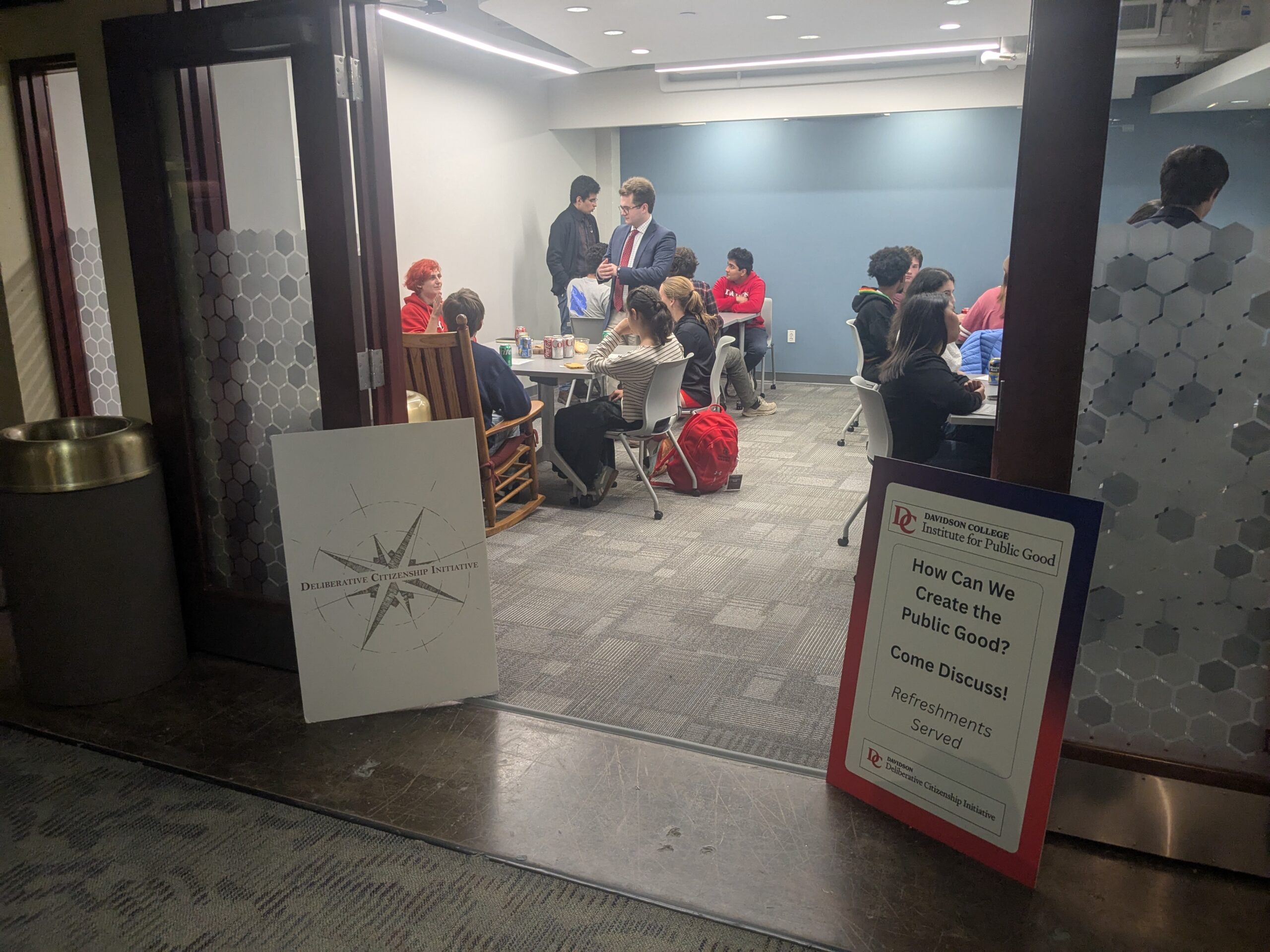
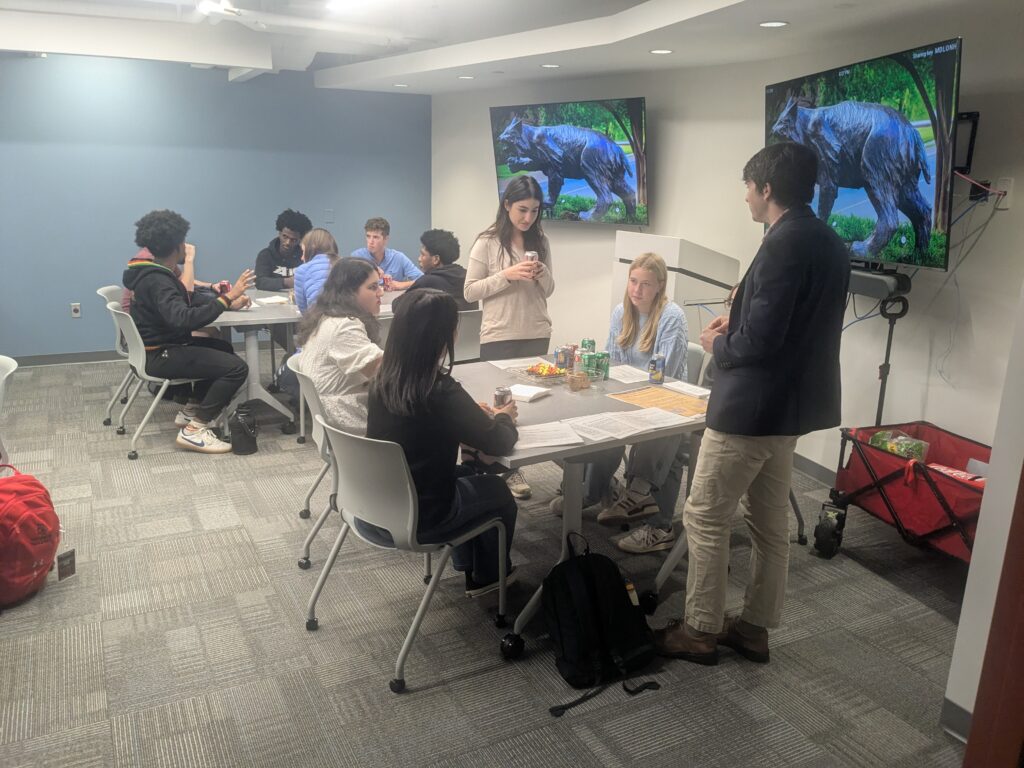
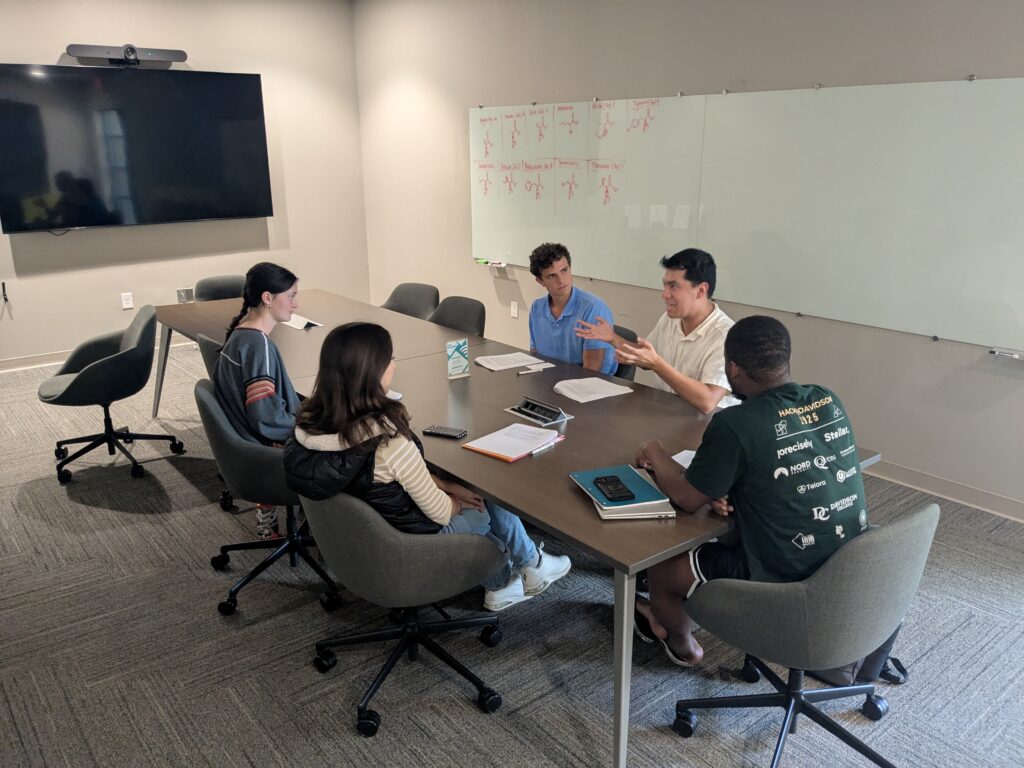
Two tables of deliberators with two facilitators standing

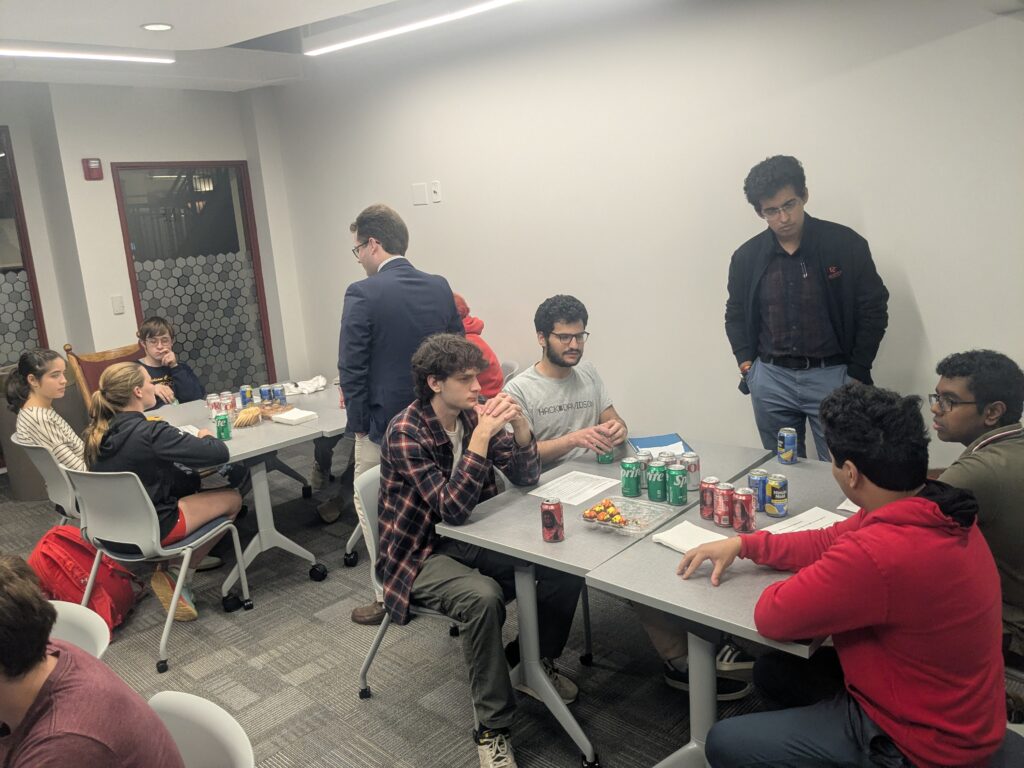
In a packed meeting room with extra chairs just outside the performance hall where some facilitators had to stand as they guided the discussions, a combination of reflections on the senators’ discussion and attempts to agree on their own definitions of the public good kept the students abuzz throughout their extended conversation.

The guiding questions for the discussion, provided by DCI Co-Convener Casey Scheiner and introduced to the participants by DCI Faculty Director Graham Bullock, focused the students on engaging with the Senators’ ideas and identifying their own perceived challenges to the public good and bipartisan action from government. Fueled by an assortment of desserts and beverages, they also discussed the ways government and citizens alike may all come together to promote the public good across a diverse array of sectors throughout society. Such questions enabled participants to focus their participation on defining and applying the public good to contexts that were relevant to their own lives so that they could take what they learned from their conversation with them into their own civic engagements in the future.

The enthusiasm of the students, passionately participating in a discussion of their own after listening to the Senators’ discussion shows the impact the work of the DCI has in providing an outlet for Davidson’s community to tackle our most pressing issues. It also shows how the DCI can complement the work of other organizations, like the Institute of Public Good (which the DCI is now a part), by creating structured yet informal contexts for participants at events they host to deliberate about ideas presented and apply them to Davidson’s own community.

See what the participants had to say for themselves after attending the event:

“[Our group] applied a lot of the things [the senators] talked about to real-world examples and talked about what we thought was a civil good […] and our duties as citizens. There was a wide array of opinions in our group; that was really interesting to get to hear people who had different opinions from myself.

“Every time we do a deliberation, I feel like I end up being able to [better] see the other side, which makes things become more complicated, which is a good thing because it helps all of us become more intentional but it’s also confusing because my opinions keep changing.”

Anna Kate Howell ’29

“I found [the discussion] very helpful to be able to process the information during the senators’ event; […] it was helpful to be able to reflect and to be asked questions that helped me put what they talked about in a proper context.”

“The facilitators were really helpful […] having guiding questions to push us to bring the conversation to different directions was super helpful, […] especially to see different perspectives and how you can apply [them] […] I now have a more nuanced answer for [what the Public Good means].”

Maggie Frampton ’29

deliberators around tables with two facilitators standing

Filed Under: Events

Recap of Our Fall 2025 Facilitator Training

October 3, 2025 by Graham Bullock

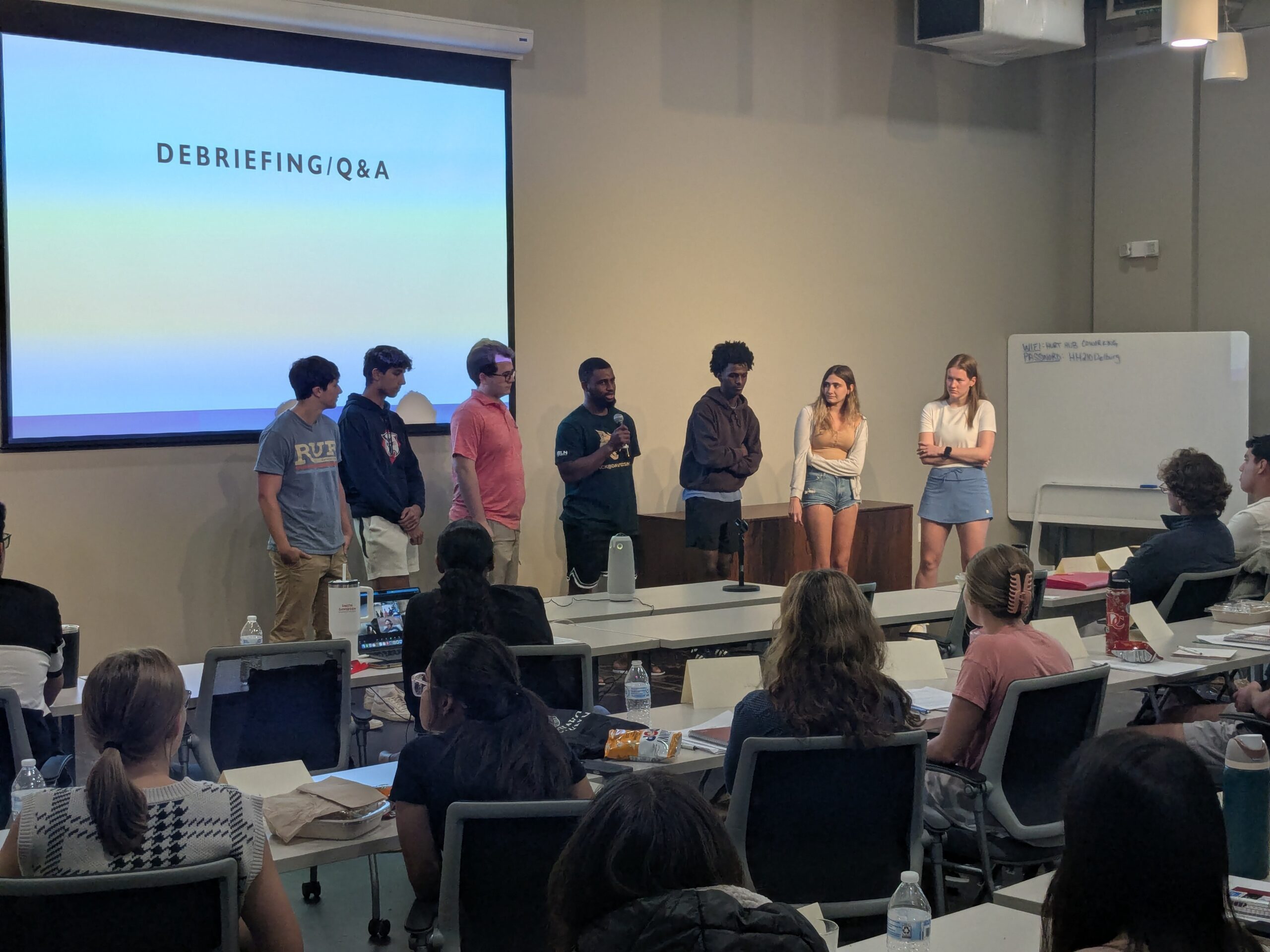
Photo of senior fellows answering questions at training

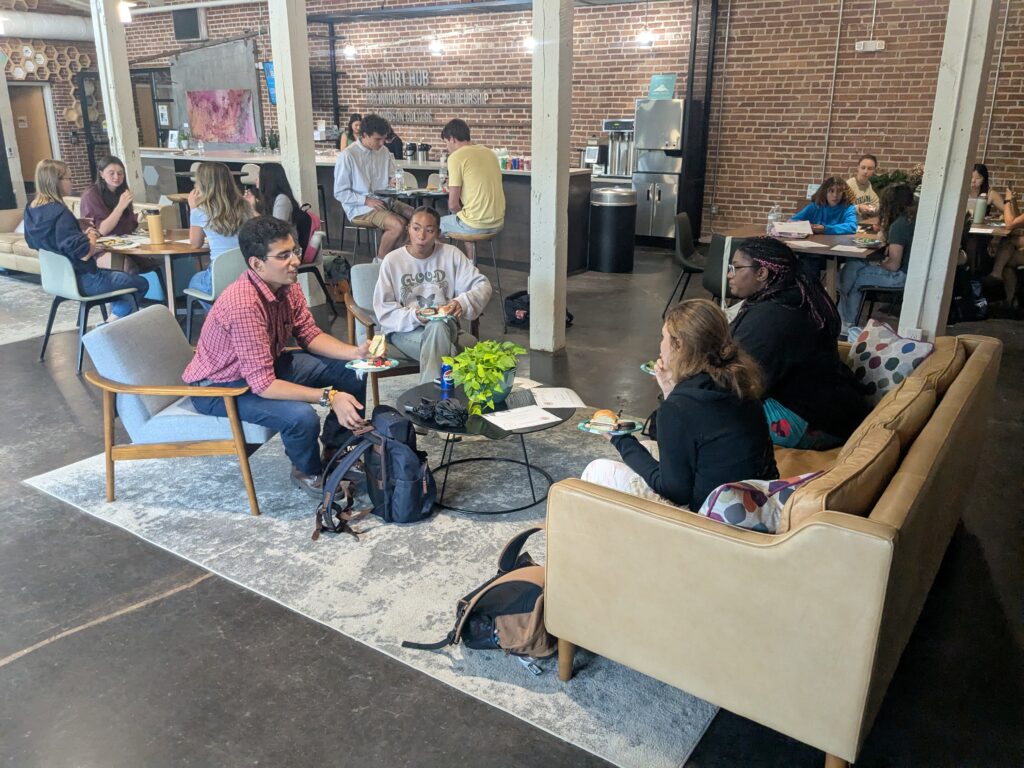
On August 31st and September 7th, the Deliberative Citizenship Initiative held its annual Deliberation Facilitator Training at the Jay Hurt Hub for Innovation and Entrepreneurship at Davidson College. These trainings, held since the spring of 2020, are designed to empower students, staff, faculty, and community members with essential skills to become facilitators of both formal and informal deliberations. Participants who complete the training become DCI certified facilitators, opening the door for participants to facilitate the DCI’s Deliberative Forums. This 8-hour training, spread over two days, enhances participants’ ability to facilitate meaningful discussions on political and social issues among deliberators with diverse perspectives.

This year, we were excited to welcome a wonderfully diverse group, with 25 participants attending in person and 4 joining us online. The cohort included a rich mix of DCI Fellows, Davidson students, staff, and engaged community members, each bringing unique insights and experiences. This blend of backgrounds created an inclusive, dynamic environment that fostered deep dialogue and collaboration right from the start.

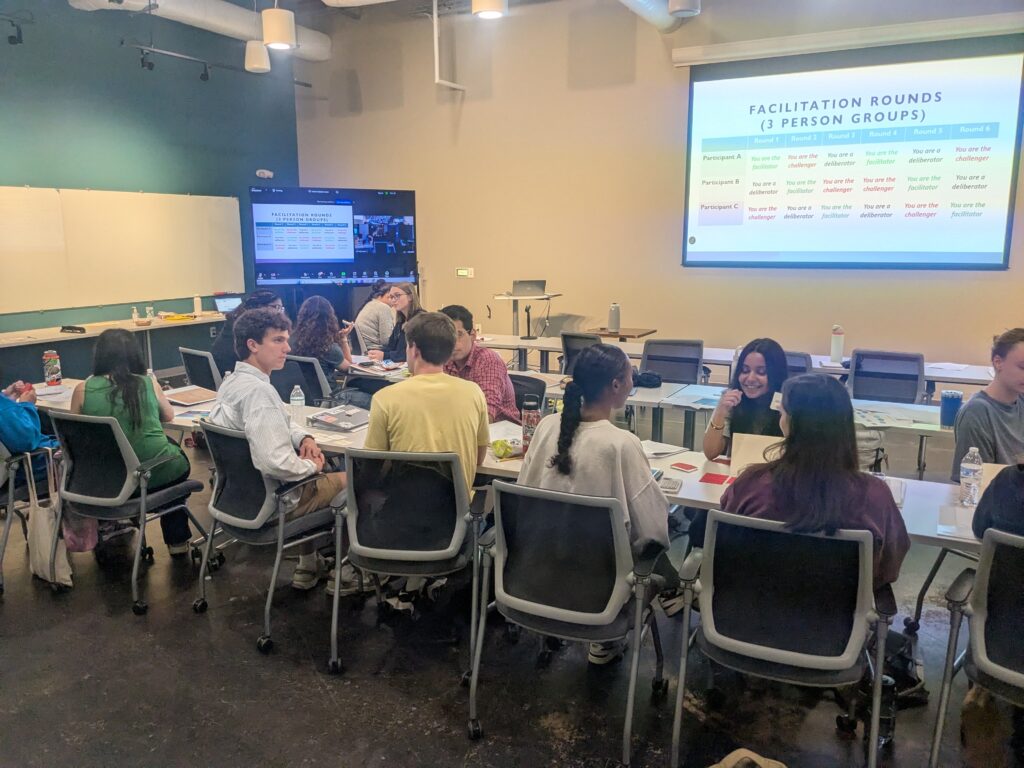
photo of small group conversations during the training.

During the first session, Dr. Graham Bullock guided participants through the essentials of setting up and preparing for deliberation. A highlight was the session’s mock deliberation on Free Speech and Inclusion, facilitated by our Senior Fellows. This hands-on experience allowed trainees to step into the role of deliberators, share personal thoughts, and observe how seasoned facilitators effectively navigate challenging, contentious conversations. The collaborative atmosphere underscored the vital importance of empathy and respect when guiding difficult discussions.

photo of participants in a small group conversation

The following weekend, Dr. Bullock equipped our trainees with advanced techniques for handling the tough moments that arise in discussions on divisive issues. Participants tackled a gamified training experience that brought to life the methods and tools outlined in the Deliberation Facilitator’s Handbook, making the learning process interactive and memorable. To apply their new knowledge, they then engaged in a second mock deliberation, using the DCI’s guide on Religion in the Public Sphere. Here, trainees stepped into the facilitator role themselves, practicing how to effectively explore multiple perspectives and motivate robust conversation. This immersive practice allowed them to build confidence and refine their techniques in a supportive setting.

The training concluded with a reception where participants had the chance to connect and build community over food and refreshments. We are immensely grateful for the time spent with all our trainees over these two weekends and are excited to see how they will apply their new skills to foster meaningful conversations within their communities. We warmly welcome them into our community of deliberation advocates who are deeply committed to strengthening our democracy.

We invite all those interested in building a better democracy, one conversation at a time, to keep an eye out for future Deliberation Facilitator Trainings. We would love to welcome you to our community!

Filed Under: Events

Recording Posted of Expert Roundtable on Equality, Unity, and Immigration

October 3, 2025 by Graham Bullock

photo of roundtable discussion

On September 30, 2025, Davidson College’s Deliberative Citizenship Initiative hosted an Expert Roundtable on “Balancing Equality and Unity: The Case of Immigration and Citizenship.” The roundtable is the first event in the Deliberative Forum Series on American Values that Davidson College, commemorating the 250th anniversary of the Declaration of Independence co-hosted by Davidson College, Duke University, and the University of North Carolina at Chapel Hill. This roundtable focused on two particular founding values, unity and equality, and explored them in the context of both American history generally and the specific policy issue of immigration and citizenship.

Image of roundtable with audience and screen in background

It included four panelists, Danielle Battisti (U. of Nebraska at Omaha), Philip Cafaro (Colorado State University, retired), Fernando Tesón (Florida State University, retired), and Hrishikesh Joshi (University of Arizona), and was moderated by John Wertheimer (Davidson College). More info on each panelist is provided below, and more background about the roundtable generally is available at this link. The event was introduced by Graham Bullock (Associate Professor of Political Science and Faculty Director of the Deliberative Citizenship Initiative at Davidson College) and Doug Hicks (President of Davidson College).

image of audience with roundtable in the background

Nearly 100 people attended in person and approximately 200 joined the event via Zoom. After engaging in a spirited and respectful discussion with one another, the panelists answered questions from both the in-person and online audiences. A video recording of the event is available below.

In the week following the Roundtable, Davidson, Duke, UNC, and potentially other institutions will be hosting community conversations building on the roundtable discussion. If you are interested in hosting a conversation yourself, click here to watch a webinar that provides some ideas about how both individuals and institutions can get involved in the series by doing exactly that, either now or over the next several months.

The DCI’s series of Community Conversations during the week of October 6 will build on the scholars’ deliberations. These two-hour deliberative discussions of 6-10 people will be moderated by trained facilitators and will use a similar format to the DCI’s D Teams. To learn more about this opportunity to engage with your fellow citizens — either online or in-person) and reserve a spot at a time that works for you, click here. The primary time for these conversations is Wednesday, October 8 at 7 pm in the Student Union’s 900 Room on the Davidson campus. We’ll have round tables and DCI-trained facilitators on hand to moderate small group discussions of 6-7 people. If you can’t make that time, you can select the other times you are available and we’ll be in touch about another facilitated Community Conversation that you can join. The deadline to sign-up for one of these additional times is October 5, but everyone is welcome to join the Oct. 8 conversation without advance registration.

Included below is a deliberation guide that provides some background information about the topic of the roundtable and the community conversations. Participants are invited to review it in advance of the conversation, as it includes some discussion questions that the facilitators will be asking everyone in their group to share their thoughts on during the conversation.

DCI-Unity-Equality-and-Immigration-Deliberation-Guide

Register to Participate in an Upcoming Community Conversation

Expert Roundtable

  • Danielle Battisti is an associate professor of history at the University of Nebraska at Omaha where she specializes in immigration and ethnic history. Her book, “Whom We Shall Welcome: Italian Americans and Immigration Reform” (Fordham University Press, 2019) examines both the liberal and conservative elements of Italian American efforts to influence American immigration policies in the 1950s and 1960s. It was awarded the Immigration and Ethnic History Society’s best first book award for 2019. She is also the co-editor of Hidden Histories of Unauthorized Migrations from Europe to the United States (Illinois University Press 2025). One of her current projects is examining the immigration laws that largely facilitated Euro-Americans’ efforts to adjust their status from “illegal alien” to “legal permanent resident.” 

  • Philip Cafaro, a philosophy professor who recently retired from Colorado State, is the author of the book, How Many Is Too Many? The Progressive Argument for Reducing Immigration into the United States (University of Chicago Press, 2015), which argues that current immigration levels—the highest in U.S. history—undermine efforts to achieve a more economically just and ecologically sustainable society. He is also the co-editor of Life on the Brink: Environmentalists Confront Overpopulation (University of Georgia Press, 2012) and Virtue Ethics and the Environment (Springer-Verlag 2010) as well as the author of Thoreau’s Living Ethics: Walden and the Pursuit of Virtue (University of Georgia Press 2004) and “The Impact of Immigration Policy on Future US Population Size” in The Journal of Population and Sustainability (2025).
  • Fernando Tesón is Eminent Scholar Emeritus at Florida State University College of Law. An Argentine-American legal scholar, he is a leading authority on humanitarian intervention and the philosophy of international law. He is the editor of The Theory of Self-Determination (Cambridge University Press 2016) and co-author of Debating Humanitarian Intervention: Should We Try to Save Strangers? (Oxford University Press (2017) and Justice at a Distance: Extending Freedom Globally (Cambridge University Press 2015). He has also published articles supporting less restrictive immigration policies, including  “The Bourgeois Argument for Freer Immigration” in The Cambridge Handbook of Classical Liberal Thought and “Brain Drain” in the San Diego Law Review.

  • Hrishikesh Joshi is an Assistant Professor of Philosophy at the University of Arizona, where he also serves as a core faculty member at the Center for the Philosophy of Freedom. His research focuses on normative issues at the intersection of philosophy, politics, and economics (PPE). He has published several chapters related to immigration and citizenship, including “Immigration Enforcement and Fairness to Would-Be Immigrants” (in The Handbook of Philosophy and Public Policy), “Immigration” (in The Routledge Companion to Libertarianism), and “Immigration: Some Arguments for Limits” (in The Routledge Handbook of the Ethics and Economics of Immigration). He has also published a book on Why It’s Okay to Speak Your Mind (Routledge).
  • John Wertheimer, the William R. Kenan, Jr. Professor of History at Davidson College, will serve as moderator of the roundtable discussion. Dr. Wertheimer’s research and teaching focuses on modern U.S. history and legal history; his two books – Law and Society in the South: A History of North Carolina Court Cases (University Press of Kentucky) and Race and the Law in South Carolina: From Slavery to Jim Crow (Amherst College Press) – explore the legal history of the U.S. South.

Unity-Equality-and-Immigration-Roundtable-Poster

Filed Under: Events

Event Re-Cap: Webinar on the American Values Deliberative Forum Series

September 16, 2025 by Graham Bullock

On September 2, the DCI hosted a webinar introducing The 250th Anniversary American Values Deliberative Forum Series and how institutions and individuals can get involved. The series is designed to commemorate the 250th anniversary of the Declaration of Independence and co-hosted by Davidson College, Duke University, and the University of North Carolina at Chapel Hill, the series will include Expert Roundtables and Community Conversations over the course of the 2025-26 academic year.

These Roundtables will include scholars with a diverse range of perspectives and academic backgrounds who will deliberate about the role of different values in American history and policy debates. The first Roundtable, for example, will be held on September 30 and will explore the tensions and complementarities between our commitments to national unity and political equality, both generally and in the specific context of immigration and citizenship.     

The week following each Roundtable, Davidson, Duke, and UNC-Chapel Hill will be hosting Community Conversations that will enable members of their communities to engage with the same questions that the experts discussed. Each institution will design their conversations so that they best match particular contexts. The conversations organized at Davidson, for example, will follow the Deliberative Citizenship Initiative’s D Team model, which are two-hour small group discussions guided by a trained facilitator, but many other models will work as well.

We welcome other institutions and organizations – as well as individual citizens – to organize similar conversations for their communities that utilize the Expert Roundtables as a catalyst for deeper engagement with the values that have animated our history and continue to permeate our political debates. Hosting such conversations is a great way to help bridge the political divides in our country, improve our ability to deliberate with one another as citizens (broadly defined), and start celebrating the upcoming 250th birthday of the United States.

To that end, in the webinar DCI Faculty Director and Associate Professor of Political Science Graham Bullock provided more information about the series itself as well as some ideas for how you might organize something for your community. The DCI has developed a series of Deliberation Guides and Pathways Guides that it will be using for the Community Conversations it will be hosting, and Dr. Bullock shared how you might adapt these guides to your purposes. He also outlined a range of different deliberative formats and designs you might use so that you can select the one that makes the most sense for your specific situation, whether it is a small group of friends gathered for dinner or a large forum with 50-100 people (or more!).  

You can check out a recording of the webinar below:

The slides from the webinar are included below as well:

American-Values-Series-Webinar-Slides

Filed Under: Events

  • « Go to Previous Page
  • Page 1
  • Page 2
  • Page 3
  • Page 4
  • Page 5
  • Interim pages omitted …
  • Page 19
  • Go to Next Page »

Footer

Blog Post Categories

  • Announcements
  • Blog Posts
  • DCI Posts
  • Events
  • Faculty Posts
  • Fellow Posts
Image of a compass superimposed by the text "Deliberative Citizenship Initiative" and "Davidson College." Clicking on this image leads to the Initiative page.

Recent DCI Blog Posts

  • We Tried to Fix Jubilee’s “Middle Ground” – Here’s How It Went
  • A Case for Deliberation in the Natural Sciences
  • Welcoming New Staff to the DCI and DCN
  • Facebook
  • Twitter
  • Instagram
  • LinkedIn


Copyright © 2026 · Infinity Pro on Genesis Framework · WordPress · Log in