• Skip to main content
  • Skip to footer

Deliberative Citizenship Initiative

Building Democracy One Conversation at a Time

  • The Initiative
    • Programs
      • Deliberation Across the Curriculum
      • Deliberation on Campus
      • Deliberation in the Community
      • Research on Deliberation
    • Motivations
      • Why Deliberative Citizenship?
      • Why Davidson? Why Now?
    • Who’s Involved?
      • DCI Fellows Cohorts
        • 2025-2026 Fellows
        • 2024-2025 Fellows
        • 2023-2024 Fellows
        • 2022-2023 Fellows
        • 2021-2022 Fellows
        • 2020-2021 Fellows
      • DeeP Collaborative Cohorts
        • 2024-2025 DeeP Collaborative Faculty
        • 2023-2024 DeeP Collaborative Faculty
      • Advisory Council
    • History
      • What Sparked the Initiative?
    • Key Deliberative Dispositions
    • Frequently Asked Questions (FAQ)
    • Annual Report
  • Get Involved!
    • Participate in a Forum
    • Join a D Team
    • Become a Fellow
    • Take Courses
    • Get Training
    • Come to Guest Lectures
  • Events
    • Upcoming Events
      • 250th Anniversary Deliberative Forum Series on American Values
    • Past Events
  • Connections
    • The Deliberative Citizen: The DCI’s Monthly Newsletter
    • Efforts on Campus
    • Efforts in the Community
    • Efforts Elsewhere
    • Readings and Resources
      • DCI-Published Guides
      • DCI Guide to One-on-One Conversations
      • How to Disagree
      • Demonstration of Facilitation Styles
      • Deliberative Pedagogy Mini-Course
    • How We Can Help: DCI’s LET’S DELIBERATE! Partnership Opportunities
    • DCI in the News
  • DCI Blog Posts
    • Recent Blog Posts
    • All Blog Posts

Faculty Posts

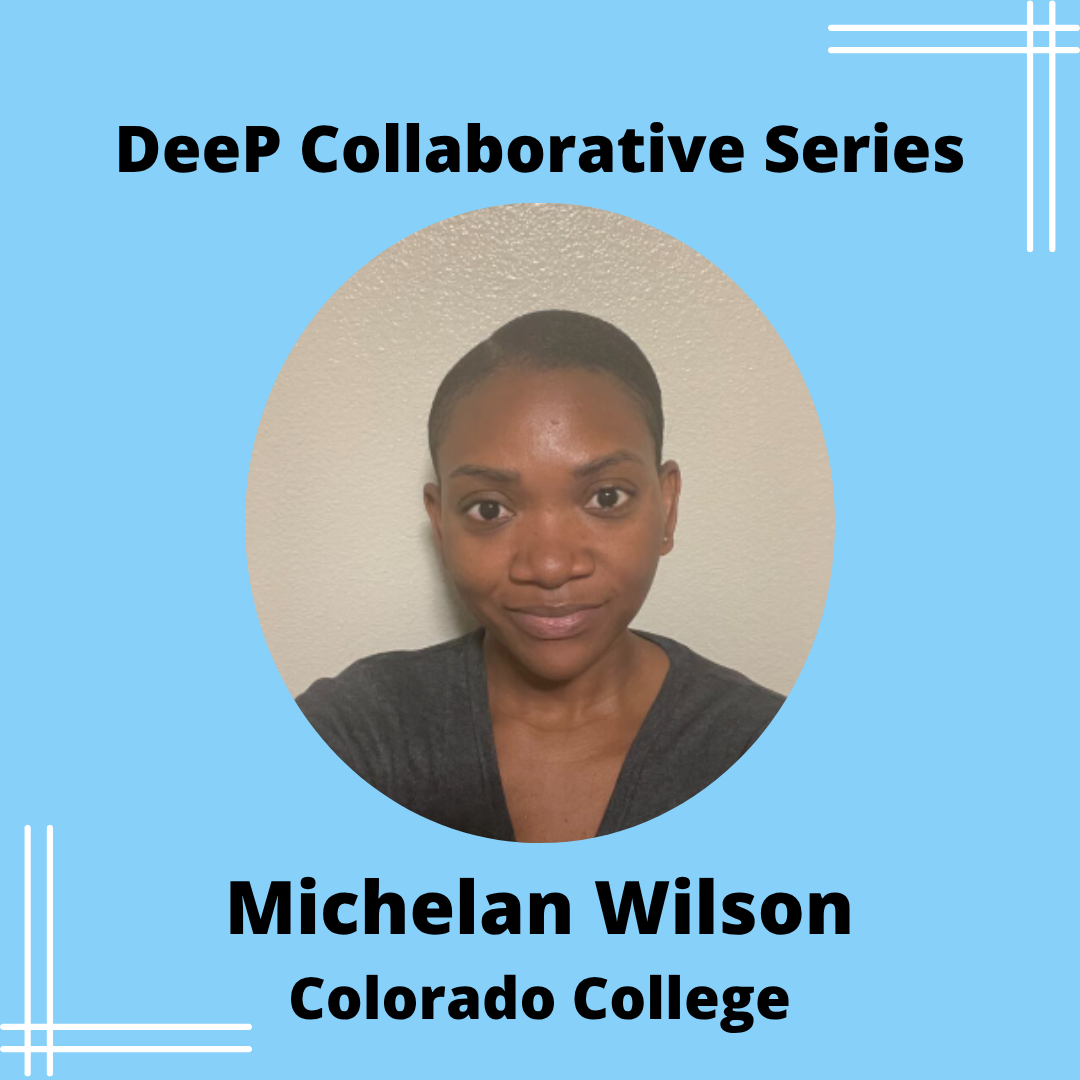
Transforming Classroom Conversations: My Journey with Deliberative Environmental Economics

July 31, 2025 by Michelan Wilson

The Deliberative Pedagogy (DeeP) Faculty Collaborative consists of faculty from Davidson College and other higher education institutions who are committed to learning and implementing new ways to improve and deepen the quality of their class discussions. These faculty come from a wide array of disciplines and backgrounds to study and discuss deliberative pedagogy methods, share their ideas and questions with one another, and work to embed deliberation in their classrooms. In this special blog series, members of the Collaborative describe and reflect on their experiences developing and teaching their deliberation-involved courses.

By Michelan Wilson (2024-25 Deliberative Pedagogy Collaborative Faculty Fellow)

Designing and delivering a course that centers on deliberation within environmental economics has been an enriching and insightful journey. I believe that deliberation can be a powerful learning tool in this context because it encourages students to engage deeply with complex environmental issues, consider multiple perspectives, and develop nuanced solutions—skills that are essential for effective policy-making and responsible citizenship. The process involved careful planning, continuous assessment, and a focus on fostering meaningful student engagement.

The Development and Implementation Process

The process began with a clear goal: to move beyond traditional lecture-based instruction and create a space where students could actively deliberate on real-world environmental issues. I incorporated the practical approach I learned from the Deliberative Citizenship Initiative (DCI), which emphasizes facilitating structured, inclusive dialogues that build students’ capacity to engage thoughtfully with complex problems. This foundation helped shape a course environment focused on active participation, critical thinking, and collaborative problem-solving.

My Approach: Deliberations focused on trying to address key areas of conflict that arise when enacting environmental policy. I had a class of 18 students. For each deliberative activity, 8 students served as deliberators and the other 8 as observers. This was a key pedagogical shift, moving from traditional lecture formats to a more learner-centered approach, which was unfamiliar to students. As such, I acted as the facilitator for each deliberation. Preparation for deliberations involved students reading through the Deliberation Guide, which highlighted expectations, along with deliberative positions and suggested readings to support their development.

To help students understand the importance and purpose of deliberation, I assigned readings from Aiken and Talisse’s “Why We Argue” and an article titled “Cultivating Dialogue and Deliberation Through Speech, Silence, and Synthesis,” Chapter 4 of Drury’s “Creating Space for Democracy.” These readings were designed to help students grasp why we were engaging in deliberations—especially on complex, often contentious issues—and how deliberative processes can be effectively used to tackle difficult problems like those faced in Environmental Economics. Throughout the course, class time was allocated to discussing these readings, highlighting what students found convincing and less convincing about the role of deliberations as a decision-making tool in environmental economics.

Outcomes and Student Responses

The assessment revealed that students demonstrated proficiency in a wide range of deliberation skills across the course. Many students showed strong abilities in articulating reasons, synthesizing ideas, and understanding environmental trade-offs. They also demonstrated increased confidence in engaging with diverse perspectives and applying economic reasoning to real-world problems. This growth was facilitated by active participation and ongoing feedback, which helped students refine their skills.

Students’ responses were largely positive; many appreciated the opportunity to apply theoretical concepts in practical, collaborative settings. They recognized the importance of respectful dialogue and evidence-based reasoning—elements critical to effective deliberation. Some students initially struggled with the complexity of balancing various viewpoints but gradually became more proficient as the course progressed.

Challenges and Lessons Learned

While the overall experience was rewarding, certain challenges emerged. One significant constraint was the structure of Colorado College’s Block Plan, as each course runs for only 3.5 weeks. This tight timeframe left little room between deliberations for students to reflect deeply on their experiences or for me to facilitate thorough debriefs. As a result, learning how to deliberate and develop deliberative skills had to be achieved quickly, which limited some of the depth and richness of the process. Some students were more comfortable with the process from the outset, while others needed more time and guidance to fully engage.

What Worked Well

The use of detailed Deliberation Guides was instrumental in supporting student learning. These guides provided students with related readings and clearly outlined their assigned positions, which took a lot of guesswork out of the process and helped ensure that students came prepared with well-supported arguments, whether based on facts or personal experience. Knowing the positions of their fellow deliberators in advance enabled students to engage more thoughtfully and strategically, fostering richer discussions. One of the most enlightening parts of the deliberations was when students introduced themselves and shared their personal connections—or lack thereof—to the issues at hand. Observing how personal connections influenced interactions revealed how knowing more about the individuals behind the arguments changed the dynamic of the conversations. Students later reflected that understanding each other’s personal stakes impacted how they perceived and engaged with differing viewpoints. 

Additionally, the deliberative process served as a valuable learning experience beyond the formal curriculum, as it brought up aspects of environmental policy that were not explicitly covered but emerged organically through students supporting their views. This dynamic exchange enriched the class and deepened their understanding of real-world environmental issues. The use of detailed rubrics and guides clarified expectations and supported skill development, giving students clear benchmarks for their deliberative performance. Reflections and discussions helped students internalize their learning and created a space to air their misgivings about the process.

What Didn’t Work as Well

I attempted to carry out a more unstructured form of deliberation, but students were left confused and ultimately expressed a preference for a more structured approach where one point of view is addressed and thoroughly discussed before moving on to another. This underscored the importance of clear boundaries and organization in facilitating effective deliberations. Another challenge was having observers with no assigned tasks; students felt they had no purpose during that time and almost believed they did not need to attend class, which affected engagement. Additionally, I was solely responsible for assessing the deliberations, which proved difficult, especially since this was a new skill for students to develop. Although the rubrics I created were helpful in distinguishing between weak and strong participation, they were less effective in assessing more nuanced levels of engagement and skill. Furthermore, evaluating intangible qualities such as empathy was particularly challenging, as it’s difficult to measure these aspects objectively through rubrics alone. 

Next Steps and Future Directions

Building on these insights, I plan to:

  • Reduce the number of deliberations during the block to deepen reflections and provide more meaningful opportunities for engagement.
  • Provide targeted facilitation training to help students manage discussions more effectively. I was hesitant at first about the level of facilitation students could achieve independently, but I recognize that developing these skills is crucial for their growth as deliberators.
  • Incorporate more diverse stakeholder perspectives through virtual engagement or partnerships with community organizations. To make deliberations more reflective of real-world conditions, I intend to provide the same guides I use with students to stakeholders. This approach will make deliberations more authentic and help students build the confidence to take deliberative skills outside the classroom. Of course, exposing students to even more diverse perspectives will enhance their ability to formulate nuanced environmental policies.
  • Develop more systematic assessment tools to evaluate deliberative skill development alongside content mastery, ensuring a comprehensive understanding of student progress. I will also include “observers” in the assessment process, which will aid in their development as deliberators and provide different perspectives on the success or challenges of each deliberation.
  • Foster a community of practice among students for ongoing dialogue and real-world application beyond the classroom. I will endeavor to build a campus community where students actively engage in deliberations, supported by my continued collaboration with the Deliberative Citizenship Initiative (DCI) as I move forward with this work.

Filed Under: Faculty Posts

Deliberating about Human Rights in a Non-dominant Language

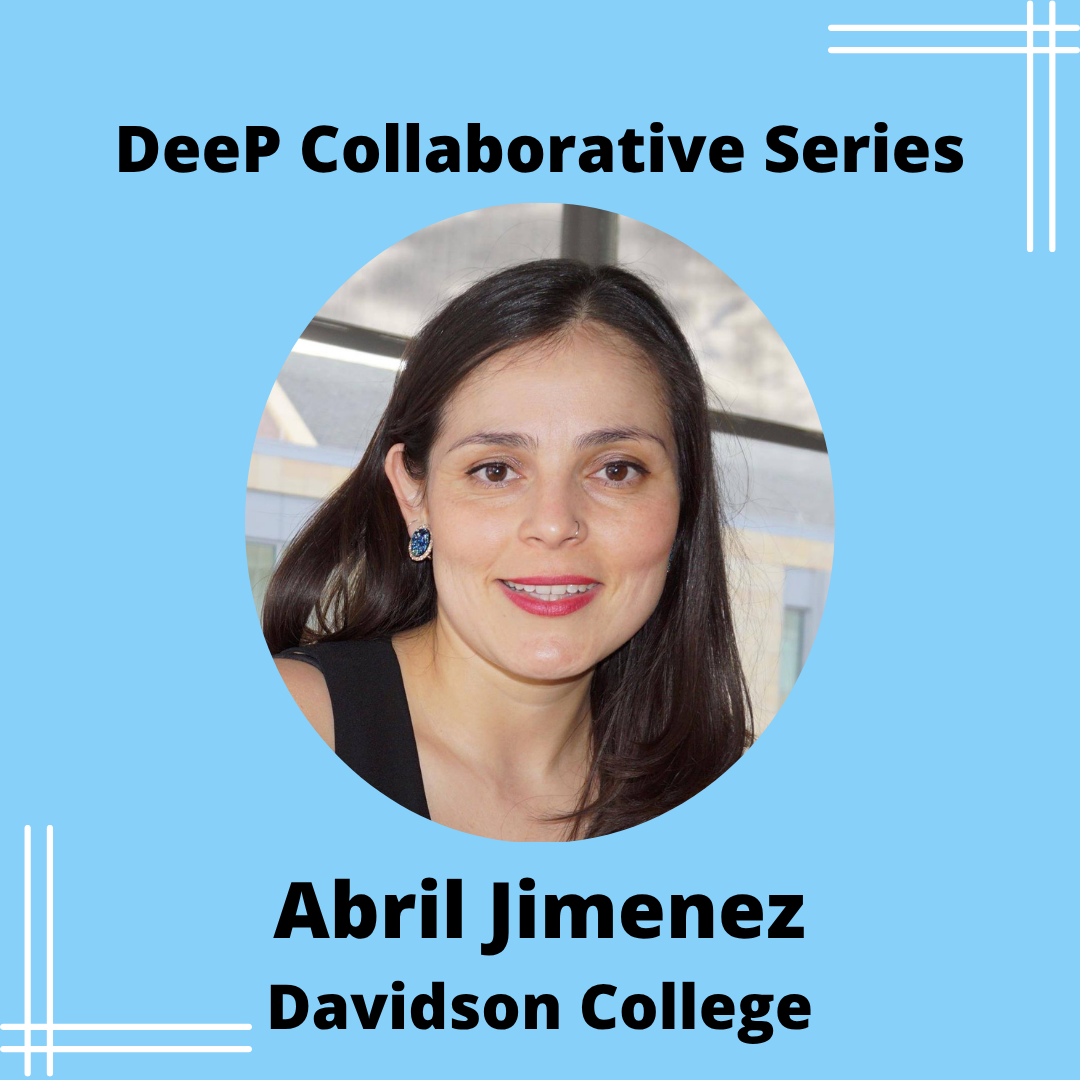
July 23, 2025 by Abril Jimenez

The Deliberative Pedagogy (DeeP) Faculty Collaborative consists of faculty from Davidson College and other higher education institutions who are committed to learning and implementing new ways to improve and deepen the quality of their class discussions. These faculty come from a wide array of disciplines and backgrounds to study and discuss deliberative pedagogy methods, share their ideas and questions with one another, and work to embed deliberation in their classrooms. In this special blog series, members of the Collaborative describe and reflect on their experiences developing and teaching their deliberation-involved courses.

By Abril Jimenez (2024-25 Deliberative Pedagogy Collaborative Faculty Fellow)

This past semester, I had the opportunity to integrate deliberative pedagogy into my two sections of Spanish 260: Human Rights, which is a bridge course designed as the first content-rich experience for language learners at Davidson College. Drawing from my training with the DeeP Collaborative, I developed a course where deliberation was empowering at the intellectual and linguistic levels.

My Spanish 260 sections combined intermediate second-language and heritage learners. For many, this was their first time holding sustained conversations in Spanish around complex and sensitive topics. Naturally, there was anxiety: how could they express nuanced ideas and engage in argumentation and critical thinking when still building fluency? 

To address this question, I invested heavily in scaffolding the experience to ensure that linguistic hurdles would not become barriers to comprehension or participation. Before our two main deliberations, we held practice sessions focused on deliberative techniques and expectations. Following each deliberation, students engaged in reflections, both orally and in writing, to deepen their learning and assess their growth. These metacognitive moments were invaluable, as they not only helped students track their progress as Spanish speakers but also allowed them to reflect on the civic dimensions of the issues we discussed. Additionally, the two main essays for this class were an extension of the DCI deliberation guides we used. The goal was to engage with the material as many times as possible, in as many formats as possible. The repeated exposure to ideas, vocabulary, and linguistic structures significantly facilitated learning.

Centering Human Rights Through Lived Experiences

In the first half of the semester, our theme was social mobility and temporary migrant labor, particularly those on H-2A visas. The first deliberation asked: “How can we make the American Dream more attainable for immigrants?” Students grappled with structural barriers, personal agency, and policy reform…. all while navigating those ideas in Spanish and engaging with Spanish-speaking community leaders. For example, we invited Leticia Zavala, a union organizer with El Futuro es Nuestro, to share powerful insights into the lives of North Carolina farm workers.

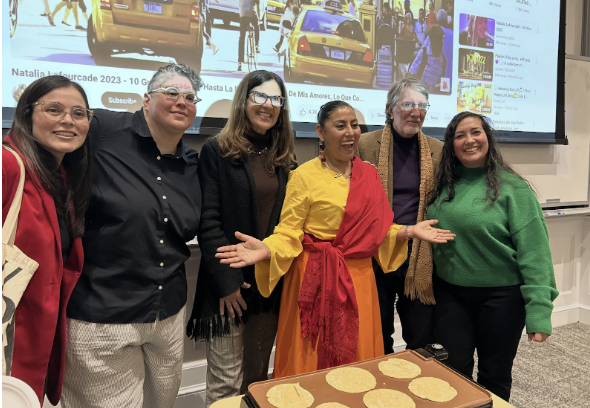
Photo: Tortilla workshop with Chef Cristina Martínez. Davidson College

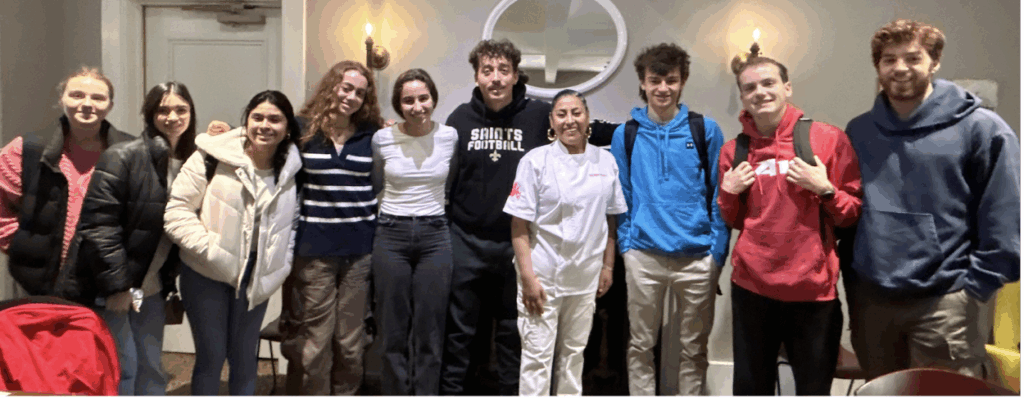
We also invited Chef Cristina Martinez, an immigrant, migrant rights activist, and business owner. She led a tortilla workshop and a guest lecture on campus where faculty and students served as interpreters for the non-Spanish-speaking members of our community. This was a proud moment that blurred the line between the classroom and real-world application.

Photo: SPA 260 students at a guest lecture by Chef Cristina Martínez. Davidson College.

The second half of the semester focused on border and legal status issues, including DACA, Dreamers, asylum seekers, and unaccompanied minors. Our third guest speaker, Dr. Benjamin Roth (University of South Carolina), brought a research-based lens to these challenges. Students read and discussed one of his publications on college access for DACA students, then engaged with him in a moving and insightful conversation. A new student-led initiative to support immigrants was born after that conversation. 

This set the stage for our final deliberation: “Immigration: Who should we welcome?” Once again, students grappled with questions of ethics and policy, but this time with greater confidence and depth. Through constructive dialogue, they not only practiced their Spanish skills but also formed thoughtful opinions about the values and considerations that should guide immigration policy.

A Transformative Experience

What began as an experiment in merging language instruction with deliberative practice evolved into something far more transformative. Through carefully scaffolded conversations about immigration and human rights, students not only strengthened their Spanish skills but also deepened their ability to think critically, form opinions, and engage empathetically with complex global issues.

  • Our deliberations became fertile ground for intellectual growth, as students wrestled with ethical questions and explored diverse perspectives. One student shared, “The most meaningful part for me was the disagreements… everyone wanted different solutions and had different reasons for them.”
  • Despite the different viewpoints, many found common ground and a sense of shared purpose. As one student expressed: “I have hope for my generation… we have different opinions but a similar goal: to bring people together.”
  • Another recognized the layered nature of the issues at hand: “This deliberation reflected to me the interconnected nature of topics related to migration”.
  • Perhaps most importantly, students left the course with a sense of agency. “This deliberation and this class gave me the ability to think and form opinions.

Language development went hand-in-hand with these critical conversations, as students became more confident speaking spontaneously, using authentic vocabulary and formulating nuanced arguments.

  • One student said, “I felt more confident than in the first one and could express my ideas more clearly,” one student shared. Another noted, “The deliberation forced me to use words I hadn’t used much before.”
  • Beyond vocabulary, students learned to think and react on the spot by listening actively and responding thoughtfully. “I had to think quickly in Spanish and explain my ideas clearly and with examples,” one student explained, while another shared, “I was more intentional with my words and improved my ability to speak concisely.”  

By using Spanish to navigate real-world issues, students did not just practice speaking, they practiced empathy, perspective-taking, and democratic dialogue. I am deeply grateful to the DeeP Collaborative for helping me reimagine what language teaching can look like when civic engagement becomes a central goal.

Filed Under: Faculty Posts

Equity and Education: An Online Course with a New Deliberative Component

July 8, 2025 by Nicholas Triplett

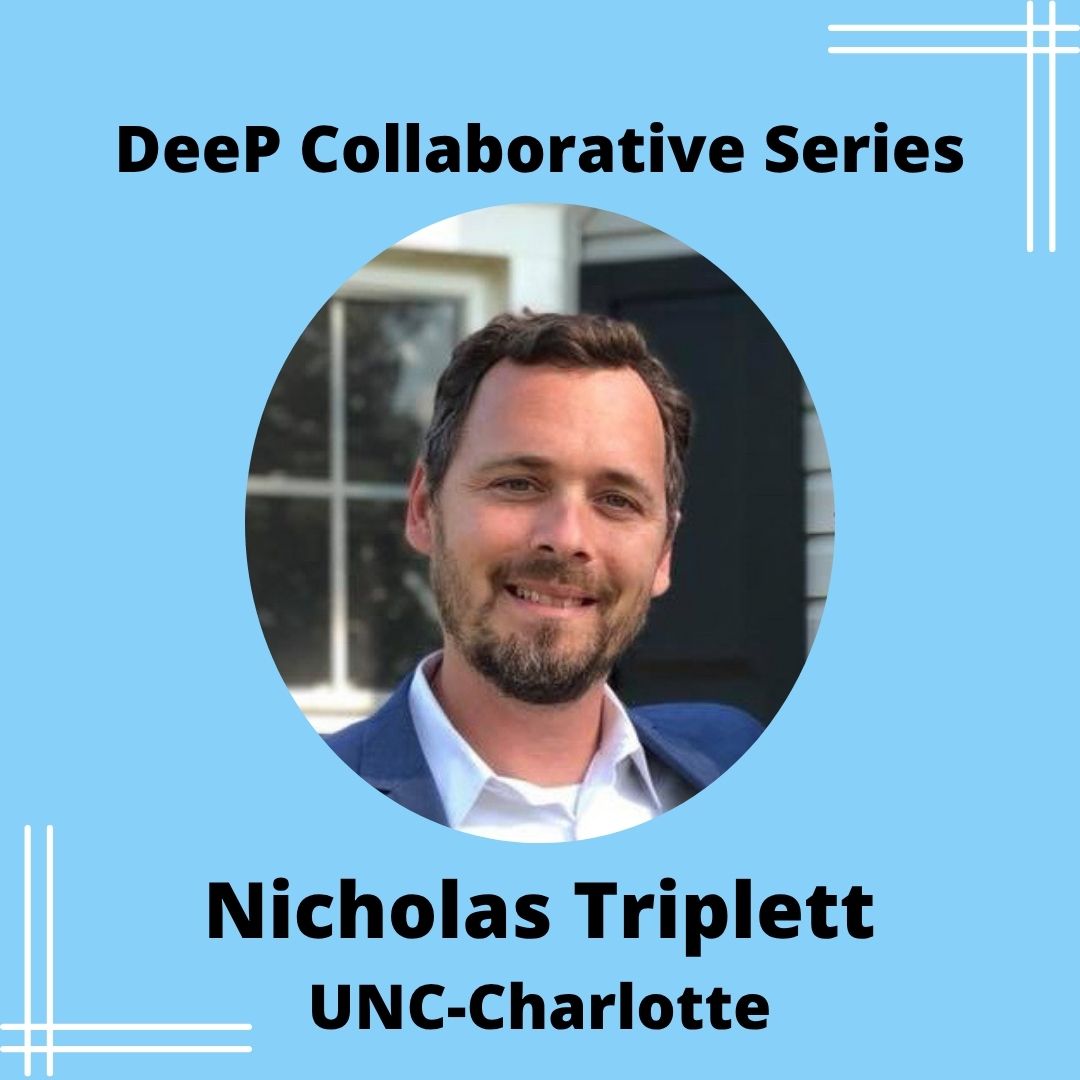
Image of Nicholas Triplett with text of Blog Post name

The Deliberative Pedagogy (DeeP) Faculty Collaborative consists of faculty from Davidson College and other higher education institutions who are committed to learning and implementing new ways to improve and deepen the quality of their class discussions. These faculty come from a wide array of disciplines and backgrounds to study and discuss deliberative pedagogy methods, share their ideas and questions with one another, and work to embed deliberation in their classrooms. In this special blog series, members of the Collaborative describe and reflect on their experiences developing and teaching their deliberation-involved courses.

By Nicholas Triplett (2023-24 Deliberative Pedagogy Collaborative Faculty Fellow)

In my regular teaching duties, I prepare prospective history teachers to help young people make meaning of the past. I also help current teachers (re)conceptualize how identity, culture, and belief influence the decisions they make in the classroom. In the process of doing those things, it is often necessary to elicit, evaluate, and interact with my students’ ideas about complex conceptions like teaching, learning, history, identity, justice, fairness, and so forth. From a pedagogical perspective, my hope was that deliberative practices might be an effective, constructive way to draw out and examine my students’ understandings of these course concepts.

To accomplish this goal, I integrated deliberation into a graduate-level, 100% online course titled: Equity and Education. I had roughly 20 students in the course. Most were experienced, full-time teachers earning a master’s degree, but I also had some early career teachers and several people entering teaching as a second career after leaving the world of business and/or finance.

The course began with three weeks of introductory material on conceptions of equity and the basics of deliberation. This part of the course concluded with an initial micro-deliberation. We spent the next 12 weeks learning about, preparing for, and deliberating on various equity discourses (race, gender, language/nativity, class, dis/ability, etc.) with approximately two weeks dedicated to each topic/discourse and each culminating in a formal deliberation conducted live in Zoom. 

The logistics of deliberating online required us to hold “self-facilitated” deliberations. Groups of 4-5 students deliberated without a formal facilitator, and they were collectively responsible for enacting and enforcing the norms and dispositions of deliberation. I was able to formally facilitate one of the groups in a given session, but soon it became clear that students preferred self-facilitation.

Self-facilitation was a surprising success in the course. I believe this was because 1) we spent several weeks learning about and justifying the need for proper deliberative dispositions, and 2) because this was a graduate level course where students were compelled (by grades) to come into the deliberation conversant in the various perspectives on a topic.

So, even though we addressed tough questions about highly controversial topics, and although deliberations were not facilitated in a traditional manner, they were more like collegial but spirited discussion than the kind of bitter partisan debates we often see in the media. Deliberating in Zoom also made it convenient to record, post, and review the deliberations afterward. I could ask students to re-watch the deliberations and provide detailed evaluations of their individual and/or group performances replete with examples, video time-stamps, and analysis.

Deliberation was transformative in terms of my hope that deliberative practices might help me draw out and examine my students’ understandings of course material. The depth of analysis I observed from students and their willingness to speak and listen to others were unprecedented for me as an instructor. Furthermore, I was also able to hear students talk about themselves, their lives and experiences in ways that gave me a much deeper appreciation of each of them as people. Pedagogically, deliberation was a resounding success.

Filed Under: Faculty Posts

Finding a Soft Landing for Freshman Non-Biology Majors via Deliberative Pedagogy

May 21, 2025 by Uchenna Iloghalu

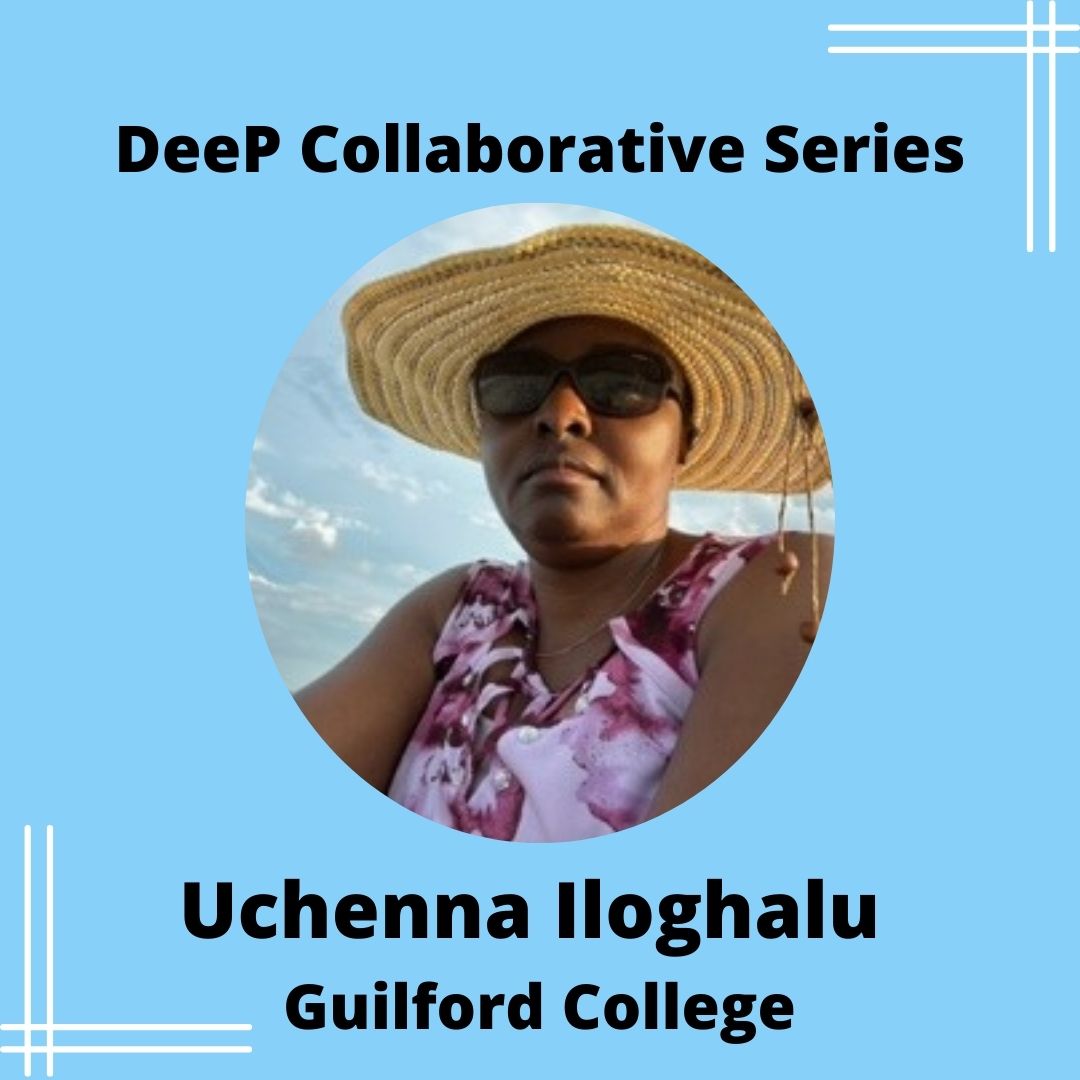
Photo of Uchenna

The Deliberative Pedagogy (DeeP) Faculty Collaborative consists of faculty from Davidson College and other higher education institutions who are committed to learning and implementing new ways to improve and deepen the quality of their class discussions. These faculty come from a wide array of disciplines and backgrounds to study and discuss deliberative pedagogy methods, share their ideas and questions with one another, and work to embed deliberation in their classrooms. In this special blog series, members of the Collaborative describe and reflect on their experiences developing and teaching their deliberation-involved courses.

By Uchenna Iloghalu (2023-24 Deliberative Pedagogy Collaborative Faculty Fellow)

Teaching non-biology majors biology is a little challenging, and more so, freshman students who have limited college course experience. These students come from various departments like English, Political Science, Education, History, Music to mention just a few. These students love to read but are not as familiar with natural systems and how they work. I was tasked to find a subtle way to make the non-biology major freshman students appreciate biology. To enhance the students’ understanding, I incorporated the practical approach I learned from the Deliberative Citizenship Initiative (DCI). This approach is focused on integrating the students’ perspective, encouraging their total participation, and improving their critical thinking.

What I did: The book entitled, “I Contain Multitudes” by Ed Yong, was used as our common source of information. This book systematically describes biological terms, concepts, processes, microbial activities, ecology, system biology, and so much more. It is written in a novel-like format, which endears it to these students, as it explains some convoluted biological concepts in magical ways.

I had 18 students in the class, and I randomly paired them together, which increases the chances of making new friends. These students were given at least two weeks to read an assigned chapter and make a presentation as well as have a constructive deliberation. For each chapter, we utilized read/pair/share/question/deliberate and jigsaw teaching styles. Class discussion, PowerPoint presentations, and blog writing were all utilized to enhance student engagement with key concepts. For example, chapter one talks about “Living Islands” and emphasizes the evolutionary processes of life, how cells and tissues are connected, as well as the knowledge of scientists and their inventions.

It was really an eye-opening experience for these students, as they were eager to make their points known to other students who were not presenting. Students who were not presenting asked questions, which helps in further understanding of the concept. More clarifications rather than disagreements were seen in each presentation.

Also, I shared rubrics that guided the students as they designed their presentation and prepared for class deliberation. The rubrics encouraged students in each group to know each other’s slides and be prepared to present them all and answer questions about them if any of the students were absent. We also had a peer assessment rubric in which the students were asked to highlight two strengths and two areas for improvement of each presenter. These were eventually shared with each student to help them improve on the next deliberation.

What I gained: I believe that the skills and concepts the students learned from the Deliberative Pedagogy (DeeP) teaching style will carry them through all their lives, particularly as they relate to interactions and discussions amongst peers who may not only have contrary opinions but may not fully comprehend relevant concepts. Deliberative pedagogy assists in bringing out important soft skills, such as the ability to listen, communicate, and not being too rigid in one’s thoughts. It also encourages students to acknowledge others’ views and be open to new ideas as they learn to work together more effectively and inclusively.

How it worked: It was really a blast as the students were in the forefront of their learning processes. They were in charge. By the time they were done reading assigned chapters, presenting their understanding in the class, and answering questions from peers, they demonstrated a mastery beyond what I imagined possible. This was demonstrated both by each presenter concluding with a take-home message and taking a quiz on the chapter within a week of the presentation.

What didn’t work and how to improve: Some students were either absent or excused on their day of presentation. This tends to set those students back and doesn’t allow them to demonstrate their learning. In the future, I’ll try to create opportunities for students who did not present as scheduled with cogent reasons to do so in the next class and to reward extra points for those who presented as scheduled. I believe the extra points will attract the students to do their presentations as scheduled and minimize unnecessary excuses.

Filed Under: Faculty Posts

Embedding Deliberation in a Human Rights Course at Guilford College

May 21, 2025 by Zulfiya Tursunova

Image of Zulfiya

The Deliberative Pedagogy (DeeP) Faculty Collaborative consists of faculty from Davidson College and other higher education institutions who are committed to learning and implementing new ways to improve and deepen the quality of their class discussions. These faculty come from a wide array of disciplines and backgrounds to study and discuss deliberative pedagogy methods, share their ideas and questions with one another, and work to embed deliberation in their classrooms. In this special blog series, members of the Collaborative describe and reflect on their experiences developing and teaching their deliberation-involved courses.

By Zulfiya Tursunova (2023-24 Deliberative Pedagogy Collaborative Faculty Fellow)

During my over 20-year teaching career, I have been rethinking the instructional design of the courses I taught and have made some modifications to create meaningful learning experiences. The training offered by Dr. Graham Bullock and Dr. Sara Copic from Davidson College was critical in integrating deliberation into the PECS 315 Human Rights course that I taught in the spring of 2024 at Guilford College.

One of the PECS 315 course’s main goals was to critically understand human rights by examining how power operates in global politics. The course provides an intellectual framework to understand the complexity of factors and issues related to genocide locally and globally from historical, political, socio-economic, and environmental lenses. We analyzed critical contradictions and connections between rights, law, and peacebuilding. Students examined issues related to citizenship, immigration, deportation, family separation, struggles, and solidarity. The case studies of genocide from the USA, Mexico, Sudan, Israel, Palestine, Columbia, Northern Ireland, China, Russia, and other countries were used to examine atrocities and ways societies move from violence to positive peace.

I introduced the theory and practice of deliberation, differentiating it from debate and discussion, and its role in scholarly inquiry and democratic life in highly divided societies. The values of deliberation and its methodology empowered students to create a safe space where they shared different opinions respectfully. One of the students reflected on the importance of learning about deliberation and engaging with each other during war, global conflicts, and power dynamics:

  • “Deliberation allowed us to educate and engage with each other while explaining personal events and experiences related to the world’s power dynamics. As a group, this made our conversations much more personal and powerful. The class allowed us a space to learn about each other while learning about the world and uplifting each other through methods such as conflict transformation on a personal level.“

Deliberative methodology helped to foster ethical peacebuilding and conflict transformation by empowering students to learn and employ deliberative democratic methods of respectful and collaborative problem-solving. The methodology encouraged students to transcend their previously held positions and enabled collective decisions and actions to bring social change and policy for justice and peace. I believe that deliberation theory and practice are congruent with Quaker peace testimonies that nurture the capacities of individuals, communities, and societies to build relationships based on mutual respect and caring for the well-being of all regardless of sexual, religious, and other aspects of our identities. Quakers embrace the transformative power of love and the power of nonviolence, striving for peace in daily interactions with neighbors, families, communities, and people all over the globe.

Five students from various backgrounds took the course. I introduced deliberative pedagogy materials by looking at the issues of immigration using the example Graham Bullock shared with me. Using the talking circle process approach, students shared what they learned in a circle and reflected critically on their learning using human rights justice lenses. One of the students pointed out that “the deliberation was a unique learning experience that now as an academic scholar I can reflect on as one that aided both research skills and facilitation. The overall process of preparing for the deliberation was effective in understanding and being prepared for the actual facilitation.“

One of the students, who deliberated on “International Humanitarian Law: A Focus on Palestinian Women and Children,” shared that deliberation “allowed me to look at human rights from a political perspective rather than just a personal perspective.” Another student indicated that they improved their ability to “evaluate the strengths and weaknesses of different types of evidence.” Through the lens of deliberative pedagogy, students reflected on their learning outcomes focusing on collaboration, reason-giving, synthesis of ideas and information, understanding of trade-offs and tensions, reflection, awareness of relationships, and empathy. It is evident from the students’ answers that the class provided robust opportunities for reflection on the process and outcomes of class deliberations.

The course enabled students to assess and synthesize human rights violations by using international law, policies, and peacebuilding strategies. Furthermore, students learned and cultivated deliberation-related skills including the practical skills of deliberation, self-reflection, empathetic listening, critical thinking, and intellectual collaboration across differences. They also learned about peace and conflict, interdisciplinary analysis and argument using natural resource management, feminist, and political science lenses, as well as communication in both spoken and written forms. This is evident in of the student’s testimony:

  • “Overall, I think the deliberation process was unique and especially valuable to the learning and development for students at Guilford. I would absolutely recommend this process to be applied in other classes as well because it truly is a combination of both research skills and facilitation which is so important to have as for any future career opportunities. Not only that it is a good experience to have continued to bring light to the issues we face globally and being able to open up to local and global communities and have necessary conversations that we usually shy away from and ones that have become so polarized.“

In support of innovative, student-centered learning guided by Quaker testimonies, I have been striving to create an academic environment that fosters creative problem-solving skills and civic engagement to promote positive change. As a class, we worked collaboratively on deliberation to promote respect and accountability for human rights among Guilford College students and the community.

Acknowledgments

The special acknowledgment goes to Dr. Graham Bullock and Dr. Sara Copic from Davidson College for sharing their knowledge about deliberation and dedication to their profession.

Filed Under: Faculty Posts

  • « Go to Previous Page
  • Page 1
  • Page 2
  • Page 3
  • Page 4
  • Page 5
  • Page 6
  • Interim pages omitted …
  • Page 15
  • Go to Next Page »

Footer

Blog Post Categories

  • Announcements
  • Blog Posts
  • DCI Posts
  • Events
  • Faculty Posts
  • Fellow Posts
Image of a compass superimposed by the text "Deliberative Citizenship Initiative" and "Davidson College." Clicking on this image leads to the Initiative page.

Recent DCI Blog Posts

  • We Tried to Fix Jubilee’s “Middle Ground” – Here’s How It Went
  • A Case for Deliberation in the Natural Sciences
  • Welcoming New Staff to the DCI and DCN
  • Facebook
  • Twitter
  • Instagram
  • LinkedIn


Copyright © 2026 · Infinity Pro on Genesis Framework · WordPress · Log in