• Skip to main content
  • Skip to footer

Deliberative Citizenship Initiative

Building Democracy One Conversation at a Time

  • The Initiative
    • Programs
      • Deliberation Across the Curriculum
      • Deliberation on Campus
      • Deliberation in the Community
      • Research on Deliberation
    • Motivations
      • Why Deliberative Citizenship?
      • Why Davidson? Why Now?
    • Who’s Involved?
      • DCI Fellows Cohorts
        • 2025-2026 Fellows
        • 2024-2025 Fellows
        • 2023-2024 Fellows
        • 2022-2023 Fellows
        • 2021-2022 Fellows
        • 2020-2021 Fellows
      • DeeP Collaborative Cohorts
        • 2024-2025 DeeP Collaborative Faculty
        • 2023-2024 DeeP Collaborative Faculty
      • Advisory Council
    • History
      • What Sparked the Initiative?
    • Key Deliberative Dispositions
    • Frequently Asked Questions (FAQ)
    • Annual Report
  • Get Involved!
    • Participate in a Forum
    • Join a D Team
    • Become a Fellow
    • Take Courses
    • Get Training
    • Come to Guest Lectures
  • Events
    • Upcoming Events
      • 250th Anniversary Deliberative Forum Series on American Values
    • Past Events
  • Connections
    • The Deliberative Citizen: The DCI’s Monthly Newsletter
    • Efforts on Campus
    • Efforts in the Community
    • Efforts Elsewhere
    • Readings and Resources
      • DCI-Published Guides
      • DCI Guide to One-on-One Conversations
      • How to Disagree
      • Demonstration of Facilitation Styles
      • Deliberative Pedagogy Mini-Course
    • How We Can Help: DCI’s LET’S DELIBERATE! Partnership Opportunities
    • DCI in the News
  • DCI Blog Posts
    • Recent Blog Posts
    • All Blog Posts

Faculty Posts

Taking Our Last Breath: Teaching a Deliberative Sociology Course at a Dying College

December 11, 2024 by Yingling Liu Leave a Comment

Photo and text introducing Yingling Liu.

When I first saw the flyer about Deliberative Citizenship Initiative, I immediately knew that it was something I wanted to learn more about and get involved with. At that time, the college I was working for had just gotten out of the ICU: it had successfully secured funding from the state to keep its doors open, after years of financial distress. As a sociologist with a law background, I am dedicated to teaching and learning how to “productively engage with one another on difficult and contentious issues facing our community and society” (DCI website).

Every semester, I teach an introductory level course in sociology – Sociology 101. This is a required course for all sociology major students and a popular class in the core curriculum. Even with a short amount of time into my career as a professor (about 3 years now), I have found that the SO101 class is the hardest course to teach. One of the reasons is that the difference in background and life experience of individuals can have so much impact on their perspectives and opinions that students and educators have difficulty engaging in meaningful and productive conversations on almost any given topic. Especially as an international scholar, a woman, and a racial minority at a small liberal arts institution, I often felt pushback in the classroom: “… a Chinese is teaching Marx…”; “… she cannot get over her personal experiences…”; “a woman is teaching Feminist theory”; “too liberal…”; “a brainwashing class” (these are selected quotes from course evaluations).

Although I can’t completely change how students view me, I know there is room for me to be a better professor who can teach those controversial topics in a more productive fashion. Thus, I joined the DCI’s 2023-2024 faculty fellows program — the Deliberative Pedagogy (DeeP) Collaborative — and decided to construct the SO101 course in spring 2024 as a deliberative course.

Based on the original framework of this course, I modified and added three components: 1) I revised the grading rubric of the Interview Project and put more emphasis on the deliberation section in the final paper; 2) I added a Townhall Meeting Activity with a full deliberation session in class; and 3) I took advantage of having a TA in the classroom to provide additional feedback to students’ deliberation performance, such as in-class discussions.

What wasn’t in my plan was that in March 2024, during spring break, my college announced that it will close its doors permanently at the end of the spring term because it failed to get the money from the state (yes, it was a chaotic story of how we should have gotten the money but eventually didn’t). The college has been suffering from financial instability for over a decade. Still, this abrupt news over spring break hurt the morale on the entire campus, and it forced many faculty members, including me, to adjust our lesson plans to accommodate everyone’s needs.

I wanted to make sure that the course represented a feasible time demand for the students (given the fact that they have to deal with transferring, campus visits, decision making, and the stress associated with this news) while still ensuring the class would provide a meaningful learning experience for everyone. I therefore reduced the workload by requiring students to finish one of the two big remaining assignments (not closely related to deliberation) instead of doing both. And I had to be flexible with the attendance policy as many students had to miss class to do campus visits or taking mental breaks. Because of that, I decided to not do The Circle activity, which had been scheduled on the week after spring break.

I also extended the deadline of the final paper of the Interview Project (which was due the week after spring break). For the Interview Project, each student was required to pick a topic and interview someone who disagrees with them on this topic. This project was scheduled over five weeks, starting with dedicated class time on the rubric and brainstorming, followed by a literature review assignment, interview guide assignment, the actual interview (over spring break), and the final deliberation paper.

To my surprise, given everything else going on, students did well on their deliberation papers (they submitted it two weeks after the closure announcement). They were able to compare different perspectives on the controversial topic, synthesize the relationship between different ideas, investigate how people’s personal experiences shape their opinions, and find the common ground between them. Students especially emphasized the value of listening to one another’s story, and how that experience helped them develop empathy and compassion. From their reflections, students overall enjoyed the experience of the project, even while at the beginning some found it uncomfortable to discuss controversial topics with someone who disagrees with them.

The Townhall Meeting activity took place two weeks before the last day of class. I was so concerned about students’ participation that I decided to use a class period (a week before the activity) to prepare for this activity. My TA and I compiled a reading list, including the history of affirmative action and opinions from multiple perspectives. We created roles that would participate in this meeting: university admission staff, high school senior students, parents, residents in the community, college students, college professors, news reporter, and state legislators.

In the prep class, each student drew a role, independently developed the characteristics of the role, then prepared for making their statement based on the role. Students were given information about the procedure of the Townhall Meeting at the prep class as well. By the time we hosted the Townhall, students have already spent the entire class period (80 minutes) and an entire week preparing for their opening statement and questions.

On the day of activity, we set-up the classroom tables in a circle, which emphasized that everyone had an equal right to have their voices heard. My TA served as the moderator while I was taking notes and grading students on their 1) knowledge of the topic; 2) portrayal of their role; and 3) participation in the deliberation. A quarter of the class were absent, yet they prerecorded their statements to be played at the Townhall. My TA started the activity with some brief opening remarks, then played all the videos and let everyone in class give their opening statement. Then, the activity went into the cross-examination phase.

I was concerned that there would be dead silence because nobody was motivated to debate, with everything else going on. Again, to my surprise, students were eager to talk, express their opinions, and “play” their roles. My TA was busy pointing to people to speak as there were lots of hands raised. At the end, I found out that almost half of the students drew a role that they disagree with. They said that was an interesting yet rewarding experience to speak from the opposite side.

Overall, I think my deliberation course went well; or more precisely, better than I expected. If I were to do it again, I would spend a bit more time talking about deliberation pedagogy with my students, discuss more readings about deliberation, and watch a few videos of deliberation. I recognize that in most cases I won’t be able to have a TA in class, which will demand more time from me to prepare for the class activities and grade the low stake deliberatve discussions in class.

As I am concluding my deliberation course, my college – a small liberal art institution in the deep south of the United States – is winding down after 168 years of operation. Yet the debate and politics about liberal art education, private institutions and public funding will not end. With a bitter feeling and watery eyes, I must move forward.

Yingling Liu submitted this blog post at the end of the Spring 2024 semester while she was still at Birmingham-Southern College. She started an Assistant Professor of Sociology position at North Central College in the fall of 2024.

Filed Under: Blog Posts, Faculty Posts

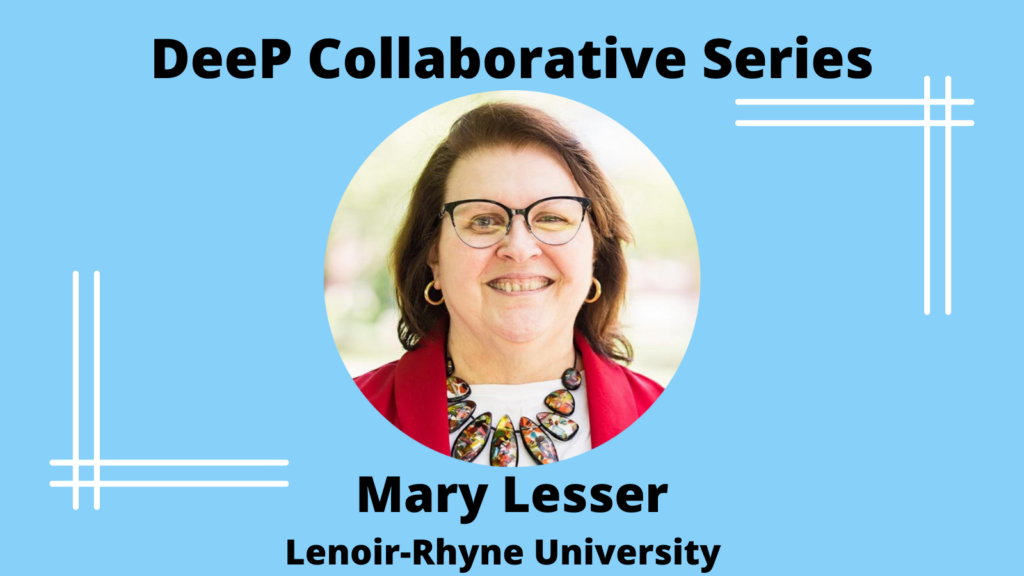
Adding Deliberation to a Behavioral Economics Course: A Journal

December 5, 2024 by Mary Lesser

It’s the day before classes start and I am feeling some odd combination of prepared and nervous. I feel as though I had excellent training for what I am proposing to do and yet I am also worried that it’s not going to work out. A lot of planning went into the course but I also allowed for some flexibility. So I am curious to see how this works out. I wanted this blog to be a kind of journal of my experience so will check back in at different points in the semester.

Week 1 into Week 2: I am working on getting members of the class to talk with me and each other. Not surprisingly there are a fair number of students reluctant to speak. I have been tossing out lots of subjects while covering the chapters of the course text assigned and it seems to be giving the students more confidence and a feel for each other.

Midterm: The class has loosened up quite a bit. I accomplished this by scatter-shot discussions during class of the different course topics, which is easy with behavioral economics. The first full-class deliberation went really well. 

Due to the size of the class I divided it into two groups and the first group was scheduled to present and everyone had a written assignment deliverable designed to provide background. The speakers did a good job and there was great interaction both among those speaking and the other students not scheduled to speak. The second group will do their session toward the end of March.

I think it was a good idea to divide the group (15 students each in 50-minute sessions) and one other strategy that I thought was effective was to ask each speaker to state their first name at the start of the presentation. That way students could address each other by name. It also contributed to the listening part of the deliberation assessment. Students could make notes of points raised and refer to them with the speaker’s name. 

The same type of exercise was repeated about 2/3 through the semester and even the reluctant students were engaged and participating. Some of that was the choice of topic; it was something that everyone could find information on and have an opinion about.

The final session of the course will be the extended time period allotted for final exams and everyone is expected to share the research they did for the final paper of the course. I am optimistic that it will be a good session, but that will be my next check-in.

Week before the Final: It’s the week before the final and I am working on preparing students for the final deliberation. I have shown a video so they can see what it should look like and am going through the steps of preparation for the next few classes that we have left. I decided to check in before the final because I am feeling more optimistic about the energy around this in the class. Students seem more engaged and interested in having the conversation. What I can say at this point is that the journey has been up and down and I am interested in seeing how it ends. More later.

The Final: The final exam session was allocated to the final deliberation to allow ample time for everyone in this relatively large class to participate. Students had prepared for this by researching an area related to the overall topic, which I hope will result in good information on a number of aspects of the topic to be included in the group work.

The final session turned out to be successful. The participation was broad-based, and students engaged with each other. The group arrived at a consensus and my overall feeling was that students felt heard and felt that they had learned from each other. This was evidenced in the reflections students turned in at the end of the session.

So how to summarize? This has been a journey with its ups and downs and those were mostly my lack of confidence in the process and practice. As I grew more familiar with facilitating a deliberation the more the students responded and it become self-reinforcing. For anyone reading this I would say keep moving through the steps and learn along the way. I don’t feel as though this is an end but rather a beginning and I move forward to continue to foster deliberation in my classes with more assurance.

Filed Under: Blog Posts, Faculty Posts

Thanksgiving after the Election

November 26, 2024 by Graham Bullock

Thanksgiving images with people talking and Donkey and Elephant in their thoughts, with the word Connect between them.

Every year around Thanksgiving you can find a stream of advice about how to engage with family with different political viewpoints across the dinner table (and the DCI has contributed our fair share). The supply of these missives likely peaks in presidential election years, and the demand for them may be at its highest after our most recent election. Indeed, many Americans feel a deep sense of disconnection from, disillusionment with, and even disgust for those who voted for the candidate they most despise.

These feelings build on a normal and natural desire to step from politics after an election and return to focusing on other important spheres of our lives. Even when elections are not as fraught as they currently are, it is not surprising that we want to escape from the political and re-discover our other passions – whether that be on Netflix, in books, on hikes, or elsewhere.

Whether our candidate won or lost, such escape may be healthy and even critical for us at this point. It can enable us to step back, get perspective, and restore ourselves. It can help us re-focus our energies and return to our interest in politics with a fresh perspective. Because at some point, we must return to it; if we care about our collective life together, if we care about one another and the directions our society follows, then we owe it to ourselves and each other to re-engage in some form or another.

Okay, fine, you say, but do I have to do it at Thanksgiving? Can’t I wait until at least the New Year, or maybe 2026? Perhaps, and everyone must make their own decision on when and how best to re-enter the political conversation. But family gatherings, perhaps ironically, offer a special opportunity for trying out new approaches and different modes of engagement after consequential political events.

How so? By enabling us, first within the space of our closest relations, to re-commit to following the Golden Rule of “loving your neighbor as yourself.” We can ask ourselves, if your candidate had lost (when in fact they won), how would you want those whose candidate had won to treat you at those gatherings? Certainly not by making snide, sarcastic, or acerbically triumphant remarks, but probably also not by just ignoring you or the subject.

Instead, how meaningful would it be to you, if that sister whose candidate won, authentically, earnestly, and sincerely asked you, in a quiet moment after dinner perhaps, “You know, I know we voted differently, and I know how upset you must feel about the outcome. I’m concerned about you – how are you doing?” What if they were truly open to hearing your concerns and just listening – and responding as patiently and respectfully as possible, when asked, “How could you vote for that person?”

And likewise, if your candidate had won (when in fact they lost), how would you like those whose candidate had lost to treat you? Also probably not with biting criticism, doomsday rhetoric, or willful silence. But what if instead, that brother whose candidate lost, said to you, honestly and directly, “You know, I know we voted differently, and I know how happy you must feel about the outcome. But frankly, I’m really struggling with understanding it; maybe you can help me. Why do you think so many people voted the way they did?” What if they were truly open to hearing your analysis and just listening – and asking as respectfully as possible, “And why did you vote for that person?”

There is some asymmetry here – a basic ethic of care and compassion suggests that the victor has a little more moral responsibility to reach out to the vanquished.  But the vanquished also have a duty to treat the victor as a human being as well. Humility, generosity, and curiosity are all important virtues – and deliberative dispositions – to cultivate in these moments.

I was recently invited by a group at Davidson College Presbyterian Church to speak about “Civil Discourse after the Election: Pitfalls and Pathways Moving Forward.” In my talk, I referenced some biblical passages that provide some guidance on why and how to adopt these dispositions. To those who have been victorious, Proverbs 24:17 suggests, “Do not gloat when your enemy falls; when they stumble, do not let your heart rejoice.” To those who have been defeated and feel (or fear) persecution, Matthew 5:43-44 encourages, “You have heard that it was said, ‘Love your neighbor and hate your enemy.’ But I tell you, love your enemies and pray for those who persecute you.”

Similar advice is offered by many different faith and secular traditions, and they all suggest we should avoid the vices of both conceit and contempt – the habit of thinking ourselves better than others and believing those others to be unequivocally worthless. Instead, we should aim to be both humble and courageous – humble enough to recognize we might be wrong and brave enough to discover when others might be right.

Sounds great in theory, perhaps, but how do we enact these principles in practice? The DCI has developed a Guide to One-on-One Conversations, which maps out a process that you can follow before, during, and after a discussion with someone who you disagree with. Establishing expectations, setting the tone, asking good questions, listening actively, sharing respectfully; these are just a few of the suggestions it includes that may be helpful.

But perhaps the most important thing to remember, as you pass the Thanksgiving sides across the table, is the goal. Given the deep pain, frustration, and division that many of us are feeling, our objective at this point should probably not be to win an argument or persuade one another of the rightness of our side. Instead, we should first focus on re-discovering our common humanity, our common joys and concerns, our love for one another. First seek to heal and to understand; as Sara Copic wrote in her Thanksgiving blog post last year, “By approaching our deep disagreements with curiosity first, we may be able to build the trust needed in order to have the hard conversations we would like to have together.”

Have a restful and restorative Thanksgiving that has its share of escape, rediscovery, and perhaps a small bit of empathetic conversation across our family and political divides.

Filed Under: DCI Posts, Faculty Posts

Deliberative Discussions in Class “Bridge the Gap between Film and Reality”

November 20, 2024 by Maggie McCarthy

This past spring I taught a writing course focused on filmic depictions of race, which incorporated four deliberative sessions on related topics of debate. Every other week on Fridays we addressed the following issues: 1) Critical Race Theory: Should States Restrict Discussion of Race in the Classroom 2) Race and Ethnicity in Entertainment. Does the Entertainment Industry Positively and Fairly Portray Minorities? 3) Slavery Reparations: Should the Government Provide Reparations to the Descendants of Slaves? 

For each one, students prepared readings representing both sides as mapped out on the “Engage with Opposing Viewpoints” website. In addition, students on each side were obliged to find additional readings to support their point of view. For the fourth deliberation, students picked the topic, which ended up being an essay on Black actors in fantasy films whose faces were far more often altered by CGI technology than white actors.

Students were divided up into two teams, and over the course of the first three deliberations, each took up one of the following roles: a 2 – 3 minute introduction of the groups’ position; engaging with one member of the other team in a back and forth that could last up to five minutes; presenting a closing statement after huddling with their team to decide which aspects of the exchanges to emphasize; and being one of three evaluators who provided feedback on the strength of each team’s arguments the overall success of the deliberation. 

I purposely assigned students to a position knowing it might not necessarily align with their own because I wanted them to have a deeper knowledge of differing vantage points. In the fourth deliberation, we had a less structured discussion, which was productive and fun, but I didn’t see opposing arguments since students tended to be in sympathy with Black actors dealing with racial imbalances.

In an essay they each wrote about the whole experience, they seemed to appreciate the chance to fully research and understand a position they disagreed with. As one student put it, “Hearing a stance that I do not fully align with no longer ignites a defensive spirit within me.” She also observed: “There were times I would make a counterargument that aligned with my position that I did not agree with. Doing this taught me how to argue points convincingly on the basis of logic rather than personal bias.” Regarding the incorporation of deliberations into a class on racial issues, she concluded: 

“I am incredibly grateful that deliberative discussions were included in this course because it elevated my understanding of the films we watched. For example, watching The Searchers and Black Panther provided us with examples of positive and negative representations in film. However, having a discussion about that topic emphasized the real world implications of said representation. These discussions bridge the gap between film and reality. They had a positive effect on me personally as well. Not only am I a better researcher I am also more empathetic and aware of differing opinions, skills that are necessary for my other commitments like debate, mock trial, and daily interaction.”

For me, it was this experiential component that mattered above all else. From the essays the students wrote, it sounds like they gained the skills the Deliberative Citizenship Initiative seeks to promote.  

Filed Under: Blog Posts, Faculty Posts

Using Deliberation to Foster Critical Thinking in the Classroom 

November 1, 2024 by Andrew Keener

One course I teach at UNC Charlotte is a lower-division general education course, “Critical Thinking and Communication,” specifically offered for students in the University Honors Program. The class size typically ranges between 15 and 20 students, and the variety of life experiences and racial, gendered, cultural, and religious identities in the room offer rich opportunities for students to engage and learn from each other across difference. Because I come from a humanities background (English literature), I have typically taught college writing seminars and critical thinking courses with a set of short, thought-provoking readings and other materials to stimulate new ways of thinking and writing. While I kept this practice for a part of the course this semester, I also incorporated an emphasis on the notion of public discourse and deliberation, with support from the DeeP Collaborative colleagues – particularly through our “G2” subgroup and discussions with my partner, Rebecca Alt. 

Although facilitating class discussion is something I have experience with, deliberation was a new topic to me as a teacher. While making that reality clear to my students, I also introduced them to the purposes and elements of deliberative engagement with readings, diagrams, and concepts I learned from and alongside the DeeP Collaborative. This material, which included essays such as Scott Aikin and Robert Talisse’s chapter on “Why We Argue,” and Martin Carcasson’s writings on “wicked problems,” offered a view of the stakes and techniques we were setting out to examine, and practice. My students were exposed to the Kaner model and deliberative dispositions; then, they began to connect their own prospective inquiry topics together as they assembled, midway through the course, into “D-Teams.” These D Teams are similar to but distinct from the Deliberative Citizenship Initiative’s D Teams, which are groups of students and non-students that meet outside of class to discuss different topics.  

Composed of four students apiece, the D-Teams in my class addressed the following thorny questions: What role should taxpayers have in municipal decisions about large-scale sports and entertainment events? How can public health be made more accessible? How can the government best represent the local people it serves? How can AI and other technological innovations be reconciled with environmental sustainability? And, what should 21st century parenting look like in the United States?  

Each of these questions emerged from four or more peers’ independently researched inquiry projects (a campus requirement for this general education course). What I noticed, and did not plan, was that the choice of a fruitful topic for deliberation itself was, in this context, a first occasion for deliberation. The Community Agreements collectively established by the class during the first week of the semester helped arrange some ground rules relevant to all of our deliberations, and my students also were able to watch a video of a practice deliberation.  

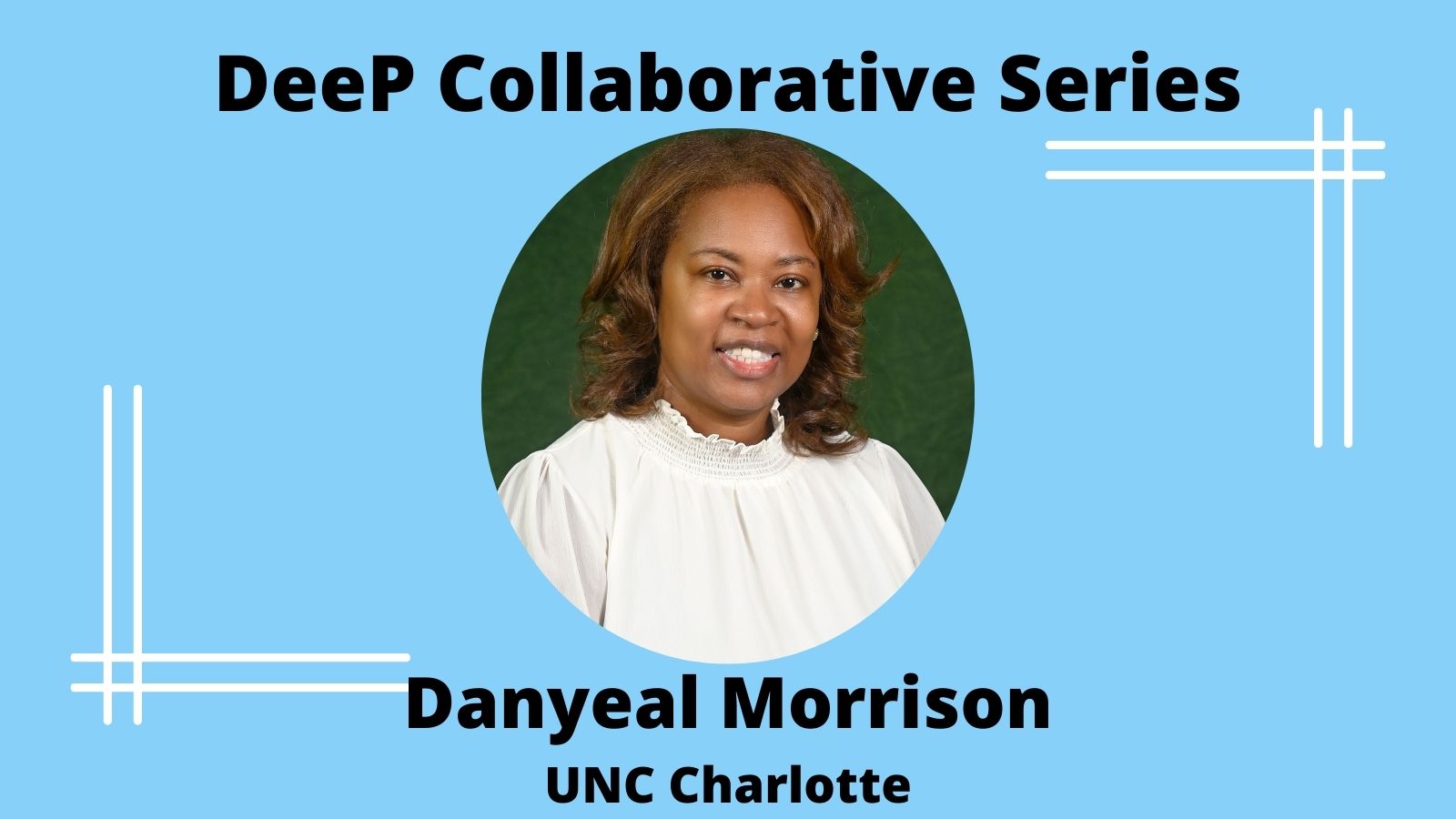
Here, I was grateful to have the chance to collaborate with four DeeP Collaborative colleagues: my fellow Honors College staff member Mindy Adnot, and three College of Education faculty: Danyeal Morrison, Michelle Stephan, and Nick Triplett. Our practice deliberation (on the subject of poverty and meritocracy) was not perfect by any means – in fact, we all agree that it left a lot of room for improvement. However, it provided a good chance for my students to observe a deliberation in action and offered a picture of several “moves” that students could employ in deliberations of their own making. 

As their deliberation dates approached, each D-Team assembled from their inquiry projects a set of relevant discussions that developed into their official Deliberation Guide. This three-purpose document provided a training ground for the D-Team, an overview of the stakes and relevant subtopics for the audience (the rest of the class), and an array of provocative questions for the facilitator.  

To permit me to evaluate deliberations as a more detached observer, I recruited and trained two bright students – who were not in the class – during a short session that featured Steve Kalisky’s video demonstration of facilitation styles, clips from the practice deliberation with my DeeP colleagues, and a set of recommended readings (Carcasson, etc.). When the time for deliberations took place, participants were evaluated on three areas: 1) their sustained support for a particular stance on the issue; 2) their respectful, concise, and relevant responses to peers’ comments; and 3) their recruitment of material in their group’s deliberation guide. A fourth area for evaluation consisted of a written reflection on the experience: opportunities, challenges, and take-aways. 

Altogether, the implementation of deliberative pedagogy in this honors course made good sense and gained traction among students through the readings, exercises, and ultimately the deliberative sessions themselves. I’ll be doing my own reflections and listening to and reading over my DeeP Collaborative peers’ experiences to inform some fine-tuning ahead of the next time I teach the course, and as I share my own experience with colleagues across campus. 

Filed Under: Blog Posts, Faculty Posts

  • « Go to Previous Page
  • Page 1
  • Interim pages omitted …
  • Page 4
  • Page 5
  • Page 6
  • Page 7
  • Page 8
  • Interim pages omitted …
  • Page 15
  • Go to Next Page »

Footer

Blog Post Categories

  • Announcements
  • Blog Posts
  • DCI Posts
  • Events
  • Faculty Posts
  • Fellow Posts
Image of a compass superimposed by the text "Deliberative Citizenship Initiative" and "Davidson College." Clicking on this image leads to the Initiative page.

Recent DCI Blog Posts

  • We Tried to Fix Jubilee’s “Middle Ground” – Here’s How It Went
  • A Case for Deliberation in the Natural Sciences
  • Welcoming New Staff to the DCI and DCN
  • Facebook
  • Twitter
  • Instagram
  • LinkedIn


Copyright © 2026 · Infinity Pro on Genesis Framework · WordPress · Log in