• Skip to main content
  • Skip to footer

Deliberative Citizenship Initiative

Building Democracy One Conversation at a Time

  • The Initiative
    • Programs
      • Deliberation Across the Curriculum
      • Deliberation on Campus
      • Deliberation in the Community
      • Research on Deliberation
    • Motivations
      • Why Deliberative Citizenship?
      • Why Davidson? Why Now?
    • Who’s Involved?
      • DCI Fellows Cohorts
        • 2025-2026 Fellows
        • 2024-2025 Fellows
        • 2023-2024 Fellows
        • 2022-2023 Fellows
        • 2021-2022 Fellows
        • 2020-2021 Fellows
      • DeeP Collaborative Cohorts
        • 2024-2025 DeeP Collaborative Faculty
        • 2023-2024 DeeP Collaborative Faculty
      • Advisory Council
    • History
      • What Sparked the Initiative?
    • Key Deliberative Dispositions
    • Frequently Asked Questions (FAQ)
    • Annual Report
  • Get Involved!
    • Participate in a Forum
    • Join a D Team
    • Become a Fellow
    • Take Courses
    • Get Training
    • Come to Guest Lectures
  • Events
    • Upcoming Events
      • 250th Anniversary Deliberative Forum Series on American Values
    • Past Events
  • Connections
    • The Deliberative Citizen: The DCI’s Monthly Newsletter
    • Efforts on Campus
    • Efforts in the Community
    • Efforts Elsewhere
    • Readings and Resources
      • DCI-Published Guides
      • DCI Guide to One-on-One Conversations
      • How to Disagree
      • Demonstration of Facilitation Styles
      • Deliberative Pedagogy Mini-Course
    • How We Can Help: DCI’s LET’S DELIBERATE! Partnership Opportunities
    • DCI in the News
  • DCI Blog Posts
    • Recent Blog Posts
    • All Blog Posts

TBC Takougnadi

Deliberation Across Generations: Bridging the Gap Between Young and Old People

July 10, 2025 by TBC Takougnadi

Illustration of a bridge with elders and young adults smiling at each other

By Bosisso Charles Takougnadi (TBC) ’27

Usually, we see deliberation as a practice based on mutual respect, critical thinking, and open dialogue. Yet how we engage in deliberation and how we view it can differ quite a lot from one generation to the next. As a DCI Fellow, I’ve learned that talking with both younger and older people comes with its own set of challenges and opportunities. When we recognize these differences as aspects of our identities, we can build more inclusive spaces to deliberate. To what extent do generational differences create a gap during discussions involving two or more generations?

To start off, contrasting methods of discussion are one way to achieve an effective deliberation. In my experience this year (which I fully acknowledge is limited and anecdotal), both young and old participants in a deliberation demonstrate two recurring patterns. Young people generally like having a more direct approach that is solution-oriented. This was common during my D Team meetings that I facilitated, as I observed very quick and short points and responses from young people aiming to reach a resolution and action plan. 

The older folks tended to make longer contributions to the conversation, giving, or requesting in the form of questions, a lot of information sometimes less directly relevant to the discussion. They valued taking their time, deep thinking, and a more ordered way of doing things. Not that younger people do not have similar values, but they seemed to exhibit them less often. I noted that while young people might prefer direct responses and be willing to shift the paradigm (although not always), older people often insist on how much past events and ways of doing things matter. 

Neither approach is necessarily better, but these differences can cause friction when people discuss contentious issues. I have seen older people asking younger participants (generally students) to explain their points further when the younger people thought they were clear enough. In a couple of instances, I noticed how older people in my group discussions can be more likely to directly confront other participants about their views. This made some of the younger people uncomfortable and upset. 

Dealing with contentious issues in cross-generational discussions can therefore be particularly challenging. For some young people, being direct and focusing on the present is vital to getting one’s point across in the room. Older people, on the other hand, often preferred a more experience-based analysis of the issue. When people of different ages come together, young folk sometimes feel ignored if others don’t agree with their ideas. Meanwhile, older people might think others don’t value the insights they have gained in their lives enough. 

Our approaches to addressing issues also shape how well we are received during a conversation. Young people often see conversations as a way to push for fast social change. But older people might be more careful thinking about long-term effects and consequences, taking into consideration their own experiences. This difference in how urgent things seem to different groups of people can make it feel like two separate talks are happening instead of one big conversation. 

Nonetheless, discussions between different age groups can be helpful. Older generations bring opinions based on decades of life experience that can be combined with the new ideas and paradigms that are popular with younger generations. One good way to bring generations together is to make sure everyone listens well so each person feels heard and valued.

Along these lines, the DCI Fellows Program taught me that adaptability represents the essential element for effective deliberation. Allowing generational differences to partially shape our discussions is necessary for a good deliberation. It will enhance understanding of one another and enable us to have meaningful dialogues. New ways of thinking emerge from younger generations while older generations provide experiential knowledge and historical depth. The process of deliberation must remain free from exclusive ownership by specific groups or engagement techniques. 

By recognizing generational differences as an aspect of people’s identities, we create opportunities for these differences to become valuable conversational topics. The evolution of future deliberative processes hinges upon our capacity to acquire knowledge from one another across divides, and particularly generational divides. Through patient and respectful dialogue combined with openness to new ideas, we need to develop a deliberative culture that empowers individuals of all ages to participate actively in deliberative democracy.
Filed Under: Fellow Posts

Event Recap: Deliberative History Forum on the Power of Historical Narratives and Contested Histories

May 16, 2025 by TBC Takougnadi

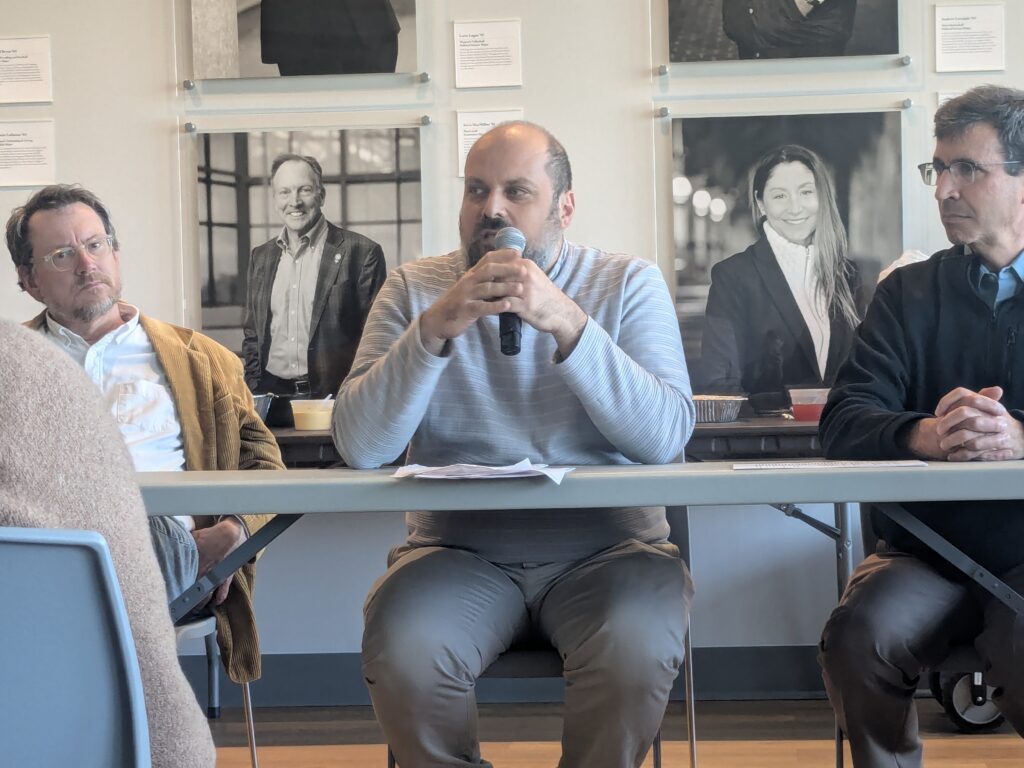
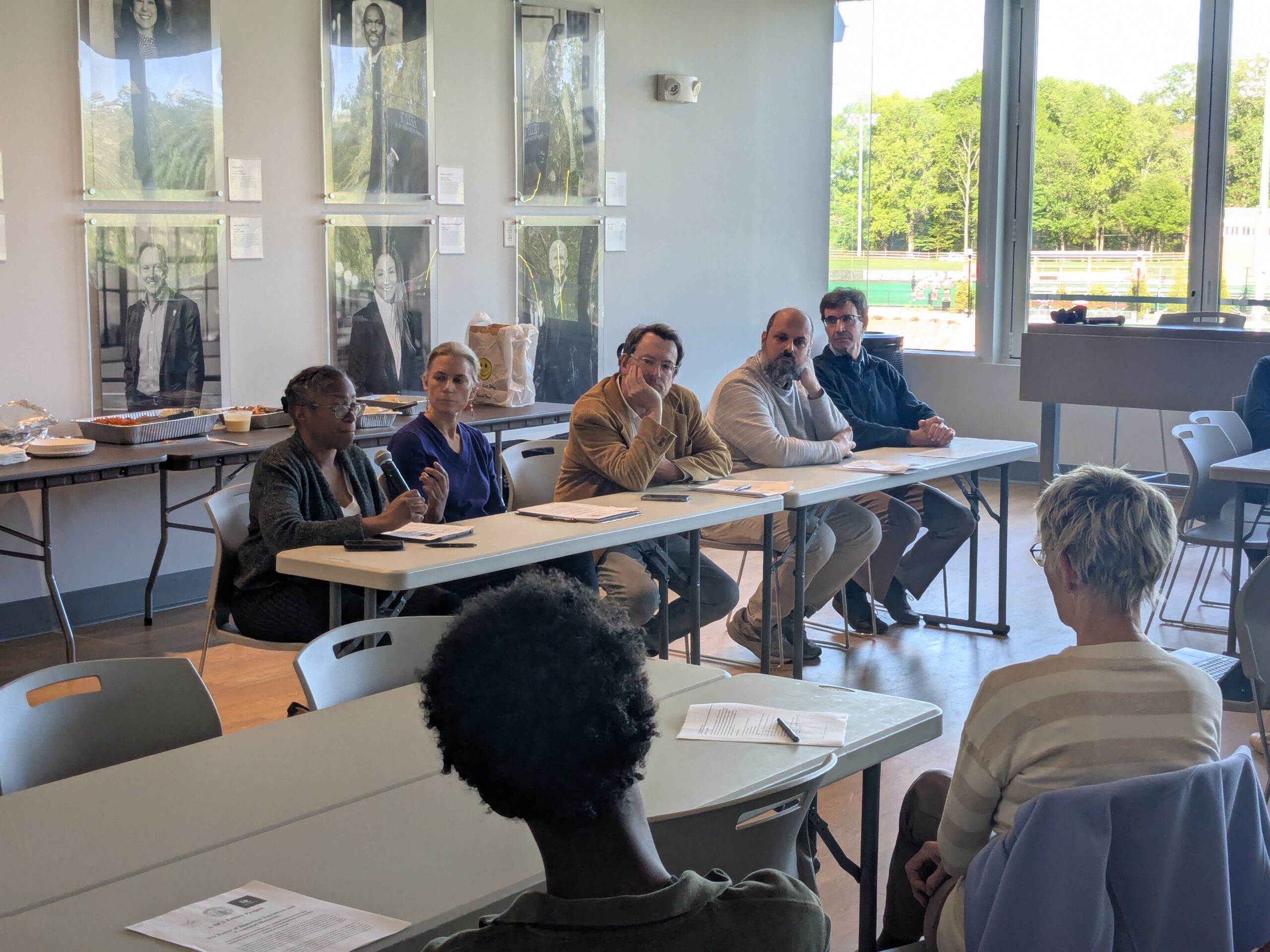
Picture of panelists at history forum

Every spring, the DCI Fellows implement personal deliberation projects in which they organize deliberations on topics they are interested in. This year DCI Fellow Bosisso Charles Takougnadi (aka TBC) had a big idea for his project — he wanted to partner with the history department to host a forum on historical narratives and contested histories. This would be a challenging enterprise for a history major, but even as a biology major, TBC was undaunted. He reached out to the chair of the History Department, John Wertheimer, and they worked together to design an innovative event titled, “The Power of Historical Narratives and Contested Histories.” This panel-based deliberative discussion was designed to explore the ways historical narratives are constructed, contested, and interpreted in contemporary society. The event focused on how history is told, who gets to tell it, and how differing perspectives shape our understanding of the past and present.

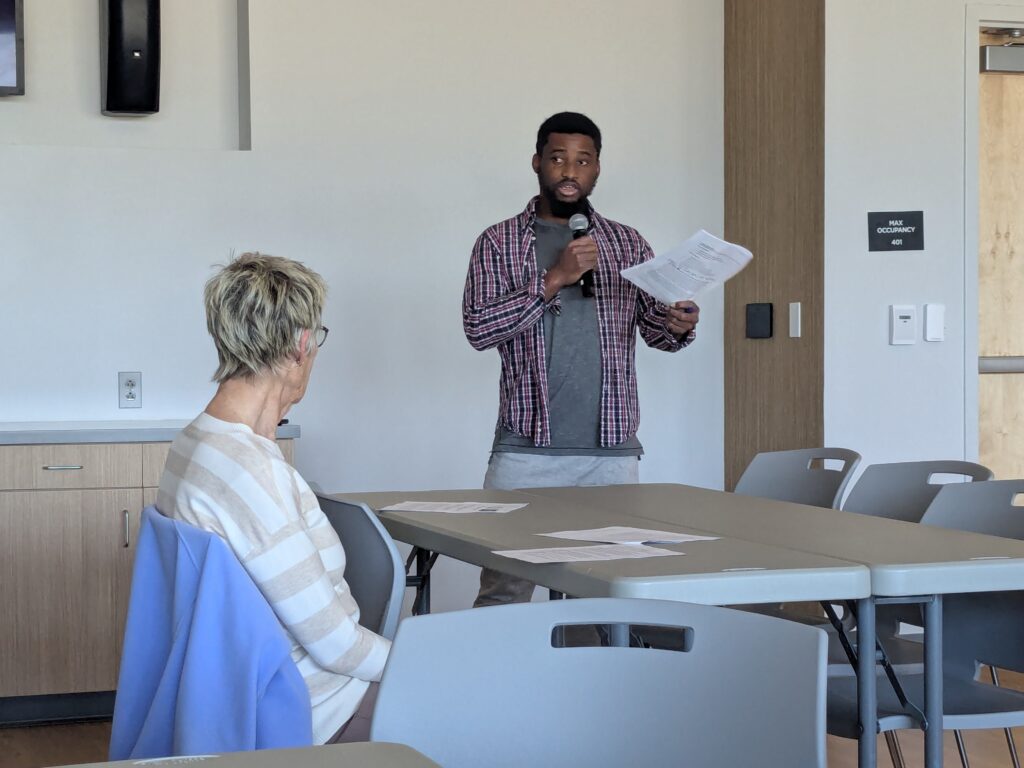
DCI Fellow TBC, the main organizer of the event, introducing the panel.

This “Deliberative History Forum” — to our knowledge, the first of its kind at Davidson — was held on April 8, 2025, on the campus of Davidson College, and lasted approximately 120 minutes. The first 45 minutes was dedicated to remarks by a panel of Davidson history professors that included History Professors Jonathan Berkey, Jakub Kabala, Hilary Green, Dáša Mortensen, and John Wertheimer. The remaining 75 minutes was reserved for small group table discussions among the audience members. The panelists joined the conversations, which included approximately 30 students, faculty, and community members. The event was hosted in the New Football Stadium’s Gallery 18, which provided a communal space that worked well for both the panel and the small-group discussions.

The event opened with brief remarks from each panelist, who shared insights into how history can be framed through different political, social, and cultural lenses. Each discussed the forum’s topic based on their academic expertise, which ranged from the histories of the Middle East, medieval Europe, the United States, and East Asia. Their remarks helped set the stage for the audience’s deliberations together.

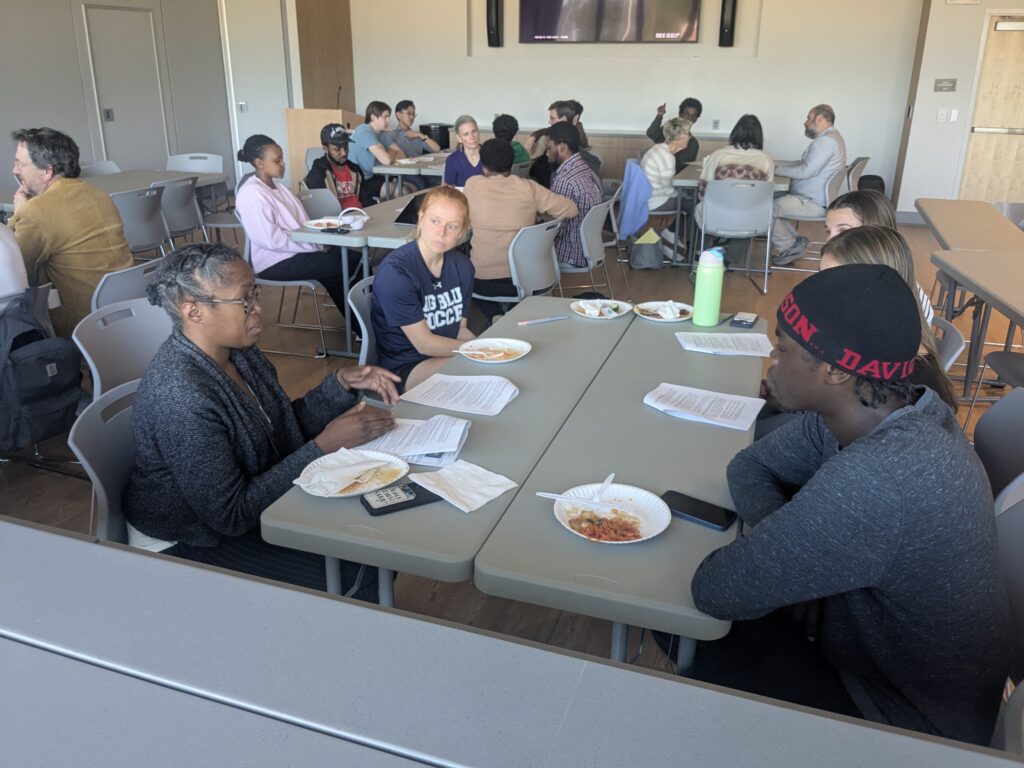
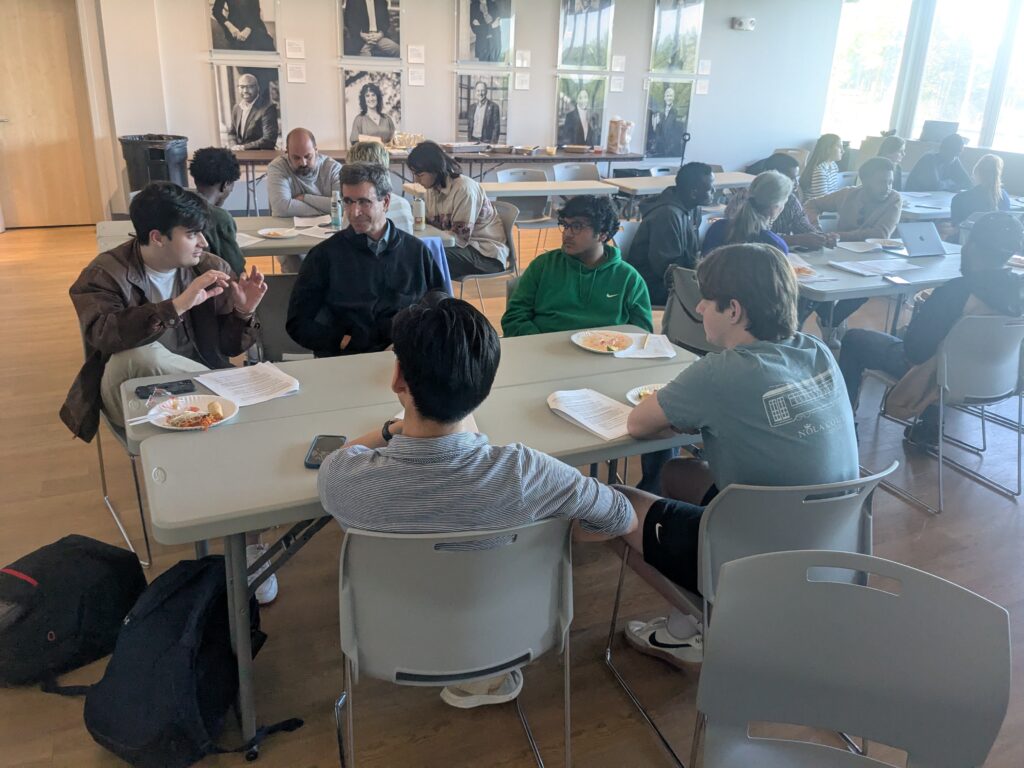
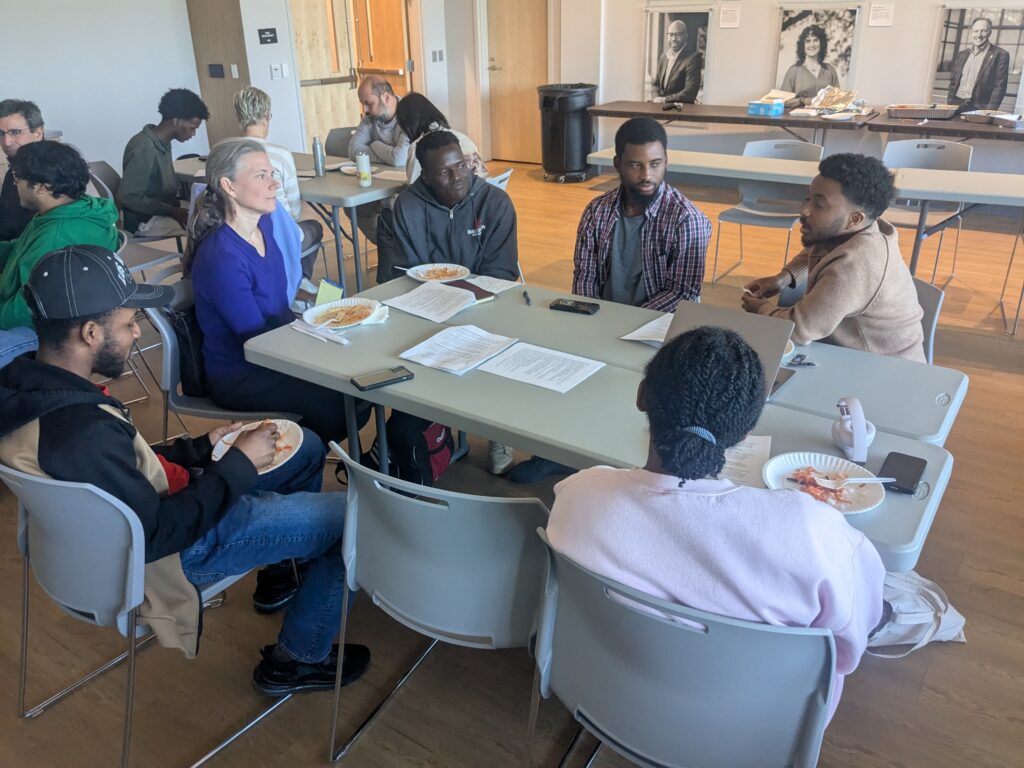
Audience discussing forum topic together around tables.

Following the panel, participants gathered around five tables for facilitated small-group discussions. Due to a shortage of DCI-certified facilitators, several attendees who had experience participating in D Teams stepped up to guide these conversations, which proved successful and enriching. Key topics of discussion included the role of historians in shaping public memory, how marginalized voices are often excluded from or misrepresented in mainstream narratives, and the impact of historical interpretation on present-day policies and identities.

Following the event, many expressed appreciation for the format and content of the event, especially the opportunity to engage with peers and faculty in meaningful dialogue. Participants also enjoyed the provided food (dinner from local restaurant Sabi), which helped create a welcoming and friendly atmosphere.

Overall, the project was a successful effort in fostering thoughtful dialogue on a timely and important subject. It demonstrated the value of collaborative, interdisciplinary events in building civic awareness and critical thinking among members of the campus community.

Filed Under: DCI Posts, Events

Embracing the Power of Deliberation: Why Thoughtful Conversations Matter

April 6, 2025 by TBC Takougnadi

image of people talking around a table

DCI Fellow Bosisso Charles Takougnadi ’27 (TBC)

Deliberation, to me, is more significant than just well-structured and healthy conversations; it is a true commitment to listening, understanding, inclusivity, and collective growth. During these polarized times, it is often overlooked, but deliberation has become a bridge between entrenched opinions and shared resolutions. Deliberation promotes not only effective and productive discussions but also the following values: attentiveness, listening, and openness. Thus, it challenges us to criticize our assumptions and empathize with perspectives that may at first, look foreign and sometimes create discomfort.

The potential to cultivate community and social resilience is one of the core principles that resonate with me as I navigate the practice of deliberation. Engaging with others’ views not only enriches one’s understanding. Furthermore, it strengthens one’s social fabric by developing trust, creating a sense of belonging as well as spreading knowledge and culture. Deliberation encourages participants to break down complex issues, dig deeper into underlying reasons and values, and collaboratively seek resolutions. Deliberation in that sense embodies a commitment to truth-seeking and a humility that acknowledges that we may not always have the solution, and we may not have all answers, but we are willing to find them together.

Furthermore, deliberation plays a vital role in fostering civic virtues. Deliberation not only encourages but also requires the following qualities: patience, empathy, and open-mindedness that enable a meaningful and effective deliberation. Every participant is should remain patient with the pace of the discussion while they confront biases, which is often a required stage to effective deliberation. They should also practice empathy and respect; indeed, these are essential aspects of democratic societies.

Excellent deliberators must concentrate on the “how” of the conversation, taking part not merely to prove a point of view but to collectively and collaboratively explore opinions and ideas. Its process-oriented nature portrays deliberation as an important skill in this interconnected world.

Reflecting on the deliberation sessions in the DCI D Teams program, it has been inspiring to witness the respect participants hold for each other’s viewpoints, no matter how diverse and different they are. These discussions around hard topics underscore the importance of creating welcoming spaces where people feel comfortable sharing their thoughts, even when they are not fully formed. This encourages vulnerability and honesty, thus easing the breakdown of walls of doubt as well as mistrust.

I believe DCI has made that possible at Davidson College in multiple ways. I am so thankful for the work the DCI has put in to give space for facilitated and respectful discussion around hard topics, as through this opportunity I was able to not only enrich myself but also enhance my skills as a deliberator and a facilitator.

As we continue to practice and refine these skills, I am hopeful that deliberation will not only foster more cohesive communities but also prepare us for the tough conversations ahead. As a student, deliberation as well as discussion about contentious issues will get more complex as we grow in the ‘real’ world where there is even more diversity in all aspects of life, from cultures to ideas. One should be able to continue to engage in the practice of deliberation as well as embody its values.

Filed Under: Blog Posts, Fellow Posts

A Deliberative History Forum: The Power of Historical Narratives and Contested Histories

April 4, 2025 by TBC Takougnadi

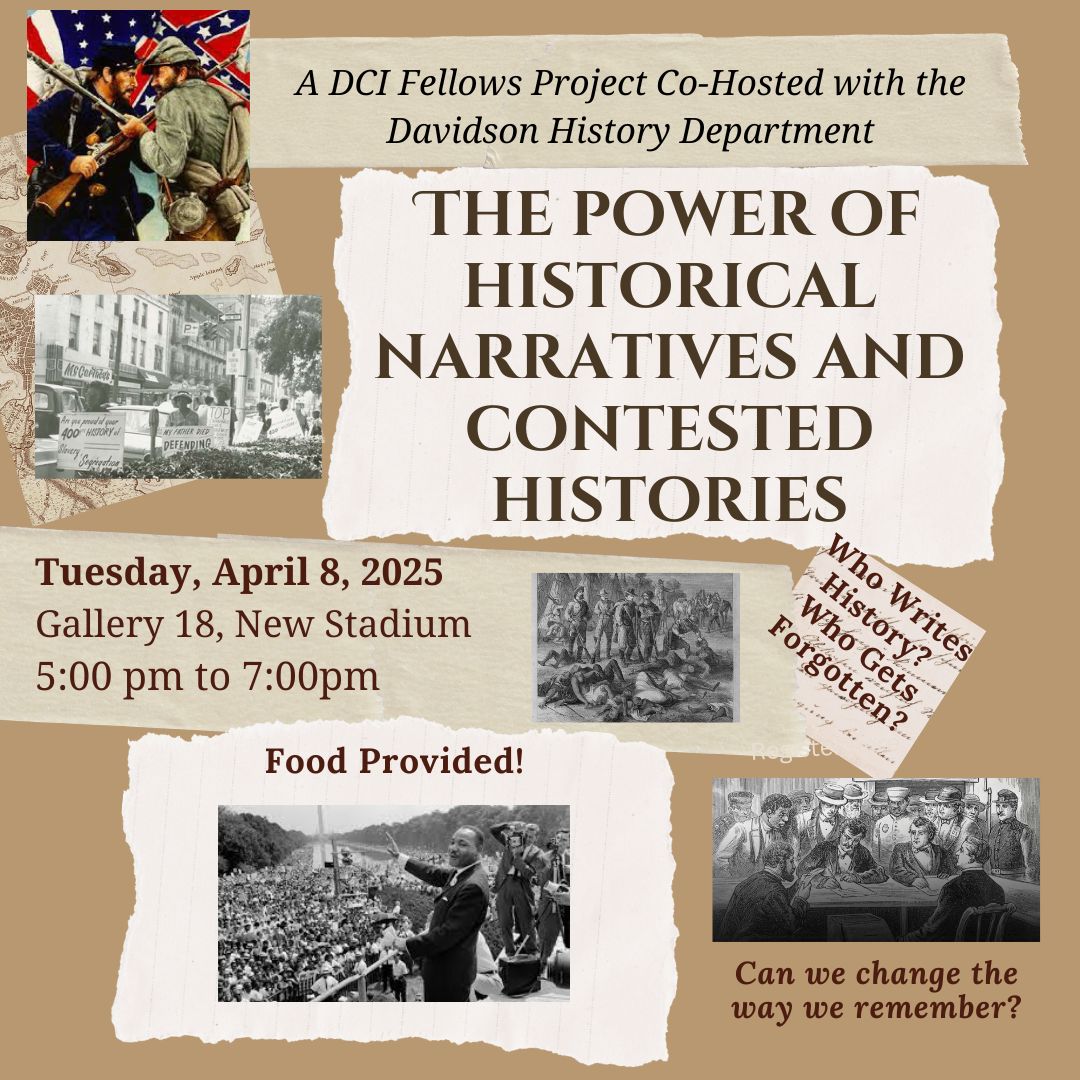
Poster for Deliberative History Forum

DCI Fellow Bosisso Charles Takougnadi ’27 (TBC)

History is not just a record of the past, it is a battleground of memory, identity, and power. The stories we tell about where we come from shape who we are, how we understand justice, and what kind of future we imagine. Yet history is rarely a singular, uncontested truth. Different communities, scholars, and political forces often clash over whose narratives are centered, whose voices are amplified, and whose experiences are erased. 

At Davidson College, we have a unique opportunity to engage in this vital conversation. On April 8, 2025 from 5 pm to 7 pm in the New Davidson Stadium’s Gallery 18, we invite students, faculty, and community members to join a critical discussion titled “The Power of Historical Narratives and Contested Histories.” This event is a deliberation project being organized by DCI Fellow Bosisso Charles Takougnadi ’27 (TBC) in collaboration with the History Department and the Deliberative Citizenship Initiative. It will feature insights from distinguished professors Jonathan Berkey, Jakub Kabala, Hilary Green, Dáša Mortensen, and John Wertheimer, who will explore how historical narratives are constructed, challenged, and reclaimed. You can register here.

 Why Does This Conversation Matter? 

 1. History Shapes Our Present and Our Future 

History is more than the past; it actively informs our laws, policies, and social structures. When certain narratives dominate while others are suppressed, the consequences are real. Consider: 

How do textbooks frame (or omit) slavery, colonialism, or Indigenous displacement? Why do some historical figures become national heroes while others are forgotten? What happens when marginalized communities reclaim their own histories? 

These questions matter because they determine whose struggles are acknowledged, whose grievances are legitimized, and whose futures are prioritized. 

 2. Contested Histories Reveal Power Dynamics 

As Professor John Wertheimer will discuss, the old saying that “history is written by the victors” is only partly true. While dominant groups often control official narratives, marginalized communities have always resisted, reinterpreted, and rewritten history. Professor Wertheimer will draw from U.S. legal history to show how contested narratives don’t just reflect power they can create it, shaping legal decisions, public memory, and even the outcomes of social movements. 

 3. Silenced Histories Can Be Reclaimed but Not Without Struggle 

One of the most powerful acts of resistance is the recovery of erased histories. Professor Hilary Green will examine how African American communities developed communal archival practices to counter the intentional silencing of their past. Even after the Civil Rights Movement, recovery efforts were faced and still face fierce opposition. Today, projects uncovering suppressed histories (from Tulsa’s Black Wall Street to Indigenous land dispossession) are met with political backlash, proving that historical narratives remain deeply contested. 

 4. Global Perspectives Enrich the Conversation 

This discussion is not limited to U.S. history. Professors Jonathan Berkey, Jakub Kabala, and Dáša Mortensen will bring transnational perspectives, exploring how historical narratives are constructed, weaponized, and reinterpreted across different cultures and eras. From colonial legacies to post-war memory politics, these comparisons remind us that the struggle over history is a global phenomenon. 

Why Should You Participate? 

This is not just an academic exercise. Whether you are a student, educator, or community member, history affects you. Here’s why your voice matters in this discussion: 

Students: You are inheriting a world shaped by these narratives. Engaging critically with history empowers you to question, challenge, and rewrite dominant stories. 

Educators: How we teach history influences the next generation’s understanding of justice and identity. 

Community Members: Local histories from Davidson’s own past (like slavery) to national debates are part of this conversation. Your perspective is essential. 

 Join Us 

We need diverse voices in this discussion. Come listen, learn, and contribute as we explore the following existential questions: 

How do historical narratives reinforce or challenge power? 

What does it mean to “reclaim” silenced histories? 

Why are some histories still so fiercely contested today? 

How do historical narratives of victimhood shape political legitimacy and moral authority in the Israel-Palestine conflict, and in what ways does the comparison to the Holocaust influence global perceptions and policy responses?

Event Details: 

📅 Date: April 8, 2025

📍 Location: Gallery 18, new football stadium.

🕒 Time: 5 pm to 7 pm

Food will be provided!

This is more than a lecture, it’s a dialogue. Let’s confront the past to better understand the present and shape a more just future. 

Help us with our planning by registering in advance at the link below. Once you register, we will send you a deliberation guide that will provide useful background for the discussion.

Deliberative History Forum Registration Link

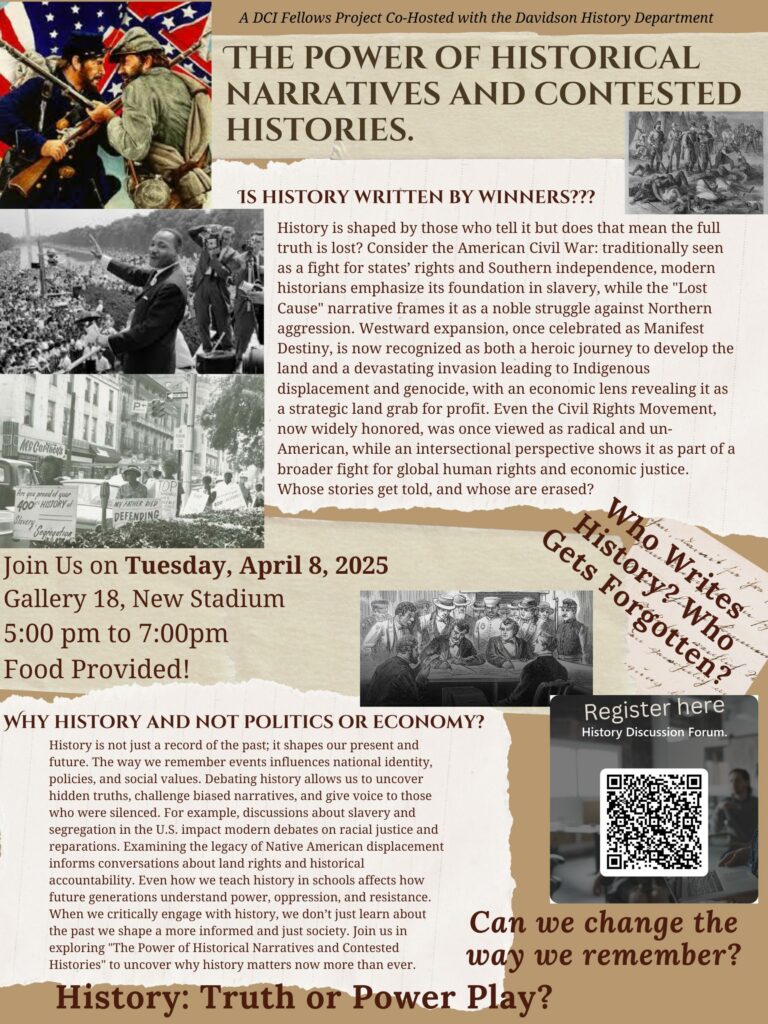
And see the poster below for more information:

Full poster for History Forum

Filed Under: Announcements, Fellow Posts

Footer

Blog Post Categories

  • Announcements
  • Blog Posts
  • DCI Posts
  • Events
  • Faculty Posts
  • Fellow Posts
Image of a compass superimposed by the text "Deliberative Citizenship Initiative" and "Davidson College." Clicking on this image leads to the Initiative page.

Recent DCI Blog Posts

  • We Tried to Fix Jubilee’s “Middle Ground” – Here’s How It Went
  • A Case for Deliberation in the Natural Sciences
  • Welcoming New Staff to the DCI and DCN
  • Facebook
  • Twitter
  • Instagram
  • LinkedIn


Copyright © 2026 · Infinity Pro on Genesis Framework · WordPress · Log in