By Bosisso Charles Takougnadi (TBC) ’27
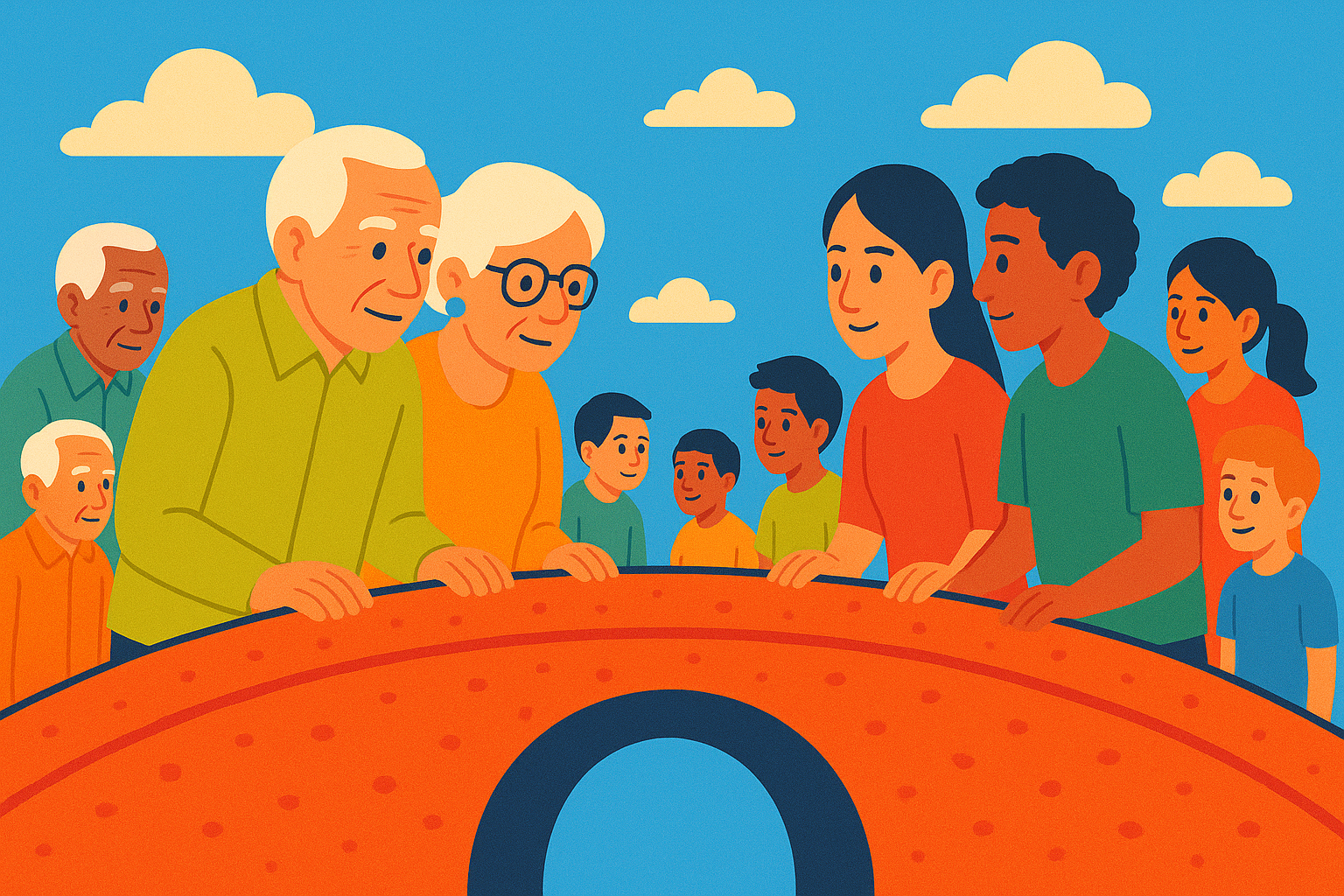
Usually, we see deliberation as a practice based on mutual respect, critical thinking, and open dialogue. Yet how we engage in deliberation and how we view it can differ quite a lot from one generation to the next. As a DCI Fellow, I’ve learned that talking with both younger and older people comes with its own set of challenges and opportunities. When we recognize these differences as aspects of our identities, we can build more inclusive spaces to deliberate. To what extent do generational differences create a gap during discussions involving two or more generations?
To start off, contrasting methods of discussion are one way to achieve an effective deliberation. In my experience this year (which I fully acknowledge is limited and anecdotal), both young and old participants in a deliberation demonstrate two recurring patterns. Young people generally like having a more direct approach that is solution-oriented. This was common during my D Team meetings that I facilitated, as I observed very quick and short points and responses from young people aiming to reach a resolution and action plan.
The older folks tended to make longer contributions to the conversation, giving, or requesting in the form of questions, a lot of information sometimes less directly relevant to the discussion. They valued taking their time, deep thinking, and a more ordered way of doing things. Not that younger people do not have similar values, but they seemed to exhibit them less often. I noted that while young people might prefer direct responses and be willing to shift the paradigm (although not always), older people often insist on how much past events and ways of doing things matter.
Neither approach is necessarily better, but these differences can cause friction when people discuss contentious issues. I have seen older people asking younger participants (generally students) to explain their points further when the younger people thought they were clear enough. In a couple of instances, I noticed how older people in my group discussions can be more likely to directly confront other participants about their views. This made some of the younger people uncomfortable and upset.
Dealing with contentious issues in cross-generational discussions can therefore be particularly challenging. For some young people, being direct and focusing on the present is vital to getting one’s point across in the room. Older people, on the other hand, often preferred a more experience-based analysis of the issue. When people of different ages come together, young folk sometimes feel ignored if others don’t agree with their ideas. Meanwhile, older people might think others don’t value the insights they have gained in their lives enough.
Our approaches to addressing issues also shape how well we are received during a conversation. Young people often see conversations as a way to push for fast social change. But older people might be more careful thinking about long-term effects and consequences, taking into consideration their own experiences. This difference in how urgent things seem to different groups of people can make it feel like two separate talks are happening instead of one big conversation.
Nonetheless, discussions between different age groups can be helpful. Older generations bring opinions based on decades of life experience that can be combined with the new ideas and paradigms that are popular with younger generations. One good way to bring generations together is to make sure everyone listens well so each person feels heard and valued.
Along these lines, the DCI Fellows Program taught me that adaptability represents the essential element for effective deliberation. Allowing generational differences to partially shape our discussions is necessary for a good deliberation. It will enhance understanding of one another and enable us to have meaningful dialogues. New ways of thinking emerge from younger generations while older generations provide experiential knowledge and historical depth. The process of deliberation must remain free from exclusive ownership by specific groups or engagement techniques.
By recognizing generational differences as an aspect of people’s identities, we create opportunities for these differences to become valuable conversational topics. The evolution of future deliberative processes hinges upon our capacity to acquire knowledge from one another across divides, and particularly generational divides. Through patient and respectful dialogue combined with openness to new ideas, we need to develop a deliberative culture that empowers individuals of all ages to participate actively in deliberative democracy.