The day after the 2024 Presidential election, the Deliberative Citizenship Initiative (DCI), in collaboration with the Dean of Students Office, the Communication Studies Department, the Political Science Department, and the Center for Political Engagement, hosted an event aimed at helping students process the election results in a constructive and thoughtful way. The goal was simple: to create a welcoming, open space for students to voice their reactions, questions, and hopes and concerns for the future, no matter the outcome of the election.
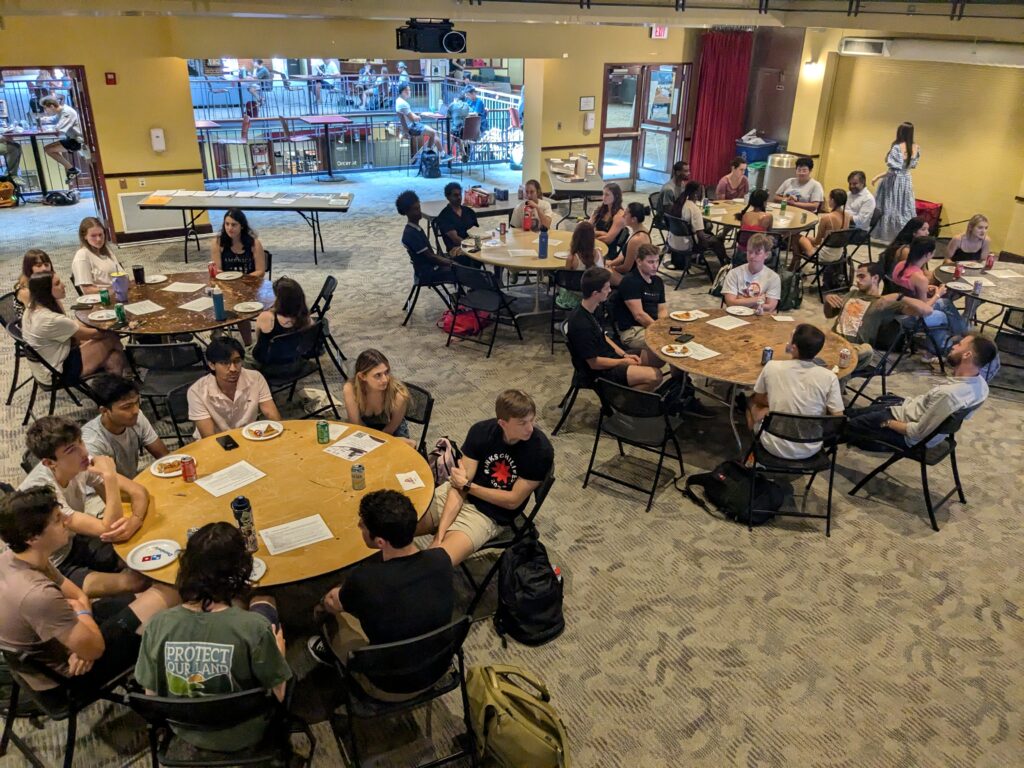
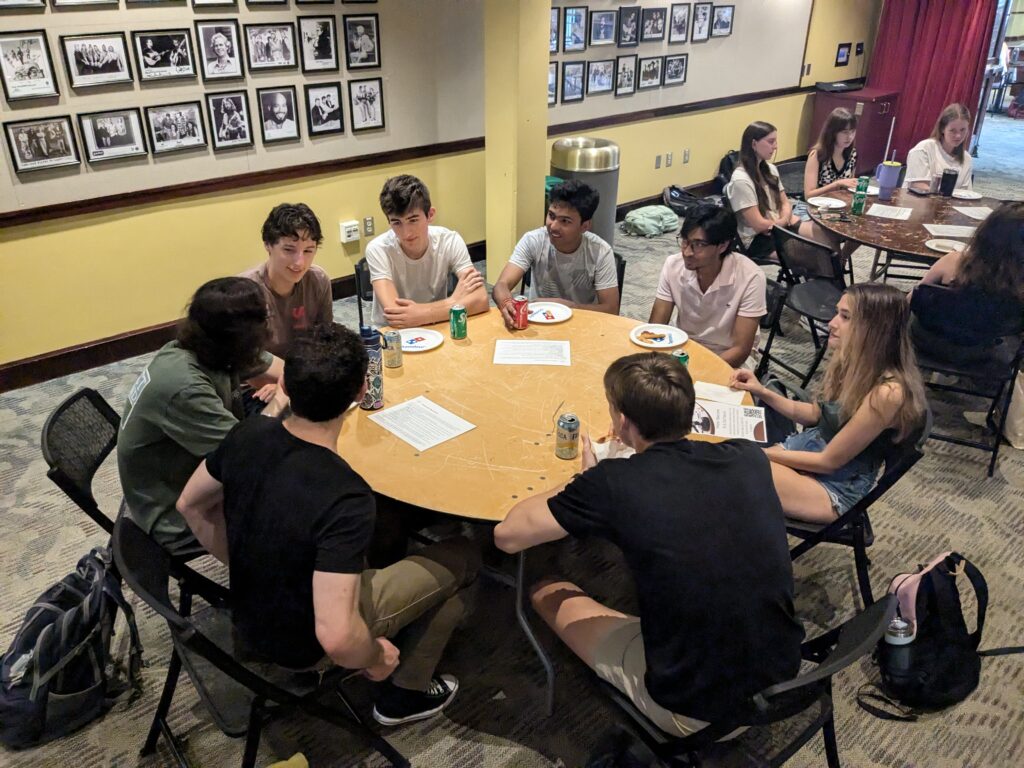
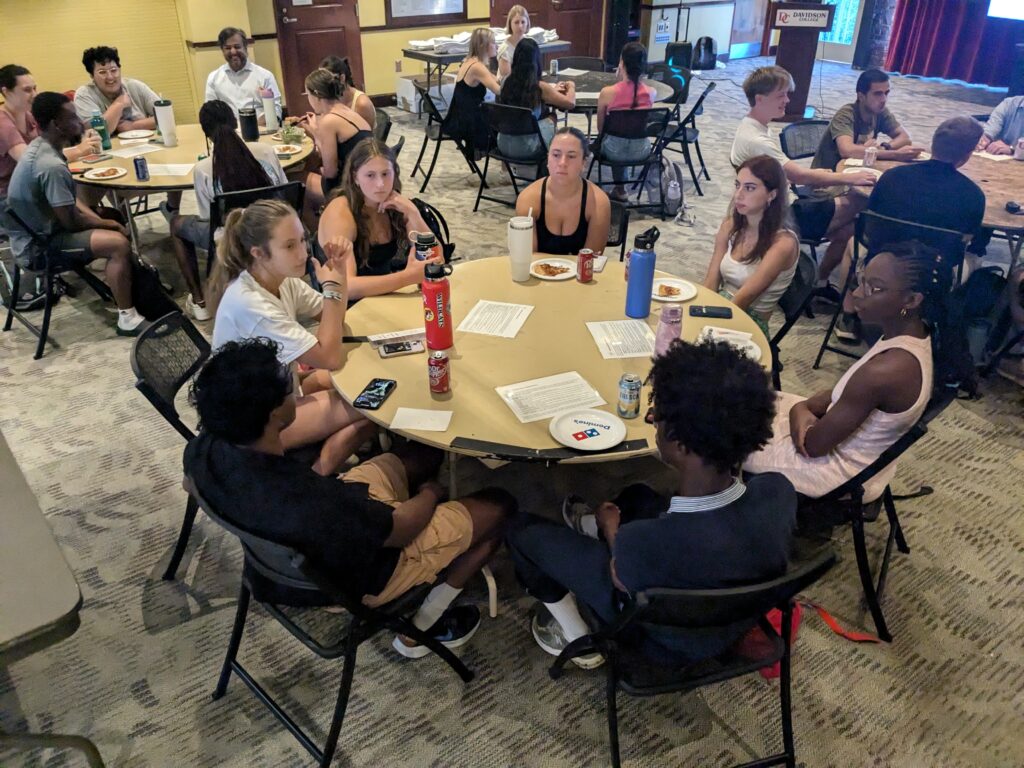
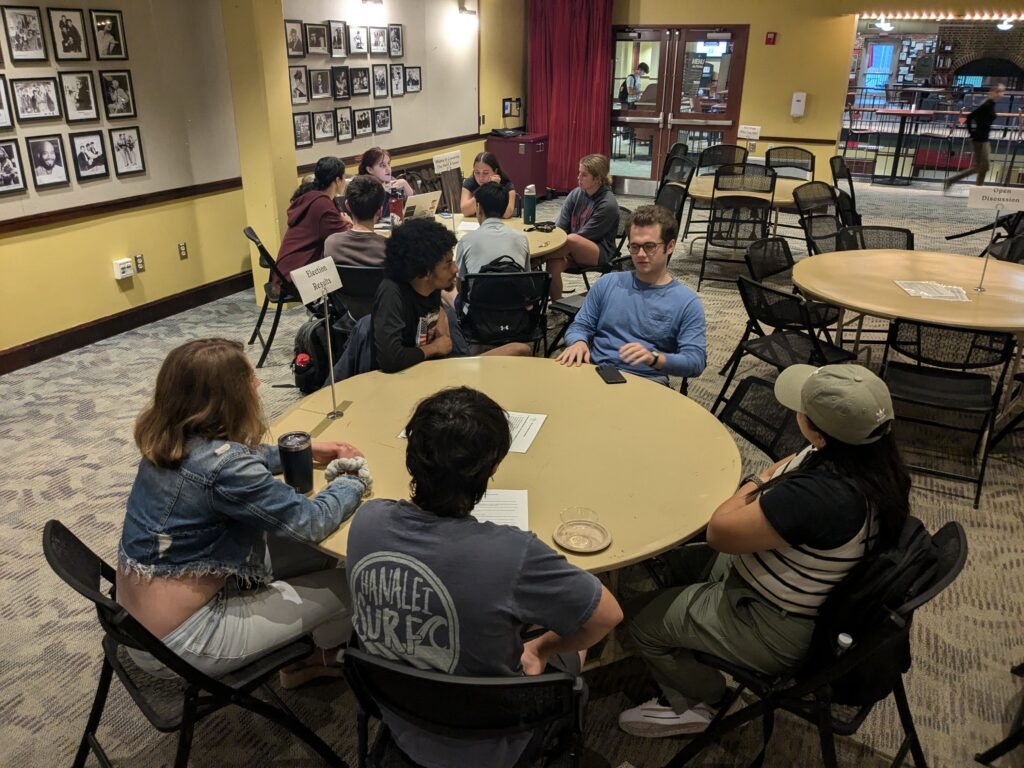
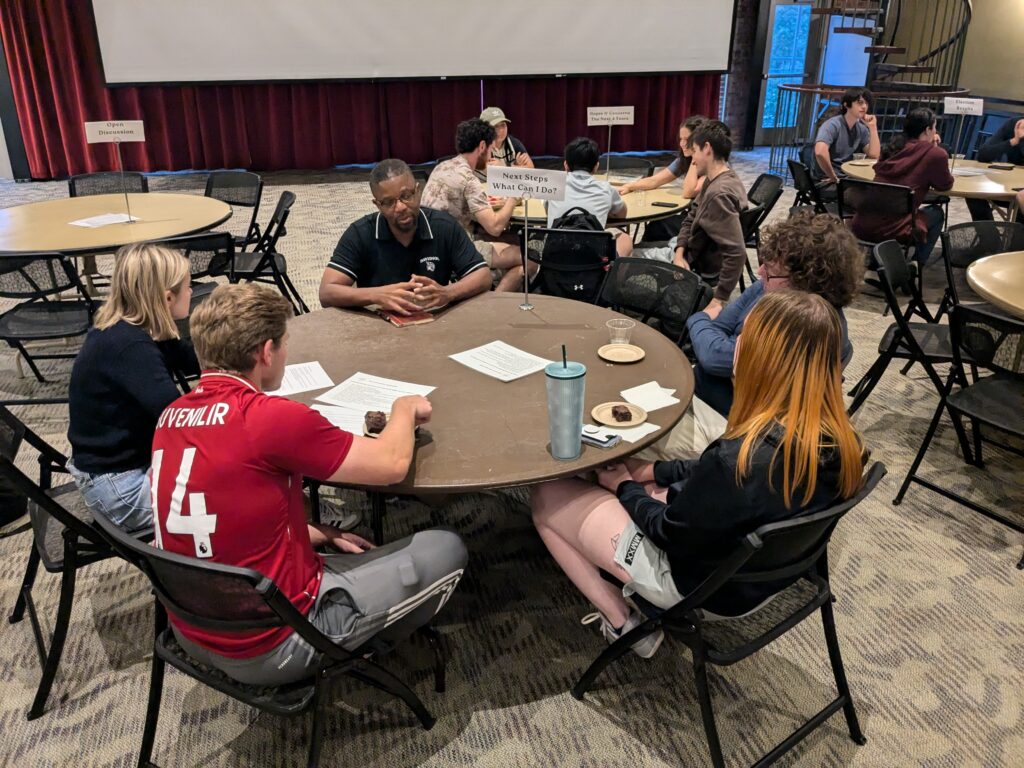
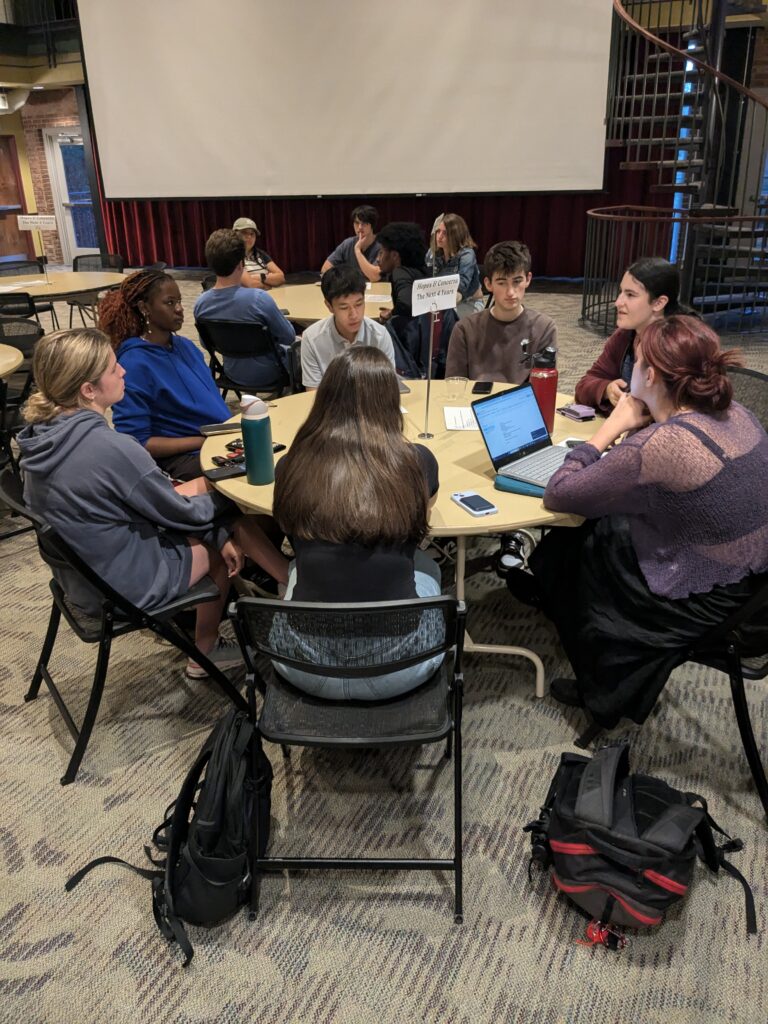
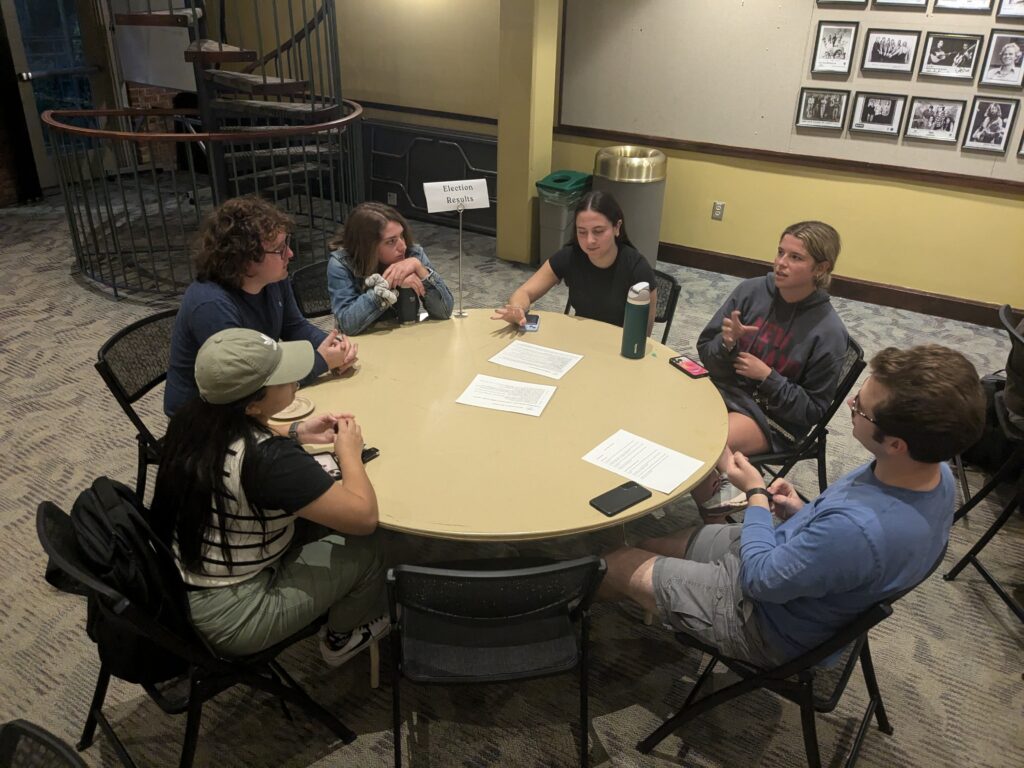
The event took place in the Union, where around 25 students from across the political spectrum gathered in Room 900 to engage in a conversation about the election results and what the next four years might hold. At one table, the Presidents of the College Republicans and College Democrats — who had worked together to organize the Eu-Phi Debate — engaged in a respectful discussion of the results with each other and other students. At other tables, both American and international students also shared their different perspectives on the election together. As the results were still fresh, emotions were running high, and there was an understandable need to come together to reflect, discuss, and strategize for the future. What made this event wasn’t just the opportunity to talk about politics—it was the semi-structured, deliberative approach to the conversation that allowed students to engage in meaningful dialogue, no matter where they stood politically.
The Process: Creating a Productive Space for Dialogue
To ensure that the event was both inviting and productive, the organizers used a structured approach to facilitate conversation. Each table in the room was dedicated to a specific theme or topic, such as election results, hopes and concerns for the next four years, next steps – what can I do?, and an open discussion table. Facilitators, trained by the DCI, were present at each table with guiding questions and ground rules to keep conversations on track and ensure that everyone’s voice was heard.
The event was designed to allow participants the freedom to either stay in their current group and continue discussing the topic at their table, or to move to another table and explore a new theme with fresh faces. Some chose to stay, diving deeper into their original conversations, while others embraced the opportunity to engage with different perspectives, expanding their understanding of the broader issues at play.
The idea for the event came out of conversations between Graham Bullock, Associate Professor of Political Science and Faculty Director of the DCI, and Ike Bailey, Professor of the Practice in Communication Studies. Professor Bullock and Professor Bailey both agreed that it would be helpful to provide a space the day after the election for members of the Davidson community to reflect on the results and status of the election, whatever they might be.
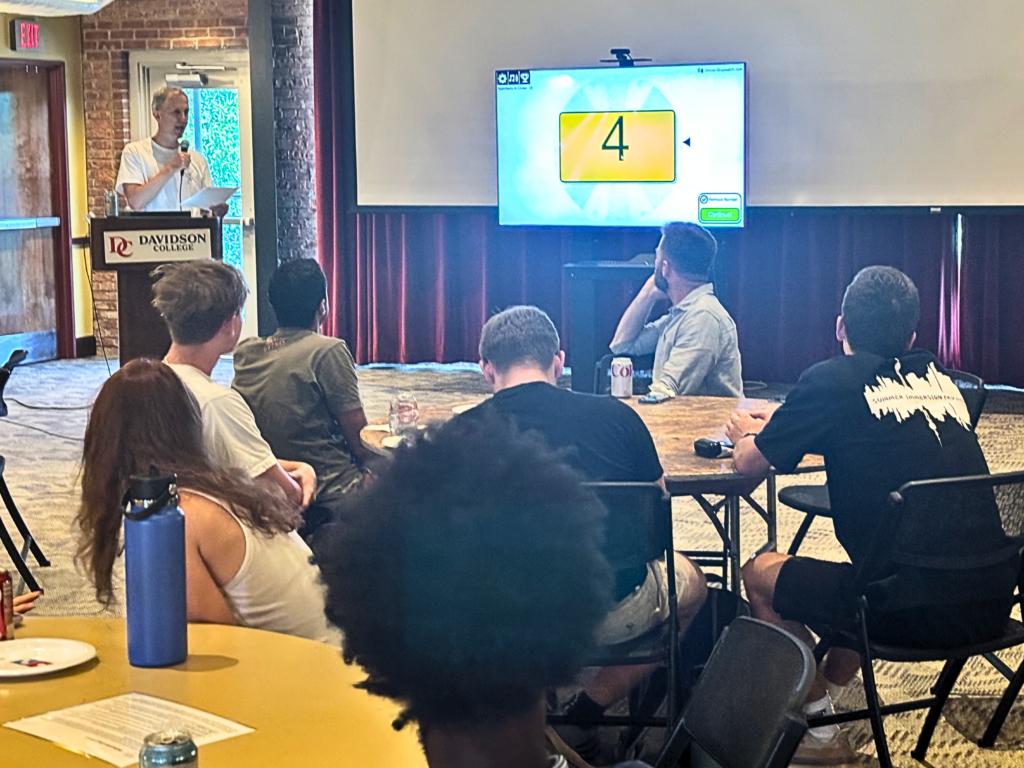
At the event, Professor Bailey participated in conversations with the students while Professor Bullock provided guidance and time checks for the participants, ensuring that they were able to engage in ways that were most meaningful to them. More specifically, participants had the option to stay at their current table for each round or explore other topics with new people. This flexibility in format—where participants could both continue conversations or seek new ones—allowed for diverse and dynamic exchanges, reflecting the range of emotions and thoughts people experienced following the election.
Creating Space for Reflection and Action
In the days following any election, particularly a contentious one, it’s common for individuals or groups to feel anxious, fearful, or even hopeless about the state of American democracy. These emotions can be amplified by the divisiveness of modern political discourse, leaving many feeling uncertain about the future. Our event aimed to provide a space for students to both express those feelings as well as explore how they might act on them. The goal wasn’t just to reflect on the election results, but to help participants channel their emotions into constructive conversations about next steps, once they felt ready to do so.
Research on deliberation has shown that such deliberative discussions can strengthen political efficacy, meaning that people feel more empowered to act within the political system (Fishkin, 2009). With this in mind, the event provided participants not only with the opportunity to express their hopes and concerns, but also a space to consider concrete ways to get involved and make a difference in their communities in the aftermath of the election. Whether it was through volunteering, participating in local governance, or engaging in grassroots activism, the conversation enabled participants to turn toward practical steps for fostering the change they want to see in the world. This allowed participants to focus on ways they could contribute to shaping a future they could feel proud of, regardless of their political beliefs.
In many ways, the event echoed the core values of deliberative democracy: a belief in the power of informed, respectful dialogue to create a more engaged, empowered citizenry. Our hope was to help participants leave with a renewed sense of agency—no matter their political leanings or the outcome of the election.
Building a Stronger Democracy, One Conversation at a Time
The day after the 2024 election, the DCI event succeeded in its goal to create a space for students to engage in thoughtful, reflective, and productive conversation. By offering both a space for thoughtful discussion and clear paths forward for those eager to take action, the event highlighted the importance of staying engaged in civic life—beyond just voting—especially during times of political uncertainty. It reminded us that democracy thrives when we actively participate, discuss, and contribute to shaping the future.
In the days following an election, it is easy to feel disheartened or disconnected from the democratic process. While it is important to give everyone space and time to either celebrate or grieve the results of hard-fought elections, events like this one can also remind us that democracy is not just about casting a vote—it requires us to stay engaged, have difficult conversations, and take steps, however small, to contribute to the well-being of our communities and society. Whether students left the event feeling heard, understood, motivated, or more informed, the most important takeaway was that they had a chance to participate in a meaningful dialogue that reaffirmed their role in shaping the future.
Thank you to all who attended, and we look forward to continuing important conversations about the challenges and opportunities we all face in the months ahead.
Resources
Fishkin, J. (2009). When people speak: Deliberative democracy and public consultation.Oxford University Press.