• Skip to main content
  • Skip to footer

Deliberative Citizenship Initiative

Building Democracy One Conversation at a Time

  • The Initiative
    • Programs
      • Deliberation Across the Curriculum
      • Deliberation on Campus
      • Deliberation in the Community
      • Research on Deliberation
    • Motivations
      • Why Deliberative Citizenship?
      • Why Davidson? Why Now?
    • Who’s Involved?
      • DCI Fellows Cohorts
        • 2025-2026 Fellows
        • 2024-2025 Fellows
        • 2023-2024 Fellows
        • 2022-2023 Fellows
        • 2021-2022 Fellows
        • 2020-2021 Fellows
      • DeeP Collaborative Cohorts
        • 2024-2025 DeeP Collaborative Faculty
        • 2023-2024 DeeP Collaborative Faculty
      • Advisory Council
    • History
      • What Sparked the Initiative?
    • Key Deliberative Dispositions
    • Frequently Asked Questions (FAQ)
    • Annual Report
  • Get Involved!
    • Participate in a Forum
    • Join a D Team
    • Become a Fellow
    • Take Courses
    • Get Training
    • Come to Guest Lectures
  • Events
    • Upcoming Events
      • 250th Anniversary Deliberative Forum Series on American Values
    • Past Events
  • Connections
    • The Deliberative Citizen: The DCI’s Monthly Newsletter
    • Efforts on Campus
    • Efforts in the Community
    • Efforts Elsewhere
    • Readings and Resources
      • DCI-Published Guides
      • DCI Guide to One-on-One Conversations
      • How to Disagree
      • Demonstration of Facilitation Styles
      • Deliberative Pedagogy Mini-Course
    • How We Can Help: DCI’s LET’S DELIBERATE! Partnership Opportunities
    • DCI in the News
  • DCI Blog Posts
    • Recent Blog Posts
    • All Blog Posts

deliberation

DCI Spring Program Announcement: Commons Conversations

February 16, 2024 by Sara Copic

Commons-Conversations-8.5×11-2-1

This spring, the DCI is partnering with Davidson faculty and staff to kick off a new iteration of our Commons Conversations program! Commons Conversations is a series of deliberative chats over lunch at Vail Commons and is open to all Davidson students. We have invited five faculty and staff members to host these conversations on topics relevant to their academic or professional expertise. At each session, these conversation hosts will briefly introduce the topic of conversation and share a few of their own insights on it. Students joining the lunch will then have an opportunity to discuss the topic with one another and the host in a conversation guided by our DCI Fellows, who are trained deliberation facilitators.

All Commons Conversations events will take place in the Vail Commons Annex. Meal swipes will be provided to all participants who are not on a full meal plan.

Below is our list of faculty and staff hosts that we have scheduled for this spring. A week or two before each Commons Conversation, we will share more information about the topic of conversation and how to register to attend (seats are limited and available on a first-come, first-serve basis).

We hope you’ll decide to join us for this series focused on the Davidson student community!

Friday, February 23, 11:15 am to 12:15 pm

Shelley Rigger, Vice President for Academic Affairs and Dean of Faculty, Brown Professor of Asian Politics

Friday, March 22, 11:15 am to 12:15 pm

Patricio Boyer, E. Craig Wall, Jr., Distinguished Teaching Professor in the Humanities and Director of the Humanities Program | Associate Professor of Hispanic Studies

Thursday, April 4, 12:15 am to 1:15 pm

Byron McCrae, Vice President for Student Life and Dean of Students

Thursday, April 18, 11:10 am to 12:10 pm

Shyam Gouri-Suresh, James W. Cannon Professor of Economics and Rizwan Zamir, Associate Professor of Religious Studies

Thursday, April 25, 11:10 am to 12:10 pm

Chris Clunie, Vice President & Director of Athletics

Filed Under: Announcements, Events Tagged With: DCI, deliberation, facilitation

Why Me?

February 7, 2024 by Auden White

Game pieces connected by a network

Auden White ’26 (DCI Fellow)

In the DCI’s fall forum, “The Challenge for Democracy,” one of the participants posed an important question: “Why me?” He was a student who was in the midst of a discussion about the role of United States military interventions, nation-building missions, and sanctions in promoting democracy abroad. He had just listened to expert professors, themselves conflicted by the track record of previous US efforts, navigate the topic for the last hour. He was unsure how to add to the conversation, chart a course, and direct policy for the future, given his lack of experience and knowledge.

His caution is justifiable. He was not as knowledgeable as an expert, nor did he have a strong personal connection to the topic. Despite this background, I pushed back against his hesitancy and urged him to participate in the discussion. He did so wonderfully and brought up some interesting points during the discussion.

The Deliberative Citizenship Initiative (DCI) is designed for the hesitant young man and everyone who wants to learn more about politics. It focuses on deliberations, not decisions. We are not focused on changing government policy. The issues we try to tackle are too large, too divisive, and too complicated to find the best solution in a short deliberation about US foreign policy. Additionally, implementing that solution is difficult given the DCI does not have an advocacy wing, nor any political power. While in the longer term one of the DCI’s goals is to catalyze creative solutions that respond to and accommodate the important concerns of all stakeholders, we work to achieve this goal by first fostering greater understanding of these concerns about the issues at hand.

This emphasis on fostering understanding rather than seeking immediate solutions is valuable. Creating a space for dialogue and deliberation can lead to increased empathy, tolerance, and a deeper comprehension of diverse perspectives. Its goal is to bring members of the Davidson community closer, to hear each other’s stories, all of them, and to walk away with a more complete understanding of the American experience. It can lead to understanding between the most ardent supporter of abortion and a pro-life absolutist, where the other is no longer demonized but seen as a person who went through a slightly different set of circumstances. For dialogue, solutions are helpful, but not required.

The DCI’s focus on bringing people together to share their stories and perspectives, even if they ultimately agree to disagree, promotes a more nuanced and interconnected community. It fosters an environment where individuals can appreciate the complexity of various viewpoints without the pressure of arriving at a definitive solution. In a world often driven by the need for quick decisions and immediate outcomes, the emphasis on deliberation for the sake of understanding aligns with the principles of participatory democracy. It recognizes that meaningful change often begins with thoughtful and informed conversations, even if the tangible results may take time to manifest.

The young man at my forum on democracy is not alone: only 40% of youth say they feel well-qualified to participate in politics. This low confidence contributes to low voter turnout and political participation amongst youth. Deliberations like the ones sponsored by the DCI inspire further political participation and foster a more vibrant democracy.

Image Credit: allinonemovie

Filed Under: Blog Posts, Fellow Posts Tagged With: deliberation, democracy, facilitation, politics

Accessibility As a Priority: A Perspective From the DCI  

January 24, 2024 by Zoe Moseley

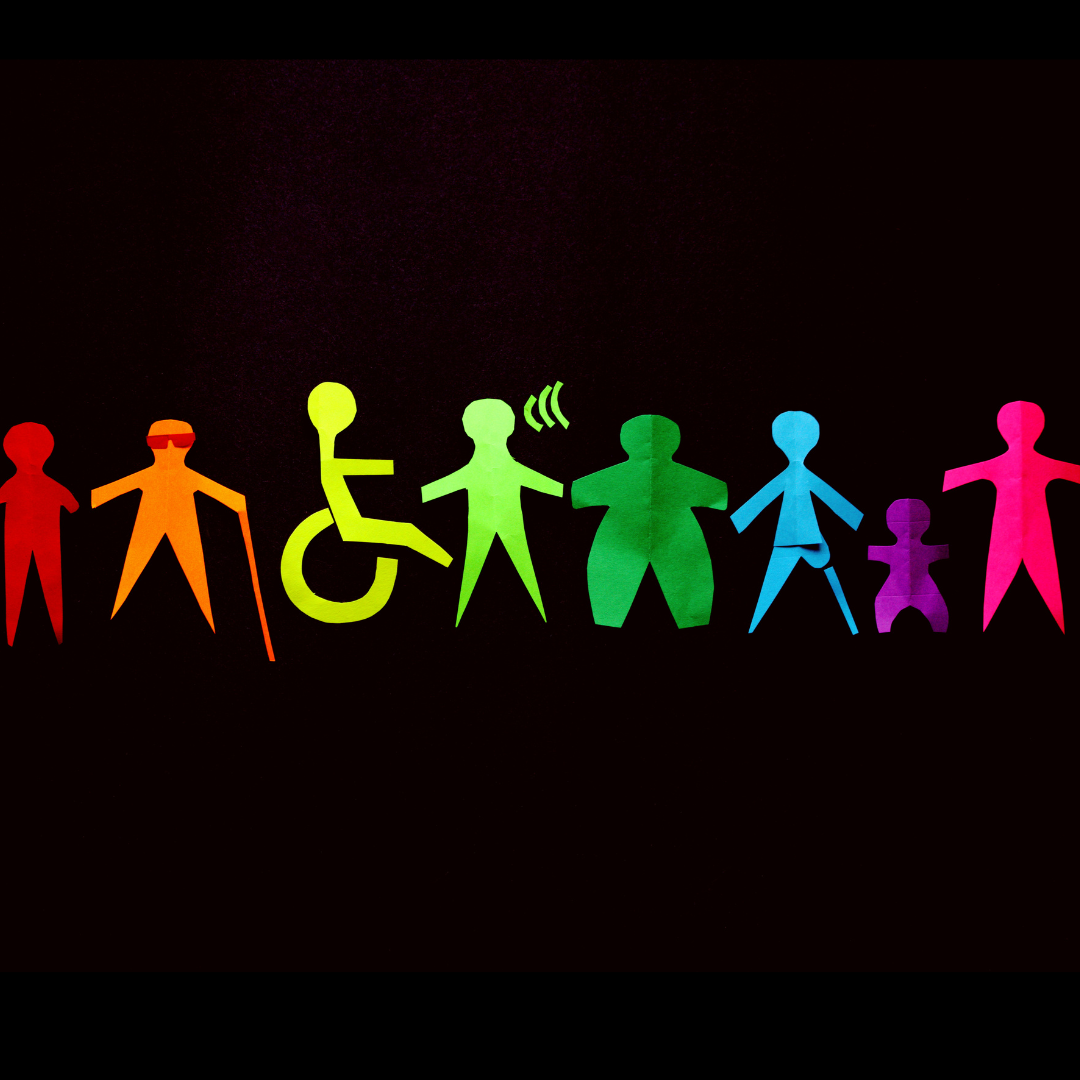
Inclusive colorful image of human silhouettes

Zoe Moseley ’26

At a Deliberative Citizenship Fellows meeting in November, we discussed an article published by Colorado State University’s Center for Public Deliberation titled, “Inclusion Around the Cycle.” This reading aligned well with what I was doing at Davidson that week, helping the Davidson Disability Alliance lead a conversation about event accessibility with student organizations. The argument the reading was trying to refute was that all deliberations are necessarily and equally exclusionary. Power dynamics and certain people speaking more, or more freely than others, are two examples of ways deliberations may not be completely inclusive.

“Inclusion Around the Cycle” started by discussing two types of exclusion, external and internal. External exclusion was described as the fact that some voices will not be present for the event.  Internal exclusion, however, is the idea that non-dominant voices may be overlooked during the event. The article emphasizes that strategies to reach sufficient inclusion are entirely possible, especially when implemented before, during, and after events.

I would say the idea that not every voice at a deliberation could be present or heard felt very disappointing throughout working with the DCI. However, I did not know how to fix it. As someone who works towards access and inclusion on campus, I was confused about why I could not think of feasible ways to bring this perspective to the DCI. I was therefore excited to read, “Deliberative practitioners should not allow the perfect to be the enemy of the good in public processes” (Maldonado, 6).

The article opened my eyes to the opportunity that deliberation presents us with on the subject of inclusivity, which is improving every time. I was surprised I had not viewed it this way before, as this was advice I gave to student organization leaders regarding accessibility. To me, accessibility, making resources available to all people, is the key to inclusion. During the meeting, we stressed that full accessibility is almost impossible since disability and need vary drastically. The article said the same thing about inclusion: “It is important to note that there is no way to ensure complete inclusivity” (Maldonado, 6).

The article touched on inclusivity efforts I realized the DCI was already making, such as offering almost all events via Zoom, training facilitators to make sure every voice gets a chance to speak, and asking for constant feedback. I tried to emphasize more minor things within my D Team when it came to inclusion, such as continuously asking if everyone could hear me, ensuring that when participants arrived, the heavy door was propped open, and zooming one participant in when they were ill. By making it clear that we care about access, I hope participants feel more comfortable to show ways we can improve. After reading this article, I have ideas for more efforts I can make next semester, taking to heart the idea of improving each time. For example, I’d like to ask participants throughout the semester if there are aspects of our meeting that may improve inclusivity and incorporate their ideas on the matter.

I am curious to see what those who argue that deliberations are not inclusive would say to Maldonado’s argument that while it is impossible to create a “perfectly inclusive forum,” we should nonetheless strive for sufficient inclusion. I appreciate the optimism of the Center for Public Deliberation on this front and hope other deliberative organizations put inclusion at the forefront of their discussion. I believe that the values of deliberation align well with the idea of inclusivity: respecting every voice, discussing differences, and assuming the best intentions.

Filed Under: Blog Posts, Fellow Posts Tagged With: D Teams, deliberation, facilitation

A Deliberative Forum on Artificial Intelligence

January 8, 2024 by Sara Copic

DCI-AI-Forum-Poster_Feb-5

Are you curious about artificial intelligence (AI) and how it is reshaping our world? Our Deliberative Forum on AI is designed for all of us to deliberate about the important questions posed by the recent breakthroughs in this technology. Whether you’re a computer science expert, a die-hard humanities lover, a doomsayer, a techno-optimist, or just want to learn more about what AI is and how we should live with it going forward, we invite you to join us on Monday, February 5th from 5-7 PM in the Lilly Gallery in person (or via Zoom)!

Who is hosting the Deliberative Forum?

The Deliberative Citizenship Initiative is excited to be co-hosting this event with Davidson’s Office of Technology and Innovation, Computer Science Department, Digital Studies Department and the Bonner Scholars Program.

What can you expect at the Deliberative Forum?

We will have a panel discussion for the first hour of the forum, in which three panelists will discuss what they take to be the most promising and the most concerning aspects of AI today and in the future. Following the panel discussion, participants will have small group discussions that will be facilitated by our DCI Fellows.

Who will be there?

  • Damien Williams is Assistant Professor of Philosophy and Data Science at the University of North Carolina – Charlotte. He studies philosophy, comparative religion, magic, artificial intelligence, human physical and mental augmentation, pop culture, and how they all relate. He teaches courses including Modeling and Society, Data and Society and Disability, Technology, and Artificial Intelligence, and much of his research focuses on the relationship between AI and bias as well as AI and consciousness. He has published articles on artificial intelligence in Wired, American Scientist, and the Journal of Responsible Innovation, among other outlets. Dr. Williams earned his PhD in Science, Technology, and Society at Virginia Tech and a Master of Arts in Philosophy and Religious Studies from Georgia State University.
  • Lauren Kahn is a Senior Research Analyst at Georgetown University’s Center for Security and Emerging Technology (CSET) focused on national security applications of artificial intelligence. Prior to CSET, she was a Research Fellow at the Council on Foreign Relations (CFR) within the National Security and Defense and Digital and Cyberspace Policy Programs, where she worked on defense innovation and the impact of emerging technologies on international security, with a particular emphasis on AI. Her work has appeared in outlets including Foreign Affairs, Lawfare, War on the Rocks, AI & Society, and the Journal forConflict Resolution, and has been featured in The Economist. Lauren holds a master’s in computer and information technology and a B.A. in international relations, both from the University of Pennsylvania.
  • Richard Boyd is a tech entrepreneur and expert on AI, machine learning, virtual worlds, computer gaming, and human/computer interfaces. He is the co-founder and CEO of AI and machine learning company Tanjo AI, which is dedicated to helping companies and individuals achieve a balance between human and machine effort and intelligence. Richard is also the co-founder and CEO of Ultisim Inc., a simulation learning company that utilizes gaming technology and AI. He works with a wide variety of industries including energy, healthcare, defense, education, and motion pictures, and he has been instrumental in creating several pioneering computer gaming companies including Red Storm Entertainment with author Tom Clancy; iRock Entertainment with Ozzy Osbourne; and Timeline Computer Entertainment with author Michael Crichton. 

  • Dr. Sara Copic, Assistant Director of the DCI, will be moderating the panel. Dr. Copic specializes in the philosophy of language with a focus on linguistic competence. She is an affiliate researcher of the UNC AI Project, and she will be teaching a WRI 101 course in the spring called, “AI: Its Nature and Significance,” which will focus on the ways large language models work, whether they can understand meaning, how this technology may be socially transformative, and what risks it may pose to humanity.

When and where is it happening?

The forum will take place on February 5, 2024 from 5-7 PM in the Lilly Gallery in Chambers Hall. There will also be a Zoom option.

How do I sign up?

This event is free and open to the public, but registration is required. Sign up here (be sure to indicate if you are attending in person or via Zoom). We hope to see you there!

Filed Under: Announcements, Blog Posts, Events Tagged With: deliberation, democracy, discourse, politics

Join us for a DCI Spring Semester Kickoff Party!

January 5, 2024 by Sara Copic

Kickoff-Party-Spring-2024

On Friday, January 19th from 5-7 pm, the DCI is hosting its Spring 2024 Kickoff Party! We will be in the Alvarez-Brown Atrium at the Alvarez College Union, and we welcome you to join us for an evening of connection, deliberation, and fun! We’ll have pizza, prizes, and some engaging deliberative activities in which you’ll be able to engage with members of our Davidson community on both local and national topics of concern. It’s a great way to kick off the new year and connect with others who are interested in building community and improving our public discourse.

This event is intended to bring together those who have already been involved with the DCI in some way with people who may not have had an opportunity yet to engage in our programming or would like to learn more about us. If you completed our Deliberation Facilitator Training in the past, have taken part in any of our Deliberative Forums or D Teams we would love for you to join us and help show others what the DCI is all about.

If you’ve never been to a DCI event or want to participate more but don’t know how to get involved, this is a perfect opportunity to learn more from the DCI community. Students, staff, faculty, community members, alums and family members are all welcome! We’ll share a bit about our plans for the upcoming semester – we’ve got some great events and activities on the calendar for 2024!

We hope you’ll decide to join us for our Kickoff Party! Feel free to drop in any time, bring a friend, and enjoy some free pizza! Registration is not required but an RSVP is appreciated for our planning purposes.

Filed Under: Announcements, Events Tagged With: deliberation, democracy, discourse

  • « Go to Previous Page
  • Page 1
  • Page 2
  • Page 3
  • Page 4
  • Page 5
  • Page 6
  • Go to Next Page »

Footer

Blog Post Categories

  • Announcements
  • Blog Posts
  • DCI Posts
  • Events
  • Faculty Posts
  • Fellow Posts
Image of a compass superimposed by the text "Deliberative Citizenship Initiative" and "Davidson College." Clicking on this image leads to the Initiative page.

Recent DCI Blog Posts

  • We Tried to Fix Jubilee’s “Middle Ground” – Here’s How It Went
  • A Case for Deliberation in the Natural Sciences
  • Welcoming New Staff to the DCI and DCN
  • Facebook
  • Twitter
  • Instagram
  • LinkedIn


Copyright © 2026 · Infinity Pro on Genesis Framework · WordPress · Log in