• Skip to main content
  • Skip to footer

Deliberative Citizenship Initiative

Building Democracy One Conversation at a Time

  • The Initiative
    • Programs
      • Deliberation Across the Curriculum
      • Deliberation on Campus
      • Deliberation in the Community
      • Research on Deliberation
    • Motivations
      • Why Deliberative Citizenship?
      • Why Davidson? Why Now?
    • Who’s Involved?
      • DCI Fellows Cohorts
        • 2025-2026 Fellows
        • 2024-2025 Fellows
        • 2023-2024 Fellows
        • 2022-2023 Fellows
        • 2021-2022 Fellows
        • 2020-2021 Fellows
      • DeeP Collaborative Cohorts
        • 2024-2025 DeeP Collaborative Faculty
        • 2023-2024 DeeP Collaborative Faculty
      • Advisory Council
    • History
      • What Sparked the Initiative?
    • Key Deliberative Dispositions
    • Frequently Asked Questions (FAQ)
    • Annual Report
  • Get Involved!
    • Participate in a Forum
    • Join a D Team
    • Become a Fellow
    • Take Courses
    • Get Training
    • Come to Guest Lectures
  • Events
    • Upcoming Events
      • 250th Anniversary Deliberative Forum Series on American Values
    • Past Events
  • Connections
    • The Deliberative Citizen: The DCI’s Monthly Newsletter
    • Efforts on Campus
    • Efforts in the Community
    • Efforts Elsewhere
    • Readings and Resources
      • DCI-Published Guides
      • DCI Guide to One-on-One Conversations
      • How to Disagree
      • Demonstration of Facilitation Styles
      • Deliberative Pedagogy Mini-Course
    • How We Can Help: DCI’s LET’S DELIBERATE! Partnership Opportunities
    • DCI in the News
  • DCI Blog Posts
    • Recent Blog Posts
    • All Blog Posts

Willow Paul

Building Community Through Deliberation: Recap of Our Facilitator Training

September 19, 2024 by Willow Paul

On September 7th and September 14th, the Deliberative Citizenship Initiative launched its annual Deliberation Facilitator Training at the Jay Hurt Hub for Innovation and Entrepreneurship at Davidson College. These trainings empower students, staff, faculty, and community members to become skilled facilitators of both formal and informal deliberations. Participants who complete the training become DCI certified facilitators, opening the door for participants to facilitate the DCI’s Deliberative Forums. This 8-hour training, spread over two days, enhances participants’ ability to facilitate meaningful discussions on political and social issues among deliberators with diverse perspectives.

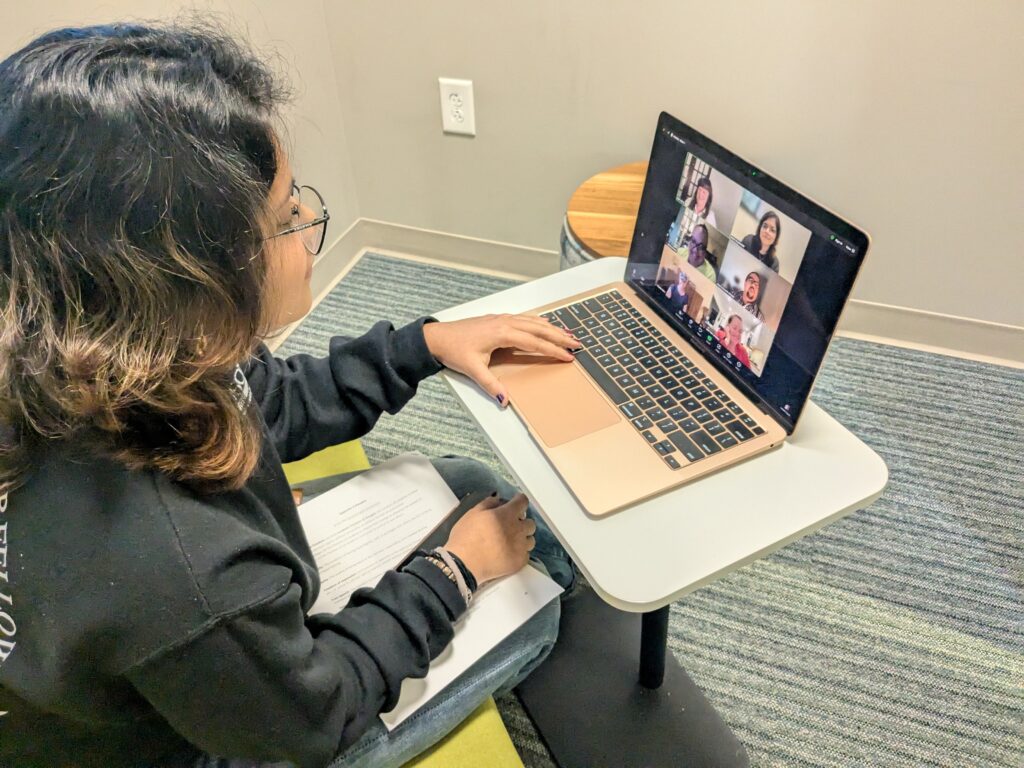
This year, we welcomed a wide-ranging group of participants, with 21 joining us online and 33 attending in person. Our attendees included DCI Fellows, Davidson students, faculty, staff, and engaged community members, each bringing unique perspectives and experiences to the table. This rich mix fostered an inclusive environment that encouraged meaningful dialogue and collaboration throughout the training.

During the first session, Dr. Graham Bullock guided participants through the essentials of setting up and preparing for deliberation. We were thrilled to invite Senior Fellows to facilitate a mock deliberation using our Deliberation Guide on Free Speech and Inclusion. This hands-on experience allowed trainees to observe how seasoned facilitators navigate challenging conversations on contentious topics. Participants took on the role of deliberators in the mock deliberation, sharing their thoughts and experiences on free speech and inclusion while also engaging in some role-playing activities. The collaborative atmosphere fostered a deeper understanding of the importance of empathy and respect in facilitating difficult discussions.
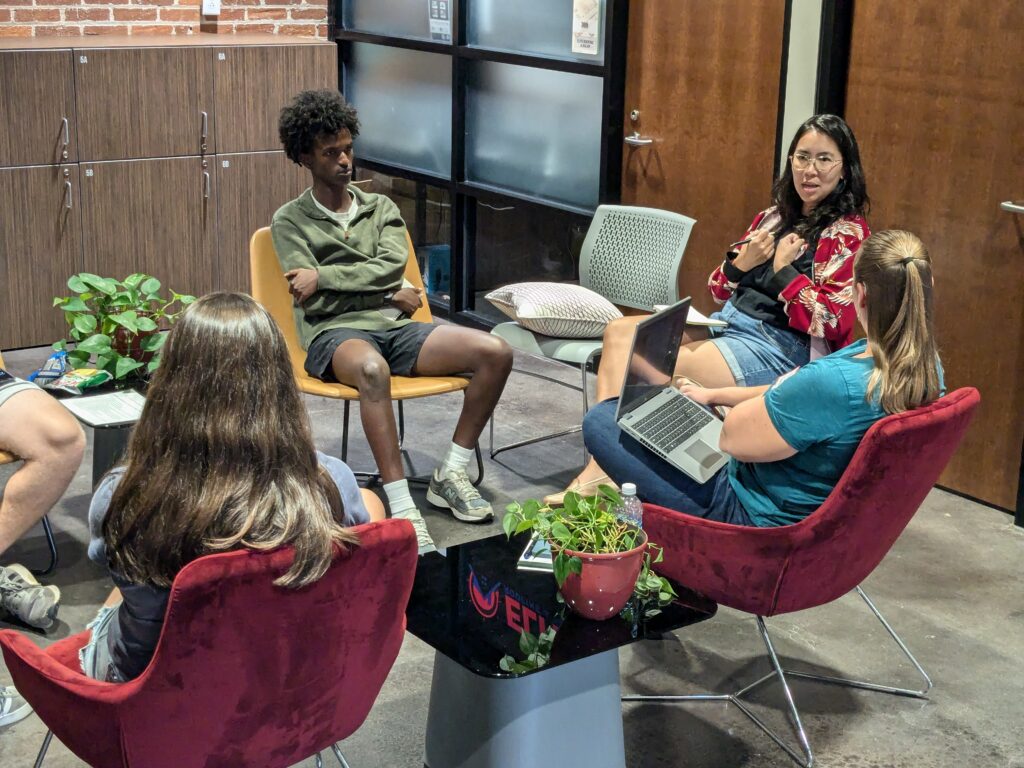
The following weekend, Dr. Bullock equipped our trainees with vital skills for facilitating tough discussions on contentious issues. Participants engaged in a gamified training experience that highlighted methods and tools outlined in the Deliberation Facilitator’s Handbook, making the learning process both interactive and enjoyable. They then practiced their newly acquired skills in a mock deliberation utilizing the DCI’s deliberation guide on Immigration, where they stepped into a facilitator role to explore diverse perspectives and motivate conversation. This immersive practice allowed trainees to build confidence and refine their facilitation techniques in a supportive environment.
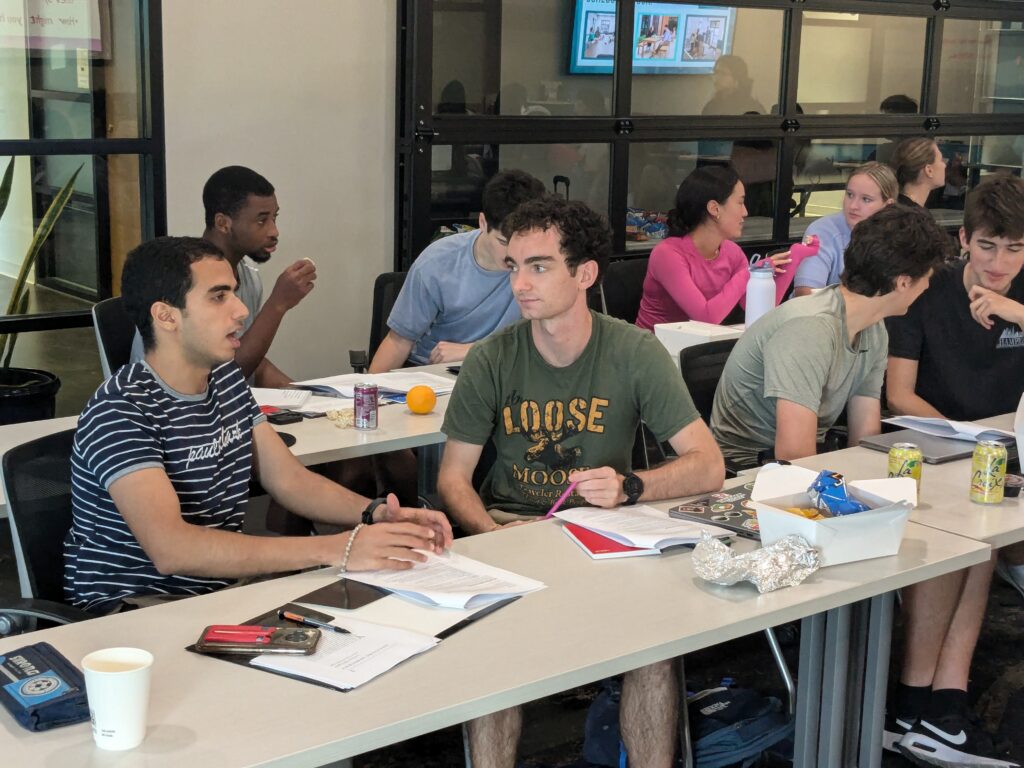
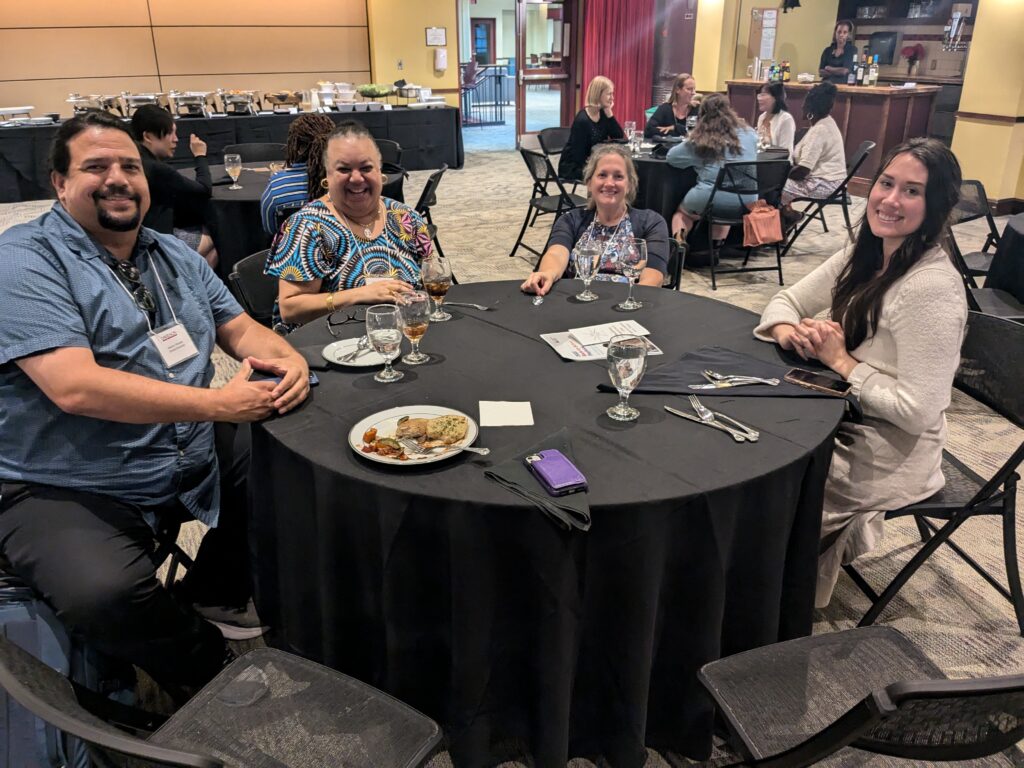
The training concluded with a spirited reception, both virtual and in person, where participants had the chance to connect and build community over food and refreshments. We are immensely grateful for the time spent with all our trainees over these two weekends and are excited to see how they will apply their new skills to foster meaningful conversations within their communities. We warmly welcome them into our community of deliberation advocates, who are deeply committed to strengthening our democracy.

We invite all those interested in building a better democracy, one conversation at a time, to keep an eye out for future Deliberation Facilitator Trainings. We would love to welcome you to our community!
Filed Under: Blog Posts, Events

Transform Your Classroom: The Fall 2024 Deliberative Pedagogy (DeeP) Faculty Panel and Lunch

September 13, 2024 by Willow Paul

An Associate Professor in the Practice in Writing, Assistant Professor of Sociology, and Honors Program Team Lead are all serving on an upcoming panel. What do they have in common? Experience embedding deliberation about difficult and contentious topics into their classrooms!

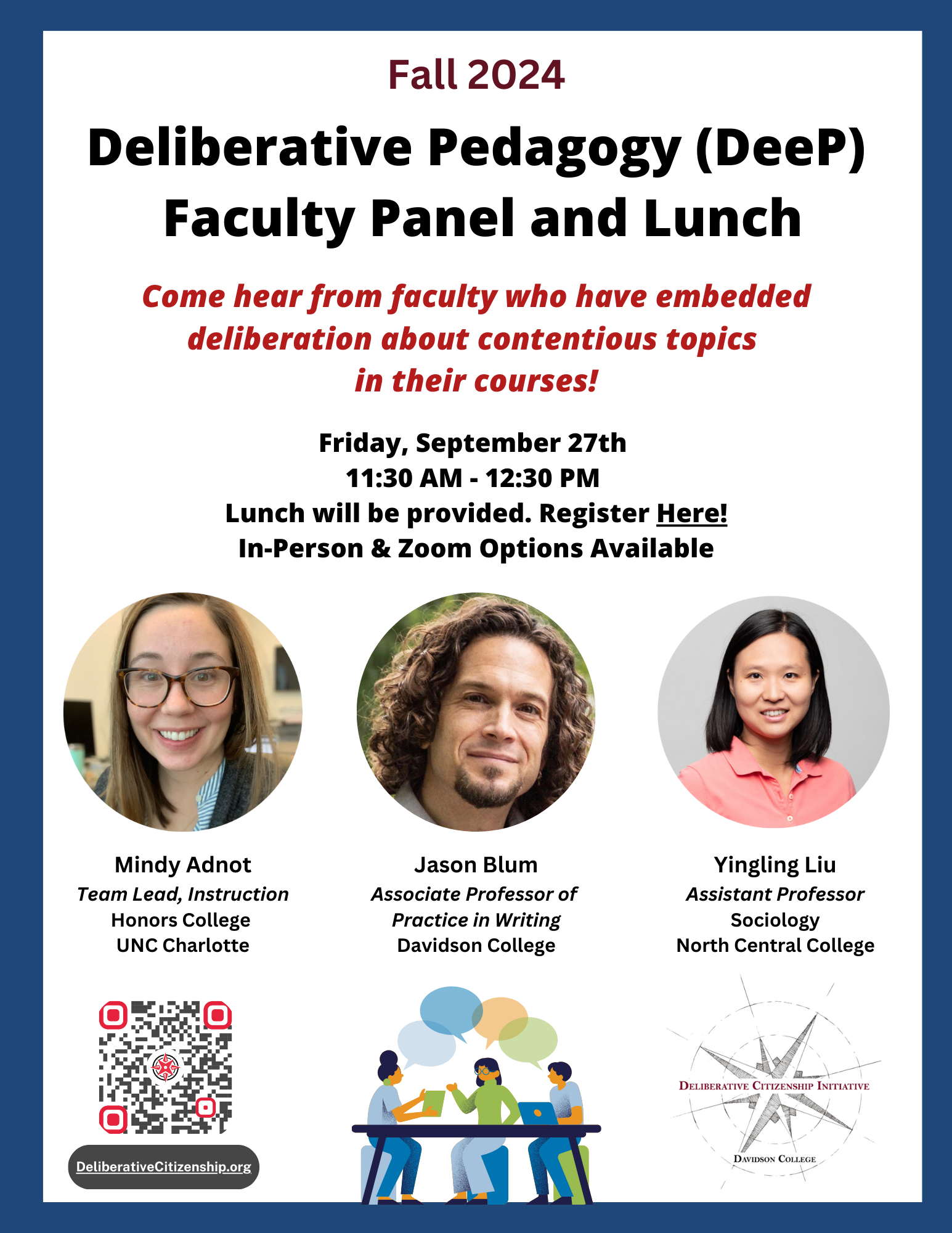
On Friday, September 27 from 11:30 am to 12:30 pm, Professors Jason Blum (Practice in Writing, Davidson), Yingling Liu (Sociology, North Central College), and Mindy Adnot (Team Lead, Instruction and Selection, UNC Charlotte) will be sharing their work as members of the Deliberative Pedagogy (DeeP) Collaborative. Through their participation in the Collaborative, these faculty members embedded more deliberation into their courses on Religion in the Public Square, Introduction to Sociology, and Labor, Leisure, Learning, and a Good Life, respectively. Graham Bullock, Faculty Director of the DCI, will also provide a brief overview of what contributes to a “deliberative classroom,” and participants will have an opportunity to think about how they might make one of their own courses more deliberative.

Over 60 faculty members from 25 different institutions have participated in the Collaborative, which enables professors from across the humanities, natural sciences, and social sciences to work together on developing and implementing innovative ways to stimulate deeper discussions in their courses. 

Are you a faculty member who is curious about how you might do something similar in your classroom? Or perhaps you already do, and are interested in picking up some new ideas? Then come join our Fall 2024 Deliberative Pedagogy (DeeP) Faculty Panel and Lunch, hosted by the Deliberative Citizenship Initiative. You can join either in-person in Studio D at the Davidson College Library or virtually. Lunch will be provided for all in-person participants, but seats are limited so sign up here today!

To learn more about the Deliberative Pedagogy Collaborative, the DCI’s Deliberation Across the Curriculum Program, and the upcoming panel, check out the attached flyer, this webpage, and these blog posts by faculty members who have participated in the Collaborative over the past two years.

We hope you can join us!

Filed Under: Announcements

Celebrating Community and Conversation: The DCI’s Kickoff Party Success

September 12, 2024 by Willow Paul

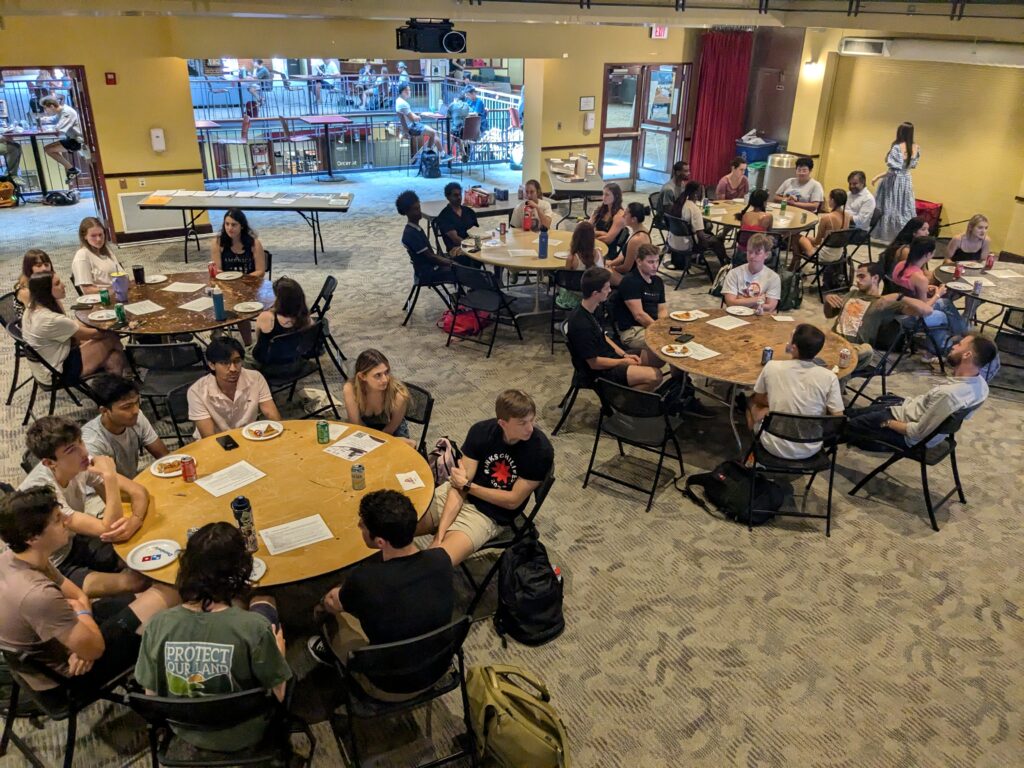
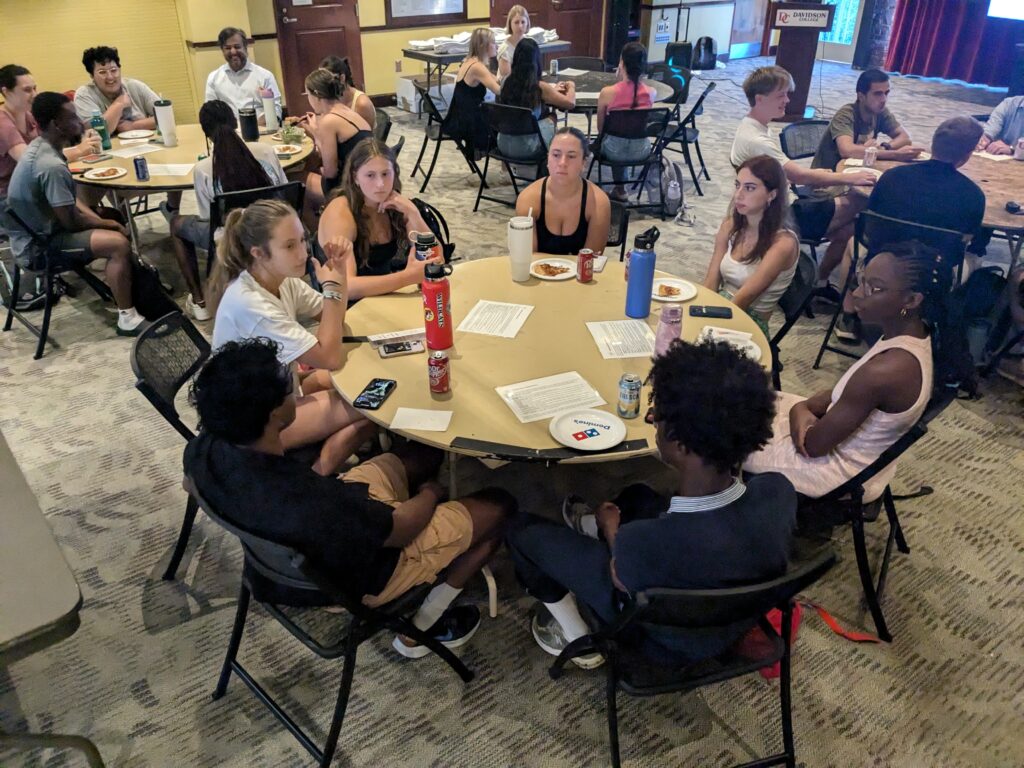
On Friday, August 30th, the DCI kicked off the school year with a burst of energy and enthusiasm! Around 40 people gathered to dive into lively discussions over pizza, connecting with fellow Davidson students, faculty, and staff. The event was a vibrant mix of newcomers to the DCI and seasoned veterans, all eager to mingle and engage.

photo of students deliberating

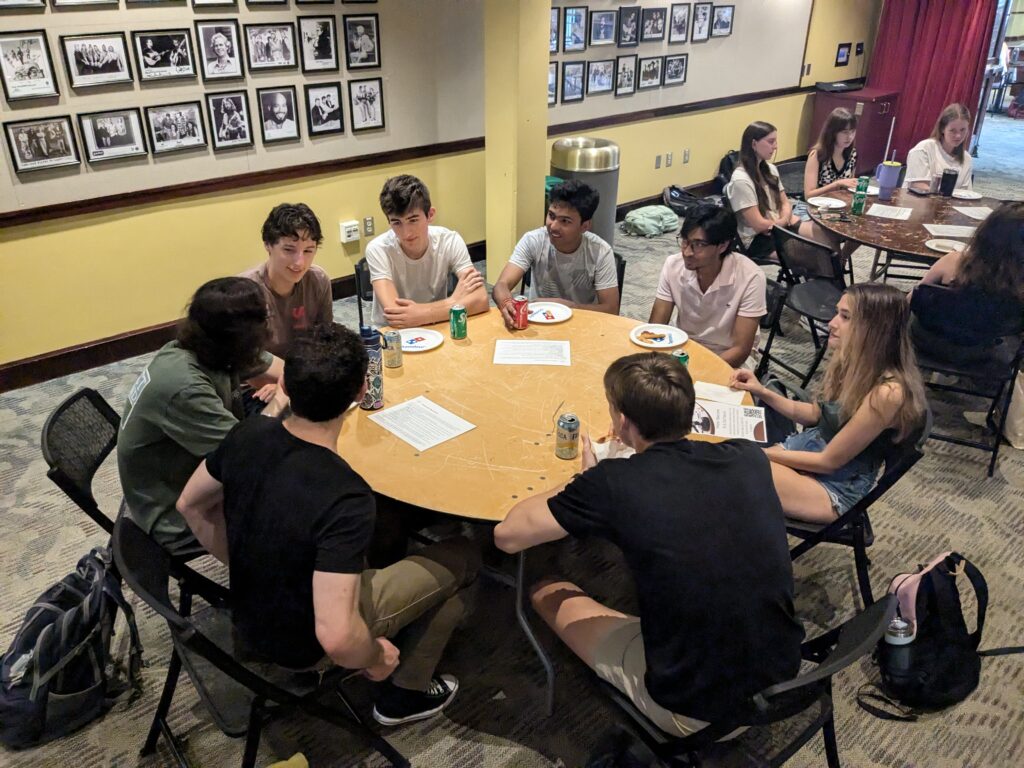
The celebration took place in the College Union’s 900 Room, where tables engaged in conversation on a diverse array of topics. Our new cohort of DCI Fellows did an exceptional job inviting students, staff, and faculty from the College Union, creating a welcoming atmosphere that encouraged dialogue. Each table was thoughtfully equipped with Conversation Agreements and Deliberative Dispositions to help guide discussions.

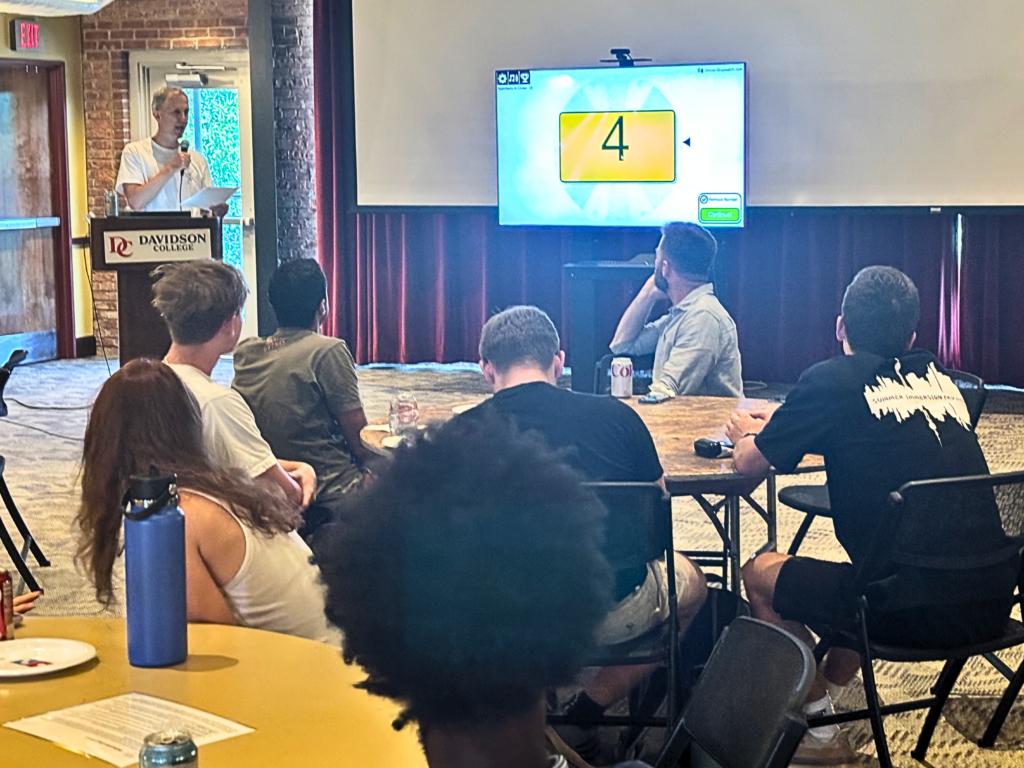
Every 15 minutes or so, the DCI Faculty Director, Dr. Graham Bullock took the floor to briefly highlight upcoming DCI events and offer useful deliberation tips. To keep the energy high, we also held a fun raffle— each attendee had a chance to win a coveted DCI T-shirt. The excitement was palpable as names were drawn, and every winner received their prize with a smile, adding a festive touch.

The event proved to be a fantastic start to the school year, providing participants with a meaningful opportunity to connect in new and engaging ways. It highlighted the DCI’s dedication to fostering respectful and thoughtful dialogue in today’s polarized climate. By embodying the DCI spirit of building democracy, one conversation at a time, the event set a wonderful tone for what promises to be an enriching year of DCI programs and events.

photo of students deliberating
photo of raffle numbers being drawn

Filed Under: Blog Posts, Events

Deliberation: From Initial Doubts to Ultimate Endorsement

September 6, 2024 by Willow Paul

The Deliberative Pedagogy (DeeP) Faculty Collaborative consists of faculty from Davidson College and other higher education institutions who are committed to learning and implementing new ways to improve and deepen the quality of their class discussions. These faculty come from a wide array of disciplines and backgrounds to study and discuss deliberative pedagogy methods, share their ideas and questions with one another, and work to embed deliberation in their classrooms. In this special blog series, members of the Collaborative describe and reflect on their experiences developing and teaching their deliberation-involved courses.

As an anthropologist, I feel most comfortable in discussion seminars, working through texts and data with students as a group. The issue, of course, is that undergraduate students may feel more accustomed to lectures and thus may hesitate to contribute to discussion, even when they have worthwhile observations or arguments to make. This holds true particularly at institutions not typically regarded as “elite.” The students are, in my opinion, just as intelligent as at elite institutions in a general sense. However, they often lack the confidence in their own opinions and perspectives that an elite institution instills. I often feel as though I must coax their perspectives out of them. Facilitating discussion has proven difficult at times, and the Deliberative Pedagogy (DeeP) Collaborative offered me the chance to experiment with deliberation in the classroom. 

Anthropology requires nuance and encourages political stances, and I initially resisted the framing of many mainstream issues with which DeeP engages. Indeed, I feel that one of the primary goals of anthropology as a discipline is to interrogate the way that we commonly frame political or social questions. My breakthrough came when I asked students to watch “How to Blow Up a Pipeline” and debate the ethical and political merits of the argument espoused by the film (a fictionalized narrative drawing from Andreas Malm’s essay “How to Blow Up a Pipeline”). In other words, I asked my students whether it was ok to blow up a pipeline, given the risks posed by climate change and government inaction. 

The ensuing debate surprised me, both in terms of the range of opinions within a relatively small class, and in the way that students drew on the texts that we had already read in the first three weeks of the semester. Offering them a yes/no question with strong ethical and political implications and then asking them to justify their opinions led to a far more animated discussion requiring far less guidance from me. They also, eventually, reached a consensus where they agreed that blowing up a pipeline might be ethically permissible but was likely politically counterproductive. 

I realized that simplifying complex issues into a single question on which students could take sides allowed them to mobilize complex readings in new ways and explore their nuances. I think that this stands as the key insight offered by the deliberative literature, though it is not an insight that is frequently made explicit. Operationalizing these insights required some thought, of course. Not every weekly topic can or should be reduced to this format, particularly as I cannot always develop relevant questions. How, for instance, would I develop a deliberation on a unit engaging Indigenous worldviews? Is a deliberation even necessary? Probably not! In some cases, I can and perhaps should continue to guide the students through the literature and highlight any relevant debates. However, I began to formulate questions that would allow students to engage in deliberation while drawing from 3-4 weeks of more complex readings. In turn, I think that the periodic deliberations further encouraged students to talk during the weekly units. 

Filed Under: Blog Posts, Faculty Posts

Deliberative Pedagogy in Action: Highlights from the Annual DeeP Collaborative Workshop

September 6, 2024 by Willow Paul

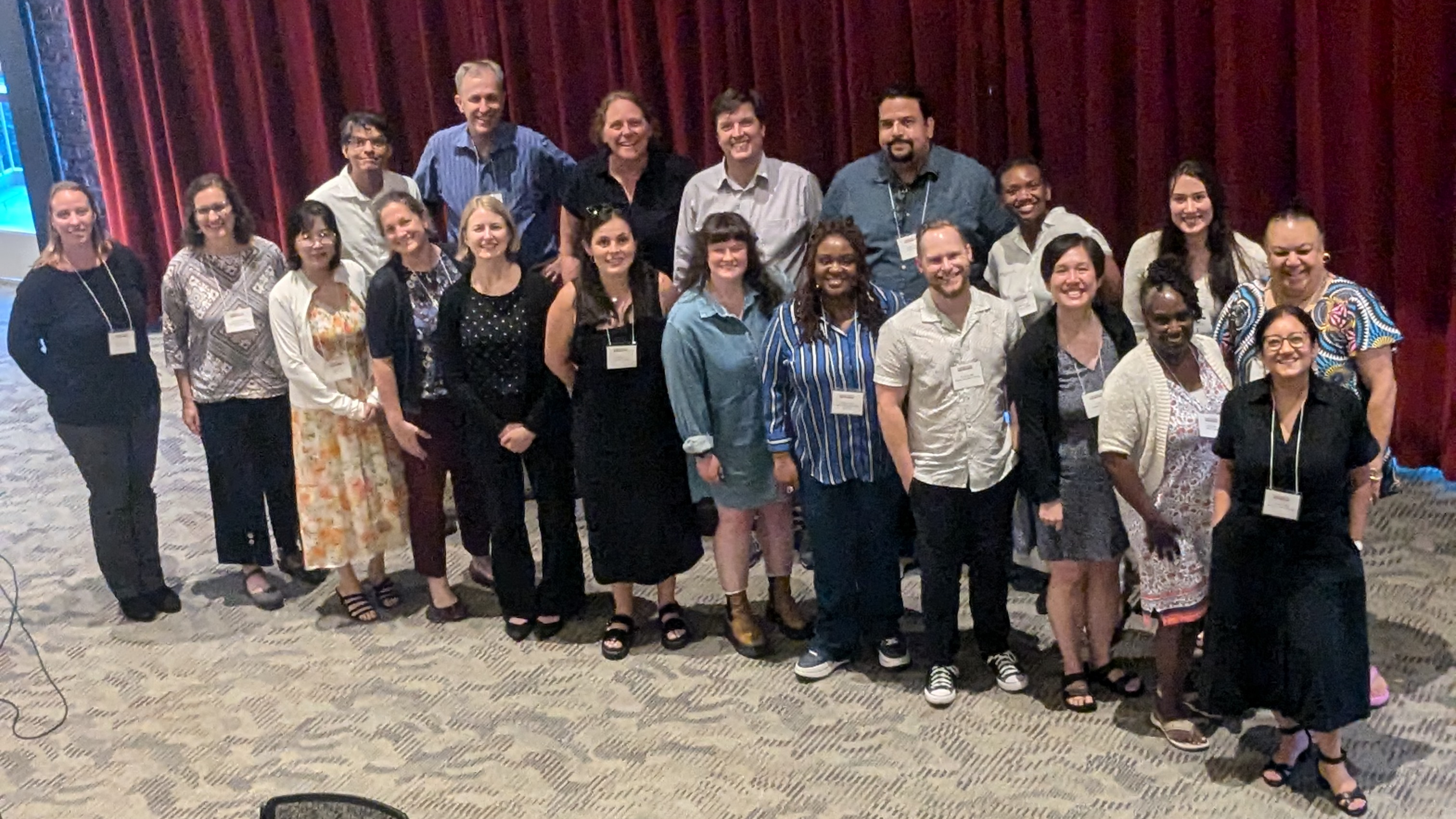
group photo of faculty.

On August 8th, we kicked off our fourth installment of the Deliberative Pedagogy (DeeP) Faculty Collaborative with our annual DeeP Collaborative Orientation Workshop. This year’s cohort brings together 18 new faculty collaborators who specialize in over 13 different academic disciplines, including anthropology, biology, communication studies, economics and business, health sciences, Hispanic studies, history, mathematics, natural sciences, political science, psychology, sociology, and writing.

They also come from 14 different institutions, including Colorado College, Davidson College, Denison University, Drexel University, Furman University, Hendrix College, Johnson C. Smith University, North Carolina A&T State University, Rhodes College, Rollins College, Sewanee: The University of the South, The University of Texas at San Antonio, Western Carolina University, and Wingate University.

The goals of this workshop were to introduce our new Collaborative members to the key principles and practices of deliberative pedagogy, to build community among the cohort members—who will be working together over the coming academic year—and to begin mapping out their goals for the fall semester, during which they will explore how they will apply deliberative pedagogy to their future courses.

DCI Faculty Director Dr. Graham Bullock led the workshop, using both active learning and deliberative strategies to introduce the motivations for using deliberative pedagogy practices, the most relevant concepts and frameworks, specific deliberative teaching methods and tools, and case studies of deliberation-involved courses.

What is deliberative pedagogy? In short, deliberative pedagogy is a teaching practice that involves the use of structured deliberative activities to teach learners how to express different viewpoints about an issue or approaches to a problem, how to evaluate these viewpoints or approaches critically, and how to identify both areas of agreement and disagreement through the course of their deliberative discussions.

The key to practicing deliberative pedagogy well is to setup deliberations in the classroom so that they include multiple viewpoints on the issue at hand, allow all voices to be heard, and promote the assessment of arguments for and against the variety of viewpoints on the table. One way to do so is by introducing conversation agreements, or ground rules for good discursive practices. Another way is to have a facilitator present who can ensure the deliberation represents multiple viewpoints and voices. (Want to learn how to become a trained facilitator for deliberative events in OR out of the classroom? Learn more about our upcoming Deliberation Facilitator Training Program here!)

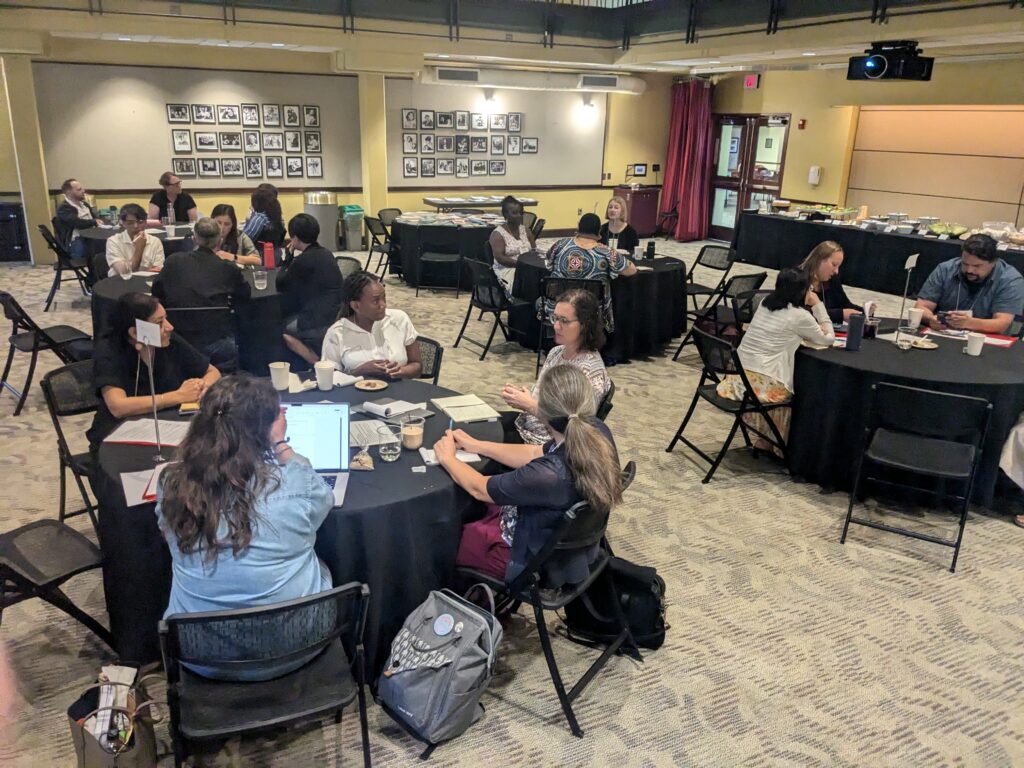
faculty meeting in tables

Deliberative pedagogy is also connected to the concept of deliberative democracy, a type of democratic engagement in which reason-giving – broadly-defined – is used as a means for citizens to make progress on practical issues facing their community.

Some of the lively discussions among our faculty cohort members focused on how deliberative pedagogy can be employed beyond courses that focus explicitly on public policy, including courses in the arts and the sciences. Groups also discussed how deliberative pedagogy can be a form of inclusive pedagogy and how faculty can navigate the apparent tension between affirming our lived experiences as individuals while assessing reasons for and against policy decisions that impact those experiences.

Others discussed whether or in what circumstances instructors should remain neutral during debates about normative issues that do not have straightforward answers and about which there can be reasonable disagreement among deliberators. None of these questions have easy answers, but we look forward to diving deeper with our ’24-’25 DeeP Collaborative cohort on these and other important topics in the coming year. Look out for blog posts from this year’s participants next year, once they have begun applying what they have taken from our interactive learning sessions in the fall to their various teaching contexts.

table of faculty

Filed Under: DCI Posts, Events

  • « Go to Previous Page
  • Page 1
  • Page 2
  • Page 3
  • Go to Next Page »

Footer

Blog Post Categories

  • Announcements
  • Blog Posts
  • DCI Posts
  • Events
  • Faculty Posts
  • Fellow Posts
Image of a compass superimposed by the text "Deliberative Citizenship Initiative" and "Davidson College." Clicking on this image leads to the Initiative page.

Recent DCI Blog Posts

  • We Tried to Fix Jubilee’s “Middle Ground” – Here’s How It Went
  • A Case for Deliberation in the Natural Sciences
  • Welcoming New Staff to the DCI and DCN
  • Facebook
  • Twitter
  • Instagram
  • LinkedIn


Copyright © 2026 · Infinity Pro on Genesis Framework · WordPress · Log in