• Skip to main content
  • Skip to footer

Deliberative Citizenship Initiative

Building Democracy One Conversation at a Time

  • The Initiative
    • Programs
      • Deliberation Across the Curriculum
      • Deliberation on Campus
      • Deliberation in the Community
      • Research on Deliberation
    • Motivations
      • Why Deliberative Citizenship?
      • Why Davidson? Why Now?
    • Who’s Involved?
      • DCI Fellows Cohorts
        • 2025-2026 Fellows
        • 2024-2025 Fellows
        • 2023-2024 Fellows
        • 2022-2023 Fellows
        • 2021-2022 Fellows
        • 2020-2021 Fellows
      • DeeP Collaborative Cohorts
        • 2024-2025 DeeP Collaborative Faculty
        • 2023-2024 DeeP Collaborative Faculty
      • Advisory Council
    • History
      • What Sparked the Initiative?
    • Key Deliberative Dispositions
    • Frequently Asked Questions (FAQ)
    • Annual Report
  • Get Involved!
    • Participate in a Forum
    • Join a D Team
    • Become a Fellow
    • Take Courses
    • Get Training
    • Come to Guest Lectures
  • Events
    • Upcoming Events
      • 250th Anniversary Deliberative Forum Series on American Values
    • Past Events
  • Connections
    • The Deliberative Citizen: The DCI’s Monthly Newsletter
    • Efforts on Campus
    • Efforts in the Community
    • Efforts Elsewhere
    • Readings and Resources
      • DCI-Published Guides
      • DCI Guide to One-on-One Conversations
      • How to Disagree
      • Demonstration of Facilitation Styles
      • Deliberative Pedagogy Mini-Course
    • How We Can Help: DCI’s LET’S DELIBERATE! Partnership Opportunities
    • DCI in the News
  • DCI Blog Posts
    • Recent Blog Posts
    • All Blog Posts

Graham Bullock

Deliberation in a Course on the Good Life: Cultivating Critical Thought and Community

August 19, 2024 by Graham Bullock Leave a Comment

The Deliberative Pedagogy (DeeP) Faculty Collaborative consists of faculty from Davidson College and other higher education institutions who are committed to learning and implementing new ways to improve and deepen the quality of their class discussions. These faculty come from a wide array of disciplines and backgrounds to study and discuss deliberative pedagogy methods, share their ideas and questions with one another, and work to embed deliberation in their classrooms. In this special blog series, members of the Collaborative describe and reflect on their experiences developing and teaching their deliberation-involved courses.

I joined the DCI DeeP Collaborative because I wanted to learn about deliberative pedagogy and examine my own discussion-oriented teaching within a supportive community of practice. The course I decided to incorporate deliberation into was a new one for me: an interdisciplinary seminar in the Honors College at UNC Charlotte called Labor, Leisure, Learning, and a Good Life. The course asks students to consider how work, play, rest, and education contribute to a well-lived life, and to examine how U.S. systems and policies influence individuals’ occupational and educational choices.

The course (CTCM 2530) fulfills the Critical Thinking and Communication requirement within UNC Charlotte’s updated general education curriculum and includes a semester-long central inquiry project. We consider CTCM 2530 to be like a “mini-capstone” course for the general education curriculum. It’s particularly important in the Honors College because it helps prepare students for the more intensive capstone projects they’ll undertake as juniors and seniors.

Adding deliberative pedagogy to a course focused on critical thinking and communication seemed like a natural fit from the start, but I didn’t fully realize how well the course content would align with deliberation until we got underway. On the first day of class, I shared the DCI’s key deliberative dispositions as a starting point for our conversation about the type of classroom community we wanted to build. The class reviewed descriptions of the dispositions and each student chose their top two, “voting” via sticky notes. This resulted in a frequency histogram showing which dispositions students initially deemed most important (check out our results in the picture below!). Unsurprisingly, open-mindedness was the top choice.
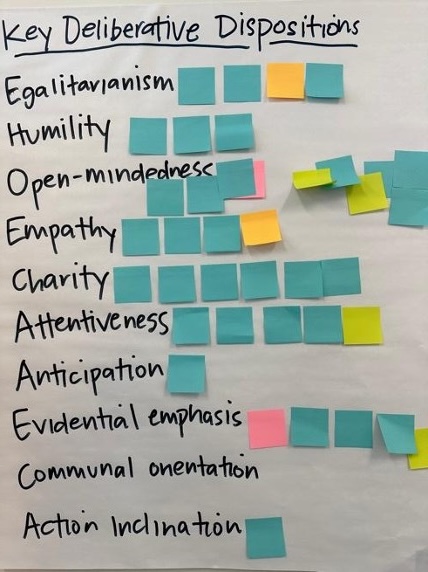
We discussed what it would take for students to show up with open-mindedness, charity, evidential emphasis, and attentiveness in class this semester. I also asked students to speak up for the dispositions that were less popular and to consider why they might be important as well.

We carried these agreements with us into all of our class discussions over the course of the semester, but particularly into two full-length deliberations on universal basic income and standardized testing policies. As preparation for these deliberations, students split into two groups and collaboratively wrote the content for the deliberation guides, deciding what to include and each providing an overview on one dimension of the issue. I set the deliberation structure and prompts, and ended each deliberation with a short “case study”—a wonderful idea that my DCI partner, Dr. Nick Triplett, tried first and recommended to me.

Overall, the deliberations were an incredibly successful component of our class that helped set the tone for the semester as a whole. When debriefing the first deliberation on Universal Basic Income (UBI), one student shared that she appreciated the opportunity to talk about something substantive with her classmates because “it helped her know them as humans.” This was a theme in our class that echoed the Aikin and Talisse (2019) reading we did early in the semester: students felt that their engagement with their peers’ ideas during the deliberation was a form of care for one another’s cognitive health.

This “cognitive care” spilled over into other forms of generosity with one another as well. For instance, when one student broke her foot and couldn’t get to class, I emailed to see if anyone could help and got an immediate volunteer. Students also offered rides to The Dubois Center, the UNC Charlotte uptown campus to hear from our guest speakers during the semester, and stayed late to hang out with each other and me at 7th Street Market. And perhaps most tellingly, toward the end of the semester the class buzzed with energy and chatter as I attempted to start class each week, a welcome change from a roomful of students scrolling on phones or finishing assignments.

Integrating deliberation into the course wasn’t without challenges, however. For me as the instructor, one of the biggest challenges was assessing performance during the deliberations. During each deliberation, our 21-person class was split into 3 groups. They self-facilitated, passing facilitation duties around as they moved through the deliberation guide. I rotated between groups to assess deliberation performance using a rubric adapted from Sara Drury’s 2019 chapter in Creating Space for Democracy: A Primer on Dialogue and Deliberation in Higher Education.

I narrowed the rubric to just four elements most closely aligned to the key deliberative dispositions identified during our conversation on the first day, deciding to err on the side of brevity while we all learned this new format for discourse. I asked students to assess their peers and also assess themselves using the same rubric. While the rubric was helpful in providing shared language and a reminder of deliberative goals, it did not produce much variation in scoring. It was difficult for me to assess particular elements when I only heard parts of each deliberation, and the students (mostly) gave each other and themselves high marks.

While this is consistent with the tight-knit community described above, I will likely try to assess using different methods in the future. I don’t want to take away the self-facilitated deliberation: the opportunity to engage each other in substantive, structured dialogue without an evaluator presence was empowering for the students. They often clammed up when I joined them, and their remarks became more performative than contemplative.

Next time I incorporate deliberation in a course (and there will definitely be a next time!) I will be more intentional about norming expectations for scoring using the rubric, and will also try to devise a way to evaluate the students’ full contributions, perhaps by video or audio recording. Despite these challenges with assessment, I am excited to incorporate deliberation into future courses and continue to use it a means to build critical thinking skills and class community.

References

Aikin, S., & Talisse, R. (2019). Why we argue (and how we should): A guide to political disagreement in an age of unreason. Second Edition. New York: Routledge.

Drury, S. A. M. (2019). Cultivating dialogue and deliberation through speech, silence, and synthesis. In Shaffer, T. J. & Longo, N.V. (Eds.), Creating Space for Democracy: A Primer on Dialogue and Deliberation in Higher Education (pp. 69-82).  Stylus Publishing, LLC.
Filed Under: Blog Posts, Faculty Posts

DCI Offers Free Deliberation Facilitator Training: Registration is Open!

August 14, 2024 by Graham Bullock Leave a Comment

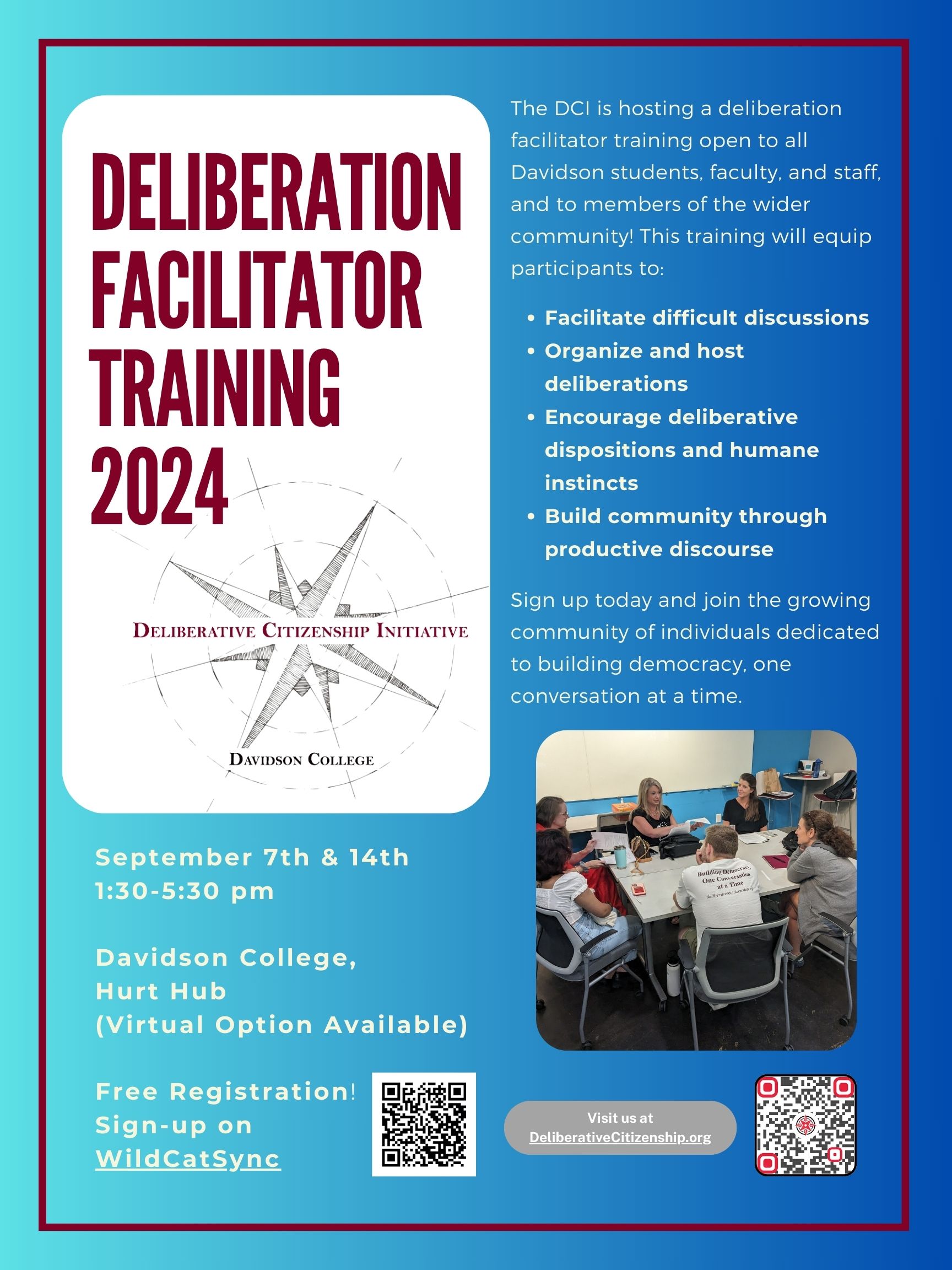
DCI Training Flyer

How should we engage in meaningful, productive disagreement, discussion, and problem-solving with others, especially when the issue at hand is highly contentious and politicized? This is the fundamental question the DCI has been working to answer, and we believe there is a way to do it well. We can disagree respectfully, we can discover the truth in spite of—and indeed, because of—our differences, and we can solve pressing issues democratically using the tools of deliberative democracy.

Deliberation, as we see it at the DCI, is a method of discussion that enables citizens—broadly construed so as not to limit this notion to persons with one particular legal status—to state their views and the presuppositions behind them, reconstruct the arguments for their positions, and to make progress toward solutions to problems where there is entrenched disagreement.

Although this can sometimes happen organically in conversation or in the political sphere, the DCI came about in part because this is so difficult to achieve. After all, we cannot claim to be immune from falling into echo chambers, falling prey to motivated reasoning, relying on fallacious reasoning, or even from failing to be able to articulate the main reasons for the views we hold in the face of criticism from another.

On the other hand, we can also be so uncomfortable in the face of disagreement that we would rather not engage—and we either decide to simply agree to disagree or to shut each other out. But living together requires making decisions together and coming to a shared understanding of difficult problems, at least to some extent.

Our experience, and the experience of similar programs around the world, has found that well-trained and intentional facilitators can help participants overcome these obstacles and engage in meaningful and productive deliberation, even when they disagree deeply. This is why the DCI is hosting its sixth Deliberation Facilitator Training Program this year. The training will take place over two sessions from 1:30 pm to 5:30 pm, one on Saturday, Sept. 7th and the other on Saturday, Sept. 14th. The sessions complement each other are required components of the training. Virtual and in-person options are available, but space is limited so sign up soon if you are interested. 

This hands-on and interactive program enables participants to lead deliberation sessions in their community, with colleagues, with their families, or in their classrooms, and to facilitate DCI-hosted forums on matters of public interest. The DCI supports facilitators with learning materials we send out before the training days, and participants get a chance to practice facilitating a mock deliberation.

Do you feel your community, your family, your students, or your colleagues would benefit from deliberating about an issue with the help of a trained facilitator? Then sign up here by Monday, Sept. 2th!

Filed Under: Announcements

Fall 2024 D Teams to Explore Issues Related to Diversity, Liberty, and Democracy: Register Today!

August 14, 2024 by Graham Bullock Leave a Comment

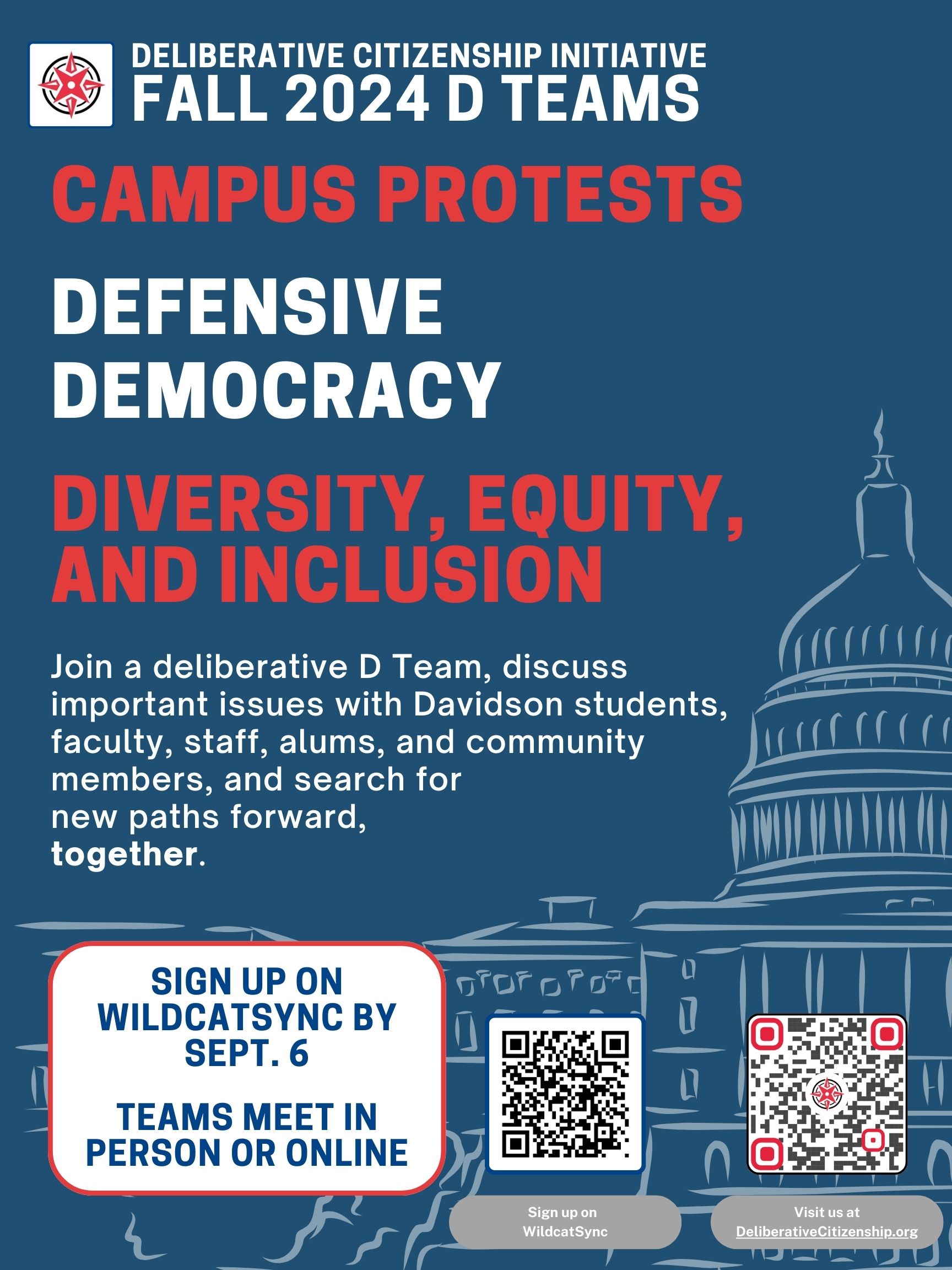
D Team poster.

“The study materials were excellent. Reading them ahead of time helped me understand positions that differed from my own, and I recognized that issues were often more complex than I had anticipated. The discussion format of sharing the strongest and weakest arguments for both sides encouraged reflection. Participants usually chose different arguments which deepened my understanding of the issues and respect for opinions different from my own.”

This fall the DCI is excited to host its ninth round of D Teams! The focus of the teams’ discussions will be on three issues related to the themes of diversity, liberty, and democracy. Read more below to learn more — Registration for Fall 2024 D Teams is open until September 6, 2024 (Know you want to sign up? Register here.).

What are D Teams?

D Teams are small teams of about 6-10 people that meet three times per semester in order to discuss contentious topics in productive ways, and to pave the way toward catalyzing creative solutions to difficult problems in the public sphere. D Teams may meet in person or virtually.

A few things make the D Team experience unique compared to other discussions about controversial topics. First, D Team discussions are facilitated by a DCI Fellow who has been trained in the kind of facilitation that leads to good discussions. Second, D Team participants get access to deliberation guides designed specifically for each topic that they discuss. And third, D Teams provide an opportunity to connect meaningfully with others beyond one’s immediate social or professional circle. You can learn more about the background and structure of this program here.

It was my first DCI experience, and I was not sure quite what to expect. I was one of 2 non-students on our team, and part of the draw to participate was to hear and learn from current students how they think and feel about such a difficult, complex, politically-charged topic. It was an enlightening and encouraging experience; I came away more hopeful, and impressed by the DCI initiative.

—D Team Participant

What are the topics of discussion for Fall 2024?

For our Fall 2024 D Teams, we are planning to focus on several important topics related to the interrelated values of diversity, liberty, and democracy. The overarching question is how should communities and societies best think about and advance these different values, particularly when they may be in tension with one another.

Our plan is to start the first session with a focus on the role of protest in society, and given the protests at colleges and universities this past spring, campus protests in particular. Then in their second session, the teams will move to a broader discussion about “defensive democracy” and the challenge of defending democracy from anti-democratic forces. We will end the Fall D Team series with a third discussion on the role of diversity, equity, and inclusion initiatives in the workplace and higher education. Each of these issues involves important questions about diversity, liberty, and democracy, and can help us better understand and grapple with the tensions that can emerge among them.

Conversations about Diversity, Liberty, and Democracy

  1. Campus Protests: How should universities and colleges handle protests and promote a healthy exchange of ideas on their campuses?

This discussion will first focus on the nature and goals of protest more generally before turning to the specific case of campus protests. It will explore reasons why college administrators might want to permit protests on campus as well as why they might want to restrict such protests., particularly as they relate to the broader goals of higher education. Participants will then discuss college and university responses to protests related to the Israel-Hamas war as a means to identify, evaluate, and prioritize policies that college officials should and should not implement in response to protests more generally.

  1. Defensive Democracy: How can we best protect democratic values and institutions from internal and external threats?

Concerns about “democratic backsliding” have proliferated in recent years, and they beg the question – what should be done in response? This discussion will first explore the evidence and reasons for such backsliding, and then will examine the state of democracy in the United States. Participants will then deliberate about what “defensive democracy” measures are and are not justified. Should democracies place limits on freedom of speech or on candidates and parties in the interest of defending their democratic processes, for example?

3. Diversity, Equity, and Inclusion (DEI): How effective are DEI practices in promoting equality, justice, and belonging in the workplace, the education sector, and society more broadly?

Efforts to promote DEI have proliferated in recent years, both in the workplace and on college campuses. Proponents believe these initiatives have been critically important and generally effective at advancing their goals; opponents have viewed them as unnecessary, largely ineffective, and contrary to the values of equality and fairness. This discussion will first explore the different meanings of diversity, equity, and inclusion before assessing the arguments for and against attempting to advance them in society. Participants will also examine specific DEI policies being implemented both in the workplace and in higher education.   

Why did we choose these topics?

The DCI solicited feedback on potential topics that were suggested by the DCI Fellows and former D Team participants via a survey that was shared within the Davidson community and the DCI’s online community — our blog and newsletter subscribers and Instagram, Facebook, LinkedIn and X followers. These topics were among the top choices that our survey respondents were interested in discussing, and they are all timely in their own ways. Finally, although the topics are substantively different, they all present an opportunity to engage with pressing public debates that are ongoing in the United States and around the world.

I was very grateful to have this kind of opportunity to have these conversations in a context where I knew I shared something with all other participants even though we are in many different stages and paths in life.

—D Team Participant

How do I sign up?

Registration for Fall 2024 D Teams is open until September 6, 2024. Sign up today and help us build a better democracy, one conversation at a time.

Filed Under: Announcements

DCI Fellows Present a Mock Deliberation on Free Speech and Inclusion at the VMC

July 31, 2024 by Graham Bullock Leave a Comment

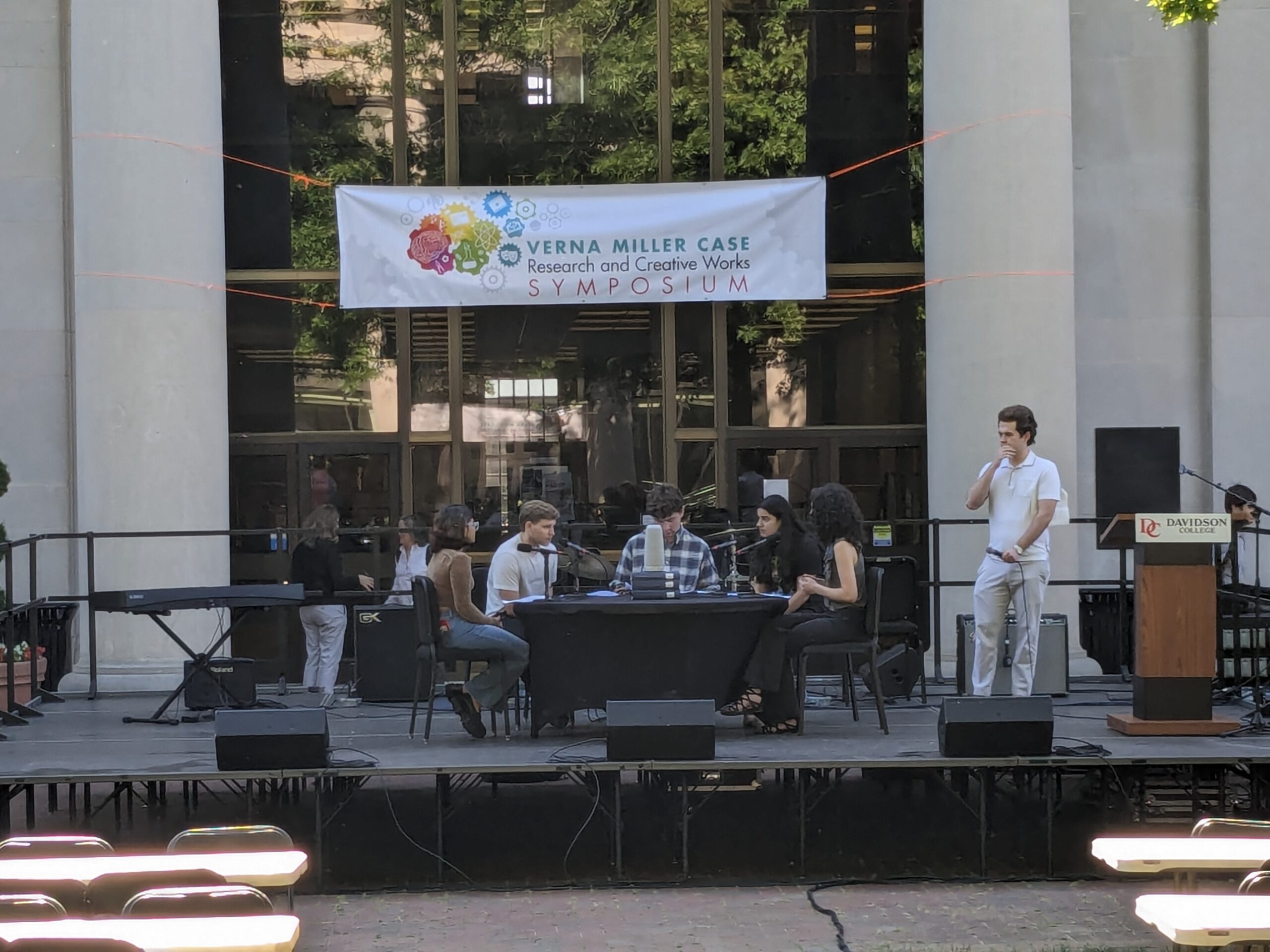
Fellows at VMC Symposium

Since its inception, the DCI has participated in Davidson’s daylong celebration of student intellectual achievement called the Verna Miller Case (VMC) Symposium. DCI Fellows have presented posters and given presentations on the work of the DCI, and it has been a great opportunity for them to share their work with the Davidson community.

This year we wanted to do something a little more dynamic and interactive to capture the spirit and ethos of the DCI. And so a team of Fellows got together and designed an hour-long event that actively demonstrated the DCI’s key features and contributions to creating a more deliberative culture on and off campus.

Photo of Mishti Mookherjee standing behind a Davidson College podium, speaking to the public.

It included a mock deliberation on the relationship between free speech and inclusion that highlighted moves that both deliberators and facilitators can make to foster more productive deliberations. The mock deliberation did not shy away from engaging with some of the most contentious aspects of the issue at hand, but tried to demonstrate how we can engage constructively and respectfully with them.

The event also included short summaries by the Fellows about their deliberation projects that they designed on issues important to them personally. It concluded with an opportunity for audience members to deliberate among themselves on a range of different topics.

The event wonderfully displayed the range and depth of deliberation that the Fellows engaged in and the set of skills they learned over the course of the 2023-24 academic year. It nicely complemented the other types of amazing work highlighted by the Symposium that Davidson students engage in on campus, from research in the social sciences, natural sciences, and humanities to achievements in the performing and visual arts to collaborations with local communities and organizations on pressing social challenges.

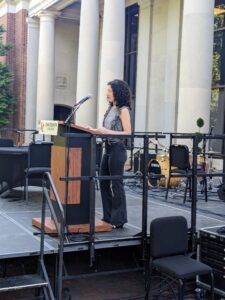
Laegan Smith speaking.

In many ways, the DCI brings together these different threads of the liberal arts – rigorous research, creative work, and civic engagement – and applies them to the critical project of fostering constructive conversations across differences on issues that matter deeply to our society.

Check out the video highlights of the DCI’s symposium event below. It features an introduction to the Deliberative Citizenship Initiative by DCI Senior Fellow and Co-Convener Laegan Smith ’24 followed by a mock deliberation featuring Laegan, Stephen Walker ’26, Emre Guvenilir ’25, Auden White ’26, Mishti Mookherjee ’27, and Arshi Hussain ’26. These and other DCI Fellows then introduce their personal deliberation projects. Check it out – it’s a great way to learn about the incredible work that Davidson students are doing as part of the DCI.

Filed Under: Blog Posts, DCI Posts, Events, Fellow Posts

A New Assistant Director Joins the DCI!

July 26, 2024 by Graham Bullock Leave a Comment

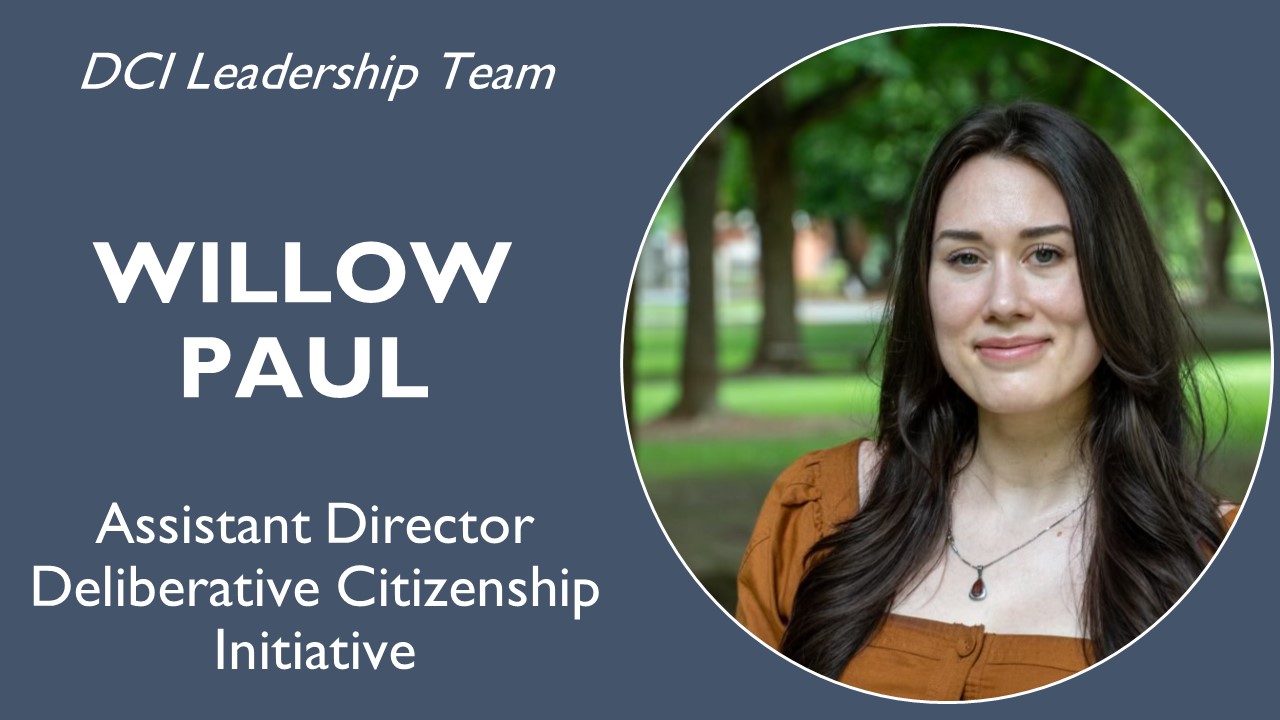
Willow Paul slide

The DCI is happy to share that Willow Paul is our new Assistant Director! Willow will be assisting with the development, implementation, and assessment of the DCI’s programs and operations. Willow earned her B.A. and M.A. in Communication Studies from Colorado State University with a specialization in Deliberative Practice, making her particularly well-suited to help lead the DCI’s efforts in creating opportunities for productive dialogue and deliberation in diverse classroom settings, outside of the classroom, and in the community.

Willow has conducted in-depth research on deliberative democracy, facilitation training, and public discourse initiatives. Her master’s thesis, “Healing a Divided Democracy,” provides important insights on efforts to bridge divides in hyperpolarized societies. Willow also served on the leadership team at Colorado State’s Center for Public Deliberation and has extensive experience designing deliberative processes, facilitating difficult conversations, and conducting research on deliberative practices. Willow’s dedication to supporting the DCI’s mission is grounded in a deep appreciation for the diverse ideological landscape of the United States. She is deeply committed to this work, and her extensive research and practitioner experience will enable her to make significant contributions to expanding the impact that the DCI has had thus far.  

All to say, we are excited that Willow has joined the DCI team! Watch out for blog posts and emails from Willow, and say hi to her if you see her around campus or in the community.

Filed Under: Announcements, DCI Posts

  • « Go to Previous Page
  • Page 1
  • Interim pages omitted …
  • Page 12
  • Page 13
  • Page 14
  • Page 15
  • Page 16
  • Interim pages omitted …
  • Page 22
  • Go to Next Page »

Footer

Blog Post Categories

  • Announcements
  • Blog Posts
  • DCI Posts
  • Events
  • Faculty Posts
  • Fellow Posts
Image of a compass superimposed by the text "Deliberative Citizenship Initiative" and "Davidson College." Clicking on this image leads to the Initiative page.

Recent DCI Blog Posts

  • We Tried to Fix Jubilee’s “Middle Ground” – Here’s How It Went
  • A Case for Deliberation in the Natural Sciences
  • Welcoming New Staff to the DCI and DCN
  • Facebook
  • Twitter
  • Instagram
  • LinkedIn


Copyright © 2026 · Infinity Pro on Genesis Framework · WordPress · Log in