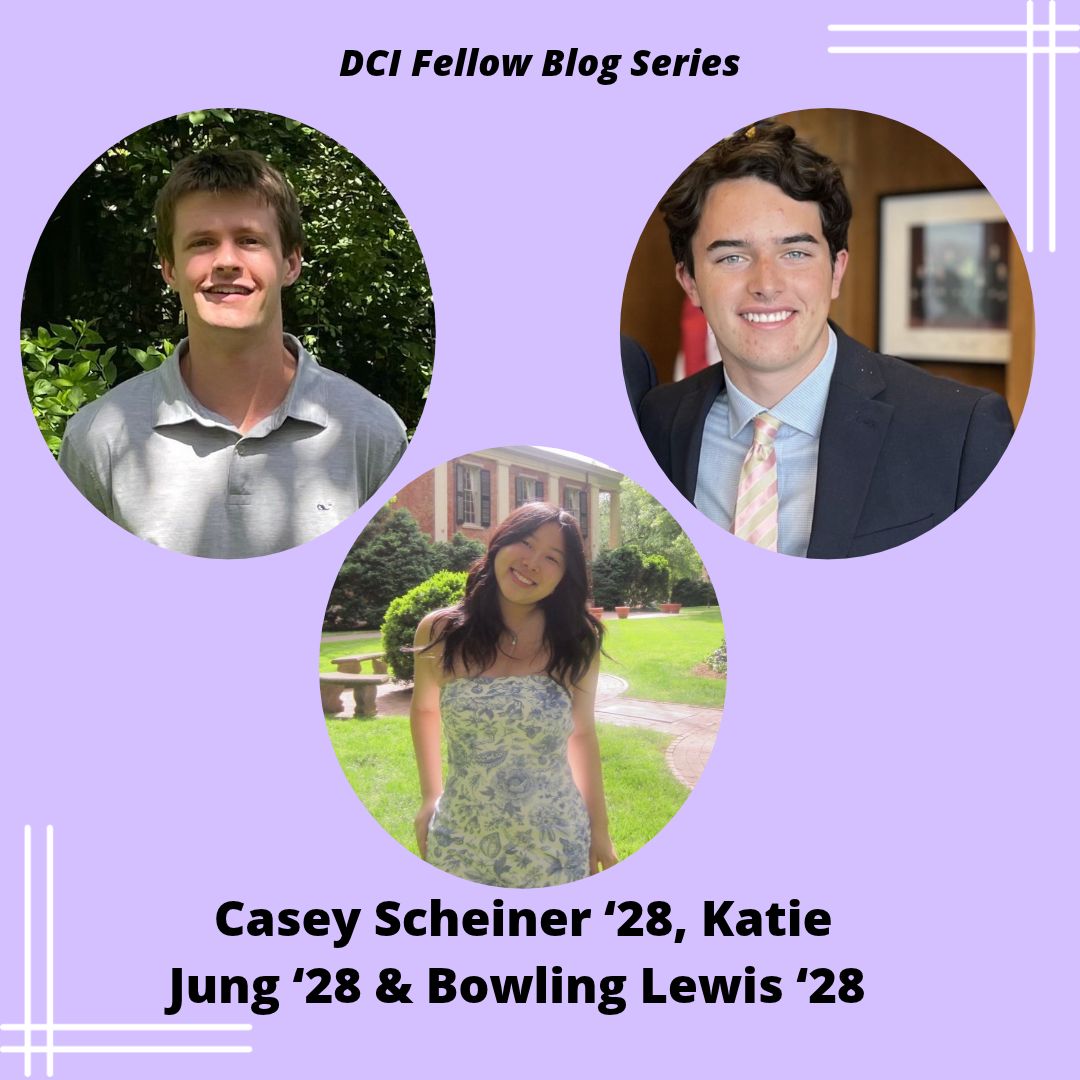
By Bolling Lewis ‘28, Casey Scheiner ‘28, and Katie Jung ‘28 (DCI Fellows)
This July, we (Bolling Lewis ‘28, Casey Scheiner ‘28, and Katie Jung ‘28) had the opportunity to moderate conversations at the NextGen Roundtable: Decision 2026. Sponsored by Stanford University’s Deliberative Democracy Lab, the Hoover Institution, the Close Up Foundation, and Generation Lab, the event brought 400 first-time voters ages 18-20 representing all 50 states to Washington D.C. to discuss some of the most pressing issues ahead of the midterm elections this fall.
As all three of us juniors were headed abroad for fall semester, we entered summer thinking we might not put our facilitator caps back on until January 2027. But in June when we opened an email from Dr. Bullock promoting an opportunity to moderate conversations with young voters (with a trip to Washington, D.C. included!), we jumped at the chance to facilitate again. We reached out and interviewed with CloseUp Senior Advisor Blake Kohn and before we knew it, we were in a hotel ballroom in Arlington, Virginia, getting ready for the NextGen Roundtable to get underway.
Due to the compressed nature of the program itself, the training process was more condensed than the DCI’s full two day boot camp. But in one afternoon, CloseUp’s staff gave new moderators a crash course while also sharpening our skills as more experienced facilitators. As with the DCI’s approach, it started with a presentation explaining both the philosophical underpinnings and practical techniques behind our roles. Then, we moved into a hands-on mock deliberation where we rotated in the moderator chair while being presented with “disruptor” situations. The mock deliberation doubled as a great way to get to know our fellow moderators for the week and engage with the subject matter we’d be discussing.
The next day, we returned to do what we came to Washington D.C. to do: facilitate! Like DCI’s programs, the deliberation aimed to empower a variety of voices (quiet and loud, liberal and conservative) and build shared understanding of the topic at hand. There was a similar amount of structure, with prepared questions/proposals to guide the conversation but also room for deliberators to drive the discussion in new directions. Still, the CloseUp approach featured a few key distinctions from the DCI model.
First, participants would read a deliberation guide establishing a common factual understanding of the issue. Then, a group of about 10-12 participants would join one of us for a 90 minute deliberation assessing multiple policy proposals related to the issue. We would spend the final few minutes formulating questions for a panel of experts on the subject before walking to the ballroom together to hear the experts share their insights and answer our questions. This format marked an inversion of the DCI approach we were accustomed to, where participants would deliberate after listening to an expert panel.
Our role as moderators also looked slightly different from our role as DCI facilitators. An important component of the NextGen Roundtable was the poll that participants would take before and after to help researchers gauge young people’s sentiments on hot-button issues. As a result, our duties were more limited to keeping the poll results methodologically sound and preventing differences in facilitator styles from skewing the results. This made our job “easier” in the sense of having few obligations besides asking routine follow-up questions about the policy proposals, but it left us less empowered to take the conversation in other directions by introducing alternative perspectives or probing disagreements more deeply.
It was enriching to hear first-time voters’ thoughtful opinions on many weighty issues. Our three deliberations covered the economic and social implications of AI, US immigration & foreign policy, and democratic and electoral reforms. Coming from vastly different backgrounds, the participants exemplified the mosaic of different perspectives within our generation. Crucially, they were consistently enthusiastic participants and thoughtful listeners, contributing to genuinely productive conversations.
Even having discussed these topics at the Thanksgiving dinner table, the Chidsey dormitory lounge, and many a DCI deliberation, we all gained valuable insights from this experience. Casey observed that regardless of their political leaning or career interests, the students shared a certain anxiety regarding the disruptive potential of AI. Bolling noticed that there was an array of immigration views stemming from the diverse geographic locations in the conversations. Katie noted that despite disagreements and differing viewpoints, there was a shared consensus that staying politically informed and engaged was essential.
The NextGen Roundtable was an amazing opportunity for us to take our facilitation skills on the road and work with young participants of different geographic, social, and political backgrounds. More than anything, the experience confirmed to us that young people are excited to grapple with political issues together. As the DCI continues to place deliberation opportunities for young people at the center of its agenda, we were reminded in Washington D.C. of our generation’s powerful response to this opportunity to hear and be heard.