By Zak Abdulahi ’27 (DCI Fellow)
This month marks six months from the 2024 elections. Looking back, I can see how as the election dust settled, as the banners began to come down and a collective sigh of relief or anger echoed across the nation, we were tempted to push the whole ordeal to the back of our minds. Irrespective of how we felt about the outcome, most of us did not miss the phone calls from pollsters, constant campaign messages, and barrage of attack ads on TV.
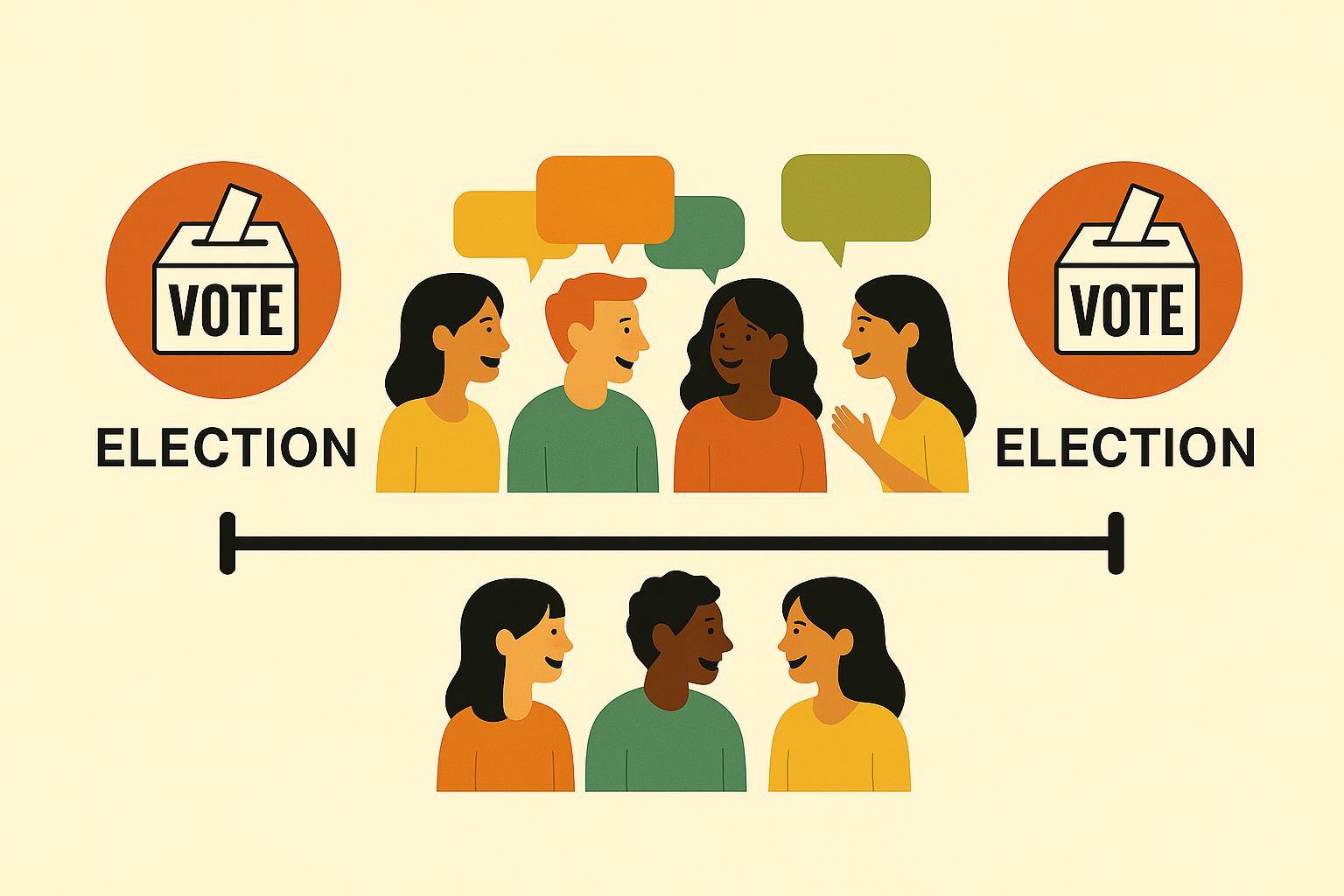
However, in the wake of the election our emotions, opinions, and beliefs may still be running high, and the euphoria or anxiety stemming from the election outcome is focused on the actions of the current administration and their implications for the next election cycle. But what if instead of sprinting towards the next campaign, we began to utilize this time between elections to engage in something rare but important: small intentional bouts of deliberation?
Unlike the sweeping national discourse that dominates election season, post-election deliberative “small talk” thrives on localized conversations among friends, neighbors, colleagues and peers. These individuals gather to discuss the outcome and what it means for their communities. These conversations are a vital way to process election results and examine how new policies being implemented are affecting our local community, neighborhoods, and daily lives. In the wake of elections, we can re-engage with each other beyond these sweeping platitudes and campaign rhetoric.
We can now take time to ask questions like: What does this outcome mean for my town or city? How might this impact the services we rely on, or issues we care about? These questions are essential in the sense that they can help ground campaign sound bites and platitudes into tangible concrete personal terms. Moreover, smaller, consistent deliberation makes civic engagement sustainable. As opposed to tuning in every 4 years, intentionally creating lower-stakes and regular check-ins with your community will create a collective sense of involvement and shared responsibility.
Though these conversations may not be extremely formal, it is important to adopt and maintain a few key deliberative dispositions during our conversations. We should strive to engage in egalitarian-minded discussions, whether that be at a coffee shop, lunch, or any other social gathering. What matters most is that these conversations ensure everyone has a chance to speak, listen, and be heard.
Finally, between-election deliberation is critical because it fosters accountability—not just of elected officials to their constituents but also among community members to one another. By coming together to discuss election outcomes and their implications, we build a shared sense of responsibility for staying informed and proactive. These conversations encourage us to reflect on how policies and decisions affect our neighborhoods and daily lives and motivate us to collaborate on solutions to address local issues.
It’s one thing to vote; it’s another to stay informed and invested in the outcomes of those votes on our communities and daily lives. Through small informal bouts of deliberation with our neighbors, colleagues and peers, we remind ourselves that democracy is a constant practice, not a one-time event, and that our engagement doesn’t end on election day.
The late civil rights activist Kwame Ture once said, “You vote once in four years, and that’s your political responsibility? Politics is every day.” As we live in this time between elections, we must recognize that our democracy neither begins nor ends at the ballot box. By engaging in ongoing deliberation, we can foster lasting, sustainable change and ensure that our communities thrive—not just during election years, but every day.