By Tehinnah Kitcher ’27 (DCI Fellow)
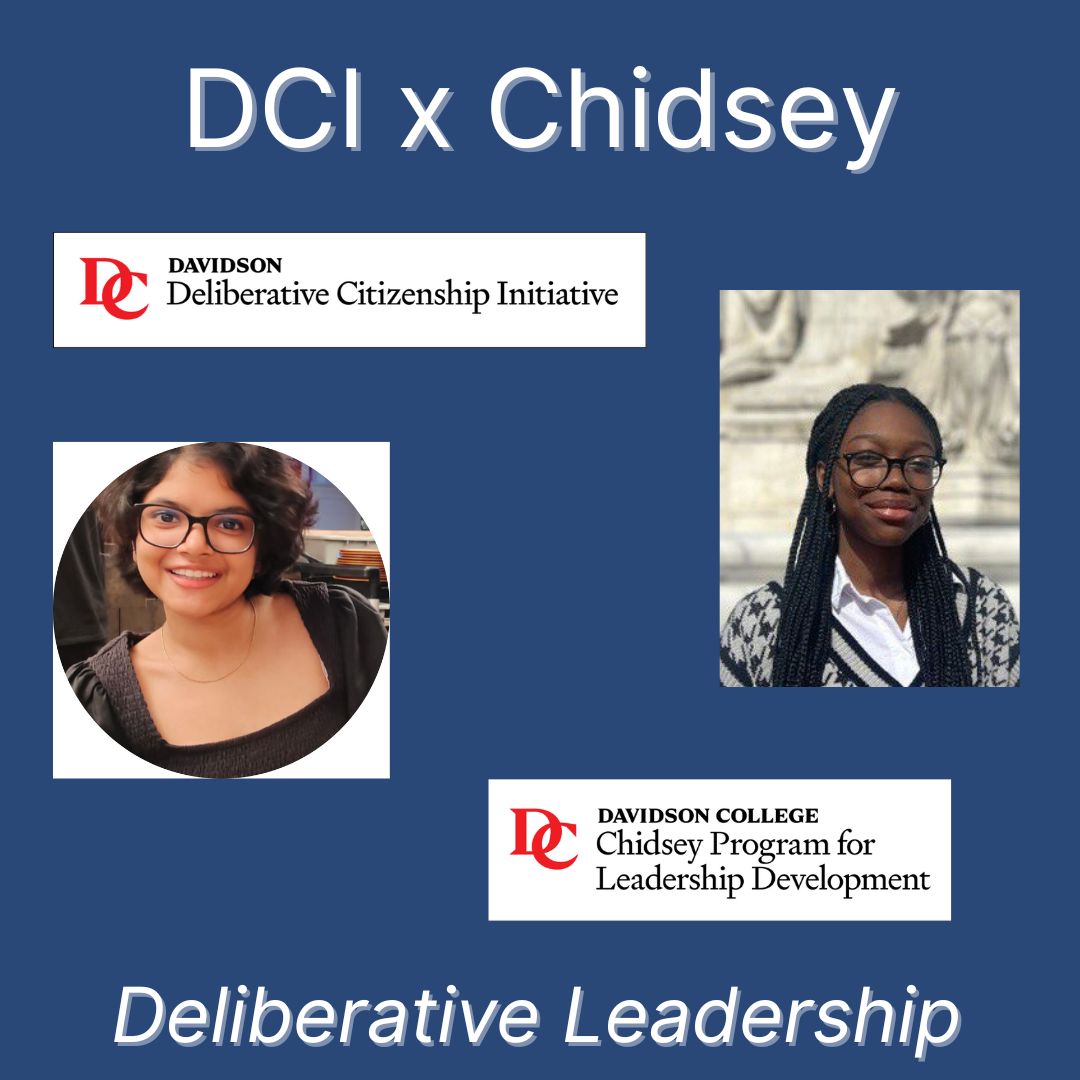
This past March, I had the opportunity to co-lead a project called “Bridging Perspectives: Empowering Leaders to Connect, Deliberate, and Drive Change Together” alongside senior DCI fellow Atyantika Mookherjee that united the Chidsey Program for Leadership Development and the Deliberative Citizenship Initiative (DCI).
The Chidsey Leadership Fellows’ Program emphasizes leadership as an intentional and evolving practice, focusing on personal choice, resilience, opportunity, and connection. It views leadership as a journey shaped by decisions, the courage to tackle challenges, the openness to see possibility, and the commitment to build connections. By embracing these pillars, Chidsey Fellows learn to grow as leaders who can positively impact their communities through empathy, responsibility, and collaboration. As both Chidsey and DCI Fellows, Atyantika and I both noticed that together, the DCI and Chidsey provide students with a powerful set of complementary skills: DCI cultivates the ability to navigate complex discussions, while Chidsey emphasizes leading with empathy and purpose.
In our session with the Chidsey Fellows, we gave them an overview of the four facilitation styles and specific techniques to enhance communication and build understanding. We drew from the same frameworks that we learned in our official DCI facilitator training. Each style offered a different way of guiding a conversation and shaping group dynamics. The Chidsey Fellows then had the opportunity to play these roles through a mock deliberation. Afterwards, they reflected on their facilitation styles and skills.
This unique collaboration between DCI and the Chidsey Leadership Program helps to create future leaders who are equipped not only with technical skills but also with a deeper understanding of how to navigate complex, real-world challenges. By integrating DCI’s facilitation skills, which are centered around being attentive, respectful, and open-minded, with Chidsey’s core values, we’re fostering leaders who can engage in constructive, inclusive conversations. Such leaders are more adaptable, open to diverse viewpoints, and skilled at finding common ground, all of which are critical in a rapidly changing and interconnected world.
I am excited to see the DCI continue to collaborate and engage with the campus and broader community. Future collaborations would undoubtedly provide greater insights as to how dialogue and deliberation influence other fields. In a world that is growing more polarized and intolerant, quality deliberation and dialogue are essential. If you are interested in getting connected with the DCI, be sure to join a D Team in the fall or attend one of our forums!