The Deliberative Pedagogy (DeeP) Faculty Collaborative consists of faculty from Davidson College and other higher education institutions who are committed to learning and implementing new ways to improve and deepen the quality of their class discussions. These faculty come from a wide array of disciplines and backgrounds to study and discuss deliberative pedagogy methods, share their ideas and questions with one another, and work to embed deliberation in their classrooms. In this special blog series, members of the Collaborative describe and reflect on their experiences developing and teaching their deliberation-involved courses.
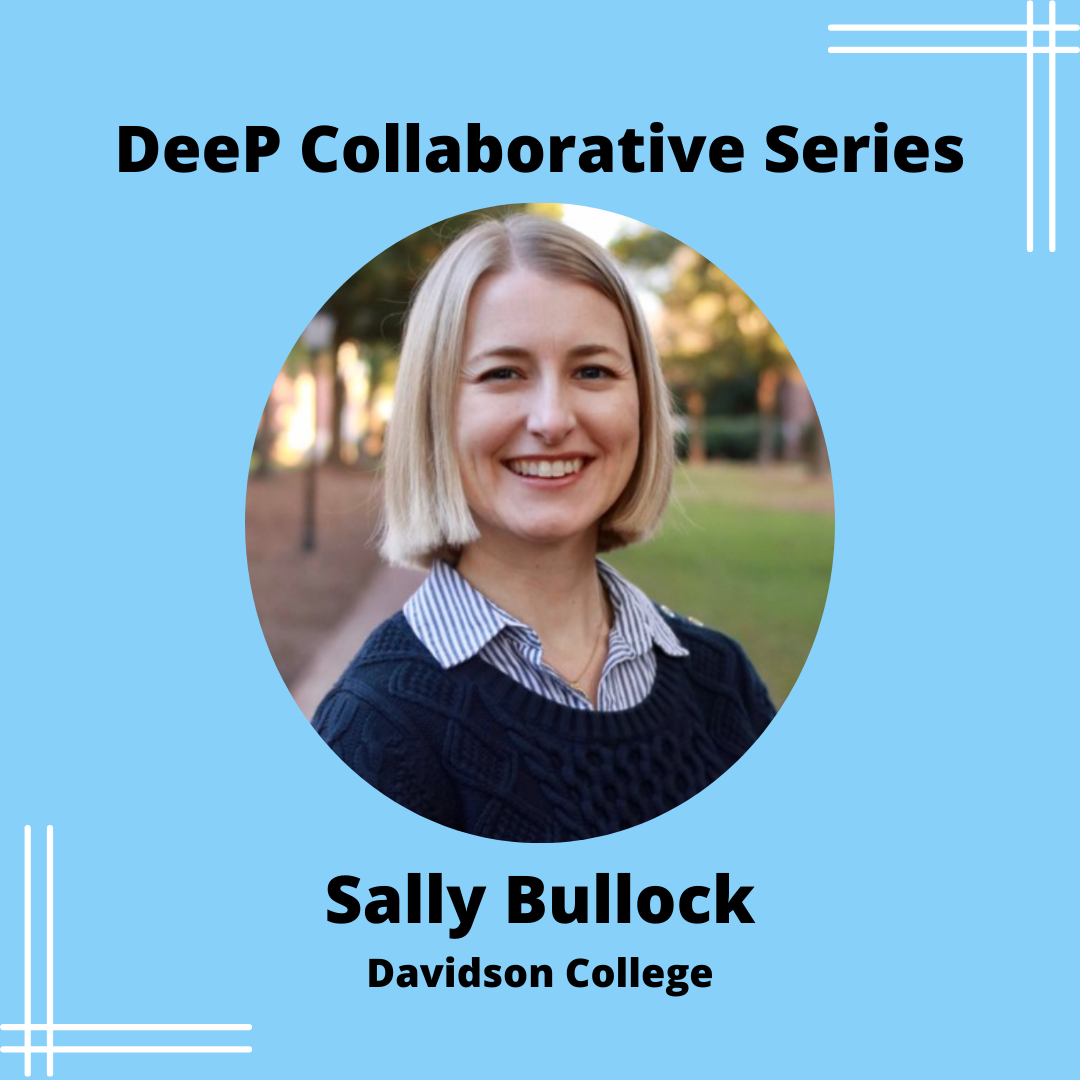
By Sally Bullock (2024-25 Deliberative Pedagogy Collaborative Faculty Fellow)
Between the opioid epidemic, COVID-19, measles outbreaks, and the current administration’s push to “Make America Healthy Again,” public health has been in the spotlight a lot recently. As an Assistant Professor of Public Health, one of my biggest challenges over the past few years has been teaching my students the public health fundamentals while also keeping up with all these pressing issues and the wide range of opinions on how to tackle them.
There are certainly evidence-based approaches that work for many major public health problems. But every intervention and policy decision involves complex trade-offs and competing values that affect our individual and collective well-being, which is why people see these issues so differently. While I encourage my students to critically analyze the public health topics we cover, I’ve noticed that this diversity of viewpoints doesn’t always come through in our class discussions or assignments. Students often seem reluctant to explore different perspectives, and many struggle to really understand viewpoints that don’t align with their own.
This concerns me because as future health professionals, my students will need to engage with diverse stakeholders and facilitate productive discussions about complex health challenges that uniquely affect different communities. So, when the Faculty Director of the Deliberative Citizenship Initiative (DCI) approached me about having students in my classes join Deliberative “D” Team discussions on topics relevant to public health, I was immediately interested. It sounded like a great opportunity for my students and dovetailed nicely with my efforts to integrate deliberation into my courses as a member of the DCI’s Deliberative Pedagogy (DeeP) Collaborative.
As part of my Introduction to Public Health and Health Disparities classes, my students participated in “D” Teams where they discussed three challenging public health topics – substance abuse, pandemic preparedness, and healthcare reform – over the course of three sessions. These small group discussions brought together community members, students, staff, and alumni. The format gave students a chance to hear different perspectives on these complex issues, share their own thinking, and work together toward potential solutions.
At the end of the semester, students submitted essays reflecting on their D Team experience. The feedback was overwhelmingly positive; students found the discussions both valuable and surprisingly civil. Many had expected contentious, winner-take-all debates, but instead found themselves in respectful conversations where people listened to each other with genuine empathy.
Despite coming from different backgrounds, students were often surprised by how much common ground they found. While a few wished for more ideological diversity, others saw the ability to reach consensus as encouraging. As one student wrote, “our unity in these conversations gives me hope that real change could be attainable and is best fostered through intentional and thoughtful deliberation.” Another noted, “The best part was seeing people change their views after hearing new perspectives. It showed how effective open discussion can be.”
What excited me most was seeing students bridge course content with their deliberations. They referenced frameworks we’d studied in class, like the social ecological model for understanding the opioid epidemic and used them to help their groups think through complex problems. Students appreciated how the class prepared them to contribute meaningfully, and they could really see the “real world” applications of what we’d been learning.
The impact went both ways. D Team participation enriched our classroom discussions too, as students would bring back perspectives and ideas they’d encountered in their small groups.
I’m thrilled my students had this opportunity. The D Teams didn’t just reinforce course content, they helped students grasp the true complexity of public health issues and develop confidence in contributing to difficult conversations. As one student reflected, “Participating in these deliberations helped me to appreciate the difficulty of public health policymaking, as I came in with opinions, but left with unanswered questions. I think that’s a good thing, as being a ‘deliberative citizen’ means being willing to listen and reconsider views in light of new information and experiences.”
Several students left inspired to keep working on skills like articulating ideas under pressure, improving their listening, and staying open to different viewpoints. Perhaps most importantly, they grasped something fundamental about deliberation. As another student put it, “One of the most important things I learned was that deliberation is not about winning an argument or choosing a side. It’s about understanding the ‘why’ behind different views and finding common ground.”