
• Skip to main content
  • Skip to footer

Deliberative Citizenship Initiative

Building Democracy One Conversation at a Time

  • The Initiative
    • Programs
      • Deliberation Across the Curriculum
      • Deliberation on Campus
      • Deliberation in the Community
      • Research on Deliberation
    • Motivations
      • Why Deliberative Citizenship?
      • Why Davidson? Why Now?
    • Who’s Involved?
      • DCI Fellows Cohorts
        • 2025-2026 Fellows
        • 2024-2025 Fellows
        • 2023-2024 Fellows
        • 2022-2023 Fellows
        • 2021-2022 Fellows
        • 2020-2021 Fellows
      • DeeP Collaborative Cohorts
        • 2024-2025 DeeP Collaborative Faculty
        • 2023-2024 DeeP Collaborative Faculty
      • Advisory Council
    • History
      • What Sparked the Initiative?
    • Key Deliberative Dispositions
    • Frequently Asked Questions (FAQ)
    • Annual Report
  • Get Involved!
    • Participate in a Forum
    • Join a D Team
    • Become a Fellow
    • Take Courses
    • Get Training
    • Come to Guest Lectures
  • Events
    • Upcoming Events
      • 250th Anniversary Deliberative Forum Series on American Values
    • Past Events
  • Connections
    • The Deliberative Citizen: The DCI’s Monthly Newsletter
    • Efforts on Campus
    • Efforts in the Community
    • Efforts Elsewhere
    • Readings and Resources
      • DCI-Published Guides
      • DCI Guide to One-on-One Conversations
      • How to Disagree
      • Demonstration of Facilitation Styles
      • Deliberative Pedagogy Mini-Course
    • How We Can Help: DCI’s LET’S DELIBERATE! Partnership Opportunities
    • DCI in the News
  • DCI Blog Posts
    • Recent Blog Posts
    • All Blog Posts

Mae Corley

10 Minutes a Day!

March 1, 2023 by Mae Corley

calendar stock image

Mae Corley ’25 (DCI Fellow)

As a DCI Fellow this year, I have learned the power of a great facilitator to drive a conversation, play devil’s advocate, and dig deeper within a discussion. Yet, I’ve become much more aware of the informal deliberations that occur right in front of me every day. In those scenarios, an official facilitator is rarely present and conversation management must be controlled and determined by the parties engaged in the deliberation. These conversations may be complex or simple or anywhere in between but deliberation norms are still as important as ever. This sounds straightforward, but these conversations are much more difficult than they seem.

I can vividly remember the most powerful conversations I’ve had with friends, family, and teachers. All of them include a surrender of ego and acceptance that learning is done by listening. These powerful conversations require honesty on a level that can be intimidating. Deliberations like this take hard work and effort. It is difficult to be this vulnerable with people you do not feel comfortable with, and I find myself relying on several friends who have a natural ability to make me feel heard and valued. I strive to be a person who can invite these types of conversations with people I do not know extremely well. DCI has taught me the importance of this skill (which can be developed and practiced) to seek intentional conversations and practice thinking through my actions when engaging with people with other views.

On Davidson’s campus, I often hear students express a desire to have deliberative conversations, but I think many people are forgetting an important step. They are forgetting to first practice deliberative skills that would allow them to have successful informal deliberations every day. They are unaware of how important it is to intentionally manage conversations to keep both parties comfortable and willing to engage respectfully.

So, what should be done? Where is the magical solution which will create incredible deliberative conversations everywhere we turn at Davidson? Well, I think it’s simpler than you would think. I’ve often heard the idea of small acts of kindness. The purpose is to encourage each individual to complete one small act of kindness each day and, compounded together with the actions of the larger community, a huge impact will be felt. I propose the same method for deliberative skills and conversations. If we can challenge our Davidson community to practice deliberation and community engagement similarly then imagine the impact.

Each person can challenge themselves to seek out one intentional, deliberative conversation each day. It could be short – ten minutes (or perhaps longer!) – but engagement with deliberative skills each day makes these conversations and skills easier over time. Ten minutes of practicing intellectual humility, active listening, and thoughtful discussion with another person can encourage the entire campus to pick up these important skills.

Perhaps I’ve oversimplified, but I think the point remains. Informal deliberation is extremely important, but it’s a difficult pursuit. It takes more effort and intentionality than one would expect. Davidson stands to benefit greatly from a community that chooses to engage with each other in deliberative ways and seeks to learn from others. It isn’t easy, but it is extremely important for growth and learning in our Davidson community. It can start with just a few minutes every day!
Filed Under: Blog Posts, Fellow Posts Tagged With: D Teams

First Words and First Steps: Introductions, Identities, and Deliberation

November 11, 2022 by Mae Corley

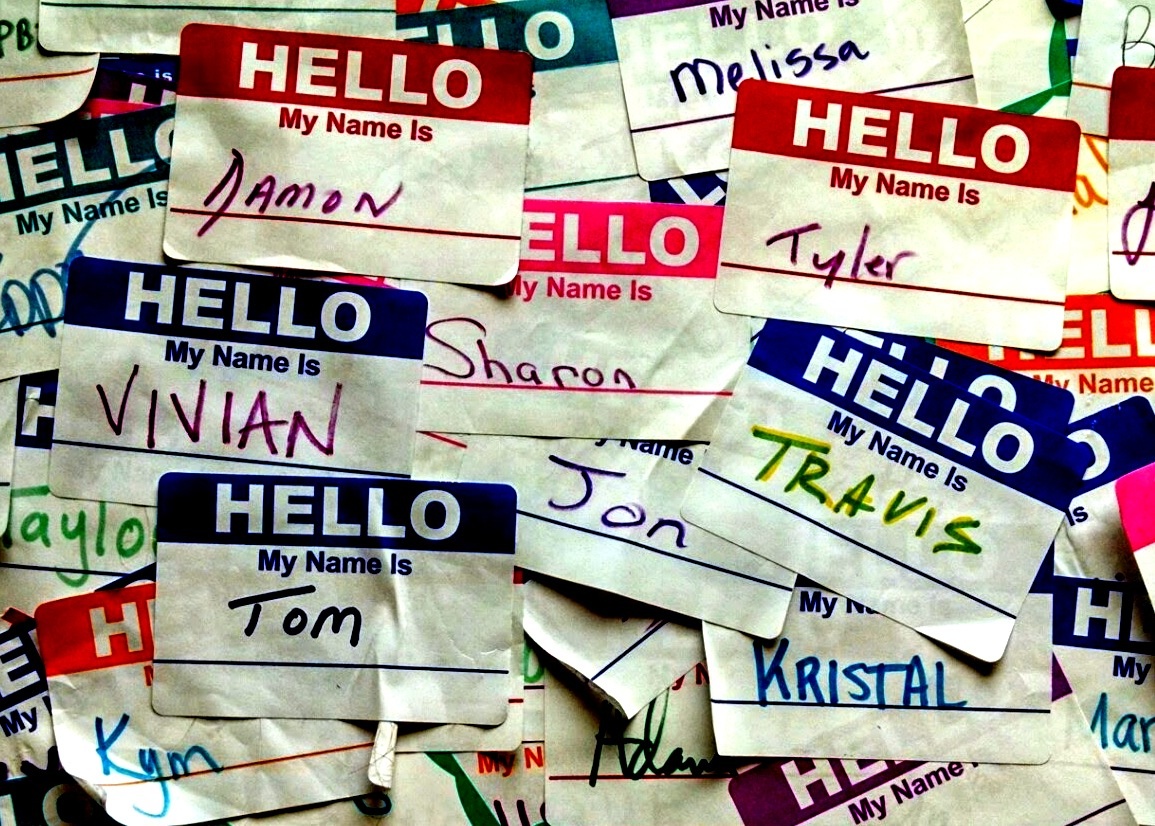
nametags

By Mae Corley ’25 (DCI Fellow)

Without knowing about the Deliberative Citizenship Initiative, I took Dr. Bullock’s American Politics class last spring. An important component of our class was participation in Deliberation Teams hosted by DCI. With the intention to learn about deliberative democracy, I joined my first group on a Sunday afternoon.  

As usual, our D Team group began with introductions. We were called to express several points of our identity that might have influenced how we think or what we believe. As always, I stressed my hometown, Seattle, as the primary contributor to my opinions and beliefs. Coming to Davidson, I was reaching outside of my comfort zone in, perhaps, more ways than I realized. Not only does the state of North Carolina lean in a different direction politically, but there are many unspoken social norms and behaviors that I have found to be different and foreign to me. 

In some sense, I miss the Pacific Northwest. It is beautiful, comfortable, and breeds its own type of person. Yet, I came to Davidson to find people unlike myself who could shape me into a well-rounded, liberal-arts-inspired adult. I wanted to be introduced to others who don’t share a similar identity produced from a Seattle upbringing.  

While, obviously, there is much more to a D Team than introductions, I still find myself fascinated by how each person in the conversation chooses to introduce themselves. When I was a participant last year, I liked to reference each other person’s introduction when I heard their opinions and thoughts during our deliberation. How did the identity factors they chose to share correspond with the opinions they hold and what they could bring to the discussion? What did they choose to focus on when they spoke and added to our deliberation? Conversely, as a facilitator this year, how can I understand each person who has chosen to participate in my deliberation? What ultimately brought them to the discussion?  

Deliberative democracy fundamentally calls for citizens to engage in discussions to understand each other, see other sides of issues, and gather a holistic perspective. While sharing identities may seem like one of the simpler parts of a D Team discussion, I believe it is the most important. Deliberative dialogue encourages participants to recognize the identities and perspectives inside of the conversation, as well as those left out and missing. By understanding the perspectives, opinions, and identities of each person in a D Team, we can create a productive deliberation in a small, intimate setting. 

Through my experience as a participant and a facilitator, I have interacted with many people – most of them connected through Davidson somehow – who offer countless different experiences, identities, and perspectives. I have been excited to find where people find agreement and disagreement and how that can relate to their identities. Deliberation is important to me because I can understand my past – a Seattle upbringing fueled by the outdoors, rainy winters, and Pacific Northwest attitudes – as it can relate to my present.  

Now, as a facilitator and participant of deliberative dialogues, I can see where my opinion, perspectives, and ideas originate from. I have also learned to appreciate where others are coming from, heard new ideas, and formed connections with people very different from myself. I believe that conversations with people different than you are essential, and, as always, they start with those easily overlooked but critically important introductions. 

Photo above is by Travis Wise and is licensed under the Creative Commons Attribution 2.0 Generic license.

Filed Under: Blog Posts, Fellow Posts Tagged With: facilitation

Footer

Blog Post Categories

  • Announcements
  • Blog Posts
  • DCI Posts
  • Events
  • Faculty Posts
  • Fellow Posts
Image of a compass superimposed by the text "Deliberative Citizenship Initiative" and "Davidson College." Clicking on this image leads to the Initiative page.

Recent DCI Blog Posts

  • We Tried to Fix Jubilee’s “Middle Ground” – Here’s How It Went
  • A Case for Deliberation in the Natural Sciences
  • Welcoming New Staff to the DCI and DCN
  • Facebook
  • Twitter
  • Instagram
  • LinkedIn


Copyright © 2026 · Infinity Pro on Genesis Framework · WordPress · Log in