• Skip to main content
  • Skip to footer

Deliberative Citizenship Initiative

Building Democracy One Conversation at a Time

  • The Initiative
    • Programs
      • Deliberation Across the Curriculum
      • Deliberation on Campus
      • Deliberation in the Community
      • Research on Deliberation
    • Motivations
      • Why Deliberative Citizenship?
      • Why Davidson? Why Now?
    • Who’s Involved?
      • DCI Fellows Cohorts
        • 2025-2026 Fellows
        • 2024-2025 Fellows
        • 2023-2024 Fellows
        • 2022-2023 Fellows
        • 2021-2022 Fellows
        • 2020-2021 Fellows
      • DeeP Collaborative Cohorts
        • 2024-2025 DeeP Collaborative Faculty
        • 2023-2024 DeeP Collaborative Faculty
      • Advisory Council
    • History
      • What Sparked the Initiative?
    • Key Deliberative Dispositions
    • Frequently Asked Questions (FAQ)
    • Annual Report
  • Get Involved!
    • Participate in a Forum
    • Join a D Team
    • Become a Fellow
    • Take Courses
    • Get Training
    • Come to Guest Lectures
  • Events
    • Upcoming Events
      • 250th Anniversary Deliberative Forum Series on American Values
    • Past Events
  • Connections
    • The Deliberative Citizen: The DCI’s Monthly Newsletter
    • Efforts on Campus
    • Efforts in the Community
    • Efforts Elsewhere
    • Readings and Resources
      • DCI-Published Guides
      • DCI Guide to One-on-One Conversations
      • How to Disagree
      • Demonstration of Facilitation Styles
      • Deliberative Pedagogy Mini-Course
    • How We Can Help: DCI’s LET’S DELIBERATE! Partnership Opportunities
    • DCI in the News
  • DCI Blog Posts
    • Recent Blog Posts
    • All Blog Posts

Lily Ogawa

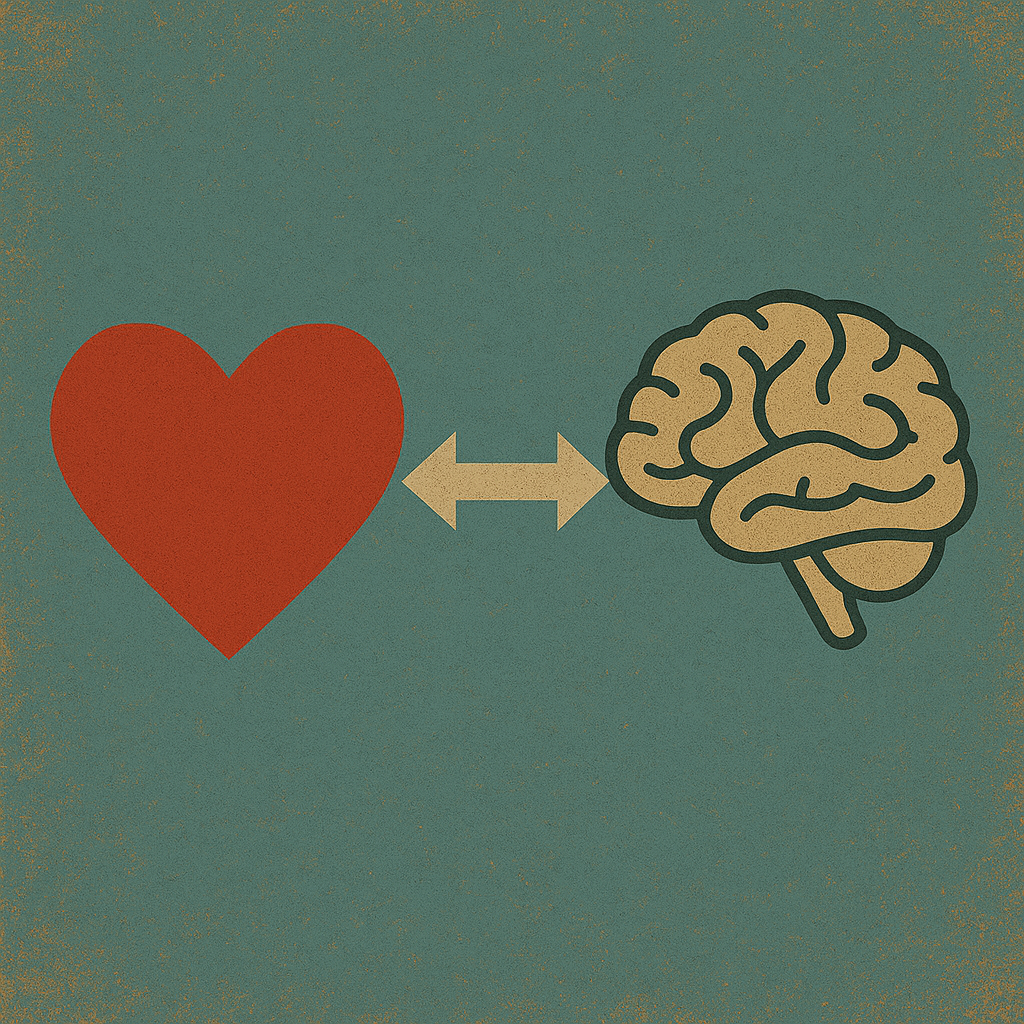
The Connection Between Emotion and Logic: Two Key Elements of a Deliberation

October 29, 2025 by Lily Ogawa

Lily Ogawa ’28 (DCI Fellow)

Which one is the most persuasive to use in a deliberation: emotion or logic?

When asked this question, most people’s gut instinct would be to say logic. People tend to believe you more when you cite data and evidence to back up a claim rather than explaining using your emotion. It may also seem easier to engage in a conversation when the person talking is using logic as you would be able to support or refute their claims using logic. When using emotion, it may seem harder to disagree with another person as we don’t want to hurt their feelings.

On the other hand, deliberations without any emotion can ignore a major part of the topic. Emotion plays a crucial role in topics such as on the government’s management on the COVID-19 pandemic, which was one of our recent DCI D Team topics. Participants may have lost loved ones or have lost their businesses due to the pandemic. To say that these participants cannot share their emotions and must only use hard logic can make the deliberations feel out of touch with reality. Emotion humanizes these participants and their perspectives and adds a unique value to the deliberation that logic cannot bring.

With these thoughts in mind, the questions then become “how to balance between the two?” and “which one is more important?” Despite the popular belief that logic and emotion are polar opposites, Leonard Mlodinow, author of the book “Emotional: How Feelings Shape Our Thinking,” argues that they are interconnected. Emotion guides people to choose what sensory information to pay attention to and what data to consider when making a decision.

In other words, emotions shape how we think. Paul Dirac, considered “one of the greatest physicists of the 20th century,” encouraged us to “be guided above all, by your emotions” (Mlodinow). Even in the field of physics, emotion influences how we make assumptions or what path of mathematics we study (Mlodinow). Emotions can subconsciously affect how we think and absorb information.

In deliberations, emotions can play a vital role in showing the diverse perspectives of participants. While emotion should not dominate the deliberation, both emotion and logic are essential ingredients in having an effective deliberation. In my D Team meetings, participants often shared what they felt during the COVID-19 pandemic, for instance, and what they feel now. They also shared data or factual evidence they came across. In other words, they used both emotion and logic to have a sincere and meaningful deliberation. Perhaps there may not be a perfect formula to balance between emotion and logic, but both emotion and logic can play an important role in bringing about fruitful conversations on difficult topics.

Work Cited

McDermott-Murphy, Caitlin. “Logic or Emotion: Which Is More Valuable?” Harvard Gazette, 31 Jan. 2022, news.harvard.edu/gazette/story/2022/01/logic-or-emotion-which-is-more-valuable/.

Mlodinow, Leonard. “Emotional: How Feelings Shape Our Thinking.” Next Big Idea Club, nextbigideaclub.com/magazine/emotional-feelings-shape-thinking-bookbite/31632/. Accessed 26 Mar. 2025.

Filed Under: Fellow Posts

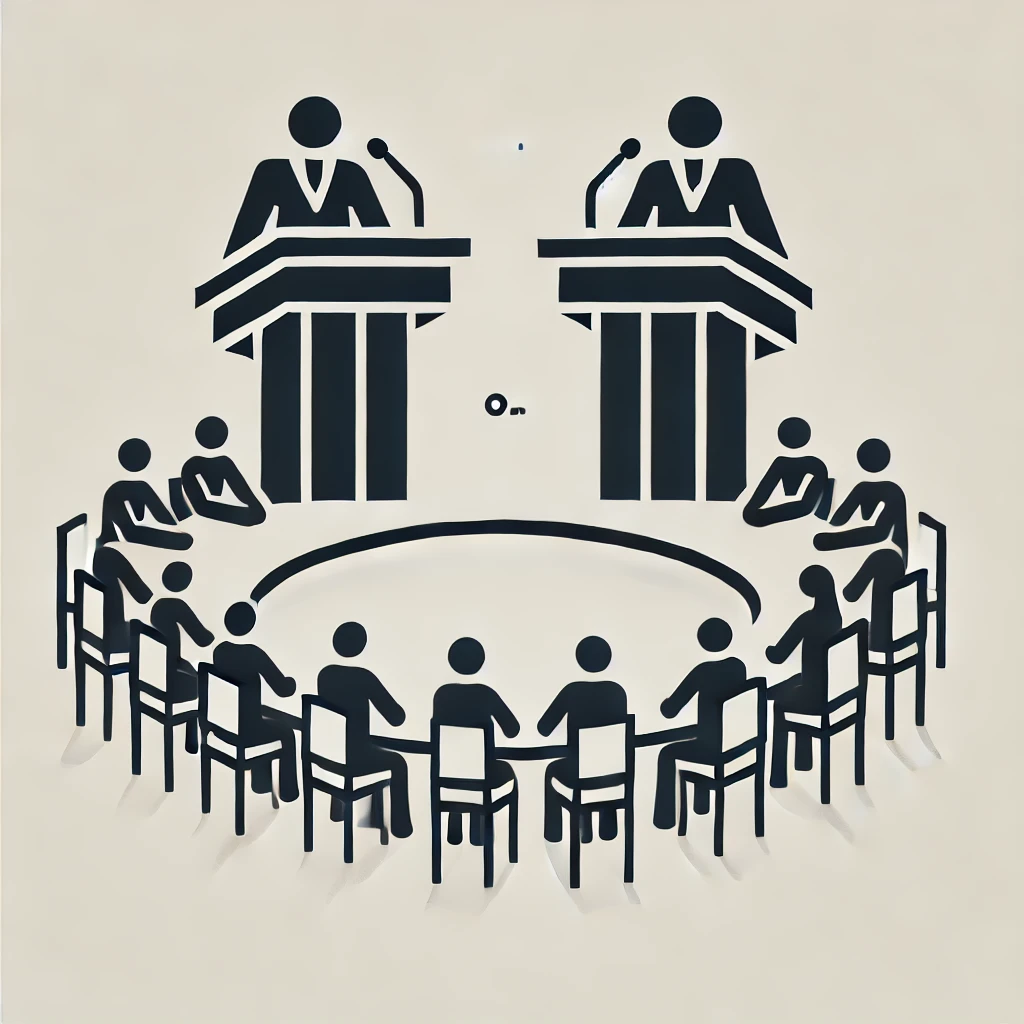
Deliberation vs. Debate: How Our Forms of Discourse Shape How We Engage

March 4, 2025 by Lily Ogawa

Lily Ogawa ’28 (DCI Fellow)

As someone who has participated in debate tournaments in high school, I had signed up to the DCI in college with the expectation that I would be able to hear people’s diverse perspectives and see them debate about current events. The more I learned about deliberation, however, I realized how different it is from debate. Deliberation is more applicable to our society now in so far as that deliberation seeks to find a solution while debates aim at finding a winner. In the deliberations I have led as a facilitator on free speech and college campus protests, oftentimes, people shared different views and there seemed to be no one “real” winner.

In high school, I debated a wide range of topics from U.S. aid to the Yemen crisis to the cost and benefits of building a high-speed rail in the U.S. In all of the debates, however, there were only two sides: for and against. While there were still different angles in which you could debate for one side, there was no side arguing for a middle-ground. This made it easier to research and frame my arguments, but as I researched, I realized that by eliminating the middle ground, it removed the nuance of the topic. Many of the articles I had read highlighted how, for instance, the U.S. should send aid to a certain area and not in weapons, which was hard to defend against if I could only argue for the “against” side in the topic of whether the U.S. should aid countries. It was unrealistic to frame the whole debate in two sides when in reality, many had moderate views that did not fully align with one particular side.

Debates are often entertaining because there is a winner. While it can be beneficial to weigh the pros and cons to determine what side you are more persuaded by, having one winner can also simplify the complexity of the issue. There is the added pressure that there must be a winner when in reality, both sides can have valid arguments and can be right depending on the specific context. This is not to say that debates are a harmful sport and that the competitive nature of it is not good. In fact, I still enjoy watching debates and there are benefits to debates that other activities do not provide, but it is important to also remember the pitfalls that can come with solely relying on debates to solve the issues in our society.

Deliberation allows people to share their own views without the restriction of having to choose a particular side. In one of my D Team meetings, for example, I facilitated a deliberation about campus protests. I was able to hear the participants’ background with college protests, and many of them had a view that was in the middle between for and against college protests. They explained that their view can change depending on the situation. Some argued that they cannot condone violent protests, but peaceful ones can bring about good change. Because of the fair and peaceful format of the deliberation, these nuanced answers were able to be captured. There was no pressure for a person to only respond to the topic with a yes or no answer.

Deliberation can change the way people engage in current issues and allow people to reach a solution without determining a specific winner. While debate has its own benefits of engaging people and training people to come up with different arguments, there are certain perspectives that cannot be captured in a debate. This is when deliberation comes into the picture and creates a space where people can constructively share their thoughts.

Filed Under: Blog Posts, Fellow Posts

Footer

Blog Post Categories

  • Announcements
  • Blog Posts
  • DCI Posts
  • Events
  • Faculty Posts
  • Fellow Posts
Image of a compass superimposed by the text "Deliberative Citizenship Initiative" and "Davidson College." Clicking on this image leads to the Initiative page.

Recent DCI Blog Posts

  • We Tried to Fix Jubilee’s “Middle Ground” – Here’s How It Went
  • A Case for Deliberation in the Natural Sciences
  • Welcoming New Staff to the DCI and DCN
  • Facebook
  • Twitter
  • Instagram
  • LinkedIn


Copyright © 2026 · Infinity Pro on Genesis Framework · WordPress · Log in