The Deliberative Pedagogy (DeeP) Faculty Collaborative consists of faculty from Davidson College and other higher education institutions who are committed to learning and implementing new ways to improve and deepen the quality of their class discussions. These faculty come from a wide array of disciplines and backgrounds to study and discuss deliberative pedagogy methods, share their ideas and questions with one another, and work to embed deliberation in their classrooms. In this special blog series, members of the Collaborative describe and reflect on their experiences developing and teaching their deliberation-involved courses.
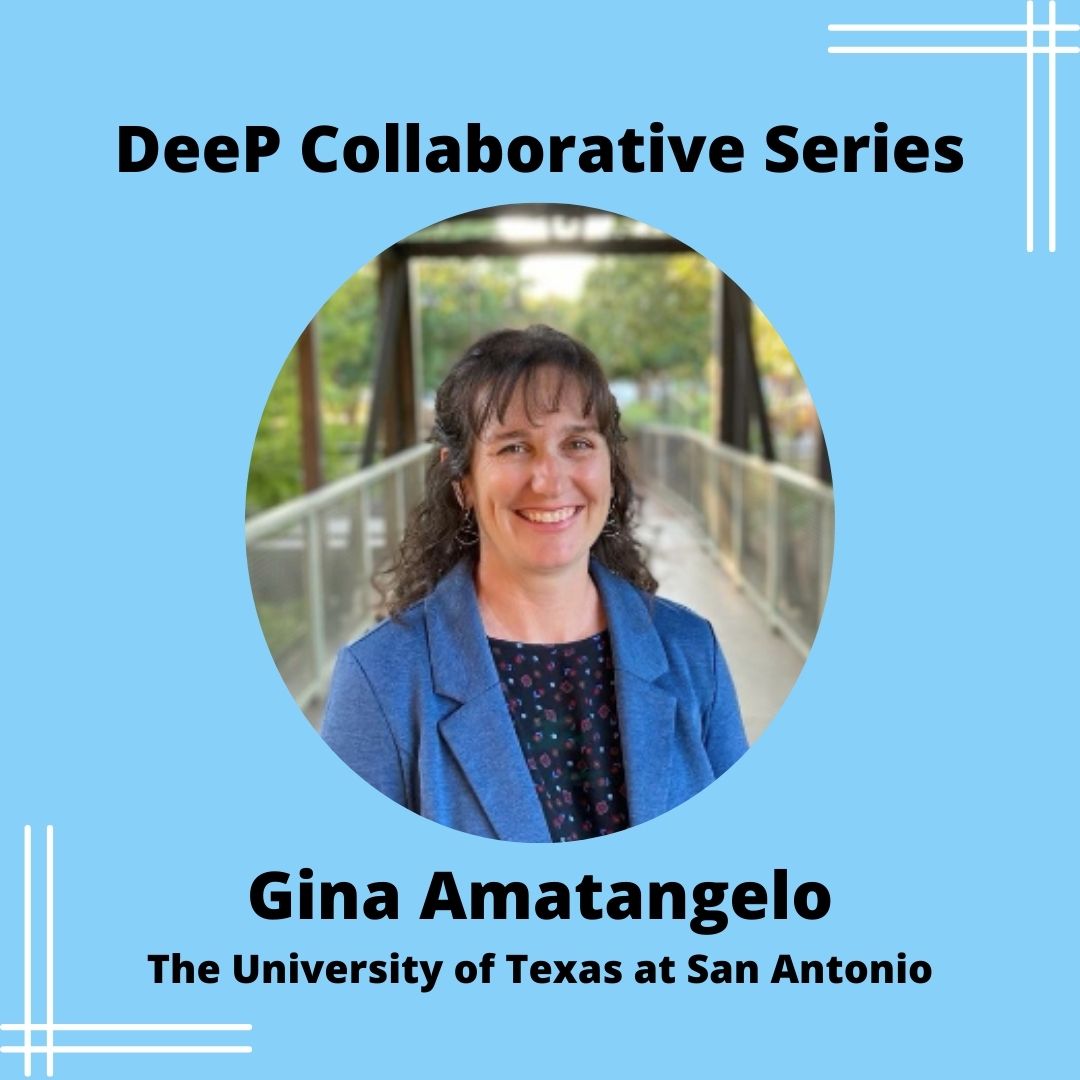
By Gina Amatangelo (2024-25 Deliberative Pedagogy Collaborative Faculty Fellow)
What we did:
I integrated deliberation techniques into our undergraduate Civic Leadership seminar, a service learning course offered in partnership between the Public Administration program and the Honors College.
As a service project for the course, students wrote deliberation guides on a range of issues that were relevant to the May 2025 municipal election. Given that municipal elections in San Antonio are nonpartisan, and voter turnout is historically very low, ranging between 15-17% in recent elections, this seemed like a good opportunity to educate students on the issues impacting by city and county government and attempt to inspire more participation among college students.
We discussed the role of deliberation in addressing community challenges, and practiced deliberation in class using a deliberation guide created by my graduate class from a prior semester. Students researched the issues in teams and were encouraged to provide a range of perspectives on the issues in the guides. We went through a process of peer review and faculty review and students revised and submitted final guides for use in our campus event. We devoted one class session to facilitation training and a second session to facilitation practice, using the guides created by the students themselves. Students then organized a campus forum in which other UTSA students could come and learn about issues such as infrastructure investment, housing affordability, homeless encampments, city funding for reproductive care, and a proposed sports and entertainment district. Authors of the guides served as table facilitators.
What we gained from it / What worked well:
Students who opened up the session did a wonderful job of articulating the value of deliberation for community engagement and encouraging democratic participation. Here is an excerpt from their presentation:
- “Heart of democracy
- Creates a safe space to discuss ideas
- Allows participants to engage with new perspectives
- Strengthens community ties through problem-solving
- Fosters a nuanced understanding of issues, creating informed individuals”
Additionally, most of the students who attended the forum seemed to genuinely engage in the discussion. Several groups were still immersed in animated conversation when it was time to close the session. Students generally seemed to appreciate the opportunity to serve as a discussion facilitator and reflected on the skills that they gained from the experience.
What could we improve in the future:
Time to review the guides: Our event was a drop-in event in which a range of students participated out of curiosity or a desire for extra credit or Honors event credit. As a result, participants were not provided the deliberation guides in advance of the event. Instead, facilitators gave them an overview and walked them through the background materials prior to the discussion. At some tables, this led to an imbalance in participation as some participants were more knowledgeable about the topics. If we were to host a deliberation event again, we would partner with another class so that students would be provided materials in advance and have more opportunity to prepare and know what to expect prior to the deliberation.
Time to learn about a range of issues: Additionally, we agreed that in the future, we would try to host 2 sessions, one session to simply offer information on issues related to the municipal election, and a second session for an in-depth deliberation. Students talked about the tradeoff of allowing students to move around the room and learn about all of the topics represented in the room versus remaining at one table for a full in-depth deliberation.
How students responded:
Most students enjoyed the role of facilitator. Their feedback on the service project and process of writing the guides was very positive.A few students expressed difficulty with maintaining neutrality with individuals with opposing viewpoints or with questions that stemmed from their intellectual curiosity. In the future, I might more explicitly discourage students from facilitating discussions on topics about which they feel very strongly.
This student perspective captures the spirit of the event well. “By hosting this event, we raised awareness of topics in San Antonio that people should care about but may not know about. By hosting an event where people are welcome, and all ideas are meant to be heard in a respectful manner, an event like this has the ability to bring people together. For change to happen, people need to be aware of the things going on in their city, feel like other people care too, and work together to make a difference. I think that this event accomplished a piece of that process.”