The Deliberative Pedagogy (DeeP) Faculty Collaborative consists of faculty from Davidson College and other higher education institutions who are committed to learning and implementing new ways to improve and deepen the quality of their class discussions. These faculty come from a wide array of disciplines and backgrounds to study and discuss deliberative pedagogy methods, share their ideas and questions with one another, and work to embed deliberation in their classrooms. In this special blog series, members of the Collaborative describe and reflect on their experiences developing and teaching their deliberation-involved courses.
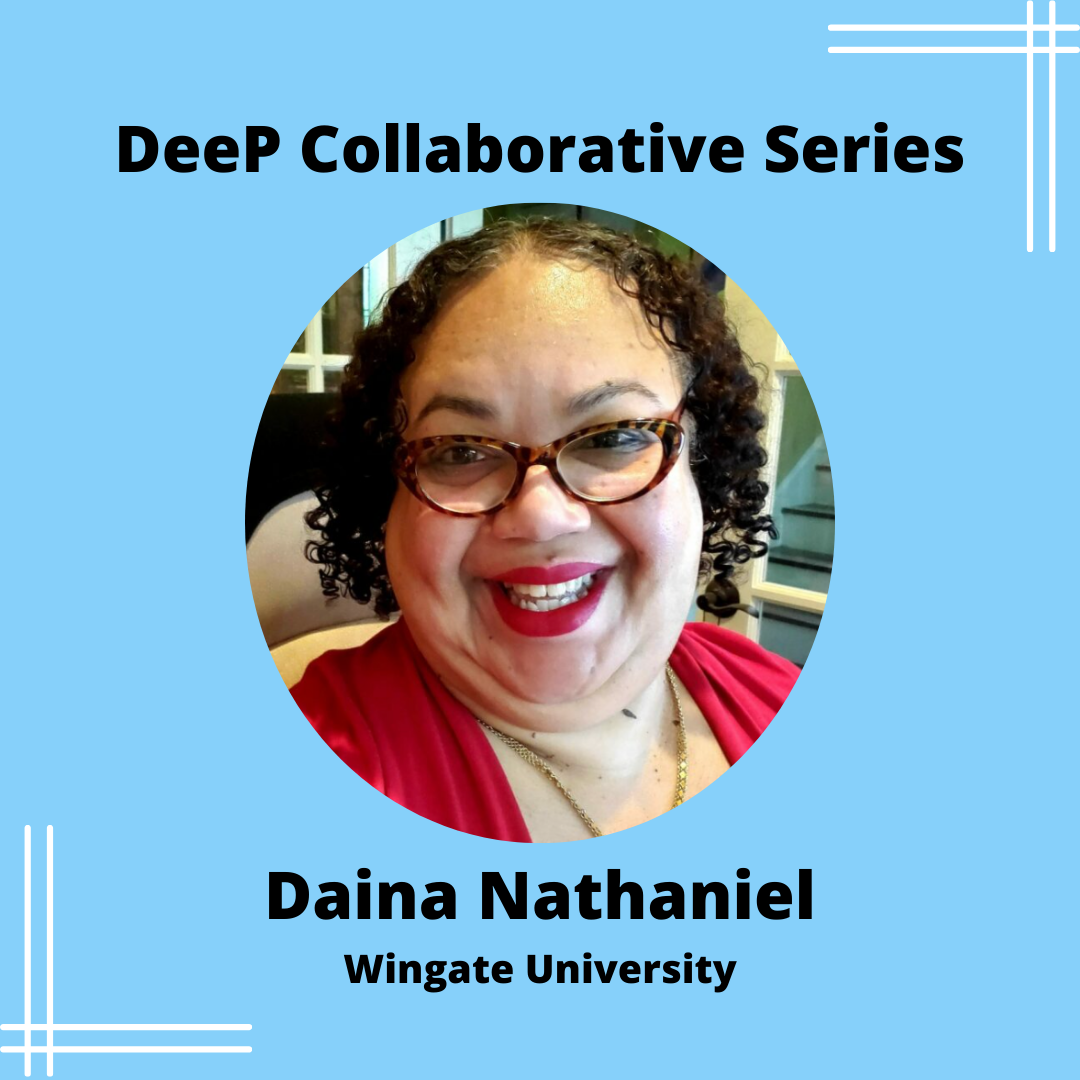
By Daina Nathaniel (2024-25 Deliberative Pedagogy Collaborative Faculty Fellow)
I was thrilled when I first learned that I was selected to be a part of the Collaborative in 2024-2025. After all, I had been doing deliberation of some form or another in my classes over the last 20 years or so. What I could not have anticipated was the variety of factors that would come to bear on this deliberative exercise, beyond whether students were understanding the content of the course or not.
My Intercultural Communication course seemed to be the perfect match. While I constantly challenge my students with seemingly off-the-wall comments and questions in all of my classes, I knew immediately that this course, which focuses on intercultural interaction, would be well tailored to discussing relevant issues of the day and within the context of the class without much effort to make it seem so.
While I felt confident about being able to integrate Deliberative Dialogue (dare I say) more deliberately in my class, there were some fundamental assumptions that I went with into the process that were in themselves challenged as a matter of course.
Assumptions about Students
It can be a challenge at times to ascertain student interest in current affairs, and often, we as educators simply try to gauge how much they might know about a particular subject or issue. I used the content units of the course to determine the types of deliberative questions the students would consider to demonstrate a clear connection with the course outcomes and learning objectives. At the same time, however, I really sought to understand what issues got students fired up.
What I learned through the Deliberative Dialogue process is that sometimes students may not be able to identify at the outset what they think about certain issues. They can be reticent about even discussing issues out in the open for fear of being judged, particularly by their peers. As I continue to grow in this practice of Deliberative Dialogue, there is some pre-work that needs to be done to prepare students for the discomfort that they might feel and to provide assurances that the classroom will remain a safe space for them to explore ideas – especially those that may be different from others.
Assumptions about Issues
In designing the prompts for the Deliberative Dialogues, I focused on issues that linked with the unit being discussed, but in a way that connected to the students’ current experiences on and off campus. I thought that given this was my first time (and theirs), it was important to keep the integrity of the exercise but make the issues as relatable to students in their current circumstances.
Should I do this in the future, I will solicit ideas from students, not necessarily about the Deliberative Dialogue prompts directly, but about campus and society related concerns that they might have. These may be specific to our campus but could also have implications across other institutions of Higher Education and the wider community. It is clear that when people have a stake in an issue, they are more likely to engage in discussing it. Since this is likely the first time that students will be expected to deliberate about issues in this way, and even take a position with which they don’t agree, getting their buy-in from the beginning might be a good starting point.
Assumptions about Myself as the Moderator
From the start and after the first set of Collaborative training and readings, I felt abundantly prepared to lead the Deliberative Dialogue process. What I could not have anticipated was that a complete change in circumstances could thwart my plans and to pivot seamlessly was a significant challenge. To me, introducing this process to students (maybe particularly my students) is best done in person. I could not have known that I would have had to switch to online classes by the third week of the semester. At my institution, students are not used to having online classes and few are even offered in my department. Given that the course I integrated this exercise into is required or suggested by a number of different departments, many students have not even had a course in my content area. Needless to say, there can be a steep learning curve for many students who may not be used to the structure and style of our courses.
Switching to the online modality was in itself tough in terms of keeping students interested and engaged particularly when this was not what they signed up for. So, making the Deliberative Dialogue exercises meaningful became more of a challenge. I believe that people who are more familiar with online discussions are better able to engage in these dialogues virtually, but honestly, it all felt quite contrived for my students, who arguably did the best with the situation.
Moreover, should I use this exercise again, I would like to train students to be moderators as well, as I believe it is important that they don’t see me as always being in charge and that they learn the skills of moderation as well – a skill that may not be stressed in the program as a matter of course.
Overall, despite some of the pitfalls, Deliberative Dialogue is a useful tool to get students (and community members) to interact about issues of import in their communities. Many have expressed concern that the growth of social media and the use of technology have made people more reticent to deliberate issues in fair-minded ways to bring about increased understanding. This process, in my view, takes the critical thinking process into the realm of the practical by providing opportunities for those involved to figure out what they think and perhaps, what they think about.