By Alyssa Henke ’26 (DCI Fellow)
Deliberation is often seen as something that belongs primarily to the social sciences. It involves engaging with ideas, weighing evidence, and reflecting on how different perspectives shape our understanding of the world. However, as someone majoring in both political science and mathematics, I have often found myself wondering: can deliberation also play a meaningful role in STEM?
For a long time, it didn’t seem that way. In my political science courses at Davidson, deliberation was everywhere. We debated complex issues, analyzed competing viewpoints, and explored how identity, policy, and institutions interact. These conversations were relevant, rooted in our experiences and knowledge about the world around us. My voice felt important in political science.
On the other hand, mathematics felt more rigid. My time was spent solving problems, proving theorems, and searching for precise answers. There was little room for personal reflection or discussions about how the subject connects to real-world experiences. It felt like there was no room for deliberation in math.
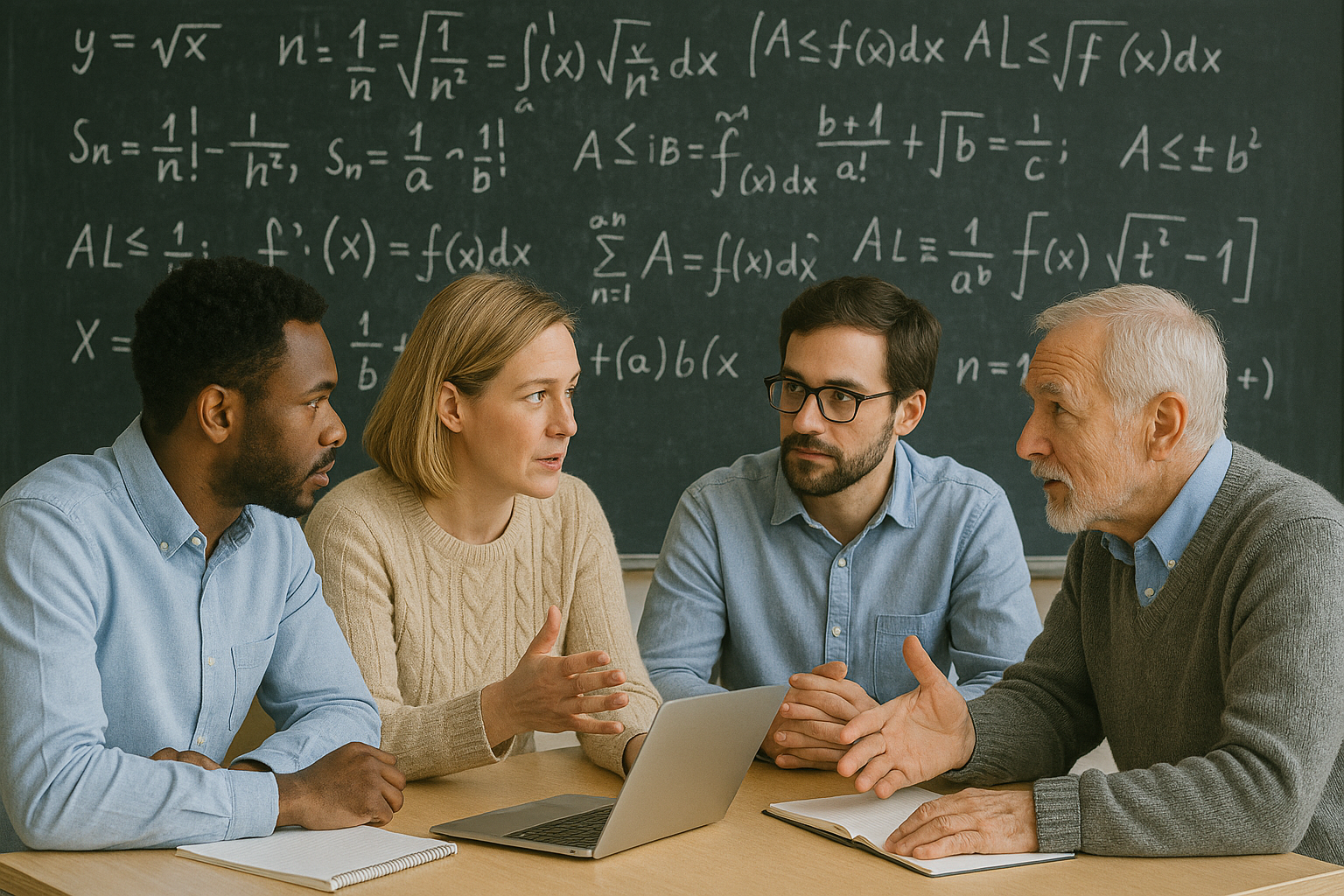
That perspective shifted when one of my professors introduced me to Living Proof, a book filled with personal stories from mathematicians around the world. These excerpts shared struggles, moments of doubt, and stories of perseverance. They revealed how deeply personal mathematics can be. These individuals brought their identities into their work, challenging stereotypical ideas that math is purely objective and separate from the human experience.
One of the most powerful messages in this book was that mathematics is not just about numbers of symbols; it is about people. Who we are, where we come from, and what we experience all shape how we approach math, why we study it, and how we see ourselves in the field. Social and political forces, access to education, and cultural norms all influence the work being done in STEM.
Deliberation is not limited to academic debate or policy discussions. It also means asking hard questions about inclusion, equity, and purpose in fields like mathematics. Who has access to these spaces? What values are prioritized? Whose stories are told and whose are ignored? At the end of the day, it is these people, shaped by their own individual experiences, who are doing the math.
When we recognize these dynamics, we open the door for STEM fields to grow not only in knowledge but in compassion. Reflection and critical dialogue help create spaces where diverse voices are heard, and where people feel like they belong. This kind of openness fosters collaboration, encouraging people from different backgrounds and experiences to work together and learn from one another. Just as political science encourages us to consider different viewpoints and question systems of power, math can also benefit from thoughtful engagement with the world around it.
Deliberation taught me how to think critically and empathetically in political science. Living Proof reminded me that these same skills belong in mathematics. They belong in every field. When we bring reflection, dialogue, and humanity into STEM, we do not just make better science or math. We build a community and a better world.