By Isabella Neri ’27 (DCI Fellow)
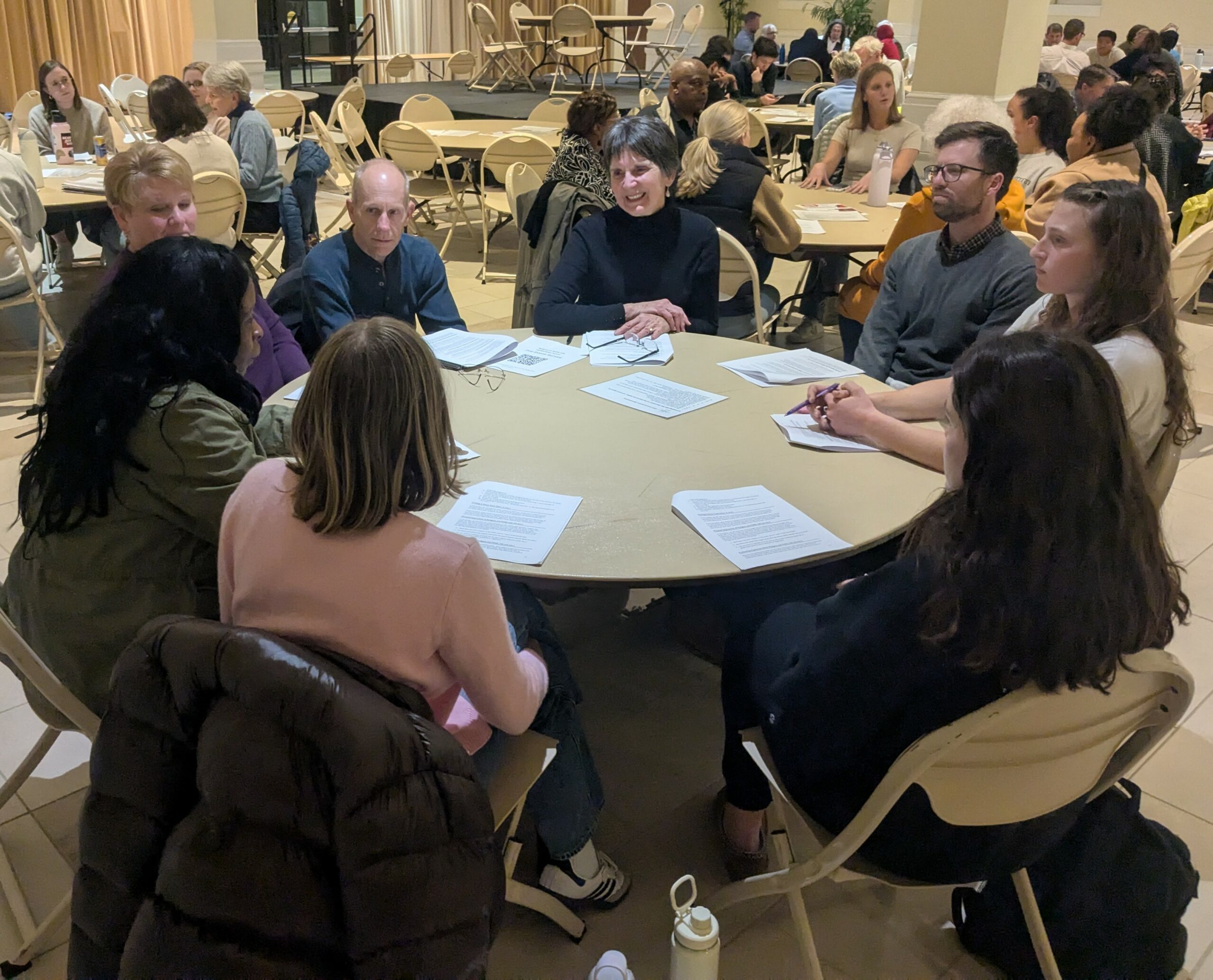
Over almost six years, the DCI has fostered a robust culture of deliberation at Davidson. Many might attribute this success to DCI’s Deliberative D Teams. However, a lesser-discussed DCI program is its Deliberative Forums. The DCI has hosted 19 forums since its inception in early 2020. These forums provide the community a chance to engage with their peers in group discussions surrounding a specific topic. For example, in the Fall of 2024, the DCI hosted a forum discussing income and wealth disparities where a panel of four participants, each with their own expertise and experience surrounding the topic, deliberated while being guided by a facilitator. After the panel discussion, groups of roughly seven participants and a facilitator had their own discussions. Other models of forums exist, though they all share the same purpose of fostering a conversation between participants on a specific topic.
Deliberative forums can act as a gateway to deeper discussions and further deliberations within the community. Forums are an introduction to what deliberation can be for those who are hesitant to get involved. Additionally, forums allow participants to think in depth about topics they may not have previously considered. For instance, someone who attended the Honor Code Forum might not have heard the perspectives of professors or even fully understood how the Honor Code functions. Many participants have expressed their appreciation for hearing new perspectives and reflecting on their discussions. Some may even take on and accept new perspectives after talking to community members or their peers.
Forums also allow for bridges to be built between those in a community. As I have previously highlighted, forums allow us to hear new perspectives through discussing often difficult topics. They can also help us form connections with each other that we might not have thought possible. One simple conversation could be what it takes for two people to understand each other. This act of listening and understanding could be all the difference in opening the conversation to find similarities between people as a community and as individuals. Additionally, with this one conversation, we can open so many doors to move forward with deliberation.
After the forum, participants receive a Pathways Guide that gives a reflection of the event and how we can move forward with what we’ve learned. Once a forum has been attended, there are a variety of paths you can take to immerse yourself in a deliberative world where those around you also want to learn and grow by discussing a wide range of topics through deliberative D Teams, additional forums, blog posts, or speaker events.
Forums do not simply end when the conversation is over. In reality, the conversation is never over. There are always topics to discuss or issues to be considered. Forums simply act as a gateway to understanding how you can become more involved in deliberation. Given our current climate, it is crucial that we come together and discuss complex and difficult topics. With this in mind, forums can act as an introduction to and pathway towards healthy deliberative discussion.