Every four years since at least 2000, the Davidson College Democrats and Republicans have held debates focused on key issues in the presidential election. They have been held between Eu and Phi Halls, two of the oldest buildings on campus, and have built on an even older tradition of debates between the Davidson’s two literary societies, Eumanean Society and Philanthropic Society, that date back to the college’s founding in 1837.
This fall, the College Democrats and College Republicans collaborated with the Deliberative Citizenship Initiative (DCI) to add a new element to the debate experience. In the past, the audience at these debates were generally passive spectators, listening to the arguments made but not having any meaningful way to engage themselves.
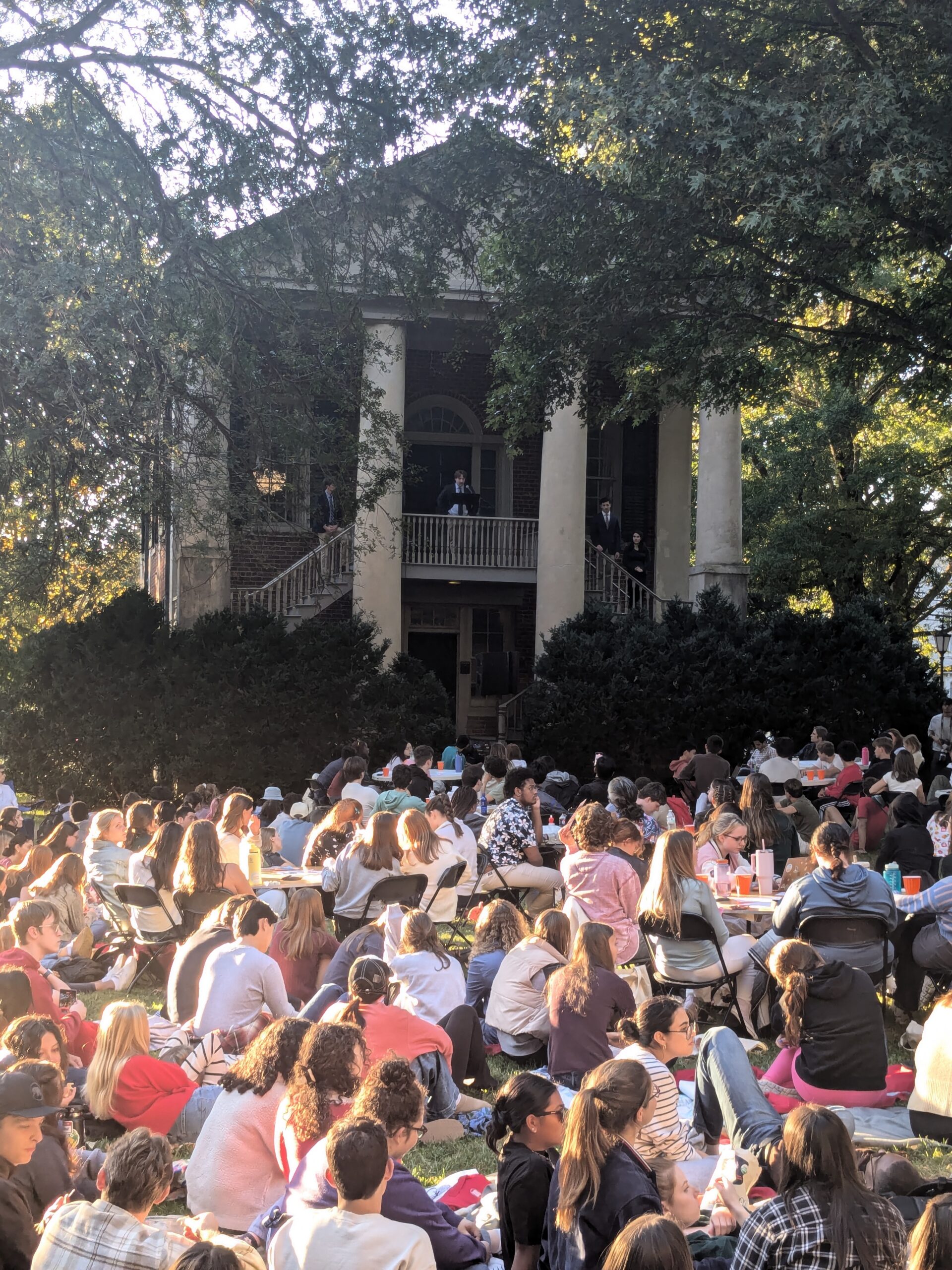
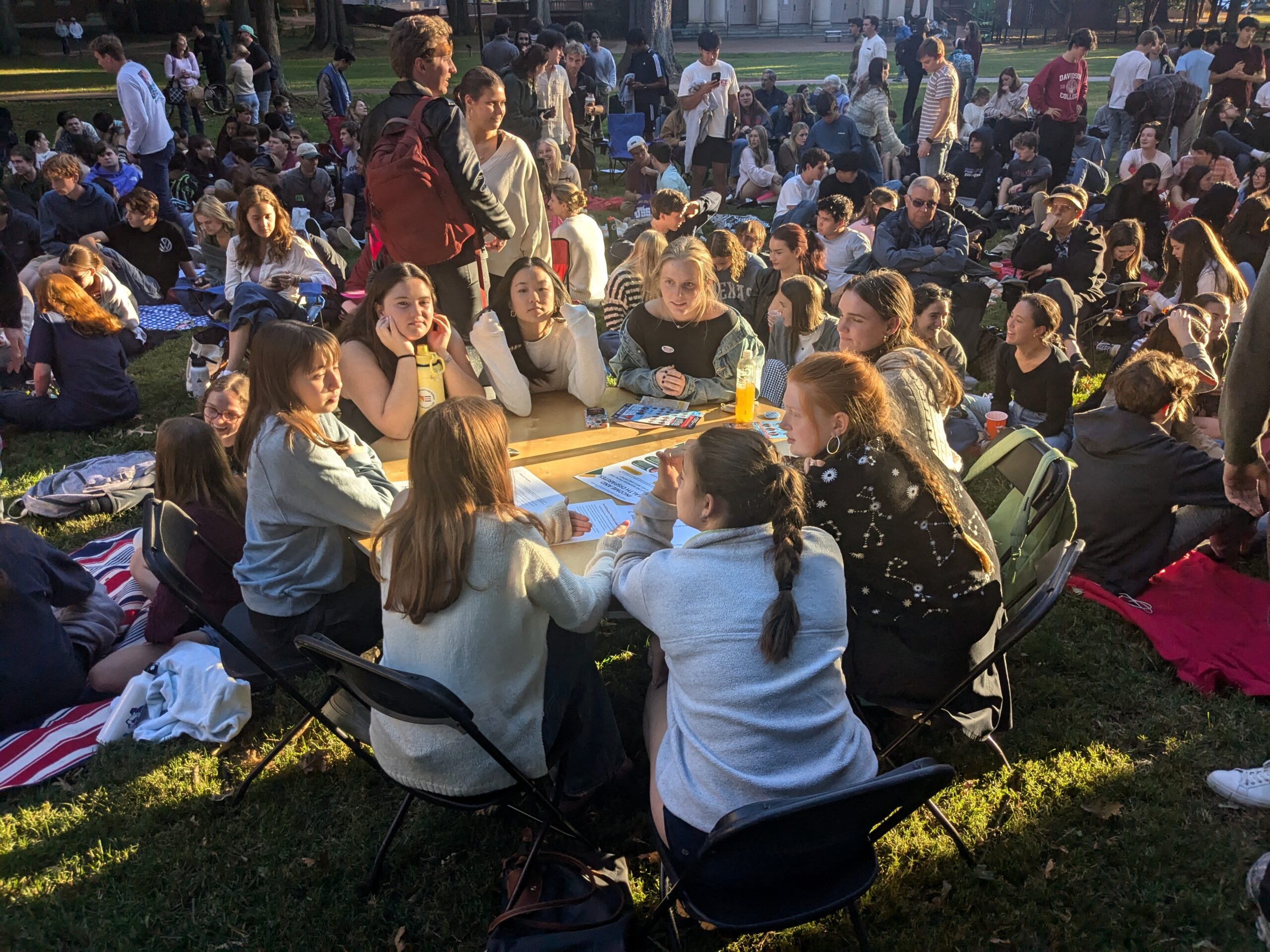
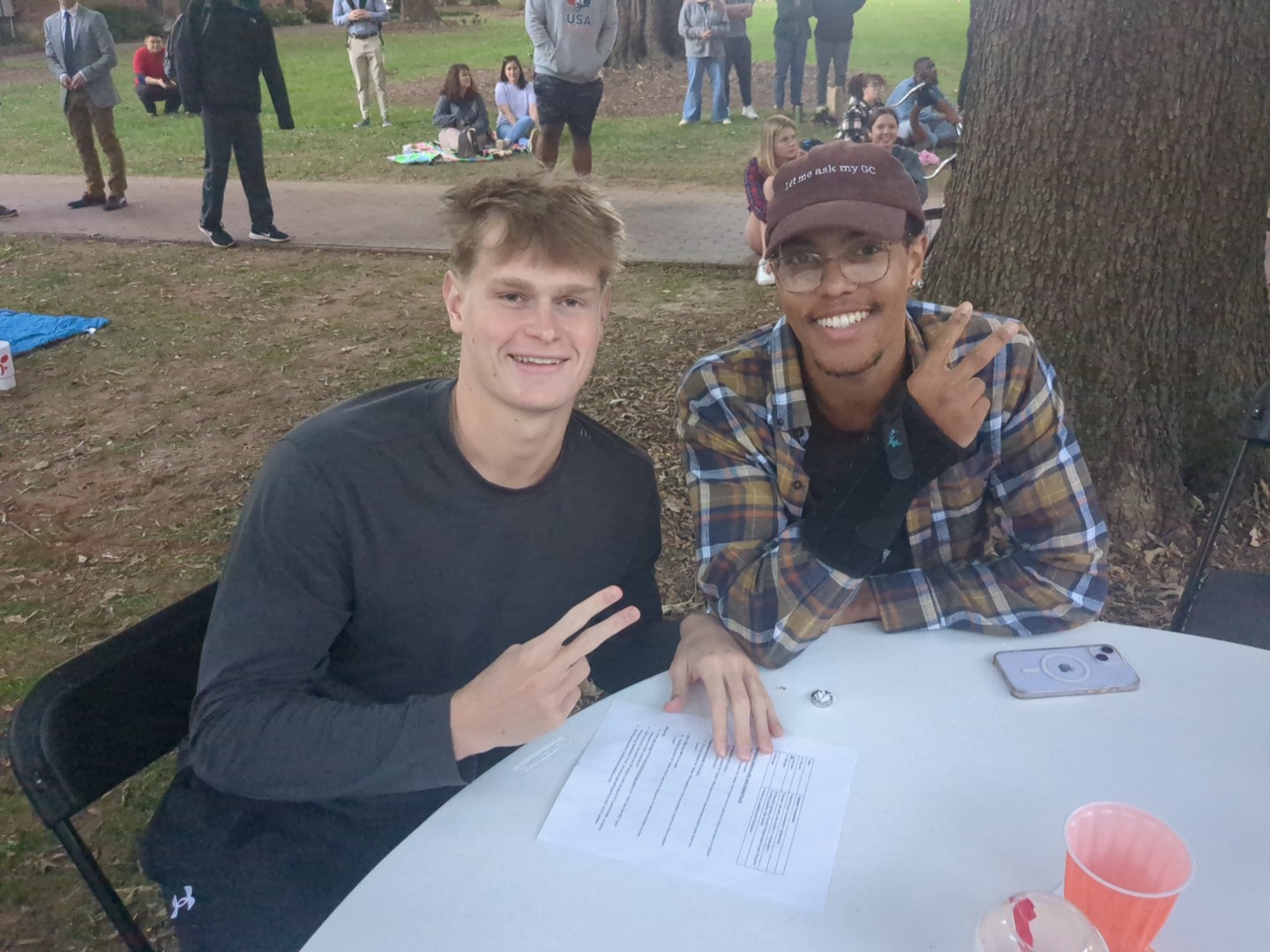
In 2024, however, audience members were given an opportunity to deliberate together about the topics that the debaters covered. In short “deliberative interludes” between each round of debate, DCI-trained facilitators guided conversations at round tables positioned between Eu and Phi Hall, introducing a set of conversation agreements, inviting participants to first share their thoughts with someone sitting next to them, and then to share with the larger group.
They explored questions like, What insights did you gain from today’s discussion or debate? What arguments or experiences shared today have you thinking differently? What aspects of the conversation would you like to explore further? Which part of the discussion or debate surprised you the most? These lightly-structured conversations provided participants with entry points into the conversation that they could respond to, build on, and explore together.
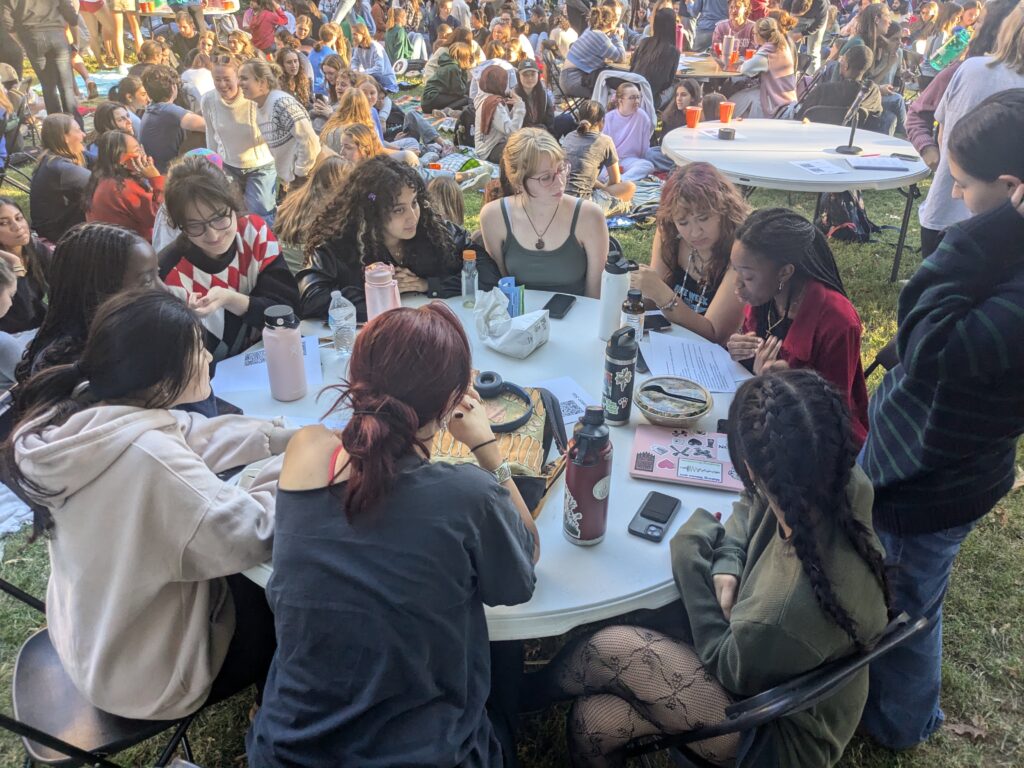
Given the hundreds of people who attended the debate (the turnout was incredible!), not everyone was able to join these conversations, and many just chatted informally with their friends during these breaks in the debate. But these interludes allowed everyone – whether they were at a table or not – to consider and discuss the arguments made by the debaters before moving onto the next topic.
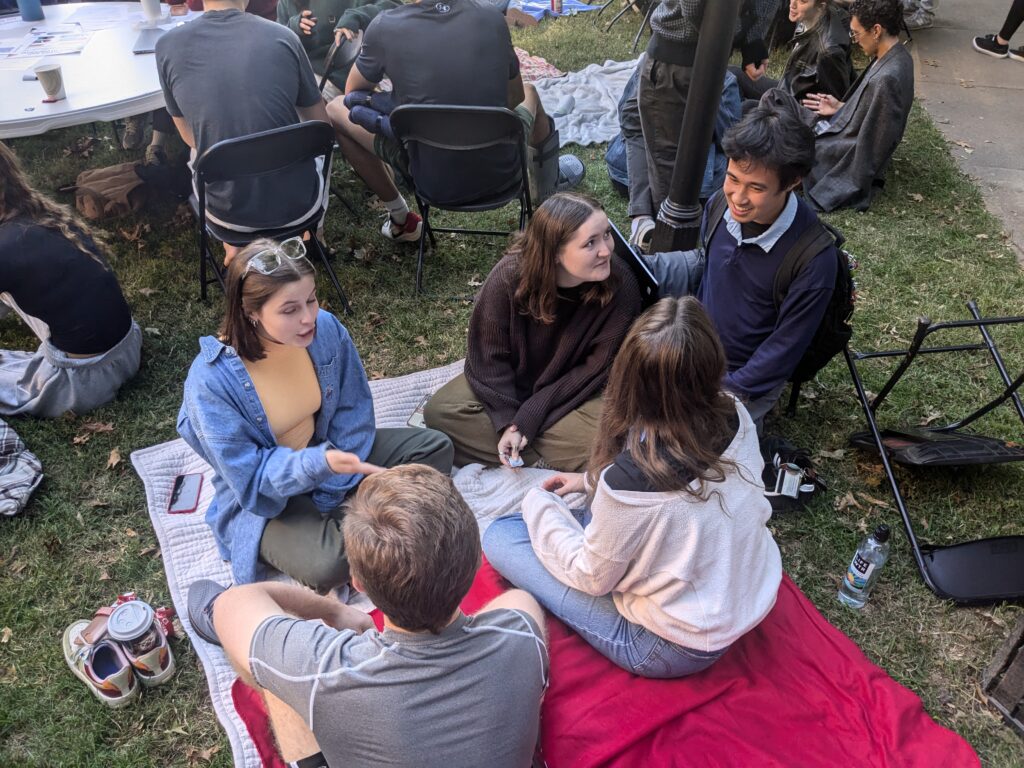
There are certainly tradeoffs associated with this innovation; for example, it took away time from the debaters and for other topics to be debated. But it also made the event more social and broke up the intensity and tension that inevitably comes from discussing challenging topics. Sitting for two hours listening to opposing viewpoints on some of society’s most contentious issues without an opportunity to constructively chime in can be challenging and draining, even for the most committed of us.
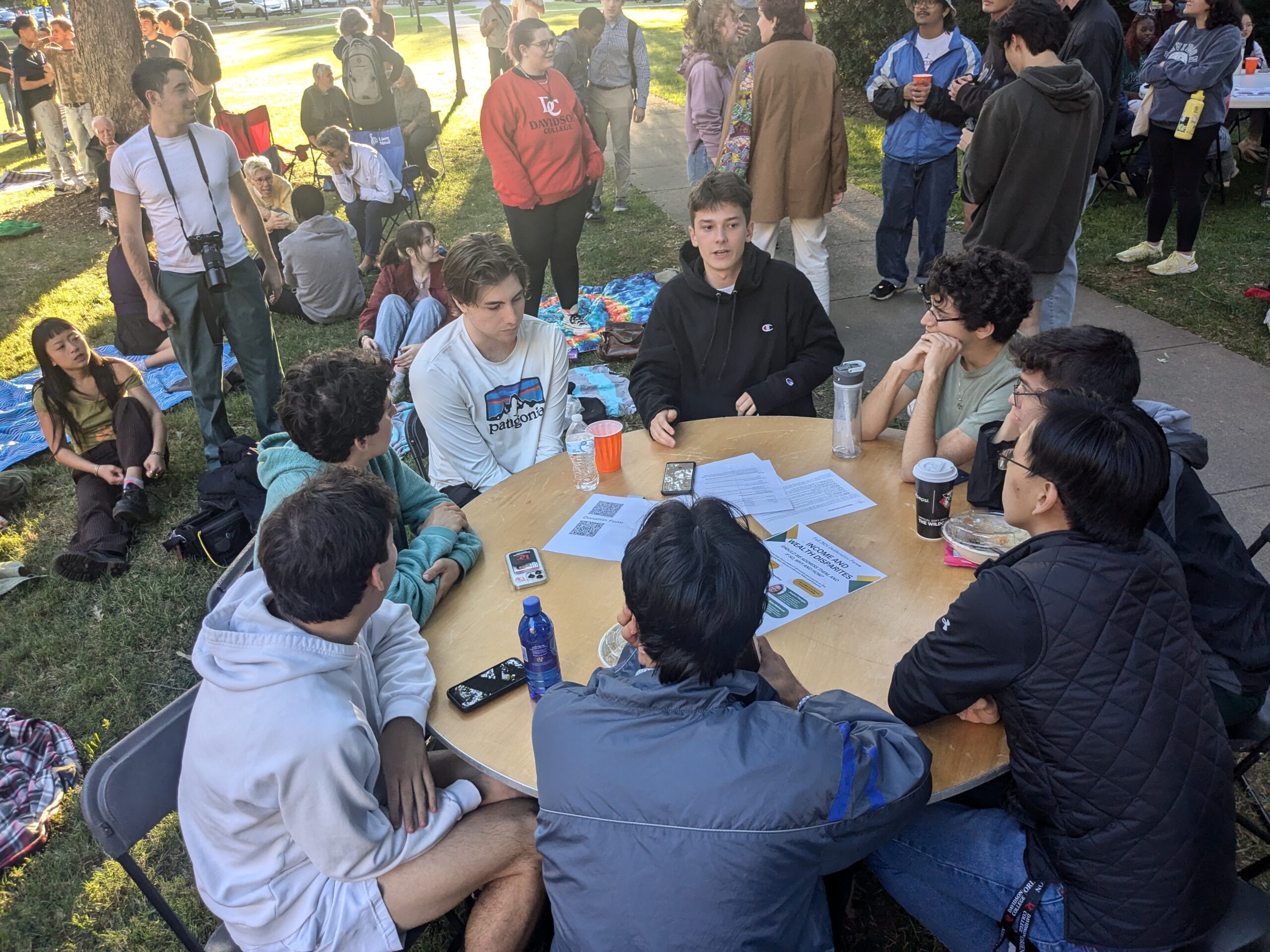
The time allotted to the breaks was also limited – only about 10 minutes each – and did not allow for extensive and in-depth exploration of the issues at hand. But they did enable participants to share their initial reflections and connect with one another in ways that they might not do otherwise. As many student participants in the DCI’s programs have reported, they don’t often talk with their classmates about political issues given how sensitive and difficult they are. These breaks provided everyone in attendance a space to engage with one another on these issues, even if it was for a short time, and hopefully increased their interest, capacity, and confidence in diving into deeper conversations in the future, either through the DCI or in other contexts.
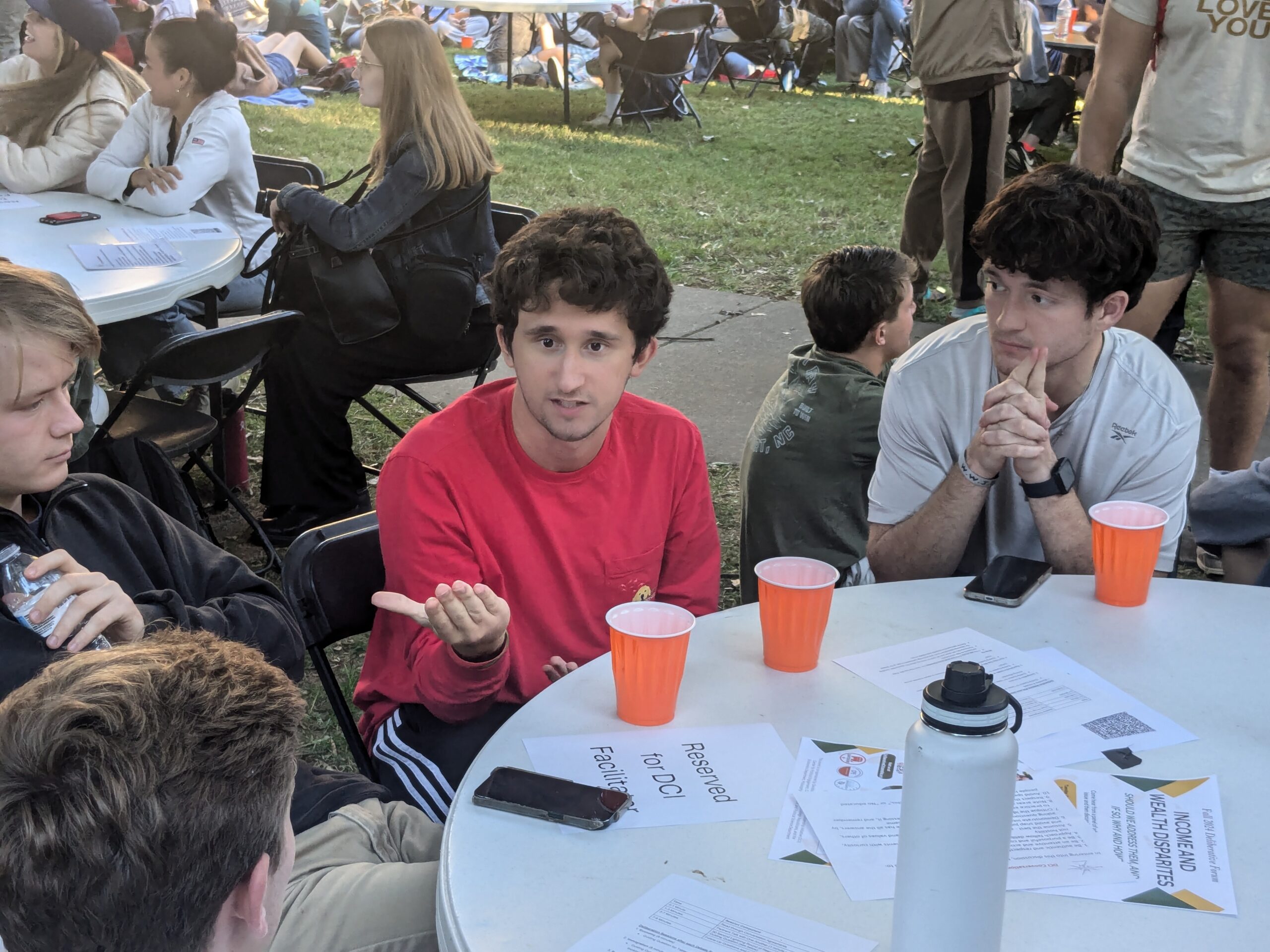
There is still a lot of work to be done to create a more deliberative culture at Davidson and in our larger society, and no one event will accomplish this task. But this debate did advance us towards that goal. It enabled a substantive exchange of ideas through the debate itself and modeled a process by which ordinary people can engage with one another as well. Perhaps just as importantly, it brought together students from across the political spectrum to organize the event together. It was a truly collaborative project between students in the Center for Political Engagement, College Democrats, College Republicans, and the DCI that they all worked hard on to pull off and make successful.
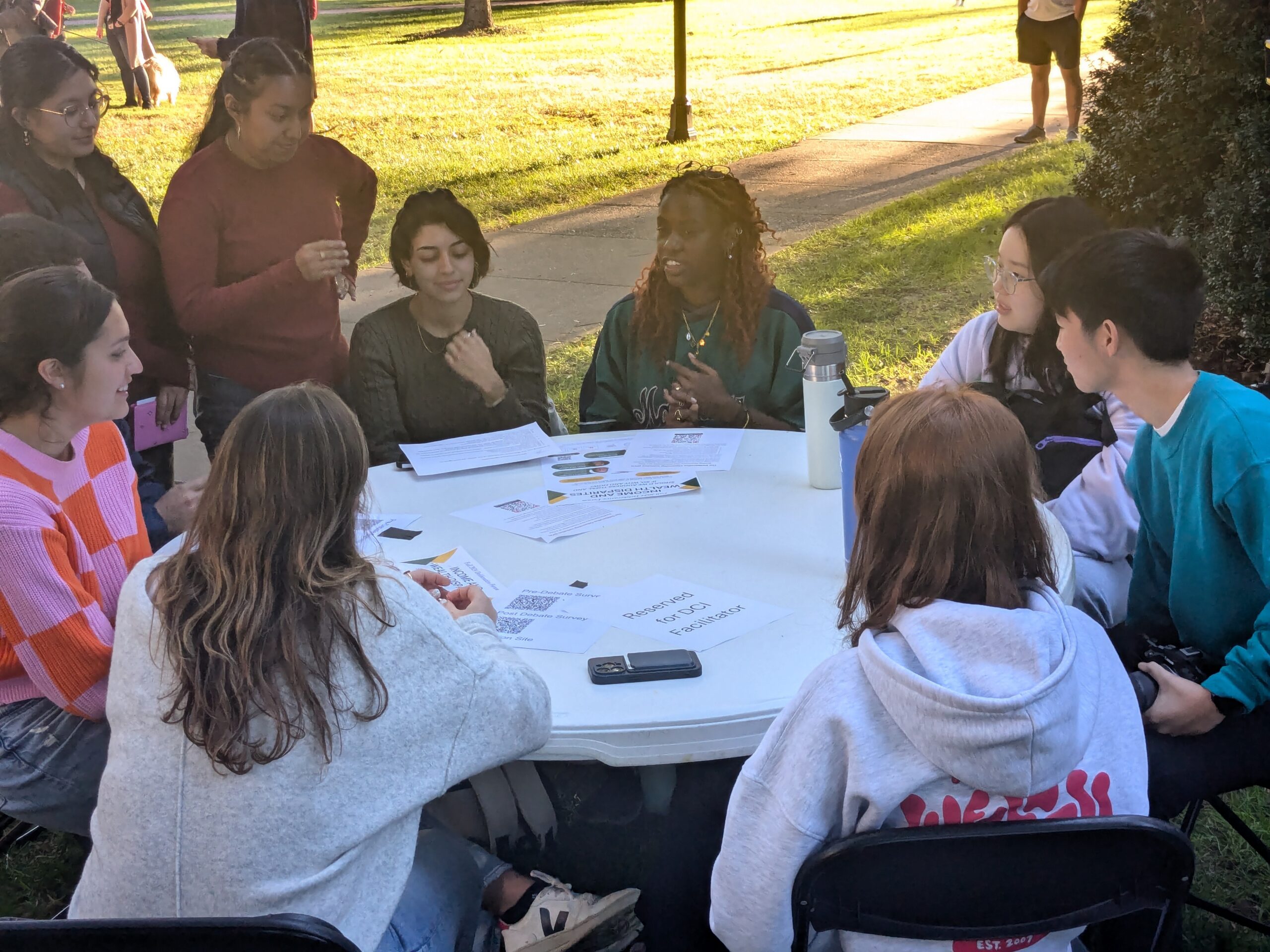
It will take lots of these types of opportunities (“one conversation at a time”), but taken together, they can help us figure out how to engage with one another more humbly, more courageously, and more constructively.
To learn more about the event, check out this article published on Davidson’s article.