When the Deliberative Citizenship Initiative (DCI) was launched nearly six years ago, the original co-conveners were committed to ensuring that it connected with faculty and students across the curriculum, including the natural sciences. When our first guest speaker, Dr. Sara Drury, visited campus in the fall of 2019, she met with a group of STEM faculty to share the work she had done with her science colleagues on embedding more deliberation into their courses. Her research has shown that such efforts can actually deepen student learning of key science concepts in the classroom.
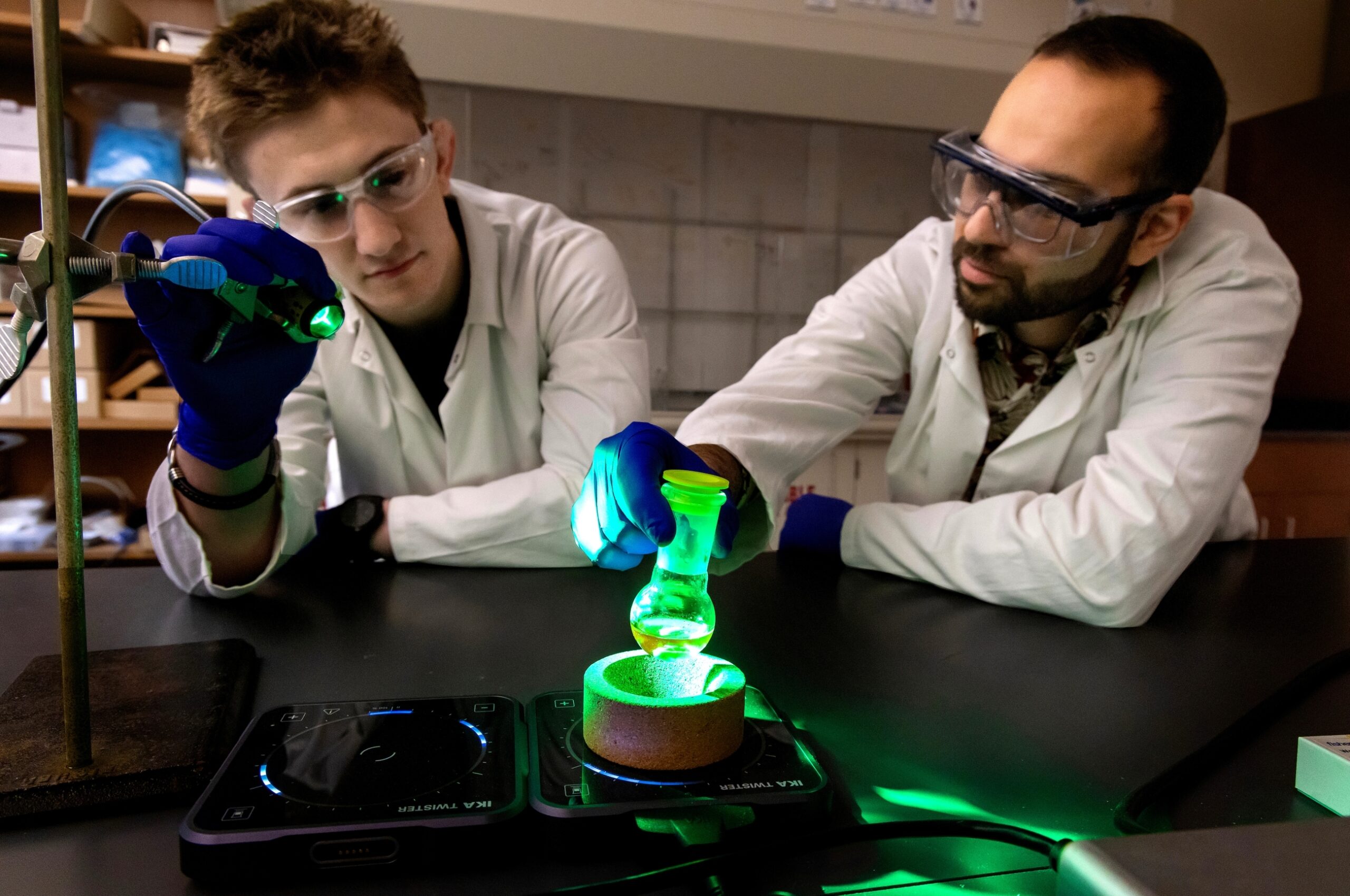
We’ve had several chemistry, physics, mathematics, psychology, and biology faculty members at both Davidson and other institutions pick up on this cue and participate in our Deliberative Pedagogy (DeeP) Collaborative, which is a year-long program designed to help faculty members incorporate engagement with challenging issues related to their courses into their syllabi. As just one example, Bassil El-Zaatari, an assistant professor of chemistry, at Davidson, incorporated such discussions into his polymer chemistry class.
He organized a class discussion about the socioeconomic impacts and tradeoffs associated with the train derailment in East Palestine, Ohio that was carrying vinyl chloride, a precursor to synthesize polyvinyl chloride (PVC), a widely utilized plastic material. He developed a synthesis. He gave the class a group assignment asking them to use their chemistry knowledge to come up with a plan to deal with the growing worldwide problem of plastic pollution. You can read more about the class in his previous blogpost on the DCI Blog.
Dr. El-Zaatari was so encouraged by the success of the deliberations he organized in the class that he plans to add similar components to more of his courses. As part of a recent grant he received as a 2025 Cottrell Scholar, he will implement “deliberative debate labs” in his courses to encourage his students to explore the intersection of chemical principles with wider world challenges. As Dr. El-Zaatari was quoted recently in an article about the award:
“When students learn about different chemical phenomena across the curriculum, they rarely think about how it’s connected to other fields and the world around them. I want to start changing this by developing deliberative debate labs into all the courses I teach, including general chemistry, in order to cultivate a new generation of scientific thinkers who can better bridge the gap between classroom learning, laboratory work and real-world impact.”
Congratulations to Dr. El-Zaatari on his grant, which will enable him to extend the important work of deliberation to more classrooms and equip more students with the skills to engage constructively across differences on the challenges facing our world.